DD
MM
YYYY

PAGES

DD
MM
YYYY

spot_img

PAGES

Home Blog Page 6209

University of Ibadan: Post graduate Students Charged to Embrace Digital Data Collection and Analysis Tools for Research

0

Researchers especially current PhD students have been enjoined to embrace digital data collection tools and analysis for improved research. This was the crux of the matter as Mutiu Iyanda, Co-Founder Infoprations Limited, engaged post graduate students and doctoral researchers at the Department of Communication and Language Arts , University of Ibadan on how to use existing digital tools to collect and analyse data so as to conduct more  credible studies and contribute to global conversation in their areas of research interest.

In what was termed as a give back to his Alma Mater, Iyanda got the rapt attention of his audience made up of both lecturers and students as he took them through the process of collecting and analysing data with digital tools such as Google Form, Google Trends, Google Alert, Google News, Tone Analyzer and Way Back Machine and Rapid Miner. The seminar, which was conducted virtually through Zoom and tagged “Collecting and Analysing Data through the Digital Space: Tools and Tactics”  involved practical demonstration of the use of these tools.

Iyanda noted the importance of the tools and how they could enhance research outcomes. He said the COVID 19 pandemic has accentuated the reasons these digital tools should be embraced either as stand-alone methods or in combination with other traditional offline research tools. The research communication consultant impressed it on the attendees that anyone who seeks to use the online data collection and analysis tools must understand data velocity, veracity, value and volume. While velocity refers to the speed at which data evolves, variety means the types of data that exists on the internet. On the other hand, veracity implies the credibility of the data being collected while value refers to the usefulness of the data collected. Volume, on its own, points to the largeness of the data to be analysed.

Earlier in his opening speech, the Convener, Prof. Ayo Ojebode noted that the seminar was aimed at strengthening the capacity of the postgraduate students in the Department. He posited that as the world has moved online, it is important for African/Nigerian researchers to have an understanding of the tools with which the data that are deposited in the virtual space could be mined. He enjoined participants to put into practice what has been learnt in the seminar series.

While speaking to our correspondent after the online seminar, the facilitator, Mutiu Iyanda said he considered it a privilege to have been invited to speak with postgraduate and doctoral students in Communication & Language Arts. He then emphasized the need for Nigerian scholars to embrace emerging digital data collection and analysis tools. This, he affirmed, would make them competitive and accepted to contribute to global research conversations.

The virtual seminar had in attendance Prof. Olayinka Oyewo, the new Head of the Department, Dr. Yinka Egbokhare, Dr. Raphael Ojebuyi and other members of the department.


Join us for the path to business GROWTH

0

We will begin at 12 noon Lagos tomorrow (Monday). Register and join innovators and project champions right now. REGISTER for Tekedia Mini-MBA.

Look at the map, join us for the path to GROWTH.

Tekedia offers an innovation management 4-month program, optimized for business execution and growth, with digital operational overlay. It runs 100% online. The theme is Innovation, Growth & Digital Execution – Techniques for Building Category-King Companies. All contents are self-paced, recorded and archived which means participants do not have to be at any scheduled time to consume contents.

If you pay before  early bird ends, you get two free ebooks:  “Africa’s Sankofa Innovation” and “The Dangote System: Techniques for Building Conglomerates” along with a free Facyber.com cybersecurity certificate course.  To learn more about this program, click the program page.

Why Brands Struggle and Depart Nigeria

6

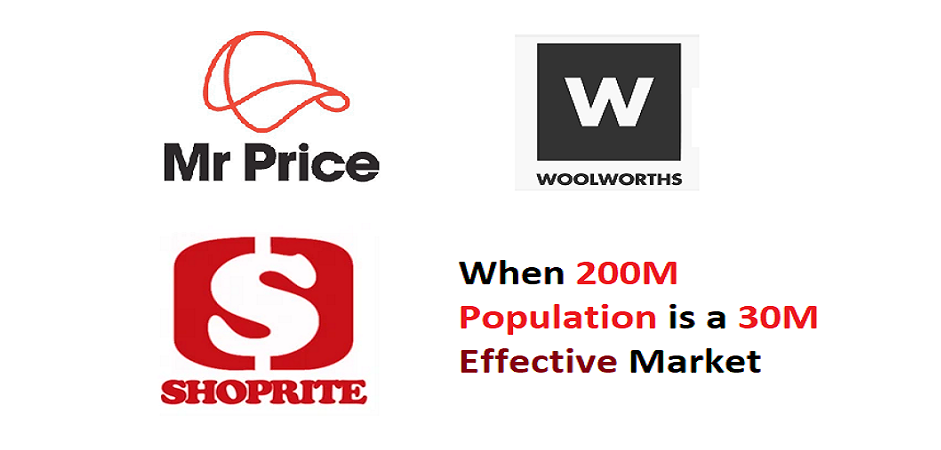
The companies with the logos above have one thing in common: they are largely retailers which left southern Africa for a voyage in Nigeria, and have since returned or about returning. Mr. Price left in June. Woolworths had departed in 2013, and Shoprite is packing. Besides them are other pockets of aspirational journey-makers, foreign and indigenous, which have also faded. Yes, more than 80% of NEW companies collapse within five years of formation in Nigeria.

Nigeria has the largest startup ecosystem in Africa coming ahead of Kenya, South Africa & Rwanda. There are plenty of positives however the reality remains that 80% of these new startups and businesses fail within the initial three years of starting

When we push for reforms, people make it seem like Nigeria has time. Our Vice President, Prof Yemi Osinbajo, is working on his excellent engagement with the startup community. But he needs to show more boldness and tackle problems. His recent statement where he is complaining how big people are influencing the appointments of judges is not leadership. He was essentially saying: see, they pressure us, and we do not appoint the best judges because we are pressured. We need to hear: in this government, all your pressures will not reach us; we will appoint the best judges for the nation. Until we can show that leadership, Nigeria will continue to fade.

So, as we see the exodus and death of companies, I remind everyone that Nigeria has about 30 million people who earn income and can pay for anything. Any model built outside that 30 million will disappoint. I have explained how I arrived at this 30 million number here. With the pandemic affecting that 30 million number, which carries the other 170 million citizens, you will then understand the challenge we have in the near future.

For foreign brands, they come with the model that the market is huge. But when they come, they feel what we have been feeling: Nigerian market is a latent opportunity which is yet to be unlocked. The purchasing power of the citizens remains abysmal and as the years go, Nigerians are getting poorer, as the population rate is growing faster than the economic growth rate. The implication is this: mass poverty is accelerating, and any “luxury product” will struggle. Yes, your superior value proposition has priced many out of range.

In simple English, the number of people in Nigeria is growing faster than the money (goods and services) Nigeria is making; so Nigerians would keep getting poorer until at least 2022. For economic well-being to improve, you need economic growth to be more than population growth. That way, everyone has a little more to share every passing year. When the opposite happens, everyone has a bit less year after year. It’s like you are a bachelor earning say N100,000 monthly and living life. Then let’s say 5 years later, your salary has doubled to N200,000. Are you actually better off? Possibly. But what if during that period, you get married, wifey becomes a career mum to two kids and your hungry brother comes to stay with you? Your per capita income goes from N100k monthly (N100,000 divided by 1 person) to N40k monthly (N200,000 divided by 5 people). In this case, your family population growth (500%) has far exceeded your economic growth (100%) and you’re almost in crisis. If you think it sounds like a terrible situation to be in, you are absolutely right!

When you hear that Bukka food is better than campus canteen, give the guy time to discover a rich uncle. Then, you will understand that winning is about MVQ (Minimum Viable Quality).

The fact is this: any product quality that does not correlate with cost (or value derivable) makes no sense. I have designed accelerometers (motion inertial sensors) where my employer gave me diverging product specification targets: one version was for $0.60, another for $260. The one for $0.60 was made for toys while the $260 was engineered for use in pacemakers (heart monitoring systems). In the cheap one, it was a very crappy product that was built to last for weeks. But in the expensive one, knowing a human life depends on it, it was designed never to fail with many redundancies and checks.

Without the cost context you can think that the cheap one was a poor job. It is indeed not a great quality product but that was by design. That is what the market for toys wants because the kids rarely use them for days before they are discarded. It is a mass market product which has to be affordable to make sense. That does not mean that you cannot make very expensive toys only few can afford. But what is the purpose? Put a $260 XL in a toy which would be dumped within days?

The deal is this: the construct of quality has no meaning until the price of the product is put into considerations. I always ask entrepreneurs to build for the Minimum Viable Quality (MVQ) bounded by the product target price which market will respond. You can build rockets to fly around the world: that is an engineering possibility. But does that make a business sense if no one can afford it? Ask the makers of Concorde for answers.

The Precious 30 Million Nigerians

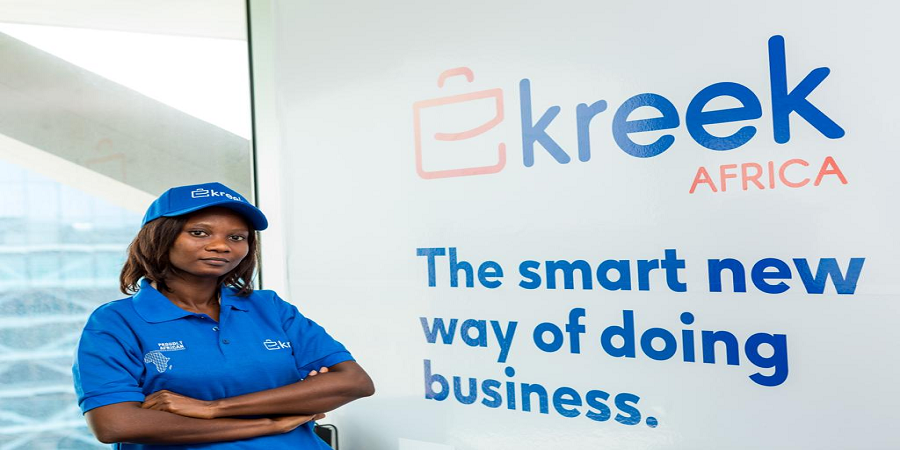
Kreek Africa – A Smart Way of Doing Business

0

The COVID-19 pandemic has taught the world, especially business community, a lot. With stay-at-home and social distancing protocols becoming the order of the day, employees and companies alike, all over the globe, are suffering the consequences. Business can no longer go on as usual, and for most, the slowdown has turned into something more worrying.

One of the biggest problems the pandemic has caused is employment insecurities. And while things are easing up, the conversation about the traditional work structure has been brought to question. Conversations are being started about how sustainable that structure is, especially during emergencies. During this pandemic, many businesses have broken down under the pressure to save cost and they have done this by laying off so many. This has increased the already large population of the unemployed in Africa, thereby leaving the economy even more vulnerable.

Also, when it comes to productivity, some businesses have taken a hit and the time wasted to get things back in order has cost even more. This is why there is a need to find a more sustainable way of doing business, a smart way.

Self-employment is looking like the way forward for those who have lost their jobs and this is already an employment option for many Africans. Therefore, the number of people considering this option increases. While it is almost normal elsewhere in the world, with many platforms available for freelancers to put their skills and qualifications to use, Africa is still having difficulties in this area. Many African freelancers who don’t have any option than to use the Western platforms don’t get the same opportunities as their Western counterparts and are also more likely to experience discrimination. The pandemic, and all these other issues has brought to light the fact that when the whole world is facing the same problem, self-reliance becomes paramount. Therefore, an opportunity has opened up for Africa to create its own solutions and this makes platforms like Kreekafrica.com very necessary.

Kreek Africa presents a platform for African businesses and Freelancers to connect and transact business. With a lot of employees being laid off, there are a lot of skills that more or less will be wasted without the right opportunity. Business are also short on staff, but still do not have enough resources to keep too many in-house employees. Kreekafrica.com thereby creates the opportunity for these two parties to come together to collaborate. Hiring freelancers takes some of the cost of keeping employees in-house, especially when it comes to paying utilities etc.

It is also relatively cheaper to get a freelancer complete a project. Freelancing also presents a flexible employment option, with regard to working hours and eliminates commuting which takes some time off work. Therefore, productivity does not have to be compromised on for all parties involved. Small and large businesses alike can benefit from this shift and individuals will can now have control over who to work for, and for how long.

With technology becoming more widespread on the continent, implementation of this smart way of doing businesses is not going to be much of a problem. A lot of Africans, especially the youth, which forms a large population, are already privy to how to use technological equipment. Internet connection is also quite widespread across the continent for shifting to remote work is not going to be much of a problem. But without initiatives like Kreek Africa, the resources and potential that Africa has to change situations into their favor might all go to waste. It is therefore a welcome solution to the employment issue in Africa, especially during times like these.

  • Contact Person: Wilfred Attipoe
  • Email: media@kreekafrica.com
  • Contact number: +230-58690130