Looking at the financial records (see here) of Shoprite, the company is not doing bad in Naira. Reported sales dropped 6.7% for H2 ended June 2020 for the Nigerian operation . If Naira had not lost value, the company would have recorded financial growth. Excluding South Africa (the home country and with the benchmark currency), Shoprite recorded financial growth decline (1.4%), even when discounting Nigeria, due to currency issues in Africa. If your sales dropped 6.7% while the influencing currency dropped close to 25%, the operating numbers are not bad.
If Shoprite had been listed in Lagos, it would have recorded “financial growth” during the period. This is my take: Shoprite came when Naira was around N127 to a dollar in Dec 2005. Today, that naira is now N380. Its home currency, Rand, has largely changed to the dollar. Simply, there is no magic how one could compensate for the naira deterioration and still deliver value to investors. It is a double whammy as the original dollars (yes Rand) came in at N127, and if you have to return them back, you need to have N380. Then, you need to create value on top to pay dividends.
The retail market in Nigeria has a promise: I do not see this as a pure competition-influenced decision. Shoprite will still be here but the reporting will be all Naira, and that is why it is looking for investors in Nigeria. Everyone wants to avoid touching Naira in the global market. Dangote Group has been selling more cements, collecting tons of Naira. But the Founder, Aliko Dangote, has experienced deterioration in its networth at the global level. With a currency in free fall, any business that has a global interface fades. That is why Shoprite is leaving Nigeria: Naira is hot to touch now. Any local investor who takes over would be fine since there would not be a need to ship Naira outside Nigeria. Or better, record financials in non-Naira figures.
Shoprite imports most of the things it sells. Except the fruits and veggies, most are imported. So, exporting from Nigeria is not an option because nothing is made in Nigeria. Also, when you model they can be paid in USD, you do not account that Nigeria has many substitutes like open markets. As I noted in the blog, while it collects taxes, open market competitors do not. Largely, it may not be easy to expect Nigerians to pay for produce at black market rate to enable Shoprite warehouse funds in London or New York. That is very theoretical to suggest in a retail sector.
Finally, if you look at the numbers from their financials, sales dropped 6.7% despite the Naira losing about 25% of its value. Largely, if currency has been flat, Shoprite was growing. In absolute terms, Shoprite was growing revenue in Naira but struggling in rand. Unlike other sectors, margins are right in retail. It cannot make enough margins to overcome our currency issues.
Personally, our grocery ecommerce is non-existent to affect brick and mortal yet. Out of $301 billion spent yearly in consumer domain, only 3% are electronic. Simply, atoms rule Nigeria. Shoprite experience is exacerbated as it is in retail where it cannot control price easily.
As the SpaceX Crew Dragon spacecraft splashed down in the Gulf of Mexico on Sunday, it brought the space journey that started in May 31, to a successful end.
After having blazed through Earth’s atmosphere, the parachutes delivered them safely to the waiting hands of NASA officers. The two parachutes worked autonomously to bring the capsule to slow down, reducing the astronauts’ speed of 17,500 mph in orbit down to 350 mph upon atmospheric reentry, splashing down eventually at 15 mph.
NASA astronauts, Bob Behnken and Doug Hurley had just ended a two month trip that changed the American space history and put Elon Musk’s SpaceX in place to be the first private transport company to space. The astronauts were recovered by a SpaceX ship shortly after they landed in the waters.
Behnken and Hurley became the first American astronauts to splashdown in 45 years, when they touched down in the waters in Pensacola, near Florida.
“On behalf of the SpaceX and NASA teams, welcome back to Planet Earth. Thanks for flying SpaceX,” SpaceX mission control said in welcome message to the crew.
The Apollo mission of 1975 marked the last time an American crew splashed down into the ocean. Astronauts have always landed on dry land until Sunday afternoon.
As the duo flew on the wings of parachutes and aimed for the waters, GO Navigator, a giant recovery ship, moved into position for the Crew Dragon spacecraft and hauled it out of the water. Hurley and Behnken were whisked away by helicopter to the Pensacola Naval Air Station, from where they proceeded to Johnson Space Center in Houston via a NASA plane.
President Donald Trump and former president Barack Obama extended their warm welcome to the astronauts.
“Great to have NASA Astronauts return to Earth after very successful two month mission. Thank you to all,” Trump tweeted.
“Welcome home, Astronaut Behnken and Astronaut Hurley!” Obama wrote on Sunday. “We launched the Commercial Crew program to strengthen our U.S. space program and it’s been great to see its success. This historic NASA-SpaceX mission is a symbol of what American ingenuity and inventiveness can achieve.”
The mission was considered a demo, (codenamed Demo-2) but it represented American’s comeback to independence in space travels. The United States has depended on Russia since 2010, when NASA ended its Space Shuttle program, to travel to the International Space Station (ISS), and has been paying Russia about $90 million per a passenger seat.
Now, Elon Musk’s Spacex has cut the cost and the dependence on Russia. NASA intends to launch its astronauts on SpaceX spacecraft every few months going forward, paying about $55 million per seat.
NASA Administrator Jim Bridenstine said during the agency’s webcast on Sunday that the success of the demo-2 marks the beginning of commercial trips to space.
“It’s really establishing the business model for the future. It’s the next era in human spaceflight, where NASA gets to be the customer.”
NASA plans to embark on an operational mission in September, but wants to conduct a review on the data from Demo-2, which may take about six weeks.
Hurley and Behnken spent 63 days at the ISS testing the SpaceX capsule’s systems and features. Part of the testing while the Crew Dragon was docked at the space station was a habitability test. The test is to ascertain if the spacecraft would be conducive for four astronauts working on some tasks.
NASA has future plans full of trips to the ISS. And if the reviews of the Demo-2 do not show major issues, the SpaceX Crew 1 mission will be launched in late September, marking the first operational mission of SpaceX’s Crew Dragon that will be made up of four astronauts.
SpaceX will refurbish the spacecraft used by Hurley and Behnken for future trip scheduled for the spring of 2021.
The quest to start a commercial spacecraft was NASA’s way of encouraging innovation and to give corporations the chance to get involved. Boeing and SpaceX were awarded the contracts: $4.2 billion and $2.6 billion respectively. The idea was to create a crew worthy of the version of the Dragon spacecraft that was flying cargo to and from the space station.
Though the idea was criticized by many, Boeing was the favorite to deliver the spacecraft in the shortest time, having been in the business of aircrafts for a long time. Eventually, Elon Musk turned the tides with SpaceX, a company founded in 2004.
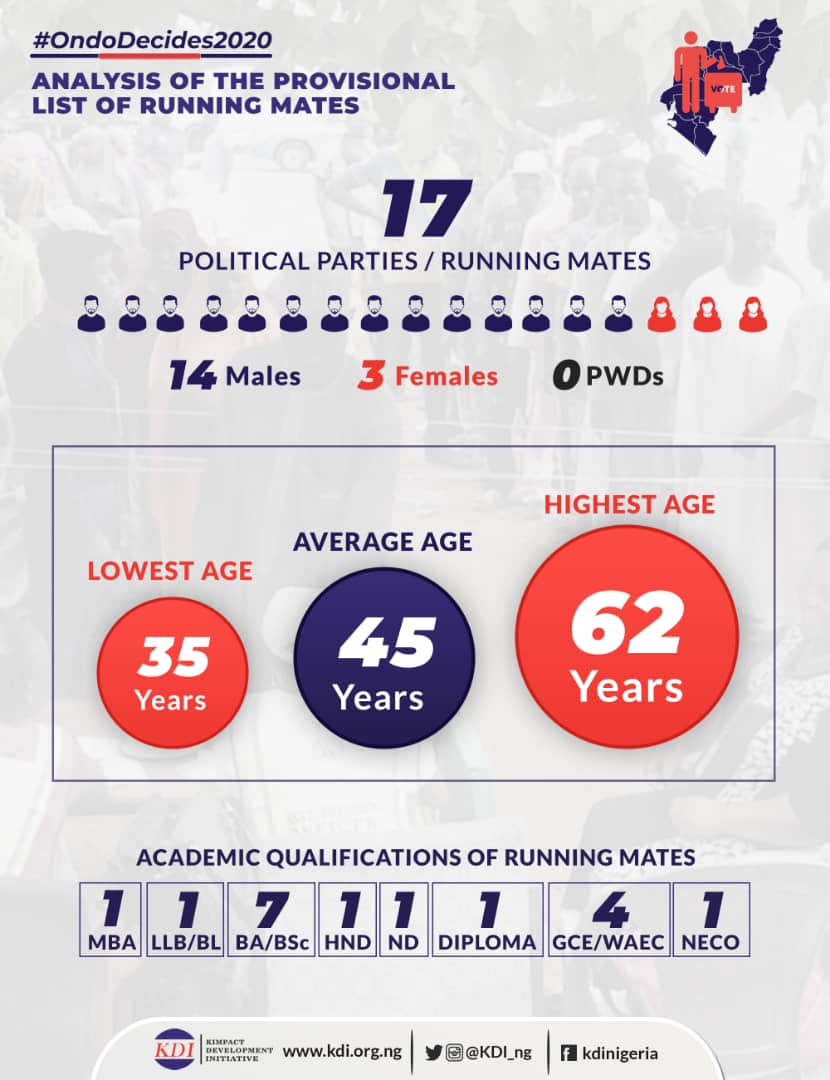
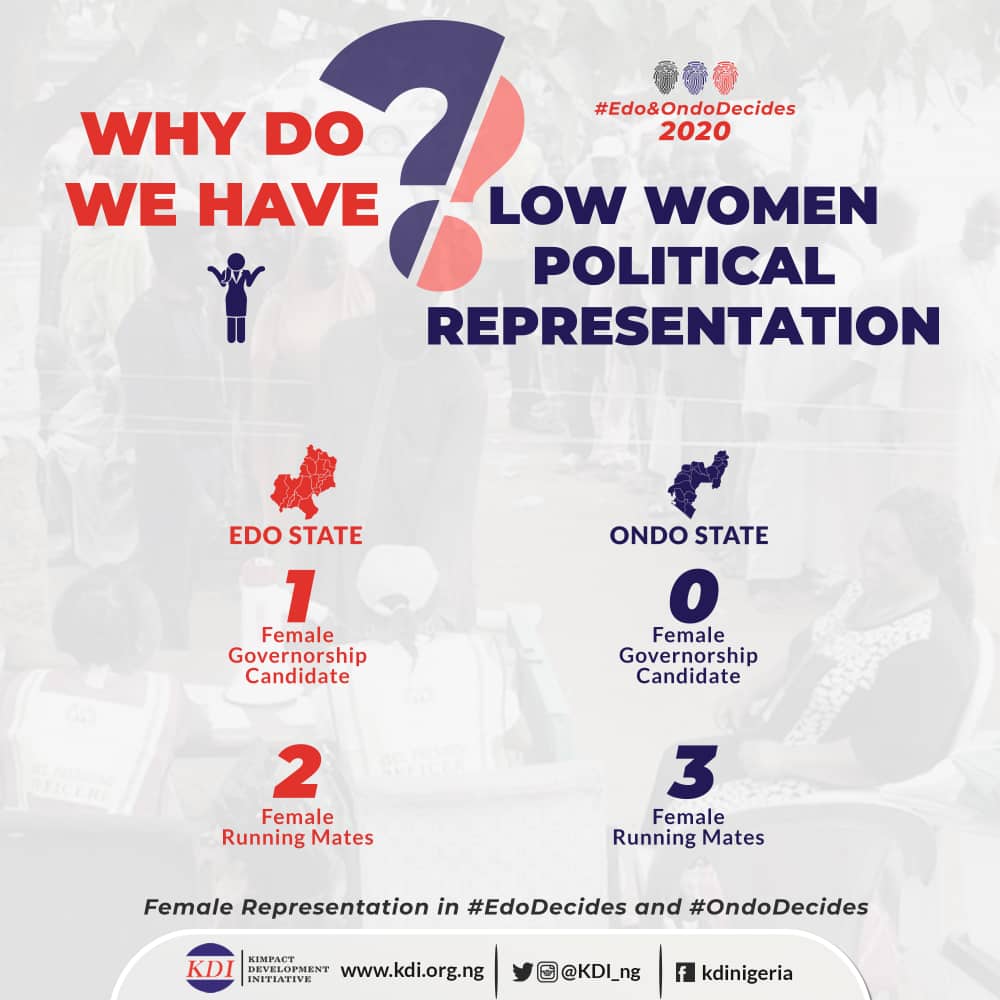
A Report has queried the low participation of women as gubernatorial candidates in the forthcoming governorship elections in Edo and Ondo States. Released by a non-governmental organisation, Kimpact Development Initiative, and titled Why do we have Low Women Political Participation, the report had a breakdown of the gender, age and qualifications of the candidates in the two forthcoming elections.
For instance, in Edo State, 14 governorship candidates are participating in the election. Out of these, only one female governorship candidate is on the list of contestants who will slug it out in the September 19, 2020 election. Analysis further reveals that two women are sharing a ticket with male governorship candidates as deputy governorship candidate.
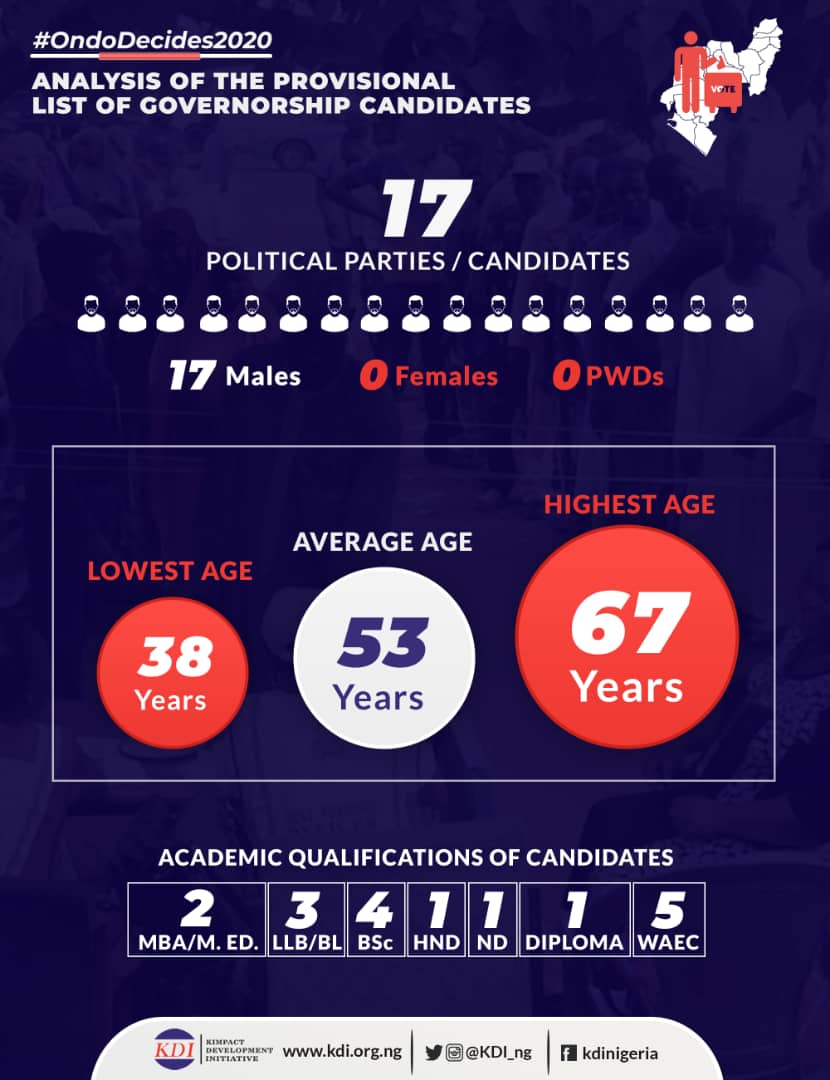
In Ondo State, insights from the report also recorded a worse dimension as there was no female governorship contestant while three of the female contestants that reflected among the 17 contenders for the governorship seat were running mates. In the state, analysis of the candidates’ qualifications breakdown indicates 5 candidates are WASSCE holders followed by 4 Bachelor’s degree holders while diploma, National Diploma and Higher National Diploma recorded 1 candidate each.
For running mates, the candidates’ qualifications records showed 8 candidates with Bachelor’s Degree, 5 candidates with West African Senior School Certificate, while 3 candidates hold Diploma, National Diploma and Higher National Diploma, respectively.
In terms of the age distribution, the governorship candidates’ ages range from 38- which was the least- to 67 being the oldest. In the running mates’ analysis of ages, the youngest of the deputy governorship contenders is aged 35years while the oldest running mate is 62 years.
Studies surrounding women participation in politics have decried factors militating against women flourishing in Nigerian politics. These problems included women’s socio-economic status, gendered economic and household inequalities, lower levels of female employment and education as well as religion or traditional practices. Others included a corrupt and patronage-based political system and violence at elections.
The previous cumulative and the new statistics about the cases of Covid-19 in Nigeria indicate a mixed trend, which shows that the country could not be said is losing or winning the war against the disease. Over the last few weeks, Lagos, Federal Capital Territory (Abuja), Kano, Oyo and Osun states recorded rising and falling cases of the disease despite various medical and non-medical measures recommended by the governments and medical experts.
A recent research, describing the disease, notes “that by April 30, 2020, the total confirmed, active, recovered and death cases stood at 1932, 1555, 319 and 58 respectively; an indication of an alarming spread. The distribution of the disease saw Lagos (the epicentre of the disease), Kano and FCT collectively accounting for 71.07% of confirmed cases, 71.45% of active, 73.67% of death, and 46.55% of recovered cases. The initial mode of spread was through contact.
As of April 30, 2020, 79% of new cases were through contact and incomplete epidemiological link, an indication of possible community transmission.” In spite of the possible community transmission, 24.43% of selected people in the Northern region asserted that COVID-19 cannot be transmitted through social gatherings and making direct physical contact with people.
But medical experts have noted that people need to maintain at least 1 metre [3 feet] distance among themselves in a crowded place. This is imperative because “when someone coughs, sneezes, or speaks they spray small liquid droplets from their nose or mouth, which may contain virus.” In addition to the physical distance initiation and maintenance, people are expected to wear face mask.
This idea when it started was strange to many. Before the disease struck, wear a face mask is not a main feature of social life in most world regions. In fact, there are regions and countries where wearing a face mask is forbidden and punishable under the existing laws. However, the emergence of the disease has made these regions and countries to change the laws, strongly enforcing wearing a face mask.
Question of Safety Over Death
In our experience, our analyst has learnt how some people in the United States of America and other countries in Europe protested against wear a face mask measure of their governments. To these people, governments are trampling upon their fundamental human rights. In Austria, the right-wing Chancellor Sebastian Kurz said that “masks are alien to our country.”
However, our check indicates that “facemasks were first prescribed as a response to a pandemic during the period of the so-called Spanish Flu of 1918/19. In Europe, the earliest laws in the 1970s and 1980s targeting face-covering, such as in Italy and Germany, referred to any device that hindered facial identification.”
Despite the effectiveness of face mask, as documented in a number of researches, it remains the most controversial measure as cases of the disease increase across the world. The controversial nature of the measure is more obvious in developing countries than in the developing ones, our analyst gathered.
Goffman has made us understand that wear a face mask should not generate arguments because wearing a face mask is not quite different from the social roles and emotional states being played and expressed by people before the pandemic. Playing social roles and expressing varied emotional states, according to Goffman, are the same with “Putting on a mask.”
Following the background information and Goffman’s view about wearing a face, our analyst explores the raging among the scholars which says “What social distancing, handwashing cannot do, to some extent face mask and lockdown can do.” This question has been examined from different settings with the consideration of COVID-19. Our analyst is interested in their findings and brought insights for stakeholders as they continue finding solutions for the total containment of the disease.
Question of Mixed Benefits
As noted earlier, an uncovered face is now a threat to the security of other people, whereas before it was a guarantor of security. When the wear a face mask policy is enforced forcefully, reports have indicated several cases of unlawful killings.
Like Goffman, Donald Low, a behavioural economist and professor, said “Putting on a mask every day before you go out is like a ritual, like putting on a uniform. And in ritual behaviour you feel you have to live up to what the uniform stands for, which is more hygienic behaviour like not touching your face or avoiding crowded places and social distancing.”
In Nigeria, a recent study depicts that “for the worst-case scenario where social-distancing, lockdown and other community transmission reduction measures are not implemented, Nigeria would have recorded a devastatingly high COVID-19 mortality by April 2021 (in hundreds of thousands). It was, however, shown that COVID-19 can be effectively controlled using social-distancing measures provided its effectiveness level is at least moderate.
Although the use of face masks in the public can significantly reduce COVID-19 in Nigeria, its use as a sole intervention strategy may fail to lead to the realistic elimination of the disease (since such elimination requires unrealistic high compliance in face mask usage in the public, in the range of 80% to 95%).”
In trials of hand hygiene, health education and masks together, hand hygiene alone was not effective, but masks were effective when used with hand hygiene. In another study, the use of face masks by the general public is potentially of high value in curtailing community transmission and the burden of the pandemic. The community-wide benefits are likely to be greatest when face masks are used in conjunction with other non-pharmaceutical practices (such as social-distancing), and when adoption is nearly universal (nation-wide) and compliance is high. Regardless of the benefits found for using face masks, a study also discovered that public interest in face mask through the Internet is not connected with spreading speed of the disease.
Not Seeing the Severity, But Masking Up Remains Top Option
From Bodija Market in Ibadan to Aba Market in Abia and Kano Market, our analyst has seen how people disregard the use of face masks. When some people used it, they either hung it on their chin or holding it. In one of his engagements with the media, Chikwe Ihekweazu, director of the Nigeria Centre for Disease Control, “We are seeing hundreds of new cases every day, with sustained community spread, in particular in Lagos. The epidemic is still increasing, but not exponentially. We are also not seeing the severity observed in other countries.”
Our analyst picked the director’s not seeing the severity observed in other countries phrase for further analysis. Analysis established that one percent of interest in understanding how to use a face mask and where to buy a face mask could be said to have contributed to reduction in number of cases between March 29 and July 13, 2020. It was 58.4% for Covid-19. These results imply the extent that people proactively engaged in understanding reasons for using face mask and silent information about the disease.
Exhibit 1: Trends of Public Interest in Face Mask, Covid-19 and Daily Cases and Deaths
Source: Google Trends, 2020; NCDC, 2020; Infoprations Analysis, 2020
Exhibit 2: Trends of Public Interest in Covid-19 and Daily Cases
Source: Google Trends, 2020; NCDC, 2020; Infoprations Analysis, 2020
Exhibit 3: Trends of Public Interest in Covid-19 and Daily Deaths
Source: Google Trends, 2020; NCDC, 2020; Infoprations Analysis, 2020
Running a supermarket in Nigeria is very challenging. Then, running a supermarket chain like the Shoprite model may be hopeless. The reason is evident: every major street in key Nigerian cities is a “market” with a security man doubling as a vendor. Then, walk a few miles, there is one market or the other. Just around Ikeja in Lagos state, you have Alade Market, the one at the junction, computer village, etc. Move a little further, there is the Oshodi Market and Ajao Estate Market. Most of those market participants do not pay tax. So, formal supermarket chains have to collect taxes and still beat them on value when quality and price are considered.
So, the news that Shoprite has failed in Nigeria should not come as a surprise. To have operated in Nigeria these years, Shoprite was running a full local government operation with its private security, waterboard, electricity, and more. But when the naira was devalued, the governance system failed as it had so much global exposure. Shoprite is a South African company.
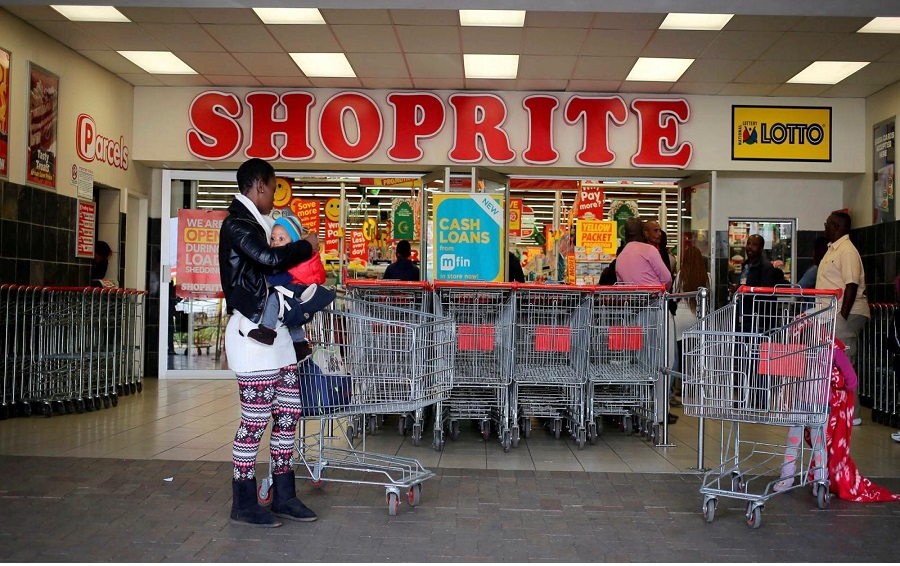
Shoprite, the biggest retail supermarket in Africa, is reportedly leaving Nigeria after 15 years, according to the statement issued by the retail company on Monday.
“Following approaches from various potential investors, and in line with our re-evaluation of the Group’s operating model in Nigeria, the Board has decided to initiate a formal process to consider the potential sale of all, or a majority stake, in Retail Supermarkets Nigeria Limited, a subsidiary of Shoprite international Limited.
“As such, Retail Supermarkets Nigeria Limited may be classified as a discontinued operation when Shoprite reports its results for the year. Any further updates will be provided to the market at the appropriate time,” the statement said.
The South African company has experienced low sales in the past few years, prompting it to weigh the cost of staying in Nigeria among other countries outside South Africa.
More so, during a season of economic paralysis, luxury fades. Why pay N1,000 in a university canteen when you can eat in the bukka for N500? The university canteen has priced the clean tables, nice music, etc in that N1,000 meal. But the bukka did not provide those things and could effectively lower the prices of meals. Shoprite was doing great on many elements, offering standard products within a well controlled environment. But just as many students went for bukka over school canteens, Nigerians abandoned it for open markets when they raised prices to account for the currency deterioration. Naira has lost more than 20% of its value in 2020.
Like Inoted a few days ago when my friend offered a suggestion after watching our Vice President’s speech, noting “your country does not know that the only reform Nigeria needs for foreign investment now is a stable currency,” our core challenge is lack of stability in Naira. And unless we deal with this instability, Nigeria will not attain the equilibrium we expect on development.
Today, our Vice President, Prof Osinbajo, gave a speech on improving the ease of doing business in Nigeria through reforms. A friend in New York sent me the link with this comment: “…your country does not know that the only reform Nigeria needs for foreign investment now is a stable currency. Your problem has gone beyond bureaucracy”.
Shoprite may not be doing terribly bad in Naira but struggles in Rand when it reports in South Africa. It is exiting Nigeria even though it makes tons of naira. So, if a local investor acquires Shoprite Nigeria with no burden to report in USD or Rand, the currency issues could be eliminated. It is like Dangote generating more naira and still losing $17 billion in net-worth in 7 years.
I worked closely with ShopRite for years as a representative of the investors who developed the malls in finance technical role in Nigeria for ShopRite to trade in. So I can say that continued Naira devaluation killed ShopRite as mentioned by Ndubuisi. Yes, I know the numbers they make here in Naira are huge in billions but the devaluation of Naira continuously makes the tonnes of Naira worthless and made making profit difficult. Until Nigeria fix the Naira, more companies will be killed by the whipsaw called Naira devaluation.