DD
MM
YYYY

PAGES

DD
MM
YYYY

spot_img

PAGES

Home Blog Page 622

How Brands Can Leverage Search Trends for Digital Marketing

0

A football match, a celebrity transfer rumor, or a political debate can spark thousands of online searches in just a few hours. For marketers, these bursts of interest are not random noise but meaningful signals that reveal what the public values in real time. The question is how brands can position themselves to respond effectively to these signals.

A recent data of trending searches in Nigeria demonstrates the power of public curiosity. Over the span of a single day, search volumes ranged from just 200 to more than 20,000. This wide spread suggests a long-tail pattern in which a handful of topics dominate the headlines while countless smaller sparks continue to capture attention. For marketers, both ends of the spectrum hold opportunities if approached with the right strategy.

Timing as the Foundation of Relevance

The data shows that public interest peaks quickly and often fades within hours. A Champions League fixture or a Chelsea versus Barcelona clash immediately pushed searches past the 20,000 mark, but by the following morning new topics had already taken center stage. This pattern highlights the importance of contextual timing in digital marketing.

Traditional campaigns that are planned weeks in advance often miss these fleeting moments. To remain visible in fast-moving conversations, brands need an agile approach that combines real-time monitoring with rapid content deployment. For example, a sports betting platform could push live odds and notifications precisely when football searches surge. Similarly, a beverage brand could roll out a “match night” promotion timed to the same peak of curiosity. The closer a campaign aligns with public attention, the stronger the impact.

Audience Segmentation through Search Behaviour

The data also reveals that different audiences gravitate toward different levels of engagement. Football as a category dominates, but individual players such as Xavi Simons and Garnacho each generated about 10,000 searches, showing the strength of personality-driven narratives. Smaller but still meaningful volumes of around 5,000 searches reflected interest in other matches and entertainment topics.

This segmentation allows marketers to match their tactics to audience size and behavior. Mass-reach campaigns are best aligned with the top tier of search volumes around 20,000 and above. Subcultures represented by mid-tier searches in the 10,000 range are better reached through community-focused activations, influencer collaborations, or targeted social media engagement. Even the long-tail searches below 2,000 can deliver value, as these often represent highly passionate micro-communities. Brands with niche products or services can achieve strong returns by catering to these smaller groups with precision campaigns.

From Keywords to Meaningful Stories

Beyond the raw numbers, the most valuable aspect of the data lies in the trend breakdown, which shows related queries tied to each search. When users searched for “UEFA Champions League,” they also looked for “when is Champions League draw” and “Champions League fixtures today.” These connected searches reveal not only what people are curious about but also why.

This shift from isolated keywords to richer storytelling opens new doors for digital marketers. Instead of competing for expensive advertising space on generic keywords, a brand can focus on the underlying intent. A sportswear company might provide fans with a downloadable fixtures calendar. A streaming service could promote how and where to watch live matches. A telecom provider might position its data bundles as the best way to stay connected throughout the tournament. By answering the “why” behind the search, a brand can transform from an advertiser into a trusted guide.

Building an Agile Playbook for the Future

To make the most of search-driven opportunities, brands should focus on three priorities. First, they need systems that monitor search trends daily, ensuring they can detect attention spikes as they occur. Second, they should develop a library of adaptable content that can be customized quickly and deployed within hours. Third, amplification must extend across multiple channels, from Twitter and TikTok to SMS and Instagram, ensuring campaigns reach audiences wherever they gather.

Public search interest is one of the clearest reflections of cultural energy today. It reveals what people care about without filters or delays. The dataset from Nigeria illustrates how both major events and smaller sparks create moments of opportunity. By mastering timing, audience segmentation, and storytelling, marketers can turn these moments of fleeting curiosity into lasting brand connections.


The New Passport Fee in Nigeria

0

The recent announcement by the Nigerian Immigration Service (NIS) to increase the cost of international passports has generated intense public debate. Starting September 1, the cost of a 32-page passport with five years’ validity moved from N50,000 to N100,000, while a 64-page passport with ten years’ validity increased from N100,000 to N200,000.

For many Nigerians, this policy has significant implications, both positive and negative. While some see the increase as part of necessary reforms to improve passport services, others believe it imposes another heavy burden on citizens already struggling with rising costs of living. Analysis of views on both sides on X (Twitter) provides insights into why this decision has sparked such strong reactions.

Pros of the New Passport Fee

Supporters of the price adjustment argue that the increase will allow the NIS to improve its services. Higher fees can help the government invest in better technology, modernize passport production systems, and reduce the long delays many Nigerians face when applying for or renewing passports. Some Nigerians have acknowledged that the process has already improved in recent years, with reduced bribery and better digital integration. For these citizens, higher fees are acceptable if they guarantee faster turnaround times and more reliable services.

The NIS has explained that the cost of passport materials has increased globally, particularly for security-enhanced booklets. Without adjusting prices, the government would have to subsidize these costs significantly, which many believe is unsustainable given Nigeria’s economic challenges. In this sense, the price hike reflects current realities rather than arbitrary decision-making.

Another argument is that Nigeria is following global best practices. In many countries, passport fees are higher than before as governments invest in improved security and biometric systems. If implemented effectively, the higher charges could bring Nigeria’s passport system closer to international benchmarks, both in terms of technology and service quality.

Some observers believe that a higher cost could reduce fraudulent applications and multiple requests by discouraging non-essential passport seekers. With the Nigerian passport being one of the most sought-after travel documents in West Africa, a moderate increase may help ensure the system serves those with genuine needs first.

Cons of the New Passport Fee

For many Nigerians, the sharp rise in passport costs is difficult to justify when compared to the country’s economic realities. With a national minimum wage of N70,000 per month, a N100,000 passport represents more than a month’s salary for millions of workers. In contrast, the U.S. passport fee is about $165, roughly 15 percent of an average monthly wage. In Nigeria, the new passport cost exceeds 140 percent of the minimum wage, making it unaffordable for many.

Even with higher fees, many Nigerians doubt that service quality will improve. While some improvements have been recorded, passport processing often still takes several months, especially at local offices. Without clear timelines and better transparency, citizens fear that they will be paying more without seeing meaningful change.

Public reactions show a growing trust deficit between Nigerians and their leaders. Many believe the increase is another example of government prioritizing revenue over citizen welfare. Sarcasm dominates some online conversations, with people suggesting the fee be set at ?500,000 or even ?1 million since, in their view, citizens are constantly expected to bear more burdens while service delivery remains poor.

The ongoing debate has reaffirmed that  the need for a more citizen-focused approach to policy implementation. Nigerians are not against reforms, but they expect fairness, transparency, and better communication. If higher fees are necessary, government agencies must ensure they are matched with visible service improvements, shorter processing times, and proper explanations for why changes are happening.

With Anambra’s Igba Boi Law, Nigeria Now Needs Igba Boi Institute

0

Congratulations to the Governor of Anambra State, Professor C.C. Soludo, the State House of Assembly, and the people of Anambra for the passing of the Igbo Apprenticeship System into law, which takes effect on September 10, 2025. This legislation aims to regulate, monitor, and enforce compliance with the world’s largest business incubation framework, popularly known as Igba Boi.

The new law introduces key requirements for apprentices, including the completion of junior secondary education and capping the apprenticeship period at seven years. This is a commendable effort by Governor Soludo and his team.

The Need for an “Igba Boi Institute”: The construct of this law now calls for the establishment of an Igba Boi Institute within a Nigerian university. We need to mirror institutions like the Confucius Institute (one exists in Nnamdi Azikiwe University, Awka), which serve as a platform for China to project its worldview. Nigeria and specifically the Igbo Nation need to export Igba Boi framework especially in this age where the world is experiencing wealth inequality.

As I highlighted in the Harvard Business Review, Igba Boi is a form of stakeholder capitalism that the Igbo people have been practicing for centuries. The Ghanaian concept of “sankofa”—which means “go back and get it”—is a powerful reminder that Africa can advance by leveraging its own historical knowledge and practices.

Silicon Valley calls it an “accelerator”, we call it “Igba Boi”. London calls it “stakeholder capitalism”, we call it “Umunneona Economics”. Simply, the fundamentals of these systems have long existed within Africa and we must relearn to advance.

Comment on Feed

Comment 1: It’s a good thing that the Igba Boi has been formalized and given a legal backing, so settlement at the end of service is no longer as the spirit leads. Creating an institute across educational institutions will also help, to create actionable and portable frameworks and validate case studies that can be scalable and exportable. It’s lack of intellectual framework that makes human creations seem like mystics and divine ordinance.

There will also be need for special tribunal or arbitration to speedily handle disputes. The traditional open market system is due for innovation, it cannot continue to remain as though it’s immune to evolution. Creating a legal framework is just the starting point.

Documented wisdom will always outperform and outlive folklore and fairytale.

My Response to a comment: “very wrong nomenclature for this famed Igbo practice” – I am not sure about “Ô na-amû ahia” which is “he/she is learning a trade”. The fact is this: he is my “Nwa Boi” [contextually, a young person, usually male, helping in business] is not a new phrase in the Igbo Nation. And no one uses it in a derogatory way because even boys are happy to be called “nwa boi”. What you wrote is a long-form explanation of what is happening, but that is not how to describe it.

It is like saying “He is in a university to learn” instead of saying “University Student”. The origin of Nwa Boi and Igba Boi if you look deep into Igbo etymology could be traced well before 1929. So, the 1990 case is just an isolated issue. But everything was scaled after the war as “Onye aghara nwanne ya” [do not leave your brethren behind] was put into action.

When the federal government cripped the Igbos with so many policies after the war, freezing their bank accounts, etc, the Greatest Generation of Igbos made decisions: young men must leave homeland and look for opportunities outside the Igbo Nation since it was in ruins. But as soon as they find opportunities, they must return to pick their brethren. And parents lobbied uncles, brothers, etc to take their kids since nothing was there in the Southeast as everything was bombed and destroyed.

That spirit picked up and after Christmas, boys will say “I am going to be Nwa Boi to Mazi Uche”.  By January, they’re gone. And as they did that, those Elders then said “Aku ruo ulo” [your wealth must reach home] which means even if you have found success in Kano, Lagos, etc bring some home as schools, clinics, etc are in ruins and no help is here. Check well there is that chieftaincy title “Ochi ri ozuo” [one who takes many people and train them] became iconic as those were men who raised many people]. There is nothing wrong with the “Igba Boi” phrase.

The Umunneoma Economics

Nvidia’s $46.7B Q2 FY2026 Earnings Beat Wall Street Expectations

0
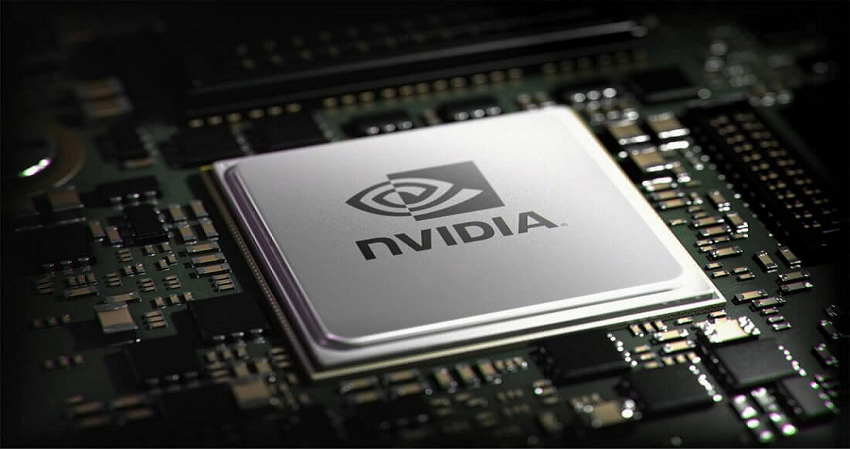
Nvidia chip

Nvidia’s Q2 FY2026 earnings beat Wall Street expectations with record revenue of $46.7 billion (up 56% year-over-year) and adjusted EPS of $1.05, surpassing estimates of $46.02 billion and $1.01, respectively.

Data center revenue, comprising 88% of total sales, reached $41.1 billion, up 56% from last year but slightly below the $41.3 billion consensus. Despite the beat, shares fell 3-7% in after-hours trading due to high investor expectations, a narrower beat margin compared to prior quarters, and no H20 chip sales to China due to export restrictions.

Nvidia’s Q3 revenue guidance of $54 billion (±2%) was in line with expectations, but the lack of China sales and a softer data center performance raised concerns about the AI rally’s sustainability. Nvidia’s Q2 FY2026 earnings beat estimates but triggered a 3-7% drop in after-hours trading, reflecting market sensitivity to high expectations and specific headwinds.

Nvidia’s stock has been priced for perfection due to its central role in the AI boom, with a forward P/E ratio significantly higher than peers. The narrower-than-expected beat (revenue 1.4% above consensus vs. 10-15% in prior quarters) disappointed investors, leading to the after-hours sell-off.

The in-line Q3 guidance of $54 billion (±2%) suggests robust growth (44% YoY) but lacks the upside surprise investors have come to expect, signaling potential peaking of the AI-driven rally in the short term. Data center revenue ($41.1 billion, 88% of total) remains Nvidia’s growth engine, driven by demand for AI chips like the H100 and upcoming Blackwell architecture.

However, the slight miss on data center consensus ($41.1B vs. $41.3B) and flat sequential growth from Q1 raise concerns about whether hyperscalers are nearing saturation or optimizing existing GPU deployments. Investors may question if AI infrastructure spending is slowing, especially as enterprise AI adoption lags behind hyperscaler investments.

Gross margins held strong at 75.7%, slightly above estimates, reflecting Nvidia’s pricing power and limited competition in high-end AI chips. However, rising production costs for Blackwell chips and potential supply constraints could pressure margins in future quarters.

Capex guidance of $7-8 billion for FY2026 (down from $8.7B in Q2) suggests confidence in supply chain improvements but may also signal a cautious outlook on near-term demand. Data center revenue, primarily from AI GPUs, grew 56% YoY but was flat sequentially, indicating a potential plateau in hyperscaler spending.

Major clients like Microsoft, Meta, and Google are still investing heavily in AI infrastructure, but the slight miss suggests demand may be stabilizing or shifting toward inference-focused chips, which Nvidia also supplies but at lower margins. Continued strength in data center revenue underscores Nvidia’s dominance in AI hardware, with no immediate threat from competitors like AMD or custom chips from hyperscalers.

Flat sequential growth and a small miss vs. consensus fuel concerns that the AI infrastructure buildout may be reaching a temporary ceiling, particularly if enterprise AI adoption doesn’t accelerate to justify further hyperscaler capex. U.S. export controls blocked Nvidia from selling its H20 chip (designed for China to comply with restrictions) in Q2, resulting in zero China data center revenue.

China previously accounted for 20-25% of Nvidia’s data center sales, a significant loss. The absence of China sales directly contributed to the data center miss and tempered Q3 guidance. Without export restrictions, Nvidia could have exceeded expectations by a wider margin.

Ongoing U.S.-China tensions and potential tightening of export controls (e.g., on software or cloud access) pose a persistent risk to Nvidia’s global revenue. China’s push for domestic AI chips (e.g., Huawei’s Ascend) could further erode Nvidia’s market share there.

Nvidia is developing compliant chips like the B20, but adoption is slow, and margins are likely lower than for flagship products like the H100. Nvidia’s performance is a bellwether for the AI sector. The after-hours drop may weigh on other AI-related stocks (e.g., AMD, TSMC) as investors reassess the pace of AI growth.

Nvidia’s confidence in resolving Blackwell supply issues by Q4 is positive, but any delays could exacerbate investor concerns, especially with competitors like AMD ramping up MI300 production. The market’s reaction reflects a shift toward scrutinizing Nvidia’s ability to sustain 50%+ growth rates.

If enterprise AI adoption accelerates or Blackwell ramps successfully, sentiment could rebound. Conversely, further export restrictions or demand slowdowns could prolong volatility. The loss of China revenue and flat sequential data center growth amplify concerns about the AI rally’s sustainability, contributing to the after-hours sell-off.

While Nvidia’s fundamentals remain strong, its high valuation leaves little room for error, and investors will closely watch Blackwell adoption and geopolitical developments in Q3.

Solana TVL Reaches $12.7B As Global Stablecoin Supply Hits $280B

0

Solana’s decentralized finance (DeFi) ecosystem has seen a significant milestone, with its total value locked (TVL) reaching $12.7 billion, the highest since January 2022, according to DeFiLlama.

This marks a substantial increase from earlier figures, such as $6.1 billion in October 2024 and $8.6 billion in Q2 2025, driven by platforms like Raydium, which accounts for over $1.8 billion of the TVL. The surge reflects growing user trust and engagement, fueled by Solana’s high-throughput blockchain and low transaction fees, despite challenges like declining DEX volumes and NFT trading.

Global Stablecoin Supply Hits $280B

The global stablecoin supply has reached a new high of $280 billion, indicating robust growth in stablecoin adoption. Solana’s stablecoin supply alone exceeds $11.4 billion, with $215 billion transferred in July 2025, highlighting its significant role in the stablecoin ecosystem. This growth aligns with broader market trends, including institutional interest and increasing DeFi activity.

Solana’s DeFi TVL growth outpaces many competitors, positioning it as a leading blockchain for DeFi, second only to Ethereum in some metrics. The stablecoin supply milestone underscores the increasing reliance on stablecoins for DeFi liquidity and cross-chain transactions. However, Solana’s DEX volumes and NFT markets have faced declines, suggesting that while DeFi fundamentals are strong, speculative trading has cooled.

Solana’s DeFi TVL reaching $12.7 billion signals robust growth and increasing user confidence in its ecosystem. This could attract more developers and projects, further expanding DeFi offerings and potentially challenging Ethereum’s dominance in the sector.

Higher TVL suggests significant capital inflows, likely driven by Solana’s low-cost, high-speed transactions. This makes Solana appealing for yield farming, lending, and other DeFi activities, potentially drawing institutional and retail investors seeking efficient blockchain solutions.

The milestone could fuel bullish sentiment for Solana’s native token, SOL, potentially driving price appreciation. However, declining DEX volumes and NFT trading indicate that speculative fervor may be cooling, which could temper short-term price volatility.

Solana’s DeFi growth puts pressure on rival layer-1 blockchains (e.g., Avalanche, Polygon) to innovate or risk losing market share. It also highlights Solana’s edge in scalability, though network stability concerns from past outages could resurface if growth strains infrastructure.

Implications of Global Stablecoin Supply Hitting $280B

A $280 billion stablecoin supply reflects their critical role in DeFi, enabling seamless transactions, lending, and trading. Solana’s $11.4 billion stablecoin supply and $215 billion in transfers (July 2025) suggest it’s a key hub for stablecoin activity, enhancing liquidity for its DeFi protocols.

The surge in stablecoin supply points to growing institutional interest, as stablecoins are often used for cross-border payments, remittances, and as a hedge against crypto volatility. This could drive further integration of blockchain into traditional finance.

A larger stablecoin market may attract stricter regulatory oversight, especially given concerns about reserve backing and systemic risks. Jurisdictions may impose new rules, impacting stablecoin issuers and platforms like Solana that rely on them.

Stablecoins facilitate access to dollar-based assets in regions with unstable currencies, potentially reshaping financial inclusion. However, over-reliance on stablecoins could expose users to risks if major issuers face liquidity or compliance issues.

Solana’s DeFi TVL growth and the stablecoin supply surge are interconnected, as stablecoins fuel DeFi liquidity. Solana’s ability to handle high transaction volumes positions it to capture a larger share of the stablecoin-driven DeFi market.

Both trends face risks from market volatility, regulatory changes, and potential technical issues (e.g., Solana’s past network outages). Investors should monitor these factors closely. If Solana sustains its DeFi growth and leverages the stablecoin boom, it could solidify its position as a DeFi leader. However, competition, regulatory hurdles, and market dynamics will shape its trajectory.