DD
MM
YYYY

PAGES

DD
MM
YYYY

spot_img

PAGES

Home Blog Page 6244

How Well Funded Startups Could Overcome Policy Somersaults in Nigeria

3

Prof Goodwill Chukwuemeka Ofunne drops some lines on how to operate in Nigeria which has many policy somersaults. Like I noted a few hours ago, on how Nigeria has gone through more than 3 ICT visions/roadmaps in 10 years with each new minister coming up with his/her own, abandoning whatever the predecessor has started. Contrast that with serious countries where government is a continuum. On these somersaults, you can add Okada ban, border closures, etc to those policy changes. When the only constant is policy somersaults in any economy, good money stays out. Here is what Prof Ofunne has to say:

How to overcome Nigeria’s Policy somersault is by making your business plan and implementation strategies elastic with defined boundaries. The rule of the thumb in Nigeria’s business world is to start small and grow the business through a coordinated, but an elastic process that accommodates primary inputs and transformations that are related to unforeseen policy changes. Big investment startups in Nigeria are too inelastic for the economy and as a matter of fact, collapse at the slightest change in primary input to set processes. Our model should be ” Little beginnings with growth”

He is saying this: blitzscaling does not work here as a small perturbation in business variables will lead to failure. This is the key line: “Big investment startups in Nigeria are too inelastic for the economy and as a matter of fact, collapse at the slightest change in primary input to set processes.”

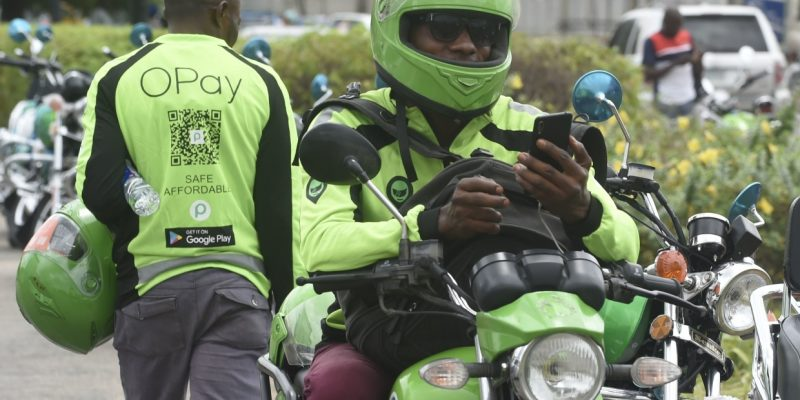
This is my summary in the OPay piece: “I have watched rich people in Nigeria, they have one playbook: go slow, find a path to profitability, and stay the course.” You go slow, watch for stability, and then take the next step. But if you go all in, and they change direction, you can crash.


My Comments on this feed in LinkedIn

In Nigeria, I do think everything changes. If you check all the major foreign tech firms in Nigeria, their manpower may not have grown in 10 years. They have the money to come and look for business in my village and possibly yours (I assume it is not in Eti Osa LGA). Simply, they are patient and do not try to use money to force things by throwing money on things that cannot work. As I noted in that piece, only 19 million pay tax in Nigeria (private + public). That is why no bank crosses more than 16m useful customers in a place with about 110 million adults. I did also note that tech in Nigeria has only 30 million max to serve. You need to grow but it is good to have buffers.

Silicon Valley can go for 10 years with no profit as it pursues growth. That is risky in Nigeria as our source to funds is limited. What tripped OPay is nothing in SV which can run reds for years. My “slow”is forget growth, and find ways to make profits so that you stay in business. It does not mean you cannot scale. It simply means you scale profitably. So, slow down and get some profits, and grow. But scaling with no profits is risky here as we do not have investors who can support that yet.

Dangote brought in $15 billion in 2015. I did not say you cannot raise $1billion. My point is that sustained profit-less growth makes no sense in Nigeria. Slow means, have ways to find profit-path. Silicon Valley can go for 10 years with no profit as it pursues growth. That is risky in Nigeria as our source to funds is limited. So, slow down and get some profits.

OPay Other Businesses Fail

Tekedia Mini-MBA Now Scheduling Private Zoom for Sponsors of 10 or More Members

0

Today, my team has started emailing organizations who sent at least ten staff to Tekedia Mini-MBA. Over the next few days, we would be scheduling private Zoom sessions with your organization. I anchor the engagement for the Institute. Largely, the focus is to deepen the program impacts, and ensure the team is aligned to the sponsoring company’s business objectives.

Essentially, we like members to converge on the assignments and labs where multiple feedback elements are integrated into 1-3 outcomes for use by management, for product development and broad strategy.

For companies sponsoring team members for the capstones, we are doing all to ensure we have symphonic execution, on topic approval, where by the time the members have finished, broad insights would be captured.

As always, we thank you for choosing Tekedia to serve in this capacity. We want to serve more; REGISTER.

https://www.tekedia.com/mini-mba-3/

The Need to Provide Special Palliatives for Teachers in Private Schools

0

The lockdown is gradually lifting; interstate boundaries have been reopened; and people have fully resumed their businesses as if COVID-19 never happened. From all corners, we see economic activities coming back to life. We see offices and shops reopening to their full capacities. We see business men and women reconnecting with their clients and suppliers. Everyone is happy. But then, one group of Nigerians have been forgotten. These are the private school teachers and owners.

This afternoon, I saw a French teacher in one of the private schools in Enugu buying our local pears in the market. As we were exchanging greetings, I asked her how she has been coping with the lockdown. She laughed and asked me if I didn’t see that she’s buying pears. Seeing the confusion written all over my face, she said, “I roast corn in front of my house to survive.”

The story of this French teacher is just one among the many. Last week I had to pay for clothes I didn’t actually need because the seller is one of my children’s teachers. I only bought those clothes because it was my little way of supporting her. This wasn’t the first time I did something like this since the lockdown started. But then, I realised that my help does not make much impact on the conditions of these teachers. Hence, the birth of this article.

It is possible that a lot of people out there do not really know what private school teachers are passing through right now. Even private school owners also have sad stories to tell. Some of these people that are smart and lucky were able to develop other skills that are currently putting food on their table. But many of them devoted all their time to their teaching work that they never bothered developing any other skills or even starting up a side hustle. Some of them work in schools, where side hustles are prohibited and those that engage in them secretly are sacked if discovered. We also have those that listened to some HR experts that stood against side hustles on the ground “serving two masters at a time”. The end result is that this group of people are paying dearly for crimes they didn’t commit.

I brought up this issue of providing palliatives for private school teachers in a WhatsApp group, where many of the members are private school teachers, and I found out that most of them need help. Some are breadwinners while others need to support their spouses, parents, siblings and what have you. However, from the comments made by these teachers, I found out that they could be best helped by:

  1. Providing them with jobs: Some of these teachers wouldn’t mind doing the jobs of sales personnel or sales clerks as they wait for schools’ reopening. This is just to say that if you have a job, no matter how small it is, please consider that private school teacher that has dependents. Give him/her the privilege of working for you until schools reopen.
  2. Partnership: I don’t know if this is the right word to use. But the thing here is that some of these teachers that have skills do not have the resources to set up shops or even advertise their works and services. One of my children’s teachers , a dressmaker confided in me that she cannot rent a shop and she does not have a good android phone to snap and send her works into the internet. I actually advised her to look for a tailor she can attach herself to and maybe pay commissions or something like that. Those that have barber shops have been of great help in this situation. I don’t know the business you have, but if it is the type that you think a teacher you know can attach to in order to make a living, kindly help out here.
  3. Patronise them: Sometimes the best way to help a person is by buying whatever he/she is selling. Some teachers have resorted to selling petty things to keep body and soul together. Please, if you find any of them, deep your hands into your pockets and buy from them. Look at this as your way of putting food on their table. This doesn’t mean you should hesitate to give them feedback on their merchandise (in case they sell substandard goods and services).
  4. Teach them: I would have said “expose them to knowledge” but I think “teach them” will serve a better purpose here. Now, in that WhatsApp group I talked about earlier, one of the members that is into investment came out to lecture us on the importance of investing (not saving) for the rainy day. Another person took her time to talk about businesses she does from home with her phone. Some people were surprised as they learnt about these things. This is just to show that most people don’t really know other ways they can make money. In other words, if you, by chance, come in contact with a private school teacher that has nothing he/she is doing presently, kindly educate the person on different ways he/she can earn a living beside teaching.
  5. Donate: Like somebody said, if you can, spare some money and food items for these teachers. Donate palliatives to them as your way of supporting them. No matter how little you have, please give them; you might be saving a life. You can also set up an ad hoc foundation to raise money for them. You can help them meet people that will provide for them or give them jobs. Whatever it is you feel will help these teachers, kindly do so because they are not finding life easy.

You would have noticed that I didn’t call on the government here. It’s not because they don’t owe these teachers some special palliatives. But I just know that the government will not do anything for them. So let’s forget about the government and do the little we can for these people; they really depend on us right now.

Sell And Make Money: The Story Of A Nigerian Corper Who Sold Bread

0

You can sell anything and make money if you first invest in building relationships.

And you must be careful to be sincere in your relationship building so you don’t appear desperate and become an opportunist. Don’t have the intention to use your relationships for your benefits alone.

I remember that sunny afternoon back then in the days of my compulsory twelve month service to my father land, Nigeria – I was a ‘Corper’ (Corps Member) with the National Youth Service Corps (NYSC).

I had not only attempted a number of businesses to shore up my slenderly small ‘allowee’ (allowance, stipend from the Federal government to keep body and soul together as it was and is still popularly called in the Corpers’ circles), I had also mercilessly laid my hands on the already insufficient cash to fund some short courses. Like those ones we did which in truth, I later realised I did not and still don’t need. All in the quest of landing a job a day after graduation. If you have served your NYSC term, you understand what I mean! 

I had also lavished this small cash on several travels from a major and popular local government area, Hadejia, to the Jigawa State capital, Dutse, in preparations for my one year long CDS goal. Well, this is a beautiful story for another day. After telling you the story, you will agree that 

Whatever you set your heart to accomplish, with diligence and consistency, without allowing yourself to get talked out of it, you will surely accomplish it.

Let us come back to my bread business story. I’m sure you never thought about it that this story borders around how I sold NGN100 worth of freshly baked soft aromatic hot bread to a policeman who never liked eating bread.

I mounted my newly bought ‘fourth-hand’ bicycle – yes, it was that old and used, and I rode as usual to the bakery. Apart from the goal I always set out to achieve, which was stocking bread, I also always enjoyed the sight of traders transacting business in all kinds of fresh food items and livestock at the popular market along the way to the bakery. I remember on one occasion that I approached one of the traders who traded in bags of beans of more than one variety. His prices were quite competitive and a quick thought of ‘wow, this is a good business!’ couldn’t have escaped one’s mind. I buy beans here and transport to Lagos, that’s a good profit margin. This was the thought that I played with that day.

So while at the bakery, I realised I would not get my complete order as there was no more bread. It seemed the market was good for them that day.

The bakery usually sold bread to customers who resell twice every day. Morning and evening. That particular day, I got there a few minutes after noon. I didn’t get my complete order. That meant that some of my customers would not get bread. My heart calculated the total profit I would lose. Those beans-loving Corpers would eat their beans either with Garri or nothing. I quickly ran my mind through these possible outcomes. Well I had to buy what was remaining. So I won’t lose out completely. I also thought about not disappointing my most regular customers.

One funny thing you need to know is that some of these regular customers or may I say fans of my bread were those who mocked my idea of selling bread as a Corper. Selling my first two orders at the start of business, I could hypothesise the reality of the mockery. I made some discoveries. I noticed their body language.  In fact, some wished they had started before me. But well, whatever the case, whether my hypothesis was true or not, I got the first mover advantage.

While enjoying my hard cycling back to the Corpers’ lodge, I decided to check on my prospect, a policeman stationed at one of the branches of one of the major banks in Nigeria. After some minutes of gisting, the discussion flowed into the subject of bread and then I brought out this particular smooth-looking freshly baked hot aromatic NGN100 worth of bread. I dipped it into its transparent nylon package and gave it to him. 

He looked at me, collected the bread and handed me my money. For that new stock, that was my first sale and it meant much to me. But it did not end there. His next words became my lifelong lesson which I have been practicing since that day until today. I still hope to hold on to that practice as long as I would be developing Marketing Contents and Sales Copies for products and services.

The policeman said:

It is not because I like bread that I bought your bread, but I bought this bread because of  you!

Immediately, a bell of sales wisdom rang in my head saying 

To become a successful salesperson, you must build relationships first before you pursue selling to anyone.

Sometimes, if not all the time, it is good to seek to know why it is taking too long to sell to a particular customer. Some customers can be difficult to penetrate. It is always not without a past experience or a reason for that behaviour.

If you are desperate to sell and you give no attention to building a relationship first at whatever level or depth, you might end up losing both the sale and the relationship. If you peradventure sold a product that the customer didn’t like or the product didn’t seem to satisfy the customer, rather than the customer calling you in to discuss his experience using the product, the customer may just look the other way and move on. That would spell the end of that possibly promising prospect.

This is the order. 

Build relationships, sell, maintain  the relationship, sell again. If the opportunity shows itself, extend the relationship to know at least one more person your customer cares about. Sell again. Maintain the relationship. If you have any give away, give. But ensure you attach some gifts to a sale to swallow or share the cost of the gift if possible. Not all the time you use the FREE SAMPLE to attract a customer. This process is blessed with endless promising encounters.

So that was how I eventually sold my NGN100 worth of freshly baked aromatic bread to the policeman who gave me the feedback that taught me a lifelong sales lesson.

This was 9 years ago, 2011.

In 2014, I experienced the result of using this strategy when I was a DSA (Direct Sales Agent) at Stanbic IBTC Bank. I had a branch manager with whom I did my best to be friends and got in his good books. 

One day we had a walk-in customer who happened to be an HNI (High Networth Individual). He was the MD of a particular multinational textile company based in Lagos State, Nigeria. Since I was not the one who introduced the customer to the bank, I didn’t have any claim on commission over his account balance. I spoke with my manager and he approved that the account be recorded and captured in my name. But that is not the end of the story.

Somehow, within two months I became very friendly with the MD (customer) that he even invited me to his house at some points in our relationship. He later realised that I get compensated in commissions based on the amount he deposited in his account. He wowed me with three action steps. All deliberate and favourable. First, he ensured he never touched the balance by withdrawal and secondly, he ensured his salary kept coming into that account. The third was that he issued me a cheque of five million Naira (NGN5,000,000). 

You would have thought I have become a ‘thousandnaire’ through commission from that account as a result of the NGN5m deposit. Well, I wished that cheque wasn’t old. I wished it was honoured.

When I got to the branch, the head of operations did not honour the cheque as, she said, it was an old cheque. He had kept the cheque unused for a long time and the bank within that period had changed some important features on the cheque. The old cheque has been rendered useless but he didn’t know since he had not had any reason to use the cheque. It was so coincidental that he was to travel that same day so he could not sign another check to meet the deadline (I could only get a commission on any account within three (3) months of opening)

I felt like crying but I didn’t cry. That’s life. Sometimes you win big and sometimes, you’ve got to let go.

If you were in my shoes, what would you have done or how would you have felt?

I resigned from the job on the last day of 2014. My stint in the bank helped me realise and develop my natural skill in relationship management. Whether B2B, B2C or B2G (Business to Government), I’m your man.

This is 2020, I still have a smooth relationship with him and many other relationships I built during and after my time working in the bank.

If you will ever succeed in Sales, first build your capacity to manage relationships.

The Google’s $10 billion to India, And Nigeria’s Revolving ICT Policies

1
CEO of Google

It is big money: $10 billion. That is what Google’s parent company plans to drop into India as a new redesign begins. That redesign is the digitization of India. India has more than 500 million internet users; Google will find quick IP addresses therein, without managing clusters of 50 countries, as in Africa. If you add what Walmart, Amazon and Facebook have invested in India in the last five years, you can understand that American tech companies see their futures in India.

 Walmart invested in India’s leading ecommerce company, Amazon has been pumping money that even a federal minister was worried about, and a few weeks ago, Facebook shipped truckloads of U.S. dollars to Jio, a telecom operator. Now, Google continues the party for team India.

In all these things, these firms have maintained one thing: India gave us a template of its digital future, and we see a path to partnership. Digital India is agnostic of party and impervious to the vagaries of policy somersaults. India has sustained it for years. 

Contrast with Nigeria where every new minister in the information technology ministry would like to develop its own ICT plan, only for a successor to abandon it four years later. When that becomes the norm, no one understands the end-goal, and capital stays out. Nigeria needs to play long-term on our policies so that we can unlock quality capital.

Google will invest $10bn (£7.93bn) in India in the next five to seven years, the chief executive of its parent company Alphabet Inc has announced.

Sundar Pichai spoke at the annual Google for India event, held online.

The investment will be used to build products and services for India, help businesses go digital and use technology “for social good”.

“This is a reflection of our confidence in the future of India and its digital economy,” Mr Pichai said.

With more than 500 million active internet users in the country, India is perhaps the biggest potential growth market for Google.

The investment will be made through the Google for India Digitisation Fund

Mr Pichai said the fund would focus on four areas to scale up digital infrastructure in India. It would:

  • enable “affordable access and information for every Indian in their own language”
  • “build new products and services that are deeply relevant to India’s unique needs”
  • empower local businesses who want to go digital
  • “leverage technology and AI [artificial intelligence] ]for social good” in sectors like health, education and agriculture