DD
MM
YYYY

PAGES

DD
MM
YYYY

spot_img

PAGES

Home Blog Page 6253

Nigerian Government Explains It’s Gold Mining (PAGMI) Policy

0

Nigeria has produced, for the first time ever, in June 2020, artisanally-mined gold that has been processed and refined according to the London Bullion Market Association (LBMA) standards required for the use of gold as a reserve instrument by the Central Bank of Nigeria.

This means that the Central Bank will be purchasing gold that has been mined, processed and refined under the Presidential Artisanal Gold Mining Development Initiative for use as part of Nigeria’s external reserves.

The first batch of artisanally-mined gold bars to be purchased by the Central Bank will be unveiled at a presentation ceremony to President Buhari in July 2020. This milestone is a demonstration of President Muhammadu Buhari’s commitment to diversifying Nigeria’s economy and foreign reserves.

This milestone is the culmination of 24 months of intense efforts between the Solid Minerals Development Fund, Kebbi and Osun States Government, Ministry of Mines and Steel Development, and the Ministry of Finance, Budget, and National Planning under a Steering Committee led by the Chief of Staff to the President, Professor Ibrahim Gambari.

So, what exactly is PAGMI?

The Presidential Artisanal Gold Mining Development Initiative (“PAGMI”) is a comprehensive artisanal and small-scale gold mining development programme, launched in 2019 to foster the formalization and integration of artisanal gold mining activities into Nigeria’s legal, economic, and institutional framework.

PAGMI has been designed to integrate social, environmental, health and safety, economic, commercial, and technical considerations, into its implementation.

PAGMI is designed as a broader strategy to address the structural and institutional factors such as rural poverty, lack of alternative livelihoods, and difficulties in meeting legal and regulatory requirements that tend to push artisanal gold mining operators deeper into the informal economy.

Background / Context:

Using data from UN Comtrade, PAGMI estimates that between 2012–2018, 97 tonnes of gold valued at over $3 billion was illegally smuggled out of Nigeria.

In addition to economic sabotage, illegal artisanal mining has fueled instability and mercury and lead poisoning incidents across gold mining communities.

Unregulated artisanal mining places a significant burden on fragile health systems. From 2010 to 2016, there were more than 7,000 incidences of lead poisoning, resulting in 700 deaths related to gold mining activities in Zamfara and Kebbi alone.

His Excellency, the President, approved PAGMI in 2019 to address these issues and foster the integration of artisanal gold mining into the formal system.

PAGMI seeks to tackle and resolve these longstanding issues, while also contributing to President Buhari’s vision to lift 100 million Nigerians out of poverty within a decade.

How will PAGMI work?

The catalyst for the integration is the provision of access to markets for the artisanal miners through a National Gold Purchase Program and the deployment of enhanced mining methods at artisanal and small-scale mining sites.

Providing better access to markets through the National Gold Purchase Programme is only the first step in a comprehensive artisanal and small-scale gold mining development strategy integrating social, environmental, health and safety, economic, commercial, and technical considerations.

PAGMI will deploy safer and more efficient mining and processing technologies across artisanal mining locations across the country, starting with Kebbi and Osun States as the Pilot States with intervention in Kaduna, Zamfara and Niger States to commence immediately after the Pilot.

Using a Centralized Offtake and Supply System supported by a Decentralized Aggregation and Production Network, PAGMI will buy all the gold produced by artisanal and small-scale miners and aggregated by licensed buying centers and aggregators for supply to the Central Bank of Nigeria.

Which States are benefiting from PAGMI?

The main gold producing belt with a history of artisanal workings and exploration activities in Nigeria will benefit from PAGMI. Intervention at artisanal mining sites will take place in Kebbi, Kaduna, Zamfara, Niger and Osun States with Kebbi and Osun States serving as Pilot States.

PAGMI will also be setting up gold aggregation centers in addition to supporting licensed buying centers and aggregators with access to financing options, responsible sourcing mechanisms, management and technical expertise including improved testing and processing equipment.

What will PAGMI achieve?

Jobs: PAGMI will result in the creation of over 500,000 new mining and formalized jobs, leading to poverty alleviation for more than 1 million households.

Wealth Creation: Under PAGMI, artisanal gold miners will earn more from higher productivity, better recovery rates, mechanization of operations, and better access to reliable geological information. Increased earnings for the miners will have significant spillover effects in the local economies as businesses will grow to cater to the increased consumption per household.

Identity Management: PAGMI will boost national identity management through the biometric registration of thousands of artisanal miners nationwide. About 20,000 miners have already been registered in Kebbi and Osun States. PAGMI will also help bring them into the formal financial sector.

Productivity and Capacity-Building: PAGMI will boost productivity and output in the gold mining sector, by deploying safer and more efficient mining and processing equipment and technologies across artisanal mining locations across the country.

Agreements have been reached with Thermo Fisher Scientific and Mettler Toledo, leading producers of gold testing and weight equipment to equip up to 50 buying centers across the country.

Revenues: PAGMI estimates that the Federal Government of Nigeria could realize an annual average of $150 Million in taxes, $25 Million in royalties, and $500 Million accretion to foreign reserves from the integration of artisanal gold mining activities implemented by PAGMI.

Reserves: PAGMI will allow the Central Bank of Nigeria to purchase locally produced gold in Naira to boost the nation’s foreign reserves.

Standards: PAGMI will ensure that responsible sourcing standards, as outlined in the OECD Due Diligence Guidance, are adhered to, and the gold bars delivered to the Central Bank of Nigeria are Responsibly-Sourced, and LBMA Certified.

Health, Safety and Environmental Benefits: From 2010 to 2016, there were more than 7,000 incidences of lead poisoning, resulting in 700 deaths, related to gold mining activities in Zamfara and Kebbi alone. The recorded lead levels, at 23,000 ppm, were more than 55x the maximum acceptable level for environmental lead levels (400 ppm). Effective implementation of PAGMI will help to control the use of lead, mercury, and cyanides. PAGMI will also improve the working condition of artisanal miners, thereby reducing the number of in-pit deaths that are seen on an annual basis.

Security: Illegal artisanal mining has fueled instability across gold mining regions with intelligence reports confirming a nexus between illicit gold mining and a rise in banditry. For the first time ever, formalization driven by access to markets will give the artisanal gold miners a guaranteed pathway to prosperity. The greater transparency that PAGMI confers on the flow of financing in the sector will help diminish the incentives for criminality.

Who will benefit from PAGMI?

  • Artisanal and small-scale miners
  • Rural mining communities
  • Registered Buying Centers and Aggregators
  • Existing and potential investors in the gold mining sector
  • Central Bank of Nigeria (CBN)
  • Federal and State Governments.

Nigeria’s TradeDepot Raises $10 Million in Pre-Series B Funding to Establish Financial Services

0

A Nigerian B2B ecommerce startup, TradeDepot, has raised $10 million in a pre-series B round to delve into financial services.

The funding which was co-led by Partech, International Finance Corporation, Women Entrepreneurs Finance Initiative (We-Fi) and MSA Capital, is coming after a $3 million series A funding led by Partech two years ago.

Co-founder and CEO of TradeDepot, Onyekachi Izukanne said the new fund will help the company to digitize retail distribution in Africa.

“We are excited to strengthen our team and welcome on board some incredible strategic investors and partners, as we double down on our mission to digitize and simplify retail distribution for the continent. Africa’s offline retail market is estimated at $1 trillion and this new investment allows us to capture an even greater segment of that market,” he said.

TraderDepot is using B2B to connect international brands and bigger businesses to local distributors. Founded in 2016, TraderDepot has witnessed significant growth in ecommerce, connecting big brands like Unilever, Nestle, GB foods and Danone to street vendors of provisions and everyday home items including milk, soap, and detergent.

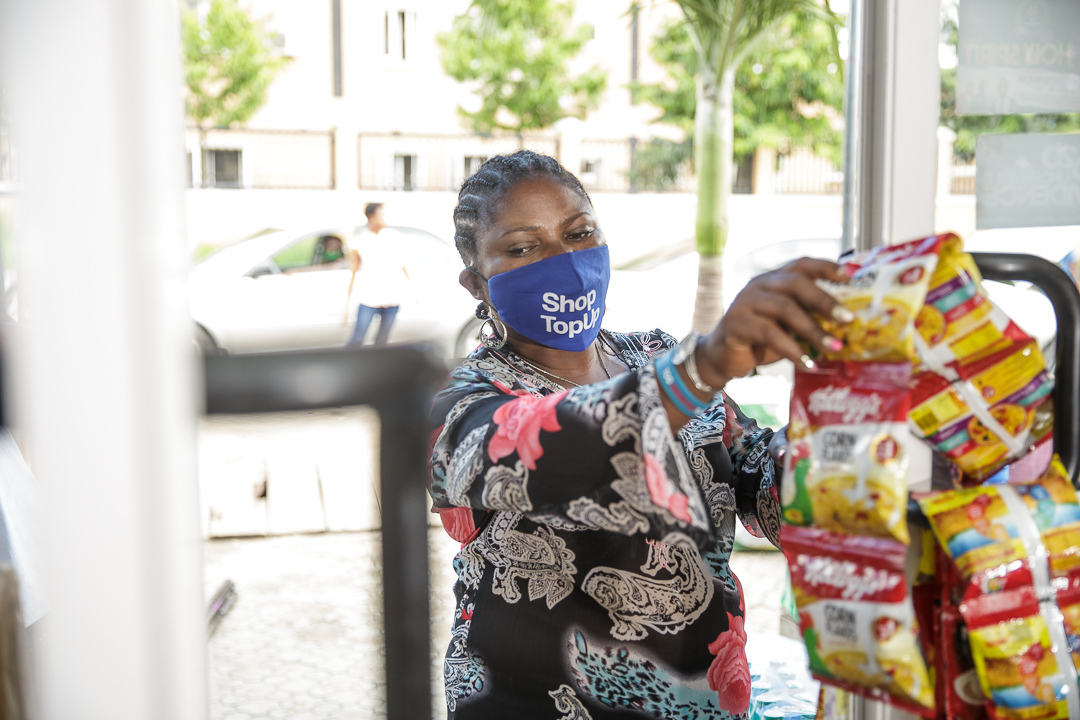
It uses its mobile app, WhatsApp or USSD short messaging code or a toll-free phone number, that allow retailers to place orders and have them delivered through TradeDepot’s logistics.

The app is built to allow retailers manage their payments, inventory and order stock. The consumer brands are distributed directly to vendors on the continent using the central hub.

The company has built a strong supply chain in four years to seek expansion into credit facility. Izukanne said that TradeDepot now has over 40,000 retailers at its service, adding that the newly raised fund will help the company to use data to provide better deals for retailers on its platform.

“Africa’s offline retail market is estimated at $1 trillion, and this new investment allows us to capture an even greater segment of that market. We will continue to use data to drive efficiency and provide an easier stock acquisition service for our 40,000+ retailers, driving down costs for them by negotiating even better deals with our global manufacturing partners, whilst simultaneously providing a better, faster route to market for our suppliers,” he said.

The rate of its growth has necessitated faster and better services to accommodate the increase and satisfy retailers. The company said a new store is activated on its platform every three minutes and it receives on average, one retailer order every 4 seconds. It added that its volume of trade has been tripled since the last 12 months.

According to TradeDepot, the financial credit facility is a design aimed at helping retailers to grow their business. The company said that retailers face difficulty in accessing credit from financial institutions when they need it to fund their businesses because they are deemed not credit worthy.

On that account, it is creating a financial segment where retailers on its platform can leverage on when they have credit needs.

However, the credit facility is accessible by mostly women, as 75% of TradeDepot is made up of women entrepreneurs.

The new investor, We-Fi is looking to offer mentorship opportunities to women in business using the TradeDepot platform and global market links.

Hanh Nam Nguyen, the We-Fi representative said there is a wide gap in the opportunity women have to access business capital, even when they play a pivotal role in driving economies across Africa. She said that the newly raised fund will help women to access business capital and develop more Small and Medium Enterprises (SME) and retailers.

“Women play a pivotal role in driving economies across Africa, but lack of access to capital, limited market linkages, cultural norms and other challenges often prevent them from achieving the success they want.

“We-Fi financing will incentivize TradeDepot to build stronger women-led small and medium enterprises SME retailer and distributor networks, which will support them to become drivers of economic growth in the communities,” she said.

Digital Transformation Model for Drycleaning & Laundry; Hire A Tekedia Mini-MBA Learner

0
student work

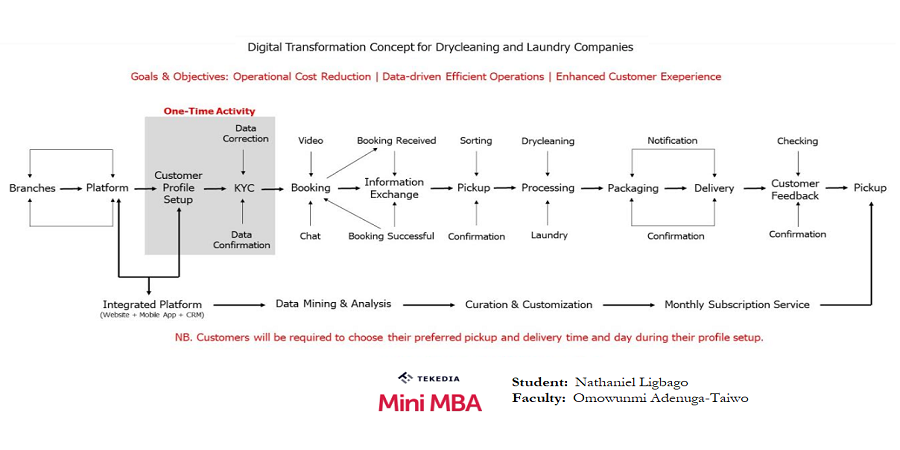
Today, a CEO of a leading company in Lagos called me. His staff, a really junior one, had sent him a digital transformation model for his company. He asked the staff where he learnt what he did; the staff said “Tekedia Mini-MBA”. He was overwhelmed. 

Now, this is in the old industrial sector: drycleaning & laundry. One of our learners, Nathaniel Ligbago, had produced a digital transformation model (they usually add notes). The faculty in charge is Omowunmi Adenuga-Taiwo.

With what we are seeing from our learners, I can write that if you need any help on innovation systems and digital transformations, Tekedia Institute will gladly provide your students to help you. You will need to negotiate and pay them directly. Just email my team with your requests, we will help with our current and past learners.

I have so much confidence in these young people and have already helped some with part-time contracts. Send those business frictions, we will supply you learners and grads to crack them. They are well prepared and are ready.

Become An Innovator & Growth Maker, Register for Tekedia Mini-MBA 3rd Edition

0

The bell is ringing for the Innovation of Firms and Nations. The best faculty, the impactful lectures, and the glocal case studies. Tekedia Mini-MBA, nurturing the innovators in firms and nations. Join today and begin a journey to find that leverageable growth by creating a new basis of competition in markets. With faculty from Shell, Microsoft, Infoprive, Flutterwave, Edves, GIG Logistics, Queen’s University, NNPC, Jobberman, and some of the finest institutions in the world, you will see a transformation in your leadership & management ascent. I will be your guide and co-learner. 

For Tekedia Mini-MBA edition 3 (Aug 10 – Dec 3), early bird registrations with the associated benefits end July 20th. Register today.

Registration is active and ongoing.

CODE PROGRAM
MINI Tekedia Mini-MBA costs US$140 (N50,000 naira) per person.
MINR Add extra (optional) $30 or N10,000 if you want us to review and provide feedback on your labs.
Add extra (optional) $60 or N20,000 for each certificate specialty course. You must have attended, begun or about attending Tekedia Mini-MBA to qualify. The following Certificate tracks are available:
CLSM Certificate in Logistics and Supply Chain Management
CSBM Certificate in Startup and Small Business Management
CETS Certificate in Exponential Technologies and Singularity
CPCD Certificate in Personal Career Development
CPFM Certificate in Personal Finance & Wealth Management
CBIS Certificate in Business Innovation, Growth & Sustainability

The Certificate program is completely capstone-based. Tekedia capstone is a research paper or a case study exploring a topic, market, sector or a company. Tekedia Institute supervises the work.

You can pay via any of these payment options and we will get you into the program immediately. Indicate the program code you paid for when contacting our team.

NB: We have incentives (free books, Facyber.com cybersecurity courses, etc) for early registrants.

  • Contact: tekedia@fasmicro.com
  • Prof Ndubuisi Ekekwe
  • Lead Faculty, Tekedia Institute

https://www.tekedia.com/mini-mba-3/

Global Contracting and Global Supply Chain At Tekedia Institute

0

He served the U.S. Army for more than 20 years. He rose to the position of the Director of Contracting Operations. He began as a Logistics Specialist, then Logistics Supervisor, then Warehouse Manager, and then Materials Manager. Then, Operations Manager, Procurement Manager, Director of Logistics, Contingency Contracting Team Lead, and Chief of Contracting.

If you can run logistics for the military, peace and war time, you really know logistics. Adebayo Adeleke is the godzilla of global supply chain and contracting. He knows so much about the global semiconductor supply chain  that during a recent conversation I stopped talking. I mean, I thought I knew the pieces, but Bayo was way high up there in the frequency.

Bayo, a seasoned combat veteran of the United States Army, and a Tekedia Institute Faculty, will lead a session on Global Contracting and Global Supply Chain. Go Global with Bayo here.

https://www.tekedia.com/mini-mba-3/