DD
MM
YYYY

PAGES

DD
MM
YYYY

spot_img

PAGES

Home Blog Page 6254

UK Bans Huawei

0
Most parts of the world have been pushing to cage Huwaei

The United Kingdom has joined the list of countries to kick Huawei out of its plan for 5G roll out. Telecom operators in the UK, such as BT and Vodafone have been given until 2027 to rid their 5G equipment of any Huawei component.

The UK government announced this on Tuesday following a series of security questions that have characterized Huawei presence in Europe. The US has been mounting pressure on its allies, including the UK to shun Huawei 5G services. the United States banned Huawei in May from using its software and chips. Digital and Culture Minister Oliver Dowden said the development has created uncertainties that ruined the trust between the government and Huawei.

“Given the uncertainty this creates around Huawei’s supply chain, the UK can no longer be confident it will be able to guarantee the security of future Huawei 5G equipment,” Dowden said.

The decision has put the UK on the side of Trump’s administration, and may start a trade conflict between them and China.

In January, London said in a decision that gave Huawei a lifeline in Europe, that the Chinese company would be allowed to operate limited 5G services. The decision however, didn’t go down well with the United States government. Secretary of States Mike Pompeo threatened to stop sharing intelligence with Britain, if it allows Huawei to carry out its 5G roll out.

Since then, the US has applied further sanctions on Huawei, restricting chipmakers in the United States from supplying Huawei with chips, a decision that’s believed to have crippling effects on the embattled company.

The Huawei ordeal which is borne out of China censorship laws has escalated throughout the west. Huawei said the UK’s decision is “bad news for anyone in the UK with a mobile phone.”

Huawei’s spokesperson Eid Brewster added that “it threatens to move Britain into the digital slow lane.” And “regrettably our future in the UK has become politicized; this is about US trade policy and not security,” he said.

Huawei has a 20 years relationship with Britain that has seen the development of 2G, 3G and 4G. Officials are warning that Huawei’s ouster would add significant cost to the 5G infrastructure. The British authorities set the 2027 deadline to curtail the cost of the decision to remove Huawei, as major part of the country’s 5G infrastructure has been developed by Huawei.

Officials said besides the additional cost the 5G roll out will incur without Huawei, it will take two more years, and the 5G wireless must be built on top of existing networks that Huawei was instrumental in constructing to reduce the risk removing its gear would bring upon the security and resilience of the network.

Besides the security concerns that have been at the center of Huawei’s troubles, the US feels intimidated by the influence of the Chinese telecom industry, particularly in the 5G deployment. It is seen as a failure of Western industrial policy.

Huawei’s lead roles in providing towers, masts and critical equipment needed to build wireless networks on the fifth generation technology has come cheaper than that of every other company.

Trump has been calling on US allies to use Sweden’s Ericsson and Finland’s Nokia in their 5G roll out, but they come at higher costs. Moreover, many western countries have other trade interests with China to protect. Germany has a huge automobile market in China that it is seeking to protect by allowing Huawei to lead its 5G roll out.

But the US’ chip and software sanction on Huawei has armstronged many of the Western countries, forcing them to review their decisions on Huawei. The telecom giant’s inability to access chips and software from US producers, including TSMC spells doom.

“Based on the current direct export rule that the US put on, I really think that Huawei’s 5G equipment business is in grave danger,” said Jefferies analyst Edison Lee.

But there is more than that. China’s annexation of Hong Kong has stirred countries to reconsider their view about the South Asian country. Considering freedom of speech and internet freedom which China censorship laws have long stood against, the development in Hong Kong, is believed to be another reason why the UK has chosen to ban Huawei.

It is not clear if there is going to be retaliation from Beijing, what is clear is that the UK’s decision has set a trajectory that other countries who have been sitting on the fence will follow.

It has also opened an opportunity for both Nokia and Ericsson to expand their 5G technology. Nokia said it has the “capacity and expertise to replace all of the Huawei equipment in the Uk’s networks at scales and speed. Arun Bansal, Europe and Latin America president for Ericsson said the company “has the technology, experience and supply chain capacity” to help the United Kingdom reach its 5G goals.
Qualcomm Invests $97 Million in Reliance Jio As the Tech World Turns Attention to India

2

Qualcomm has thrown its full weight behind Reliance Jio with $97 million investment equity to acquire 0.15% stake in the Indian telecom operator.

Reliance Jio has been ambitious in its quest to dominate the telecom industry in India. Its agility has attracted a lot of investment interests. It has raised more than $15.7 billion in four years, with Facebook being the highest stakeholder with $5.7 billion followed by Vista Equity Partners and Saudi Arabia Public Investment Fund who staked $1.5 billion respectively.

Qualcomm has become the latest to join the army of investors under Reliance Jio’s command. Qualcomm said its aim is to help Jio platforms “roll out advanced 5G infrastructure and services for Indian customers.”

In less than four years, Reliance Jio has gained over 400 million users in India to challenge other big names in the telecom industry, including Bharti Artel and Vodafone Idea.

India is the second largest market for telecommunication in the world, and Reliance Jio has exerted dominance in the country by offering cut-rate voice and data plans. It has maintained Average Revenue Per User (ARPU) that equals those of its rivals and made it the most valuable company in India.

Reliance Jio also operates a number of digital services that includes music, live TV, movies streaming and the recently added video teleconferencing. These services have made it a darling to high profile investors like Facebook, Silver Lake, General Atlantic, Intel etc. selling 25.24% stake within a short period.

With the host of services in its domain, Reliance Jio has delved into 5G roll out and Qualcomm believes it has what it takes to offer the best services in that terrain.

Steve Mollenkopf, chief executive of Qualcomm is hoping to use 5G to give Indians a new set of experience.

“With unmatched speeds and emerging use cases, 5G is expected to transform every industry in the coming years. Jio platforms have led the digital revolution in India through its extensive digital and technological capabilities. As an enabler and investor with a longstanding presence in India, we look forward to playing a role in Jio’s vision to further revolutionize India’s digital economy,” he said.

Apart from its strategies that have attracted millions of mobile subscribers, Jio is believed to be enjoying special treatment from the government. Reliance Jio is owned by India’s richest man, Mukesh Ambani, who is a close friend to the ruling party. It is believed that his relationship with the authorities is driving a lot of investors to stake a claim in Jio, with the belief that it would lower the regulatory burden they currently face in India, according to investors who spoke with TechCrunch.

Another factor that has put not only Jio but also India on the spotlight is China’s trade war with the US that is gradually becoming a global crisis. Many companies are pulling out of China, and are looking at India as a destination.

On Monday, Google CEO Sundar Pichai announced a $10 billion internet investment in India. The plan is to make the internet affordable and to promote digital economy in India by enabling access to information in every Indian language via tech and the telecommunication industry.

“This is a reflection of our confidence in the future of India and its digital economy,” Pichai said in a statement. “India’s own digital journey is far from complete. There’s still more work to do in order to make the internet affordable and useful for a billion Indians … from improving voice input and computing for all of India’s languages, to inspiring and supporting a whole new generation of entrepreneurs.”

The $10 billion investment fund is aimed at improving the tech sector for the next five to seven years through a combination of equity investments, partnerships, and infrastructural development.

India’s internet population has topped over 700 million and there are yet many to be enrolled. With the recent interest in India, the country seems keen on using the opportunity to unseat China from its dominance position in the smartphone market. China dominates India’s smartphone market where Alibaba and Tencent are the biggest investors.

India’s Prime Minister Narendra Modi has been on ‘grow India campaign’, and the recent border conflict between India and China offers an opportunity for the country to implement its digital policies and limit reliance on Chinese firms.

The US chipmaker Qualcomm appears to have read the handwriting on the wall and moved into position to establish a robust digital network in India.

“Qualcomm has been a valued partner for several years and we have a shared vision of connecting everything by building a robust and secure wireless and digital network and extending the benefits of digital connectivity to everyone in India,” said Ambani.

Four Cornerstones of Innovation: Mapping of MultiChoice DStv

0

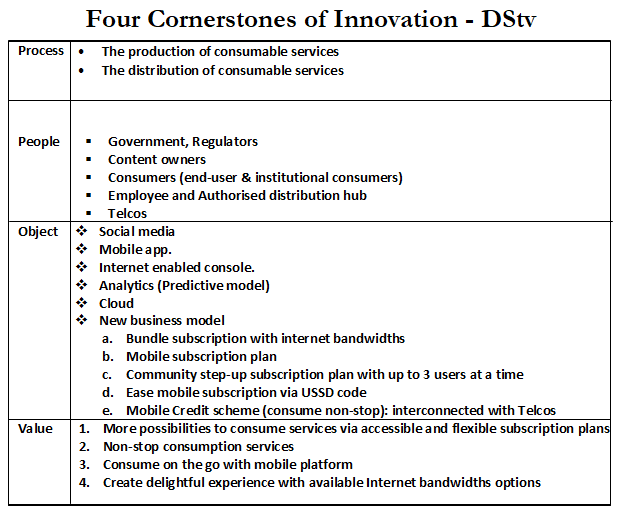
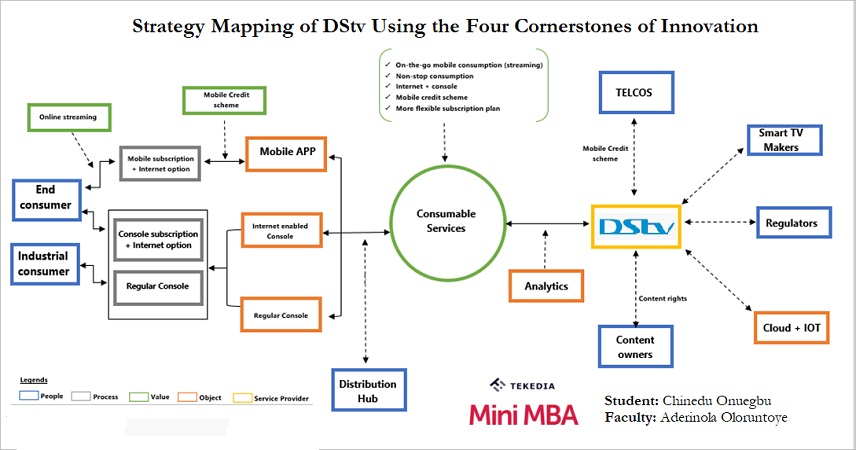
Today, one signed a contract after his innovation analysis on Andela made it into the right hands. And then this. I have the approval of Chinedu Onuegbu to share how he has examined DStv business, using a theory developed by our Faculty, Aderinola Oloruntoye. This is part of his challenge assignments in Tekedia Mini-MBA.

The picture and table were produced by Chinedu. Our learners are looking at their companies from innovation-angle, and great things are happening in companies. Make sure your company is sending staff to Tekedia Institute.

“Innovation happens when the basis of competition moves”… Professor Ndubuisi Ekekwe. I put together insights from the ongoing Tekedia mini-MBA program to craft this strategy map for DStv using the four cornerstones of innovation developed by my faculty Aderinola Oloruntoye. The idea here is to grow the consumer base of DStv by utilizing new revenue models and through digital execution. John Ugbe I am glad to be participating in the ongoing Tekedia mini-MBA program. (From Chinedu Onuegbu at LinkedIn)

Tekedia Congratulates Our Faculty, Taiwo Abraham, for Inclusion in PMI Future 50

0

Tekedia Institute is proud to congratulate our Project Management Faculty, Taiwo Abraham, PMP, for inclusion in  Project Management Institute’s Future 50. The Future 50 recognizes young project management professionals who are changing the future of work,  and transforming the workplace through collaboration, inclusion, and purpose.

In Tekedia Mini-MBA, Taiwo will lead a session on Effective Project Management and you can count that a high-ranking leader in the Board of a global project management organization will provide the template on how to lead, execute and deliver great projects. His lecture is a masterpiece across all domains of project management.

Congrats Taiwo, from all of us at Tekedia Institute.

The Cycle of Bundling And Unbundling in Business Strategy

0

Disruption takes place when there is a new breakthrough solution, for an existing industry problem, or when the existing problem is redefined and solved. Whenever this happens, existing industries are re-created and their boundaries are reconstructed. Non-customers are converted into customers. Growth trajectory of the industry, zooms into a new phase. This is usually the resultant effect of the convergence of multiple technologies and mass market adoption. 

During the events leading to the Initial Public Offering of Netscape, its CEO, Jim Barksdale quickly noted, “There are only two ways to make money in business: one is to bundle; the other is unbundle.”  However, the capacity to do either of the two depends on the available technology and how such technology can be harnessed to deliver superior results. There are moments when bundling is important to the distribution and economics of scale/scope, just as there are times unbundling is essential to add more flexibility and personalization to consumer experience.  

It has been observed that there is a maxim that drives the back-and-forth pattern, commonly seen in business frameworks. It is that most business strategies have a complementary nature (direct vs. indirect, vertical vs. horizontal, quantitative vs. qualitative, premium vs. low price, hack vs. plan, unbundle v. bundle, fixed payment v. subscription, etc.). In some cases, they may overlap. These back and forth movement, do not just occur at will; they are moments that unleash substantial leapfrog in consumers’ benefits. Organizations, for instance, switch between bundling their products and services or breaking them down for a la carte purchases, as a drive to satisfy customers better. 

First Wave of Unbundling

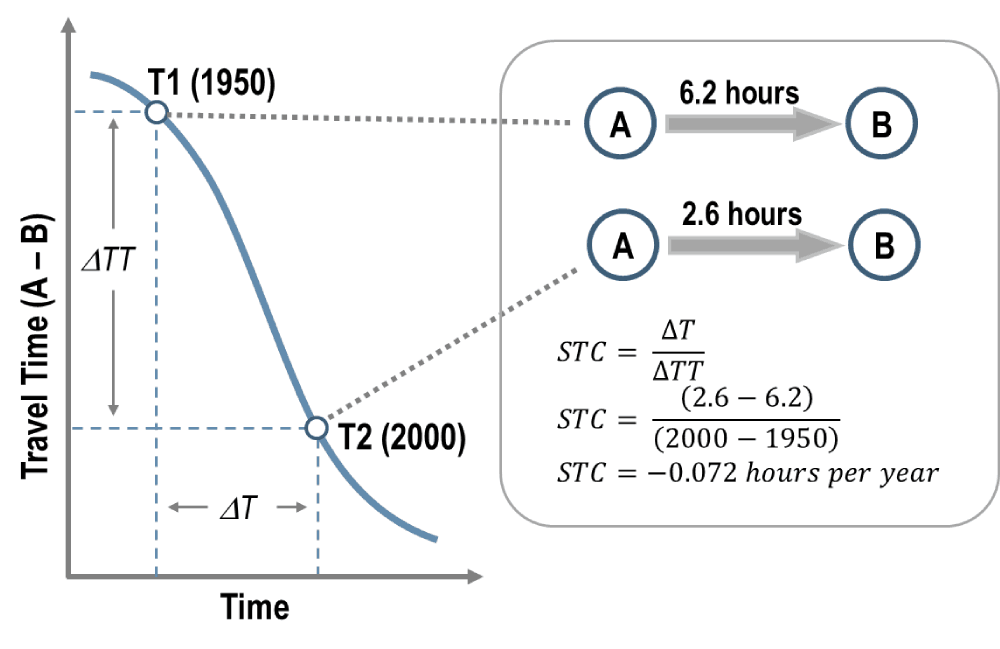
Back to the 1800’s, the transportation infrastructure in the United States grew massively with the constructions of roads, canals, turnpikes, and railroads. This led to the fall in the time and costs requirements, to move from point A to B. The transportation revolution further made it possible for the first great unbundling to take place, namely the end of the necessity of making goods in proximity to the point of consumption. Agricultural and manufactured goods can now be shipped across towns and cities, thus opening new market opportunities. This reduced the number of manufacturing plants needed to be set up, making economics of scale easier to achieve, and increasing abundance of access. 

Improvement in transport systems, made it possible for changes to be made to the relationship between space and time.  The more efficient the transport system, the larger the distance, that can be covered within the same amount of time. The result is a space / time convergence, because the amount of space that can be overcome for a similar amount of time increases considerably. 

Source: Transport Geography

Second Wave of Unbundling

The economics of scale achieved as a result of falling transportation costs, further led to another bundling, vertically integrated companies. These companies attempt to own much of their supply chain, in order to gain maximum efficiency through economies of scale. For instance, in the first half of 1900s, Ford Motors owned much of its supply chain, from the iron mines, to the steel mills, plants (for manufacturing of component car parts), forests and sawmill (for wooden parts), and assembly plants (to churn out finished cars).  No doubt, this was a profitable way of doing business in the then predictable market. But as markets expanded, and customers’ preferences changed, the all-inclusive model began to break down, as it focused more on efficiency, at the expense of responsiveness to customer desires. 

Advances in information technology, and falling costs of communication and coordination, made it possible for the second great unbundling to take place, the end of the need for supply chain activities, to take place near each other. Thus, vertical integration gave way to virtual integration, giving companies the ability to focus on their core competence, and outsource other operations, in order to keep up with continuing changes in technology and customers’ demands. 

Third Wave of Unbundling

As the components of the supply chain matured, it led to the gatekeeping of customers, by middlemen, another form of bundling.  This spiralled into inflexibility, supply monopolization and poor customer experience. The coming of the digital age, brought along with it, unprecedented ability to disarm the gatekeepers, with digital business models, cutting out middlemen and blurring supply chains. When new technology or process, reduces manufacturing and distribution costs, the original motivation for bundling disparate product/service value is eliminated. New entrants take advantage of these technologies to offer individual components, with higher value, speed and personalization, than the limited offering in the bundle. 

Case Study: Music Industry

Consider the music industry, where the high manufacturing, storage, distribution and marketing costs for labels drove the bundling of songs into albums to increase distribution efficiencies and overall market revenue. In the early 2000s, digitalization, with a near-zero distribution and consumption cost, eliminated the economic rationale for bundling songs. It enabled the stripping of a single song from the album and offering it as an affordable stand-alone product, instead of requiring the consumer to purchase the full CD with extraneous content. As customers experienced more choices, they became less willing to pay for bundles, thus leading to the disruption of brick-and mortar incumbents. iTunes and other digital distributors, rode the wave of unbundling to displace independent music stores, which could not profitably offer singles. 

While this disruption took place, there was a redesign in the music industry, shifting focus from physical products to digital distribution and life events, such as concerts. This magically increased the value of music talents. They can be everywhere digitally, but can only be in one location physically. Because of the internet, a musician can have millions of fans online, as a result of lower distribution cost. This large fan base, in turn increases the intrinsic value of the musician significantly, at life events. 

No doubt, unbundling has positive effects, giving consumers unprecedented choice and control. However, it can also create a mass of different services that may be hard to coordinate. Fortunately for the music industry, the ubiquitous internet connectivity that accompanied the mobile era, made music streaming very popular. Now, streaming services like Spotify and Apple Music, offer subscribers, on-demand access to a bundle of almost all music for less than the cost of one album per month. The digital bundling of music again, transformed the music business from an unstable revenue model, to a more stable one. All together, we can see a paradigm shift in the music industry, from bundling (physical albums) to unbundling (single downloads) and back to bundling (streaming services). 

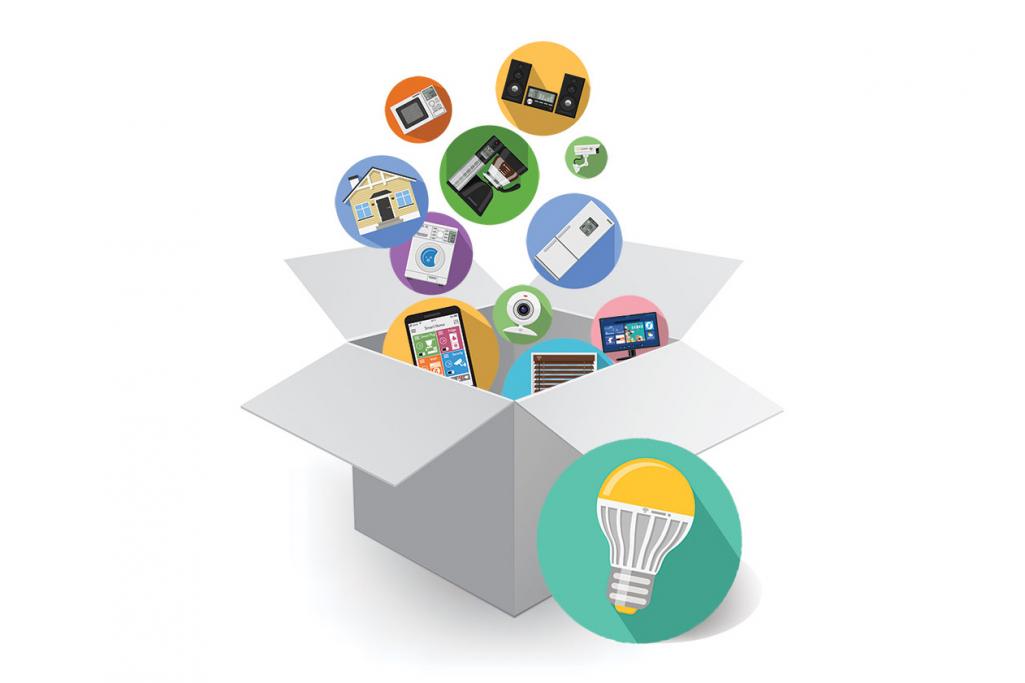
Similar examples have been observed across many domains; information, video, banking, mobile device, etc. This is because digitalization makes it easier to bundle or unbundle digital products and services, than physical ones. Bundling and unbundling is an intrinsic cycle. Bundling creates the incentives for unbundling and vice versa. 

Knowing when to bundle or unbundle however, depends on the kind of industry you belong and the type of products and services you are offering. You need to consider various factors? What are your market projections? What insights can you draw from your personal and industry sales record? What is the current economic landscape that can influence your choice? What are the components of your products/services? Does your product have multiple capabilities, with uneven usage? Will it capture more or less value when you bundle it with other offerings or when you offer it as a stand-alone product?  How will it affect your pricing and in turn influence the decisions of your customers?  Are the needs of your customers unique or different?

In all, both product bundling and unbundling are effective, beneficial and useful in their respective ways. However, at any point in the trajectory of an industry, one is more attractive than the other. When you combine the right choice with a good execution, you can set a new basis of competition in your industry.