DD
MM
YYYY

PAGES

DD
MM
YYYY

spot_img

PAGES

Home Blog Page 6276

Facebook, Google Donate $200m and $175m Respectively in Support of Racial Justice

0

Facebook’s founder and CEO Mark Zuckerberg announced on Thursday that the social media giant is committing $200 million to support black businesses and organizations.

“We’ve been speaking with Black business owners to understand how we can best support them, and in the short term, we’ve heard that financial support can go a long way, especially during a pandemic and economic downturn that have disproportionately impacted communities of color,” Zuckerberg said.

Facebook has come under severe criticism for refusing to take down Donald Trump’s post encouraging shooting of protesters of racial injustice in the United States. Though Zuckerberg repeatedly tried to explain that the post didn’t violate any Facebook policy, it didn’t quell the backlash. Many are beginning to see the social media platform as pro right-wing, an identity Zuckerberg doesn’t want to reckon with, and he is trying desperately to right the seeming wrong.

On Wednesday, Facebook removed some ads featuring a large inverted red triangle associated with the Nazis. Trump and the pro right-wing have used the symbol in the smear campaign against antifa and “far-left mobs” who he claimed are destroying American cities.

The ads were posted on Team Trump and Mike Pence’s pages as part of a campaign to defame antifa, an antifascist organization fighting right-wing oppression. Trump had earlier threatened to declare them a terrorist organization for their activism.

A Facebook spokesman told the Independent that the ads were removed because it violated the company’s policy against organized hate.

“We removed these posts and ads for violating our policy against organized hate. Our policy prohibits using a banned hate group’s symbol to identify political prisoners without the context that condemns or discusses the symbol,” he said.

But it is believed to have been removed as a result of intense criticism that Facebook has been subjected to recently, as some of the ads remained online for more than a day and recorded thousands of impressions.

Zuckerberg said the social media giants plan to give $1 billion to Black-owned businesses and cause from now to 2021.

“We’re building on our COVID-19 grant program and making an additional $100 million in cash and ad credits available to support Black-owned businesses, creators and non-profits serving Black communities in the US. To make sure we are supporting the community in our own business practices, we’re also committing to spend at least $100 million with Black-owned suppliers, part of a goal to spend $1 billion with diverse suppliers next year and every year thereafter,” he said.

Many see the gesture as a way of trying to make amends for allowing Facebook to be used in promotion of racial hatred.

On the other hand, Google has also rolled out plans backed up with over $175 million divided into segments to support many aspects of Blacks’ welfare. Google’s CEO Sundar Pichai released a note on Wednesday, outlining the plan.

Google will spend over $175 million on racial equity efforts, including financing Black-owned businesses and entrepreneurs, says CEO Sundar Pichai. As demonstrations for racial justice take place across the country, the search giant also announced plans to increase its proportion of “leadership representation of underrepresented groups” by 30% by 2025. The move comes after Netflix CEO Reed Hastings and his wife Patty Quillin pledged $40 million each to Spelman College, Morehouse College and the United Negro College Fund in the biggest-ever individual donation to the historically Black institutions.

“As a company, and as individuals who came here to build helpful products for everyone, Google commits to translating the energy of this moment into lasting, meaningful change. Today we are announcing a set of concrete commitments to move that work forward; internally, to build sustainable equity for Google’s Black+ community, and externally, to make our products and programs helpful in the moments that matter most to Black users,” the note said partly.

Pichai said part of the plan will be to improve Black+ representation at senior levels and committing to a goal to improve leadership representation of underrepresented groups by 30 percent by 2025.

‘$100 million is dedicated in funding participation in Black-led capital firms, startups and organizations supporting Black entrepreneurs, which includes increased investments in Plexo Capital and non-dilutive funding to Black founders in the Google for startups network.’

‘$50 million is for financing and grants for small businesses, focused on the Black community and in partnership with Opportunity Finance Network.

‘$15 million is for training, through partners like the National Urban League, to help Black Jobseekers grow their skills.’

‘$10 million+ is to help improve the Black community’s access to education, equipment and economic opportunities in our developer ecosystem, and increase equity, representation and inclusion across our developer platforms, including Android, Chrome, Flutter, Firebase, Google play and more.’

Pichai said that in addition to these grants, Google will continue to support racial justice organizations. Google had earlier pledged $32 million in support of criminal justice reform, but said it would make additional $12 million to advance the cause.


A sustainable approach to tackling the waste management crisis in Lagos

8

Last week, residents of Surulere, Lagos, woke up to a sad reality. A heavy downpour has flushed the openly dumped waste into the urban drains clogging the system and resulting in a flash flood. Photos of stranded residents and vehicles trapped in stagnant water as a result of choked drainage systems flooded the internet. The flooding incident reminded us once again that waste management is an essential utility service that is often taken for granted — particularly in developing countries — until things go wrong.

As an Environmental Engineer, I am drawn to the Nigerian waste management crisis, because it affects nearly all cities and rural areas. While at first glance, the waste crisis may seem like a complex challenge, a simple and effective framework has been developed. The Sustainable Waste Management (SWM) framework outlines detailed strategies for tackling the waste management crisis in developing countries. The fundamental elements in the SWM include the expansion of waste collection (if possible, to a 100%,), the elimination of open dumping and uncontrolled burning, and the creation of an inclusive stakeholder framework. This framework is a viable pathway to solve the looming waste challenge in Nigeria.

In Lagos for instance, the approach to waste collection needs to be improved significantly. Data from the Lagos State Waste Management Agency (LASMA) shows that only an estimated 30% of daily waste generated in Lagos is collected. This implies almost 70% of the generated waste is likely to be dumped in the open or burnt uncontrollably. Comparatively, when reviewing the waste management situation in a similar city like Accra, Ghana, collection coverage is estimated at 75%.  The disparity between both cities is vast. Furthermore, under the current situation of Lagos, it is unsurprising if a heavy rain washed these uncollected waste streams into nearby drainage systems.

Three major landfills and 2 temporary sites currently serve the state of Lagos. Although this capacity is inadequate for its 20 million population, the traffic challenge within Lagos makes waste transportation highly inefficient, which further complicates the crisis. The project to upgrade the three (3) principal landfills and disposal sites at Olushun, Abule-Egba and Solous needs to speed up to meet the rapid demand for waste disposal. This will reduce traffic congestion, improve the turnaround time of trucks, and facilitate quick recovery of garbage from local dumpsites or residential areas. 

Another aspect to consider in providing the solution for waste management is the need for more productive and inclusive stakeholder engagement. LAWMA acknowledges this strongly as captured on their website : “Advocacy is a daily routine where our advocacy team drives around the state to enlighten the people on our waste handling, containerization, sorting, building and tariff programs”. Additionally, the advocacy team also collects information on complaints and suggestions. I have been to Lagos on several occasions and have been delighted to see how Lagosian (Lagos indigenous citizens) are full of energy from the market women to the “Danfo ” bus conductors. 

The waste management framework must harness this energy to succeed at all levels in order to govern, plan, execute and finance waste management projects. Individuals should be enlightened on the appropriate usage of waste bins and the implications of irresponsible waste disposal.  Further, partnerships should be encouraged between households and LAWMA personnel to ensure appropriate placement and timely recovery of waste disposal bins. This partnership can be fostered further for appropriate household waste filtering, to ensure that these citizens can separate recyclable and unrecyclable waste. Most importantly, the Lagos state government must sustain their political will and financial commitment to keep the system afloat. 

Like Lagos, most cities in Nigeria are faced with a waste management crisis. For a sustainable solution, appropriate agencies need to integrate the basic elements of SWM — expanding collection, ending open dumping, and intensifying stakeholder engagement — or scale them up where they already exist. 

French Telecom Giant, Orange, Plots Entry Into Nigeria, South Africa

3

Orange, French largest telecom company, is making plans to enter the Nigerian and South African markets. This was announced days ago by the CEO Stephane Richard, who said the company would make its move into Nigeria and South Africa in coming months.

“It could make sense to be in economies such as Nigeria and South Africa. If one considers there are things to do, the time frame I’m considering is rather a few months than a few years,” he told the press.

Earlier in the year, Orange opened a regional headquarters for Africa and Middle East in Casablanca Morocco, signaling its interest to increase its presence in the region, particularly Africa. The telco has seen growth in its operation in the Middle East and it’s working to do the same in Africa, targeting the largest economies in the continent.

Orange has operations in 18 countries in the Middle East and Africa that have proved to be the fastest growing market in its grip.

Revenues in the region have a record of 6.2% in the first quarter of 2020. Orange has recorded an average annual growth of 6% in the Middle East and Africa (MEA) region since 2015. For these reasons, the telco decided to give the region more autonomy to foster the growth.

Orange has continued to deploy the 4G technology in the MEA, reaching 26.5 million customers, 50.6% more than a year ago.

However, its interest in South Africa and Nigeria poses concern on whether it could usurp the reign of existing telcos in the countries. MTN leads with the highest subscribers’ base in Nigeria and South Africa, while the others have over time amassed enormous numbers of subscribers.

The number of GSM subscribers in Nigeria as of March 2020 stood at 188,989,051, according to data published by the Nigeria Communication Commission. Given a population of 203 million, Orange will find it difficult to disrupt the status quo as most Nigerians are already attached to existing telecom companies.

But Orange knows this, and has come with a plan. At the inauguration of the headquarters in Casablanca, Richard said the potential the telecom operator sees in the African telecom industry goes beyond voice calls and internet data. He said that mobile money is an example of digital transformation that needs to be developed in the African continent.

“Orange is one of the rare international groups to have made the strategic choice, 20 years ago, to seek to develop in Africa and Middle East. We have also always been convinced of the immense potential of this continent. In many ways, it can be seen as a model for digital transformation; mobile money is a great example of this.

“One of the key success factors behind new services is to develop them in Africa so that they are adapted to specific local requirements and so meet the needs of our customers. That is why we decided to organize the management of our business in Africa and the Middle East from within the region directly from the African continent,” he said.

Orange has been investing $1.1 billion in the MEA yearly as part of its Engage 2025 plan. The Engage 2025 plan involves a multi-services strategy aimed at diversifying their operation to represent 20% of the business at the end of 2025. The company hopes to derive $1 billion in revenue while it works to develop its energy and e-health services.

However, financial services have become paramount in its strategy to penetrate more African markets. The telco is planning to introduce Orange Credit in every country of the MEA region where it is operational, and it hopes to use its banking system to facilitate Orange Money payment services.

While the telecom industry appears to be all taken in Nigeria, the fintech industry is still open and offers amazing opportunities to operators who wish to offer financial services. MTN Nigeria happens to be the only telco in the country that has pushed itself to the limelight with its MoMo financial services. Airtel, Glo and 9mobile are struggling to find their footing, which leaves the sector ripe and open for Orange.

Moreover, the number of unbanked and financially underserved people in Nigeria and the rest of the continent is economically viable for companies that want to pitch their trade in the fintech industry.

How Covid-19 Home Lockdown Benefited Children

0

It is said that in every disadvantage, there is an advantage. And that in every circumstance there is a benefit. These inspirational sayings have proved themselves to be true during this COVID-19 period. As some businesses register losses, others gather in profits. While some people lost their jobs, many found better paying ones. Factories were shut down and the poisonous gases they emitted were put on hold. Animals that went into hiding in order to avoid human predators came into the open and took over streets, roads and beaches. In fact, like someone said, the planet Earth is healing itself through COVID-19.

Coming to the human world, a lot of families took the period of the lockdown to “meet” their members. Before the Corona Era, most parents wake up early in the morning and “run-off” before their children wake-up and then come back late at night when the children must have gone to bed. Even busy spouses did not have time to know each other because they hardly stay at home together. But as Corona came, everyone was forced to take a break and look around him or her. The Corona Era is indeed a time for several positive, as well as negative, changes.

Among the people that benefited much from this era are the children. Even as adults worry about children not going to school, they (the children) were home enjoying themselves. Most of these children are experiencing, for the first time in their lives, the joy of spending hours with their parents. Many of them are just experiencing what the term “holiday” truly means. Unlike before, when parents bundle their children away to one private lesson or another, the children now sit back at home from morning till night without the stress of learning in a formal environment. Believe me, if this lockdown continues for another two months or more, most children will not want to go back to school. We have actually saturated their brains with different forms of academic activities that they found the “holiday” experience exhilarating.

Specifically, the children benefited the following from this lockdown:

  • More Time to Play and Explore

Naturally, children are meant to play. In fact, they are supposed to learn through playing. But we have placed a lot of burden on their fragile shoulders and have turned most of them into miniature adults that they have not really known what it means to be children. Thank God for this illness, these children can now play to their satisfaction, explore their surroundings and “spoil” things like it’s expected of their age.

  • Learning More about their Environment

Many times, contents of an academic curriculum do not teach children everything they need to know about their environments and their places within the environment. This could be linked to the fact that curriculums are not tailored to meet specific needs of different environments. However, during this lockdown period, most children had the opportunity to read up materials that are outside the ones used in their schools and to ask trusted adults questions that have been bothering them. They found out a lot of things that they wouldn’t have been taught in school. They learnt things informally, which makes it more impactful.

  • Bonding with Parents

Parents were forced to stay back at home and therefore couldn’t help but enjoy their children. Permit me to say that many parents used this period to understand who their children really are. When the economy started to reopen, most mothers felt guilty leaving their children with their helps as they went back to work. This will just tell you how they have been able to bond with their children during the lockdown.

  • Resting and Sleeping

Sometimes I marvel at how my children could sleep till 9am these days. Ordinarily they wake up by 5.30am to get ready for school. Even during the short holidays, they find it hard to sleep till 7am because I have to wake them up early so I can sort them out and leave for work. But right now, they are resting; and it is good for their growth and development.

  • Eating Better Meals

I know that Indomie and other noodle companies will feel the impact of this lockdown. A friend of mine confessed that she now has ample time to cook a proper meal for her family. Before, parents find it easier to boil a pack of noodles or prepare a bowl of cereal for their children as breakfast and/or lunch. But that is not the case right now. To be honest, the aromas I perceive from my neighbours’ kitchens now suggest that our traditional foods are the order of the day.

I know that many parents have gone back to work and that the children are once again left with relatives and help. It is, however, necessary that these children be allowed to flex their muscles the more since schools may reopen anytime soon. No one knows how long the next term and the term after that will run. For that, let us allow these children to be children and enjoy all the benefits that come with being children.

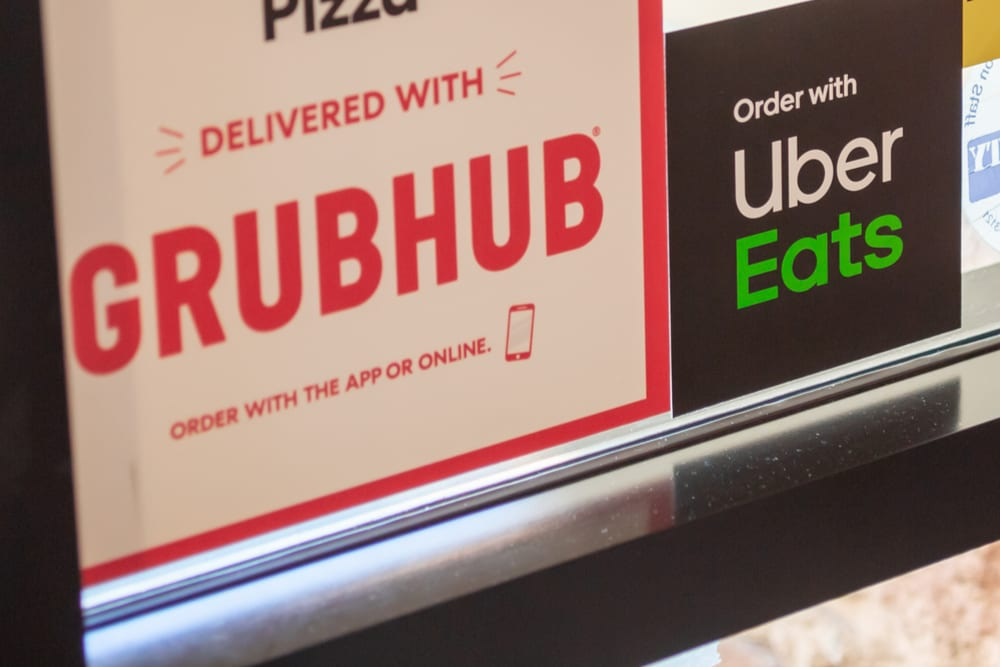
U.S. Restaurants Heave Sigh of Relief As GrubHub Ditched Uber for Just Eat Takeaway

0

Last week, Uber lost out on the much anticipated deal that would have seen the biggest consolidation of eatery business in the United States. Uber has been in acquisition talks with GrubHub as it pushes to augment losses being incurred as a result of COVID-19 induced lockdowns.

The ride-hailing company failed to reach a deal with GrubHub due to price and regulatory concerns, according to people familiar with the matter.

Consequently, GrubHub turned attention to European Just Eat Takeaway, and the duo reached a takeover deal valued at $7.3 billion. Just Eat Takeaway said it would value GrubHub at $75.15 per share, and GrubHub’s founder and chief executive Matt Maloney will join Just Eat Takeaway’s board to oversee the business in North America.

Just Eat Takeaway confirmed in a release that “it is in advanced discussion with GrubHub regarding an all-share combination of Just Eat Takeaway.com with GrubHub.”

The development is a big blow to Uber that is hoping the acquisition would narrow competition and give it an edge in the United States food market. Uber and Grubhub are domestic rivals, and both have been struggling recently even in the face of online food delivery surge masterminded by the coronavirus pandemic.

Uber’s shares dropped 5% on the news that it lost the deal to European rival. The American ride-hailing giants backed out of the deal as many US senators started showing interest over antitrust concerns. Last month, Sens. Richard Blumenthal, Amy Klobuchar, Patrick Leahy and Patrick Booker had urged responsible agencies to investigate the deal.

Klobuchar said in a statement that the US doesn’t need another merger that could squelch competition.

“I have repeatedly raised concerns and advocated against a potential merger between Uber and GrubHub. During this pandemic, when millions are out of work and many businesses are struggling to stay afloat, our country does not need another merger that could squelch competition. News that the Uber/Grubhub deal may not materialize would be good for both consumers and restaurants,” he said.

Uber and GrubHub had previously agreed on a stock ratio of 1.925 Uber shares per share of GrubHub, but regulatory concerns posed a challenge to the deal.

The fear that Uber/GrubHub merger would cripple competition and throw others in the market out of business spurred the lawmakers to push for investigation.

The online food delivery is an existential threat to local restaurants and COVID-19 pandemic aggravated the already bad situation as lockdowns compelled those who eat out to order foods online as most restaurants remain shut. The news that the merger deal between Uber and GrubHub failed would have brought a great relief to local restaurant owners and politicians.

Earlier, Klobuchar and other senators had written to the antitrust agencies expressing this concern.

“As our country grapples with the many health and safety challenges brought about by the coronavirus (COVID-19) pandemic, many consumers have turned to food delivery apps to order meals online, and many restaurants have come to rely on the business they get through these apps to stay afloat,” the senators wrote.

They added that “a merger of Uber eats and GrubHub would combine two of the three largest food delivery application providers and raise serious competition issues in many markets around the country.”

Uber’s failure to close the GrubHub’s deal has dealt a further blow to its dwindling services. With life yet to return to normal, the hope of generating revenue from ride-hailing services is still far from reality. Uber said it will continue to look out for other merger deals; however, its investors’ confidence has been dampened by the recent event as anxiety over its increasing losses grows.

However, while the failed merger deal between Uber and GrubHub hurts the ride-hailing company’s chances of recovery from the economic spikes of COVID-19, it offers a lifeline to local restaurants that would have been heavily impacted by the resultant dominance.

Restaurants in many US states are only allowed to do takeout and delivery as part of measures to curtail the spread of coronavirus amidst the increasing dominance of the likes of Uber Eats and Grubhub. Restaurants owners were wary that a successful merger by two American companies would monopolize the eatery market, and eat out restaurants will be at the receiving end.

According to data from Second Measure, GrubHub held 30% of the US meal delivery while Uber held 20% as of October last year raising concern that a consolidation would put a further strain on restaurants.

Many states in the United States put a cap on delivery services as the pandemic shut restaurants out, to ease pricing concerns in the near term.