DD
MM
YYYY

PAGES

DD
MM
YYYY

spot_img

PAGES

Home Blog Page 6280

What To Do When You Can’t Learn Again

0

In October 2018 I read an article on Harvard Business Review that intrigued me enough to write about it.

The article at that time received a very good welcome from my readers (you know I like that ?).

So I was going through my LinkedIn page midnight yesterday and stumbled on it again. I read it all over myself and found it instructive for a time like this.

“As we approach mastery, our learning rate decelerates, & while the ability to do something automatically implies competence, it also means our brains are now producing less of the feel-good neurotransmitters — the thrill ride is over.”

That sense of ennui eventually leads to a lack of motivation and, in some cases, poor performance. If you can instead shift your attention to mastering new skills — aka “jumping the S-curve — then you can continually stay engaged and make work much more enjoyable..”

That was the quote I came across as I was reading the article on HBR. It left me puzzled because the title of the article was “When to Turn Down a Lucrative Opportunity” and I was expecting entirely something different.

However, it made me realize that both as an individual and corporate entity, we get to a point in life when we need to change our direction, not because where we earlier faced was wrong, but because we don’t find it as exciting as we used to again. In short, we need to “jump our s-curve,” we have stopped learning, nothing new again.
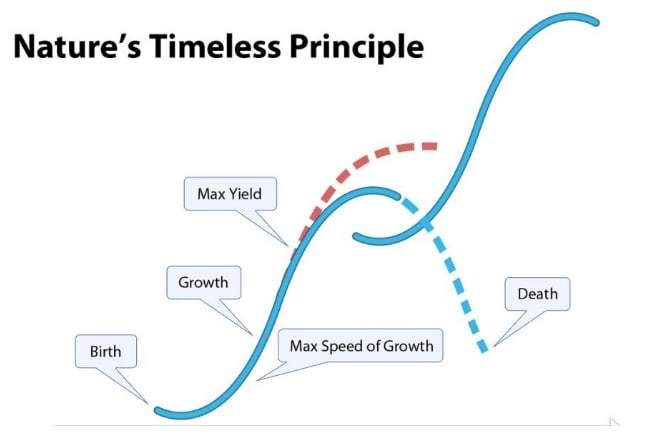
As seen in the above image, we all reach maturity (max yield) and when we do as a business or an individual, to avoid diminishing, we need to get a new vibe.

This is where the principle of Kaizen comes in, the commitment to continuous learning, the ability to unlearn, and re-learn in a new topic area.

We’ve seen the world’s billionaires taken this pivot, Bill Gates resorted to ending extreme poverty while Jack Ma from 2019, aims to focus on quality education and all things in between that. And while the Oracle of Omaha still seems to be committed to Berkshire, we have seen a lot of his wealth gone for donations.

As a corporate entity also, you should evolve, the pages of history burn with stories of evolution, and corporations that have succeeded for more than 50 years will surely have stories in this context to tell; J.P. Morgan, IBM, GE, etc.

As an individual, you might not necessarily have the wealth of Bill Gates nor the influence of Barack Obama before you consider taking on a new pivot. The time is always right to take a pivot if you consider yourself to have gotten to the peak of the s-curve and the diminishing effect is setting in.

Learning something new can be difficult and I strongly agree with that but you will agree with me also that you would rather learn something difficult that takes time to achieve than stay on a curve that tends towards infinite decline.

Doing this will help you stay lively again, a new challenge, a new thrill, a new commitment, entirely different from the status quo, the brain is alive and you are waking it up to a new sphere entirely.

Now you have more reasons to burn the midnight candle and more reasons to pay a worthy sacrifice.

And like any adventure one is committed to with diligence and faith, in the long run, it pays off. And of course, it depends on how long your long-run is.

“So as you approach mastery, and your learning rate decelerates, and while the ability to do something automatically implies competence, it also means your brains are now producing less of the feel-good – the thrill ride is over.”

Consider taking on a new pivot and resurrect yourself from the declining curve by learning a new thing that thrills you.

What’s your thought, I would like to know?

Originally written in 2018 here: What To Do When You Can’t Learn Again
“Fooled by Randomness” – What Brings Happiness?

3

Early thoughts from the book “Fooled by Randomness”

Croesus, king of Lydia in Ancient Europe was considered the richest man of his time. So rich till this day, the Roman languages use the expression “rich as Croesus” to describe a person of excessive wealth.

He had a visitor one day…

His visitor was Solon, the Greek legislator known for for his dignity, upright morals, humility, frugality, wisdom, intelligence and courage.

When Solon arrived at his place he didn’t display the smallest surprise at the wealth and splendor surrounding his host, nor the tiniest admiration for the their owner.

Can you imagine that!!!

Croesus was so irked by the manifest lack of impression on Solon’s part that he attempted to extract from him some acknowledgement.

To do this he asked him if he had known a happier man than him.

Solon cited the life of a man who led a noble existence and died while in battle. Croesus prodded for more, Solon similar heroic but terminated lives, until Croesus, irate, asked him point blank if he was not to be considered the happiest man of all.

I like how Nassim Taleb summarized Solon’s answer.

“That which came with the help of luck could be taken away by luck (and often rapidly and unexpectedly at that)”

Deep (for I who often stretch the boundaries of luck). ???

The flip side of that is even more compelling…

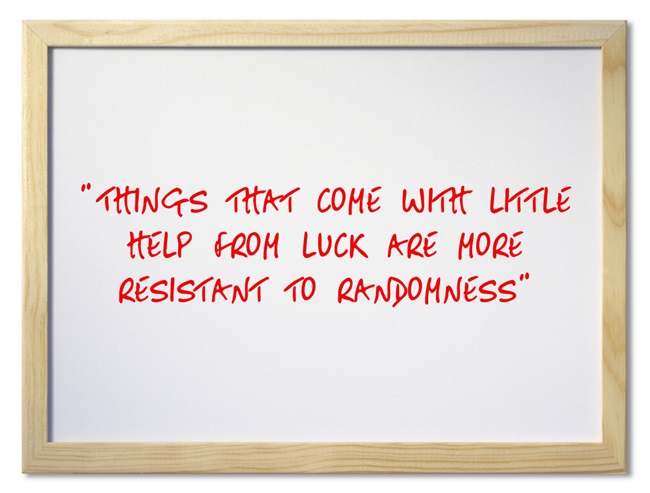
“Things that come with little help from luck are more resistant to randomness”

Another deep words which I will often refer to in the future.

I’m not sure if Croesus fully grasped the message of Solon during the conversation but soon he will.

Not long after this conversation, Croesus lost a battle to Persian king Cyrus. Worst of the event was that Croesus was about to be burned alive, yes burned alive. Then he shouted (something like) “Solon, you were right”.

Cyrus of Persia asked about the nature of such unusual invocations and he told him Solon’s warning.

Here’s the twist

This impressed Cyrus so much that he decided to spare Croesus’ life, as he reflected on the possibilities as far as his own fate was concerned.

See the role of luck and randomness

But remember as Solon opined, another thing can happen again and Croesus’ head will pay for it.

I’m still thinking about this narration but I got comment to add now.

Things that come with little help from luck are more resistant to randomness

This point to me is worth ruminating over again and again.

Baring in mind that Solon said this in respect to the question of happiness asked by Croesus even makes it more compelling to think on.

If happiness is your goal, it will be futile to base it on things that are determined by just randomness because they come and go at will and your happiness shouldn’t.

But what are things that are not subjected to randomness or less subjected to it.

A trade with 50% return overnight is surely randomness on your side, on a day it is not on your side, you may lose your capital.

Without doubt, we all seek happiness and even pursue it. To say we might have one point or the other think material wealth is what will bring us such happiness will not be a misstatement. The reality is a lot of us still think so and that’s fine. I know it’s fine trust me.

I wrote a twitter thread once about the need to embrace our cravings and even attain them.

Because attaining is the best mechanism to teach us that what we really want doesn’t lie on this mountain. The earlier we attain, the earlier we realize.

The question “what brings happiness” needs to be placed side by side with this quote again

“Things that come with little help from luck are more resistant to randomness”

Think about that.

Short Nigeria, Long Nigerians: The Invention of Kilishi

1

We were having a usual conversation in one of the most cherished groups I belong to on WhatsApp recently. The conversation at this time was about the transportation industry, diving into electric cars, autonomous cars, and all that’s between that. You can guess we did mention Tesla in our conversation. ?

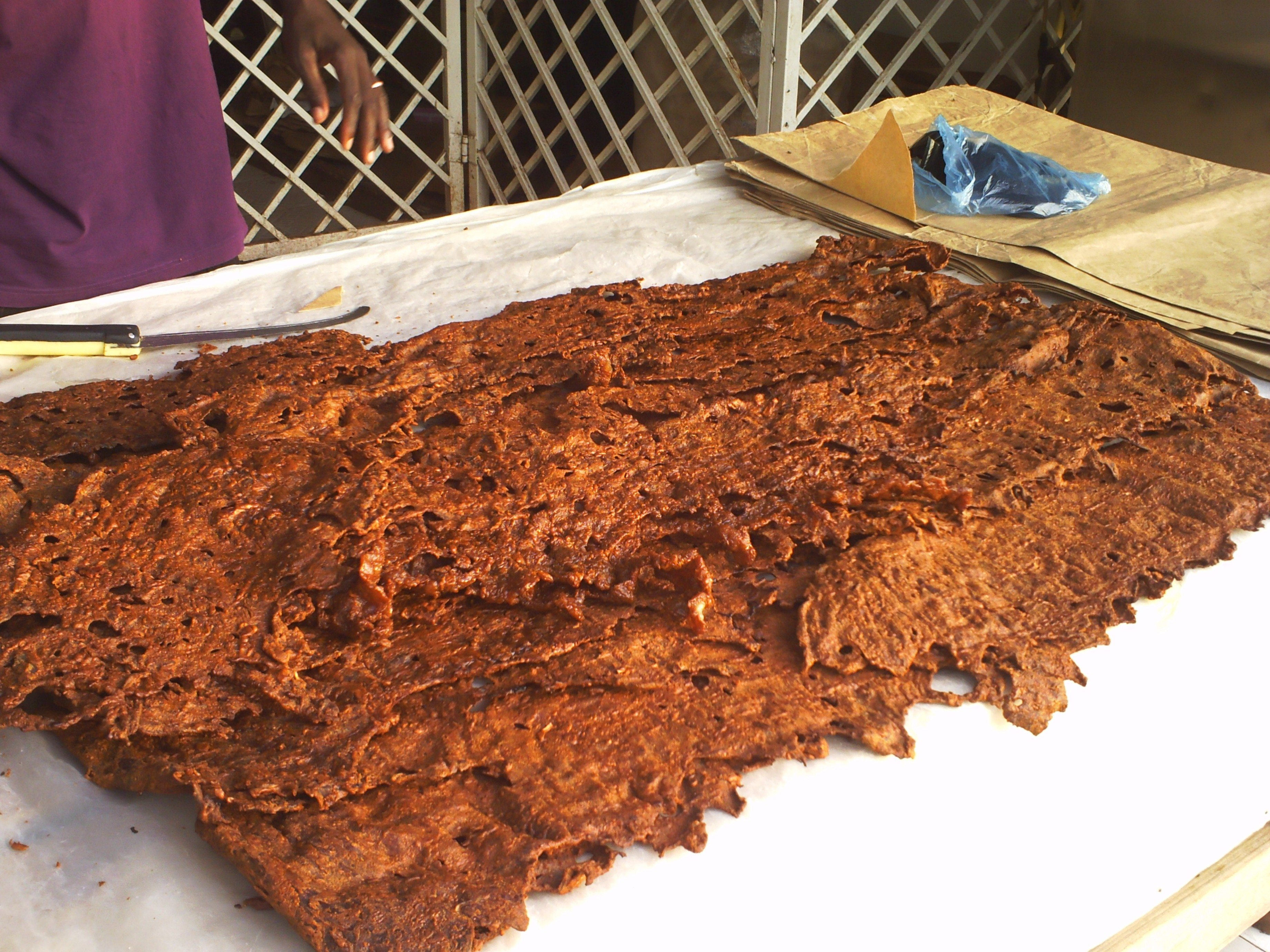
We concluded the conversation on a very optimistic view of the future. Few hours down the line a member of the group shared the image below with the accompanying comment.

Comment: “While the rest of the world is working on Advanced AI, Blockchain, and 5G. Nigeria is innovating Kilishi. You can’t make this shit up lol.”

This comment plus the picture motivated another member of the group to make another comment that connects the dysfunction state of Nigeria with the random conversation we were having about the transportation industry earlier.

“Talking about the auto industry this afternoon got me thinking about how most of the technologies that are being (or will be) deployed in the auto industry in the next decade or two (connectivity, autonomous driving, car-sharing/pooling, electric…) will move the world farther away from crude oil.

Yet, instead of the leaders of my 200+ million people Nation to start making serious plans for the future, they’re innovating kilishi. Issokay…”

Funny but not funny is that comment I must confess because it is both true and despicable.

Well, that motivated me to comment “short Nigeria and you will always win”.

For the uninitiated, “short Nigeria” simply means take a bet that Nigeria will lose its value over time and you will always make a gain.

The evidence of that is not far fetched I continued with my comment with the following lines:

Short Nigerian Naira, you will win

Short Nigeria All Share Index, you will win

Short, Nigerian Government Bonds, you will win

Short Nigeria Governance, you will win

Short anything that reflects Nigeria as a whole, you will win.

This is a rather saddening reality. When on earth can I (anyone) Long Nigeria?

When can I take a bet of prosperity on Nigeria?

Last year when Nigeria clocked 59, I wrote an article titled “Nigeria would have been our pride,” and in the article, I said, “but Nigeria has turned to what we must escape”.

The issue that became of this country is not something I like to much delve into. That is because talking won’t solve much of our problems if it will, we should be the most prosperous country on earth by now. We can talk.

So to my question “when can I take a prosperity bet on Nigeria?” I’m sorry to say this but maybe not in my lifetime.

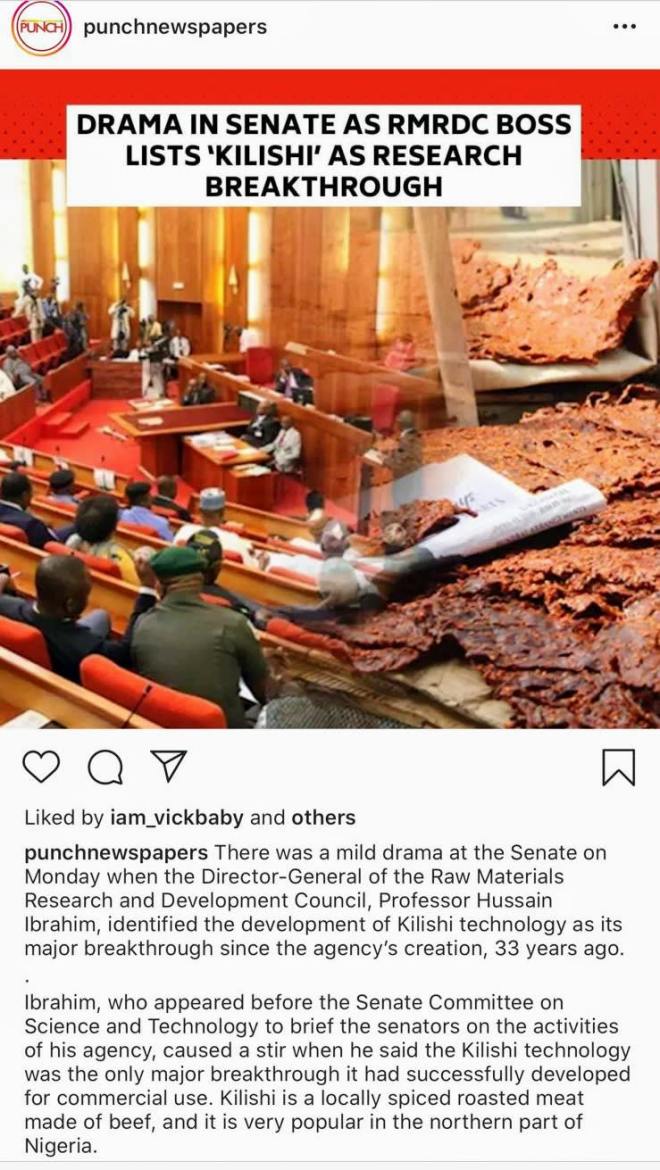
Excuse me, we are debating killisi innovation when Impossible Meat is innovating with a plant-based substitute for meat that will still give the same nutrient. And you expect me to Long a country like that?

Or like my friend from the group said, “when the world is preoccupied with 5G technology, Artificial Intelligence and the Blockchain” and we are debating Killishi innovation on the floor of the highest legislative house (the Red Chamber). You really want me to take a long position on such people?

Or like my other friend said, “all technologies from IoT to autonomous driving to AI will be a catalyst for the future of transportation as we know it”, yet it doesn’t bother us as people to solve Lagos traffic responsibly and innovatively. No, you won’t want me to take a bet on such a quagmire that Nigeria has become.

The truth about this article

Listen, I started this article not knowing what direction it will take but with the hope that it will take a direction that will favour Nigeria. Unfortunately, it couldn’t. I can’t Long it. At least not in the light of the present and foreseeable future conditions.

Because of the direction it took, I had to change my inconclusive optimistic title to a conclusive title of “Short Nigeria, Long Nigerians.”

Because of the direction it took, my short position is even more grounded.

Isn’t it alarming that nothing that tracks Nigeria can be taken a bet on? Pathetic. ?.

I am not a messenger of doom

Here’s what I believe can be done as an individual of all races and sentiment.

Be the best you can possibly be under whatever circumstance you may find yourself.

Yes, your influence by being the best you could possibly be might seem insignificant on a national level. However, when you realize that Nigeria rejoices today to be associated with Ngozi Okonjo-Iwela, Chimamanda Adiche, Charles Soludo, and the likes, you will realize that being your best might just be enough contribution.

You will be proud of yourself, feed your family, and more, and you will become a national pride. Then you will agree with me that your best might just be enough.

Remember Africa as a whole claimed Elon Musk as their own when he launched Falcon 9. That’s how much reaching for your best can contribute to helping the country.

So I’m not a messenger of doom and while I can’t long Nigeria, I can Long Lagos Young Professionals Innovation Club, I can long David Alade (I have faith in me to be my best)?, I can long brilliant and hardworking individual Nigerians that I know, I can Long the great startups that are solving real societal problems.

I have a long list of “Nigeria” that I can long but I am not sure I will Long Nigeria.

After 12 years in the UK, I still miss the vibe and bustle of Nigeria- Emmanuel Mogaji

0

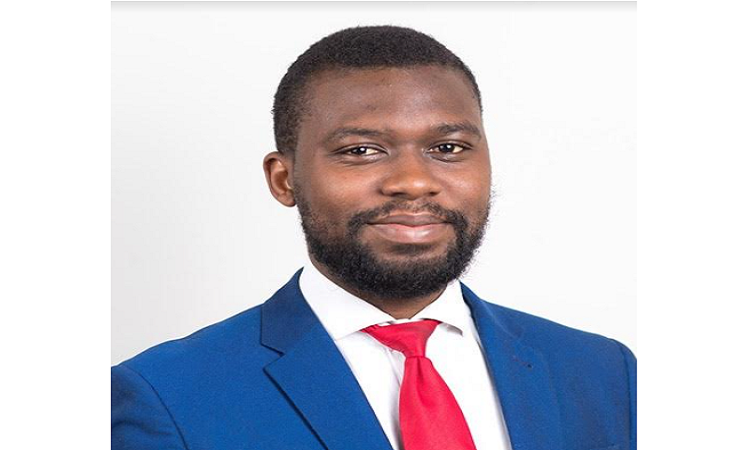
Emmanuel Mogaji is a faculty member of the University of Greenwich in the United Kingdom. The Ekiti State, Efon-Alaye-born university teacher is one of the thousands of Nigerians plying their professional trade across the world. With a Bachelor’s degree in Architecture from the University of Lagos, he moved to the UK in search of a second degree in 2008 at the University of Bedfordshire, the same university where he eventually got his PhD in 2015. The Advertising and Marketing Communications Researcher had a chat with Rasheed Adebiyi on his career trajectory and love for Nigeria. Here are the excerpts.

Tekedia: Could you tell us the story of your journey to the UK?

Emmanuel Mogaji:  I came to the Uk to study my Master Degree and after Master Degree, i stayed back to work and i went in for my PhD studies and since then I have actually been here. I came in through education route, that’s why I have been here. Well, the journey so far, I can say it has been fine. I did my first degree in the University of Lagos. I have a first degree in Architecture.  I finished in 2006. I served in 2007 and finished national service in 2008. I came to the UK to do my Masters. The year of the journey to the UK was 2008. It was in September to be specific. I had a background in Architecture but because I could not afford to do a Masters degree in Architecture in the UK because it was quite professional, quite expensive, I had to do something Art related. Something still Creative, so I did Art and Design with Internet Technology and from there I was able to work in a small advertising agency and then I did my Ph.D in Advertising and Marketing Communications.

Tekedia: I saw an interesting career trajectory in your profile. You moved from Architecture to Art & Design and then Advertising and Marketing Communications. What motivated that? How easy was it to go through that lane?

Emmanuel Mogaji: The shift has not been bad. I have always loved creative ideas. Since I couldn’t do my Masters in Architecture, I had to do something creative which was art and design. Then I worked in an advertising agency where I developed interest in marketing communications and then a PhD which looks at banks’ marketing communications after the 2008 global financial crisis and now I research it.

Tekedia: What was the feeling that defined the day you arrived in the UK?

Emmanuel Mogaji: I arrived in the UK with a friend of mine, we both came to the same university to do our Masters degree. So, it was quite easy to find our way around but I think what was most daunting was trying to find the transportation. Yes, I think because we were coming down from Heathrow, we had to get the train, the underground then try to get to St. Pancreas and then to where we were going. I came in September, so, it was not that very bad in terms of weather. We didn’t really feel anything about the weather. So, I think the most daunting thing was the transportation, trying to find your way around while still carrying the travelling bags and all those things, but we got to where we were going finally. I would say it was a feeling of excitement like feeling of at last, we got here safely thank God. Since I had a friend with me, it made it quite easy for me to be relaxed and to go along very fine. So, I think it was a feeling of excitement, a feeling of happiness. A feeling of what would happen next.

Tekedia: So, after the Master’s programme, you went for a PhD. What did it take you to navigate the UK higher education terrain?

Emmanuel Mogaji: I think what it took me was actually recognizing the fact that I was in a new environment and that I needed to take responsibility for my learning especially when you know where you are coming from, the cost and the fact that you needed to juggle things around. You still want to make sure you put in more effort into your academics and pass. So, I think it was me taking responsibility for my knowledge, asking questions, meeting people like interacting and knowing how they went about it.

Tekedia: What were the issues you encountered and how did you surmount them?

Emmanuel Mogaji: I think the main issue was more of time management. You might think you have got a free time to do everything but you know assignment were due. You know you need to go and work, you need to do some other things. So, I think the main issue was how to manage my time but I think I was able to do that by recognizing the fact that I can plan things. I knew when to read. I knew when I was going to classes. I knew when I needed to go and work and also having people around  you to motivate you as well. You know you were not on your own. You could get support. People shared ideas and were just making sure you know what to do.

Tekedia: You have transited from studentship to lecturing. What are those systemic things that you think make higher education in the UK different from anywhere else, especially, a developing country like Nigeria?

Emmanuel Mogaji: I think the main issues here are assessment and student engagement. Assessment is not to make you fail but to test your knowledge and see how much knowledge you have acquired. Also there are different level of engagement between the staff and student. Members of staff knows they should support their students. This is just beyond class room but looking after their welfare.

Tekedia: How does relating with your colleagues on campus like?

Emmanuel Mogaji: Here at Greenwich, it’s been fine. I guess may be because it’s London. Everyone seems welcoming.

Tekedia: Is there anything you miss about Nigeria?

Emmanuel Mogaji: I guess what I miss more about Nigeria is the community, the vibe and the bustling. I will say I miss excitement of life in Nigeria, the engagement with people, the buying and selling in the market. I mean the interaction and even the street food.

Tekedia: What is your general perception about the way issues in Nigeria are covered by international media?

Emmanuel Mogaji: I think we can’t control what the media say about Nigeria. We just have to create our own narratives. I like what Neflix and Nollywood are doing in that direction. The foreign media may choose to show the bad part of Nigeria, the fraud and the corruption. But with the movies and creative output from Nollywood/Netflix partnership, there is a new narrative about Nigeria. They show the good sides about Nigeria. They tell our story. But most importantly, Nigerians should keep doing good.

Tekedia: Any hope of a return soon or a project in Nigeria?

Emmanuel Mogaji: I have plans to return to Nigeria, especially to work with a university, albeit on a part time basis as a visiting professor. Through that, I hope to contribute my own quota.

Tekedia: Thank you for your time.

Emmanuel Mogaji: It is my pleasure.  


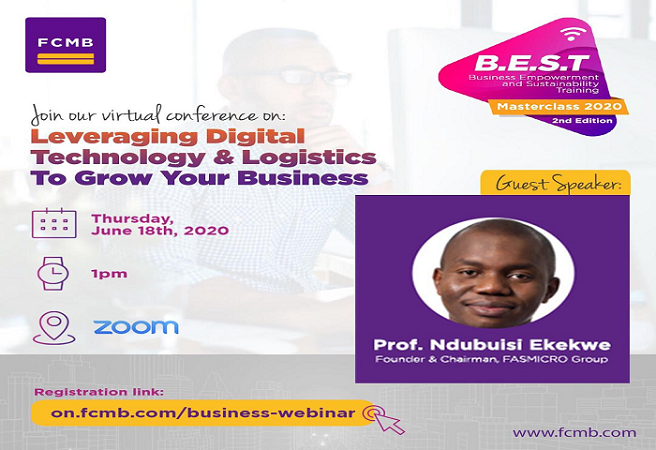
Ndubuisi Ekekwe To Speak in FCMB Masterclass

0

On Thur 18, I will speak in First City Monument Bank (FCMB)’s Masterclass on a topic I have titled “Innovating for Growth & Improving Supply Chain”. Supply chain is a very critical component of modern commerce, and in this post covid-19 era, innovation is the only trajectory to leverageable growth. Few days ago, I spoke with a brilliant Lagos banker for close to 2 hours: Ladi Balogun, the Group CEO of FCMB Group Plc. 

I learnt something from the very best who are at the forefront, and I decided to open a business account in FCMB for one of our businesses. People, from my laptop in America, I opened a business account within 5 minutes, received account number and could receive payments. 

Simply, FCMB impressed me, and I told the big banker. So FCMB is innovating, using digital to transform the bank. It wants its customers to also innovate. This masterclass will examine the path to growth for these customers.

As a big part of Zido Logistics, I will be sharing perspectives on supply chain and logistics. Zido did very well during this pandemic. I hope to connect innovation and supply chain for GROWTH.

Register here to join us, free.