DD
MM
YYYY

PAGES

DD
MM
YYYY

spot_img

PAGES

Home Blog Page 6300

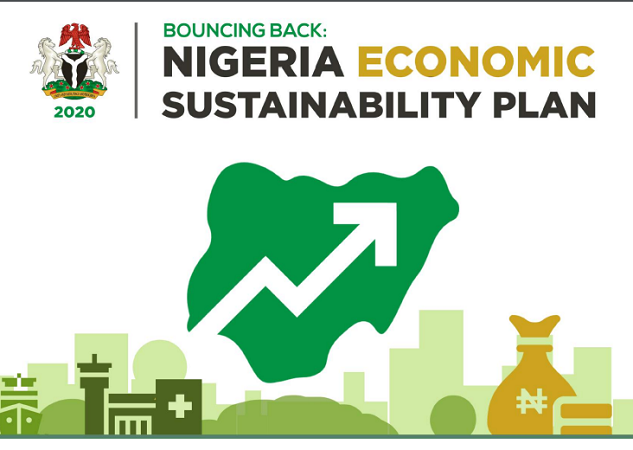
The Yemi Osinbajo-led Nigeria Economic Sustainability Plan 2020 [Download, PDF]

1

The Vice President Yemi Osinbajo-led Nigeria Economic Sustainability Plan 2020, commissioned under a presidential committee, has been released. This report was produced to evaluate how to mitigate the paralysis which Covid-19 has brought to the Nigerian economy. The outlook is extremely depressing. Download the report here (pdf).

Non-oil revenue, largely made up of taxes, has also practically dried up. This is because, like several economies around the world, Nigeria is faced with paralysis of economic activities due to lockdown measures in the Federal Capital Territory and the key commercial and industrial centres of Lagos, Ogun and Kano States. In addition, several other State Governments took similar steps to slow the spread of COVID-19 in their respective territories. These have cumulatively resulted in supply chain disruptions, suspension of commercial activities and large-scale job losses.


Zoom Caught in China’s Censorship Controversy

2
Zoom

Zoom has enjoyed unprecedented growth in the wake of COVID-19 pandemic, rising to stardom as it became the center of teleconferencing and virtual interactions. However, its rise is facing challenges ranging from privacy issues to Chinese government’s interference.

On Thursday, the company issued a statement acknowledging that it was pressured by the Chinese government to shut down an event commemorating the 31st anniversary of the 1989, June 4 Tiananmen Square Massacre.

Zoom acknowledged that it was repeatedly urged to shut the event down by Beijing because it goes against the country’s laws.

“In May and early June, we were notified by the Chinese government about four large, public June 4th commemoration meetings on Zoom that were being publicized on social media, including meeting details. The Chinese government informed us that this activity is illegal in China and demanded that Zoom terminate the meetings and host accounts,” the statement from Zoom said.

Zoom’s compliance with the Chinese government’s request has stirred questions on where the loyalty of the company lies in the issue of privacy and security. The development has heightened the growing scrutiny emanating from security concerns over Zoom’s ties with Beijing.

The accounts of Zhou Fengsuo, a Chinese activist based in the US, was shut down days after he hosted a memorial for the Tiananmen massacre, and Lee Cheuk-Yan, a pro-democracy activist based in Hong Kong, who has been organizing a yearly vigil for the victims of the crackdown was suspended too.

Though Zoom said it has restored the accounts, human rights and pro-democracy campaigners are concerned about the growing influence that the Chinese government is having on the tech company. The two accounts suspended are based in outside China where the Chinese laws have no jurisdiction, which suggests that Zoom, which is operational in 80 countries around the world, is under the grip of the Chinese authorities.

Zoom is among few media-tech companies of foreign origin allowed to operate in China. Others have been shut out over their refusal to play by the censorship rules of the Chinese Communist party.

The Chinese government has been in the news of misinformation dissemination recently on social media platforms that are banned in China.

On Thursday, Twitter issued a notice disclosing 32,242 accounts of state-linked operations attributed to China, Russia and Turkey. The accounts were removed for various offenses hinging on violation of the platform’s manipulation policies.

However, it seems to be a tip of the iceberg in efforts that the People’s Republic of China is making to exert influence on tech companies around the world. Zoom has unfortunately been caught up in the controversy that may jeopardize its bright future.

Yan said Zoom’s willingness to allow China to pressure it to determine who uses the video app and who doesn’t is “shameful.”

“They have restored my account but Zoom continues to kneel before the Communist party. My purpose on opening Zoom is to reach out to mainland Chinese, breaking the censorship of the Chinese Communist Party. With this policy, it defeats my original purpose,” he said, adding that he has closed down his account and asked for a refund.

Zoom said it doesn’t have the technology to block accounts from certain countries, which led to the decision to shut the Tiananmen event down. The company said it is working on the technology that will enable it to block participants by country instead of shutting them down.

Zoom said it did not give any information to China, and “will not allow the Chinese government to impact anyone outside of Mainland China,” which alluded to the concern that the Chinese government will continue to exert a measure of influence on the company. The development thus confirmed the fears of many and brewed new antitrust concern from the US authorities and human rights activists.

Wang Dan, one of the activists commemorating the Tiananmen event, and whose account was shut down twice at the request of China said the Communist Party is intensely attacking democracy and free speech around the world.

“The Chinese Communist Party is actively attacking democracy around the world. They have already started to intervene in the social system and way of life in the US. The whole world should be on alert,” he said.

On Friday, China said Twitter should take down accounts that smear China if the social media platform is serious about fighting misinformation.

With the growing effort by China to control what goes out in platforms outside China, the United States government is beginning to take interest in the activities of Zoom. Representatives Greg Walden and Cathy McMorris Rodgers wrote Zoom’s CEO Eric Yuan, asking him to explain his company’s actions. Senator Josh Hawley also asked Yuan to “pick a side between American principles and free speech, or short-term global profits and censorship.”

China researcher for Human Rights Watch, Yaqui Wang, said given that China’s laws don’t conform to international human rights standards, tech companies should come together to fight their censorship influence.

“Tech companies should stand together to resist Beijing’s censorship demands and uphold the right to freedom of expression. Otherwise, the groveling will never end,” she said.

Many see Zoom as a young company with an impeccable reputation and future to protect, and its relationship with Beijing is putting it in a position that may hurt the progress it has made so far. Experts said the last thing Zoom needs right now is a sanction from the US government as a consequence of enabling Chinese censorship.

2020 Best Startup Ecosystem Ranking – Nigeria Drops; Kenya, South Africa and Rwanda Ahead

0

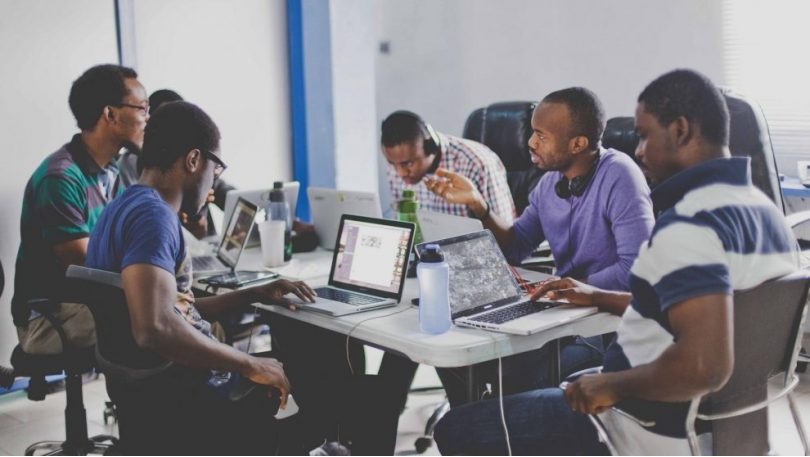
In the latest ranking of the Best Startup Ecosystem, Nigeria dropped 12 places to 68, and also lost its 3rd position in Africa to Rwanda.

This is according to Startup Ecosystem Ranking for the year 2020. Last year, Nigeria ranked 56th in the world and 3rd in Africa, behind South Africa and Kenya. Rwanda was three places up at the 65th position while South Africa and Kenya dropped to 52nd and 62nd positions respectively.

The Startup Ecosystem Ranking is conducted through data collated from over 60,000 startups and 14,000 co-working spaces around the world. The three main metrics used in ranking are: Quantity, as in the number of startups, their quality, and the business environment in the tech ecosystem.

Lagos also dropped 28 places in city ranking, losing its number one position in Africa to Kenya’s Nairobi. Lagos ranked 99th in 2019 but fell short this time around to 127th on the chart. Nairobi also dropped 11 places to 116 in the world, while Johannesburg and Cape Town rose to 146th and 160th respectively.

Nigeria’s drop in the recent ranking has been attributed to factors relating to business environment and basic infrastructure. The quantity score used in the ranking rose from 0.11 to 0.27, while the quality score rose from 0 to 0.11. But the business score saw drastic reduction from 5.89 to 0.46, a huge loss that resulted in drop in the ranking.

The Nigerian business environment is marred by infrastructural deficiencies and poor government policies that pose a threat to growth and development of startups. It cuts across government policies and basic amenities needed for businesses to thrive.

A popular example is the ban on ride-hailing motorbikes by the Lagos State Government. Hundreds of motorbikes were thrown off the roads forcing the startup companies to shut down. It has become a trajectory that every startup in Nigeria can get caught up in, as some other state governments have implemented similar policies.

The state’s policy to ban the use of motorcycles was implemented at the detriment of businesses that lost millions of dollars as a result – there was no compensation and alternate provision.

For other startups that are allowed to operate, it is survival of the fittest. Infrastructural decay ranging from unstable electricity supply and poor internet has offered them only the opportunity to strive.

Nigeria is still struggling to distribute above 4,000 megawatts of electricity, forcing startups and all businesses to depend on power generators for electricity.

On the other hand, Nigeria,s internet service is far below the recommended 10 mpbs, at 1.5 mpbs and startups are at its mercy. Attempts to improve the situation have fallen on government’s unfavorable policies, among them, the decision of state governments to charge N4.5 million ($11,600) for the laying of a kilometer of broadband cable. It has not only spiked the cost of the poor internet service, it has also made it difficult for telcos to facilitate undersea cable network infrastructure.

Unstable foreign exchange is another difficult situation that startups have to face in Nigeria. Techtext reported how Kwese’ satellite TV was forced out of business due to the devaluation of Nigerian currency that put their revenue at loss. Nigeria is still struggling to have a unified foreign exchange that business can count on.

Currently, Nigeria has two forex rates; a government’s rate of N361/$1 and the black market rate of N387.5050/$1. To cap the woes of entrepreneurs, the government’s rate is never accessible by most of the startups and SMEs that need it, though there was N380/$1 at $20,000 per quarter rate for SMEs, it didn’t help the situation.

Last month, Manufacturers Association of Nigeria (MAN), said that the difficulty in accessing forex has hampered manufacturing activities in Nigeria.

“It was pretty difficult to source forex from all the available windows. Members have had problems accessing foreign currencies for five weeks due to lack of Central Bank’s interventions. The scarcity of foreign-dominated currencies is hampering the ability of local manufacturers to import raw materials, machines, and spares that are available in Nigeria,” MAN said.

In May, the Central Bank of Nigeria suspended foreign exchange sales to retail Bureau de Change currency traders. The Apex Bank said the decision was to protect the naira after its devaluation due to the impact of COVID-19 and plummeted oil revenue.

All these were the factors considered by Startup Ecosystem that resulted in the drop of Nigeria’s ranking.

Understand the Age of Singularity – From Tekedia Mini-MBA [Video]

0

Singularity is a “hypothetical point in time at which technological growth becomes uncontrollable and irreversible, resulting in unforeseeable changes to human civilization”. During the Tekedia Mini-MBA, for one week, we will assume the world has entered the age of singularity. But instead of panic, we want to examine the promises and business opportunities when machines possibly become smarter than humans!

My engineering PhD focused on neuromorphic systems – a new engineering field which emulates biology to create microprocessors that mimic the event-driven asynchronous parallelism of the nervous system, unleashing the plasticity, efficiency, etc you see in humans in machines.

If you ever want to think uncommon, join us in this session which four faculty, from TAFFDs USA, will teach.

Edward Hudgins, PhD
Chogwu Abdul, PhD
Gennady Stolyarov II
Brent Ellman

The Triple Evil: Racism, Slavery, and Colonialism

0

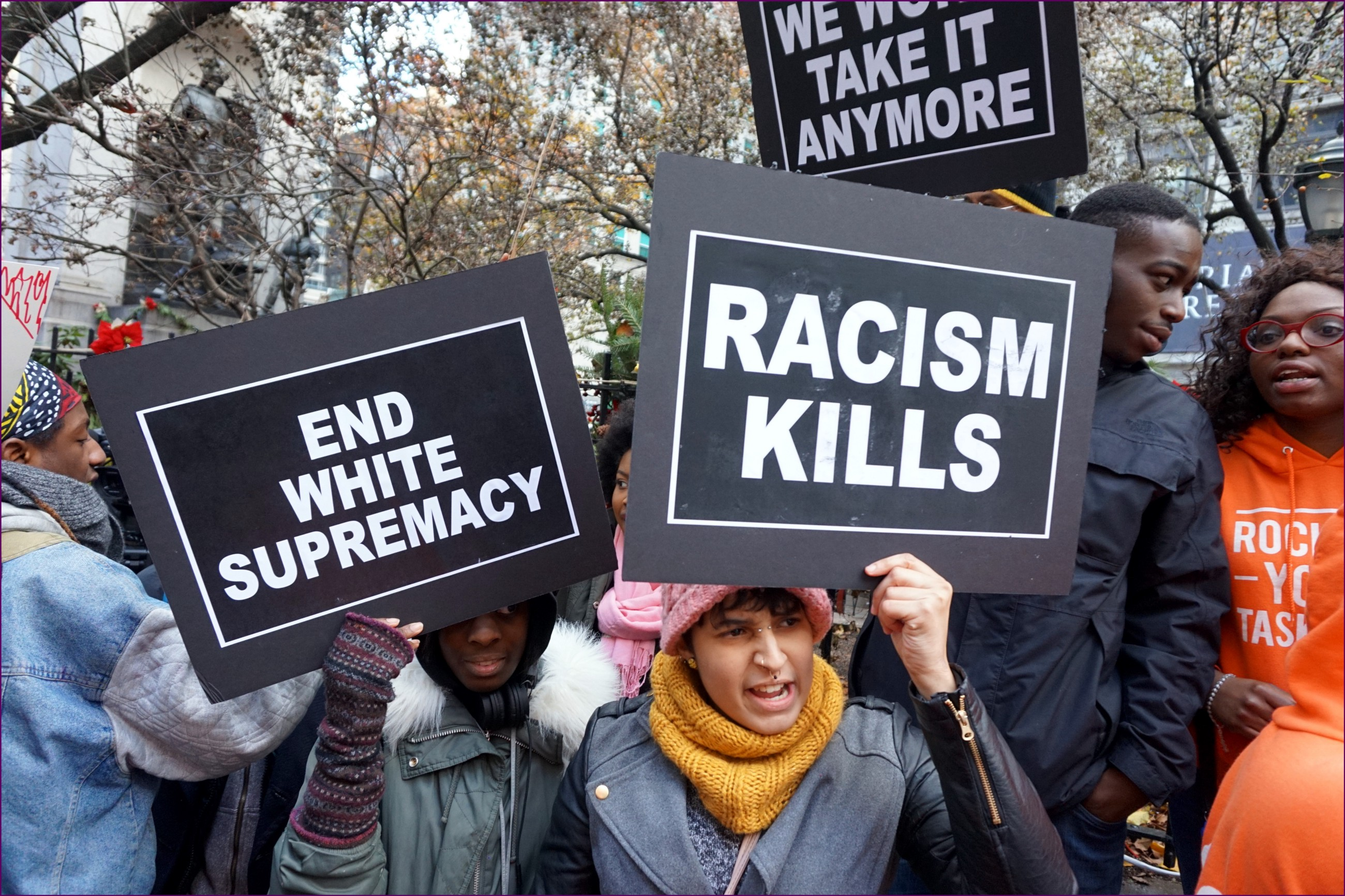
As George Floyd begged for his life that day, so does everyone that looks like him around the world begs for their lives daily. Our brother George is the face of the new movement that is asking for change, but systematic racism and hate that took his life is not confined to the street of Minneapolis or the United States. This ugly monster has a long history and parades itself everywhere around the world in different shapes and forms.

As an African immigrant living in the United States, I can feel the knee on my throat in two ways. I grew up in a continent that is in shambles due to the oppression of slavery and colonialism. I also live in a place where I get a daily dose of hatred and poison of racism. It is an everyday experience for black people around the world, even in their lands, to be looted, choked, and oppressed daily.

As we continue this discussion of racism, we should not forget the genesis of the problem. I believe that we cannot solve this problem without having a thorough understanding of its foundation. The history of racism goes back more than 400 years ago when the evil idea of seeing black people as inferior effectively came to life. The continent of Africa was invaded, robbed, and stripped of dignity, right, freedom, and opportunities. The colonial masters ruled Africa and looted the continent. The intelligent and articulate leaders that could ask questions were subdued, killed, or enslaved. By the time the colonial masters left most African countries around 50 years ago, it was too late for the continent to recover. It has been downhill from that point and still getting worse because of the policies towards Africa.

The descendants of the enslaved Africans and the Africans that migrated for opportunities still face discrimination in America and other places around the world. I was talking to a Caucasian man sometimes ago. He was impressed by the way I analyzed a topic. He then said, “When I saw you, I thought you are an African American, but I see that you are an African. I am not surprised because many of you are very focused and educated.”

I did not understand the discussion until a few years later. Whether the man understood what he was saying, I don’t know, but I do know that it is the narrative that pitches people with the same experience and background against each other. African Americans are told that African immigrants are taking their jobs, while African immigrants are told that they are more serious-minded and focused. Unfortunately, many people within both communities have subscribed to the idea. While many might think that slavery only affects the direct descendants of African American slaves, it affects the African immigrants too. The great grandparents, great uncles, and aunties of some of the immigrants were the slaves. Many African immigrants left the continent that was robbed of its dignity for opportunities. On the whole, racism does not distinguish between African immigrants and African Americans when it’s time to discriminate. The color of racism is the same, and both sub-groups experience harassment and denial of opportunities in the same degree. 

The effect of racism is not only felt by black people in the countries with majority Caucasians, but its impact is also profound in the continent of African. Africa remains the poorest continent in the world. The corrupt African leaders are allowed to keep the money they stole from their respective countries in the western financial institutions. Many of these corrupt leaders also see western nations as a save haven after they have looted their countries. 

Racism is rooted in the global policies that create a disadvantage for Africa and people of African descent. The economic, trade, financial, political, health, and other major global policies are against Africa. Just recently, a French doctor suggested that the Coronavirus vaccine should be tested in Africa. That shows how much a supposedly educated individual values the life of Africans.

The unattractive portrayal of Africa is amplified in the media, which is the source of information for many people. The view of Africans as barbaric, unintelligent, and inferior that led to slavery and colonialism is still being amplified in the media.  Bananas are thrown at black people to remind them of “where they belong” and “who they are.” Unfortunately, what the media projects is not the lived experience of 80% of the people on the continent. There is poverty in Africa, but Africans wear clothes, there are cars on the street, Africans go to school, and Africans do not live among wild animals. 

The picture of Africa created by media and global policies feeds racism that we see everywhere around the world. Until the inferior view of Africa changes, discrimination against black people across the globe will continue. The comment made by Danny Ferry (former Atlanta Hawks General Manager) in 2014 about Luol Deng, an NBA star, underscores this point. Ferry said, “He’s a good guy overall, but he’s not perfect. He’s got some African in him.” What is the African in Luol Deng? That is the general unpleasant view of Africa.

I have heard many times that African countries and people of African descent need to change their narratives. How can you rise above a tide that overwhelms you daily? How do you operate in a system that is set up against you? How are you expected to rise when people tell you that the skin that you cannot change is your problem, and it is your fault? How can you get better when oppression has become your way of life? However, just like brother George was chocked with the knee of his throat and cannot do anything because he was incapacitated, the same way Africa and black people cannot change until systematic racism is eradicated by those that enacted it.

We have a lot to do at the grassroots level, but racism against black people requires a global approach. We have to tackle this issue from its root. As long as the negative view of Africa as a barbaric and good for nothing continent remains the same, racism towards black people around the world will not change. We cannot just cut the branches of the tree of racism as we have done in the past and expect racism just to disappear; we have to uproot it. Otherwise, it will bud again at the scent of water of oppression. The change starts with removing the knee from the throats of Africa as a continent. We need a global political and systematic change towards Africa and people of African descent. The media portrayal of Africa has to change. There are beautiful things about Africa and black people that people need to know. 

The death of George Floyd must not be in vain, fade away, or become a lip service of sympathy. Donation of money by corporations is not enough. It must spark discussions to create an urgent need for a change that is long overdue around the world. There is a long road ahead, but the change can only happen when we start having the right conversations that focus on the root of the problem. These discussions are not calls for sympathy for black people or the African continent. They are requests for equity and an opportunity to compete without seeing our skins as a disadvantage. We are all equally created by God, and no one is inferior. Intelligence is not a function of skin color, and opportunities should not be a function of race. Eliminating racism against black people around the world starts with changing the view of Africa as a continent.