DD
MM
YYYY

PAGES

DD
MM
YYYY

spot_img

PAGES

Home Blog Page 6311

Nigeria’s Former Vice President Atiku Will Run for President Again

2

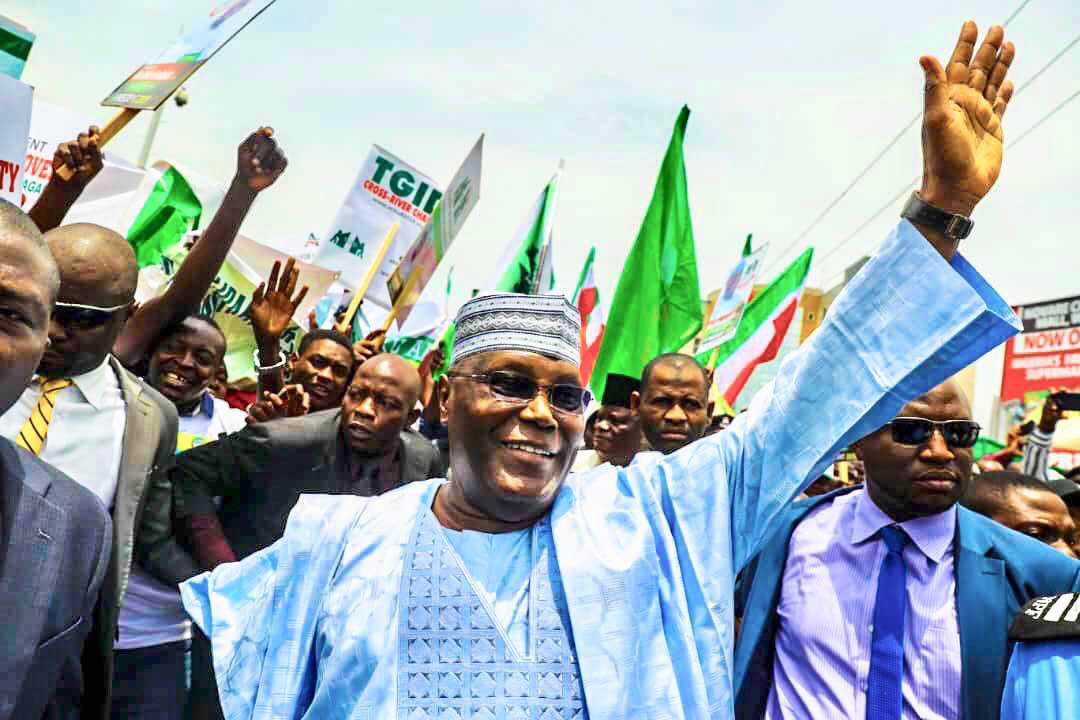
Nigeria’s former Vice President Atiku Abubakar will contest the 2023 presidential election in Nigeria. His son, a commissioner in Adamawa State, has said. This is not surprising if you have been following Atiku’s recent writings. He is positioning himself as a thought-leader. If PDP zones presidency to the northern part of the country again, Atiku has a chance. 

The son of Nigeria’s former Vice President Atiku Abubakar, Adamu Abubakar, has said his father plans to contest the 2023 presidential election.

“Personally, I don’t see anything wrong with my father contesting for the presidency. In 2023, my father will be aspiring to the number one office in the land because he has been an astute, strategic, master politician for almost four decades,” Mr Abubakar who currently serves as commissioner for works and energy in Adamawa State was quoted saying by the Punch.

He made this known while marking the one-year performance of his ministry under the leadership of Governor Ahmadu Finitiri of Adamawa state.

The Creator of Ayoks Digital Wheel Is Coming to Tekedia Mini-MBA

0

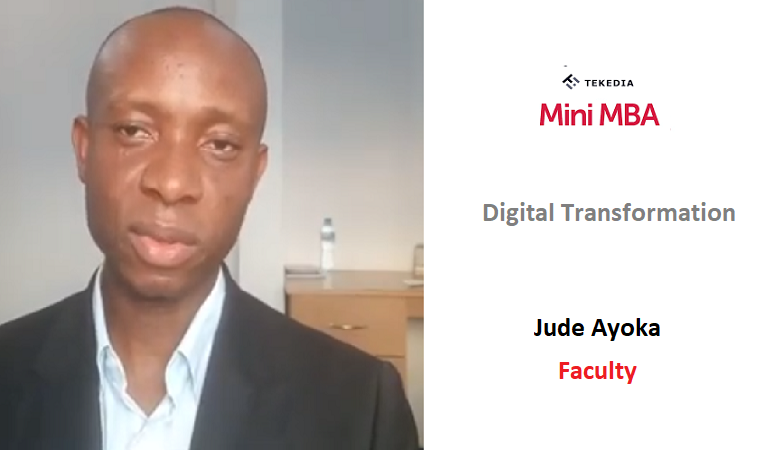
He created the Ayoks Digital Wheel,  a framework to guide businesses to get their digital transformation right. We borrowed this amazing concept during the 1st edition of Tekedia Mini-MBA. He graduated from FUTO with a bachelor’s degree in Mathematics & Computer Science and later earned an MBA. Today, he works in Africa’s largest bank, by customer base, Access Bank, as a manager in the Innovation and Digital unit.

Jude Ayoka, the developer of the Ayoks Digital Wheel is coming to Tekedia Mini-MBA. No other person can explain that work better than the creator. Jude is a certified Enterprise Architect and Project Manager with capabilities for orchestrating and managing digital business transformation. 

In this post-Covid-19 world with digital, the now-settled new normal, strategies begin and end with digital. Join the digital innovator here.


https://www.tekedia.com/mini-mba-2/

I would like to see the like of Taiwan’s Systemic and Infrastructural Development in Nigeria in not too distant future – Musa Ajibola

0

Musa Ajibola is a Nigerian studying for a PhD in Taiwan on scholarship. He has been on the Island in the last five years. In this chat with Rasheed Adebiyi, he bares his mind on transition to Taiwan, his expectation of Nigeria’s development journey and general perception of Taiwan’s culture. Here are the excerpts

Tekedia:  Please tell us about yourself?

Musa Ajibola: My name is Musa Ajibola. I am currently a PhD student in Neuroscience at National Yang-Ming University, Taipei, Taiwan; under the fellowship of Taiwan International Graduate Program (TIGP) of Academia sinica.

Tekedia: How does it feel transiting from Nigeria to Taiwan?

Musa Ajibola: It has always been an exciting experience seeking knowledge in another country and Taiwan is not an exception.

Tekedia: How much support did you get in order to fully settle down both at your study institution and in the society?

Musa Ajibola:The host institution made arrangement to receive me at the airport and also provided good accommodation at the student dormitory. Integrating to the society was very easy as Taiwanese people are naturally accommodating. The only major challenge then was the language and cultural differences.

Tekedia: How did you then handle the language issues?

Musa Ajibola:  I attended a four-month Mandarin class. Though wasn’t enough to learn the language  but at least basics to survive.

Tekedia: So, was it enough to ensure you find your way both at work and in the society generally?

Musa Ajibola: Not enough, at my work place we speak English. In the society, I can join some words together and we can communicate.

Tekedia: How was buying basic needs and navigating your way around the  city?

Musa Ajibola: What we were taught during the class is enough to communicate in the traditional markets and stores. Navigating the community is easy because there’s always a English directory in public transport. But doing business within the community is almost impossible without good Mandarin skill.

Tekedia: What do you miss about Nigeria?

Musa Ajibola: Notwithstanding the despicable socio-economical situation of Nigeria, home is always home. Most importantly I miss my family.

Tekedia: What are those things you have seen in Taiwan that you would wish to see in Nigeria?

Musa Ajibola: There’s a lot of systemic and infrastructural development I would like to see in Nigeria in not so far future because we can’t afford to lag behind. For examples, I would like to see a well-structured education policy that will make funding research at our university a topmost priority of government at all levels. An education system with a focus on human capital development. Specifically, at our tertiary level, I think there is an urgent need to look at the whole system again and restructure it to meet international best practice. For health sector, with the current COVID-19 pandemic it has become glaring that we have issues with our healthcare system. In Taiwan for example, the National Health Insurance (NHI) scheme is universal and even compulsory. Our government needs to improve the current National Health Insurance Scheme (NHIS) and make it more inclusive, if possible compulsory. Most importantly, our primary healthcare centres should not just be buildings but functional. I hope in the future we can automate our healthcare system such that every hospital in the country can quickly access patients’ health history via the individual health insurance cards. I have also experienced organized transit system in Taiwan and mostly cashless ticketing system. I would like to see improvement in public transport system of Nigeria such that it would be so convenient and organized that the rich can use it. This should include reformed train system, and also our water ways.

Tekedia: How could you describe the work culture in Taiwan as compared to Nigeria?

Musa Ajibola: The work system is designed for everyone to be hardworking and carryout the assigned job at stipulated time. I would just say “you can’t break the work chain” so you must do your part timely. You rarely go to offices and have to wait a long time before being attended to. Though, this may be because 95% of work/jobs here are automated so relatively faster and more efficient. Moreover, average Taiwanese is trained formally and informally to be hardworking. And most of them have been engaged in one job or the other since their high school days, so they are full of experience.

Tekedia: How do you feel about the Nigerian government’s response to COVID-19 as compared to Taiwan? 

Musa Ajibola: Taiwan’s response to Coronavirus outbreak is described by  experts among the  ,best in the world. Considering the close proximity of the island to mainland China where the first outbreak was first reported, it was among the most at-risk areas. Interestingly, today the country only has 443 confirmed cases, 429 has already recovered and 7 deaths. That is relatively a fantastic result of the Taiwan government response. The Nigerian government response was poor given the country experience with Ebola. It appeared as if we haven’t learnt anything from Ebola outbreak. For example, before the Taiwan index case on 21st January, the Taiwan government activated many action items to combat the virus including the testing centres, isolation centres and personal protective equipment (PPE) for the frontline medical officers. All hospitals in the country were supplied with PPE. To prevent a hike in the price of materials such as face mask, the government put a ban on face masks export. And estimated the number that can be produced in the country and work with the companies to increase its production. Even before the index case, the communication was clear and transparent that the use of face mask and social distancing are the solutions to prevent the spread of the virus. Both Nigeria and Taiwan had previously experienced disease outbreak, so it is expected that the two countries should handle the pandemic better. The island, Taiwan, was strongly affected by severe acute respiratory syndrome (SARS) outbreak in 2003 with over 150,000 people quarantined. This experience seems to have prepared the country well to handle the coronavirus pandemic. Although, Nigeria was also affected by Ebola outbreak in 2014 but the country’s response to coronavirus does not show any preparedness. It was expected that this would help Nigeriato respond faster and take the danger of coronavirus seriously than other African countries. Unfortunately, that was not the case. Another edge Taiwan has over Nigeria in handling the pandemic is the island universal coverage world-class healthcare system. The Taiwan government recognized that border control is not enough in controlling the spread of the virus, so the policies and actions go beyond border control. Every sector of the government was carried along. And the communication was transparent, accurate and lucid.

Tekedia: Thank you for your time.

Musa Ajibola: It is my pleasure.

The Nigerian Retail Scene: The Need for More “Malls” in The Face of E-Commerce

2

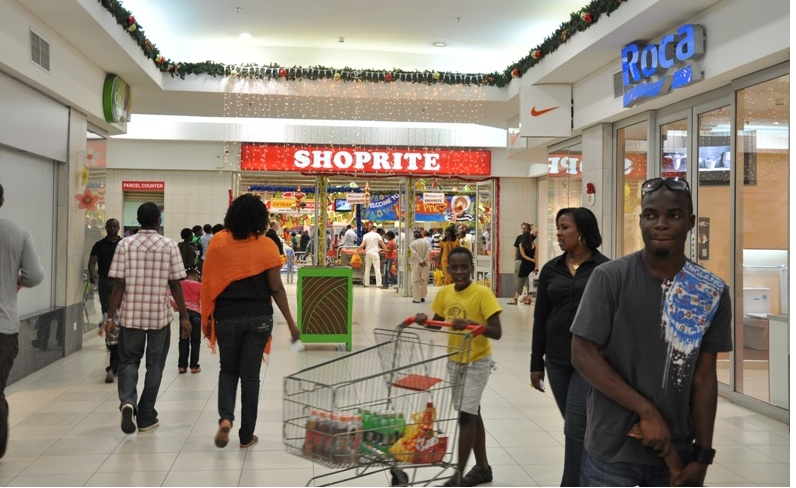
The past decade has seen the increasing emergence of large American-styled malls in Nigeria’s populous cities. Investors have been attracted by the promise of Nigeria’s large population, a growing middle-class, and high level of urbanization.[1] Providing an all-in-one convenience centre has changed the shopping culture and experience of shoppers, making the mall-going culture popular in Nigeria.[2] This change may be challenged by e-commerce, but not anytime soon because Nigerians like touch and feel experience that offline retail channels offer.[3]

Nigeria is home to some of the largest shopping malls on the continent, with similar facilities to malls in Europe, the Middle East, and North America. These malls include those owned by foreign investors such as Shoprite, which is one of the most popular in the country and indigenous retailers such as Justrite, Addide, Goodies, Park ‘n’ Shop, Ebeano, Blenco, Bestsavers, Roban Stores, and Everyday Group among others that are changing the shopping experience in Nigeria.

Before the emergence of malls, retail business was mostly carried out from lock-up shops, open markets, small shopping centres, and kiosks. Now, this has metamorphosed over time as developers of shopping malls are leveraging on the increasing population, the changes in consumers’ lifestyles, and advancement in technology to provide experiences for consumers.[4]

Globally, the retail industry is also experiencing some rapid shifts in consumer preferences as it relates to taste, behaviour and expectations, given the rapid pace of technological advances and social transformation. E-commerce is having an increasingly significant impact on brick-and-mortar stores. For example, online retail sales in 2019 was estimated to be 13% of total retail sales globally.

In the US alone, more than 57,000 stores closed between 2007 and 2017 due to changing consumer needs, and more than 5,800 more store closures were announced in 2019.[5] This trend is being referred to as a “retail apocalypse”, and is crippling traditional shopping malls. Major retail stores such as Victoria’s Secret, JCPenney and Gap, have closed numerous locations within the last two years. Some have filed for bankruptcy such as Forever 21 – a judge approved Forever 21 Inc.’s bankruptcy, and an $81 million opening bid for its assets on February 4, 2020.[6] BusinessInsider recently reported that malls across the US are trying to survive the retail apocalypse by investing heavily in rides, indoor ski parks, and other entertainment options to lure in customers no longer interested in just shopping.[7]

In Nigeria, however, different factors ranging from logistical issues to lack of trust are the major factors derailing the growth of e-commerce compared to offline retail channels like malls. In spite of convenience being one of the benefits of e-commerce platforms, Nigerian shoppers still want the ‘touch and feel’ effect before making payment for goods. There is also the instant gratification factor, rather than waiting for days to get your purchase. In Nigeria, a social factor that increases traffic in malls is the opportunity shoppers have to take selfies with friends and families, and post them online for their social media audience as well as admirers. Additionally, people visit physical stores especially malls, just to window shop or as a form of relaxation.

The theory is that the growth of online shopping will reduce the shopping activities taking place in brick-and-mortar stores. But the fact remains that Nigerian shoppers still want to see, feel, and try on products before making a purchase.

What does this mean for Nigerian retailers?

With e-commerce still at its infancy stage in Nigeria, as can be seen by the difficulties being experienced by online retail players such as Konga, Jumia, etc, the good news is that brick-and-mortar is still the winning business model in Nigeria, when it comes to retail. However, the economic situation of the country has greatly diminished the purchasing power of the average buyer.

Between 2014 – 2018, Nigeria’s population grew consistently at a rate of 3%, while the Gross Domestic Product (GDP) has declined at an average rate of -7% over the same period. The resultant effect is that Nigeria’s GDP per capita has been on the decline at a rate of -10%.[8] Operators of businesses in Nigeria need to be efficient in their service/product delivery and effective in their sales due to various reasons ranging from an average economic growth rate of 2%[9] in the last 2 years, a World Bank prediction of a GDP growth rate of 2.1% in 2020, speculations on the possible devaluation of the Naira, and decrease in the country’s foreign reserves.

Nevertheless, to be a winner in the Nigerian retail space, the following must be considered:

Rapid business expansion

Physical evidence is still very relevant in this economy despite the popular chant for e-commerce. However, the siting and configuration of such structures should be different from the norm. The gigantic American-styled malls are no longer effective as they require large land mass, leading to their being sited away from residential clusters, therefore making it inconvenient for the average buyer to access easily.

To win, rapid expansion through purposefully built mini malls is the way to go. This is simply the establishment of mall-like structures in residential areas that are built to purpose with less land mass, but similar offerings. What this does is position the venture as the destination of choice, as a mall’s main advantage is an “all-in-one” experience centre. This approach will lead to sustained patronage levels, as the malls become convenient shopping centres, as opposed to out-of-town sight-seeing destinations.

Customer-centric model

Business as usual doesn’t work anymore. Customers have become more enlightened about product prices and alternatives. Businesses must move from a transactional relationship to establishing an emotional connection with customers. To achieve this, data is key. The mining and analysis of available store data, from purchase behaviours to identifying psychographic patterns will lead to more effective managerial decisions and precision of business initiatives.

High operational efficiency

A major advantage of shopping in malls for consumers is low prices and great deals. However, this doesn’t appear to be the case in majority of our malls, as goods are priced above market prices. The reason for this price difference varies from expensive rent, to taxes and operational inefficiencies. Efficiency can be achieved by reducing waste, wait-time and general administrative hiccups. This modification will create room for more margins, leading to increased profitability after all business obligations are met.

People and culture

It goes without saying that people make organizations. It has become more important for business owners to dictate the culture of their brand and be conscientious in the training of their employees. The employee is the brand people experience before purchasing a product or service.  This is more critical for shop owners and mall administrators, as the culmination of experiences from point of entry, to purchase, and then point of exit is critical, as it determines repeat purchase rate, goodwill, and recommendation.

Global trends are most likely to come home to us in Nigeria. We have seen this happen in multiple industries, at different times. Nevertheless, I reckon that we have at least 10 years before we experience a retail apocalypse, as the foundation of a successful e-commerce industry is built on good infrastructure, which we still significantly lack in Nigeria.

References

[1] (Quartz Africa, 2017)

Quartz Africa, 2017. Quartz Africa. [Online]
Available at: https://qz.com/africa/1075301/nigerian-retail-looks-past-shoprite-led-malls-to-bet-on-nigerias-middle-class/
[Accessed 2020].

[2][4] (The Nation, 2019)

The Nation, 2019. The Nation. [Online]
Available at: https://thenationonlineng.net/shopping-malls-threaten-conventional-shops/
[Accessed 2020].

[3] (Awosanya, 2018)

Awosanya, Y., 2018. Why brick-and-mortar stores will remain a key channel for eCommerce in Nigeria. [Online]
Available at: https://techpoint.africa/2018/05/24/why-brick-and-mortar-ecommerce/
[Accessed 5 March 2020].

[5][7] (BusinessInsider, 2020)

BusinessInsider, 2020. Business Insider. [Online]
Available at: 1. pulse.ng/bi/strategy/malls-across-the-us-are-trying-to-survive-the-retail-apocalypse-by-adding-rides/x68p0r4
[Accessed January 2020].

[6] (The Wall Street Journal , 2020)

The Wall Street Journal , 2020. WSJ. [Online]
Available at: https://www.wsj.com/articles/forever-21-bankruptcy-sale-dashes-creditor-hopes-11580863720
[Accessed 2020].

[8] (Focus-Africa, 2020)

Focus-Africa, 2020. Focus-Africa. [Online]
Available at: https://www.focus-economics.com/countries/nigeria
[Accessed February 2020].

[9] (WorldBank, 2019)

WorldBank, 2019. WorldBank. [Online]
Available at: https://www.worldbank.org/en/country/nigeria/overview
[Accessed 2020].

The Nigeria’s U-Turn on Deregulation of Petroleum Products

2
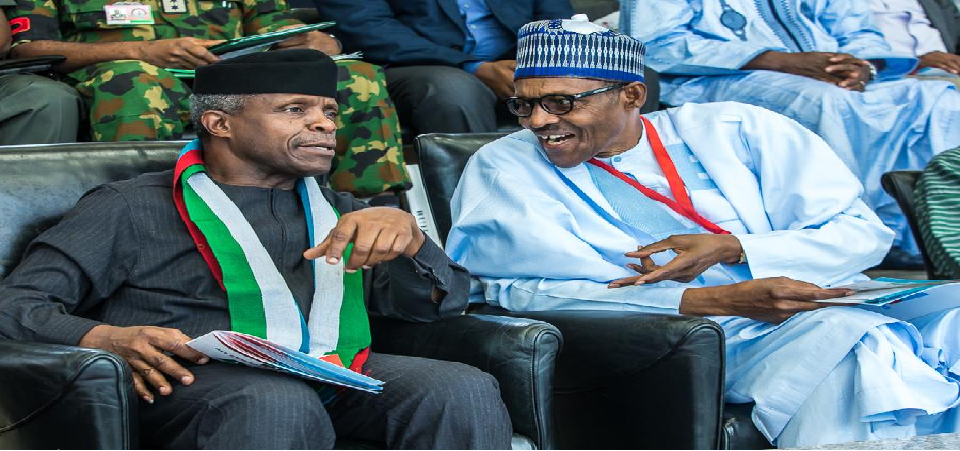
President and Vice President of Nigeria

When it was announced that Nigeria would fully deregulate its downstream petroleum sector, I wrote: ‘“You need to see to believe… Yes, I do not believe this policy or initiative…” Partly, the agency that put the press release was the agency that was created to regulate the sector. In that press release, the Executive Secretary of  Petroleum Products Pricing Regulatory Agency (PPPRA), Abdulkadir Saidu, did not say he was resigning or disbanding/downsizing the agency. So, how can petrol prices be unregulated when the regulator is still fully operational? Of course, even fully deregulated markets have regulators (example, NCC for telecoms). Yet, at least PPPRA would have noted how many people it was firing for reduced activities. That did not happen, and many of us did not believe the government in the long-term.

Just as expected, indeed the PPPRA is not going out of business. It has clarified that nothing has really changed. No full deregulation!

The Petroleum Products Pricing Regulatory Agency (PPPRA) has made a U-turn on its decision to allow marketers to fix petroleum products prices as indicated by market forces. The Regulatory Agency had a few days ago published a document containing the government’s decision to partially deregulate the downstream sector.

On Saturday, the PPPRA said it would not allow petroleum products marketers to fix prices, although its role will be to advise and recommend prices that will serve as a guide to marketers.

The statement signed by the Executive Secretary of PPPRA, Abdulkadir Saidu, confirmed that the Nigerian government has deregulated the market, but added that it does not excuse the role of the Agency as the Regulator.

“Suffice to say that in a deregulated market, the role of a Regulator in monitoring and regulating activities in the sector cannot be over-emphasized,” he said.

That is the Nigerian problem: interests. How do you expect a big man or woman to disarm in Nigeria? This is why a national leader shapes the destinies of nations. Many do know the right thing to do but cannot because of self-interests. So, you have to make the calls for them!

This agency has shown that even though it may still be useful to provide guidance on a full deregulated market, it may not have to run at 100% current capacity. Yes, less than 30% of the current manpower may be needed for the post-deregulation regime. But for that to happen, it means the Executive Secretary will reduce this agency budget which will be like a poison pill. That does not happen in Nigeria. And because of that, no deregulation as self-interests will always win.