DD
MM
YYYY

PAGES

DD
MM
YYYY

spot_img

PAGES

Home Blog Page 6312

PPPRA Turnaround: In Fear of Job Loss, Agency Says Petroleum Pump Price Must Be Regulated

0

The Petroleum Products Pricing Regulatory Agency (PPPRA) has made a U-turn on its decision to allow marketers to fix petroleum products prices as indicated by market forces. The Regulatory Agency had a few days ago published a document containing the government’s decision to partially deregulate the downstream sector.

On Saturday, the PPPRA said it would not allow petroleum products marketers to fix prices, although its role will be to advise and recommend prices that will serve as a guide to marketers.

The statement signed by the Executive Secretary of PPPRA, Abdulkadir Saidu, confirmed that the Nigerian government has deregulated the market, but added that it does not excuse the role of the Agency as the Regulator.

“Suffice to say that in a deregulated market, the role of a Regulator in monitoring and regulating activities in the sector cannot be over-emphasized,” he said.

He added that the ‘Market-Based Pricing Regime for Premium Motor Spirit (PMS) Regulations, 2020,’ published on June 4, does not empower marketers to fix prices. He said that marketers should rely on the guidance of the Agency that will keep monitoring the market realities and offer advice based on the facts.

Abdulkadir said that the PPPRA will monitor market trends and advise the Nigerian National Petroleum Corporation (NNPC), and marketers on the monthly market-based guiding price, and will determine the retail price at which petroleum products shall be sold nationwide.

He said, “It would be recalled that the removal of Premium Motor Spirit (PMS) price cap and implementation of a market-based pricing regime was first announced by the Honorable Minister of State for Petroleum Resources, Chief Timipre Sylva, in March 2020. This was followed by PPPRA’s publication announcing the Regulation on the market-based pricing regime, thus creating a legal framework for the policy.

“The Honorable Minister had earlier stated that the Federal Government will continue to monitor the price of petroleum products and advice on monthly guiding prices that guarantee reasonable returns to operators while ensuring consumers pay appropriate prices in line with market reality and are not overcharged.

“The Honorable Minister in his statement further stressed that the government’s role in a deregulated economy was to provide, through the operation of the Petroleum Products Pricing Regulatory Agency, a pricing mechanism to create a market-driven price regime.

“For the avoidance of doubt, it is instructive to state that no private individual or group has the mandate to fix prices of petroleum products. However, the statutory regulatory body is saddled with the responsibility of advising guiding prices.”

In the document released on June 4 by PPPRA, it was stated clearly that marketers of petroleum products would be allowed to fix prices as determined by market forces. Therefore, the turnaround of the Agency seems to be indicating ulterior intention.

On Saturday, after the decision of the federal government to deregulate the downstream sector made the news, Nigerians started advocating the disbandment of the PPPRA. Many said that the Agency’s sole reason for existence is to regulate pricing for petroleum products, and should be dissolved as the price is no longer regulated.

“The job of PPPRA is to regulate the price of petroleum products. As the price of petrol will no longer be regulated, PPPRA is no longer needed. Scrap it now!,” said Dr. Joe Abah, former Director General of BPSR.

It believed that the calls to scrap the Agency have instigated fear among its members, due to job insecurity, and they are putting up a disclaimer to part of the information contained in the document it released earlier to save their job.

Moreover, it was noted that the Regulatory Agency was unable to effect uniform pump prices in the country before the PMS subsidy was removed, as there were notable differences in prices of petroleum products in some parts of the north, the Southeast and some South-western states.

At a time when the Nigerian economy is going through strains due to COVID-19 pandemic, and the government has been advised to cut its spending by, among other things, minimizing ministries and agencies, Nigerians are calling on the federal government to scrap the PPPRA as soon as possible.

European Governments Force Google to Introduce “Choice Menu”

0
The US is after Google also

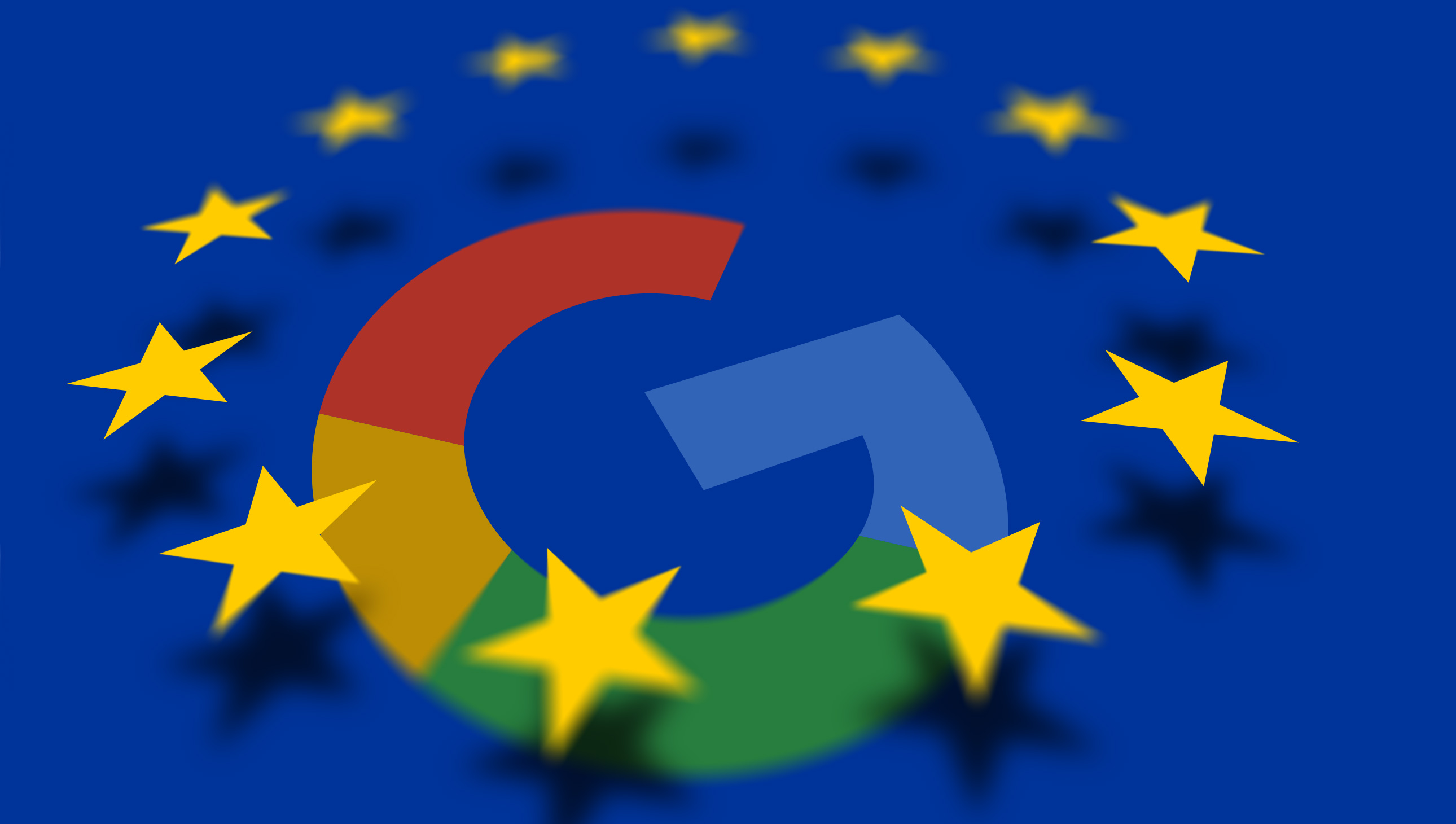
As the Justice Department continues with its antitrust investigation on Google, focusing on the search giants’ dominance in the online advertising industry, the European counterpart has compelled some changes that will set regulatory precedent.

Phone users in Europe have, for the first time in many years, been presented with a menu option that allows them to choose other search companies as their default search engines. The choice menu has become a feature of new Android phones and devices running on Google software.

In 2018, the European authorities ruled that Google abused its dominance in smartphone software and gave itself undue advantage over competitors. Based on the ruling, the search giant is trying to make amends by developing new devices with new features that allow users to use search choices other than Google. But that has brewed more trouble for the Silicon giants.

The attention of the United States Justice Department has been drawn to it, and it appears ready to get Google to do the same in the US. The Justice Department is reportedly preparing a big antitrust battle with Google this summer. It is said to be one of the biggest monopoly actions taken by the United States in years.

Google has been a company of interest in Europe and the United States over the years. Since last year, the Justice Department and state attorneys generals have been investigating the company’s web practices, especially on web search and ads. Google has a huge influence when it comes to the internet. It controls about 90% of online searches and receives one-third of every dollar spent on online ads according to New York Times.

The call to break Google up over its dominance as it tends to muzzle competition has been voluminous for years, and it appears the European governments have opened a chance for the Department of Justice (DOJ) to pursue a legal challenge against the company’s influence.

But experts believe that following Europe’s line of action will do Google no harm.

“It doesn’t seem like too much of an imposition on Google’s business model, while opening the floodgates to competition a bit. The fact that Europe has gone first gives the D.O.J a benefit to see how it’s working,” said Michael Carrier, a law professor at Rutgers University Law School.

In 2018, Google was fined a record €4.34 billion with a demand that it stops its anti-competitive practices. Though the company is appealing the ruling, altering power of default to allow other companies on devices using its operating system seems like a win for Europe.

Google’s search accounts for almost 100 percent of Android smartphones and the company is paying Apple billions of dollars to be the default search choice on iphones.

In 2001, the US government and Microsoft ended their long fought antitrust battle on the decision requiring the company to alter some of its default software to allow users to switch to applications of their choice. That included allowing users of the Microsoft Windows to use browsers other than explorer.

In 2006, Google told antitrust officials that Microsoft should give Internet Explorer users a choice of another default search engine when starting the browser. And that set a precedent that has come to hunt Google right now.

But it is not the first time Google is getting caught in the controversy of monopoly. In 2017, the company and the Russian Federal Antimonopoly Service agreed, as part of settlement, that it will update its chrome browser in Android phones so that users can have choice of using other search engines as default.

Though Google has agreed to alter its default software to accommodate other companies, its terms and conditions have become a challenge that many have found unacceptable. The internet giant is limiting the number of non-Google search engines to three in any country. It is also forcing interested companies to participate in quarterly auctions to decide how much they will pay to be featured.

Gabriel Weinberg, chief executive of DuckDuckGo, said even though he sees the preference menu as a good way to increase competition, Google’s tactic is unfair to small businesses and consumers: “pay-to-play auction is bad consumers (and competition), Google knows how to work the system and consumers lose in the end,” he said.

For now, the big players in the game appear not interested in the auction, and that leaves Google and small companies like DuckDuckGo in the play. And it’s not clear if European governments are going to do something about the pattern the company has employed to administer the choice menu.

Understand How To Grow Your Business In U.S. And Establish Business in America

0

Dawn Malotane-Lindsey, a South African who now lives in the U.S., runs a family company Vari-Tek LLC. In Tekedia Mini-MBA, Dawn will share knowledge and experiences on how to prepare for doing business with American companies and for establishing business in the U.S. for African immigrants.

Join Dawn, the President of Vari-Tek LLC and an immigrant like most of us, in our program, as she educates on how to find that opportunity in beautiful America.

America is a fascinating country. The first dozen people I hired for my firm came from free U.S. support (yes, excess scholarship money while in school) and when I finished, the U.S. Government through USAID wrote me a cheque. It was magical because I spoke just for 7 minutes for them to fund Zenvus.

Come over and let us co-learn and co-share experiences to advance the mission; REGISTER.

https://www.tekedia.com/mini-mba-2/

Scaling A Business And Marginal Cost Impact [Video]

0

This week we are looking at marginal cost and profitable scaling in Tekedia Mini-MBA. This is the introduction video for Week 18. There are four more videos in the Digital Board for members including some modelling on things discussed in this video. Interested in the next edition? Register here for the next edition which begins June 22.


Week 18 Session

0

Notes:  The Written Material has been updated; there is no material difference except formatting issues and numbering of a figure. Apologies for the mix-up during upload. The first edition of Tekedia Mini-MBA will come to a close on June 10th. We will share a video here on Wednesday on the certificate issuance process for those […]

This post is only available to members.