DD
MM
YYYY

PAGES

DD
MM
YYYY

spot_img

PAGES

Home Blog Page 6319

On The Nigerian Government’s Endless Loans

0

On Tuesday, the Nigerian House of Representatives approved the $22.7 billion loan request made by President Muhammadu Buhari. This is coming a few weeks after the Nigerian government secured a $3.4 billion COVID-19 assistance fund from the International Monetary Fund (IMF).

The senate had on Tuesday approved a $5.5 billion loan request made by Buhari, as his administration continues to look for funds to implement the revised 2020 budget.

According to the letter that accompanied the loan request, part of the loan will be sourced from Multilateral and Bilateral Institutions: $3,400,000,000 from the IMF, $1.5 billion from the World Bank. The Senate is also seeking $500 million from the African Development Bank (AfDB), and the federal government, $113 million from the Islamic Development Bank.

Every one of the borrowing plans is tied to the funding of the revised budget.

The $22.7 billion was approved by the Senate in March, but was rejected by the House due to the controversy surrounding it. The speaker of the House, Hon. Femi Gbajabiamila said the loan was not approved then because the southeast was excluded from the infrastructural projects that Buhari said the large part of the loan will be spent on.

“I know there has been a lot of agitation about the southeast not benefiting from the loan,” Gbajabiamila said in March. “It is one of the reasons we haven’t considered the loan in the House,” he said then.

The House handed the loan’s consideration to its committee on aids, loans and debt management, and in over two months, the committee submitted their report approving the loan.

In May, both the upper and lower chambers of the National Assembly unanimously approved the N850 billion loan proposal by the federal government. The federal government said the loan will be sourced domestically to augment the revised budget. This will put Nigerian public debt to N31.57 trillion.

While it is obvious that Nigeria needs as much money as she can get now, owing to the economic havoc that COVID-19 pandemic is wreaking on the country, the challenge has always been if the borrowed fund will be judiciously used.

In the revised budget, the national assembly complex renovation was reduced to N27.7bn (25.1%) decrease. The allocation for primary healthcare in the 774 Local Government Areas in Nigeria is reduced from N44.4bn to N25bn, more than (42.5%) decrease. The Universal Basic Education fund was also reduced significantly from N111.7bn to N51.1bn, more than (54.2%). The 2020 budget as originally passed stood at N10.51 trillion. The downsized budget as published by the Ministry of Finance is N1.5 trillion, but only N80.35 billion was actually cut from the budget, according to data published by Dataphyte.

Analysis of the budget’s downsizing shows that the federal government has ignored critical areas of the economy to favor others that the country can do without. The recurrent expenditure was increased by N85.55 billion, (from N4.84 trillion to N4.93 trillion). The construction of the National Assembly Library (NLIDS) received N2 billion while the health, education and agricultural sectors took a cut.

The revised budget was based on N360/$1 foreign exchange and $25 per a barrel crude oil benchmark. The decision of the federal government to increase funding for these projects at the expense of most important sectors has, however, attracted outrage. The Center for Anti-Corruption and Open Leadership (CACOL) said the FG’s decision to cut down the funds for education and healthcare is unfortunate.

“Why should we waste N27 billion on a building that is not showing any sign of distress?” asked the executive chairman of CACOL, Debo Adeniran. “It is a misplaced priority and a total waste. The National Assembly doesn’t need repainting let alone renovation.

“Nigeria is the poverty capital in the world despite being one of the most endowed countries. It is misplaced priorities that brought us to this sorry state we found ourselves. Nigerians are dying from treatable and preventable diseases and the government thinks it is right to slash the health budget while maintaining the N27 billion for renovation? It’s a shame,” he said.

The federal government has applied for these loans on the promise that it would be used to contain the strains of coronavirus pandemic in Nigeria. The healthcare sector is of primary concern, education and agricultural sectors are also paramount as the government is preaching its desire to diversify the economy. Many have expected that the revised budget would be streamlined toward these critical areas, and could not hide their disappointment at the turn of events.

“Cutting on health budget in the midst of pandemic is heartlessness at its peak. Approving 27 billion for renovation of the National Assembly building amidst that same pandemic is inhuman and gross. Wicked leaders! Anti-people government,” Adentunji Adediwura wrote on Twitter.

As the development stirs more controversy, the Socio-Economic Rights & Accountability Project (SERAP), has taken the matter to the UN. In a statement issued on Wednesday, the anti-corruption group called the federal government’s decision “unjustified, disproportionate and discriminatory,” adding that it should be immediately reversed.

“we have asked three UN special rapporteurs to put pressure on President Buhari and the National Assembly to immediately reverse the unjustified, disproportionate and discriminatory budget cuts to education & healthcare, and stop them from spending N27bn to renovate NASS complex,” the statement said.

As condemnation trail the development, the federal government and the National Assembly backtracked. They claim the fund allocated for the National Assembly Complex renovation is N9 billion, not the N27 billion being circulated in the media. But many have refused to believe it, saying that the government cannot be trusted to speak the truth.

The refutation is supposed to calm the nerves of Nigerians who have been irked to livid by the development, if not that they want the renovation of the National Assembly complex out of projects considered by the federal government, as there are more important things to do with the borrowed fund. Given the present economic and health crisis, N9 billion is still considered a large sum.

In 2016, president Buhari had sent a $30 billion loan to the eight senate headed by Bukola Saraki. The majority of the senators rejected it as there was no explanation on how the fund will be used. Consequently, Buhari repeatedly hinted on the refusal of the senate to approve his loan request as the reason he couldn’t fulfill many of campaign promises, since revenue generation was low due to dwindling oil prices.

After the 2019 general elections, members of the All Progressive Congress (APC) won a majority of the seats in both the upper and lower houses of the National Assembly. It was seen as a political development that changed the tides in favor of the federal government.

The National Assembly, hence, was believed to be a tool in the hands of Buhari, with many calling it “rubber stamp” to signify their inability to question the president on anything.

The relationship between the two arms of the government has been cordial, but it is believed to be on a “rob my back I rob yours” basis. The National Assembly’s incessant approval of loan requests by the federal government, and the latter’s eagerness to yield to its yearning, has been seen as evidence of quid pro quo.

The noise and argument that followed the $22.7 billion loan request in April, appears to have died a natural death. Not even a member of the House from the southeast and South-south caucasus, who fiercely opposed the loan proposal then based on the exclusion of the southeast, could lift up a voice against it now.

Many believe that the status quo of recurrent expenditure and constituency projects has been maintained during the downsizing of the budget because it’s part of the deal between the legislative and the executive arms of the government. And every project can be sacrificed in the interest of their “give and take” relationship.
Akinwumi Adesina: AfDB Board Approves An Independent Review (Full Text)

3

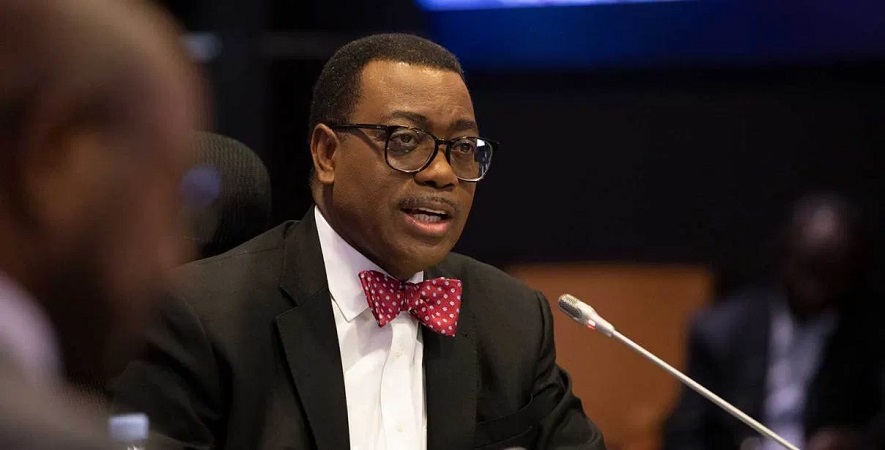
As expected, the Board of the African Development Bank (AfDB) will appoint an independent attorney to look at the Ethics Committee report on complaints against the Bank President, Akinwumi Adesina. They just issued a communique today (Thursday, see below). This independent overview is close to what the U.S. had asked for.

There are no surprises, I wrote a few days ago thus: “Many here have written that African Union and AfDB should just ignore the U.S. and carry on. That would be a momentous stupidity because if the U.S. treasury classifies AfDB as a “corrupt institution”, rightly or wrongly, the bank will crash.” You do not mess up with America when it comes to banking ordinance because the U.S. dollar and its banking institutions run the world. 

However, based on the views of some Governors on the matter and the need to carry every Governor along in resolving it, the Bureau agrees to authorize an Independent Review of the Report of the Ethics Committee of the Boards of Directors relative to the allegations considered by the Ethics Committee and the submissions made by the President of the Bank Group thereto in the interest of due process.

Even the AfDB President will not fault the conclusion of the Board as he does know the implications of going against the wishes of the U.S Treasury. His meeting with Nigerian President would have fixed his problems, but unfortunately, Nigeria is a spoke in the wheel of global banking – and the U.S. owns the whole wheel. I had commented on that Mr. Buhari  meeting thus: “President Buhari makes his support to Akinwumi Adesina, African Development Bank (AfDB) president, evidently public. Ideally, that should do it for the AfDB President on the allegations leveled against him”. But America has different ideas.

Now, game on, this may be the best outcome for Adesina. If an independent attorney clears him, he would be cleared indeed! Yes, even though the independent review will focus on reviewing the Ethics Committee decision,  there is a clear correlation here: if the committee has done a good job, Adesina smiles. But if the Review says the committee did not do a good job, it becomes an issue, and a new investigation may be needed. So, why the Review is not probing or investigating the direct allegations, its conclusion remains a matter that will affect the President’s interests. When you review a report of a probe, you are indirectly “probing” the original incident!

And those African ex-presidents who wrote that letter, making a case against an independent attorney,  should now understand how their lack of visioning  has denigrated the standing of Africa in the global arena. The African Development Bank is a cash center for the United States in Africa, not even a full bank branch!


The full statement

Communique of the Bureau of the Boards of Governors of The African Development Bank Group following its Meeting of 4th June 2020 regarding the whistle-blowers’ complaint against the President of the Bank

  • The Bureau reiterates that it agrees that the Ethics Committee of the Boards of Directors performed its role on this matter in accordance with the applicable rule under Resolution B/BG/2008/11 of the Board of Governors.
  • b)The Bureau also reiterates that the Chairperson of the Bureau of the Board of Governors performed her role in accepting the findings of the Ethics Committee in accordance with the said Resolution.
  • c)However, based on the views of some Governors on the matter and the need to carry every Governor along in resolving it, the Bureau agrees to authorize an Independent Review of the Report of the Ethics Committee of the Boards of Directors relative to the allegations considered by the Ethics Committee and the submissions made by the President of the Bank Group thereto in the interest of due process.
  • d)The Independent Review shall be conducted by a neutral high caliber individual with unquestionable experience, high international reputation and integrity within a short time period of not more than two to four weeks maximum, taking the Bank Group’s electoral calendar into account.
  • The Bureau agrees that, within a three to six month period and following the independent review of the Ethics Committee Report, an independent comprehensive review of the implementation of the Bank Group’s Whistle-Blowing and Complaints Handling Policy should be conducted with a view to ensuring that the Policy is properly implemented, and revising it where necessary, to avoid situations of this nature in the future


Comment from LinkedIn Feed

Comment #1: Just to be clear, what have been authorized is “an Independent Review of the REPORT of the Ethics Committee” and not a look at the whistleblower complaints against the President. There is a clear difference.

Comment #2: Prof, please fact-check. The Board will allow an “independent review” of the approved report, not an “independent investigation” into the matter. US can have its say but the AfDB Board will have its way.

My Response: I think the title of this piece is Independent Review. There is no confusion there. However, when you probe a report, you are also probing what the report looked at. Everyone is an adult and we understand. While there is a difference, it is an independent person doing it. The key word is “independent”.

Covid-19 Is Redesigning Global Payments, Killing Cash

1
Nigeria Naira US Dollar

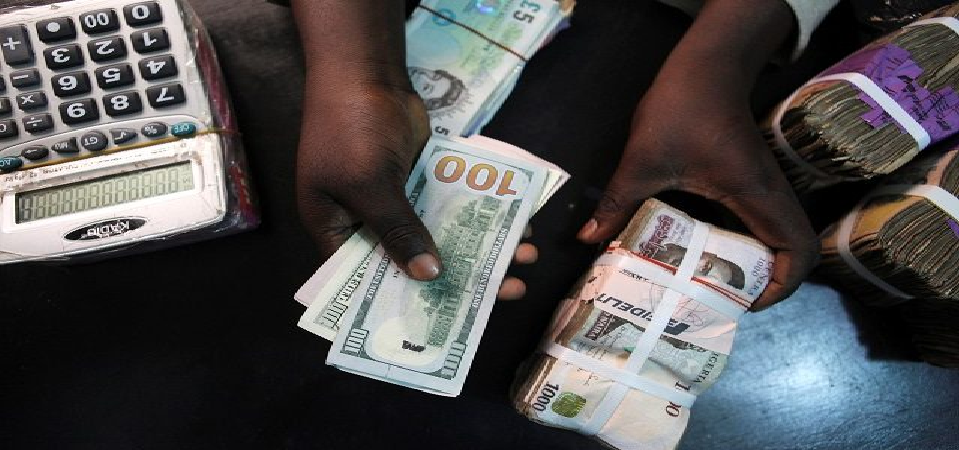
Across America, Covid-19 is bringing a new ordinance in one small piece which travelers experience daily: paying toll gates with cash. As the virus dislocated market systems, making touching cash a dangerous decision, state governments moved quickly to digitize toll payments. It seems very simple but it is a momentous decision because a few years ago, some activists went to courts to protest their rights to pay for things, with cash. Yes, even if you digitize your restaurant payments, you must still have a mechanism to collect cash from customers.If you do not do that, you are breaking the law of the land. But now, paying tolls in most locations would be all electronic. Only Covid-19 made that possible. Companies like Chipotle, an eatery chain, have eliminated cash payments. Either you pay with a card or you go hungry.  

That takes me to what is happening across East Africa. Rwanda now requires people to pay through digital means in Kigali. Uganda wants the informal okada riders to join e-hailing companies which have better tools for digital payments. And Kenya has taken it all the way: “Kenya’s National Transport and Safety Authority (NTSA) wants privately-owned minibuses involved in public transportation to start using cashless payments to collect fares”.

Kenya’s National Transport and Safety Authority (NTSA) wants privately-owned minibuses involved in public transportation to start using cashless payments to collect fares. When in force, customers will be required to make payments with their phones while boarding ‘matatus’ as the minibuses are called in Kenya. To achieve this, the NTSA has reportedly called for bids from tech companies who will take up the task of installing necessary software on the matatus.

While the immediate motive appears to be linked with limiting COVID-19 spread, the move ties into a noticeable wave in East Africa to digitize payments in the transport sector. In Uganda, the government wants informal motorcycle drivers to join e-hailing companies, while the Rwanda Utilities Regulatory Authority recently directed all motorcycle taxi operators in Kigali to have meters and collect payments using only digital means. (TC Daily newsletter)

You know the implication? These cities and nations are advancing and will possibly formalize their largely informal economic systems.  Most of these redesigns would not have happened without Covid-19 as some activists would have mounted ferocious challenges. But with the virus ravaging things, those counter-calls have been muted. Why? If you think collecting cash is the way to go, governments will ask you to go and mount the toll gates and be paid for doing that job. 

Covid-19 is evil. Yet, it has provided opportunities for some economies to reform. I do hope Nigeria takes actions across our market sectors and territories. There are many positive things the government can do now with no opposition in the name of Covid-19. Call this moment a generational opportunity to bring reforms in markets and economic structures.

Are Women Truly Afraid of Men?

0

Some days ago, the Nollywood actress, Genevieve Nnaji, took to her Twitter page to condemn the murder of Tina Ezekwe and Vera Omozuwa. While lamenting their demise, she said that women “live in constant fear of men”. This comment has raised dusts all over the social media platform and beyond as both men and women questioned, rejected or agreed with her. It was indeed a deep recognition of what many women pass through, or believe they pass through.

But the key question here is, “Are women really afraid of men?”

Many women in the world can attest to the fact that they were raised to see men as the stronger sex. Women were taught to stay away from men so they don’t get hurt. Women were taught that they are no match to men in physical fight. And the majority of them have experienced that feminine “lack” of physical strength. But does that mean that women live in constant fear of men?

Maybe Genevieve Nnaji made that comment without knowing how deep it will cut. Her statement caused women to reflect on why they avoided men, especially in dark and lonely places. She caused men to wonder if there is an impending gender-war brewing. From all I could see, men do not understand the reason why women should be afraid of them and women couldn’t tell exactly why they are afraid of men.

Some women may be fast to say that they are truly afraid of men forgetting that they have male colleagues with whom they work comfortably with. Many women are not afraid of interacting and relating with their male relatives, friends and neighbours. So, it will be out of place to say that women are afraid of men.

But that notwithstanding, there is a deeper reason behind Genevieve’s statement. Truth is that what women are afraid of are not men, but what men represent. Women are not afraid of the male gender; they are afraid of what men are capable of doing. Put simply, the problem is with the action and not with the doer. In other words, women are cautious around men because they wouldn’t want to experience those actions.

Now you may ask, “What is it that men do that women don’t do?” And to that I will tell you, “Nothing”. I will explain this with these three major vices attributed to men folk – physical assault, robbery and sexual harassment.

Physical Assault

Experience taught women that they cannot fight men, at least not physically. People like me tried that severally and failed woefully and bitterly. So deep down women know that they wouldn’t want to challenge or stand to experience any physical attack from any man. So women are not afraid of the man but of the pain he will cause them.

Note that men are not the only ones that physically attack people. Women do that too, a lot. And theirs are quite deadly. But then, a woman doesn’t run away from another woman. Even if she’s being attacked by many women at the same time, she will stay back and fight it out because somewhere at the back of her mind she believes she will not be injured by a woman as she would have been hurt by a man.

Robbery

Someone said that if she’s jogging and sees a man behind her, she will move faster. She’s not the only one here; many women can attest to that. If you ask why they do this, they might tell you they suspected that the man was a thief that wanted to snatch their phones or purses. And sometimes, they’re right.

For some reasons, it is hard to attach a feminine face to robbery. Most robbers are men. Even our folktales represent stealing with male characters. This explains why people hardly feel uncomfortable when they find themselves on lonely roads with a woman. Some of us do not enter public transports when it is occupied by only men even though we know that many deadly robbers are women. This is just to say that when women think about thievery, they think about men; it is not the other way round.

Sexual Harassment

This is the height of it. Every girl-child is constantly warned by her parents to avoid being alone with men because she might get raped. This same child hears stories about girls being sexually harassed by men or she might even experience it. So women actually live in constant fear of rapists. Unfortunately for men, the face of a rapist is the face of men. So when women fear rapists, they actually fear men.

I think it is extreme to say that women are afraid of men. No, women are not afraid of men; they are only afraid of vices committed by hoodlums. They are afraid of dangers that will put them through pains. The only crime committed by men here is that many hoodlums are men (though this is not scientifically proven). It is therefore left for the men folk to sanitise their gender so as to get rid of the bad eggs among them.

But we should not forget that all vices do not bear men’s faces. Women do have their own areas of specialty when it comes to heinous crime. But that doesn’t make us afraid of women. In other words, we don’t need to tag faces to crime as that will be deceptive. Rather, we should focus on how to eradicate crimes.

A Microsoft Business & Tech Leader Will Teach Cloud & AI In Tekedia Mini-MBA

0

He is a business and technology leader with deep financial and business acumen derived from close to two decades in the IT industry, covering sales, technology consulting and advisory. He worked with leading technology and telecommunications companies like Allied Computers, Resourcery Limited and MTN Nigeria. He holds a Bachelor’s Degree in Computer Science and Engineering from the prestigious Obafemi Awolowo University Ile-Ife.

Wale Olokodana, a Microsoft Azure Business Group Lead, will handle our Cloud and AI session during the Tekedia Mini-MBA. Cloud computing has become exceedingly critical in today’s business sphere, and AI is already emerging to architect a new paradigm in the mechanics of global commerce and industry. 

Come and understand cloud and AI, for your business innovation & growth, at Tekedia Mini-MBA; REGISTER.

https://www.tekedia.com/mini-mba-2/