DD
MM
YYYY

PAGES

DD
MM
YYYY

spot_img

PAGES

Home Blog Page 632

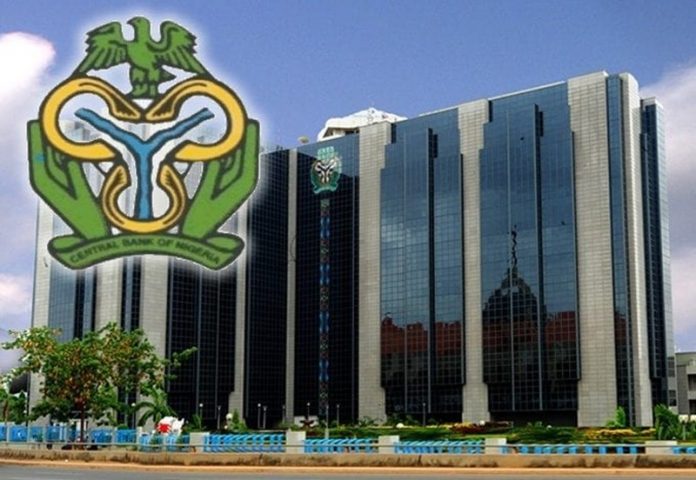
CBN Orders Nigerian Banks, Payment Operators to Migrate to ISO 20022, Mandates Geo-Tagging of Terminals by Oct 2025

0

The Central Bank of Nigeria (CBN) has issued a sweeping directive compelling all financial institutions and payment operators in the country to complete migration to the ISO 20022 global messaging standard and implement mandatory geo-tagging of payment terminals by October 31, 2025.

In a circular dated August 25 and signed by Dr. Rakiya O. Yusuf, Director of the Payments System Supervision Department, the apex bank stressed that the reforms are crucial to strengthening Nigeria’s financial infrastructure, aligning the country with international benchmarks, and improving transparency in electronic transactions.

The directive, published on the CBN’s official website on Tuesday, applies to Deposit Money Banks (DMBs), Microfinance Banks (MFBs), Mobile Money Operators (MMOs), Switching and Processing Companies, Payment Terminal Service Providers (PTSPs), Payment Solution Service Providers (PSSPs), Super Agents, and all other licensed players in the payments ecosystem.

ISO 20022: Global Standard, Local Mandate

The CBN said the adoption of ISO 20022, now the global benchmark for payments messaging, is consistent with SWIFT’s global migration timeline.

“All payment transaction messages exchanged domestically or internationally must be formatted in ISO 20022 in line with CBN and SWIFT specifications,” the circular stated.

Institutions are expected to populate mandatory data fields accurately, including payer and payee identifiers, merchant and agent identifiers, and transaction metadata. The regulator underscored that compliance is not optional, warning that migration activities must be fully completed before the October 31 deadline.

ISO 20022 replaces legacy messaging formats with a data-rich framework that provides greater clarity and reliability. Instead of terse transaction codes, the standard allows detailed information such as purpose codes, remittance details, and identifiers, thereby reducing errors, enhancing fraud detection, and making regulatory oversight more effective.

Mandatory Geo-Tagging of Terminals

In addition to messaging reforms, the CBN rolled out a significant requirement for geo-tagging of payment terminals such as PoS devices.

According to the directive:

  • All existing and new terminals must have native geolocation services enabled, supported by double-frequency GPS receivers.
  • Terminals must be registered with a Payment Terminal Service Aggregator (PTSA) and tied to precise latitude and longitude coordinates of the merchant’s physical business location.
  • Android OS version 10 or higher is now the minimum requirement to ensure compatibility with the National Central Switch’s geolocation monitoring system.
  • Terminals not routed through a PTSA will be barred from transacting.
  • Geo-location data must be captured at the point of transaction and embedded in the message payload as a mandatory reporting field.

The apex bank further directed that all existing terminals must be geo-tagged within 60 days of the circular, while new terminals must be geo-tagged before certification and activation. Compliance validation exercises are set to commence from October 20, 2025.

The CBN aims to curb fraud, prevent unauthorized relocation of devices, and strengthen confidence in digital transactions by linking terminals to their exact deployment points. Geo-tagging also enables regulators to identify underserved regions and guide policies for financial inclusion.

Why It Matters

Experts say the reforms represent one of the most ambitious overhauls of Nigeria’s payments ecosystem in years. The ISO 20022 migration aligns the country with global financial standards, enhancing cross-border payment efficiency while tightening domestic oversight.

The mandatory geo-tagging of payment terminals is expected to reduce rampant fraud involving mobile PoS machines and strengthen transaction integrity. Analysts also point out that by tracking deployment, the CBN could use the data to address gaps in payment penetration across rural and semi-urban areas.

Challenges Ahead

Despite the clear benefits, the directive may pose challenges for smaller operators. Many microfinance banks and small PTSPs could struggle with the cost of upgrading devices to Android 10 and equipping them with advanced GPS technology.

Some analysts warn that without adequate support, smaller firms risk being forced out of the market. They note that while this reform will certainly improve the payments space, the cost implications may hit smaller players harder, potentially leading to consolidation in the industry.

Nigeria’s payment system has grown exponentially over the past decade, with PoS transactions, mobile money services, and online payments surging as cash use declines. But fraud, weak oversight, and uneven infrastructure deployment have plagued the sector.

The CBN’s reforms, by insisting on data standardization (ISO 20022) and location traceability (geo-tagging), aim to plug these gaps, protect consumers, and put Nigeria on par with advanced financial markets.

If fully implemented, the measures could reshape not just compliance but also competition in the industry, rewarding operators who can swiftly adapt and raising the bar for customer trust and transaction security.

Trump’s Firing of Fed Governor Lisa Cook Sparks Unprecedented Clash Over Central Bank Independence

0

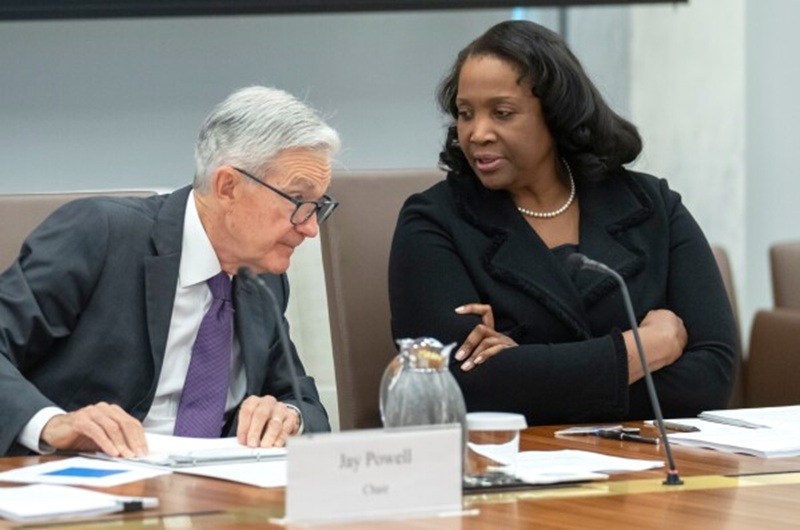
President Donald Trump’s announcement on Monday that he had fired Federal Reserve Board Governor Lisa Cook has triggered an immediate legal and political storm, setting up what could become the most consequential battle over the independence of the U.S. central bank in more than a century.

In a termination letter posted on his Truth Social account, Trump accused Cook of committing mortgage fraud, citing allegations first made by Federal Housing Finance Agency Director Bill Pulte. Trump alleged that Cook signed documents for properties in Michigan and Georgia in 2021, each time declaring them to be her primary residence.

“It is inconceivable,” Trump wrote, “that you were not aware of your first commitment when making the second.”

“There is sufficient reason to believe you have made false statements on one or more mortgage agreements,” Trump added, calling her actions “deceitful and potentially criminal conduct” that undermines her competence as a financial regulator.

The Justice Department confirmed last week it was reviewing Pulte’s referral, though Cook has not been charged with any crime.

Cook Pushes Back

Cook, who in 2022 became the first Black woman to serve on the Fed’s Board of Governors after being nominated by then-President Joe Biden, rejected Trump’s action outright.

“President Trump purported to fire me ‘for cause’ when no cause exists under the law, and he has no authority to do so,” Cook said in a statement Monday. “I will not resign. I will continue to carry out my duties to help the American economy as I have been doing since 2022.”

Cook has retained the prominent Washington attorney Abbe Lowell, who recently launched a new firm specializing in defending government officials targeted by the Trump administration. Lowell, whose clients include Hunter Biden and New York Attorney General Letitia James, called Trump’s move baseless.

“President Trump has taken to social media to once again ‘fire by tweet,’ and once again his reflex to bully is flawed and his demands lack any proper process, basis or legal authority,” Lowell said. “We will take whatever actions are needed to prevent his attempted illegal action.”

Lowell added that Cook’s termination was “based solely on a referral letter” and would be challenged in court.

A Legal and Political Showdown

The confrontation raises profound constitutional and economic questions. Under the Federal Reserve Act of 1913, presidents may only remove governors “for cause.” Historically, this phrase has been interpreted narrowly to mean malfeasance, neglect of duty, or inability to serve — not simply political disagreement.

Senator Elizabeth Warren, the top Democrat on the Senate Banking Committee, has condemned Trump’s action.

“The illegal attempt to fire Lisa Cook is the latest example of a desperate President searching for a scapegoat to cover for his own failure to lower costs for Americans,” Warren said. “It’s an authoritarian power grab that blatantly violates the Federal Reserve Act, and must be overturned in court.”

Edward Mills, managing director at Raymond James, warned of market implications. “This marks an unprecedented moment for both the Fed and the White House, signaling a campaign to exert direct influence over monetary policy decisions. Markets are likely to view this attack on Fed independence negatively, amplifying uncertainty over future policy direction,” he said.

Trump’s Battle With the Fed

Trump’s decision to target Cook did not come out of nowhere. Since returning to the White House in January, he has clashed openly with Fed Chairman Jerome Powell, pressuring him to slash interest rates despite the central bank’s cautious approach.

On July 15, Trump asked a group of Republican lawmakers whether he should fire Powell, with several agreeing he should. Though he later denied any immediate plan, Trump left the door open, saying Powell could face dismissal if allegations of fraud surfaced.

Powell himself, appointed by Trump in 2017, has faced attacks from the president before. During Trump’s first term, he repeatedly berated Powell for raising interest rates, calling him a “bonehead” and even likening him to “an enemy” of the United States.

Historical Clashes Between Presidents and the Fed

The conflict between presidents and the Federal Reserve has deep roots. Though the Fed was designed as an independent body insulated from politics, presidents have often tried to exert influence over its decisions.

  • Franklin D. Roosevelt leaned on the Fed during the Great Depression to support New Deal policies and debt financing for World War II.
  • Richard Nixon privately pressured Fed Chair Arthur Burns to keep interest rates low before the 1972 election, a move many economists later blamed for fueling runaway inflation in the 1970s.
  • Ronald Reagan clashed with then-Fed Chair Paul Volcker, who raised rates aggressively to tame inflation. Volcker resisted political pressure but was replaced by Alan Greenspan, who was seen as more accommodating.
  • Barack Obama faced criticism from Republicans who accused the Fed under Ben Bernanke of enabling “easy money” policies that inflated asset bubbles, though he refrained from direct confrontation.

What sets Trump apart is not just the intensity of his pressure campaign but his willingness to test the legal boundaries of presidential authority over the Fed by attempting to remove a sitting governor.

Stakes for the Fed’s Independence

If Trump’s action against Cook is upheld, he would be able to nominate her replacement. Alongside his pending nominee, Stephen Miran — tapped to replace the recently resigned Adriana Kugler — Trump could tilt the seven-member board toward a 4-to-3 majority of appointees loyal to his agenda.

Two governors, Christopher Waller and Michelle Bowman, were already appointed by Trump during his first term. With Powell also a Trump nominee, the president could exert significant influence over monetary policy decisions, including the pace of interest rate cuts.

The implications for financial markets are far-reaching. Already, the ICE U.S. Dollar Index dropped 0.3% following Trump’s announcement, while the 2-year Treasury yield dipped 4 basis points. Stock futures weakened in overnight trading, and gold prices climbed 0.3% as investors sought safe assets.

Now, the courts will need to determine whether allegations of mortgage misrepresentation constitute sufficient “cause” for dismissal under the 1913 statute. If Trump prevails, he could gain extraordinary leverage over the central bank at a moment when global investors are scrutinizing U.S. economic stability.

If he fails, the attempt may backfire, strengthening the Fed’s institutional independence and setting a precedent that insulates its governors from future presidential intervention.

Foreign Portfolio Investment in Nigeria Soars to N1.81tn in July, A 133.09% Leap from June

0

Nigeria’s capital market witnessed a dramatic surge in foreign portfolio investment (FPI) in July 2025, with inflows hitting N1.81 trillion, a 133.09% leap from N778.65 billion in June.

The latest data from the Nigerian Exchange (NGX), compiled from custodians and market operators, also reveals a year-on-year increase of 269.19% compared to N491.61 billion recorded in July 2024.

Cumulatively, total FPI between January and July 2025 stood at N6 trillion, almost double the figure for the same period last year, marking one of the strongest seven-month performances on record.

Domestic Versus Foreign Flows

While foreign participation rose significantly, domestic investors continued to dominate market activity. The NGX report showed that domestic transactions in July 2025 jumped to N1.66 trillion, representing a 161.07% increase from N639.34 billion in June.

Within this, institutional investors drove the bulk of trading, outperforming retail investors by 38%. Institutional activity surged by 216.03%—from N364.71 billion in June to N1.15 trillion in July—while retail transactions climbed by 88.07%, moving from N274.63 billion to N516.50 billion in the same period.

On the foreign side, transactions totaled N145.95 billion, up 4.76% from N139.31 billion in June. However, foreign inflows of N50.4 billion were eclipsed by outflows of N95.4 billion, highlighting that while investors are engaging in the Nigerian market, many are still pulling capital out at a faster pace than they are committing.

Year-to-Date Foreign Portfolio Trends

From January to July 2025, total foreign portfolio flows reached N1.28 trillion, more than double the N598 billion recorded in the same period of 2024. A breakdown shows that inflows have nearly tripled to N609.73 billion, compared with N266.64 billion in 2024, while outflows rose to N671.56 billion, from N331.36 billion a year earlier.

This sharp increase indicates stronger engagement, but it also underscores the cautious stance of foreign investors who continue to exit with significant capital despite the attraction of Nigerian equities.

In historical perspective, this year’s FPI is substantially higher than in preceding years: N185.62 billion in 2023, N301.37 billion in 2022, and N262.85 billion in 2021. When combined with N4.7 trillion from domestic transactions, total activity in the first seven months of 2025 reached N6 trillion.

Drivers Behind the Surge

Several factors are fueling this unprecedented wave of trading. Analysts point to the performance of the All-Share Index (ASI) as a critical driver. The index delivered a strong return of 37.7% in 2024 and has already gained over 37% in 2025, making Nigerian equities one of the most attractive across emerging markets.

A more stable foreign exchange market—after years of volatility—has also played a role in calming investor concerns. Additionally, a relatively predictable inflation outlook has reassured market participants that risks, while still present, are more manageable than in previous cycles.

However, the sharp rise in FPI activity reflects both renewed confidence and persistent caution. On one hand, higher inflows demonstrate that global investors are finding Nigerian assets increasingly attractive amid reforms, index gains, and a push for macroeconomic stability. On the other hand, the fact that outflows continue to exceed inflows suggests that confidence remains fragile, with investors often engaging in short-term speculative plays rather than committing to long-term holdings.

This duality has long defined Nigeria’s relationship with foreign portfolio capital. Unlike foreign direct investment (FDI), which signifies a deeper and longer-term commitment to the economy, portfolio inflows tend to be hot money—quick to enter during periods of optimism but equally quick to exit during episodes of uncertainty.

Nigeria’s FPI and Market Story

Nigeria’s FPI story echoes broader emerging market patterns where shifts in U.S. interest rates, oil prices, and global risk sentiment play critical roles. The country has often seen boom-and-bust cycles in capital inflows, with surges in periods of relative stability followed by sharp exits during crises, such as the oil price crash of 2014–2016 or the FX market turmoil of 2020.

The current surge to N1.81 trillion in July alone suggests a level of optimism not seen in over a decade, but the persistence of high outflows serves as a reminder that Nigeria’s investment case still hinges on policy credibility, FX liquidity, and structural reforms.

Looking ahead, analysts say sustaining this momentum will require continued efforts to improve the business environment, strengthen fiscal stability, and maintain a transparent FX regime. If these conditions hold, Nigeria could gradually shift from being merely a target for speculative inflows to a more stable investment destination.

Google Arms Translate with AI Lessons, Setting Up a Showdown with Duolingo in Language Learning

0

Google is taking a major step to make its Translate app more than just a quick word-conversion tool. The company has begun rolling out AI-powered language learning features, turning Translate into something closer to a full-fledged tutoring service.

The new feature, now in beta, creates personalized lessons that adapt to a user’s skill level and goals. For example, someone preparing for a holiday abroad could receive different lesson plans than a student gearing up to live with a host family. The app draws on Google’s Gemini AI models to craft exercises that range from practicing everyday phrases to handling professional or family conversations.

At launch, the service is limited: English speakers can practice Spanish and French, while Spanish, French, and Portuguese speakers can work on their English. Once users tap the new Practice button in the app, they can select their skill level and either describe their goal or choose a preset scenario. Translate then generates interactive lessons that can involve both speaking and listening.

Matt Sheets, a Google product manager, said the exercises are designed to track daily progress and help users “build the skills you need to communicate in another language with confidence.” The approach mirrors some of what popular apps like Duolingo offer, but with Translate’s real-time AI capabilities woven in.

Google is also pushing further into real-time communication. A newly launched live translation feature now allows two people to converse naturally, even without sharing a common language. The tool captures speech, produces an AI-generated transcription, and plays back an audio translation in the listener’s language. It works in more than 70 languages—including Arabic, French, Hindi, Korean, Spanish, and Tamil—and is already available to users in the US, India, and Mexico.

Unlike the live translation feature on the Pixel 10, which mimics the speaker’s voice, the Translate app uses a generic AI-generated voice. Sheets noted, however, that Google is “experimenting with different options” for more natural-sounding results in the future.

This update marks one of Google’s boldest moves yet into language education technology, positioning Translate not just as a travel aid but as a direct competitor in the global AI-driven language learning market.

This expansion positions Google Translate in direct competition with Duolingo, the Pittsburgh-based company that has become a global leader in app-based language learning. Since its launch in 2011, Duolingo has grown to more than 100 million monthly active users across over 40 languages, combining gamification, AI-driven personalization, and daily practice streaks to dominate the language learning app space. It has also expanded into literacy and mathematics, but language remains its core strength, cementing its reputation as the world’s most downloaded education app.

Duolingo’s success has been built on its ability to adapt lessons to a user’s progress while keeping engagement high through rewards, streaks, and competitive leaderboards. Its gamified approach has made it particularly popular among younger learners and casual users who may not otherwise stick with traditional study methods. In 2021, the company went public on Nasdaq, underscoring its status as a rare success story in the edtech sector.

Google is effectively challenging Duolingo on its home turf by adding AI-driven lessons directly into Translate. Unlike Duolingo, which requires downloading a separate app, Google is leveraging the popularity of Translate—already installed on billions of Android and iOS devices worldwide—as a built-in gateway to learning. The integration with Google’s Gemini AI could also give Translate an edge in producing highly contextual, real-world scenarios that mirror the kinds of conversations people actually have.

The move sets the stage for a showdown between Duolingo and Google. While Duolingo’s gamification and brand recognition are unmatched, Google’s sheer reach, AI muscle, and integration into existing services could tilt the balance in its favor. The battle could redefine how people around the world approach language learning, shifting from playful apps to fully AI-assisted, real-time learning and translation ecosystems.

Bitcoin Slides as Investors Hope For Bullish Price Action

0
CREATOR: gd-jpeg v1.0 (using IJG JPEG v80), quality = 82

Bitcoin has continued to extend its losing streak on Tuesday. According to CoinDesk data, the world’s largest digital asset dropped 2.6% in the past 24 hours to trade at $109,628.

The decline leaves Bitcoin 11% below the record high it set earlier this month and has sparked fresh debate over whether the bull run has already peaked in 2025.

The latest sell-off is being attributed to a “whale,” a large Bitcoin holder offloading assets that pushed the market below critical technical levels. Bitcoin’s price briefly dipped below its previous all-time high of $109,300, first reached in January 2025, raising concerns that the token could be headed for deeper losses.

Technical Warning Signs

Analysts highlight that Bitcoin has broken below the 100-day exponential moving average (EMA), a level that has historically signaled further near-term weakness. “BTC has broken below the 100 EMA on the daily chart. That’s not a good sign and could open the door for a deeper correction toward $103K,” trader Cryptorphic cautioned in a post on X.

Other traders are watching whether the $100,000 level will be retested, or if Bitcoin could even slip back into five-figure territory. Weakening on-chain metrics, including lower trade volumes and bearish divergences in the relative strength index (RSI), are reinforcing bearish sentiment.

Liquidations Mount

Bitcoin’s sharp pullback has triggered nearly $500 million in long liquidations since Sunday, according to CoinGlass data. Many of the newest investors, those holding BTC for less than a month are now sitting on unrealized losses of around -3.5% and have begun selling, analyst CrazzyBlockk noted.

However, some traders see signs of a possible rebound. “BTC downside liquidity has been hunted. And now, it seems like shorts will be liquidated next,” trader BitBull suggested.

Despite the fear, some analysts argue the correction fits within Bitcoin’s broader bull market structure. Since early 2023, the cryptocurrency has posted several drawdowns of 20–30% before resuming its uptrend. Merlijn The Trader, for instance, dismissed the idea that Bitcoin has already topped at $124,000, calling it “noise” rather than a cycle peak.

Ethereum Steals Some Spotlight

While Bitcoin struggles, Ethereum has attracted growing interest. Digital asset investors have recently rotated into ETH, which hit a new high on Sunday after Federal Reserve Chair Jerome Powell signaled potential interest rate cuts.

Data from Blockchain.com highlighted a major whale offloading 24,000 BTC ($2.7 billion) into the decentralized platform Hyperliquid over the past nine days. Of that, 18,142 BTC worth $2 billion was already sold and rotated into 416,598 ETH, according to analyst MLM.

Another whale sold 670 BTC ($76 million) to open a leveraged long ETH position last Thursday, reinforcing a growing trend of whales swapping Bitcoin for Ether. ETH has rallied 220% since bottoming at $1,471 in April, narrowing the gap with Bitcoin and Solana (SOL), which led earlier phases of the bull cycle.

Though Ethereum has since cooled on profit-taking, analysts at Kaiko noted that “liquidity and volumes remain supportive.”

Looking Ahead

For now, traders and investors are waiting for a fresh catalyst to drive Bitcoin’s next move. The cryptocurrency failed to rally past its previous high of $124k, after Powell’s Jackson Hole speech even as stocks surged on the prospect of lower borrowing costs.

With risk assets typically benefiting from falling interest rates, Bitcoin’s muted reaction has left bulls hoping the next wave of momentum is just around the corner.