DD
MM
YYYY

PAGES

DD
MM
YYYY

spot_img

PAGES

Home Blog Page 6338

To Prevent COVID-19 And Other Related Diseases, Market Men and Women Need To Be Enlightened On Food Safety Practices – Tomisin Adefare

0

Tomisin Adefare is a young lady who is passionate about development. She has a first degree in Agricultural Economics and Extension from the Osun State University, Osogbo. She is currently on a Master’s programme in Agricultural Extension and Rural Development at the University of Ibadan. She recently organized a sensitization programme for market men and women in two selected markets in Ibadan on COVID 19  preventive measures, food security and safety practices. She had a chat with Rasheed Adebiyi on her passion for development, food security and hygiene. The excerpts are here.

Tekedia: What informed your recent effort at engaging issues around COVID 19 and food security?

Tomisin Adefare: I believe an individual can make a difference. Our collective effort can make an immeasurable impact in the lives of many people. It is everybody’s social responsibility to ensure the virus doesn’t spread among the people and that food security is not affected.

Tekedia: How do you feel being part of those engaging the Pandemic in a productive manner?

Tomisin Adefare : I feel fulfilled making an impact in my community. It makes me want to do more. As a student of Development, I cannot resist the urge to contribute my own quota in the fight against the Coronavirus which is threatening an area I have huge interest in- food security. Health is important to ensuring food security. When the farmers are healthy, they would be able to farm and supply the markets with the needed food items. The market users too need to be healthy to ensure the chain of distribution does not break. This is why I embarked on the sensitization on the preventive measures of the virus and at the same time also enlighten the market users on the need to maintain food safety practices.

Tekedia: Tell us more on these programmes?

Tomisin Adefare : The sensitization was done on food safety and preventive measures of COVID 19. Sometimes ago, I was at the market for a market survey and part of my survey was to see how food is being packaged, processed and sold. I discovered the way the food was being handled wasn’t hygienic enough. I discovered some food items were exposed to flies and to some animals like goats and sheep. I remembered vividly about the time the goat and sheep were busy eating the cassava flakes that were put outside by a seller, it was a passerby that called her attention to it that she had to chase the animals away. After which she removed a small portion from the side the animals were eating from, poured it away and then continued selling to the customers that came after then. I was so sad and as a Development Practitioner, that triggered me to make plans towards sensitizing them on food safety.Bodija and Sango Oju Irin Markets were chosen for the sensitization because this is where the bulk of the food people in Ibadan metropolis eat comes from. Also, due to the outbreak of COVD 19, there was a need to sensitize them on preventive measures to prevent transmission of the virus in the market place. Because this will have a negative impact on food security in the society and this could lead to hunger, starvation to death and malnutrition.

Tekedia: What was your experience like talking to people at the grassroots?

Tomisin Adefare : I discovered that the majority of the market users didn’t believe COVID 19 exists and they were of the opinion that it could only affect the rich people. We made them understand that the virus is not a respecter of any person as it affects the children, the old, the rich and the poor. We discovered a minority of them had heard about Covid 19 from friends but still aren’t taking it serious.  After the sensitization, the market users understood how to wash hands properly, the importance of social distancing. They even demonstrated social distancing before we left the markets. We saw them maintaining some distance from their co-sellers at the market.  They had a change of mindset about it as they were a bit scared of the consequences if someone that contracted the disease is not properly taken care of.

Tekedia: As a result of your being on the street, what advice do you have for government on the fight against COVID 19

Tomisin Adefare: Sensitization is never enough and as they keep hearing the importance and purpose, they will begin to stick to it and act properly. Lockdowns may be the best solution to curtail the spread but it pays for most developed countries where about 80 percent of the population is in the formal sector and they could work from home. But in a country like Nigeria where about 65 percent of the people especially in the rural areas are in the informal sector, lockdown without adequate support or a relief fund can as well lead to casualties. As non-governmental organizations and the private institutions are doing their best in creating awareness and sensitizing people on the need to take preventive measures, government shouldn’t relent by creating more awareness for people especially those living in the rural areas, they should provide more protective materials for the people or by subsidizing the amount they purchase it. The  National Agency for Food and Drug Control should enforce food safety among the market users so as to prevent eating contaminated food to prevent diseases such as Lassa fever as the number of people dying from it keeps increasing day by day.


Ndubuisi Ekekwe To Speak in Standard Bank’s Event Tomorrow

0

Lord Polonius: “What do you read, my lord?”. 

Hamlet: “Words, words, words”.

Today, Hamlet would have answered “Data, data, data’ in business.

From Samuel Taylor Coleridge’s “The Rime of the Ancient Mariner”, we got this line: “Water, water everywhere, Nor any drop to drink”. Tomorrow, I will discuss data, going back to the ancient Greek philosophers on the purpose, and meaning of natural philosophy, and how data offers a new dawn in the financial sector. 

Chinua Achebe would write, “An adult does not sit and watch while the she-goat suffers the pain of childbirth tied to a post”, the key is executing on data, not just having data.

This is a non public event by Standard Bank Group, South Africa.

Nigeria’s GDP Grew by 1.87% in Q1 2020

1
LAGOS, NIGERIA - JULY 15: A general view of congested traffic in central Lagos on July 15, 2008 in Lagos, Nigeria. (Photo by Dan Kitwood/Getty Images)

Against the backdrop of global economic strains resulting from COVID-19 pandemic, Nigeria’s Gross Domestic Product (GDP), grew by 1.87% Year on Year (YoY) in real terms, according to the data published by the Nigerian Bureau of Statistics (NBS).

The performance recorded in Q1 2020, represents a drop of -0.23% points compared to Q1 2019 and -0.68% points compared to Q4 2019, reflecting the earliest effects of the disruption, particularly on the non-oil economy. Quarter on quarter, real GDP growth was -14.27% compared to 5.59% recorded in the Q4 2019.

The oil sector performance stood at average daily production of 2.07 million barrels per day (mbpd). The production level was higher than the 1.99mbpd recorded in the same quarter of 2019 by 0.08mbpd and the fourth quarter of 2019 by 0.06mbpd.

There was a record of real growth rate of 5.06% yoy in the Q1 2020, indicating an increase of 6.51% points relative to the rate recorded in the corresponding quarter of 2019. However, there was -1.30% points decrease compared to Q4 2019 which was 6.36%. Quarter-on-quarter, the oil sector recorded a growth rate of 11.30% in Q1 2020.

Consequently, the non-oil sector added 1.55% growth in real terms in Q1 2020. That’s -0.93% points slower compared to the same quarter in 2019, and -072% slower than the Q4 of 2019.

The non-oil sector was sparked mainly by telecommunications, finance, agriculture, mining and quarrying and construction. The non-oil sector contributed 90.50% to the nation’s GDP in Q1 2020, in real terms, compared to 90.78% of the same quarter in the preceding year, and 92.68% in the Q4. Road transport, quarrying, accommodation, real estate and food services recorded the lowest performance.

In the mining and quarrying sector, which consists of crude petroleum and natural gas, coal mining, metal ore and other minerals, there was a nominal growth of -10.57% yoy in Q1 2020. While metal ore recorded the highest growth rate of all sub-activities at 8.72%, followed by crude petroleum and natural gas activity which stood at -10.20%, it was crude petroleum and natural gas that contributed most to the sector with 99.51% growth in the Q1 2020.

The mining and quarrying sector grew in real terms by 4.58% yoy, compared to the same quarter of 2019, the Q1 2020 was higher by 5.95% points but lower by -1.49% points when compared to Q4 2019. The quarter on quarter growth recorded stood at 9.36%. The total contribution of mining and quarrying to the real GDP was 9.54% for Q1 2020.

In the agricultural sector, there was a 22.47% yoy growth in nominal terms in the Q1 2020, indicating a decline of -0.11% points from the same quarter in 2019. The sector recorded an increase of 8.66% points when compared to the 13.80% growth rate of Q4 2019. Crop production accounted for 90.54% of overall nominal growth in the sector. Quarter on quarter growth stood at -19.58% in Q1 2020. The agricultural sector contributed 20.88% to nominal GDP in the Q1 of 2020.

The agricultural sector grew by 2.20% year on year in the first quarter of 2020, in real terms, indicating a -0.97% points compared to the same quarter in 2019. On a quarter on quarter basis, the real agriculture sector growth was -27.81%. The sector made 21.96% contribution to overall GDP in real terms in Q1 2020.

Information and communication sector’s growth stood at 8.94% in nominal terms yoy, a -2.51% points decrease from the rate of 11.45% recorded in the same quarter of 2019, and -0.93% points lower than the rate recorded in the preceding quarter. There was a -7.20% quarter on quarter growth in the first quarter of 2020.

The information and communication sector contributed 10.31% to total nominal GDP in the Q1 2020, lower than the rate of 10.60% recorded in the same quarter of 2019. In the first quarter of 2020, the information and communications sector recorded a growth rate of 7.65% in real terms, yoy. Compared to the same period of the preceding year, there’s a decrease of -1.84% points. Quarter on quarter growth stood at -8.02% in real terms. The sector contributed 14.07% to total real GDP in Q1 2020.

The increase recorded in most of the sectors contributed to the 1.87% GDP growth, but compared to the preceding year, the Q1 2020 has underperformed, mainly, due to the decline in oil price and events that the year 2020 was ushered in with.

With this scorecard, the second quarter of the year will undoubtedly yield negative growth due to the impact of the coronavirus crisis. The International Monetary Fund (IMF)  said Nigeria should brace up for its worst recession.

When Your Company Goes WFH, Your Leverageable Value Drops

5

If your company introduces a Work from Home (WFH) policy, do not just blindly rejoice. I just finished reading a paper by a big U.S. bank economist who is advising its customers that (1) WFH will help them expand their talent pool (2) Reduce wage growth for their workers over time (3) Solidify an employer-market, arbitraging best talent and lower cost.

As companies like Twitter, Facebook, Amazon, Microsoft, and Zillow embrace this redesign, do not think it is because they want you to have extra sleep by keeping you at home over jumping into early morning traffic. This is the fact: Covid-19 has forced a huge global experiment, pushing companies around the world to pilot something many would not have done. And the results came out largely just fine.

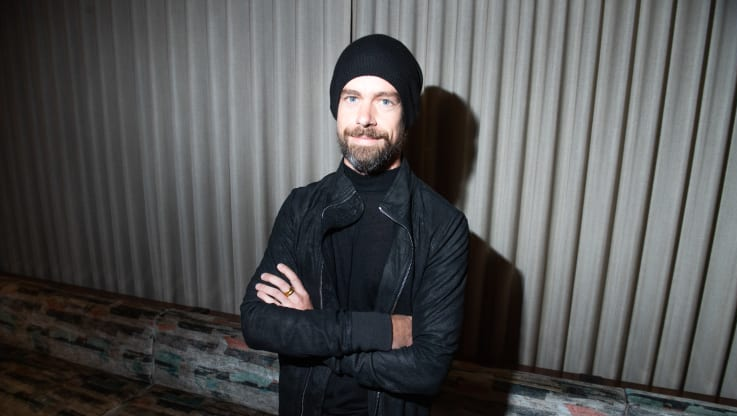
Both of Jack Dorsey’s companies will now allow employees to work from home permanently.

San Francisco-based Square said Monday it would let people work remotely, even after regional shelter-in-place orders end. The news came a week after Twitter, also run by Dorsey, announced its employees would have the same option.

“We want employees to be able to work where they feel most creative and productive,” a Square spokesperson told CNBC. “Over the past several weeks, we’ve learned a lot about what it takes for people to effectively
Be aware that WFH will offer a new domain of competition where talent sources will be both local and global at the same time.  Simply, talent becomes unbounded and unconstrained, making it possible that plug-and-play can happen at scale. Yes, if you are in San Francisco, earning $8,000 per month, you can be replaced with someone in Nairobi, earning $2,000, and the company will justify it as adopting a new way of work philosophy. But deep behind is a clear value-creation for employers, through reduction of the cost of labour!
“We can get talent anywhere. There’s a lot of folks out there that do not want to move to San Francisco. They feel comfortable working in a much smaller office or just home.” CEO of Twitter, Jack Dorsey
It is arbitraging the best, lowest cost workers globally, pushing workers on the edge downward trend. While some workers will lose, some will benefit. A positive impact on workers is the new Andela policy to adopt WFH for experienced software developers.

ICT created value for companies through improved productivity. The internet has done the same. But there is a key difference: the web does create value but it is also great on destroying and shifting value. If you make a phone call with Whatsapp from Lagos to New York and spend one hour, you may be spending about $1 via equivalent broadband cost. 

But if you have called direct via MTN, a telecom company, you may be off by $40. Yet, the $39 you have saved is not going to Whatsapp which remains free. So, for companies the value has been destroyed, not transferred between. This trajectory cuts across industries making it possible that you can innovate, and yet not earn any income from it; you just end up destroying value for everyone!

The WFH is a new technology app: it would destroy value for some workers (others will benefit) and help employers save while improving overall efficiency through a more talented workforce! It is basic economics, whenever supply increases, other things being equal, price drops. If WFH increases talent for companies, expect wages to drop for workers in some expensive regions of the world! If you live in those regions, you must ensure you can bring more value to avoid displacement. And understand where you stand in this dislocation.

On The Allegations Against AfDB President, Akinwumi Adesina

2

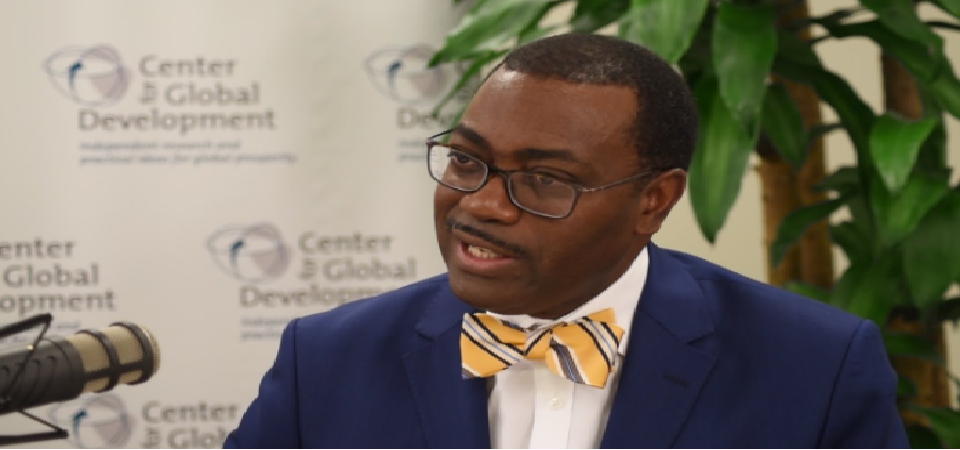
Since the news broke on allegations against the African Development Bank (AfDB) President, Akinwumi Adesina,  and the American government’s rejection of the Ethics Committee conclusion, I have tried to understand what happened. I have asked some friends in the Bank and read some online articles. Of course, this is a whistleblower complaint; not many things are online. This is the summary: In the Nigerian standard, these are not allegations because we operate that way, from local governments to the presidency. Of course, AfDB is not Nigeria.

There were some accusations against Dr Adesina by some AfDB stakeholders. The Ethics Committee of the Bank’s Board was put into action; he was exonerated by the Committee.

The big news now is that the United States Government through the Secretary of Treasury, Steven T. Mnuchin, has rejected the conclusion, and is asking for an independent investigation. That changes the dimension of this whole thing. The letter is attached here (pdf). Dr. Adesina was largely walking into the second term of the AfDB presidency before this investigation began.

From this you can see the heart of Dr. Adesina, he gave out the $750,000 he won on prizes to charity but the Bank’s whistleblowers would have preferred he sent it to its vault. That the U.S. government read through these allegations and is getting involved (read letter) is surprising. What he is accused of happens everyday in Washington DC. That does not mean they are good, but with all the issues in the world, and America can find time for this does mean Adesina has more challenges than these allegations.

The original complaint seen by PREMIUM TIMES include 16 cases of alleged breaches perpetrated by Mr Adesina and an additional four cases of breaches later sent to the Board of Governors.

The allegations range for alleged misconduct and favoritism, arbitrary recruitment, private gain, impediment to efficiency, singlehandedly overruling decisions taken by directors, nepotism, political lobbying, use of bank resources for private gains.

That said, this is a lesson for all of us from Nigeria: one of the accusations is that 25% of the newly recruited managers and leaders are Nigerians; Nigeria holds 9% stake in the bank. If that is indeed true, we must condemn it, but that is not a fire-able offense. The Bank president can be given time to normalize it.

In 2014, I went to Aso Rock, Nigeria’s seat of Power. I got to a section… People there were speaking Ijaw – most of them came from the Niger Delta area. I returned to that same place when I went for an event where I met the Vice President in 2017, everyone was now speaking Hausa. Largely, in Nigeria, our “it is my turn” is a way of life. But that should not be, and some may not accept it.

Premium Times has some of the allegations.

ALLEGED BREACHES OF CODE OF CONDUCT

The original complaint seen by PREMIUM TIMES include 16 cases of alleged breaches perpetrated by Mr Adesina and an additional four cases of breaches later sent to the Board of Governors.

The allegations range for alleged misconduct and favoritism, arbitrary recruitment, private gain, impediment to efficiency, singlehandedly overruling decisions taken by directors, nepotism, political lobbying, use of bank resources for private gains.

[…]

The whistleblowers claimed that almost immediately after Mr Adesina’s assumption of office, he usurped the role HR manager, “playing very active role in the recruitment of all managerial positions”.

[..]

The whistleblowers also alleged that under Mr Adesina’s presidency, the bank’s organisation chart was altered to promote Nigeria to an almost full-fledged region.

[…]

“Admittedly, Nigeria is AfDB’s largest shareholder with over 9%, but it’s not clear if this justifies a preferential treatment. Nigerians have also been particularly well treated in the massive recruitment drive that was launched due to the restructuring of President ADESINA between 2016 and 2018. When roughly 9% of new recruits were Nigerians (or dual nationals of Nigerian origin) – in line with Nigerian shareholding –, they made up roughly 25% of the newly recruited managerial functions. It is not clear if this preferential treatment was justified by a previous under-representation,” they said.

[…]

The whistleblowers described Adesina as “the unchallenged travel champion” of the bank and accused him of using the opportunities of his travels to meet regional heads of States and making financial promises to obtain their support for his re-election.