DD
MM
YYYY

PAGES

DD
MM
YYYY

spot_img

PAGES

Home Blog Page 6339

7 Cheats Code I’ve Used To Lead An Extraordinary Life

0

If you are young, let me give you 7 cheat codes about life that I have been using to lead a smarter life.

  • First is to learn on your own

The common theme is to encourage people to ask questions. But for me a lot of my deep learning have emerged because I refrain from asking questions.

Instead of asking a question, I go down the deep of finding answers from the Internet myself. While doing that, I read both relevant and irrelevant things.

Here’s what I learnt along the way…

The irrelevant things are only irrelevant to what my question was not to life or other ventures in life. Not asking people but the internet my questions has been nothing but an adventure I will take again and again.

Do I still ask people questions? Absolutely, yes. I like the feeling of having to refer to someone as being my answer provider. But beyond that, human brings a different flare to my question and take care of nuances that general online answers may not take of

In the end I combine my rabbit hole internet adventure with that of human answers that tend to take off nuances. That my friend is what gave birth to me.

  • You have time to make mistakes. Make them. You have time to fail. Fail forward

Those two things will add up to become stories that society will pay you later on to hear you narrate it. 

  • Don’t go asking for permission before you go on about your life and take your bets

All permissions are granted based on the authority that the person giving it has. Many times no one has the authority to give you a go ahead but you. If you fail, it’s a feature in life not a bug.

  • Just learn as many things as you can. As in JUST LEARN

I often say “follow the impulses of your heart and if anything looks good to you, do it.” Never give up on learning. 

  • Just be you and Do you

Please don’t copy anyone. Find your uniqueness and you will be rewarded abundantly for it. 

  • Stop worrying about what someone or somebody is thinking about you

It won’t add to you or remove from you. That’s the truth. The “true you” can only be discovered once you break free of what others think of you. No matter what you do, they will always think something and that’s out of your control.

Why will you spend your whole life focusing on what you can’t control. Just pursue excellence in all that you do. That’s all you owe yourself and the world. 

  • Please always think beyond today and more about tomorrow

Be a long term oriented individual who plays the infinite game and considers the second order effect of a lot of her/his decisions. 

I am young just as you and those are the 7 things I’ve been focusing on.

Hydroxychloroquine Suspension: WHO Credibility Continues To Take Heat

0

The World Health Organization announced on Monday that it is suspending the clinical trial of hydroxychloroquine as potential treatment for coronavirus.

The decision to suspend the trial came following a study in medical journal The Lancet, which said there is evidence that taking hydroxychloroquine might even increase the number of deaths among those in hospital with the disease.

“We were unable to confirm a benefit of hydroxychloroquine or chloroquine, when used alone or with a macrolide, on in-hospital outcomes for COVID-19. Each of these drug regimens was associated with decreased in-hospital survival and an increased frequency of ventricular arrhythmias when used for treatment of COVID-19,” statement from Lancet said.

In February, hydroxychloroquine gained international attention when it showed significant progress in clinical trials. The drug became a top choice in treatment of coronavirus disease. The US president Donald Trump started promoting the drug in his push for a cure for the COVID-19 pandemic.

Hydroxychloroquine is a malaria drug, and can be used for lupus and arthritis. Its use in the treatment of coronavirus appears to have been borne out of desperation since no clinical trial recommended it for treating COVID-19.

However, the use of the drug soared in many countries, with self-medication being the new normal as many people seek to protect themselves from the disease.

On Monday, officials at WHO said hydroxychloroquine would be removed from the trials until its safety is ascertained. The director-general of WHO, Tedo Ghebreyesus said that Lancet’s findings have necessitated the pause in the use of the drug.

“On Friday, the Lancet published an observational study on hydroxychloroquine and chloroquine and its effects on COVID-19 patients that have been hospitalized. The authors reported that among patients receiving the drug, when used alone or with a macrolide, they estimated a higher mortality rate…

“The executive group has implemented a temporary pause of the hydroxychloroquine arm within the Solidarity Trial while the safety data is reviewed by the Data Safety Monitoring Board. The other arms of the trial are counting,” he said.

However, some countries said they will continue with the trial and use of the drug for coronavirus treatment.

The National Agency for Food and Drug Administration and Control (NAFDAC), said Nigeria will continue to use chloroquine in treatment of coronavirus patients following substantiated data that proves its efficacy. The director-general of the agency, Mojisola Adeyeye said the clinical trial will go on for the next three or four months.

“There is data to prove that hydroxychloroquine worked for many COVID-19 patients. Therefore, we would continue our own clinical trials in Nigeria. Hydroxychloroquine has been proved to work at a mild stage. So the potency depends on the severity of the disease in the patient’s body.

“If medical doctors, research scientists, pharmacists, herbal experts work together, we should conclude the trial in three to four months. The narrative might change afterwards but for now, we believe in hydroxychloroquine,” she said.

Turkey is another country that has defied the Lancet findings and the WHO’s decision to suspend the use of the drug until a final conclusion is made on its safety.

A senior government official said on Tuesday that hydroxychloroquine which has the generic name (plaquenil) in Turkey, will continue to be used because it has effectively reduced cases of Pneumonia and COVID-19 in the country.

“We are still using it. It is very effective when combined with other drugs in the early stages of the disease. However we don’t see the same results in the later stages when the patient needs to be put on intensive care,” the official told Middle East Eye.

Turkey was one of the countries that invested heavily on chloroquine before it reached the peak of COVID-19, stockpiling one million units of the drug in March, before many companies in the Middle East country started producing a generic version.

The data from the Turkish health ministry said 60 percent of cases registered on 24 March have fallen to 19.5 percent on April 6. A decrease they attributed to the use of hydroxychloroquine.

Besides Nigeria and Turkey, several other countries and individuals have vowed to continue to administer the drug in the treatment of coronavirus patients. Though the most prominent advocate of the hydroxychloroquine, Donald Trump said he has stopped taking it as a precautionary measure, it appears he has inadvertently inspired many to stick to the drug, after all, there is no better choice yet.

On the other hand, the US’ government’s deteriorated relationship with the WHO seems to have created rooms for distrust for the UN’s health agency, and many countries are now operating from them at the expense of the existing global health synergy.

Supply Chain Supremacy, When Political Scheming Backfires – Semiconductors Go Political

1

The 15th of May, 2020, was a big day in the technology supply chain realm; the United States threatened to banish China from the semiconductor production niche, which the Western nation, alongside South Korea, and Taiwan, has been dominating for some time now. You might be wondering, ‘what on Earth is a semiconductor?’ The truth is, all you really need to know is that they’re used extensively in electronic circuits, and today’s smart devices need them.

The U.S. managed such a seismic shift by luring Taiwan Semiconductor Manufacturing Company (TSMC), the world’s largest contract chipmaker, to home-soil, where they have committed to building a $12 billion plant within the next four years. That’s an incredible feat; a Taiwanese manufacturing giant setting-up shop in Arizona, providing 1600 jobs to the local population and thousands more, indirectly.

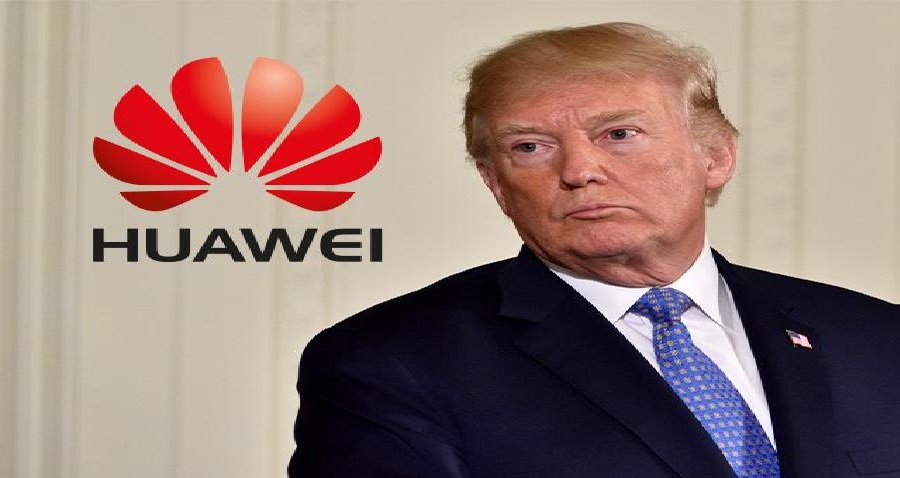
Trump administration 1 – China’s hold on the technological supply chain, 0. Or is it…?

The Big Daddies

TSMC, although you may never have heard of them, is one of the three global manufacturers capable of producing computer chips that contain transistors of 10 nanometers or smaller ? in other words, the most advanced computing chips in the world. The more notable brands, Samsung, and Intel round up the top three. Both of whom tend to keep the best of the best for their own flagship products, to boost their sales, as you’d expect. Unfortunately, China limps behind in the semiconductor race, with its largest manufacturer, Semiconductor Manufacturing International Corp, producing 14-nanometer chips at best. Meaning, Chinese tech giants have to outsource their semiconductor production, because they just can’t keep up.

Taiwan In The Middle

What does this mean for TSMC? Well, the manufacturer has a unique standing in the middle of the U.S. and Chinese tech markets – they’re the umpires of this international tennis match. Fortunately for their wallet, both Apple and Huawei source their semiconductors from the manufacturing giant. There are worse places to be; it’s like having Bill Gates and Jeff Bezos as your uncles, competing for your favor by pumping money into you. The problem is, technology is the future, and dominance is defined by technological capabilities – which is why the U.S. Department of Commerce has weighed in.

Semiconductors Go Political

Back in 2019, the US Department of Commerce, alongside much of the Western world, placed Huawei and 114 of its affiliates on its entity list. The entity list is just a list of businesses, organizations, and governments that are subject to licensing requirements for the export, re-export, and transfer of certain items into the United States. It sounds simple. But there was a reason for this action: it banned U.S. companies from selling their state-of-the-art tech to Huawei and its affiliates unless they had a special license from the Department of Commerce. The move was made under the guise of national security, with Huawei’s 5G signals and AI-enhancement infiltrating the countries worldwide in the form of ‘the next best thing.’ However, this didn’t affect TSMC, because they weren’t a U.S.-registered business – this meant that Huawei could still access the same semiconductors as Apple and other global tech giants.

Sewing Up The Loophole

Well, to the Department of Commerce, that’s a loophole that China is exploiting, and that just won’t do. So to sew it up, just hours after TSMC announced its plan to build a new U.S.-based plant, the Department expanded the existing entity list regulations. They announced that any non-American chip producers who utilize American chip-making machinery and equipment also need a special license to trade with Huawei and their affiliates. That’s handy, given that the equipment needed to produce the very best semiconductors costs upwards of $100 million per machine, and the United States produces them. This move is designed to bind top-tier semiconductor producers to the nation, preventing them from supplying Chinese tech leaders.

The Catch

While it all sounds great, there’s a catch… TSMC currently produces 12 million wafers of their industry-leading 5-nanometer chips per year, it only intends to produce 20,000 wafers of semiconductors per month at their U.S. facility, once it is built. The facility won’t be complete until 2024, and it’ll be equipped for this particular chip – which will be outdated. And, the company already plans for its upcoming, 3-nanometer chip production to take place in its Taiwan-based plants in the coming years. This means that tech giants in the U.S. will still be reliant on overseas supply chains for the best nanometers, and by the time they can produce them on home-soil, they’ll be going overseas for the cutting-edge tech of the day, yet again.

So, in the end, the TSMC plant does little to untangle the U.S. and Chinese supply chains, and will seldom affect the global outlook on the matter.

Untold Consequences  – Inspiring China

Now, there are a couple of other major issues that the U.S. Department of Commerces meddling has unceremoniously created. Most important of which is the reality of the expanded export ban being held in place – China, as it stands, is the country that purchases the majority of semiconductor tech from U.S. manufacturers. As a prime example, China provides Qualcomm with two-thirds of its yearly income. This implies that losing Huawei and China’s trade could, in fact, severely impair the development of the U.S. tech sector. It will certainly hinder the nation’s ability to innovate the upcoming wave of industry-leading next-gen tech.

Additionally, the U.S.’s interference inspired the Chinese government to endorse their leading chipmaker, Semiconductor Manufacturing International Corp (SMIC), in their pursuits of producing the industry-leading semiconductors. And, what better way to do that then injecting a fresh $2.2 billion investment into their bank account? None. So that’s exactly what they did.

Shanghai-based chip maker Semiconductor Manufacturing International Corp has secured an investment worth $2.2 billion dollars from Chinese state investors, the company announced on Friday.

The funding was revealed on the same day that the United States announced new restrictions on Chinese tech company Huawei Technologies that would further impact its ability to source chips made with American technology.

According to SMIC’s announcement, a number of vehicles under China’s so-called “Big Fund,” a government-backed money pool for funding domestic chip companies, will jointly make the investment in one of SMIC’s plants.

The U.S. has been looking to break China’s stranglehold on the technology supply chain for many years now. And, on the surface, this announcement has good optics, looking like a massive victory for Trump and U.S. policymakers in their seemingly endless battle with the Eastern powerhouse. The governing body came up with a scheme, executed it, and painted a pretty picture for the nation to see – we’ve regained our high-tech manufacturing capacity, cutting Asia out of the loop, and our technological advancements and intellectual property are no longer in the hands of Chinese manufacturers and tech giants.

Unfortunately, it shows us how intertwined the United States and Chinese supply chains really are, and just how much the two nations need each other to maintain global dominance.

The Need to Reintroduce History into Nigerian Curriculum

1

When I was in primary school I could remember History was a subject of study in senior secondary school. I knew this because sometimes I go to the school where my mom worked and I see students receiving their History lessons. I didn’t know what the subject was called then but I never liked the fact that someone had to memorise dates and names. It was until my second year in secondary school that I understood what History stood for and why there is a need to learn names and dates alongside the stories. But I was happy that the subject is optional, even for arts students like me. By the time I was in SS 1, History no longer existed in my school. The reason for this is unknown to me as of date. But was I happy that I didn’t meet the subject? The answer is a capital YES.

Well, that happiness has turned sour because I have realised what I’d lost. The first time I missed not studying History was when I saw a book on Nigerian historical happenings (such as the Oyo Empire and their wars) during my pre-NYSC days. I devoured the contents of the book (even though I avoided names and dates) and kept looking for more. I became interested in knowing who I really am as a Nigerian and where I stood in the historical development of the country, and the world at large. Well, let’s just say that everything I could gather since then comes in bits and pieces, some of which I couldn’t vouch for because I don’t know how objective the contents are.

As mentioned earlier, no one can truly tell why History was scrapped off Nigerian school curriculum. We only hear of reasons such as that History adds no value to economic and technological developments or that those that scrapped it off have things to hide. But, as we will find out later, History is one subject that will ensure the growth and development of any society; so it is wrong if it was truly trashed for that reason.

While I was searching for articles that will explain why History was removed from the school curriculum, I came across a news article in Vanguard Newspaper dated March 27, 2018, which reports that History has been reintroduced into the school curriculum. This report states that History is “buried under Social Studies curriculum”. This is a welcomed idea even though the curriculum review is yet to be put into effect. Alternatively, it could be that the inclusion is too insignificant for it to be noticed. But then, why should History be “buried” under Social Studies when it can stand as a subject of its own or be placed as one of the subjects under Religious and National Value (RNV)?

The fact that History is being hidden in Social Studies shows that its importance isn’t known. To start with, the existence of that subject gives people the opportunity of learning from the mistakes of others. By so doing, certain mistakes will be avoided in the present and in the future. This is one way History helps nations and individuals to grow and develop. But as we can see, the absence of History is taking its toll on Nigerian’s economy.

History helps people to understand the cycle of life. For instance, a little peek into the past reveals that things, such as fashion, reappear after some times. Another good example here is the present pandemic. History shows that coronavirus and other plagues have been attacking the world. The most important thing that would have been learnt concerning these ailments is that lack of vaccine, modern medicines and health inventions (such as ventilators and medical diagnosis) led to the death of many in the past. But here we are, hearing different forms of conspiracy theories surrounding COVID-19 and its vaccine all because we didn’t learn from the past.

History encourages patriotism. Sometimes what we know about our country are things we heard from unverifiable quarters. But then knowing the true history of Nigeria will make you want to protect the country. It will be hard for someone that knows what it took some Nigerian elites to secure Nigerian independence to do things that will jeopardise the country’s reputation or cause its disintegration. But we hear a lot of varying accounts from different quarters and we get more confused than we were supposed to. Believe me, if History is not reintroduced in full force in the nearest future, the present younger generation will grow up to hate this country.

As I implied earlier, History can help people to find their identity. Of course there are several myths and legends surrounding the origin of communities and tribes, but most of them are not recorded. However, the ones that were recorded are there to help with providing answers to certain questions concerning the origin of towns, villages and communities. A good example is the presence of two or more different communities or tribes that bear the same name and speak almost the same dialect or language, even though they are located in different parts of the country. The reason for this could be migration in the past, but most of these stories are lost because the people that knew them have died off or are dying off with their secrets.

We cannot continue mentioning the importance of History as a subject of study because they are too numerous to be recounted. The only thing that needs to be done right now is that the people concerned should reintroduce the subject into the system as soon as possible. If memorising dates and names will be the issue (as it is for people like me), I will suggest that the curriculum concentrate more on the stories and then give reasons why they happened and their effects. As for the classes that should be taught History, I will suggest that it starts from Primary 1 (that is Lower Basic 1). That way, people will know every important thing that has happened in the past before they finish secondary school.