DD
MM
YYYY

PAGES

DD
MM
YYYY

spot_img

PAGES

Home Blog Page 6342

The Economics of Covid-19: An Unprecedented Threat To Nigerians Development

0

Gideon Dunioh Publisher and Editor-In-Chief At Econs Media and Economics Correspondent At TrueNewsNG

As it stands now no one in the world is safe because of the COVID-19, it is a virus that we have never seen before there have been other coronaviruses but this one particularly seems to be different as very little is known about it and it spreads rapidly. 

We are dealing with fear and uncertainty, a menace we cannot see, in this circumstances it means that the entire world should be interested in making sure that economies do not suffer economically as the economic impact is already being felt.

In Nigeria the COVID-19 has presented an unprecedented threat to national development as well as presenting a huge opportunity.

This paper seeks to highlight what is perhaps known as the most profound, global and domestic challenge especially in health and economy in the whole of human history. 

In Nigeria alone there are over 182 number coronavirus related deaths and the figures are predicted to rise (as at Sunday, 17th May 2020).

From an economist point of view, managing the COVID-19 crisis will not be easy ‘’Coronavirus pandemic economic fallout ‘way worse than the global financial crisis,’ IMF chief says the Coronavirus pandemic has created an economic crisis “like no other,” the top IMF official said. “It is way worse than the global financial crisis “ of 2008 – 09, Gergieva said during a World Health Organization news conference’’

Nigeria will go into recession if COVID-19 continues beyond six months – Finance Minister

“If it is an average of three months, we should be able to close the year with positive growth. But if it goes longer than that – six months, one year – we will go into recession.”

Hence the need to identify the opportunities herein, by answering the following questions of the unseen COVID-19 danger

Some Questions Of The Unseen COVID-19 Danger In Nigeria 

  • How long will the covid-19 crisis last in order for us to envisage the impact ?
  • What sector in the economy needs critical attention ?
  • How does the Covid-19 affect our most pressing business needs in terms of laying off staff and salary cuts ?
  • How does the government influence your decision on savings, investment and consumption ?
  • How can the private sector compliment the government in the covid fight?

Until these questions can be answered and a better coordination of govt policy responses and measure put in place to curb the effect of the covid crisis then can we begin to tap into the opportunities 

Here Are Some Of Nigerians Fiscal And Monetary Policy Responses 

FISCAL POLICY RESPONSE  MONETARY  POLICY RESPONSE 
COVID-19 CRISIS INTERVENTION FUND

  • Establishment of a N500 billion COVID-19 Crisis Intervention Fund • 
  • To upgrade healthcare facilities • Fund Special Public Works Programme to generate employment 
  • • Adequate framework will be put in place for the collection, management and reporting of donations into the Fund
  •  • COVID-19 Donor Accounts to be opened with Zenith Bank, Access Bank, Guaranty Trust Bank, UBA and First Bank
  •  • To form part of the existing TSA arrangement
Reduction of interest rates on all applicable CBN interventions from 9% to 5%
SUB-NATIONAL SUPPORT

  • Draw down on World Bank facility (US$82m) and additional financing from the REDISSE (US$100m) project to meet COVID-19 emergency needs by States/FCT.
  •  • FG’s N102.5b in resources to be available for direct interventions in the healthcare sector. Already disbursed N6.5b to NCDC and N10b to Lagos state
  •  • US$150m to be withdrawn from the NSIA Stabilization Fund to support the June 2020 FAAC disbursement
  •  • Debt and interest moratorium for States on FG and CBN-funded loans to create fiscal space
Liquidity injection of ?3.6 trillion (stimulus package in the form of loans) into the banking system
BUDGET REVISION AND FUNDING

Benchmark oil price revised to US$30/b from $57/b and production to 1.7mbpd from 2.18mbpd.

 • Concessional funding from WB, ADB, IDB and IMF’s COVID-19 Rapid Credit Facility

 • No intention to negotiate or enter into a formal programme with the IMF 

• Downwards adjustment of non-oil revenue projections, customs receipts and proceeds of privatisation exercises 

• Budget Office to revise 2020-2022 MTEF / FSP 

• Amended Appropriation Act will provide for COVID-19 Crisis Intervention Fund

Provision of ?100 billion to support the health sector, ?2 trillion to the manufacturing sector, and ?1.5 trillion to impacted industries in the real sector
TAX RELIEFS AND ALLOWANCES

2019 Finance Act already grants tax exemptions to small businesses while the tax rate for medium-sized companies has been reduced from 30% to 20% 

• VAT exemption for expanded list of basic food items plus medical and pharmaceutical products

 • Ministerial Orders for charitable donations to fight COVID-19 to be tax deductible

 • Release and (where necessary) enhance the hazard allowances of federal health sector workers 

• Affected States are enjoined to take similar measures.

Creation of ?50 billion targeted credit facility through NIRSAL Microfinance Bank for households and MSMEs
The CBN granted all DMBs leave to consider temporary restructuring of loan terms for businesses/ households affected by COVID
Strengthening of the CBN Loan to Deposit ratio (LDR) policy.
Suspension of the sale of foreign currency to members of the Association of Bureau De Change Operators of Nigeria (ABCON).

Nigerians should expect some more unprecedented economic shock even though a comprehensive structural policy reforms can reduce the impact 

Further impact of the Covid-19 in Nigeria

Massive spike in employment

  • Massive number of people in informal sector not earning daily wage between lockdown and recession
  • Huge food security challenge 
  • Fiscal crisis at both Federal (FG) and State level
  • Depletion of external reserves

Note that : Nigeria entered the crisis with pre-existing vulnerabilities such as  low growth, low private investment and severely constrained fiscal policy which was  only compounded by the Covid-19 pandemic which are 

Very low tax to GDP ratio (less than 6%)

  • High debt service to revenue ratio 
  • Low level of tax compliance 
  • Significant fiscal risks due to COVID-19 economic disruption
  • Exposure to the risks of a sustained decline in oil prices 
  • Dated Brent oil prices as low as US$18.49/barrel as at Friday 1 May 2020
  • Compared to 2020 Budget benchmark of US$57/barrel 
  • Oil production in 2020 year-to-date is 2.0mbpd vs Budget projection of 2.18mbpd.
  • Little fiscal buffers compared to 2008/2009 or 2015/2016
The Igbo Apprenticeship System, Dangote Group, Innoson Motors and Ubuntu

16

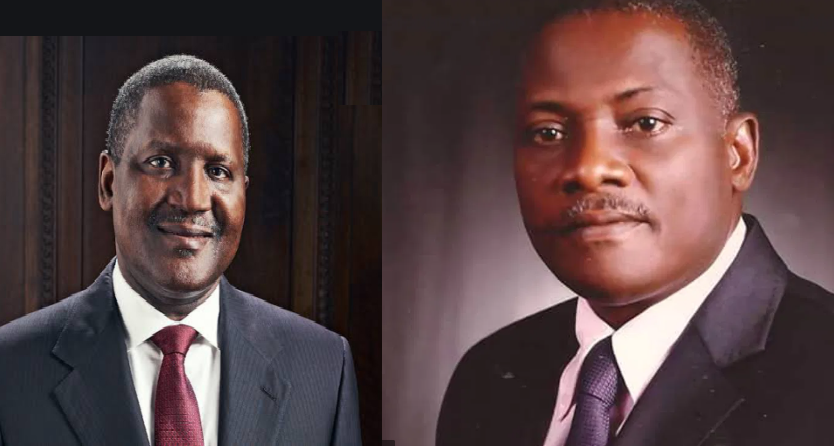
Great feedback on the Ubuntu and Igbo Apprenticeship System piece. Many have written comparing Dangote Group and Innoson Vehicle Motors (IVM). Some accurately noted that Dangote is now a big conglomerate while IVM is not. And Innoson Chukwuma, IVM Founder, may be controlling a huge part of that business while Dangote might have diluted to scale via outside funding.

The soul of the Igbo Apprenticeship System could be likened to the U.S. Federal Reserve which largely works to keep the U.S. dollars stable (by reducing inflation) and maximize employment through interest rates. So, the Reserve has defined main focus areas even though it can use its systems to do other things. Consequently, the U.S. Congress uses those two main factors to ascertain the effectiveness of the Reserve policy. For the Igbo Apprenticeship System, the main focus is to prevent poverty by mass-scaling opportunities for everyone, and not building conglomerates!

As someone who is close to these Igbo legends, I do note that what drives them is different. Yes, they do dilute their business controls by giving out market share, not via equity as in the typical European model. I have noted that the system has major defects; many will argue differently! With the Obi of Awka last year, I discussed the Umunneoma Economics in Nnamdi Azikiwe University.

When a child is born, he belongs to the community. That is why Igbos name their kids “Nwaoha” [the child of the community]. The parents are agents to bring children into the world; the communities have duties to ensure the children thrive.

So, under Igbo Apprenticeship System, you see men who could have built massive assets and empires dividing their acquired market shares for over four decades, happily. That is why you will not see any big conglomerate in Aba, Onisha etc because the Igbo Apprenticeship System is not designed to have one iroko but many trees in the forest!

From the continental and global levels, Igbo Apprenticeship System is defective.But from the community level, it is perfect. There is no beggar in my village in Ovim (Abia State) because there is always help. But those helps come by relinquishing market shares by market leaders even as they fund their future competitors.

The fact is this: people like IVM measure impacts differently. Nnewi has the highest per capita income in Nigeria according to many studies. Ohafia men will believe that it is better to have 10 men with $10k than two with $50k each. Across the Igbo Nation, and drawing from post-war experiences, strengthening communities was more important than personal empires. Many Igbo communities started community leagues and development associations to build schools, clinics, and roads. The Ovim Community League which manages my village was started in the 1970s to support the community since no one expected help from the Nigerian government. Despite their saving, Nigeria froze their bank accounts, and practically, all Igbos had to begin from near-ground zero.

To make progress, they called that Umunneoma spirit, asking those who made small efforts to come and pick their brethren. Men made business decisions designed not to make just money but to employ people. And community levies mushroomed as they wanted to make sure that even though they were venturing out of villages, those back home must still have schools and clinics. Most primary and secondary schools built post-war in Igbo Nation were built by community efforts, not government.

The Secondary Technical School Ovim which I attended was built in the mid-1970s. By 1981, it had woodwork, automotive, etc labs. Today, the state university uses it for computer labs as it has advanced computer labs. All the projects funded via Ovim Community League. The promising businessmen made enormous financial sacrifices to support those projects.

The Igbos came out of the Biafra war with assets (outside South East) frozen by the federal government; call it ground zero. Many Igbo communities started community leagues to build schools, clinics, etc. Elders pushed men to share opportunities to help brethren. The war shaped the tribe; young women trekked days, hiding from bombs to get salts, as men fought war. Mothers named their kids “Nwaoha”[child of the community], with confidence that the village would rise if orphaned.

The key is that companies like Dangote Group and IVM have different incentives because the founders see things differently. Most will not tell you that. Between building a dominant conglomerate, most of the Igbo players  will prefer to build a stable community with many players. This cuts across trade and industries.They did not live through the war because of wealth, but through shared efforts. Each person is nothing but through communal support, they are rising. They lost 100% of all landed properties outside Eastern Nigeria, but today, through shared efforts, they are one of the largest investors in landed properties in Nigeria. Yes, while there is no single dominant landowner, in their midst, the cohort is thriving – and when they see opportunities, they pass to their brethren.

The largest producer of car spare parts many years ago in Ghana was Ifeanyi Ubah (now a Senator). He left that business to his brethren to build hydro power plants in Congo which remain one of his biggest investments. Ifeanyi then used his money to build a community in Congo. He gave away good businesses and opportunities to his brethren. Then, he left to start Capital Oil, one of the largest indigenous oil depots in Nigeria.

I was with Mr Ubah in his office a few years ago when a man who took him to Ghana visited him in Abuja. He had dropped out of secondary school in his second year or so. Ubah is now multiples richer. But the reverence was unbelievable: “Prof, this is my Oga. He took me to Ghana”, the now-Senator said. Later that evening, the man came to me: “I am proud of my boys, Ifeanyi makes me happy”. Those are things that bring happiness to them, not market share or dividend.

Nigerian Igbos Run the Largest Business Incubation System in the world – TED Video

Working Remotely: The Facebook’s Smart Move

0

COVID-19 pandemic has ushered in a new dawn; the work ecosystem will henceforth have a remote choice on its menu that workers will choose from.

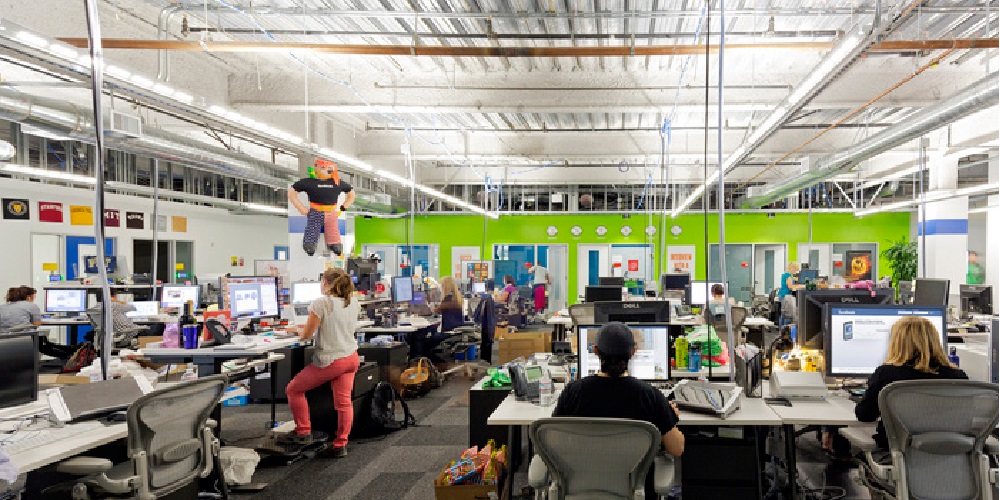
On Thursday, Facebook announced that it’s going to let its workers choose whether to work remotely or work from the office. Since the outbreak of the coronavirus pandemic, companies have recorded success in using the Work From Home (WFH) idea, and it appears it’s going to be the new normal.

What started like a joke from Twitter CEO, Jack Dorsey in time, has turned to a big catch for companies and CEOs. Many could still hear Dorsey saying: “We want employees to be able to work where they feel comfortable.”

Since Dorsey started walking the talk, a host of companies including Google and Square have jumped the bandwagon, but Facebook came with a dang that may dampen the willingness of many workers to switch to working remotely. Facebook founder and CEO Mark Zuckerberg is known for copying ideas from rival companies to get ahead in the game – that’s, when he fails to buy the company.

In this case, he seems to have found a better edge to save his company more money. In a statement, the Silicon Valley giant said that workers who choose to work from home would be paid according to the cost of living where they are working from.

“Those who move to lower cost cities may have their compensation adjusted based on their new locations… we’ll adjust salary to your location at that point. There’ll be severe ramifications for people who are not honest about this,” he said.

This is the game changer that has stirred curiosity. Is Zuckerberg operating in the guise of working remotely to achieve cheap labor?

Looking at the statement he issued on Thursday, the answer to this question appears inconsequential as he outlined the undeniable benefits of working from home, among them, reduced commuting. Environmentalists have been counting on something like that to reduce the impact of vehicle emission on the environment. More to that, Zuckerberg said the idea will make Facebook more diverse and help “spread economic opportunity much more widely around the country and world.”

Coronavirus which instigated unprecedented rise in the use of videoconferencing and spurred Zoom surge also inspired Facebook to expand its virtual apps. Zuckerberg said the WFH will help the company to accelerate the growth.

“Since so much of what we build is around helping feel connected and present with others no matter where they are – like our private messaging apps, video chat, Workplace, Portal, and eventually virtual and augmented reality – living our values will help us accelerate the development of these technologies,” he said.

In the past, Facebook has been staunch in the belief that working from the office is essential. The recent turn of events seems to have changed that, and the company is seeing an opportunity to save some cash and promote its services.

While Facebook’s decision to pay salaries appears deterrent to developing the remote work idea, workers (not only Facebook) wouldn’t mind a pay cut to work from home.

A poll conducted by analyst Jeremiah Owyang on Twitter found that 44% of workers are willing to take a 10% pay cut to work from home indefinitely. Though 56% said they wouldn’t, the 6% difference signals a new wave of working practice that is about to take over the labor market.

It is not clear if the larger or smaller number of Facebook employees is going to accept to work remotely knowing that their wages will be adjusted according to their places of residence, what is clear is that people are willing more than ever before to work remotely. In the coming weeks and months, as COVID-19 forces people who are opportune to keep their job to work from home, they will gradually adjust.

Zuckerberg said he is expecting 50% of Facebook employees to work from home over the next 5-10 years, and believes it will be the same with other organizations too. However, the challenge lies in making WFH a normal. Facebook said it’s leading the campaign even though there are lots of unanswered questions.

“Facebook will be the most forward-learning company on remote work at our scale, and we’ve been working on a thoughtful and responsible plan to this.”

With 40% of the company’s workforce willing to give the remote work a try, it will be another cost-saving strategy won by Mark Zuckerberg.

Spanish LA Liga Resumes June 8

0
Stars like Messi are the attraction

In a scintillating announcement on Saturday, the Spanish Prime Minister Pedro Sanchez said the Spanish la liga has the “all-clear” to resume games in the second week of June.

“The resumption of major professional sporting competitions and, in particular, La Liga will be allowed from the week of June, 8,” Sanchez announced in a televised address.

The announcement brings to an end, speculations, anxieties and the boredom that have emanated from the suspension of the league back in March.

The future of the remaining parts of the leagues across Europe has been a subject of interest since the COVID-19 pandemic brought sports activities to a halt in the continent. The league bodies have sought ways to keep the games on or bring them back as soon as possible to save clubs from severe economic downturns.

FC Barcelona is among the Spanish clubs severely hit by the global health crisis. Having a financial responsibility of 500 million euros wage bill per annum (the highest in Europe), the Catalan giants have been desperately looking for fund to upset the bill of players’ salaries before the end of June.

In March, the players had voluntarily agreed to wage cuts so that other staff of the club could be paid. Lionel Messi and other team members took 70% pay cut to stem the financial burden on the club.

With the La Liga ready to resume next month, there is hope that Barcelona and others could live up to its financial obligations, though there are still challenges.

La Liga president Javier Tebas didn’t hide his excitement that the restriction has been lifted, but he said there is need for continuous vigilance.

“We are very happy for the decision, it is the result of the great work of clubs, players, technicians… CSD (National Sports Council) and agents involved,” he wrote on Twitter. “But we cannot lower our guard, it is important to follow health regulations and ensure the pandemic doesn’t come back.”

Barcelona has a slight 2-point lead over Real Madrid to stay at the top of the table. With 11 rounds of the fixtures remaining, the league is still open, making its completion compulsory.

However, the reopening of the stadium has come with a price. The remaining games are going to be played behind closed doors under strict precautionary conditions. The players will undergo tests for coronavirus the day before games and will have their temperature checked before they’re allowed to go into the stadium. Only 197 persons including coaching staff and match crew are allowed in the stadium.

German Bundesliga has last week resumed the league games, being the first among Europe’s top-five leagues to play matches. The Italian Serie A and the English Premier League are still working to resume on later dates.

Spain is one of the most hit countries by the coronavirus pandemic with more than 28,000 deaths from over 234,000 cases, which crippled sports activities that is a major part of the country’s economy. Tebas said the cancellation of matches would have cost Spanish clubs about a billion dollars in revenues.

The second-flight Segunda Division is also set to resume games with the Primera liga. The Spanish football federation is hoping to end all domestic games in July to give room for European competitions. So the clubs will play through midweek and weekends to finish the remaining games.

La Liga players had earlier last week resumed training, signaling readiness to resume matches.

However, against the excitement of resumption lies the realities of financial loss that will come from empty stadia. Every one of the teams is going through financial difficulties that need parked stadia to stem. With the indoor rule, fans will be watching from home and that means ticket sales will remain on hold until further notice.

But the league body appears not to be so concerned about that. Safety has been the focal point of the agreement between the health authorities and Spanish Football Federation. The numbers of players to grace the pitch for training has been cautiously reduced to 10, in order to observe the social distancing rules.

Tebas believes that the arrangement will not pose any danger to the matches since necessary safety measures have been put in place.

“That’s what I hope. We shouldn’t have any problems playing on Mondays across the eleven rounds of matches left to play. I hope for some sense from the Spanish Football Federation on this, because it’s very important for us to be able to give both our national and international broadcasters and fans across the world, football on as many days as possible to ensure as little disruption as possible,” he said.

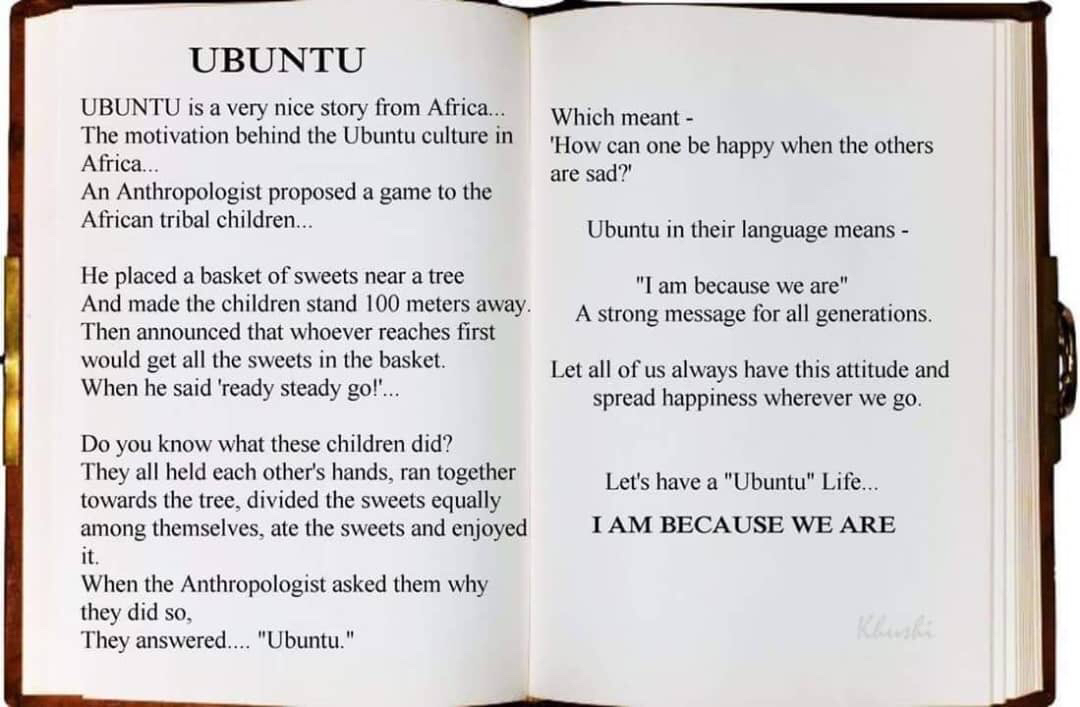
“I Am Because We Are” – Ubuntu

0

Ubuntu is the spirit that guides the Igbo Apprenticeship System – a business philosophy of shared prosperity where participants co-opetitively participate to attain organic economic equilibrium where accumulated market leverageable factors are constantly weighted and calibrated out, via dilution and surrendering of market share, enabling social resilience and formation of livable clusters, engineered by major participants funding their competitors, with success measured on quantifiable support to stakeholders, and not by absolute market dominance.

Igwebuike, Onye Aghana Nwanne Ya, Ubuntu, and Strength in Unity largely mean the same.

See it this way, a man goes into a business sector, and wins market share. Then, one day, he decides voluntarily to give out market share and immediately creates competitors for himself. And as he does that, he includes huge obligations to ensure those competitors thrive. So, magically, a system evolves where everyone is just doing well with no distorted imbalance. No one is super-rich but everyone is just fine! And the players just like it that way because “onye aghara nwanne ya” [do not leave your brethren behind] is part of the culture!

The Platform – Why I Said the Igbo Apprenticeship System is the World’s Best Business Framework