DD
MM
YYYY

PAGES

DD
MM
YYYY

spot_img

PAGES

Home Blog Page 6346

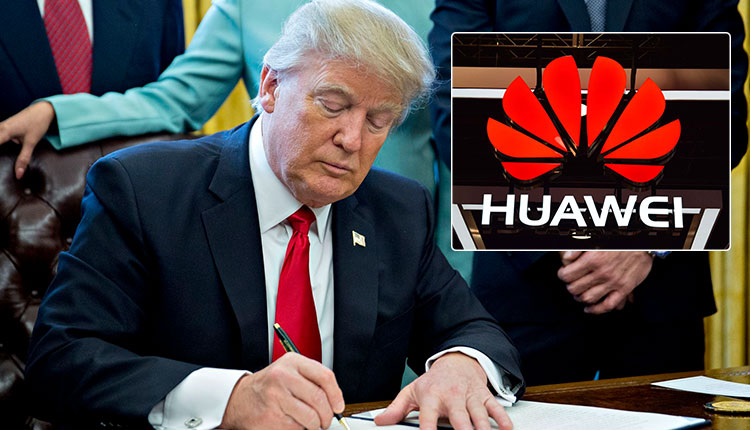
Trump Signs Huawei’s Biggest Challenge

4
US has also pushed against Huawei

A few months ago, I wrote that the biggest ban the United States could exert on Huawei would not come from any product made by Google, Facebook or  general Silicon Valley. Practically, Huawei can find alternatives to those solutions, even if they are sub-optimal. Yes, it can make its own mobile operating system, replacing Android. It can find some European companies like Qwant for search. In a ride together a few years ago in Casablanca Morocco, the CEO of Qwant shared his vision of “search privacy”. Yes, a search alternative that is not Google or Bing is available!

U.S. plans to restrict access of critical components into the hands of Huawei as the trade war with China intensifies, and the battle for the future of 5G technology is waged. Largely, U.S. has many tools through two vital companies in the world of microelectronics: Cadence and Synopsys. More than 99% of the leading chip designers depend on these firms. Without them, it will be hard for Huawei to make its own microchips (to overcome the bans) in ways that foundries can manufacture them effectively. If U.S. blocks Huawei, call that move extremely “severe” but not “existential”, yet, because China will respond. Simply, China can block Chinese factories from offering “labour components” for American firms like Apple, Dell, HP, etc. If that happens, iPhone may be off market!

But there are two things Huawei cannot do and cannot find solutions at the moment: semiconductors machinery, and advanced CAD tools for analog chip design. Cadence and Synopsys control the global market for the latter at more than 99%, especially for high end chip designs. While Mentor, Magma and others register on the chart, Cadence is the leader. Interestingly, the top five players are Americans.

Then on chip manufacturing, while we hail TSMC, Globalfoundries and Samsung Electronics, all of them depend on semiconductor tools supplied by American companies. Without those companies, these companies cannot operate.

So, to cripple Huawei, the U.S. recently said that no American semiconductor machinery  can be used by any semiconductor foundry that does business with Huawei. Magically, nearly all foundries in the world became affected; TSMC is rumored to have dropped Huawei. If Huawei cannot get a foundry to help on its chip fabrication, it has a big challenge. At the moment, it does  not have the capacity to build these factories without relying on American machinery and equipment. This is Huawei’s biggest test! With this ban, it is now an asymmetric warfare and I expect a surrender even as the UK plans to wean itself off of Huawei by 2023, on 5G.

Taiwanese Semiconductor Manufacturing Co., the world’s largest contract semiconductor maker, has stopped taking new orders from Huawei Technologies, one of its largest customers, according to the Nikkei Asian Review. The report said the decision was made to comply with new United States export controls, announced last Friday, that are meant to make it more difficult for Huawei to obtain chips produced using U.S. technology, including manufacturing equipment.

 

Apple’s Greatest Risk is Washington DC Packaged in Huawei

How to Make Remote Work More Productive

0
Virtual event or meeting has gone mainstream, benefiting Zoom

You will be happy to know that innovation should produce a better result. I was addressing a team one time, I used the concept of innovation of strategy to illustrate this.

 We know if a new strategy is better than the other in performance and not in description or how it works. So, we only need to replace an existing system with a new innovation when it has been tested that the innovation is better in output.

 At the end of the day, we ended up concluding that a new innovation in marketing should be able to produce better marketing results than an existing one if not there will be no need for its replacement.

Why do we need a car instead of a horse, when the two have similar purpose? It is simply because the car is more efficient than a horse. This applies to all forms of innovations.

In this article, I will provide you a great analysis of how you can achieve better results through remote working strategy.

Now , let’s get started.

How to Make Remote Work More Productive

When you critically look at the concept of remote working, you will discover it has two components. It has the management and the team or the employer and the employee. So, in order to achieve a desired result from remote working, the two sides of the equation need to be balance with the following;

Remote Work policy:

The remote work policy should contain policies or regulations that guides the employees. It should define what the roles of team members will be as they work remotely. It should define the do and the don’t of remote working. 

This is basically the bible that guides remote workers and their employers. This will keep them in check. An example is the Codecitty remote work policy which addressed the security of the company in relation to remote workers. 

It is the management of the company that will provide this guide.

 Discipline Factor

Being at home could be a moment to wine and dine but don’t lose sight of the remote working task. While there are many distractions at home, you have been given a level of trust by your employer. 

So, what will help you to stay on course is discipline. With discipline, you can avoid distractions in order to focus on  your remote working tasks. This is what every remote worker must learn to do and inculcate  as a habit.

Target Factor

The management should set a benchmark for the work being done remotely. It will be required that everyone meet the benchmark. We don’t just want work but we want work that will produce the expected outcome.

 So, employees should give remote workers targets to reach on a daily basis. Without a target there will be no parameter to measure poor performance and great performance.

 Virtual Supervision and Evaluation Factor

 The major difference between remote work and office work is lack of contact. Through the power of technological innovation there can be virtual contacts. So, the supervisor of every team should ensure strict supervision of remote teams in order to deliver on the targets. 

We have zoom, with impressive business model, Google meet, with impressive business model, Messenger room, with impressive business model, Whatsapp, with impressive business model etc for virtual meetings between the supervisors and the team.

Then, evaluation should also be done at the same time. It should either be weekly or everyday to know if the remote workers are measuring up to the target standard set by the supervisor.

 In my first article on remote work, I analysed how you can use it as a manager to cut cost. You can read that analysis here. With these two materials, you should be equipped to know how to explore remote work now and after coronavirus.

Far Away from Home: Sharing Stephen Akinremi’s experiences as a Nigerian studying in the Netherlands amidst the COVID 19 Pandemic

17

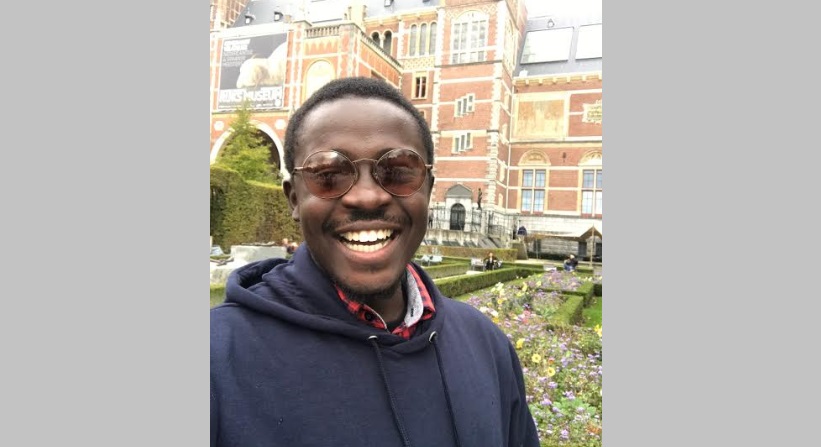
Stephen Akinremi is one of the thousands of Nigerian students spread all over the world seeking knowledge and education from countries with better structures and processes. He is currently in the Netherlands for a Masters’ Degree. He had his first degree in Geology at Obafemi Awolowo University, Ile Ife. He had a chat with Rasheed Adebiyi on his experiences as a student in Netherlands and the fear that comes with hearing from home in this period of Coronavirus pandemic.

Stephen’s and his colleagues’ impression about the way Nigeria has handled the COVID 19 pandemic so far.

To be away from home and get to hear all the issues surrounding Nigerian government’s manner of handling the pandemic crisis could be more psychologically draining than one could imagine. When asked the impression he had about the Nigerian government’s efforts at containing the pandemic, he responded that he and some of his Nigerian colleagues usually paid serious attention to some of the issues being discussed in the media concerning Nigeria’s response to the pandemic. They shared in the sentiment that Nigeria did not respond early enough. They didn’t also like the fact government palliatives and relief materials did not get to citizens. This is unlike the experience they had in the Netherlands where citizens’ welfare is given top consideration. However, like every other Nigerian Diaspora, they talk endlessly about the situation at home and end with a sigh of helplessness. He said: “we are not just happy about situations at home whenever we have conversation on Nigeria and the way the government has been responding to the pandemic. All we just have to do is just sigh and just pray and hope that one day Nigeria will also be a country that has a system that works. Unlike here where we have constant power supply, we read about people at home in lockdown without certain amenities, especially power. It is really frustrating. Here, there is a welfare system that takes care of the citizens especially when there is a job loss. A Dutch man or woman would be paid 70% of his monthly salary to enable them to cope with the situation until they are able to secure another job. ”

His transition to the Netherlands and the Cultural Shock

For a foreign student in a new setting quite different from his home country, there is bound to be some kind of shock as a result of cultural, social and environmental differences. Stephen was asked how he has been coping. He categorized the shocks he has experienced into different types. First, he talked about the student-lecturer relationship and methods of lecture delivery and grading. He was amazed by the little gap that the system allows between the lecturers and students. He responded “The cultural shock I will first start with is the educational system, there are a lot of differences between what is obtainable here and what I passed through as an undergraduate in Nigeria. To start, the system of teaching is different and it’s actually better here. Also, the student to lecturer relationship is more cordial than we had it in Nigeria. They don’t even call them lecturers, they call them teachers. The relationship is different and it was a shock for me when some of my lecturers had to keep correcting when I referred to them attaching Sir or I put Dr in front of their names and things like that. They would ask you to call them by their first name. This promotes some kind of a personal cum informal relationship. I remember back in my undergraduate days in Nigeria, I barely had anything to do with any lecturer. The situation was just be on your own, attend classes, write exams  and pass. But here you have reasons to knock at the door of a lecturer, ask for any meeting at any point in time. That was really different for me and I had to start to adjust to it gradually.”

He delved into the method of lecture delivery, the grading system, and the fact that students are briefed on the expectations of each course, how they will be graded and how they will evaluate if a student has been able to achieve the stipulated outcomes. This is unlike the Nigerian system where students do memorize concepts and pour them out during the examinations.

Stephen equally made reference to the open social interaction in the Netherlands. He spoke highly of their willingness to relate with foreigners who do not speak their local language. He described his experience, “the lifestyle back in Nigeria is different from the society here but I think the Netherlands is very better compared to other European countries because they speak English a lot apart from their local language. The language would have been the first problem  for me but due to the fact that the Dutch speak English well even as a non English speaking country. When you are interacting with them and you just say “English please” or even when they say good morning in their language and you are saying good morning in English, they already sense that they need to switch to English for you. This happens everywhere you go, the supermarket, the hospital and other places. I know it’s not the same in Germany. I visited Germany and I’ve also read a lot about Germany. The system is so different completely. You hardly get over the cultural shock in terms of language. I almost got lost trying to find my way when I was trying to get a ticket for a train to connect to my nephews that I was supposed to meet, I almost got completely stranded because there was nobody that was ready to speak English to me even when it appeared they actually understand it”.

Differences in the Nigerian and Dutch food are another shock that Stephen has to cope with. He eats the local dutch food when he needs to socialize. However, he does not derive the kind of satisfaction he gets from eating Nigerian delicacies. He has to cook Nigerian food for himself. On the food, he has this to say : “if the only option I had was to eat the native food it would have been a big problem for me but since I still have option to, at my own time cook my own kind of food, so that really helps, and I must also say that the University really planned a nice orientation for us that really helped introduce us to the culture, the good, the bad and their general lifestyle. I’m not a person that is very adventurous when it comes to food, but we’ve had to eat the native food on many occasions and I just had to manage, when I just have to eat to socialize I would just have to eat to socialize but it’s not the same. I still cook Nigerian food for myself in my own room. that’s what I cook and I eat, but when we have to go out for functions, for social gathering, I just try to eat but we’re different, definitely we’re different, so that was a big shock for me,”

His experience learning amidst the pandemic

When Stephen was asked to share his experience learning amidst the global health crisis, he spoke glowingly about the ease of learning online in the Netherlands. He said : “taking online classes during the lockdown is very simple here. The whole system is something easy to navigate through. They made everything easy for us. They gave us a week for us to be able to adjust and  practice with the system. We were allowed to practice with the conferencing tools that we are going to be using. So, it’s easy to adapt. It’s easy to change over to the new system. The only challenging part is that it’s affecting our psychology and mental health because there’s no physical interaction you are just in your room learning all day. There are some things you do not have to think about. You don’t have to think about power and the internet. We are living in the faculty hostel, so there’s internet. They connect us directly to the school server. Even our licenses for all of our softwares that we use are still very active even in this period.

The Governor’s Mistake [Video]

4

A governor waives most small business taxes in his state, and attacks the core principle of taxation, Nigerians rejoice – he is fighting for the masses. Yes, why should we pay taxes when there is no government in our lives? Every respectable company in Nigeria runs a local government operation, providing its water via borehole, electricity via generator and security via private security guards. Government is invisible! We know those things – Nigeria is not working. Yet, what will make Nigeria work is not killing taxation but by demonstrating that taxes can work for the people, and then using that construct to stimulate them to pay more. Until Nigeria can get people to understand that taxation is part of being a citizen, we have no future.

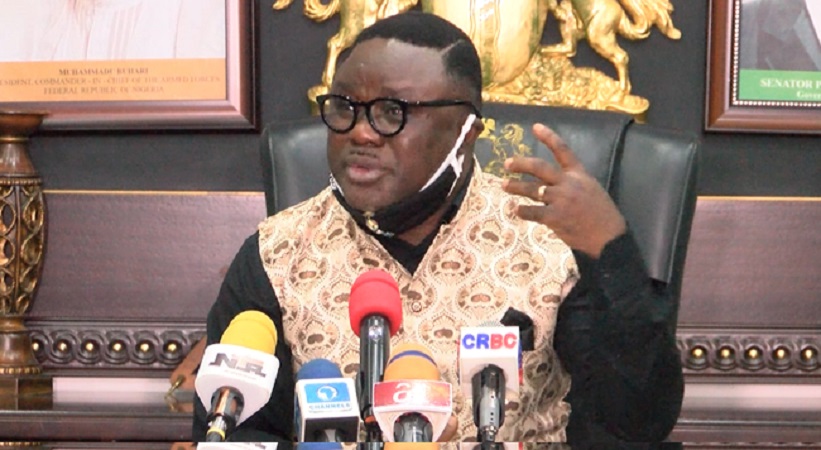
Yes, many  have shared the clip of the Governor of Cross River state, Ben Ayade, who waived most taxes in his state. While his post Covid-19 tax waivers are commendable, his broad statement should not be celebrated blindly. He attacked the tax system, making a case that governors should not make. For Nigeria to rise, governors have to find ways to deepen their tax bases, and then use the resources judiciously. Like I noted in the Platform, people willingly pay taxes when taxes are working in their lives! But that does not mean we have to give them excuses not to pay. Why? The promises of all politicians are taxes of the citizens. When that tax is not available, nations fade.

I respect His Excellency but his argument is flawed. Tax should not be based on scale of business but profit, as contained in the Nigerian tax ordinances. People should pay taxes as that builds a system we all depend on – affordable public schools, at least. If you are in any government university or polytechnic and paying less than N300,000, thank tax payers for that possibility when private schools continue to hit new heights on fees and tuition. 

You tax a man that makes N30,000 as a teacher while the man who owns 20 goats selling two every market day does not pay tax. Mr. Governor, in his thesis, where farmers should not be taxed will be comfortable with that. The construct  is that only those that have formal employment should pay taxes in Nigeria even though some of them are still very poor! Yes, the farmers, carpenters, cab drivers, etc are not paying, but that does not mean that is normal. We have to work hard to change that even if they have to pay N50 in a year provided that was based on their profits. Government does not need to have directly helped in your farming before it can have the rights to tax the profits from your farming.

Governor is a politician but his state will not advance on this muddling tax policy. He can suspend tax payment during a pandemic. That is fair, but making collection of tax to be seen as an evil system is recklessness.

 What Mr Governor needs is a tax collection system which follows the law: find an efficient way to tax profit whether from a big or small company. Linda Ikeji blog was rumored to be making hundreds of millions of naira  at a time. She probably had less than three staff. Many said no tax was paid. But if you check her revenue, she could have made more money than most insurance companies in Nigeria – most report less than one billion naira in revenue, yearly. Yet, they are hit with tax while those small profitable entities pay nothing.

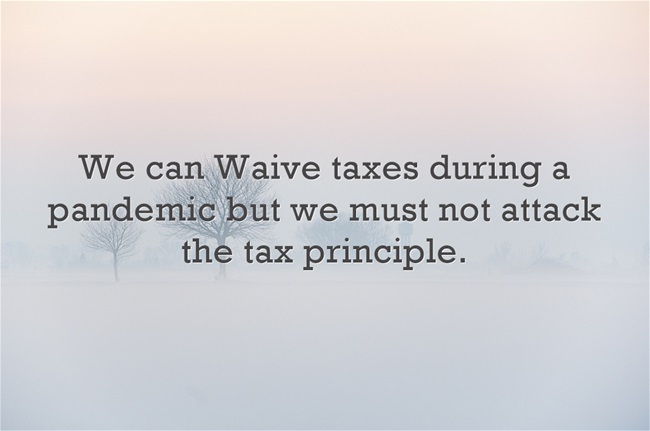
This is my formula – prepare the minds of people that paying tax is part of being a citizen. Do not attack the tax system. Sure, you can suspend or waive during a pandemic but taxation is not evil. For more than twenty years, Nigeria has been working hard to re-orient the citizens on the necessity of paying taxes. We cannot make heroes out of those who now think asking people to pay taxes is a bad policy.

Yes, a governor should not send a different message. I will hope our leaders make that point because Nigeria’s problems of tomorrow will be anchored on our ability to pay taxes. More so, a state governor has limited control of taxation in Nigeria. The statement from the governor could make the work of federal tax collectors harder, as the citizens will see all of them as agents of the state, which the governor had mandated not to collect taxes. Practically, a governor cannot dictate most things on taxation in Nigeria. The man who sells acres of land and pays no VAT, and the man who sells dozens of cows and pays no VAT should not be given tools for excuses.

I commend Mr. Governor for waiving taxes during this hard time. We need the small businesses to thrive, for tomorrow. But taxation is not bad and no governor should preach that message. Our challenge is this: tax collection remains sub-optimal and governors like Ben Ayade should improve that system in Nigeria.

I COMMEND the tax waiver.


How Osun Intends to Advance Its Green Economy

0

In 2019, a report indicates that Nigerian green economy worth $250 billion with the possibility of the sector playing critical roles in employment generation and eventual economic growth across the country. Several organisations and experts have discussed and still pointing out the significance of the green economy, which comprises low carbon, resource efficient and socially inclusive businesses including various opportunities in agriculture.

According to the United Nations Environmental Programme, “in a green economy, growth in employment and income are driven by public and private investment into such economic activities, infrastructure and assets that allow reduced carbon emissions and pollution, enhanced energy and resource efficiency, and prevention of the loss of biodiversity and ecosystem services.”

Having seen inherent opportunities in green economy, state governments and the federal government have been investing in it in the last few years. Every year, the state and federal governments are spending a certain percent of their budgetary allocation on agriculture and sustainable environment, especially through flood mitigation and other activities on climate change control. In its 2020 budget, Osun state wants to spend N2,363,716,760.00 (3.82 per cent) on agriculture.

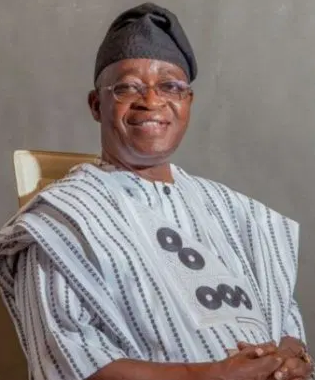
Prior to the allocation, Governor Gboyega Oyetola hinted that the state is “largely an agrarian economy with fertile and expansive landmass, we are your most- suitable location for agricultural investment. With a Land Bank in operation and our avowed commitment to making Osun the main hub of agriculture in South West Nigeria, we seek your partnership to further open up this sector via investment on large scale crop production, beef chain development, establishment of seed companies and partnership to develop farming services in the areas of quality seedling supply, farming equipment leasing, as well as development of financial and extension services to farmers, among others.”

In his efforts and patterns of engaging citizens and residents in the state, Governor Oyetola reiterates his readiness to advance the state through green economy. Monitoring the engagement on a social networking platform, our analyst reports that Governor Oyetola intends to use the sector as the bedrock of driving economic development and growth in the state because emergence of the next oil money will evolve from agricultural and farming activities. Governor Oyetola states that his administration will empower 5764 farmers in the state to grow up cassava, cotton and also engage in fish farming, with support from the Central Bank of Nigeria.

The expectation of the governor and his administration is that this effort and others such as open up of 12 local councils for aggressive farming through designated 2,000 hectares of land, training of about 1,000 farmers in specialised farming, distribution of improved seedlings, pesticides and herbicides would help in reducing poverty curve further in the state, most especially among the vulnerable households.

Meanwhile, since few days ago that Governor Oyetola disclosed his intent about the green economy, various reactions have continued to trail the intent. Majority of people want the processes that will be used for the selection farmers and other beneficiaries to be transparent. “I don’t know how government is going to drive the systems to identify true farmers and prevent fake farmers from benefiting from the programmes,” one of the governor’s followers on the social networking platform said.

“Almost every government came with idea of empowering farmers but always end up in failure, but I pray this Oyetola own will not fail because there is no recognized farmers Union in place rights now in Osun state,” another person pointed out.

Editor’s Note: Musa Ahmed provides background information for this report.