DD
MM
YYYY

PAGES

DD
MM
YYYY

spot_img

PAGES

Home Blog Page 636

XRP Can Reach $11 This Cycle According to ChatGPT, but Here’s Why Ripple Holders Are Loading Up on Little Pepe (LILPEPE)

0

Amid the renewed fervor in crypto markets, XRP is once again stealing headlines. A union of technical setups, regulatory clarity, and renewed institutional interest has propelled this veteran altcoin into the spotlight—with chatter growing louder that it could surge as high as $11 this cycle. Yet, while XRP’s potential rally captures attention, a rising meme-themed Layer-2 contender called Little Pepe (LILPEPE) is quietly capturing traction among Ripple loyalists. It’s where meme culture, infrastructure, and upside collide—and why investors are increasingly taking an interest.

XRP’s Bullish Case

Technical analysts recently highlighted an emerging cup-and-handle pattern on XRP’s chart, a classic signal preceding powerful upward movements. This formation, tracing from early 2025 into August, outlines a “cup” base with a minor “handle” pullback, now inching toward completion. Should selling pressure ease and momentum normalize, this setup could drive XRP sharply higher, toward the $8–$11 range—or further if volume surges strengthen the breakout.

Meanwhile, the AI model ChatGPT has provided a strong backing for this bullish thesis. CryptoPotato reports that ChatGPT sees the bull run for XRP far from over, citing the resolution of the SEC lawsuit and growing whale accumulation—over 900 million XRP worth roughly $2.8 billion acquired across 48 hours—as tailwinds for further gains.

Yet more technical gold appears at the weekly level: ChatGPT sees a textbook bull flag formation forming around $3.20, complemented by regulatory easing such as a Regulation D waiver granted to Ripple, reducing fundraising barriers. Combined with corporate interest—recently spotlighted by a high-profile crypto company accepting XRP for payments—this could prompt a breakout toward $4–$5 in the near term. Against that backdrop, the $11 figure that ChatGPT and technical setups suggest may feel like conservative realism rather than fantastical hype.

Why Ripple Holders Are Also Pouring Into Little Pepe (LILPEPE)

While XRP believers watch technical levels, a growing segment of them is making a parallel bet—one that’s more meme-fueled yet underpinned by genuine innovation. This is the story of Little Pepe (LILPEPE), a meme coin that has rapidly become a presale darling, particularly among traditional Ripple holders. LILPEPE is currently in its presale Stage 11, priced at $0.0020 per token. Across all stages, the project has raised over $21.6 million and sold north of 13.9 billion tokens since the presale commenced. The ongoing momentum signals genuine institutional and retail interest—even before a listing.

Why the excitement? LILPEPE is built not just as a token, but as the native currency of a dedicated Layer-2 blockchain optimized for meme coins. It prioritizes low fees, fast finality, and fair participation—elite-level utility wrapped in meme culture. Anti-sniping technology, zero transaction taxes, and a robust Certik audit further bolster confidence.

Analysts are forecasting a striking 3,200% surge post-launch, with immediate listing expected around $0.003, yielding 57–58% immediate gains for late presale buyers, and long-term projections pushing as high as 40x returns.

When compared to XRP—which may grow several-fold but likely within a narrower band—LILPEPE represents hypergrowth potential. IndiaTimes even frames it as a potential 12,000% return if meme cycles ignite full force again. That combination of meme virality, technical utility, and presale adoption makes it irresistible to risk-tolerant holders aiming for massive upside.

Two Approaches, One Theme: Bullish, but Different

Investors loading up on both XRP and LILPEPE aren’t contradictory—rather, they’re covering both ends of the spectrum. XRP offers rational, chart-driven growth backed by legal clarity, institutional interest, and possible ETF catalysts. It’s a high-quality altcoin play that could return several-fold. LILPEPE, on the other hand, offers speculative exponential upside anchored in clever engineering and meme culture. Put simply, XRP embodies the solid blue-chip altcoin story, riding macro tailwinds and plausible breakout patterns. LILPEPE is the speculative rocket, with potential for greater returns if listing dynamics and hype continue to build.

What’s Next for XRP and LILPEPE Holders?

XRP investors should watch key resistance breaks, particularly above $3.30 and confirmation of the cup-and-handle breakout. Volume trends and institutional accumulation could validate targets toward $8–$11. Macro drivers like ETF approval or corporate adoption would further accelerate the move. For LILPEPE, presale participants are closely monitoring Stage 11 momentum and eagerly forecasting listings. Given the project’s swift capital accumulation and staging schedule, price discovery may happen soon. Bulls will look for listing volumes, CEX listings, and community traction to fuel post-launch expansion.

Final Thought: Optimism Multiplied

In the current cycle, XRP stands as a credible long-term altcoin with deep fundamentals and technical triggers for a pronounced run. Its potential toward $11 in this cycle, reinforced by AI and technical patterns, reflects a rational yet bullish belief in its trajectory.

Simultaneously, LILPEPE offers an unfiltered ticket to meme-fueled upside, layered with technical merit and presale momentum. For investors embracing both ends of crypto’s spectrum—structured blue-chip growth and hyper-speculative meme rocket—this pairing represents a playbook built to win big, both mindfully and wildly. Whether your capital allocation skews cautious or ventures into the hype, one thing is clear: optimism has an edge again, and both XRP and LILPEPE are at the center of that resurgence.


For more information about Little Pepe (LILPEPE) visit the links below:

Website: https://littlepepe.com

Whitepaper: https://littlepepe.com/whitepaper.pdf

Telegram: https://t.me/littlepepetoken

Twitter/X: https://x.com/littlepepetoken
AI Arms Race Drives Billions Into Mega-Scale Data Centers

0

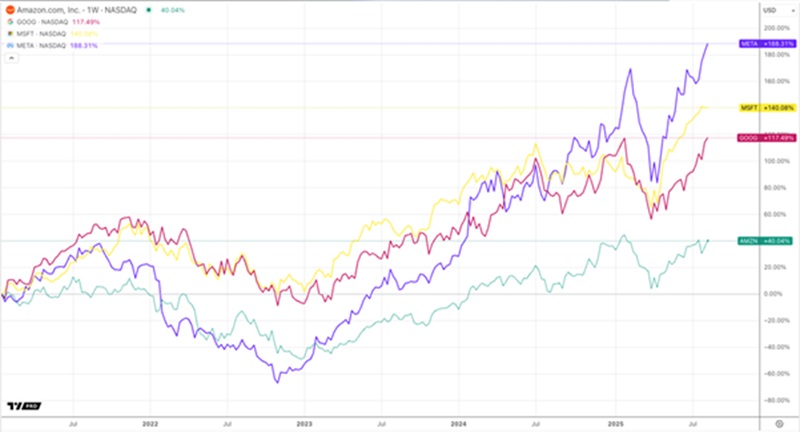
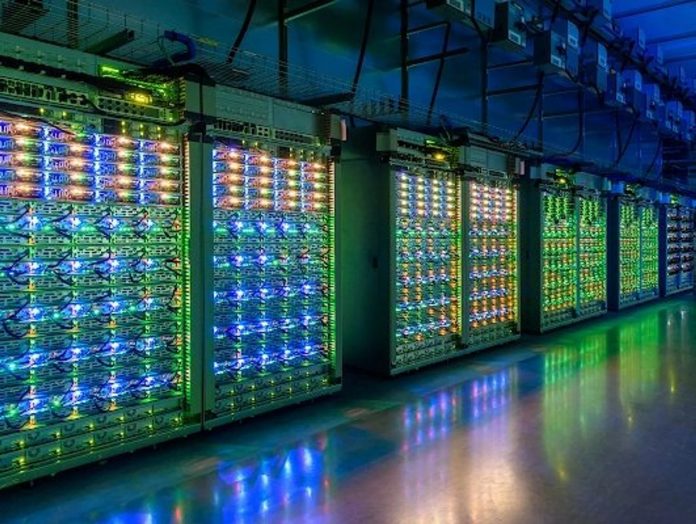
Investments in the construction and modernization of data centers are now reaching a level comparable to the economies of entire states. And not the small countries are meant. Amazon alone has spent more than $100 billion on infrastructure development over the past year. This is about the same amount as the entire economy of Costa Rica produces in a year, and more than the GDP of Luxembourg or Lithuania.

Other cloud market leaders have a similar picture:

  • Google has spent $82 billion on this, which is more than the entire annual volume of the Slovenian economy.
  • Microsoft’s figure is slightly lower, $75 billion, which is still higher than Uganda’s GDP.
  • Meta has invested $69 billion in its data centers, which is more than Bahrain’s annual production.

If we look at the industry as a whole, spending continues to grow rapidly. Capital expenditures on data centers are projected to exceed $657 billion in 2025. For comparison, in 2023 it was about $330 billion. The growth has almost doubled in two years, primarily due to the race for AI capabilities. The question is whether today’s record investments will deliver quick returns, or whether the industry will continue to work for the future. Currency markets are already responding, with USD JPY performance often serving as a barometer of investor confidence in these long-term tech bets.

Hyperscalers expect these investments to bring income someday, but for now, it’s more of a long-term bet. Even players like xAI, which are not among the largest providers, spend about a billion dollars a month on infrastructure.

However, not everyone is confident that large-scale investments will pay off quickly. In the second quarter of 2025, Meta explicitly stated that the time-tested machine learning models underlying its recommendation systems were generating profits. Generative AI still remains in the category of promising, but not among the primary revenue streams. Nevertheless, cloud companies are ready to offer more and more AI resources to those who want to develop their own projects.

There may be a shortage of computing power in the market in the coming years. New models, such as the recently introduced GPT-5, require more and more resources. At the same time, the need for infrastructure for inference, the daily use of AI is also growing. Already today, over 700 million people use ChatGPT alone, of which over 120 million use it daily.

Although IT equipment will remain the main focus of industry spending, investments in physical infrastructure will grow fastest. We are talking about power supply systems, energy distribution, and cooling. The computing density in racks is growing almost exponentially, which demands ongoing technical upgrades.

At the same time, there is an increasing interest in local generating capacities and microgrids. Major operators are already investing in these areas to reduce their dependence on external power sources. It is also expected that the construction of data centers will accelerate, and the largest sites will reach a capacity of at least one gigawatt.

Some projects are already beyond their usual scope. Meta has announced several campuses with a total capacity of several gigawatts, which are planned to launch in 2026. Individual sites at an early stage of design may surpass 5 GW.

All this means that the data center market is changing rapidly. The question is whether today’s record investments will be able to bring a quick return, or whether the industry will continue to work for the future, increasing costs and pushing infrastructure to the limits of its capabilities.

ETH Stalls at $4,318, OKB Whale Moves Billions, BlockDAG’s Presale Targets $600M

0

Ethereum’s rally is showing signs of exhaustion, stalling near resistance at $4,318, while OKB has drawn fresh attention with billions in whale transfers moving in and out of exchanges. These developments highlight how quickly momentum can shift, leaving traders uncertain about near-term direction. Amid this noise, BlockDAG is charting a very different course. Its presale has already raised more than $383 million and sold over 25 billion coins across 29 batches, with pricing now at $0.0276.

The final goal is a $600M cap, funding liquidity, listings, and ecosystem growth. What sets BDAG apart is its layered momentum strategy, global visibility through Inter Milan, local engagement with the Seattle Seawolves and Orcas, and a confirmed U.S. sponsorship deal that adds credibility. Combined with its hybrid DAG + PoW architecture and 2.5 million mobile miners, BlockDAG is positioning itself as one of the top crypto to buy heading into 2025.

BlockDAG’s Triple Momentum Strategy Toward $600M

BlockDAG is building its foundation on multiple levels. Globally, its partnership with Inter Milan puts the project in front of millions of fans. Locally, partnerships with the Seattle Seawolves and Seattle Orcas foster grassroots trust in the U.S. and adding even more weight, a yet-to-be-revealed U.S. sponsorship deal brings national credibility. Each layer is designed to move beyond visibility and drive real adoption, fueling its reputation as a top crypto to buy.

The presale numbers highlight this momentum. More than 25 billion coins have already been sold across 29 batches, with prices climbing from $0.001 at launch to $0.0276 in Batch 29. Early participants are already up over 2,660% on paper. The $600M cap will fund liquidity, listings, and ecosystem expansion, with confirmed exchange support from MEXC, LBank, and BitMart, plus ongoing discussions with Coinbase and Gemini.

With its hybrid DAG + Proof-of-Work model supporting up to 15,000 TPS and an EVM-compatible design for seamless Ethereum migration, BlockDAG isn’t just a presale, it’s a network built for scale. Add in 2.5M+ users mining through the X1 mobile app, and the adoption case becomes undeniable. This layered approach is why BDAG is increasingly recognized as one of the top cryptos to buy this year.

OKB Whale Transfers Signal Uncertainty

OKB has been in the spotlight after a surge in whale transfer activity. The largest saw 19.7 million OKB, worth $2.25 billion, move from OKX to an unknown wallet, followed by a reverse flow of 17.1 million (~$2.06B) back to OKX. Additional transfers worth $1 billion, $302 million, and $573 million only heightened speculation.

Price action currently hovers around $217, with whale movements dictating volatility. Netflows suggest accumulation rather than dumping, but the scale of transfers has traders alert. The uncertainty surrounding these moves has kept OKB in focus, though it lacks the structured growth strategy that makes BDAG one of the top crypto to buy.

Ethereum Technical Analysis: Resistance at $4,318

Ethereum has been consolidating near $4,265–$4,318, with short-term indicators showing mixed momentum. StochRSI is oversold, hinting at a bounce, while RSI remains neutral. ETH continues to trade above major moving averages, including EMA25 at $4,086 and EMA99 at $3,275, supporting its broader bullish case.

Still, ETH needs a decisive breakout above $4,320 to unlock targets near $4,500. A drop below $4,000, however, could expose support around $3,600. Institutional flows and ETF demand are helping provide support, but uncertainty keeps traders cautious. While ETH holds long-term promise, BlockDAG’s presale-driven adoption push positions it more clearly among the top crypto to buy in 2025.

Final Word

Ethereum continues to wrestle with resistance at $4,318, and OKB’s billion-dollar whale moves are raising speculation. Both assets remain important, but neither has the structured, adoption-focused momentum that BlockDAG is building.

With over $383M raised, 25B+ coins sold, millions of miners, and a layered sponsorship strategy, BlockDAG is aligning technical strength with mass visibility. Its scarcity-driven presale has already delivered paper gains of 2,660% for early participants, and projections toward $1–$5 in the coming years reinforce its potential. For those seeking the top crypto to buy right now, BDAG combines scarcity, adoption, and growth like few others in the market.

Presale: https://purchase.blockdag.network

Website: https://blockdag.network

Telegram: https://t.me/blockDAGnetworkOfficial

Discord: https://discord.gg/Q7BxghMVyu


BONK Slips 15% While Solana Targets $300 and BlockDAG’s $382.5M Presale Pushes Toward $5 Forecast

0

Which matters more in crypto right now: memes, short-term momentum, or global visibility? The BONK price drop has sparked doubts over whether hype is enough, while the latest Solana (SOL) price prediction points to a possible climb but with mixed confidence. Both projects are looking for stability but face challenges that may limit strong growth in the near term.

BlockDAG is presenting a different story. Instead of relying on speculation, it is tying its presence to real-world sports. From Inter Milan’s global broadcasts to rugby and cricket sponsorships, plus a major U.S. deal about to launch, BlockDAG is becoming a familiar name across stadiums and streams. With $382.5 million already raised in its presale and long-term projections stretching to $5, BlockDAG is making its case as the best long term crypto to keep on the radar.

BlockDAG: Sports Exposure and Presale Momentum

BlockDAG is positioning itself in a way that ensures constant visibility. Its strategy is simple but effective: show up where millions of fans already gather. Inter Milan matches bring global exposure, while rugby and cricket crowds deliver regional strength.

An upcoming U.S. sponsorship deal, awaiting clearance, will add even more reach. These partnerships are not just about branding; they are gateways to fan tokens, NFT collections, and digital activations that connect users directly to BDAG.

By appearing in live sports, BDAG builds familiarity with casual audiences who may never read a crypto chart but will recognize the name from games and broadcasts. That recall could make all the difference when BDAG lists on exchanges, giving it an advantage over projects that rely solely on market cycles.

On the numbers side, BDAG’s progress is already substantial. The presale has raised over $382.5 million, with more than 25.4 billion coins sold across 29 batches. Early participants from batch 1 have seen paper gains of 2,660%. The current presale price sits at $0.0276, with projections for $0.05 at listing and long-term expectations of $1 by 2027 and $5 by 2030.

Miner sales have crossed $7.8 million, with over 19,400 miners sold, adding further strength to the ecosystem. When combined with more than 2.5 million mobile miners and 300+ dApps in progress, BlockDAG’s mix of real-world exposure and strong fundamentals makes it one of the best long term crypto options right now.

BONK Price Drop Brings Uncertainty

The BONK price drop has caused meme coin traders to second-guess its staying power. In just a few days, BONK slipped from $0.00002285 to $0.00002117, with volume spikes reflecting heavy selling pressure. Weekly losses of around 15% and daily declines of 2–3% are keeping it under strain. Technical resistance is firm at $0.00002308, while support near $0.00002100 is being tested repeatedly.

The issue is not just the numbers but the lack of a clear roadmap. Without deeper utility or fresh adoption drivers, BONK struggles to convince traders that rebounds will last. While it once gained traction on pure hype, the current slide highlights the limits of meme-driven growth. Unless new partnerships or use cases appear, BONK may continue to cool off in the short term.

Solana Price Prediction Eyes $300

The Solana (SOL) price prediction shows both promise and caution. Short-term ranges put SOL between $180 and $210, with projections extending toward $240–$300 if market momentum holds. Some longer-term forecasts even point to $500.

Recovery from $175 has given SOL a slight boost, while institutional activity tied to a $1.15 billion settlement adds to positive sentiment. Still, resistance near $245 could block the climb, and whale activity is flashing caution signals. Binance tools estimate only a 5% increase over the next 30 days, with most technical models suggesting a sideways range into late September.

Solana’s DeFi and upgrade activity remain strong, but it lacks a new spark to capture broader attention. For now, the Solana price prediction reflects steady progress, but without a breakout narrative, buyers may explore alternatives with more immediate upside potential.

Closing Thoughts

BONK’s recent 15% decline underlines the risks of meme-based projects that lack depth, while Solana’s price outlook shows possible strength but also major resistance ahead. Both continue to hold relevance, but neither has a clear path to long-term cultural reach or consistent adoption.

BlockDAG is carving out that space. With over $382.5 million raised, 25.4 billion coins sold, and more than 19,400 miners purchased, BDAG already has momentum. Add 2.5 million mobile miners and sports partnerships ranging from Inter Milan to major U.S. sponsorships, and it becomes clear why BDAG keeps generating attention.

Its strategy of pairing real-world sports with digital expansion is designed to create demand cycles that go beyond market hype. For those watching the best long term crypto opportunities, BlockDAG is quickly becoming a top contender.

Presale: https://purchase.blockdag.network

Website: https://blockdag.network

Telegram: https://t.me/blockDAGnetworkOfficial

Discord: https://discord.gg/Q7BxghMVyu

World Liberty Financial Launches on Hyperliquid As Fantasy Dot Fun Gain Traction on Base

0

World Liberty Financial, a DeFi project backed by the Trump family, has been generating significant buzz. The WLFI token, an ERC-20 governance token on Ethereum, recently became tradable, with its perpetual futures debuting on major exchanges like Binance, Bybit, and OKX.

According to reports, WLFI futures prices initially hovered around $0.40–$0.42, implying a fully diluted valuation (FDV) of over $40 billion for its 100 billion token supply. This aligns with the claim of a peak FDV of $43 billion. However, the token’s price appears to have dropped, with the FDV falling below $23 billion, suggesting a price per token of roughly $0.23 or lower.

This volatility is consistent with the thin liquidity noted in some analyses, which can lead to drastic price swings, especially in pre-market and early trading phases. The project’s roadmap includes a 20% unlock of presale tokens (purchased at $0.015 and $0.05) on September 1, 2025, representing about 5% of the total supply, which could further influence price dynamics.

The Trump family’s involvement, with a reported stake of 15.75 billion tokens held by Donald Trump himself, adds a layer of speculative hype but also raises questions about centralization and potential conflicts of interest, especially given regulatory scrutiny following the GENIUS Act. The FDV drop from $43 billion to below $23 billion reflects the market’s reassessment of the project’s fundamentals or speculative fervor cooling off.

Fantasy dot Fun Platform on Base

The Fantasy dot fun platform, operating on the Base blockchain (a layer-2 solution for Ethereum), has reportedly gained traction, with its total market cap reaching $150 million over the weekend. While specific details about the platform are sparse in the provided data, this surge suggests growing interest in Base-based projects, likely driven by the chain’s low transaction costs and scalability.

The $150 million market cap indicates significant user adoption or speculative trading, but without more data on the platform’s tokenomics, utility, or user base, it’s hard to assess whether this is sustainable or a short-term pump. The Base ecosystem has been gaining momentum, and projects like Fantasy dot fun may be riding this wave, but investors should be cautious of volatility in nascent markets.

Implications of WLFI Token Launch on Hyperliquid

WLFI’s peak fully diluted valuation (FDV) of $43 billion, followed by a drop below $23 billion, reflects extreme volatility typical of hyped crypto projects, particularly those tied to high-profile figures like the Trump family. The initial surge was likely driven by speculative trading fueled by the Trump brand and political sentiment, while the subsequent drop suggests market reassessment due to thin liquidity or lack of fundamental value.

The WLFI token’s transition from non-transferable to tradable, following a July 2025 governance proposal, signals a shift toward market liquidity. However, its governance-only model (no economic rights) and high insider ownership (Trump family holds 15.75 billion tokens) raise concerns about centralization, potentially undermining trust in decentralized finance (DeFi) principles.

The SEC’s Project Crypto, aiming to clarify token launch standards, could impact WLFI’s operations. A more accommodating regulatory environment might benefit WLFI, but its high-profile status makes it a likely target for oversight, especially if perceived as prioritizing personal payouts over ecosystem growth.

WLFI’s $1.5 billion deal with ALT5 Sigma, which now holds 7.5% of WLFI’s supply, mirrors the strategy of MicroStrategy’s Bitcoin treasury model. This trend of public companies holding crypto as treasury assets could legitimize WLFI and drive institutional adoption, but it also risks overvaluation if market sentiment shifts.

WLFI’s USD1 stablecoin, with a $2.2 billion market cap, positions it as a significant player in the stablecoin market. Its integration with Ethereum, Binance Chain, and TRON, backed by monthly audits, could enhance trust and adoption, reinforcing the U.S. dollar’s dominance in DeFi. However, its success depends on transparency and regulatory compliance.

The Fantasy Dot Fun Platform’s Market Cap Growth on Base

The Fantasy dot fun platform’s $150 million market cap surge over a weekend underscores the growing traction of Base, Coinbase’s layer-2 Ethereum solution. Base’s low-cost, scalable infrastructure is attracting projects and users, positioning it as a competitor to other layer-2s like Optimism or Arbitrum. This could drive further investment into Base-based projects, boosting the ecosystem’s total value locked (TVL).

The $150 million market cap reflects speculative enthusiasm, but without clear data on tokenomics or user engagement, it’s uncertain whether this is driven by genuine adoption or a short-term pump. Such rapid rises often precede corrections, as seen in other altcoin surges, posing risks for late investors.

Fantasy dot fun’s growth bolsters Base’s reputation, potentially diverting capital from other layer-2 or layer-1 blockchains. This could intensify competition among Ethereum scaling solutions, pushing innovation but also fragmenting liquidity.

WLFI’s high-profile launch and Fantasy dot fun’s rapid growth signal increasing mainstream interest in crypto, driven by political endorsements and accessible platforms. However, both projects highlight the tension between DeFi’s decentralized ideals and centralized influences (e.g., Trump family control or speculative market cap spikes).

The WLFI launch and Fantasy dot fun’s growth reflect the crypto market’s potential for explosive growth and mainstream adoption, but they also underscore its volatility and ethical challenges. WLFI’s political ties and speculative pricing could drive short-term gains but risk long-term instability, while Fantasy dot fun’s rise highlights Base’s promise but demands scrutiny of its fundamentals.