ETHNICITY AND GOOD GOVERNANCE IN RIVERS STATE
David, Uchechukwu Japheth
Abstract: The issue of good governance is a topical one in both developed and developing societies. However, there are certain extenuating circumstances that hinder such a desirable experience in any given polity. This study examined the impacts of ethnic identity as a militating factor against good governance in a multi-ethnic State of Rivers, Nigeria. Thus, relying on prebendalism as theoretical thrust and content analysis as the method of inquiry, the study found that ethnicity, otherwise conceived as an instrument of social harmony in some civilizations and circumstances, has paradoxically become an instrument of disequilibrium which frustrates social cohesion in Rivers State. The study also found that ethnic identity has hampered development in the State because political appointments and contests do not derive from popularity and competence but they are rather underpinned by ethnic sentiments. The study therefore recommends the need for reorientation of people against ethnic politics and enthronement of values that promote state consciousness and interethnic cohesion.
Keywords: ethnicity, good governance, patron-clientelism, ethnicism, tribe, prebendalism
You can download this work on PDF here.
-
Introduction
Rivers State is a multi-ethnic society and this pluralism poses a daunting centrifugal challenge to the cooperate existence of the State. Over the years, the idea of corporate, inclusive government that is detached from ethnic colouration has been jettisoned by the citizens of the State. Sectional loyalty and local affiliations are somewhat stronger than statehood consciousness. The concept ethnicity is one of many social science concepts with varied definitions owing to varied persuasions of its definers. Some scholars have defined it in terms of feeling of cultural difference (Eriksen, 2010; Haralambos et al., 2013; Giddens & Sutton, 2013). This cultural distinction in itself is not anomalous except when it becomes an important factor within a political society. There are certain definitions of ethnicity which speak to its criticality in a political system thus forming the basis for political engagements (Nnoli, 1978; Odeyemi, 2014; Efemini, 2005). The in-group attachment and attitude towards out-groups have become social facts in Africa, especially Nigeria, today.
The concept good governance is one of the concepts in social science that lack universally accepted definitions. Therefore, there have been different definitions based on the persuasion of the definers. Perhaps, as argued by Odo (2015), unpacking the concept will help provide some understanding as to what the concept is, since the concept is made up of two words. So, it is first necessary to examine the concept governance. The World Bank (2003) contends that governance refers to the exercise of authority in the name of the people while good governance is doing so in ways that respect the dignity and needs of everyone within the State. Therefore, good governance, from this conceptualisation, rests on two core values namely inclusiveness and accountability.
Good governance has been identified as an underlying factor for development. It is characterised by inclusive management of resources, participatory democracy, human development and attainment of the goal of globalisation. However, when there is governance failure, it is accompanied by a number of such social issues as poverty, unemployment, insecurity, dilapidated infrastructural facilities, injustice, low human development index, etc. These are serious human security issues that threaten the domains where life subsists. The essence of good governance is the improvement of the conditions within which people live. A properly governed society must be able to meet these two needs: the need to protect lives and means of livelihood, and ensure dispensation of justice.
While certain governance theorists have attributed lack of good governance in Nigeria, and indeed Rivers State, to patron-clientelism, money politics, corruption and inefficiency (Aigbe & Justin, 2018; Awojobi, 2014; Omotola, 2009), this study attempts to analyse the relationship between ethnic politics and good governance in Rivers State.
-
Literature review
This section will explore extant literature on discourses that border on ethnicity, good governance, historicizing the ethnic question in Nigeria.
2.1 The concept of Ethnicity
Despite the difficulty involved in the definition and conceptualisation of ethnicity (Fearon, 2003; Nagel, 1994), some social thinkers have been able to use it as an important index in such discourses as violent group mobilization, secessionist movements and economic growth differences (Collier & Hoeffler, 1998; Easterly, 1997; Osaghae, 1995; Rodrik, 1999; Sambanis, 1999). However, some other scholars have remained sceptical about its use as an axiom in social research. Doornbos (1991) posited that ethnicity does not explain anything but rather needs to be explained. Whereas this paper argues the importance of ethnicity as a veritable index in social research, it aligns with the belief that the concept faces a number of conceptual and practical limitations which can potentially have a major impact on the validity of its application as a social variable (Graham & Arnim, 2010).
The concept of ethnicity has often been misunderstood to mean the same thing as tribe. Some scholars have even used both concepts interchangeably. However, it is pertinent to note that although these concepts are related, they are different. Nnoli (1978) sees ethnicity as a social phenomenon associated with the identity of members of the competing communal groups (ethnic groups) seeking to protect and advance their interest in a political system. The term tribe was invented by imperial powers to describe societies that were considered racially and culturally inferior to European societies. It is basically a portrayal created from prejudice and ethnocentrism which, as opined by scholars, should be discarded (Achimugu, Ata-Agboni, & Aliyu, 2013). Based on Nnoli’s description of ethnicity, it is deducible that what propels ethnicity is competition for some ends which make people resort to in-group loyalty and ideology. Azeez (2004) has argued that ethnicity has its roots in combined remembrance of past experience and common aspiration.
Furthermore, ethnicity is deeply related to general practice of alienation and identity branding (Odeyemi, 2014). In some societies, people tend to cluster more readily around the cultural solidarities of kin than any other forms of solidarity (Achimugu et al., 2013). In recent times, the world has witnessed an unprecedented integration of people, traditions and customs (Williams, 2015).The downside of ethnicity is conflict. This is inevitable under conditions of interethnic competition for certain values which are considered desirable in any given society.
2.2 The concept Good Governance
The concept of good governance has been interrogated by various scholars. For instance, Odo (2015) contends that good governance is tied to the ethical grounding of legitimate authority which must be amenable to specific laid-down norms and objectives. Okpaga (2009) opined that before one discusses good governance, it is first necessary to examine the context of the term governance. For Okpaga (2009) & Ansah (2007), governance denotes how people are ruled and how the affairs of the state are administered and regulated. Therefore, governance refers to how the politics of a nation is carried out.
Invariably, good governance flows logically from the concept of governance. Governance may be good or bad depending on whether or not it has the basic components of what makes a system acceptable to the generality of the people. These include, but are not limited to, freedom, accountability, and participation (Sen, 1990). Accordingly, good governance is derived from adherence operating within the boundaries of ed in accordance with legal and ethical principles as conceived by society (Mohideen, 1997:9). The basic features of good governance include the conduct of an inclusive management wherein all the critical stakeholders are allowed to have a say in the decision-making process. Accordingly, good governance is the process through which a State’s affairs are managed effectively in the areas of public accountability, financial accountability, administrative and political accountability, responsiveness and transparency, all of which must show in the interest of the governed and the leaders.
2.3 Historicizing the Ethnicity question in Nigeria
Nigeria is perhaps one of the most plural societies in the world, as she is an amalgam of several ethnic nationalities which have distinctive political and cultural boundaries. Most of the ethnic groups that constitute the country were hitherto self-governed before the forces of imperialism conflated them into what is now known as Nigeria. Frederick Lugard, the first British Governor-General of the colony and protectorates of Nigeria (Dec. 1913 – Nov. 1918), forced the various tribal national groups and geo-political zones – the Northern Protectorate and the Colony/Southern Protectorate – to amalgamate in 1914 without giving thought to their peculiarities and without a proper roundtable agreement (Odeyemi, 2014).
The architect of the amalgamation, British Government, was not unaware of the upshot of conflating fundamentally different ethnicities together without some pre-talk and mutually agreed terms. They went ahead with it because of its expediency for British occupation. Once the amalgamation was completed, the roadmap for ethnic competition in Nigeria had been launched. The amalgamation soon became a veritable base for colonial policy of divide and rule which served to weaken concerted nationalist struggle against imperialism. Political thought and actions were thus underlain by ethnic sentiments rather than broad-based action to challenge colonial rule. For example, in 1920, Sir Hugh Clifford effectively dampened the emergent West African nationalism by exploiting the ethnic soppiness of members of the National Congress of West Africa when they called for the reform of the colonial order. Resort to ethnic sentiments seriously ebbed nationalist movement and delayed Nigeria’s independence (Nnoli, 2003). It is unmistakable that the foundation for ethnic rivalry in Nigeria was built by British colonisers. For instance, colonial government promulgated the Land and Native Rights Act in 1910 which vested control and administration of all land in the North (with certain exceptions) in Governor-General. The law was envisioned to deter southerners from holding land in the North and restrict their migration to the North. The colonialists believed that the southerners were capable of undermining the alliance they had with northern leaders which they deemed crucial for colonial enterprise in Nigeria. Those southerners who were undeterred by this legislative barrier and who migrated to the North were restricted to live in particular place – Sabon Gari – meant for non-natives (Nnoli, 1978). This apartheid-like system of residential segregation promoted ethnic inimitability and polarization which worsened relations among the ethnic groups.
In 1949, the colonialists stirred up ethnic hostility by the way they handled the strike embarked upon by Enugu coal miners. Rather than deploy mechanisms for collective bargaining to address their concerns, colonial government unleashed terror on the striking coal miners, thus killing 21 of them and leaving tens of them injured. This event would have been an isolated case of show of strength by the colonizers but for the ethnic colouration it assumed. The armed police officers deployed to quell the protest by miners were predominantly from the Middle Belt Region of the North. Consequently, relations between Southern people in the East and the North worsened because of the massacre of Igbo people of the South by Northern people (Ananaba, 1969). Other issues that aid in deepening ethnic rivalry between the North and South are claims by southerners that pre-independence census and elections were rigged in favour of the North by British Government. It must be noted however that neither the North nor the South is monolithic because ethnic competition is rife in both sections of the country. For instance, there are as many ethnic groups in the South as there are in the North and all of them, since colonial rule, have been in rivalry one against another.
Ethnic rivalry in Nigeria came to a head with the Nigerian Civil War – July 1967 to January 1970 – between Nigerian government and the secessionist State of Biafra. The precursors to the war were two coups and turmoil which forced about a million Igbo people to return to the south-east of Nigeria (Nwaubani, 2020). The first military coup in Nigeria took place in January, 1966, and it was led by senior Nigerian Army officers, mostly of the Igbo origin. The coup resulted into the death of most top politicians from the north and west, with little or none from the eastern Nigeria where some the coup plotters hailed from (Alabi-Isama, 2013). The killing of notable politicians from the north led to months of massacre of the Igbos living in the north. Consequently, the killing of tens of thousands of Igbos in the north forced them to return home – eastern Nigeria – in 1967. These events sparked the Igbos’ resolve to secede from Nigeria. This decision to secede led to Nigeria-Biafra War which resulted to hundreds of thousands of fatalities, mostly from eastern Nigeria. Apart from deaths from shelling, a lot of Igbos died of hunger because the Nigerian military blocked food supplies to the secessionist Biafra.
Although the war is now history, its cleavages are still rife in Nigeria till today. There is common distrust among the different ethnic groups that make up the country, so the basis for a united front is lacking. Every section of the country merely seeks its own good. Ethnic sentiments are now so entrenched that even within states of the Nigerian federation, there are issues bordering on ethnic rivalry and competition.
-
Theoretical framework
The central idea of the “theory of prebendalism” is that state offices are regarded as prebends that can be appropriated by officeholders, who use them to benefit themselves, their supporters and members of their ethnic group. Nonetheless, government should belong to the people and should be for the people as well as by the people. This is the democratic ideal that is borne out of the innate desire in man for good governance, societal stability and development (Oji & Okafor, 2000). To realize this democratic ideal however, electing people to participate in government should be freely and fairly done to allow for the true choice of the electorates to emerge. Very importantly is that those elected must see the offices that they occupy as positions to be utilized to protect, serve, and advance the interests and wellbeing of the generality of the citizens of the polity (Michael, 2008).
Contrarily, in Rivers State, these democratic ideals have not been significantly realized. This is attributable, in large part, to prebendalism, which has over the years characterized the state’s political activities and appointment, distribution of development programme and government administration. The term prebendalism is usually credited to be first used by Richard A. Joseph, director of the program of African studies at North-Western University, USA, to describe patron-clientelism or neopatrimonialism in Nigeria (Joseph, 1987 & Oluchukwu, 2010). Since then the term has commonly been used in scholarly literature and textbooks. Morphologically, prebendalism refers to political system where elected officials and government workers feel they have a right to a share of government revenues, and use them to benefit their supporters, co-religionists and members of their ethnic group. Undoubtedly, prebendalism has become the dominant and defining characteristics of Rivers States’ politics. Indeed, the political and social behaviours that have continued to dominate the states’ polity and politics since creation are the prebendal tendencies among the politicians (Linus, 2006 & Mala, 2010). Thus, these politicians are not motivated by true patriotism to serve the state but are driven by greed and pathological urge to loot in order to enhance their parochial selfish interests.
-
Ethnicity and Politics in Rivers State
Ethnicity otherwise conceived as an instrument of social harmony in many civilizations and circumstances; has paradoxically been used as a motivation for violence, manipulation at the point of resource control in River State, hence its indication as a double-edged sword. It also manifests in the contamination of electoral choice and leads to vote buying and also on the unequal allocation of development programme and political appointments by political leaders.
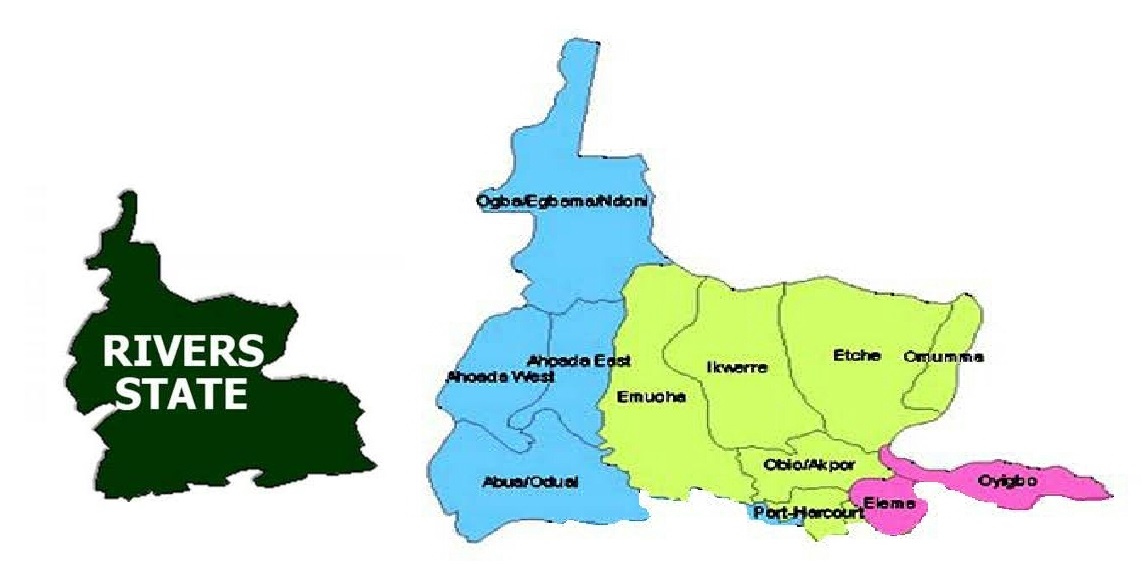
A case in point of an asymmetrical allocation of development programme is revealed in a tailored analysis done by the Chief of Staff, Government House, Port Harcourt, Mr. Emeka Woke. Who overtly revealed that a chunk of the development programme by the Wike-led administration is domiciled in the Port Harcourt Metropolis (Ijuye-Dagogo, 2018), which has rendered the rest of the Local Government Areas economically handicapped and dependent on the capital city for survival.
Furthermore, with increase in ethnic politicking in Rivers State, there tend to be a decline of statehood consciousness; which results into influenced electoral choice and manifest in vote buying (David, 2019). As a result of this electoral malfeasance, ethnic rivalry and conflict becomes inevitable. Thus, the ecosystem becomes unsafe for domestic and foreign investment to thrive. Under such condition socio-economic activities which are one of the major sources of the Internally Generated Revenue (IGR) of the state is impeded or destroyed. Understandably, those that survive are forced to move to another state where they can flourish. In other words, as these domestic and foreign investors divest the state, decrease in economic growth and underdevelopment ensued, resulting in high level of poverty, unemployment and increasing crime rate.
Accordingly, David (2019) asserts, that the feeling of ethnic differences in tradition, history, culture inter alia has had great impact on politics in Rivers State. However, this is true in the sense that gubernatorial election results in Rivers State reveals that most political aspirant gets majority of their votes from their ethnic constituency. Oftentimes this is without regard for competency, efficiency, meritocracies inter alia of the aspirant (Andah, 2019).
-
The intersection between Ethnicity and Good Governance in Rivers State
In all political activities in Rivers State, the ethnic cleavage is being reflected. This common syndrome of ethnicity has resulted in unhealthy political struggle in the state. Thus, it can be seen that as a state, Rivers State has failed to properly manage her political relations in a manner that is characteristic of the civilized societies of the world (Salawu & Hassan, 2010). This spate of ethnic cleavages in government general patronage of the citizens has led to the structural imbalance in Rivers State framework, which is the most potent source of fear of domination among the various ethnic groups. Meritocracy has been compromised in the state as well as statehood consciousness being plateau.
Nevertheless, Rivers State at the age 53 is still searching for a new political order. The full realization of the objective has been made impossible because of the dominance of ethnic sentiment, a factor which has impacted the survival of good governance in Rivers State. The effort made so far in this study has been to show that the inter-ethnic relations in Rivers State has been one of rivalry largely caused by ethnic chauvinism, which manifests in form of ethnic patronage. By definition, this means a tendency to see one’s self, first and foremost as a member of an ethnic group rather than as a member of the state. This tendency has been shown in some ways and particularly in the allegiance people pay to their ethnic group.
In Rivers State today, many prefer identification with their ethnic group rather than with the State. Salawu & Hassan (2010) assert that, such identification has implications for the survival of good governance. The question to answer here is how ethnicity and the resultant ethnic politics affect good governance as an institution? Ethnicity has had a lot of negative consequences for the state’s movement towards the institutionalization of good governance. Among its resultant negative consequences as observed by Babangida (2002), are wastage of enormous human and material resources in ethnically inspired violent encounters, clashes and even battles, heightening of fragility of the economy and political process, threat to security of life and property and disinvestment of domestic and foreign components with continuous capital flight and loss of confidence in the economy; and increasing gaps in social relations among ethnic nationalities including structural suspicions and hate for one another.
However, ethnicity is not peculiar to Rivers State as other climes have plural composition. Although, Rivers State’s political participation is fraught with ethnicity. Under such condition, this study appraises the rabid competition amongst multiethnic groups for power and wealth. This has culminated in mutual distrust and suspicion as well as heightened tensions with its attendant implications for good governance. Good governance which is a sine qua non for development, cannot flourish in an ethnically conflict-ridden polity or sentimental ecosystem. Thus, the corollary of this is the recurring and perennial hydra-headed challenge it poses for state-building.
-
Conclusion
The problem of ethnicity is inherent in Rivers State’s political system. Thus, it can be seen that as a state, Rivers State has failed to properly manage her political relations in a manner that is characteristic of the civilized societies of the world. As such, this study specifically considered ethnic politics and good governance in Rivers State. Nevertheless, the factor of ethnicity in Rivers State developed as an offshoot of the national ethnic sentiment created by the colonialist which isolated the masses from the benefits and security by the system, thus, leaving the people with little or no choice than to seek comfort, security and material as well as socio-psychological support and sense of belonging from their various ethnic associations (David, 2019). This spate of ethnic arrangement led to the formation of ethnic driven politicking to promote, represents and protect their primordial interest.
Furthermore, competition for scarce resources has been the more common bases of ethnic consciousness and tensions. This competition includes in areas like land, boundary, and natural resources and also for political power and control. In the political sphere and in relation to political development, especially in areas like voting in elections and support for candidates, the impact of ethnicity cannot be overstated. Politicians seeking mass support found out that the only platform on which they can win the votes of the masses or appeal to the interest of the populace is to appeal to communal cries and sentiments rather than universalistic appeal and ideology.
-
Recommendations
In view of the conclusion reached, there is need for those who hold state offices to take drastic measures in putting an end to ethnic chauvinism in the governance structure of Rivers State. This can be achieved through the following ways:
- The structural imbalance in Rivers State framework is the most potent source of fear of domination among the various ethnic groups. This fear promotes competition for scarce resource – governance, which intensified the politics of “winner takes all”. Unless this fear is removed by providing an optimal opportunity for all ethnic groups to feel a sense of belonging in the governance system, ethnicity will continue to be a bane on good governance in Rivers State.
- The principle of Federal Character needs to be properly reviewed to enable it perform integrative function without compromising merit in Rivers State.
- For statehood integration to really be effective in Rivers State. More space should be provided for Rivers State populace to participate in the affairs of the state as well as those of their various communities. This will go a long way reducing alienation and conflict, which oftentimes is a major promoter of ethnic nationalism.
- For institutionalisation of lasting democracy in Rivers State, her ethnic plurality notwithstanding, the wrongs of ethnicity must be righted. This can best be done by good governance. The state needs a purposeful leadership that has a vision of how to place its citizens at the centre of political project without recourse to ethnic chauvinism and sees acquisition of political power as not an end in itself but a means for serving the collective welfare of its people regardless of their ethnic origin. A leadership that recognizes and respects the many people’s that make up this state, and treats all communities as its constituency thereby allaying the fear of ethnic domination.
With the suggestions above, Rivers State will be able to reduce the incidence of ethnicity in the state’s body polity. This will transform particular loyalties to loyalty to the state. It will reduce the common syndrome of ethnic loyalty, which has always resulted into unhealthy political struggle and which has manifested in various types of political protests and instabilities.
- References
Alabi-Isama, G. (2013). The tragedy of victory: on the spot account of the Nigeria-Biafra War in the Atlantic theatre. Spectrum Books Limited, Ibadan, Nigeria.
Achimugu, H., Ata-Agboni, U. J. & Aliyu, A. (2013). Ethnicity, ethnic crisis, and good governance in Nigeria: Implications for sustainable nation-development. In Public Policy and Administration Research, Vol. 3, No. 12.
Aigbe, E. & Justin, U. (2018). Patron-client network and its implications for good governance in Nigeria: An X-Ray.In Afro Asian Journal of Social Sciences, Vol. IX, No. 1, Quarter 1.
Ananaba, W. (1969). The trade union movement in Nigeria. Benin: Ethiope.
Andah, J. (April 03, 2019). Rivers election: Results from inec collation centre (live update). Retrieved on May 4th, 2020 from https://www.concise.ng/2019/04/03/rivers-governorship-election-results-from-inec-collation-centre-live-update/
Ansah, A. B. (2007). “Globalization and its challenges: The need for good governance and development in Africa”. In African Journal of Indigenous Development, Vol. 3. Nos. 1&2, January-December.
Awojobi, O. N. (2014). Corruption and underdevelopment in Africa: A Discourse Approach. International Journal of Economics, Commerce and Management, 2(10), 1-14.
Azeez, A. (2004). The dynamics of ethnic politics and democratic consolidation in Nigeria: A prognosis. In Duro Oni, Suman Gupta, Tope Omoniyi, EfurosibinaAdegbija and Segun Awonusi (Eds.), Nigeria and Globalization: Discourses on Identity Politics and Social Conflict. CBAAC: Ibadan: Stirling-Horden. Pp. 327 – 342.
Babangida, (2002). Ethnic nationalities and Nigeria State. Excerpts from a Lecture delivered at NIPSS, Kuru, Jos.
Collier, P. & Hoeffler, A. (1998). ‘On the economic causes of civil war’. In Oxford Economic Papers, 50(4): 563-573
David, U. J. (2019). Ethnicity and good governance in Rivers State (Bachelor’s project). University of Port Harcourt, Choba, Nigeria.
Doornbos, M. (1991). ‘Linking the future to the past – ethnicity and pluralism’. In M. M. A. Salih and J. Markasis (Eds.), Ethnicity and the state in eastern Africa. Stockholm: ElandersGotab.
Easterly, W. (1997). ‘Africa’s growth tragedy: Policies and ethnic divisions’. In Quarterly Journal of Economics 112: 1203-1250.
Efemini, A. (2005). “Managing conflicts in the Niger Delta region of Nigeria”. CASS Newsletter Vol. No. 1 May. Centre for Advanced Social Science (CASS): Port Harcourt.
Eriksen, T. H. (2010). Ethnicity and nationalism (3rd ed.). London: Pluto Press.
Fearon, J. D. (2003). ‘Ethnic and cultural diversity by country’. In Journal of Economic Growth 8: 195-222.
Giddens, A. & Sutton, P. W. (2013). Sociology. (8th ed.). Ansari Rd, Daryaganj, New Delhi: John Wiley & Sons Press.
Graham, K. B. & Arnim, L. (2010). Conceptualizing and measuring ethnicity.In Forthcoming in Oxford Development Studies 38(4)
Haralambos, M., Holborn, M., Chapman, S., & Moore, S. (2013). Haralambos&holborn sociology: Themes and perspectives. (8th ed.). London: HarperCollins Press.
Ijuye-Dagogo, S. (July 15, 2018). The dead-end of “Mr. Project”: Comparing Wike’s achievements with those of Cross River and Akwa Ibom States. Rivers Ijaw Voice. Retrieved on 13th October, 2019 from https://riversijawvoice.com.ng/2018/07/15/the-dead-end-of-mr-projects-comparing-wikes-achievements-with-those-f-cross-river-and-akwa-ibom-states/
Joseph, R. A. (1987). Democracy and prebendal politics in Nigeria: The rise and fall of the second republic. Cambridge University Press: Ibadan.
Linus, M. (2006). The frozen democracy: God-fatherism and elite corruption in Nigeria. Enugu: Triumphant Creations.
Mala, M. (2010). “Corruption in Nigeria: Conceptual and empirical notes”. In Journal of Information Society and Justice, Vol. 3, No. 2. July.
Michael, C, (2008). Political science: An introduction. New Jersey: Pearson Educational Inc.
Mohideen, A. (1997). “Stock taking and assessment of democracy and good governance”. In Proceedings of the Development Policy Management Forum (DPMF) Conference on Democracy, Civil Society and Governance in Africa. December 1-4 Addis Ababa,Ethopia.
Nagel, J. (1994). ‘Constructing ethnicity: Creating and recreating ethnic identity and culture’. In Social Problems, 41(1): 152-176
Nnoli, O. (1978). Ethnic politics in Nigeria. Enugu. Fourth Dimension Publishing Co. Ltd.
Nnoli, O. (2003). Ethnic violence in Nigeria: A Historical Perspective. Pp. 1-23
Nwaubani, A. T. (2020). Remembering Nigeria’s Biafra war that many prefer to forget. BBC News.
Odeyemi, J. O. (2014). A political history of Nigeria and the crisis of ethnicity in nation-building.In International Journal of Developing Societies, Vol. 3, No. 1, 87-95.
Odo, L. U. (2015). Democracy and good governance in Nigeria: Challenges and prospects.In Global Journals Inc. (USA), Vol. 15, Issue 3, Ver. 1.0
Oji, O. & Okafor, C. (2000). Political parties, pressure groups and public opinion in the political process. Enugu: John Jacob Press.
Okpaga, A. (2009). “Ideology and the challenges of good governance and development in Nigeria”. In Edoh, T. et. al. (eds).
Oluchukwu, M. (2010). “Nigeria and its prebendal public office holders in nigeria”.In Master Daily News. 2nd June.
Omotola, J. S. (2009). Nigerian parties and political ideology. Journal of Alternative Perspectives in the Social Sciences, 1(3), 612-634.
Osaghae, E. E. (1995). Structural adjustment and ethnicity in Nigeria. Uppsala: Nordic African Institute
Rodrik, D. (1999). ‘Where did all the growth go? External shocks, social conflict and growth collapses’. In Journal of Economic Growth 4: 385-412.
Salawu, B. & Hassan, A. O. (2010). Ethnic politics and its implications for the survival of democracy in Nigeria.In Journal of Public Administration and Policy Research, Vol. 3(2) Pp. 28-33 Feb., 2011.
Sambanis, N. (1999). ‘Partition as a solution to ethnic war: An empirical critique of the theoretical literature’. World Politics 52(4): 437-483.
Sen, A. K. (1990). Sovereign governance and the role of international institutions. Washington DC, World Bank.
Williams, D. U. (2015). How useful are the main existing theories of ethnic conflict? In Academic Journal of Interdisciplinary Studies, MCSER Publishing, Rome-Italy, Vol. 4, No. 1.
World Bank (2003). Better governance for development in the middle-east and north Africa. Washington DC, World Bank.