DD
MM
YYYY

PAGES

DD
MM
YYYY

spot_img

PAGES

Home Blog Page 6363

To Speak in Standard Bank, South Africa – May 27

0

It would have been great coming in person but Covid-19 has messed up the tradition. I will telespeak in Africa’s largest bank by assets and one of the finest banking institutions in the world: Standard Bank, South Africa. May 27 is the day. Executives from 18 African countries and 2 from Europe will connect as we examine how to unlock opportunities post Covid-19.

A few years ago when I walked into a leadership program, one of the executives brought out a copy of his Harvard Business Review print, and asked me to discuss my perspectives live. It was a moment knowing that your works are used by some of the most brilliant leaders in our continent.

Standard Bank.. the new standard in banking. Thanks for all your partnerships.

The Deaths in Northern Nigeria: A Consequence of Plausible Deniability

0

Over the weekend, when the letter of Ibrahim Mohammed Baba to President Muhammadu Buhari made the news, it swiftly became part of the occasional controversies surrounding the number of people dying as a result of the coronavirus pandemic, especially in the north.

Ibrahim Mohammed Baba, a former member of the House of Representatives had written to President Buhari over the death of over 100 people in Azare town, headquarters of Katagum Local government Area of Bauchi State.

In his letter titled: ‘Massive COVID-19 Outbreak in Azare: Request For Urgent Action,’ Baba said that the cemetery bears witness to the fact that people have died in unusual way in the past weeks, and begged for Buhari’s intervention as he said that the Federal Medical Center in the State is getting overwhelmed.

“If you go to the graveyard, they have a register there and you would see it yourself. In the last two weeks, they registered more than 286 bodies at the Azare graveyard. The normal death rate in the town was about one to two per day. So you have to raise the alarm when you are burying 200 to 300 persons in two weeks and over 100 per week. Our people are dying, do we have to keep quiet”?

About three weeks ago, a similar alarm was raised in Kano. Over 640 persons were buried in eight LGAs of the State: Nasarawa, Gwale, Dala, Ungogo, Fagge, Tarauni, Kumbotso and Municipal. It was a tale of horror that kept Nigerians wondering what the killer could be even though to some, it was a political mischief.

However, the events have brought Kano and Bauchi to a familiar terrain. In April, when the alarming number of interments in Kano caught the attention of the general public, and calls for investigation went out, the Sub Committee on COVID-19 issued a defensive statement, dismissing suggestions that coronavirus could be the cause of the deaths. In a statement then, the Secretary of Risk Communication Sub Committee on COVID-19 in Kano State, Alhaji Auwalu Abdu Fagge said it’s all rumor.

“This particular rumor has been investigated and found to be untrue. I beg of you with massive social media followership to help in clearing the air,” he said.

Though the Kano State Ministry of Health, in its own statement said an investigation has been launched and the general public will be informed of the outcome, many bought the Secretary’s statement and defended it against the realities evidenced in the cemeteries.

Aminu, a Kano resident said the deaths were not unusual; they only became noticeable due to the lockdown that halted the hustling-bustling in the Kano Metropolis.

“People die every day in Kano even before this COVID-19 pandemic. Kano is a big city, it’s because the city is crowded that’s why people don’t observe the daily deaths. But now because of the lockdown, people tend to observe. So please let’s not turn natural cause into politics,” he wrote on Twitter.

The numbers rose significantly the following weeks in Kano, prompting Buhari to impose a 2-weeks lockdown on the state and to give marching orders to the Presidential Task Force to unravel the cause of the deaths.

On May 3, the Chairman of the Presidential Task Force, Dr. Nasiru Sani Gwarzo told the press: “Let me inform us that most of the deaths recorded of recent and test carried out showed that Coronavirus was the cause. So before the final report which would be ready in the next one week or few days, it is necessary for people of Kano to wake up from their slumber that this is a serious issue,” he said.

While there have been questions about the credibility of the Presidential Task Force’s report (due to the fact that it was based on verbal autopsy), the fears of many were confirmed and the objective voices in Kano died down. Nevertheless, the consequences have been contagiously fatal and teach a lesson that Bauchi State is failing to learn.

In his letter to Buhari, Baba has pointed out the similarities in the deaths of Kano and Bauchi States – community transmission that its mystery has the simple explanation of a pandemic.

“We are not blaming anybody; this is a pandemic, we are just asking the government to take further action. The Federal Medical Center there is doing well; they have over 20 people in isolation there. It’s a case of community transmission like the one in Kano,” he said.

But while the calls for urgent action ring louder, the Bauchi State Government is refuting the claims of many deaths. In a press briefing held on Saturday, the Deputy Governor of Bauchi State, Baba Tela, who also is the Chairman of the state’s Rapid Response Task Force Committee on COVID-19 and Lassa Fever, said the deaths come seasonally in Azare town, and people with existing health conditions always die.

“It is a seasonal thing in the area especially during the hot season when people with underlying illnesses get complications which always lead to their deaths,” he said.

The same excuse used in Kano in the early times of the deaths that only encouraged social life against the precautionary measures of COVID-19. There was no “what if it is coronavirus” question to encourage safety practices.

In his statement, Tela acknowledged that the situation in Bauchi has been spurred by the events in Kano considering the proximity of the two states, though he dismissed the suggestion that it is coronavirus; and that’s where the danger lays, the incredible denial that keeps birthing contagious consequences of fatality.

Over the past two weeks, the number of dead persons in northern Nigeria has seen an alarming increase. With coronavirus being responsible for a sum, the larger sum has been categorized under “mysterious death” caused by ailments that bear symptoms similar to the pandemic though not confirmed. The main reason being that there is a little or no medical provision to ascertain the cause where these deaths are happening.

As the state governments and medical practitioners issue statements to discredit the link between the deaths and coronavirus, there are suggestive hints in their words that give credence to the claim that it could have been the virus.

Dr. Nagoma Sadiq of the Aminu Kano Hospital said: “It’s shocking to most of us that the count of the dead is alarming. But it is likely due to reduction in the number of health institutions available in the state.

“Because there are a lot hypertensive patients, diabetic patients, asthmatic patients, cancer patients, and they don’t have much access to the hospitals. The lockdown is affecting everybody. Our poor majority don’t even have a vehicle to take them to the hospitals,” he said.

In his statement, Dr. Sadiq mentioned underlying ailments that experts said decrease the survival chances of coronavirus patients. Alas, they are not good enough to give credibility to the link of the deaths to coronavirus, not even when death has not been witnessed in such alarming numbers for years.

Ali, a grave digger in Kano told BBC: “We have never seen this, since the major cholera outbreak that our parents tell us about. That was about 60 years ago.” His statement comes against the governments’ side of the story that attributed the deaths to season, malaria, typhoid fever and old age. Ibrahim Hassan Hadejia, the senator representing Jigawa north, even attributed the deaths to fasting and heat. He said old people with health challenges are dying because of Ramadan fasting and the hot clime in the northern region.

Amidst these excuses coming from government officials, a large number of people are being confirmed coronavirus positive in northern states, among them, the almajiris who roam the streets begging. The Kano State Government had on May 7, as the Northern Governors Forum (NGF) had agreed to deport each one of the almajiris to their states of origin, and deported a lot of them to Jigawa State. Among those deported, over 40 almajiris have tested positive for coronavirus in Jigawa State alone, and it cuts across the northern states.

The proximity of these states appears to be enabling the spread of the coronavirus and the mystery disease, a fact Tela acknowledged in his statement. He said that Bauchi State has been so infected due to its closeness to Kano. An indigene of Azare, Inuwa Umar said the situation must have been a spill-over from the Kano events.

“I think the situation might be as a result of what is happening in Kano. We have strong economic ties with Kano. Over 30 buses go to Kano from our town daily, which means that anything that happens to Kano people might easily happen to us. Even during the lockdown, you would be surprised to see the number of people travelling to Kano for business. Our people know the routes to Kano,” Umar said.

Kano, Bauchi, Jigawa and Kaduna states all share common boundaries that make integration easy. So, according to Umar, no matter the height of restriction imposed, the people will always find their way to each other states, unless the fear of being infected by a deadly disease stops them. The villagers in Azare said that a large number of traders have voluntarily stopped going to Kano for fear of being infected. This development adds yet again, credence to the claim that whatever is killing people in these axes is more than malaria, fasting and heat; and needs more attention than it is getting right now.

As of May 10, Kano remains the epic-center of coronavirus in the north with 602 confirmed cases; Bauchi has 181, and Jigawa 118. The numbers increased unprecedentedly in a matter of days, and it is believed that more people are infected in these states than are recorded by the Nigerian Center for Disease Control (NCDC), but many are unaccounted for due to poor testing facilities in the region.

In the wake of this health crisis, the authorities are failing to stop migration of people from states, a large number of them, the almajiris. Many of them are heading toward the south, others move to other states in the north. However, the consequence of the free movement continues to be seen in the numbers of those infected or those dying.

As the health controversy thrives on inadequate health facilities and governments’ deniability, whatever is killing people in northern Nigeria is spreading with unprecedented speed, and it is fast reaching other states like the notorious coronavirus. Currently, Yobe State is reportedly burying more people than it has done in the recent past.

It is believed that the affected state governments are denying the realities for political correctness and to save face from perceived lax and poor leadership in the face of critical health crises. Against the backdrop of coronavirus containment, the northern governments have been reminded that the dark cloud they think is rain is actually a tsunami that will wreak devastating havoc if it is not contained now.

Tekedia Institute Will Lead FCMB’s BEST Masterclass GROWTH Session

0

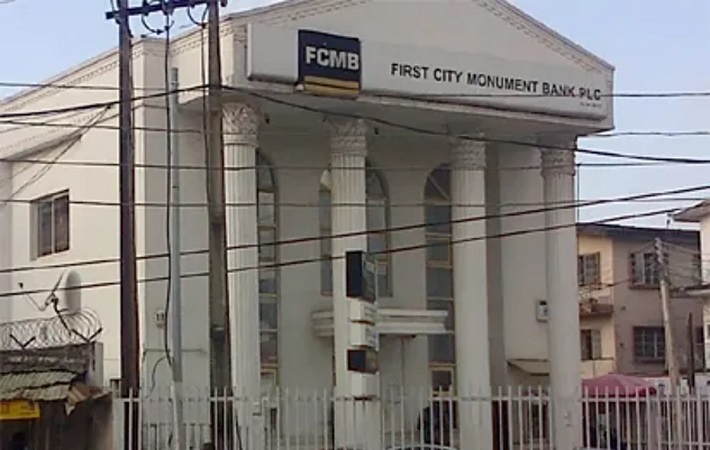
It is an amazing bank which has discovered how to empower startups and SMEs across different sectors. It has one of the top SME Advisory units in our nation, with professionals who help entrepreneurs and founders navigate operational, tactical and strategic challenges in their missions. It is a simple playbook, we give you loans, and we help train and prepare you to thrive, because we want you to grow. FCMB’s ‘’Business Enterprises and Sustainability Training (BEST)” is industry-leading and has served many entrepreneurs across Nigeria.

The BEST initiative is one of the innovative ways we empower, promote and support the growth of our SME customers because without effective training and exposure, it could be quite difficult for their businesses to succeed. We believe this training will go a long way to impact positively on the SME operators who have participated in this programme. It will propel them to further develop themselves in order to compete favourably within and outside the Nigerian market. We, therefore, urge the beneficiaries to take advantage of the unique opportunities provided by this exercise, because it is a veritable platform for them to take the lead in driving the diversification and growth of the Nigerian economy’’,

On June 18, along with partners from McKinsey, KPMG and other global brands, Tekedia Institute, which runs Tekedia Mini-MBA, will lead a session on business growth for makers, founders, managers, entrepreneurs, doers, and innovators in the FCMB SME Business. I will lead that for our Institute which continues to serve markets by sharing practical insights on the mechanics of market systems.

 I hope to deepen with BEST SMEs on June 18 as we plot the path to growth, post Covid-19, tapping into structures and systems FCMB has provided to ensure everyone thrives. (Register via the link provided by the bank).

Be BEST – bank with FCMB.

FG Inaugurates Committee for the Revitalization of Ajaokuta Steel Plant

1

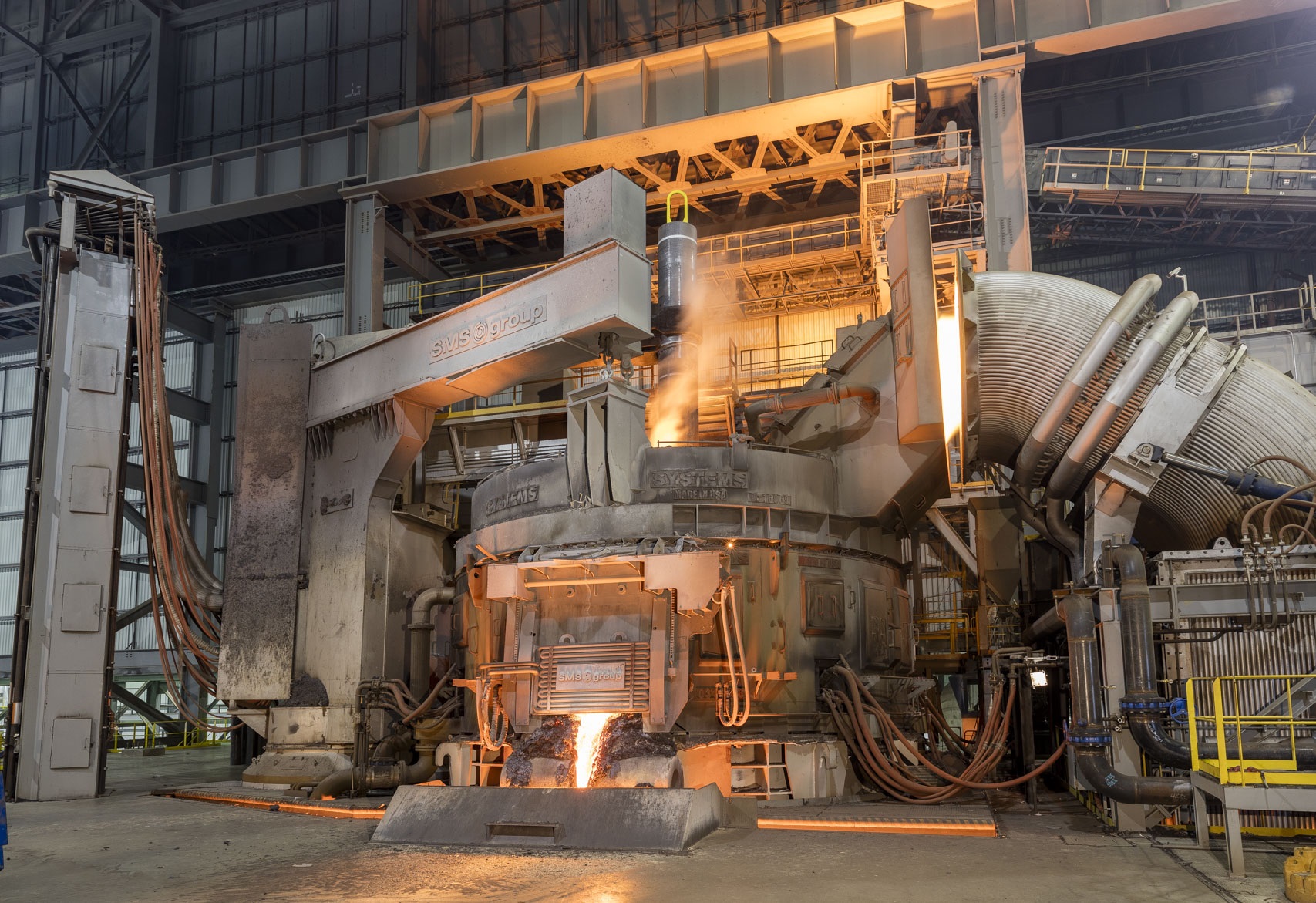
On Monday the Federal Government of Nigeria inaugurated a committee for the resuscitation of Ajaokuta steel that has been in the pipeline for decades. This is coming after the Russian government showed interest in the project once again. The Russian government has been working with the African Import and Export Bank to raise over $1.4 billion for the revival of the steel making plant that has been in ruins for long.

President Buhari has in October 2019, reached a deal with his Russian counterpart, Vladimir Putin. According to BusinessDay, the Russians are investing $460 million in the project while Afrexim is doling out the larger sum of $1 billion.

Russian company TyazhpromExport designed the Ajaokuta Steel Company Ltd on June 4 1976, with the aim that it would be producing 1.3 million tons of steel per year. Ever since then, the 44 years old company has failed to make use of the mineral resources in the country to live up to the expectation.

The Secretary to the Government of the Federation (SGF), Boss Mustapha, who inaugurated the committee, said the development will present Nigeria with the opportunity to diversify its economy, especially in the face of dwindling oil revenue that has grossly affected the country.

“Revamping the Ajaokuta Steel Plant, clearly presents a unique opportunity to make us West Africa’s largest fully integrated steel producer and most importantly accelerate our industrialization especially in the steel related industry,” he said.

However, there is a legal issue involving Global Steel Holdings Limited, an Indian firm, concerning the past concession agreement which is said to have given the rights of Nigeria Iron Ore Mining Company (NIOMCO) to the Indian firm. The legal battle has posed a challenge to commencement of work at the Ajaokuta Steel Company.

But the Minister of Mines and Steel, Olamilekan Adegbite said the legal challenge will not stop the project, that Nigeria will not surrender its ownership of Ajaokuta Steel Company and NIOMCO to the Indians.

“Yes, the legal issues are there, but now that the Russians who built the place have shown interest, all the legal issues will be resolved. Steel was produced from Ajaokuta in the past but with imported billets. Now we are working with the Russian government to commence local production using the abundant raw materials available in Ajaokuta.

“The beauty of this proposal is that it does not involve Nigeria putting money; the project will pay for itself. It is taking a while because of government bureaucracies involved. It is worth it and we will get it right,” he said.

He shed some light on the legal challenge while explaining the process of the deal. He said the office of the vice president is handling the legal matters.

“It is a situation whereby a contract is given to somebody to perform and got terminated but not according to the rules. The corporate body went to arbitration. We are trying to extricate ourselves. It won’t affect the Russian deal. We are trying to do a coordinate settlement on that. The legal issue is being addressed by the office of the vice president and other issues of revitalization ongoing.

“There have been lots of correspondences and they have asked several questions and we have responded. Afrexim is bringing the money, the Russians are bringing in the technical expertise and we are bringing in mineral resources which we have.

“Essentially, what the deal said is that the Russian government would help us nominate a body that have the engineering skills to complete the work and possibly the same body to run and manage it for a number of years. We agreed on of course with a reasonable profit and revert back to Nigeria’s ownership on complete manage and transfer terms,” Adegbite said.

The committee named Ajaokuta Presidential Project Implementation Team (APPIT), is made up of the SGF who will chair the team, the Minister of Mines and Steel Development (alternate chairman), the permanent Secretary, Mines and Steel Development; Permanent Secretary, Ministry of Finance; Solicitor-General of the Federation/Permanent Secretary Ministry of Justice.

Others are; the Sole Administrator, Ajaokuta Steel Company Ltd; Sole Administrator, National Iron Ore Mining Co. The members are made up of industry experts; Vincent Dogo, Elegba S.B and the director-general of ICRC, Godwin Adeogba.

According to the SGF, the committee is tasked to develop a work plan that involves a quarterly report of progress besides developing concession contract terms.

The Ajaokuta Steel Company has been a bone of contention through successive administrations for over four decades. So much resource has been invested on efforts to revitalize the plant. It is hoped that this approach by the Buhari administration will drive in the nail that will seal the loopholes that have prevented the steel company from working for years.

Competence and Preparedness should be Determinants for Leadership, Not Necessarily Age – Adedayo Adeniyi

0

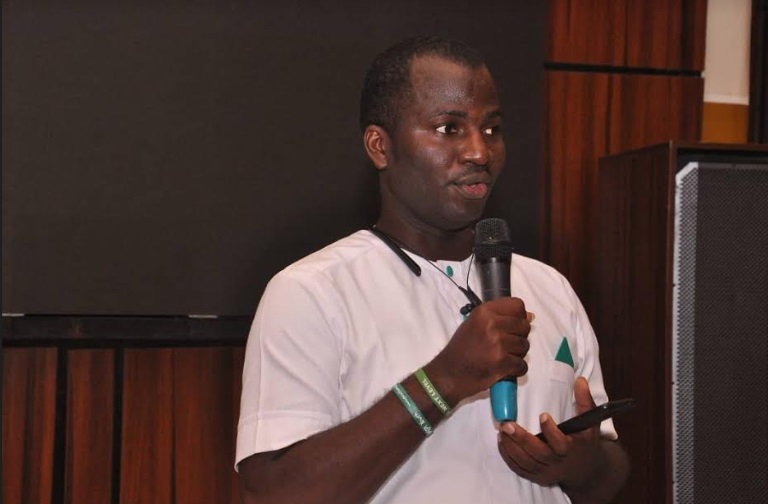
Adedayo Adeniyi, popularly known as Dayo Nigeria, is the Executive Director of Matadors Leadership Institute, an organization that is committed to redefining the concept of leadership as service rendered in the society, not the titles acquired. He is a Fellow of the Mandela Washington Fellowship for Young African Leaders. He spoke with Rasheed Adebiyi on the roles of the youth volunteerism in combating the COVID 19 and other issues on youth leadership.

Here are the excerpts.

Tekedia: Could you tell us about yourself.

Adeniyi: My name is Adedayo Adeniyi, popularly known as Dayo Nigeria. I am a development worker and leadership trainer with about a decade experience in preparing young people for effective and responsible leadership.

Tekedia: The advent of COVID 19 has again brought to the limelight the importance of volunteering. Do you think Nigerian youths are rising to the occasion?

Adeniyi: Honestly, it is neither here nor there. We have a handful of youths in different parts of Nigeria who have risen up to the responsibility and contributing in diverse ways to either aid the effort of Government and the health workers in containing the pandemic, while some others have chosen to approach from the economic and livelihood point of view where they have raised money to get palliatives for people hit by the effect of Covid-19. It is however sad to admit that a large proportion of Nigerian youths, just as with most other issues, are looking at this through the lens of political sentiment or religious agenda, which has led to the propagation of unfounded conspiracy theories that are unfortunately hampering the work that Government is doing.

Tekedia: You are interested in youth leadership and mentorship. In the face of Not Too Young to Run Law, do you think the Nigerian youths are ripe to rise to leadership positions at all levels of government?

Adeniyi: This issue is relative. At the moment, we have a lot of Nigerian youths who are doing well in the leadership position they occupy. If this category of youths is given opportunities in government, I believe they will do well. On the other end, there is a teeming population of youths who have not sorted out their priorities and do not even know what being a leader entails. It is sad but true, we have them all around. This category of youths does not deserve a chance at leadership because it would end up in a disaster that could have been avoided by not giving power to them. When you look at a lot of youth led initiatives, we can only conclude that it is best that we look at leadership more from the angle of competence and preparedness, than age.

Tekedia: Rising incidence of fake news and misinformation on the social media has made governments to seek to control internet communication. Do you believe that these efforts are justifiable?

Adeniyi: The challenge of fake news is beginning to pose more threat to our existence than any other challenge that the world has seen and the sharp rise can be linked with the advent of the social media becoming the fastest platform of news dissemination. We all must choose to be more responsible as citizens of the world and ensure that we don’t just share news without confirming, especially if it looks as if those fake news support a bias in our minds. The government on its part should also prioritize developing a responsive and timely communication process that will ensure that authentic news is disseminated. The best weapon to fight evil is good. If we want to curb misinformation and spread of fake news, transparency must be promoted and people who deliberately spread falsehood should also be made to pay for their crime within the ambit of the law without stifling press freedom.

Tekedia: During the ongoing lockdown, emphasis has been on skills acquisition online. Do you also agree that anyone who emerges from this lockdown without a new skill is not focused?

Adeniyi: It is a good notion but we should be careful about over-generalizing. For me, the goal should not be coming out of the lockdown with a new skill. This is just a means to an end. The end in itself is that you become a better person and more valuable.  Why do you need a new skill? It’s to develop yourself and be able to add more value. Luckily there are many means to this end i.e. a new skill is not the only way to self development.  So, I will advise that instead of focusing on a new skill, let us all just come out of the lockdown a better person than we were when it started. The realities of individuals are different but everyone must strive to be more and do more.