DD
MM
YYYY

PAGES

DD
MM
YYYY

spot_img

PAGES

Home Blog Page 6364

February 2020 Scorecard for Telcos in Nigeria

0

As coronavirus continues to exert ravenous might on the economy, the telecommunication sector appears immune to its strains. The number of subscribers to telcos in Nigeria is rising even with limited freedom that has impacted many businesses. There has been a significant increase in the number of internet and call networks’ subscribers. The report for the month of February showed that the increase started early in the year.

According to the data from the Nigerian Communication Commission (NCC), the number of subscribers rose to 187 million in February. The number indicated eight percent year-on-year increase considering the 173.28 million subscribers at the same time in 2019.

There were a total of 1.4 million additions to the customer base of the telecommunication industry in the month of February given that the telcos recorded 185.74 million in January. Internet users also surged by 15 percent, increasing from 114,725,357 in February 2019 to 131,647,895 in February 2020.

Among the telcos, MTN Nigeria leads with 1.7 million new subscribers to command a total of 72.47 million users.

Airtel gained 490,389 new subscribers to reach a total of 50.49 million users. On the other hand, Globacom added 48,798 new subscribers to book its place behind Airtel with a total of 51.8 million customers in February.

9mobile lost 913,733 subscribers in February, making it the only GSM company to lose customers within that period. Its total subscribers dropped to 12.24 million.

MTN leads with a wide margin even though it lost 1,058 subscribers through the Visafone spectrum. It maintains its place as the largest network operator in Nigeria with 38.73 percent market share.

Globacom took the second place with 27.68 percent market share while Airtel clinched the third place with 26.98 percent market share. 9mobile remained at the fourth place with 6.54 percent market share.

On internet users, Globacom gained the highest number for the month of February with 1.75 million subscribers to record a total of 30.95 million.

MTN mobile internet subscribers’ base expanded to 56.49 million in the month of February, an addition of 960.814 new users from the 55.53 million in June last year. However, the South African company lost 1,378 users on its Visafone subsidiary, bringing the number of new subscribers down to a total of 88,818.

Airtel recorded 670,474 new users for the month of February to make a total of 36.17 million users when merged with the 35.5 million internet subscribers it recorded in January.

However, 9mobile incurred loss of subscribers also in mobile internet service. The company’s mobile internet subscribers nosedived from 8.04 million in January to 7.94 million in February, a 96,220 loss in the number of users in one month.

9Mobile’s struggle to keep up with the pace has been attributed to the bullying dominance of MTN, Airtel and Globacom. It was the main reason its parent company, Etisalat exited the country as the company was in the verge of liquidation and was about to be seized by creditors. The exit of Etisalat offered a lifeline to 9mobile as it gave opportunity to indigenous investors to buy into the company.

However, the domineering presence of the “big three” has continued to intimidate 9mobile. As it is the case with businesses in other sectors in Nigeria, subscribers always go to where the crowd is, unless there is a compelling change to attract them to the underdog. 9mobile tried to pull off the magic through promos but it could only entice a few who ported as soon as it no longer served.

The big deal lies in efficient services like the 4G roll out that ensures improved data services for subscribers. Nevertheless, financial constraints stymied 9Mobile’s aim to compete with the “big three” as they flex their financial muscle on infrastructural upgrade of their network systems. The 4G roll out alone attracted a large number of users to the other operators. Apart from that, the expansion of their network coverage to places where it has not been, especially rural areas helped to increase the number of voice communication users.

The recent data is an indication that 9mobile is still under pressure to catch up in the subscribers race. And it may take a holistic approach to the existing strategy for the needed growth to take effect.

However, the constant growth in the telecom sector even in the face of global economic turmoil presents Nigeria with the opportunity to close the gap of the unbanked using fintech. Experts have called on the Central Bank of Nigeria to issue licenses to network operators to enable them to provide banking services to a wider range of people in Nigeria.

Economic Structures, Systems and Pandemics

0

The contemporary world in which we live is an ever-changing ever-dynamic globe. Things are happening at breathtaking pace, while social players try to adapt to these changes. In order to keep pace with developments, human beings have devised ways and methods by which to live and operate. The fundamentals of social existence suggests that every being is a social animal, and according to Charles Darwin’s theoretical framework, it is a matter of survival of the fittest and those without the strength and were withal to stay fit and alive naturally go into extinction. Modern societies operate on two models that may be classified into collectivism and individualism – concepts that were explicated by 18th century philosophers like Emile Durkheim and Herbert Spencer. At a basic level, individuals make up the society but they lack capacity to exist in isolation, which is where the collective capacity comes in.

From time immemorial, the ability to ensure that society keeps functioning is vested in various institutions, with a critical one being that of government. The government exists to organize the collective basis of our lives with a framework from which every member of society draws benefits and security for sustenance and prolonged existence. Governments in modern states have this in mind when that responsibility is bestowed upon them by whatever means deemed appropriate; either through democratic elections or through forceful takeovers. This institution is what empowers other lesser institutions to function in an efficient manner and the aggregation of these structures is what creates the overall social system. It is within this system that members find direction and support, while pursuing their individual goals and ideals. A functional social system fosters a sense of belonging in the minds of the members, which leads to a certain degree of trust on a long run.

Coming down to Africa, and bringing it closer home, we see the reflections of some of these aforementioned ideals. Having been under colonial rule and subsequent independence for well over half a century ago, it would take some real moment of hesitation to affirm that we have what can be called a functional social system in Nigeria. In every segment of our society, one is able to see the obvious gaps in efficiency and optimum operation of most institutions within this system. With over 200 million people- based on latest United Nations data (an equivalent of 2.64% of total world population) while over 60% are youths and a staggering unemployment rate of around 20%, there has never been a better time for drastic changes to take place than now.  

A New Pandemic

The current global pandemic in form of COVID-19 has revealed a significant level of functionality or shortcoming in the capacity of different societies all over the world. In the history of pandemics, the Spanish flu of 1918 is described as one of the deadliest in the modern era, killing about 50 million people worldwide, with almost 500 million people infected. Its impact on Nigeria saw the death of about 500,000 citizens nationwide, with a national population of just 18 million at the time. As many may be unaware, the country also went through a lockdown in the manner we are witnessing now, while the disease was being contained.

The most developed countries with the best of systems have been worn out by this pandemic as seen so far. The situation in Nigeria is also testing the capability of our existing systems to confront this challenge. Before now, it is a consensus that ours is a society of weak systems. From politics, to economics, to health and infrastructure as well as other critical sectors, these have been characterized by inefficiencies over the years, which have often let down Nigerians at crucial times. Corruption is one malady that seeps through our social structures, while maladministration is a constant bane of these institutions. As at the time of writing, total number of recorded cases in Nigeria stands at just below 3000 according to NCDC figures, with the numbers expected to rise significantly in coming days, as Nigeria is yet to reach its own peak period, according to health experts.

Furthermore, nothing indicates a defective social structure more than the absence of a central national database for the country, as the Federal Government struggles to determine whom its poorest citizens are in its bid to provide palliatives during the desperate times like this.  The absence of any kind of social security or welfare net further shows the failure of our core social systems overtime. In other countries, stimulus packages are being rolled out to support nationals and this is based on efficient and reliable database in the face of lockdowns and social (physical) distancing directives.

Distancing by Nigerians?

This then brings us to the matter of social distancing as a strategy for combating the virus. By nature, Nigerians are a very sociable people. A simple evidence of this is seen in the number of social gatherings that takes place especially on weekends across most cities in the country. Drawing from sociological theories of 19th century scholar, Emile Durkheim, one of the leading sociologists of that era, two forms of solidarity comes to mind, these are; Mechanical and Organic. These concepts help us to understand how society evolves from one stage to another and how it operates in terms of social relationships and interactions. This is especially in light of the current directive on social – more like physical – distancing.

The Mechanical solidarity describes the kind of interaction based on shared beliefs and values usually seen in traditional pre-industrial societies while the Organic type is found in more complex and advanced or industrialized societies. After a while, every society transforms into an Organic solidarity type as a result of industrialization, according to Durkheim. The concept of social distancing is a phenomenon that many Nigerians have to come to terms with for the sake of now. Traditionally, the Nigerian social structure is one based on mechanical type of solidarity, where kinship ties are strong with shared beliefs and values by all members of a society, in a structure that brings everyone including extended family members together at times.

It Takes Planning

The point being highlighted here so far is that there is a need on government’s part to create necessary social and welfare systems if success is to be achieved in enforcing measures such as social distancing and state lockdowns – a trend that has gained greater significance because of the widespread global pandemic of COVID19. When unforeseen (unfortunate) situations that pose serious threats to the survival and comfort of ordinary citizens arise, this system serves as a form of cushion and further serves as a foundation for the provision of necessary palliatives to members of the public. Unfortunately, the government of Nigeria at all levels – most depressingly, the Local Governments– have not recorded much success in this regard. In order to ensure a sustainable system in place, the first step is to have the right kind of leaders in positions of authority. These leaders must be set of people with the much-needed political will, to make tough, drastic decisions that will culminate in sweeping changes and benefit Nigerians on the long run.

The National Identity Management Commission (NIMC) has failed to achieve its primary objectives over the years, which is very worrisome. This is something that can be addressed with quality, visionary and purposeful leadership – an element that has eluded the country’s ruling class over the years. Now is the time to reflect and begin to plan because COVID-19 will surely pass but who knows when the next pandemic might be? Posterity will not forgive us if we fail to plan, we must avoid a repeat of the popular saying that “if you fail to plan, you will plan to fail”.

The Andela’s Layoffs And Industry Disintermediation

2

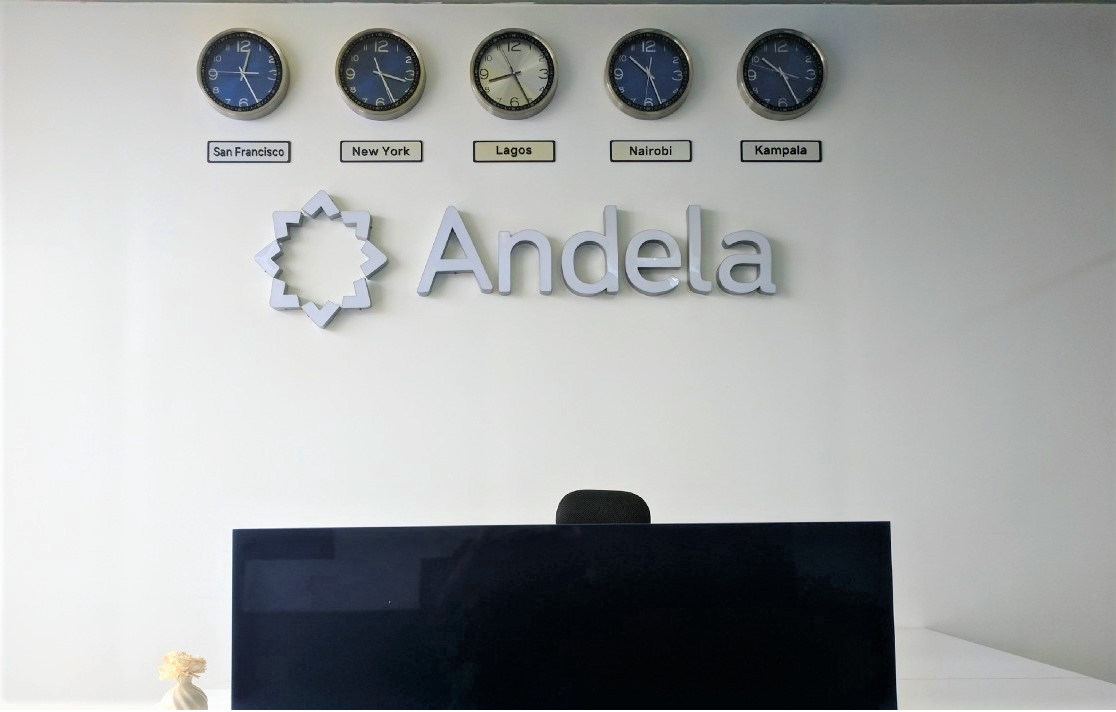
Covid-19 is really bad. It has distorted all elements of commerce. Andela, the remote work placement company, has fired 135 workers as it works to manage the challenges arising from the virus. The CEO of the company wrote: “Like any venture backed startup, our ability to attract future investment is determined by the ratio of how quickly we grow in comparison to how much we spend to achieve that growth.” The company has raised about $181 million from  investors and is certainly well loaded. Yet, its business model may be under stress, not necessarily from competition, but from an industry evolution.

Africa-focused tech talent accelerator Andela has let go 135 employees, CEO Jeremy Johnson confirmed to TechCrunch.

Senior staff at the company — with offices in New York and four African countries — will also take salary cuts of 10% to 30%.

The compensation and staff reductions are a result of the economic impact of the COVID-19 crisis and bring Andela’s  headcount down to 1,199 employees. None of Andela’s engineers were included in the layoffs.

Backed by $181 million in VC from investors that include the Chan Zuckerberg Initiative, the startup’s client-base is comprised of more than 200 global companies that pay for the African developers Andela selects to work on projects.

 Like I noted in the Harvard Business Review, Africa cannot rise on the strength of pure outsourcing as the U.S. and Western Europe will use AI, robotics and improved software systems to bring disintermediation. Sure, software developers are not within that domain at the moment. Yet, there are many software development works which AI will incrementally help elite companies to do, making it unnecessary to hire many junior software developers. Those elite companies are Andela’s  core customers, and they are the ones investing massively in reducing human elements via semi- and full-automation. 

The trajectory is simple: only the most experienced and talented software developers would be needed, while the junior and inexperienced ones will be disintermediated with intelligent systems. Yes, the Andela industry is shifting rapidly, and only elite software developers, the top 20% bucket in the world, can help it. It has to discover them in order to thrive. The inexperienced developers do not cost these companies that much, and most may not want outsourcing them at scale. For them, the key pain points are the ultra-expensive experts. They would like to get those capabilities at cheaper rates.

In September last year, Andela cut 420 staff. In Q1 2020, it also reduced workers. The recent one is evidently understandable with the virus derailing economies and markets. Yet, Andela challenge may not be a virus: it has to check the business model to see if other forms of tech are competing with the workers it has available to place in companies. Largely, Andela is not cutting staff due to competition (ignore the new 135 due to Covid-19). Rather, its competition is industry shift as AI advances! We are seeing the same in the microprocessor design industry. It has to revamp its playbook and account for this shift to get to its mission. That is important as you cannot let go about 600 direct staff in 9 months, and still claim that you can change the African continent!

Comment on LinkedIn Feed

Comment #: I’m not sure how this is the ‘problem’ with or for Andela. More so, I do not see ‘improved AI, Robotics and improved software systems’ changing the metrics. These intelligent systems have everyday parts that need to be put together. Even with data science skills gravitating towards increasingly towards drag and drop, engineers still need to be hands on.

Having been through 2 Andela tests and poached by several (way too much for my liking) tech recruiters, I see Andela’s challenge as failing to read well especially US international relations one hand and the fatigue of remote development on the other hand.

Remote work has been revolutionary but it comes with high cost of time, delay due to distance (even with virtual meets, it is a significant burden) and the fact that a lot of ‘resolutions’ arise every now and then.

The number of emails for developers and data analytics/science roles I get has increased in the past months. One thing is constant: they are looking for local talents. They realize that the immigration wahala bar has been raised especially during the present administration.

My Response: Of course we see it differently. Remote work is expanding. Most U.S. companies use remote workers in India as recently they cannot come to U.S. easily. But those used are top 5-20% to reduce cost. U.S. companies are not looking to cut the costs of those earning $90k but those earning $400k. Simply, Andela has to find a $150k equivalent to replace those earning $400k on skills. That is why it has no value for many junior engineers as U.S. firms are not concerned about them. Many community colleges in U.S. after 2 years can give you $60k engineers. Apple spent $50M to mass produce them in selected community colleges few years ago. Then AI is doing some of those jobs. The issue is the elite coders who command north of $400k.

Comment #2: Prof Ndubuisi Ekekwe is there a way the software development industry in Africa at large and Nigeria by extension can develop an internal solution that is Africa based? Yes, these companies get outsourced job from the West but there are also a lot of competitions. India for example is a big one but they are also developing themselves internally and the Fortune 500’s are now opening stores locally. Though, I believe power, security, broadband, and, trust are some of the major challenges but how can we harness the human resource strength to drive growth in Africa?

My Response: Our problem is not foreign companies. Our challenge is that we do not have BUYERS. If you build it, you will find few buyers. Sure, we parade 200m people as in Nigeria but you have a national budget execution of $20 billion and your largest bank’s market cap less than $1.5B. If Andela sees buyers of its solutions in NG, it will sell to them. South Africa is the only viable at national budget of $127 billion with great institutions. If the demand improves, Africa-focus will happen.

The Andela Problem

3 Months Unresolved Complaint: Can Access Bank Be Responsible and Responsive Once if Not all the Time?

0

Businesses exist to serve a purpose. Businesses exist to ensure profit that commensurate with the efforts expended by the owners and their employees. In a just society, businesses are not expected to be resolute in their pursuit of profitability at the expense of clients or customers, especially those at the bottom of the pyramid.

In any sector or industry, it is the core responsibility of businesses to ensure equality in terms of customer engagement and attention to issues. Out of over 15 industries and sectors in Nigeria, financial or banking and consumer good industries are critical to the survival of other industries and sectors. These industries are the backbone of operational activities of entities and individuals at household level. When it becomes practically impossible to fulfil financial obligations, activities would be grounded. The consequences would be enormous and devastating.

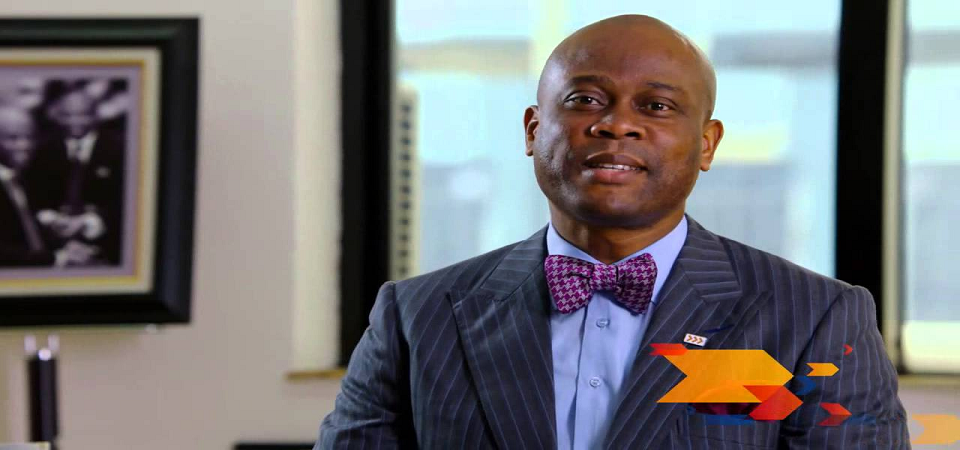
In my earlier open letter to Herbert Wigwe, the Chief Executive Officer, Access Bank Plc, and his staff, I detailed how the bank has failed to resolve blacklisting of my accounts over the last 3 months. The blacklisting has led to the inability to receive and make payments. As I noted during conversation with two staff of the bank, the suggestion that I should go to the nearest branch cannot solve the issue because of the past experience with the employees at the branch. Besides, going to branch at this period (Coronavirus outbreak) is uncalled-for if truly Access Bank is transforming the Nigerian banking industry with “digital transactions and discourage branch banking until the world is completely out of the pandemic times,” according to Victor Etuokwu, Executive Director, Retail Banking.  Apart from this, it is imperative for the Chief Executive Officer to revisit his position about how the bank should be an intelligent one. An intelligent bank is expected to know the right approaches to the effective use of technologies to resolve customers’ complaints in a challenging time. As he said during an event on 16 May, 2019, “becoming an intelligent bank is no longer an option in today’s financial services, but a necessity.  Today, we are experiencing the fourth industrial revolution which uses the Internet of Things, and Cloud Technology to automate processes. This has enabled financial service providers to increase their digital offerings for customers so they can conduct banking transactions on mobile phones, the internet, and at the ATM.”

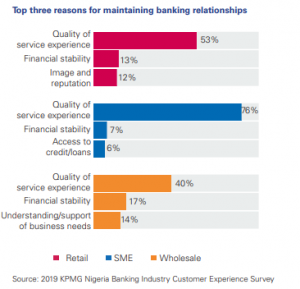
May I refer the CEO and staff to the Central Bank of Nigeria’s legal framework for customer complaint management, which stresses timely complaints handling and dispute resolution. According to the apex bank, “the 2008 global financial crisis re-emphasized the need for concerted efforts among regulators in various jurisdictions to establish robust policies and structures aimed at regulating the conduct of operators, with a view to protecting consumer’s assets.” Access Bank and staff also need to realise that quality of service experience is the main factor for sustainable banking relationships.

As a citizen and consumer, who believes in justice and fair play, I have logged my complaint with the Federal Competition and Consumer Protection Commission in line with the apex bank’s legal framework for consumer protection in the bank industry. The response of the agency will determine how true, we embrace justice and equality as a nation.

Update One

In my efforts of getting my accounts whitelist, I sent a message to Access Bank’s Ombudsman Desk on May 10, 2020. A few hours later, I received an email message from one Gloria Okungbowa, saying “Kindly send us a clearer written instruction (also signed) and a valid means of identification to reactivate your USSD profile. We apologize for requesting for another instruction, the initial one you sent is blurred and we could not work with it. We hope to hear from you soon to resolve the issue.” 

I do not believe  a scanned copy of National Identity Card I sent is blurred. This morning I have replied to her with a repositioned card and asked for urgent solution to the issue.

In 2018, the bank says “the aim and objective of the Ombudsman initiative was to resolve all customer complaints and issues on the same day irrespective of where the complaint is issued from or the officer responsible for resolution.”

Update Two

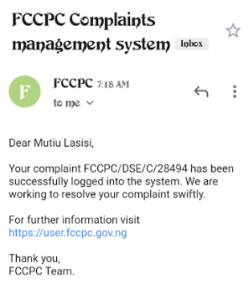
The Federal Competition and Consumer Protection Commission has sent a message, confirming my complaint. It would be recalled that I logged the complaint with the commission on May 8, 2020. The commission has asked for the details of the accounts blacklisted by Access Bank. I hope the commission will leave up to its constitutional responsibility and promise it gave in the message.

Update Three

While waiting for the response of the Federal Competition and Consumer Protection Comission, a staff of Access Bank (Gloria) reached me via email asking for the resend of the written instruction earlier gave to the bank to whitelist my accounts. I have informed her that doing that is like playing upon my intelligent. It is should not be difficult to retrieve the previous one. Apart from this, I do not know the reason Access Bank cannot assign only one person to resolve the issue. Why four people treating the same issue? This is creating back and forth, which is bad for customer engagement. Access Bank should do the needful!

More Reasons To Register for Tekedia Mini-MBA

0

Dear Sir/Madam

(If registered already, please help us forward)

Tekedia offers an innovation management 4-month program, optimized for business execution and growth, with digital operational overlay. It runs 100% online. The theme is Innovation, Growth & Digital Execution – Techniques for Building Category-King Companies. All contents are self-paced, recorded and archived which means participants do not have to be at any scheduled time to consume contents. Class begins June 22. There are many reasons to register for the second edition of Tekedia Mini-MBA. Here are some:

  • Experts from global and local brands like Microsoft, MIT Boston, Deloitte, and Flutterwave are joining to lead different sessions. We are covering 32 areas in business from Innovation to Strategy, Business Law to Operations, Supply Chain to Sales, and beyond, with practicing faculty.
  • All participants of Tekedia Mini-MBA in 2020 will attend a virtual Career Week. Our Career Week (coming in Nov) is not designed for finding jobs. Rather, it is structured to TRANSFORM workers, founders & entrepreneurs into business leaders and champions of innovation in their companies. The sub-theme is Career Planning & Resilience During Disruption. Learn more here. Within the week, at least 10 HR leaders will provide guidance to workers and companies on how they can build productivity.
  • Joining Tekedia Mini-MBA second edition comes with two free ebooks – Africa’s Sankofa Innovation, and The Dangote System: Techniques for Building Conglomerates.
  • You also receive a complementary Certificate cybersecurity course from First Atlantic Cybersecurity Institute. Visit facyber.com and select your course on Cybersecurity: Policy, Management, Digital Forensics and Technology.
  • We continue to offer installment payments

Join us for $140 or N50,000 by registering via (bank transfer, Flutterwave and Paypal) – https://www.tekedia.com/pay

Regards,

Nky Udo
Tekedia Institute

tekedia@fasmicro.com