DD
MM
YYYY

PAGES

DD
MM
YYYY

spot_img

PAGES

Home Blog Page 6369

More Reasons To Register for Tekedia Mini-MBA

0

Dear Sir/Madam

(If registered already, please help us forward)

Tekedia offers an innovation management 4-month program, optimized for business execution and growth, with digital operational overlay. It runs 100% online. The theme is Innovation, Growth & Digital Execution – Techniques for Building Category-King Companies. All contents are self-paced, recorded and archived which means participants do not have to be at any scheduled time to consume contents. Class begins June 22. There are many reasons to register for the second edition of Tekedia Mini-MBA. Here are some:

  • Experts from global and local brands like Microsoft, MIT Boston, Deloitte, and Flutterwave are joining to lead different sessions. We are covering 32 areas in business from Innovation to Strategy, Business Law to Operations, Supply Chain to Sales, and beyond, with practicing faculty.
  • All participants of Tekedia Mini-MBA in 2020 will attend a virtual Career Week. Our Career Week (coming in Nov) is not designed for finding jobs. Rather, it is structured to TRANSFORM workers, founders & entrepreneurs into business leaders and champions of innovation in their companies. The sub-theme is Career Planning & Resilience During Disruption. Learn more here. Within the week, at least 10 HR leaders will provide guidance to workers and companies on how they can build productivity.
  • Joining Tekedia Mini-MBA second edition comes with two free ebooks – Africa’s Sankofa Innovation, and The Dangote System: Techniques for Building Conglomerates.
  • You also receive a complementary Certificate cybersecurity course from First Atlantic Cybersecurity Institute. Visit facyber.com and select your course on Cybersecurity: Policy, Management, Digital Forensics and Technology.
  • We continue to offer installment payments

Join us for $140 or N50,000 by registering via (bank transfer, Flutterwave and Paypal) – https://www.tekedia.com/pay

Regards,

Nky Udo
Tekedia Institute

tekedia@fasmicro.com

Help Comes for Arik Air and Air Peace, Nigeria Goes N2 Trillion Reset

7

The Nigerian government is coming to save Arik and Air Peace – and that is a good thing. The playbook is contained in a statement by Clem Agba, the Minister of State for Budget and National Planning, as the government unveils a N2 trillion economic stimulus: “We are also looking at how to support the Aviation Sector. Like you know, a lot of planes are parked and this is causing almost N21 billion (loss) on a monthly basis. We are looking at how to provide some form of bailout support to ensure that the industry doesn’t die”.

The Minister of State for Budget and National Planning, Clem Agba, said on Tuesday at a webinar held by the Finance Ministry and stakeholders, that the Federal Government is planning to inject a N2 trillion intervention fund into the economy.

The Federal Government had earlier doled out N50 billionTargeted Credit Facility fund to help businesses in Nigeria as the coronavirus pandemic wreaked havoc across sectors. But the fund appears so meager to bail out most of the businesses under the strain of COVID-19 impact. The aviation sector is among the most affected, causing one of the leading Airlines,Arik to lay off staff.

Agba said the fund will offer a lifeline to businesses mostly impacted by the pandemic, especially the aviation sector which according to him, is losing N21 billion monthly.

“All in all, when everything is put together, both government funding and the funds we are expected to get from the Central Bank of Nigeria (CBN), Banks of Industry and other multilateral agencies and grants that we are receiving, we expect to get a stimulus of about N2 trillion going into the economy.

“We are also looking at how to support the Aviation Sector. Like you know, a lot of planes are parked and this is causing almost N21 billion (loss) on a monthly basis. We are looking at how to provide some form of bailout support to ensure that the industry doesn’t die.

“Of the $2.5 billion facilities from the World Bank, about $1 billion of it will be going to the states as loans. Mr. President has already approved N850 billion loan from the domestic capital market,” he said.

I have written about a challenging future for Arik here. That came after I made a similar call on Air Peace here.  That government is coming to help the aviation sector is a good call. Without both, the Nigerian economy will not have any chance to rise. There is no commerce without logistics & supply chain – aviation is a critical element of that. Of course, Aero and other airlines will be supported.

What Next for Arik Air?

What Happens To Air Peace?

Nigerian Government to Inject N2 Trillion Stimulus Into the Economy

0
Finance Minister, Nigeria

The Minister of State for Budget and National Planning, Clem Agba, said on Tuesday at a webinar held by the Finance Ministry and stakeholders, that the Federal Government is planning to inject a N2 trillion intervention fund into the economy.

The Federal Government had earlier doled out N50 billion Targeted Credit Facility fund to help businesses in Nigeria as the coronavirus pandemic wreaked havoc across sectors. But the fund appears so meager to bail out most of the businesses under the strain of COVID-19 impact. The aviation sector is among the most affected, causing one of the leading Airlines, Arik to lay off staff.

Agba said the fund will offer a lifeline to businesses mostly impacted by the pandemic, especially the aviation sector which according to him, is losing N21 billion monthly.

“All in all, when everything is put together, both government funding and the funds we are expected to get from the Central Bank of Nigeria (CBN), Banks of Industry and other multilateral agencies and grants that we are receiving, we expect to get a stimulus of about N2 trillion going into the economy.

“We are also looking at how to support the Aviation Sector. Like you know, a lot of planes are parked and this is causing almost N21 billion (loss) on a monthly basis. We are looking at how to provide some form of bailout support to ensure that the industry doesn’t die.

“Of the $2.5 billion facilities from the World Bank, about $1 billion of it will be going to the states as loans. Mr. President has already approved N850 billion loan from the domestic capital market,” he said.

The extension of “no flight” to another four weeks has aggravated the woes of the aviation sector, making the companies’ survival impossible without the government’s stimulus package.

He said that the government is focused on how to boost the economic activities to mitigate the harsh realities of the pandemic. And as a member of the Economic Planning Committee, he said that plans are underway to ease the process of national supply chain of goods and services through effective means of transportation.

The Minister added that the FG would release more funds to the Federal Roads Maintenance Agency (FERMA), to undertake urgent rehabilitation of roads across the country. And as part of the arrangement, the Committee will be working with stakeholders in the agricultural sector to implement efficient agro-industrial processing in the geo-political zones.

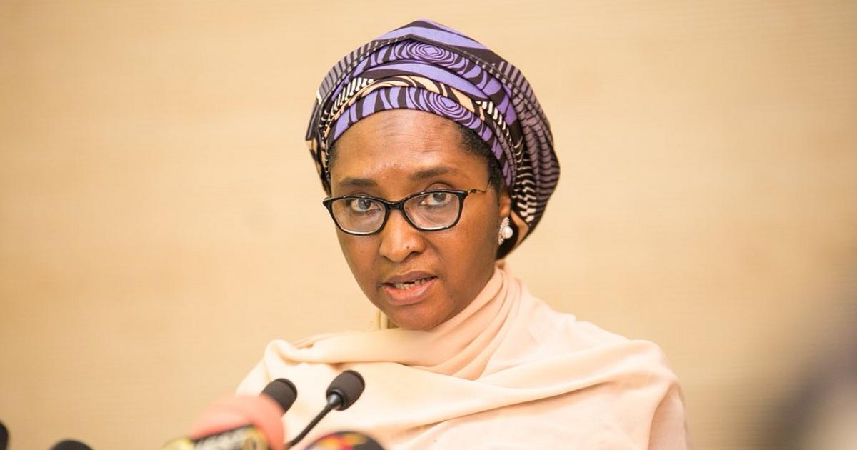
Explaining more about the measures the government is taking to alleviate the impacts of COVID-19 on the economy, the Minister of Finance, Budget and National Planning, Mrs. Zainab Ahmed said there is ongoing review of revenue projections to conform with the realities of oil price – mainly the slash of oil benchmark from $57 to $20 as the oil price keeps wobbling around $20 and $30 per barrel.

“We have had to scale down our auction volumes because globally the crude oil market is very slow and we are not able to sell as much crude like before.

“We also had to review a number of things that we had planned including scaling back on investments in the upstream sector of the Nigerian oil and gas economy, which means projects will be delayed much longer than was originally planned,” she said.

She explained that the government is reviewing the 2020-2022 Medium-Term Expenditure Framework/Fiscal Strategy Paper (MTEF/FSP) to conform to the $20 budget benchmark. This she said will be complemented by other Fiscal stimulus that is designed to spur economic activities in other sectors.

Part of it is the blanket duty waiver for the pharmaceutical and health sector, which was granted by president Buhari. She confirmed that the waiver took effect from May 1 and will ease the cost of bringing in medical equipment for the fight against COVID-19.

Mrs. Ahmed noted that the welfare of SMEs have been integrated into government’s intervention plans which aim to implement a low tax regime for small businesses.

“In the Finance Act 2019, we had reduced taxes from 30 percent to zero for small businesses that have turnover of N25 million and below, for medium enterprises that have turnover of N25 million to N100 million, we reduced their taxes to 20 percent.

“We want to make sure that those benefits are implemented, even though we increased the VAT, we had heightened the threshold for stamp duties and also expanded exemptions so that the small enterprises and Nigerians of lower means are not burdened by the increase,” she said.

The Federal Government has projected 80% decline in oil revenue as a result of COVID-19 – From N5.47 trillion to N1.12 trillion. Other means of revenue generation saw massive declines too that created projected revenue gaps. Custom revenue went from N1.5 trillion to N1.156 trillion; VAT income plunged from N60.42 billion to N2.029 trillion, putting the revenue accruable to the Federation Account to N3.890 trillion from the projected N5.72 trillion.

The Director General of Budget Office, Ben Akabueze said there is a need to revisit the 2020 Appropriation Act because it’s based mainly on assumptions that are opposed to the current economic realities.

“In this regard, the Budget Office is currently finalizing the revised 2020-2022 MTEF/FSP, as well as an Amendment to the 2020 budget, which will provide for COVID-19 crisis intervention fund as well as other adjustments,” he said.

Mrs. Ahmed has raised concern over the cost of governance which she acknowledged that it takes a large sum of the budget, and needs to be curtailed by collapsing some of the MDAs.

Akabueze said the proposed budget will cut MDAs capital expenditure by 20% as well as reduce overheads costs by 16.7%, exempting only health and security.

The proposed adjustment aims to lift the projected budget deficit from N2.175 trillion to N5.36 trillion including expenditures funded by project-tied loans.

He explained that the new projects will be financed through the privatization proceeds that amount to N126 billion, a difference of N137.63 from what was earlier projected. He said N263.63 billion will be borrowed from Federal Government’s special accounts and drawdowns on multilateral/bilateral projects-tied loans of N387.3 billion and new borrowing that will put the total figure at N4.59 trillion.

Despite the new projections that aim to cut wastage by collapsing agencies, especially those duplicating functions, it is obvious that the FG will find it difficult to realize the N2 trillion.

The government in desperate need for funds, had earlier attempted to borrow from the pension fund, a move that was fiercely opposed. However, against the backdrop of economic downturns in the face of the coronavirus crisis, the Federal Government is pushing to get the national assembly’s support to borrow not only from the pension fund, but other special accounts, including donations made for COVID-19.

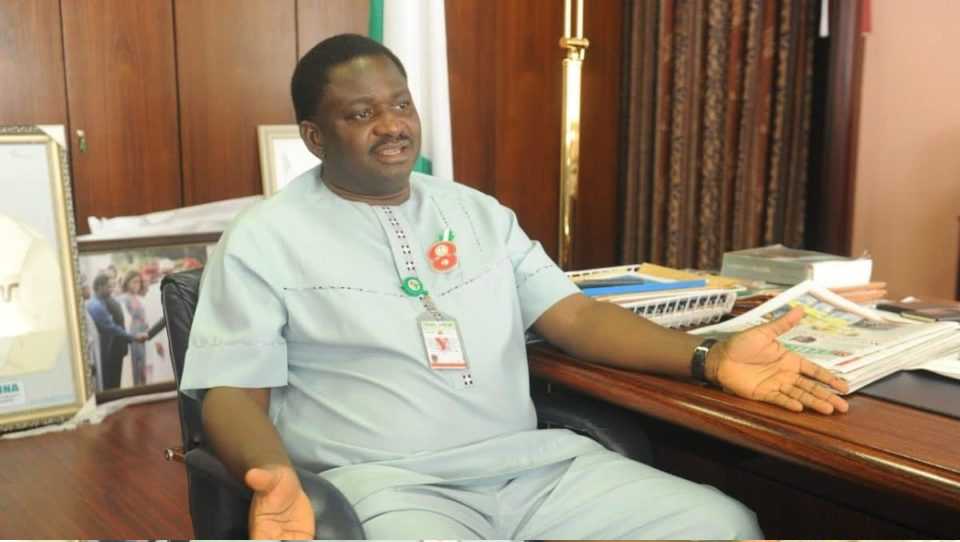
Averting The Road to Venezuela By Femi Adesina

0

Let’s tell the story of Venezuela, because it bears striking similitude with that of Nigeria.

Just like us, Venezuela is rich in oil, very rich. At a time, the county’s problem was not money, but how to spend it. Just like Nigeria.

And quite like us again, the South American country did not look inwards. It planted nothing, did not invest in agriculture, since there was an endless flow of oil wealth. Life was one long Christmas, and it was jingle bells all the way.

But the rainy days came, as they would always come. And the bells stopped jingling. Rain began to beat Venezuela badly. Nowhere to take refuge. It did not buy umbrellas in the time of affluence, so no shelter from the rains.

From the days of the immediate past President, Hugo Chavez, to the current Nicolas Maduro, the country has seen that life is not one long honeymoon. The egungun festival would always end, no matter how fun and pleasurable it has been.

From a land flowing with milk and honey, what are the characteristics of Venezuelan life today? Hyperinflation. Starvation. Diseases. Crime and high mortality rates. Massive emigration, the worst in the history of the country.

And the half has never yet been told. By 2017, over 75% of the population had reportedly lost 8 kg (19 lbs) due to hunger. There are interminable food queues, and people even cross the borders, looking for sustenance. At least 94% live in grinding poverty, more than 10% (3.4 million) have left the country, and 25% needed one form of humanitarian assistance or the other.

How did a country that was once an oasis of pleasure get to this sorry pass? Simple. Economic mismanagement, sole dependence on oil. More than 70% of food needs were being imported, and why not, since petroleum-dollars were flowing. Then, the crunch came. Oil prices crashed, and Venezuela crashed with it. Just like it almost happened to Nigeria. Almost. If not for a simple man from Daura called Muhammadu Buhari.

Imagine pediatric wards in hospitals filled with underweight babies, who still continue to suck the shriveled breasts of equally emaciated mothers. Close your eyes and try to envision hitherto middle class adults now rummaging through rubbish heaps for scraps, with the remainder of what used to be neckties now hanging limply over threadbare shirts and suits that have turned to ‘coats,’ looking more like parachutes on thin shoulders .

That was what Nigeria almost became. Almost. And by today, with COVID-19 ravaging the world, all international borders closed, oil prices crashed and external reserves dwindling, that is where we would have been. If God had not brought Muhammadu Buhari our way in 2015.

When he got to office as President, oil prices had crashed from an Olympian height of 100 dollars per barrel (it even went as high as 143 dollars), and then dropped to less than 30 dollars. Where were the savings during the boom years? None. Where were the foreign reserves? Mere pittance. Empty national treasury. Excess crude oil account, depleted. Nothing in reserve, local or foreign. The Venezuelan situation was at the very doors. But how did we avert it? How did we avoid the journey to Caracas, the capital of Venezuela?

President Buhari knew that we had to stave off the evil day by getting to work immediately. Whatever money we had left must be put where our mouth was, otherwise danger loomed.

With a rallying cry, the President urged Nigerians to return to the land. They obeyed. God also showed mercy by giving consistently good rainy seasons back to back. And today, we can count our blessings.

In late 2015, the Buhari Administration came with the Anchor Borrowers Program, championed by the central bank. It was launched in Kebbi, and the vision was to grant farmers access to finance, so that they could grow rice, wheat, ginger, maize, soybeans, and many other products.

And what a revolution has been sparked off. When we launched in Kebbi in 2015, it was in a vast open land. When we went back to same state earlier this year for the Argungu International Fishing Festival, the heap of rice was almost touching the sky. We once had groundnut pyramids in this country. Now, they have been succeeded by rice pyramids. Just because a President came, and had a dream. He then turned the dream to reality.

I once visited one vast farm in Nasarawa State run by Nigeria Farmers Group and Cooperative Society. It is promoted by a man named Retson Tedheke, started in 2017, and there you have professionals from different disciplines, engaged in farming. Very impressive. I was told Vice President Yemi Osinbajo had also been there. The place sure is dreamland, and who would have thought a prophet could come from a small town like Nazareth? But it’s happening, right before our eyes. Thanks to the man from Daura.

Each time, as I see palliative materials being handed out at this time of health and economic emergency, and I behold heaps and heaps of bags of rice, all locally grown, I imagine what else could have happened. What if we had needed to import, and there was no foreign currency, and all international borders were closed? Hunger ooo. Starvation ooo. Weeping and gnashing of teeth. But we averted the journey to Venezuela. We avoided the trip to Caracas, because a man called Muhammadu Buhari came.

There was a time we imported beans even from Burkina Faso. Rice from Thailand, and from everywhere under the sun. Milk, tomato paste, palm oil, vegetable oil, even toothpick. Everything was imported. Today, we rank highest in Africa in rice cultivation and milling, with over seven million tonnes yearly. Jobs have been created in millions, and food sufficiency has almost been achieved.

Cotton farmers were funded last year to start production. It means a rebound for the textiles sector soon, and jobs and jobs.

Fertilizer that used to be imported at hundreds of millions of dollars, with the attendant sleaze that attended it, is now done locally. Nigeria and Morocco are in alliance, and the project is driven right from the Presidency. Not less than 11 moribund blending plants have been resuscitated, and we now produce about 1.3 million tonnes . Prices of fertilizer have crashed from N15,000 to N5,500 per bag. And set to crash further. Farmers now have direct access to the product, and at affordable prices. Just because a man from Daura had a dream, and turned it to reality.

Agriculture has contributed a great deal to our Gross Domestic Product in the past four years. The private sector has equally keyed in. Dangote Group is already test running a two billion dollars fertilizer plant, which will see us become a net exporter of the product. And many others.

A presidential aspirant recently described the closure of our land borders as an ‘insane’ policy. May we have many more positive insanities. If President Buhari was not proactive, even prescient, to have closed our borders, where would local farmers be today? Every food product was being smuggled into the country, thus discouraging local initiatives. And when borders were closed, apart from the security benefits, local production of food items thrived-rice, poultry, vegetables , tomatoes, other food products boomed. Yet, somebody says it’s ‘insanity,’ because the selfish interests of buccaneers were affected. More of such insanities, please.

The Coronavirus pandemic is severely testing our capacities to feed ourselves. And we are making a good showing, acquitting ourselves creditably.

Despite the crash in the global economy, we are continuing with key infrastructure projects, not borrowing to pay salaries as we did in the height of the 2014 oil boom. An army of entrepreneurs is being created in different spheres. All because a man from Daura had a dream, and turned it to reality. May God bless this man. Amen, somebody!

Harry Belafonte, King of Calypso music, sang the hit track, Matilda.

“Hey! Matilda, Matilda, Matilda, she take me money and run Venezuela.

Five hundred dollars, friends, I lost

Woman even sell me cart and horse!

Heya! Matilda, she take me money and run Venezuela.”

But now that Venezuela is the way it is, with President Maduro striving day and night to turn things round, where will Matilda run to? Nigeria, I guess.

*Adesina is Special Adviser on Media and Publicity to President Buhari

Facebook Inaugurates Content Board

0

Against the backdrop of hate crimes, racial prejudice and cyber-bullying, Facebook is stepping up its game to curb the trend across its platforms and eliminate claims that it is choosing one group over the other.

On Wednesday, the Silicon Valley giant announced the inauguration of the first 20 members of its Oversight Board. The independent body is empowered to overturn Facebook’s content moderation decisions as they deem fit.

The board will receive cases through a content management system that is linked to Facebook’s platforms. They will deliberate on the report received and decide whether the responsible content will be allowed to stay up on each of Facebook’s sites or not.

The 20 member board will oversee appeals from Facebook and Instagram.

Facebook has said in November 2018, that it’s working to establish a board like that to sanitize its platforms from propaganda, fake news and political misinformation. The company was aiming to avoid further controversies like the one that followed the 2016 American presidential election. Russia’s interference in the U.S. election was at the center of the discussion and Facebook was blamed for giving them the platform.

Post 2016 presidential election, the social media giant started to remove posts deemed politically and socially unacceptable, and that didn’t go well with many. Some conservatives groups and lawmakers accused Facebook of censoring politically conservative points of view. Though Facebook denied it, the challenge of instituting a neutral body that will make the decision on what stays up or down was born.

“I have come to believe that we shouldn’t be making so many important decisions on free expression and safety on our own,” Mark Zuckerberg said in 2018.

The goal was to inaugurate an independent body that will lift the burden of content decision making off the shoulders of Facebook’s team.

There were reports then that some Facebook executives had tried to downplay and spin bad news. Coupled with the allegations of some U.S. political groups, the journey of an independent board of decision makers started.

Across the diverse members of the board are lawyers, journalists, human right activists and professionals in digital rights, religious freedom, internet censorship and civil rights. Other members range from former heads of state to Nobel Prize winners to members of Facebook’s team.

Last year, Facebook said it’s giving the board $130 million to cover its operational costs for six years. But there was no detail of how much the board members would be paid.

Among its notable members are Aln Rusbridger, former editor in Chief of the Guardian Newspaper, and Andras Sajo, a former judge and VP of the European Court of Human Rights.

Members of the board believe there is a serious challenge when it comes to content decision making, and Facebook undoubtedly needs help now more than ever.

Helle Thorning-Schmidt, a former Prime Minister of Denmark, and a member of the board’s four co-chairs said Facebook has had to make the most difficult decisions. “Up until now some of the most difficult decisions about contents have been made by Facebook and you could say Mark Zuckerberg,” she said.

Another co-chair of the board, Jamal Greene said it’s time to do something about the challenges of content moderation and Facebook’s approach is novel.

“It’s one thing to complain about content moderation and challenges involved, it’s another thing to actually do something about it. These problems of content moderation really have been with us since the dawn of social media, and this really is a novel approach,” he said.

Michael McConnell, another co-chair of the board said the goal is to make Facebook a neutral platform where everyone could air his view in all fairness.

“It is our ambition and goal that Facebook not decide elections, not be a force for one point of view over another, but the same rules will apply to people of left, right and center,” he said.

The board is expected to begin hearing in coming months and help Facebook avoid accusations of bias by removing controversial contents from the platform.