DD
MM
YYYY

PAGES

DD
MM
YYYY

spot_img

PAGES

Home Blog Page 6375

Facyber Is Back After Going Offline Due to Overcapacity

0

Our apologies that Facyber went overcapacity last night.  A university partner which uses our platform for supplementary training of their students on cybersecurity began testing last night, pushing the system over the bar. Over the last one month, the platform has grown more than 460%, and my tech team did not plan well.

I personally apologize to those that could not login directly and to those accessing from APIs in their respective schools and institutions. 

We use AWS but our dynamic system which was supposed to re-calibrate on capacity was suboptimal last night. Everything should be fine now – please return.

Thank you for your support and please continue to spread the message of facyber.com, the leader in cybersecurity training on policy, management, technology and digital forensics. We crafted a training engine which delivers value to our members.

Social Service from AFRIT – Let’s Help You Go Online With A Website

0

Since 2011, we have been offering a social service to African students and young people via non-profit African Institution of Technology (AFRIT), a U.S. 501(c)3 charity, the highest level of non profit with total tax exempt. Every year, we buy bulk domain and cpanel hosting, and make access to people and companies. So instead of spending an excess of $125 for domain and cpanel hosting yearly, ARIT offers it at about $25. 

If you need help to get online and tell the world what you do on that school project, idea, mission, inspiration, etc, email my team. They just upgraded to the latest Cpanel with auto scripts for installing WordPress, Joomla, etc. It offers unlimited emails and databases. 

How To Register

  • Make a payment of N9,500 or $25 here using Flutterwave, Bank Transfer or Paypal
  • Look up for an available domain name using Fasmicro supersite or Godaddy (do not register and pay; we will do that for you)
  • Send us the name of the domain
  • Quickly, we will register the domain, set up your cpanel and send you the cpanel password.

Contact: tekedia@fasmicro.com

Team can show you email and cpanel interface if you want to check

Shared Hosting and Domain Registration

This offers state of the art cPanel with latest .php and modern scripts for installation of population solutions like WordPress and Joomla. We offer among others, the following:

  • Unlimited Email
  • Unlimited Databases

A Simple, Powerful & Complete solution for WordPress Websites

  • Automatic WordPress Installation Script
  • Automatic WordPress updates
  • WP Database Optimized
  • Unlimited Email Accounts
  • Jetpack plugin pre-installed


    Latest WordPress which you can install with a script


Many scripts for wizard installation

The IMF’s BIG Reset in Nigeria

1

Nigeria: IMF, we need help here as we are low on cash to fight Covid-19 pandemic.

IMF: The Nigerian people must agree on one thing:  pay full cost of electricity consumption with all subsidies removed.

Nigeria:  There is no problem. We will do that from 2021. Can I send our bank account to wire the money?

IMF: Not yet, I need a written commitment.

Nigeria: Draft and we will sign.

IMF: Perfect – document sent.

Nigeria: We have signed. The bank account has been sent also.

IMF: Transfer of $3.4 billion done.

Nigeria: Daalu, e dupe, na gode

People, IMF may be accomplishing the near impossible: get Nigerians to pay the full cost of electricity. Sure, people claim nothing is offered for them to pay. Interestingly, without the improved tariff, investors will not pump money to fix any paralysis in the energy sector. With naira losing value to global currencies, and the power business not relying on sand from Okija or metals from Ogbomosho or trees from Sambisa forest, rate increment seems like a good idea. Of course, not many will agree. But now that the IMF has conditioned on that, we will see what happens. This is a BIG reset if it happens.

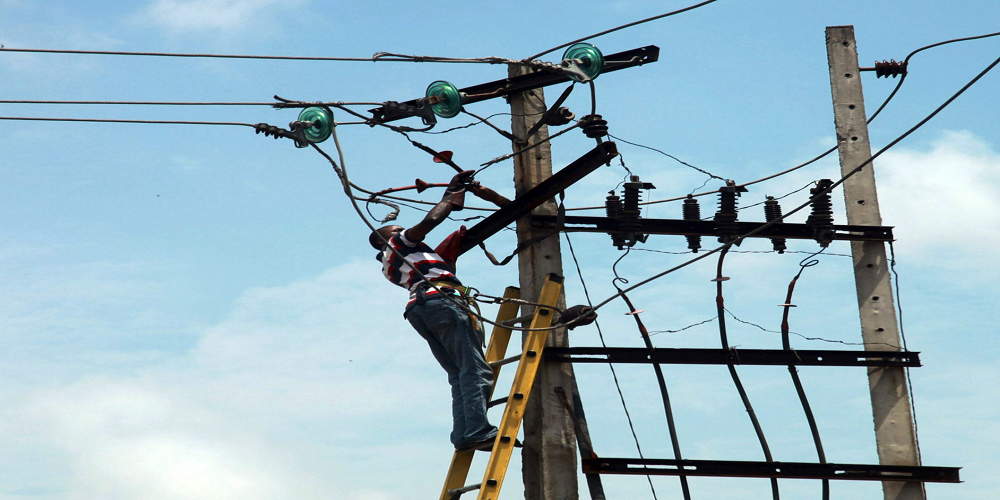
Nigerian Government to Remove Electricity Subsidy – It will Be A Battle.

Nigerian Government to Remove Electricity Subsidy – It will Be A Battle.

0

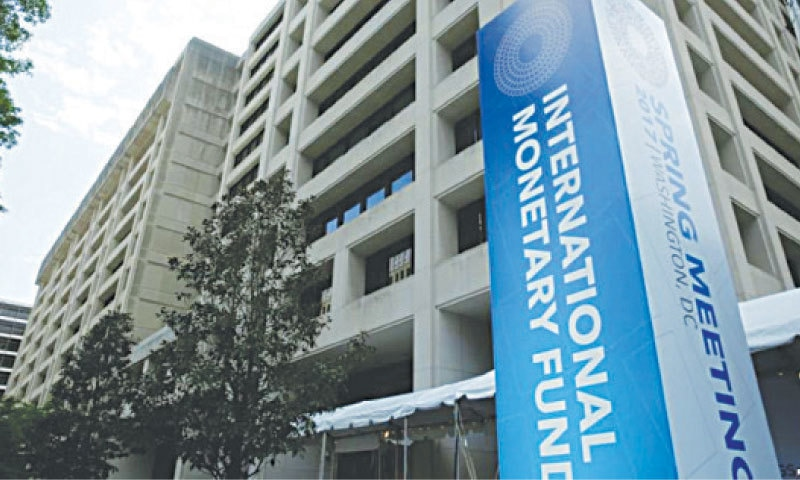
The $3.4 billion emergency financial assistance received by Nigeria from the International Monetary Fund (IMF) came with a huge price that the Nigerian people will have to pay in pain. As part of the agreement to secure the emergency financial assistance, Nigeria and IMF agreed that the fund will be judiciously used and the oil and electricity subsidies will be totally removed.

In view of this, the federal government of Nigeria is gearing up to review electricity charges upward as part of efforts to revamp the economy from the ravages of coronavirus pandemic.

The Minister of Finance Zainab Ahmed and the Central Bank of Nigeria Governor, Godwin Emefiele, had earlier, in a joint letter to the international monetary body promised that Nigerians will pay the full cost of their electricity consumption in 2021. The federal government also promised the IMF that electricity tariff shortfalls will be capped to N380 billion in 2020.

“We are also advancing in our power sector reforms – with technical assistance and financial support from the World Bank – including through capping electricity tariff shortfalls this year to N380 billion and moving to full cost-reflective tariffs in 2021,” the federal government’s letter partly said.

The increment of electricity tariff has been a long battle between the electricity Distribution Companies (DisCos), and consumers. With the epileptic condition of power supply in the country, the DisCos have found it hard to convince Nigerians to pay more for the little they use.

The last attempt made by the DisCos to increase electricity tariff was approved by the National Electricity Regulatory Commission (NERC) on January 4. Though the approved charges were not as cost-reflective as demanded by the DisCos, it was met with stiff opposition by labor unions, lawmakers and Nigerians, forcing the Regulator to put the increment on hold.

The planned tariff increment billed to take effect from April 1, was going to add about N20 increase in per unit charges, which was deemed too high by consumers and not good enough by the distribution companies.

However, the federal government’s promise to the IMF means that the incoming increment will be higher than what was approved by NERC in April. The IMF had approved the emergency financial assistance on the condition that it will monitor how the fund will be used, especially on the sectors it has long advocated that subsidies be removed – mainly the oil and power sectors.

“Once the COVID-19 crisis passes, the focus should remain on medium-term macroeconomic stability, with revenue-based fiscal consolidation essential to keep Nigeria’s debt sustainable and create fiscal space for priority spending. Implementation of the reform priorities under the Economic Recovery Growth Plan, particularly on power and governance, remains crucial to boost growth over the medium term,” the IMF has said in a statement after approving the $3.4 billion fund for Nigeria.

In October, before the outbreak of coronavirus, the IMF had urged Nigeria and other African countries to phase out implicit fuel subsidies in order to bridge the wide gap between the rich and poor in their respective countries.

“Fuel subsidies tend to be poorly targeted, foster over-consumption, curtail investment and maintenance in related sectors and crowd out more productive government spending.

“Some countries need to take the opportunity afforded by low oil prices to reduce fuel subsidies to free up additional fiscal space (Cameroon, Nigeria, Senegal), as was done in Mozambique and South Sudan and is being pursued by Burkina Faso,” the IMF said.

Just like the power sector, the removal of fuel subsidy has been a bone of contention between the federal government of Nigeria and the people. Year after year, the move by the government to remove it has been resisted by the coalition of civil society groups and the Nigerian people. However, the global COVID-19 health crisis appears to have offered the opportunity to Nigerian government on a platter of gold.

As oil prices plunged below $30 per barrel, the federal government of Nigeria reduced the petrol pump price to N123 from N143. Subsequently, the Nigerian National Petroleum Commission (NNPC) announced the total removal of fuel subsidy, a development the IMF didn’t hold back from applauding.

Unlike other times when the government had attempted to remove the subsidy, there was no protest. It is understandable because of the global oil price that has kept the pump price below the N143 in Nigeria.

However, the concern hangs on what happens when the COVID-19 pandemic is over. As economies around the world reopen, the oil market is gradually making gains. The oil price is rising above $30 per barrel and is expected to do better in the coming months as more companies and industries resume and more people get back to work. It is expected that the pump price in Nigeria will rise accordingly, a development most Nigerians are not aware of right now and they are not prepared for it in the nearest future.

While it is obvious that the removal of the electricity and petroleum subsidies will put a lot of money into the government’s purse, its impact on the people cannot be excused. With more than 80 million Nigerians living below $2 daily and businesses depending on power generators for electricity, the government will still have a long fight to implement it.

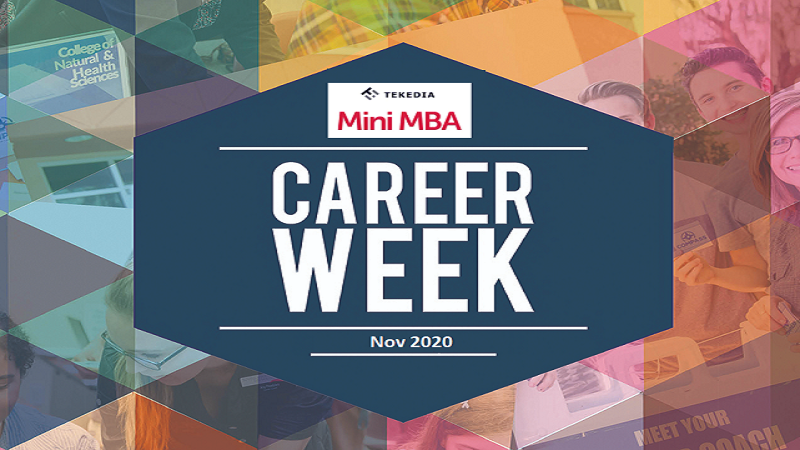
Tekedia Mini-MBA Career Week Coming Nov 2020

0

Our Career Week (coming in Nov 2020) is not designed for finding jobs. Rather, it is structured to TRANSFORM workers, founders & entrepreneurs into business leaders and champions of innovation in their companies. The sub-theme is Career Planning & Resilience During Disruption. It will be packaged under the Tekedia Mini-MBA theme of Innovation, Execution & Growth.  

In November 2020, we will run an online Career Week as part of Tekedia Mini-MBA, for graduating classes of rainfall and harmattan editions. In other words, this is designed for editions of Feb and June, free. (Registration for the edition starting June 22 is ongoing). We do believe that when you work hard to create your future, you can predict it better. So, we are bringing more than ten eminent HR leaders and directors to lead us on this. 

Some of these experts lead HR departments of MNCs, banks, FMCGs, consulting firms, and startups. You will learn every aspect of career planning, career development, and how you can become a leader in the company you work. Yes, we want to raise Champions in African companies and help others have capabilities to rise.

Our focus is Innovation, Growth and Digital Execution: we think those encapsulate what the moments require in companies. 

https://www.tekedia.com/mini-mba-2/

Due to the virus, this replaces the Tekedia Innovation Summit.