DD
MM
YYYY

PAGES

DD
MM
YYYY

spot_img

PAGES

Home Blog Page 6376

Central Bank of Nigeria Penalizes and Deducts N1.4 trillion from banks’ Cash Reserve Requirement (CRR)

3
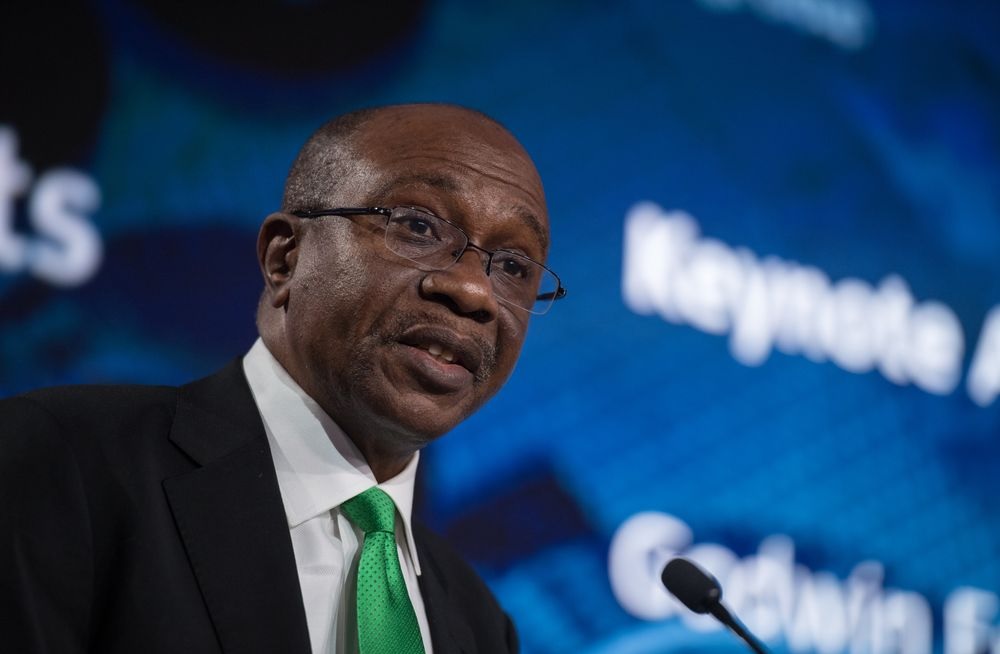
CBN Governor

In the wake of the decision of Access Bank Nigeria plc to lay off 70% of its workforce, Banker’s Committee, along with the Central Bank of Nigeria (CBN), convened an emergency meeting on May 2nd, to deliberate on the capacity of the banking industry to cope with the negative impacts of COVID-19.

The communiqué of the meeting titled: CBN, Bankers’ Committee Suspend Lay-offs in Banks, signed by CBN’s Director, Corporation Communications, Isaac Okoroafor, gave hope of reinstatement to the laid off staff and a beacon of hope to all bankers in Nigeria. The communiqué said that no bank in Nigeria shall retrench or lay off any staff in the face of economic hardship posed by COVID-19.

“A special meeting of the Bankers’ Committee was convened on May 2, 2020, to further review the implications of COVID-19 pandemic on the Nigerian banking industry. The Committee particularly deliberated on the issue of the operating costs of banks in view of the disruptions emanating from the global economic difficulties and decided as follows:

“In order to help minimize and mitigate the negative impact of the COVID-19 pandemic on families and livelihoods, no bank in Nigeria shall retrench or lay-off any staff of any cadre (including full-time and part-time.)

“To give effect to the above measure, the express approval of the Central Bank of Nigeria shall be required in the event that it becomes absolutely necessary to lay-off any such staff.

The Central bank of Nigeria solicits the support of all in our collective effort to weather through the economic challenges occasioned by the COVID-19 pandemic,” the communiqué said.

The Access Bank’ decision to lay-off 75% of its staff has been criticized, with many calling it premature and insensitive, especially when the bank has just made a donation of N1 billion to the federal government as part of its assistance to the fight against coronavirus.

The development which threw the affected staff into panic drew the attention of stakeholders in the financial sector, especially the Apex bank. Sahara Reporters reported on Saturday that a cashier of Access Bank collapsed upon hearing the news of her lay-off.

The CBN and Banker’s Committee intervention appears to have drawn the line in what would have become a precedent for other banks. The Apex Bank has promised to roll out measures to protect jobs in the financial sector as part of the government’s commitment to mitigate the impact of the pandemic.

Meanwhile, the CBN has deducted N1.4 trillion from the banking sector’s Cash Reserve Requirement (CRR) being a penalty for all Nigerian Deposit Money Banks, DMBs’ failure to meet the 65% Loan-to-Deposit Ratio (LDR) for the month of March 2020.

The CRR is the amount in percentage that DMBs must keep with the central bank. Though it is a standing procedure of liquidity management by the CBN, as the excess liquidity in the banking sector stood above N1 trillion, analysts consider the withdrawn amount exorbitant, especially in the face of COVID-19 economic crisis that is threatening the existence of many businesses.

Some believe that it contributed to the decision of the Access Bank to lay off 75% of its workforce, and could further put banks under pressure to clamp down on their debtors as they are counting mainly on the interest to replenish the CBN’s deduction.

Access Bank parted with N41.billion to fall in line with other big names in the banking industry that received a large share of the deduction. Others are: Zenith Bank plc, N355.9 billion; First Bank of Nigeria, N206.1 billion; United Bank for Africa (UBA), N204.7 billion, GTBank N65.6 billion.

Stanbic IBTC also was debited N143.9 billion; Standard Chartered, N120.6 billion; Union Bank, N49.8 billion; Ecobank, N43.05 billion; Fidelity Bank, N32.1 billion etc.

Experts believe that a lot of factors may have contributed to CBN’s decision to make the deduction from banks but excess cash liquidity is at the center of it. Foreign Portfolio Investors (FPIs) who liquidated their naira investment found it hard to get out due to lack of liquidity in the Investors and Exporters’ (I&E) forex window.

BusinessDay reported Omotala Abimbola, a macro and fixed income analyst at Lagos-based Chapel Hill Denham, saying that the debit wasn’t unexpected due to the high level of excess liquidity in the banking sector. He added that there is a possibility that the CBN would return the money.

“So I guess that is why the CBN decided to take a decision to take away that liquidity in form of CRR debit to reduce the level of demand for Fx … there is a chance that the CBN may try to return the money debited from the banks because when people try to exit the market, they would need to exchange their naira for the dollar. But for the banking sector, it will be a very challenging year for them,” he said.


Technology in the Wake of Coronavirus

0

The 21st century ushered in a scintillating side of life that has brought ease, speed and efficiency together in a space called technology. Human dependence on machines to carry out tasks has undoubtedly yielded unprecedented results and spurred imaginable growth in many fields including the health sector.

As the year 2020 appeared with a roar of interesting events, among them the novel coronavirus that has grown beyond borders and shores, wreaking havoc along the way. The world was counting on machines to curtail the outbreak if not to totally quell it in the shortest time.

In the early stage of the disease, scientific laboratories were on the spotlight to find a cure. With the hope and trust of so many people invested, every minute seemed like an hour counting with lambo speed; until the reality shoved up the despair, dividing attention from the search for a cure to the search for the infected.

As people move, the virus follows them to new places where it is equally not wanted; transmitting with such ease that it has become difficult to point at its last stop. And that has been the bane of its containment.

Apple and Google stepped in to help with contact-tracing of those infected via Bluetooth and GPS developed apps. It appeared to be the answer to what has been the most distressing part of the pandemic. The more there is reliable data about the number of people who are infected in a radius, the easier it is to halt the spread.

So when Google announced it is opening its API to the public to enable those interested in developing their own contact-tracing app to develop their own, many countries jumped on it. It’s part of Apple and Google’s effort to help the fight against the virus. The duo was building software into smartphones that will tell people when they come in contact with coronavirus-positive people.

Starting from Singapore, countries joined the race to beat the outbreak using contact-tracing apps. France, the UK, the Netherlands etc. all started to work on their own apps. There was hope it would solve a large part of the problem, though a cure remains a mystery to be unraveled.

However, there are few problems: Privacy and speed. Speedily developed software has consequences, and the privacy of users of the apps is a glitch that could make or mar the idea of contract-tracing. With governments asking Apple and Google to relax the privacy policy of the contact-tracing apps, the challenge in its use becomes more obvious.

The apps are supposed to gather information on the movement of people using it, and if anyone tests positive for COVID-19, the places he went to, the people he met could be easily traced. However, the actualization of the aim depends on the willingness of people to sign up on the apps, but the scare of privacy breach holds many back.

In view of this, Apple, Google and Microsoft are making sure that people’s information is not tampered with. The Care19 app being used in North Dakota uses Wi-Fi, cell towers and GPS to gauge people’s location within about 175 feet, which is more effective than Bluetooth-based tracing apps.

The New York Times analyzed the app and confirmed that it sends people’s location data to a private server hosted on Microsoft cloud platform. The developer said only him and one other person have access to the storage, and health officials can only get the information of people who test positive and agree to share their data.

In another tech development, the quarantine app, used mostly in India to check the movement of people under surveillance and to create virtual parameters for them, has been deployed since April. So is Aarogya Setu (health care bridge), that uses smartphone location data and Bluetooth to log people’s travel routes and the other phones they encounter.

However, the misuse of private data especially by governments has been at the center stage of the concern about the use of these apps. For privately developed apps, there has been a constant battle between the government and the developers for more information from the app. Moreover, the possibility of data error has become part of the concern. The Aarogya Setup app wrongly sent the user’s latitude and longitude to a YouTube server. That heightened the fear of the risk collective surveillance data would pose if mismanaged – a reality no one wants to be caught up in.

There has been a handful of quick inventions aimed at curtailing the virus, doing one thing or the other faster than humans can – from testing tools to ventilators. But on the other hand, the quick-fixes that the available tech tools appear to be offering are far from the solution, and may create problems that will last longer than the pandemic.

While there has been an undeniable contribution of technology to human successes in the fight against coronavirus, the gaps are telling the hurtful truth – technology can’t fix everything!

Tekedia Mini-MBA Business & Commerce Law Session

1
Course Outline of our Business & Commercial Law session

Our lecture materials for the second edition of Tekedia Mini-MBA (starts June 22) have started arriving from our eminent faculty members. The Business & Commerce Law session would be supreme. I recommend this program to everyone; you will learn and develop capabilities which will help your career or mission. People, three hours of video with supporting class notes will open your mind to the world of law. Scale that to digital transformation, supply chain, strategy, innovation, etc, you will see why Tekedia Mini-MBA has entered corporate boards: a Lagos bank wants us to help.

In the law session, I know nothing about law except to stay out of trouble. But we have legal experts to take us on the excursion of legal knowledge. Register today and join Tekedia Mini-MBA. Begin here – https://www.tekedia.com/mini-mba-2/

https://www.tekedia.com/mini-mba-2/


Sani Abacha “Gifts” $311 Million To Nigeria; NBS Says 88% Sokoto Citizens Are Poor

5

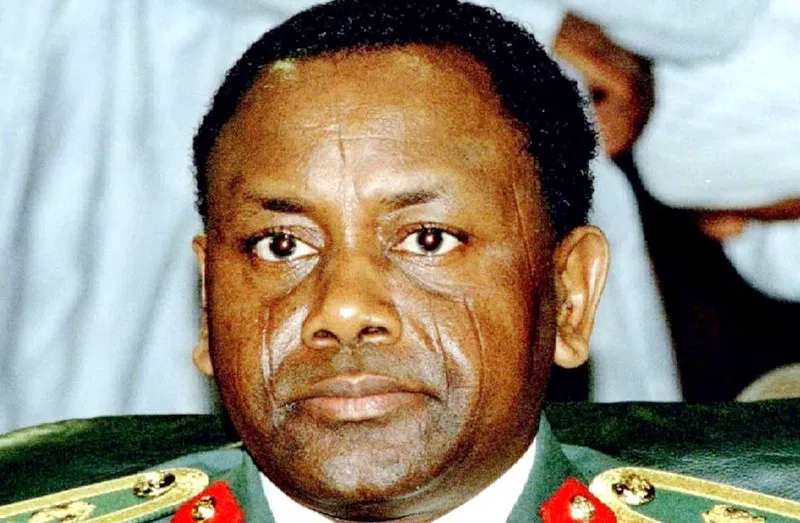
Good People, it don happen. Dictator Sani Abacha continues to fund the Nigerian treasury with the trickle of his loots. The Attorney General of the Federation and Minister of Justice, Abubakar Malami, has confirmed that Nigeria received about $311 million  of the Abacha loot from the US and Jersey: “The amount increased significantly from over $308 million as stated in a press release in February to over $311 million because of the interest that accrued from February 3, 2020, to 28th April, 2020, when the fund was transferred to the Central Bank of Nigeria.” My hope is that the money is not re-looted! Now, the government wants you to get involved to ensure that re-looting does not happen.

“The process for the engagement of the CSO monitor has already commenced with the adverts placed in two Nigeria newspapers – Daily Trust and The PUNCH (4th March, 2020 and a Notice of Extension on 17th April, 2020), the Federal Tender Journal (9th and 23rd March, 2020), the Economist (14th March, 2020). The advert can also be found on the website of the Federal Ministry of Justice.

This money is coming when the National Bureau of Statistics (NBS) just noted that 83 million Nigerians live in poverty. In Sokoto, 88% of the population are poor! I don’t really believe that because NBS is measuring poverty based on formalized assets. The richest people in my village are not the teachers but people with lands which they lease yearly. Because those records are not in any government data, there is a tendency to record them as poor even though most are loaded well ahead of the N30,000-monthly wage teacher. In Sokoto, whenever I go there, I see camels. You may think those people are poor because they have no bank accounts and do not earn formal income, but they have goats, cows, etc. Of course, this is not to say there is no poverty; my point is that 88% of Sokoto citizens are not poor!

About 40 per cent of Nigerians (or 82.9 million people) live in poverty, the Nigeria Bureau of Statistics said in its latest report.

The NBS in its 2019 Poverty and Inequality report also said the poverty rate varied across states. It is highest in Sokoto where almost 90 per cent (87.73 per cent) of the population are poor and lowest in Lagos where 4.5 per cent of the population live in poverty.

Comment on LinkedIn Feed

Comment: I understand your position. My suggestion remains. Back it up with researched data. If you present a definitive alternative that is a function of on the ground reality, nobody will argue further. Even the world bank will put it in perspective. But in the absence of that, 88% of Sakwatto people could realistically be poor. I believe the data, because its based on poverty and not extreme poverty which are very different. Base on my experience, I believe that much people are poor in Sakwatto. Just leave some allowance for some doubt. Its a possibility.


My Response: No issues, we are not arguing over the data. You keep bringing up data. The issue is interpretation using the same data. U.S. has poverty rate of about 14% using govt data https://www.census.gov/library/publications/2019/demo/p60-266.html . A man that makes $1k monthly in U.S. is poor but that guy is “rich” in Nigeria. A man that makes $1 in Sokoto is better off than a man that makes $1.50 in Victoria Island.

So, using Lagos benchmark and throw it across Nigeria does not cut it. Yes, using the same data, we can come to different conclusions. I do not need new data, I just need to question the data in my own way. If I am called, I will defend. The $2 or so that World Bank uses makes no flat sense because it does not account for earning powers and living expenses across rural and urban areas.

If you live in mud house in Abia state and earn $1.90 per day, you may be better than someone who is NOT poor in Lagos but earning $2.1.

This will be my last word on this, thanks for the debate.


STATEMENT ON THE RETURN OF THE ABACHA STOLEN MILLIONS FROM THE UNITED STATES AND JERSEY

On Monday, May 4, 2020, some $311 million US Dollars – stolen from the citizens of Nigeria during the Abacha regime – were safely returned to our country from the United States.

These funds have already been allocated, and will be used in full, for vital and decades-overdue infrastructure development: The second Niger Bridge, the Lagos-Ibadan and Abuja-Kaduna-Kano expressways – creating tens of thousands of Nigerian construction jobs and local skills, which can then be useful in future projects.

Part of the funds will also be invested in the Mambilla Power Project which, when completed, will provide electricity to some three million homes – over ten million citizens – in our country.

The receipt of these stolen monies – and the hundreds of millions more that have already been returned from the United Kingdom and Switzerland – are an opportunity for the development of our nation, made far harder for those decades the country was robbed of these funds.

Indeed, previous monies returned last year from Switzerland – some $320 million US dollars – are already being used for the government’s free school feeding scheme, a stipend for millions of disadvantaged citizens, and grain grants for those in severe food hardship.

The latest return is a testament to the growing and deepening relationship between the government of Nigeria and the government of the United States.

Without the cooperation both from the UK Government, the US Executive branch and US Congress, we would not have achieved the return of these funds at all.

For years many countries deemed successive Nigerian administrations as too corrupt, too venal and too likely to squander and re-steal the stolen monies – so they did not return the funds.

Today, US, UK and other jurisdictions have found the partnership with the nation of Nigeria they can finally trust.

The Buhari Administration is committed to – and is enacting – total and zero tolerance to corruption in politics and public administration.

The days when government was seen and used by the political class as their personal ATM to empty are over.

The time of better governance and clean hands in the affairs of state is here to stay.

Garba Shehu

Senior Special Assistant to the President

(Media & Publicity)

May 5, 2020

Nigeria Reopens – And What Did We Achieve With This Lockdown? [Videos]

0

NIGERIA REOPENS – and what did we achieve with this lockdown over Covid-19? People, this is one of those experiments we followed Western Europe and the U.S. without thinking deeper into the whole process. I personally supported lockdown (so, I was in the possibly wrong part) but looking at videos of the first day of partial lifting of lockdown in Nigeria, we might have all missed it. All protocols for social distancing have been broken just by looking at the 2 videos.

3rd Mainland Bridge


The bridge and border