DD
MM
YYYY

PAGES

DD
MM
YYYY

spot_img

PAGES

Home Blog Page 6381

Jumia Sails South In A Brilliant Voyage

4

Let me congratulate Jumia for entering Africa’s finest ecommerce market: South Africa. Typically, you tell startups from Nigeria to shine their eyes before they go south since South Africa is a more matured market, and exceedingly competitive. You do not thoughtlessly go into business in South Africa. If someone drops you blindfolded, in Cape Town, in the night, you may think you are in San Francisco when you wake up! Typically, a kid born in Cape Town or Johannesburg has to leave South Africa to visit Africa!

With South Africa, Jumia will become a real ecommerce company as there are enabling infrastructures which actually make ecommerce to earn that “e” for “electronic”. What we have in Nigeria are physical stores with online stores since there are no leverageable anchors that reduce marginal cost during scaling. Without those enablers, the scalable advantages move towards “0”, turning a typical digital platform marginal cost plot to look like an average fixed cost curve with no inherent advantages via economies of scale.

Largely, as I have noted here many times, operating a pan-African ecommerce venture is hopeless, because your marginal cost instead of going to near-zero, as you scale, turn into a curve that looks like an average fixed cost curve (a shape that is similar to the one you see in Dangote Cement which confirms that ecommerce in Africa is a physical business, not electronic). When that happens, scale does not bring efficiencies on transaction and distribution which  are critical for the profitability of digital businesses.

But in South Africa, Jumia can unleash its capabilities and can actually grow without the typical impediments imposed by the paralysis of African infrastructure. No wonder, investors like the call as Jumia’s stock has added about $1 to close above $4 since the announcement. Jumia  had listed at $14.50 a share, valuing the company at $1.1 billion. Just four days later, its stock hit $49.77, raising its value to $3.8 billion.

Jumia pays its co-CEOs with Wall Street scale and we expect them to deliver Wall Street-like value. In 2019, the duo collectively went home with $5.3 million in all compensations, implying that a Jumia CEO earns more than any CEO of a quoted company in the Nigerian Stock Exchange, including the CEO of MTN Nigeria, and GTBank CEO. They certainly need to deliver!

Of course, Takealot, South Africa’s leading ecommerce player, is not an easy competitor. That is not an issue: there is room for all of them to cohabit when you remember that Jumia has a good warchest in cash to fight any battle. South Africa will treat Jumia fine.

Become A GROWTH Champion In Your Office

0

This is the deal: the only thing that matters to business leaders now is GROWTH. As we reopen, think on how you can help the company where you work GROW.  The clients have bled money and some are already gone, the challenge now is how to survive. Growth, even if not profitable temporarily, is the only prescription! Think of three ways you can unlock growth for your firm. Develop the apparatus and have an implementable growth plan ready.

As leaders gather for that key meeting on the first day in office , make a contribution on the next path. I have listed domains in a video where we expect to see growth and opportunities in coming months. Check how you can help your company on that redesign.

  • Hybridized Supply Chain: Flexible, adaptive, global and local, at the same time.
  • Remote Everything: The web will run the world across sectors.
  • Digitization and Cloud Migration: The pace will accelerate.
  • Semi-automation: Disintermediation of humans will accelerate

Become a champion, help your company find growth. GROWTH, Growth, growth are the only agenda, post Covid-19.

The State of Tech Nation [Video]


Tekedia Mini-MBA Registration: Please Email My Team After Payment

0

Very challenging – running a digital business and asking people to pay via bank transfer in Nigeria. You have cases where people pay and never email you. Yes, even in our Edition 1 of Tekedia mini-MBA, we have paid participants who did not send emails. Please if you paid, you still have to email my team to create an account for you. Right now, they have to be googling people, looking for their emails and contacts.

—-
Sir,
We received a bank transfer payment in “your name” and no one has written us after the payment. We did a Google & Linkedin search with the name and got this email.

Could you confirm you made this payment? If so, just send a receipt (teller or online) or the date/approximate time of payment with amount. Do not feel bad on this as we need to reconcile or possibly continue searching.

Regards,

Tekedia Team

The Zoom’s Envy: Google and Facebook Trying to Catch up on Video Success

0

As COVID-19 limits humans’ interaction to nearly virtual space, spiking the use of teleconferencing and putting Zoom on the spot for larger audience; Facebook has been stirred by envy of the surge and it is getting ready to mimic the video technology that has placed Zoom in the forefront of virtual activities in the face of coronavirus pandemic.

Last week, Facebook introduced one of its biggest expansions into videoconferencing, unveiling several new video chat features and services. The changes include video group chats for up to 50 people in Facebook Messenger, Whatsapp video calls for up to eight people and video services for Facebook dating.

Mark Zuckerberg has earlier ordered Facebook employees to focus on video chat projects as the number of Zoom users increase daily.

It has become a race to beat Zoom as many of the Silicon Valley giants are introducing one video service after the other. Google has announced that it is making its video services (Meet) free, following the recent success of Zoom. Everyone appears to want a page of the story that has seen Zoom record over 300 million participants daily, a milestone from the 10 million before the outbreak of coronavirus.

The development has followed a trend of financial bullying by the tech giants, which many smaller companies had had to deal with recently. Tiktok and Snapchat have all had to ward off Facebook acquisition interest or attempt to outmuscle them with financial power.

Zoom appears to be the next target as COVID-19 pandemic has spurred a surge in the number of its users. Mark Zuckerberg said video has come to trend in the wake of the outbreak as people try to stay connected to each other virtually.

“The world was already trending in this direction before COVID-19. This is the trend in general – the ability to feel more present, even when you’re not physically together,” he said.

The push to get a taste of the success that Zoom is enjoying appears to be high among tech companies. But Zoom CEO Eric Yuan said in an interview that he is not bothered, that his company is focused on improving users’ experience and it is not thinking about competition. He said COVID-19 is a “once in a probably 100 years crisis” that shouldn’t stir competition.

Zoom success has been attributed to the simplicity of its use, from installation to setting up a videoconference, which compared to others, has given people a flexible alternative.

Google has made its video services free via Gmail and said it has witnessed an increase in number of users and hopes there will be more people signing up as the days go by.

But Facebook has been attuned to Zoom’s rise more than any other company, as it has been the case with other companies offering video services. Zuckerberg has tasked Facebook’s teams to accelerate their video chat product releases, which includes a desktop app for Facebook Messenger that has a video chat feature in April.

Zuckerberg said the new features have enticed many new users – more than 700 million people now use Facebook Messenger and Whatsapp for calls. He said that more changes will come to the apps as soon as possible. They may include messenger rooms, a quick way to create video chat rooms using Facebook Messenger that will accommodate dozens of users simultaneously. As part of its expansion, Facebook is introducing video chat rooms to its dating site and has a plan to do the same with Whatsapp and Instagram soon.

Zuckerberg wants the video chat experience to be serendipitous unlike the Zoom’s that’s “casual and more scheduled.”

“I don’t really think there’s anything today that you can display on an ad hoc basis that you’re hanging out and have whoever wants to join you over video. Sometimes people compare what we do to other companies, like you did earlier with Zoom. I think the main thrust of how people are going to experience Rooms will be very different,” he said.

While Facebook has all these video plans lined up, it is reportedly working with Zoom on a partnership to expand the use of its augmented and virtual reality division since January. The idea is to allow people to make video calls through Zoom using its device called portal. The plan has been to release it in May while Facebook continues partnership negotiation with other companies for its video chat, but Zoom’s decision to freeze all new feature development in order to fix its security concerns has put it on hold.

Google’s Meet and Facebook’s video platforms are watching Zoom’s success with such envy, and it keeps baffling them that their existence before Zoom has failed to make them people’s choice.

Localizing Sustainable Development – What It Means For African Businesses

0

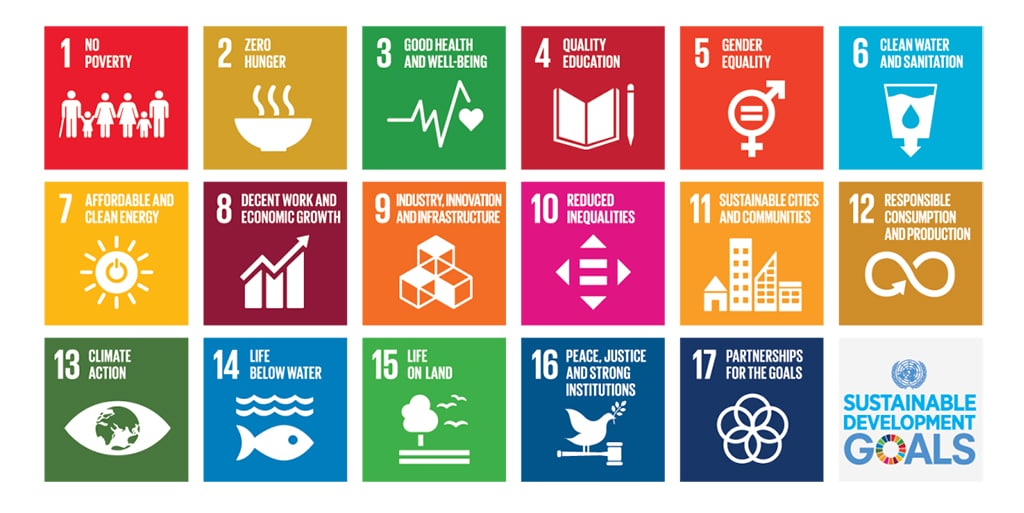
In recent times, a number of articles have been written to explain what localizing the Sustainable Development Goals (SDGs) mean. Billed to be achieved by 2030, the 17 SDGs were launched by the United Nations in 2015 as a roadmap for global development at all levels of government and governance. Going by this understanding of the SDGs, a number of experts have stated that localizing the goals is about ensuring Local Governments’ effective involvement in the implementation of the goals. This makes logical sense, considering that Local Governments are fundamentally the closest to the affairs of the everyday common man, who make up the largest cluster of stakeholders facing most of the challenges the SDGs were set up to address.

My submission however is that this thinking only addresses the aspect of government without paying attention to governance from a more holistic context. A major group of key players required for the achievement of the SDGs are not in Government. They are in business and according to the United Nations, and other global commissions and institutions set up to support the UN’s 2030 sustainable development mission, the private sector has a central role to play in this mix. In fact, it has been established that without the leadership, skills and resources of its private sector, no nation can successfully achieve sustainable development. 

Looking more closely, a number of the SDGs are addressed largely, if not solely by the private sector, with the government only serving as umpires or enablers as the case may be. Take Goal One, No Poverty or Goal Eight, Decent Work and Economic Growth as examples. It is a known fact that businesses are the key drivers of wealth and job creation. When you visit regions without thriving businesses, the direct result you notice is poverty, unemployment and high levels of underdevelopment.

How then can the private sector effectively contribute to sustainable development? The hallmark of the private sector is entrepreneurship. The private sector is made up of people who have identified specific problems, which they are either solving directly, or through investing their resources into powering other people’s solutions. Whichever route they choose, the focus is on the return on investment. 

By it’s natural make-up, the private sector cannot actively contribute to sustainable development except there is a compelling business reason to do so. It is very easy to talk about doing things because it is the right thing to do, which of course is right. However, without the business mindset, the sustainability matrix is incomplete. There is indeed a reason the three Ps of sustainable development are People, Profit and Planet. The economic aspect of sustainability cannot be neglected and this is largely a burden shouldered by the private sector.

Thus, considering the need for increased focus on the role of the private sector in sustainable development as it relates to governance, we need to ask an important question: what does localizing the SDGs or sustainable development mean for business? 

It means adapting global best practices to our local nuances. In practice, what this means is that in a country like Nigeria, diversity in the workplace, for instance, will have little to do with reporting the variety of nationalities working within an organisation, except of course the organisation is an MNC. Even then, why would it matter to Nigerians that a multinational company has Indians working for them in Nigeria? 

Amongst other issues that diversity addresses, it will be more about tribal diversity. Is your bank tilted towards a certain tribe, employing based on favoritism without recourse to merit? Are you running your organisation based on man-know-man, focusing only on short-term face saving? In effect, localizing the goals will be about transposing sustainability issues to our local and cultural context at a relatable level for our market in a way that creates sustained value and ensures long-term business success.

The private sector is skilled with making money. In fact, they excel at identifying opportunities and monetizing solutions. The challenge is that the way business has been run over the years has been unsustainable. We see it in the level of economic disparity between the rich and the poor, in the level of global environmental degradation, in the restlessness of our youth and the warming up of our climate. While this is not primarily an African problem, our vulnerability heightens the negative impact of the consequences on the continent. 

The COVID-19 pandemic has further exposed what we have always known, often admitted but not done enough about: most African nations have unbelievably weak economic systems, fuelled by many factors including corruption. In spite of our natural and human resources, and the number of businesses on the continent, there’s a huge infrastructural deficit and high levels of household poverty. Most African countries have not been able to effectively implement lockdown measures, even though survival depends on it, because the economies are not structurally resilient enough to withstand such pressure. 

Entrepreneurship provides the building blocks for economic progress and has indeed been applauded as the messiah of most developed countries’ financial prowess. However, without building businesses that can effectively localize a well thought through sustainability framework like the SDGs, Africa will continue to grapple in the darkness of poverty under the weight of underdevelopment. 

Our local African businesses need to understand that times are different today and there is a better way to do business in a manner that creates shared value. This is not about sharing part of the profit made in charitable contributions or philanthropic feats but about how it was made in the first place. Organisations must fully appreciate their roles as sustainability drivers who meet the needs of the present without compromising the ability of future generations to meet their own needs. 

While making this transition to a new way of doing business might seem challenging, it is not impossible. It requires innovation and a new level of thinking that goes beyond profit to incorporate considerations for the people and the planet. When done right, the trade offs will also be minimal with the gains enormous. In fact, according to the commission on business and sustainability, there is 12 Trillion Dollars worth of economic value to be unlocked within the SDGs by 2030. Businesses that make the switch to sustainable models now will be those that will lead the future, both on the continent and on the global scene.

As much as sustainability makes business and economic sense, while driving innovation and differentiation, the goal is not to have business leaders just jumping on board to be a part of the bandwagon. It is about a more holistic value: sustainable businesses make sustainable economies. Without a thriving private sector, a nation will only continue to strive, making marginal progress, if any. It is therefore in the best interest of everyone, that we not only have more businesses spring up on the continent to create more jobs for our ever growing youth population, but that new and existing businesses entrench sustainable business strategies into their models. Verily verily I say unto you, Africa cannot rise above its present misery if its private sector does not work, and sustainably so.