DD
MM
YYYY

PAGES

DD
MM
YYYY

spot_img

PAGES

Home Blog Page 6386

COVID-19: Testing of Global Real Estate and Facilities Management Industry Calls for Smart Decisions -Ukeme Peters, Alpha Mead Group’s Head of PEMS

1

Editor’s Notes

Amid continuous ravaging of coronavirus across the world, several reports have indicated and some are still suggesting that the health of real estate and facilities management industry is not good based on the fact that lockdown, one of the measures being used by the governments to contain the virus, has significantly shut down most commercial real estate, which constitutes the main component where substantial revenue is being generated by players in the industry. Nigerian real estate and facilities management industry is not an exception in this regard. Ukeme Peters, Head of Planning, Enterprise and Management System (PEMS) at Alpha Mead Group, one of the leading total real estate solution company in Nigeria, speaks with our analyst on what have been the impact of the virus in the industry, coping strategies being implemented to ensure continuous service delivery to the clients and what the future holds for the industry.

Excerpts

Tekedia: No doubt, this period is volatile for businesses, individuals and governments across the world considering Coronavirus Outbreak. As a business that has presence beyond Nigeria, what have been the coping strategies for business continuity?

Ukeme Peters: The COVID -19 outbreak has affected lots of businesses and indeed it has affected Alpha Mead as well. However, our coping strategy is the years of investment in human capacity development and technologies.  Before the pandemic, all around the world, especially in developed economies, the Real Estate and Facilities Management (REFM) industry was seeing an impressive increase in investment and application of technology such as artificial intelligence, robotics, and other intelligent solutions that helps buildings become what is now called smart buildings.

At Alpha Mead, we were also in the vanguard of this global trend – rethinking our processes and systems in line with global best practices. This period is indeed putting those organizational resilience strategies, capacities and scenarios (such as technology adoption and application; risk & quality management systems, and Health & Safety) to the test.  And we are happy that beyond these as the bedrock of our COVID-19 operations, they also present an opportunity to proof the viability of our years of investment and leverage it to continue to provide solutions for our customers in this unusual time.

Tekedia: Apart from devising the strategies, how would you describe your company’s innovative approach this period compare to what it was before the pandemic?

Ukeme Peters: I think my response to that will be this period provides us with the opportunity to test our innovations around processes, systems and technologies in a real-life scenario. So, what we have been focused on is driving increased acceptability, adoption and scaling our systems in line with the demands of the times and those of our customers.

For example, one of the cruxes of this time is, by all means possible, reduce physical contact of people. As an organisation that cares about our people – either employees, customers, vendors, and other stakeholders – even before the government lockdown was announced, we already took a strategic decision to shut physical delivery of most of our services.  We have also reviewed our supply chain strategies and completely eliminated to the barest minimum what we call JIT supplies. Even though supply chain efficiencies are challenged by the highly complex and regulated logistics arrangement of the time, we leveraged on the relationships we have built across the chain before this period and I can tell you, we have been very happy with the results.

The business has also scaled up remote support to handle customer issues especially from our residential operations which is at its peak delivery times this season. We have a 24/7 customer call centre available which can be contacted by telephone, email, WhatsApp and through our social media handles. We have observed an increase in the use of these channels and we are also able to continue to handle inquiries from customers concerning our other real estate products.

We also slightly modified our Health, Safety, Environment and Security protocols to include specific COVID-19 protocols to ensure the risk of infection for our employees and customers are eliminated as much as possible. Definitely, it has affected basic site operations protocols such as cleaning frequency, substance use and PPEs.

Tekedia: Since the virus becomes pandemic, what has been the impacts on Facilities Management Industry, especially the commercial real estate component?

If you follow our webinar on the 15th of April, you can check our website for excerpts. I did mention that the Corporate Real Estate and Commercial Real Estate sectors are amongst the hardest hit in the REFM industry as social distancing and lockdown strategies are enforced for close to four weeks now. As the use of these facilities reduced its operations and foot fall, we have seen a marked decrease in facilities management scope of activities especially as it concerns reactive procedures. Some planned/fixed operational procedures are still on-going in some cases even though largely scaled down.

Let me also state that this has affected the Corporate Real Estate sector in varying ways depending on the classification of such organization into essential or non-essential businesses. So, in some cases, the demands from essential businesses have increased as a result of more stringent requirement in terms of operations, hygiene and HSE requirement which has increased and is now subject to more regulatory influences.

Tekedia: Your company recently held a webinar to educate professionals and other stakeholders in the industry about the impacts of the virus. Based on the insights you shared with them, how do you see the impacts in short, medium and long terms?

In the short term while businesses remain closed, revenues and cashflows of businesses may continue to dwindle and that may also affect critical obligations to stakeholders. This is expected to continue even few months after the restriction to businesses are lifted given the fragile macroeconomic condition at the time especially as a result of oil price instability

Post COVID -19, business operations, processes and demand pattern from customers are expected to be altered. I believe there will be a new normal, which businesses have to quickly study and adapt their operations to fit. At this point, only businesses that are able to inject flexibility into their processes and are dynamic in nature will be able to cope. Therefore, the lockdown period should be used to innovate and create new ideas.

In the medium term, depending also on how long the COVID-19 situation persists worldwide and even in Africa, we may begin to see declining investment into real estate projects especially as remittances into the country deprioritizes projects which most of the times are real estate related.

Some economists are suggesting that we may experience another recession in the coming quarters resulting in high inflation rates and depressed disposable income. If this holds true, we may witness a rise in vacancy factor across the industry and perhaps assets disposal in a bid to sanitize balance sheets or as a result of post COVID-19 strategies where remote working have increased.

Therefore, in the long term, you may see increase in co-location situation for offices, reduced rents, and perhaps interesting real estate deals.

Companies will need to be more cost efficient as inflation rises and challenges margins. Certainly also, investment in technology will spike and the use of technology will become a new norm as clients who had hitherto not embraced the idea will be more opened to such situations.

Tekedia: Now, let’s examine the impacts on employees. FM solutions provision requires a lot of people in a developing market such as Nigeria. One of the impacts of the virus on operational activities is asking employees to work from home. If your company is using this approach, how effective is it?

Ukeme Peters: Working from home situation is working very well for us in Alpha Mead. Interestingly, these are strategies our organization had already considered although on a more conservative scale. Therefore, we have had investments within the last 2years now in preparation for that. However, we see challenges in internet cost, internet quality (although I might say is better than I personally expected) and power situations which is a problem in the country.

So, the experience for our staff have been mixed as some still do have to report on site – amid stringent health, security and safety protocol – to continue to provide essential services especially for residential and Corporate Real Estate clients on essential duties in the banking, telecoms, and tech sectors.

Tekedia: As one of the key players in the industry, what have been your contributions towards the containment of the virus since Nigeria records her first case on February 27, 2020?

Ukeme Peters: As I mentioned earlier, we were one of the few companies that recognized the risk involved in large gatherings around offices and had taken the decision to shut our head office even before the federal government order came in.

We have also issued quite a number of publications and guidelines to our customers, partners and the general public on how they can continue to maintain social distance and handle safety, security and environmental protocols during this period.

In terms of capacity development, as a player in the REFM industry with the goal of improving quality of talents across the industry, we have opened up our online learning channels for practitioners to take a few free training courses that can enhance their skill during this lockdown season so that they can be better equipped when normal business resumes. We are also constantly evaluating ways we can further use our resources to continue to partner with authorities to bring an end to this pandemic.

Tekedia: How would you describe government’s efforts and people’s response to the various measures for the containment of the virus?

Ukeme Peters: I would particularly commend the federal government for its handling of the situation. We must note that this is an unusual time, hence not all decisions will be right. But we have seen how the government has been refining the protocols and policies as new developments arise.

The Lagos and Ogun State governments must also be commended for the pro-activeness they have shown this period of the pandemic. Their prompt actions and infrastructure delivery has helped the country so much.

The NCDC is also doing well and we are hoping that test capacity can be improve in the coming days.  In all, the governments need to do better in terms of profiling and offering support at this time to the people and businesses. If this is not done well, it will be difficult to enforce the lockdown for the necessary period to drive the desired result of containing and bringing the pandemic under control.
 

Discos Losing 60% of Revenue As Estimated Billing Backfires

0
electricity companies nigeria

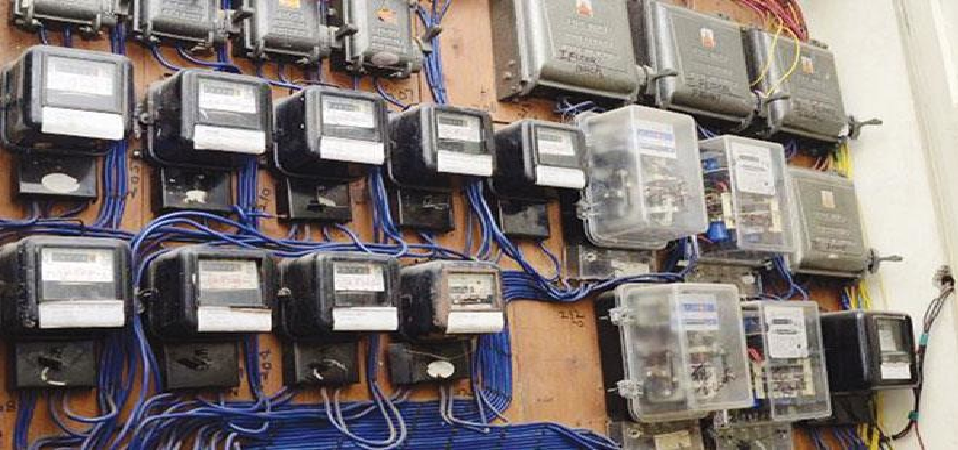
As coronavirus induced lockdown takes effect in many states in Nigeria, Electricity Distribution Companies (DisCos) are reporting 60% loss in revenue due to the economic impact of the lockdown on households.

Everyone is cutting down on expenses, prioritizing survival as people’s means of livelihood have been halted by the lockdown.

The DisCos that used to rake in millions through estimated billing said it has become difficult for many to pay due to the crisis. The situation has resulted in 60% loss of revenue for the distribution companies since the majority of Nigerian households are not metered. Data from the Nigerian Electricity Regulatory Commission (NERC) shows that only 3,895,497, representing 40.26% out of 9,674,729 registered electricity consumers use meters.

NERC attributed the unwillingness of customers to pay to estimated billing, which is believed to be more of extortion.

“Thus, 59.74% of the registered electricity customers are still on estimated billing which has contributed to customer apathy towards payment for electricity,” NERC said.

The Ikeja Electric Distribution Company (IKEDC), had in March, as a gesture of goodwill, promised not to disconnect customers during the first phase of the 14-days lockdown. This has made it difficult for the company to disconnect as usual, households who failed to pay their bills.

The DisCos had earlier got into negotiation with the Federal Government to provide free electricity for Nigerians in the face of the lockdown in order to cushion the effects. But the parties failed to reach a deal as the Discos demanded N200 billion from the FG as payment for the electricity supply during the period of the lockdown, but the government distanced itself from the demand.

Metering has been a bone of contention in the Nigerian electricity sector for long, a situation that has existed to the gain of the DisCos as many households are placed on estimated billing. The MAP initiative was introduced in March 2018, to solve the continuous problem between consumers and DisCos over billing but it has failed to live up to expectation.

In February, the NERC rolled a new regime of billing for the DisCos, putting a cap on estimated billing. In a document titled: Order on the Capping of Estimated Bills in the Nigerian Electricity Supply Industry (NESI), signed by James Momoh the NERC Chairman, and Dafe Akpeneye, its Legal, Licensing and Compliance Commissioner, the Regulator said there is a limit to how much the distributors could charge, especially residential areas.

According to the document: “A consumer of XYZ Disco resident in White Acre under R2 (single phase) tariff class has an energy cap of 78 kilowat/hour per month and a tariff of N42 per kilowatt/hour. The maximum that XYZ Disco can invoice such a customer is 78kW/hr x N24/kWhr =N1,872 per month.”

The document added that customers should not be compelled to pay estimated bills if DisCos do not provide prepaid meters.

“The customer shall remain connected to supply without further payment to the DisCos until a meter is installed on the premises under the framework of MAP Regulations or any other financing arrangement approved by the commission,” it said.

Unfortunately, this new regime failed to take effect as DisCos continued with their old pattern. Consumers were forced through disconnection to pay high rates of estimated bills because the marketers count on them to meet up with outrageous targets.

Recent development has however, turned the table around, and the hunter has become the hunted.

DisCos across Nigeria are lamenting about their losses as the priority of consumers have changed from bills to survival. Moreover, many businesses have been shut down following the lockdown order, and the distribution companies complain that the volume of energy supply remains the same.

It is believed that the metering plan (MAP) that was introduced last year has been sabotaged so that DisCos will continue to issue outrageous bills to unmetered customers.

The MAP programme allows third-party investors to provide meters at costs segmented according to the capacity of the meters, and thereafter, get paid through customers’ retail payment for electricity. The process has been abused so that consumers who applied for the meters hardly get them unless they pay twice the original cost.

One of the reasons for the scarcity and high cost of meters has been attributed to the upward review of import levy on electricity meters from 10% to 45%, by the Ministry of Finance. The implementation went into effect immediately resulting in abandonment of thousands of meters at the ports.

COVID-19 has turned the tide with a huge implication for the electricity distributors, limiting their earnings to 40%. And the DisCos are expected to lose more in revenue generation if the lockdown is extended beyond the two weeks.

The Nigeria’s Tax Agency Plea

0

The Federal Inland Revenue service (FIRS) issued a statement demanding that booming businesses in Nigeria increase their tax payment as other businesses have been shut down following the surge in coronavirus pandemic cases.

In circular entitled: Update On Palliative Measures to Cushion Effect of COVID-19 on Taxpayers, dated 22 April 2020, and was signed by the FIRS Executive Chairman, Muhammad Nami, the tax body asked corporate organizations to commence their annual tax return earlier than supposed, to enable the federal government to generate the much needed revenue.

“Further to my statement on Monday 6th April 2020, on the palliative measures put in place to cushion the effects of COVID-19 on Taxpayers and my assurance to keep you updated with information specific to Taxpayers as it becomes expedient. I wish to appeal to a section of taxpayers, whose sectors are experiencing a boom and significant increase of income at this point in time, for a high level of cooperation in payment of their taxes.

“As I have done in many public fora in recent times, I wish to acknowledge and reiterate the difficulty businesses are going through at this time of COVID-19 pandemic. You will note that early in the lockdown we put out palliative measures to cushion the effects of the economic shocks occasioned by the pandemic on taxpayers. Nonetheless, we wish to acknowledge that some sectors such as Telcos; financial institutions, e-commerce, supermarkets, manufacturers/processors of certain products, etc. are experiencing boom due to increased transactions as a result of the lockdown or even despite the pandemic.

“As is currently obvious, the economic downturn that resulted from the global shutdown occasioned largely by the COVID-19 pandemic has continued to put pressure on revenue generating agencies including the FIRS; thereby straining governments to bridge budgets funding gaps.

“In view of the above, I wish to specially make an appeal to corporate bodies in the sectors mentioned above to go the extra mile at this time to cooperate with us in making special arrangements to pay their taxes. They may consider, for instance, a situation where they can commence payment of their annual returns earlier than the due date apart from their normal monthly obligations. This has become necessary in order to ease some of the cash flow gaps being experienced by the government at this critical time.

“I look forward to positive responses from the aforementioned sectors. Let me assure you once again that we will continue to provide support to all taxpayers as directed by president Buhari in his lockdown speech of Sunday 29th March 2020, and will keep you updated with information specific to taxpayers as we deem fit,” the statement said.

As expected, backlash followed the statement. Nigerians reacting to the new step taken by FIRS believe it is quite insensitive for the tax body to be talking of taxes in the face of global pandemic that is taking a toll on businesses, which has other countries waiving taxes in order to sustain their economy.

“All you’re interested in is putting further strain on an already overstretched economy. How are financial institutions, e commerce, supermarkets or manufacturers experiencing boom when the purchasing power of the masses has been drastically reduced & there is restricted movement,” a Twitter user responded.

In another response, the FIRS was urged to employ another method in tackling the deficiency in revenue generation because none of the sectors of the economy is exempt from the ravages of the pandemic.

“It’s an ill-thought and knee jerk policy from the tax man. Like you said, virtually all sectors are limping from low purchasing power, devalued naira, increase in logistics and also sundry unbudgeted costs. A better tool kit would have been to use Tax Anticipation Notes,” a Twitter user wrote.

Compared to what other countries around the world are doing to help businesses, the FIRS’ move to implement early taxation is believed to be anti-business.

“Another low for the FIRS and this govt. other countries are giving businesses relief package, Nigeria is adding more burden. Dear business owners, pay your tax only as at when due. You need that cash more than the govt. this is not the time to be unnecessary generous,” Oke Umurhohwo wrote on Sunday.

Earlier, the Inland Revenue Service has announced some measures it has taken to help businesses. In a circular it shared on the 6th of April, the tax body outlined a 6-point provision it has made to ease the pain of economic strain on businesses. That includes using the e-filing platforms to submit documents instead visiting FIRS’ offices. Waiving the Late Returns Penalty (LRP) for early tax payers, extending VAT remittance from the 21st of the month to the last day of the month and the period of filing PIT returns for Foreign Affairs, Non-Residents, Military and police has also been extended to June 2020. Taxpayers who have difficulty offsetting their liability due to scarcity of forex were granted a window to pay with naira.

To many, these measures are much less a remedy to the plights of businesses because the national supply chain has been disrupted, and every business is feeling the heat. Companies have started laying off staff to ease the economic burden. And in the disruption of the national supply chain, no business is an island; it’s only a matter of time.

The telcos mentioned by the FIRS as an example of booming business are losing now more than other times as subscribers are being discreet with spending, many are relying on text messages for communication. It is believed that the Inland Revenue Service has made their decision based on the assumption that companies are depending more on online platforms to conduct meetings and conferences, which has been translated to mean more revenue to the telcom service providers.

However, the fury has been based on the FIRS’ inability to see that more businesses and people have halted their telcom services due to the lockdown and financial constraints stemming from the health crisis. And the supermarkets are likely going to run out of supplies very soon, with borders and ports shut, goods and service delivery will be hampered and the stores will have little or nothing on their shelves.

It also means that there is more withdrawal from financial institutions than deposits, a further strain on the banks that are now depending more on interest rates to generate revenue due to closure of businesses.

The ecommerce industry is symbiotic with other businesses. People make online purchases because they have the money. In the face of economic turbulence that calls for prudent spending, the online stores aren’t much better than others, especially when there is restriction of movement and transportation is limited to essential goods and services only.

The statement

UPDATE ON PALLIATIVE MEASURES TO CUSHION THE EFFECT OF COVID – 19 ON TAXPAYERS – 22nd April 2020

Further to my statement on Monday 6th April 2020, on the palliative measures put in place to cushion the effects of COVID – 19 on Taxpayers and my assurance to keep you updated with information specific to Taxpayers as it becomes expedient, I wish to appeal to a section of taxpayers, whose sectors are experiencing a boom and significant increase of income at this point in time, for a high level of cooperation in payment of their taxes.

As I have done in many public fora in recent times, I wish to acknowledge and reiterate my concern on the difficulty businesses are going through at this time of COVID – 19 pandemic. You will note that early in the lockdown we put out palliative measures to cushion the effects of the economic shocks occasioned by the pandemic on taxpayers. Nonetheless, we wish to acknowledge that some sectors such as Telcos, Financial Institutions, eCommerce, Supermarkets, manufacturers/ processors of certain products, etc are experiencing boom due to increased transactions as a result of the lockdown or even despite the pandemic.

As is currently obvious, the economic downturn that results from the global shutdown occasioned largely by the COVID – 19 pandemic has continued to put pressure on revenue generating agencies including the FIRS, thereby straining Governments to bridge budget funding gaps.

In view of the above, I wish to specially make an appeal to corporate bodies in the sectors mentioned above to go the extra mile at this time to cooperate with us in making special arrangements to pay their taxes. They may consider, for instance, a situation where they can commence payment of their annual returns earlier than the due date apart from their normal monthly obligations. This has become necessary in order to ease some of the cash flow gaps being experienced by the government at this critical time.

I look forward to positive responses from the aforementioned sectors. Let me assure you once again that we will continue to provide support to all Taxpayers as directed by President Muhammadu Buhari in his lockdown speech of Sunday 29th March 2020 and will keep you updated with information specific to Taxpayers as we deem fit.

Muhammad Nami

Executive Chairman

COVID-19 and the Lagos Informal Sector – Realities, Implications and Responses

1

Authors: Babajide Oluwase, Wole Ademola Ademola

With excitement and fireworks, the world ushered in 2020 with so much dreams and expectations but never thought everything would be brought to a halt and on the brink of global recession in a flash by a virus outbreak. The Coronavirus (COVID-19) pandemic which started at the tail-end of 2019 in Wuhan, China has now become the biggest invincible enemy of the world. The world as we know took a challenging turn on 30 January 2020, when the WHO declared the COVID-19 outbreak a public health emergency that should be of international concern. The  pandemic is primarily a health crisis and a human tragedy, but it also has across-the-board economic implications. In Africa, it is already disrupting millions of people’s livelihoods, with disparate impact on poor households and businesses in the informal sector—and the pace of this disruption is likely to speed-up in the weeks and months ahead.

As the world now grapples with the containment measures of COVID-19, countries around the world including Nigeria have put in place measures such as restrictions of movement in Abuja, Ogun and Lagos, currently the epicenter of the outbreak in the country. Nigeria currently has more than 1,000 confirmed cases of COVID-19 with the numbers increasing daily and this means there are choices to be made: to either return to normal or extend the restrictions even when they come with unintended consequences in various spheres.

Lagos, the Epicentre of Nigeria

Lagos exemplifies the challenges that plague most African cities, but on a scale that seems daunting and amplifies the stresses and strains of urbanisation. Even if there is no general consensus on how many people live in Lagos, one thing holds true: the economic nerve of Nigeria is growing at an alarming rate. Though arguable, the State Government records the population of Lagos as over 21 million with a high influx of people from other parts of the country on a daily basis. When Lagos confirmed the first case of the novel virus in Nigeria, it quickly sparked memories of the fears of the Ebola epidemic that hit the megacity six years ago. Though it is believed that there is not enough testing going on, the State governor, has however shown leadership in the implementation of the response strategy so far.

The Informal Sector: What Does it Mean?

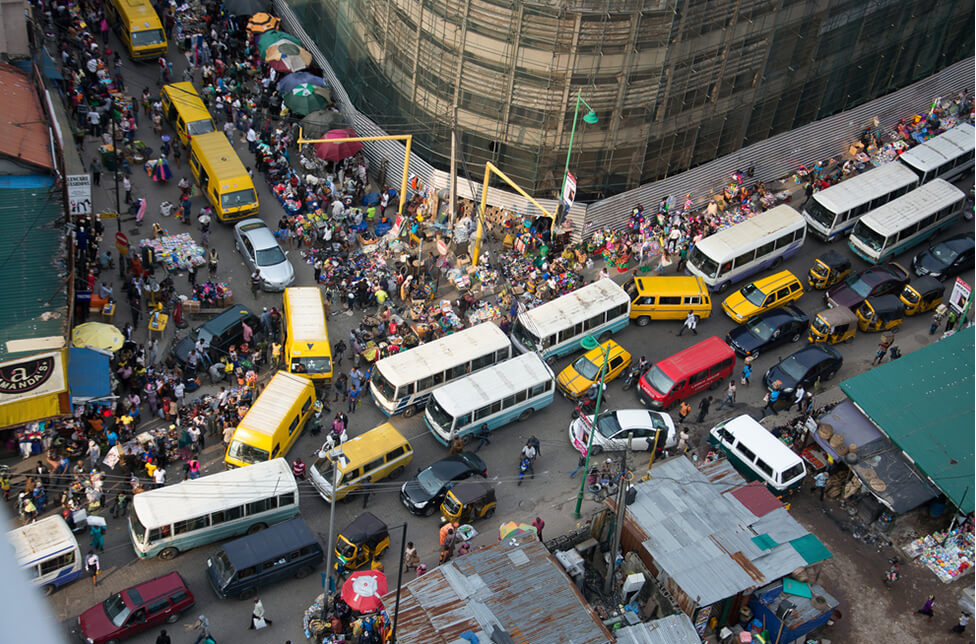
The informal sector represents a significant part of economies around the world, especially in developing countries. As described by many economists, the informal sector is a part of the economy not formally recognised or registered under any national legislation. From a non-economist perspective, it is invoked to refer to the street vendor in Ghana, the hawker in India, the shoe-shine worker in New York, the “danfo driver and conductor” in Lagos to mention a few. What these activities have in common is their ability to satisfy basic needs by harnessing informal opportunities and its impact on economies is becoming more significant. For example, in Uganda, about 13.67 million persons of working age (14 – 64 years) are engaged in the informal sector, which represents about 98 percent of the total working age population. In Nigeria, the Bank of Industry (BoI) acknowledges the informal sector as a major economic driver which contributed about 65% to the country’s GDP in 2017. 

COVID-19 and the Lagos Informal Sector 

As Lagos grinds to a halt amid increasing coronavirus cases and movement restrictions, Adebola Rebecca, a 46-year old trader, still visits her shop thrice a week. “How can I stop,” she said, with an edge of desperation in her voice. “For me to eat, I have to make daily income, it’s as simple as that.” Without regular patronage, Adebola spends much of her day sitting back in the hope of making sales to support her family. The struggle with Adebola’s business amid the COVID-19 pandemic captures the realities of millions of informal economy workers in Lagos. Social distancing has necessitated dramatic deviations in the world of work – a shift into remote working. However, such an easy transition only works in the formal sector. Informal sector activities thrive on physical interactions.

In addition, slums and unplanned settlements dotted across the city of Lagos serve as home to most informal sector populations, many of whom lack basic services like potable water, sanitation and decent housing. This reality aggravates their vulnerability during a health crisis, and makes stopping the spread of COVID-19 a complicated task to manage. That the informal workforce was not taken into proper account while declaring a total lockdown is reflective of their invisibility in the State’s consciousness and policymaking.

Amidst the closure of workplaces and avenues of employment, the lack of clear and positive assurances from the political leadership only exacerbated these workers’ anxieties. The economy as we know it was fragile even before the advent of COVID-19, but now the outlook is far worse as government efforts to confront the pandemic paralyze economic activity. No sector, worryingly, may be as vulnerable during the lockdown as the workers who toil in the State’s vast informal economy, employed in precarious work environments, and lacking any form of social security or welfare safety net.

Imagine a city like Lagos with a population of over 21 million and the informal sector is estimated to account for over 70 percent of the working population and approximately 42 percent of the economic activities within the State. This includes hawkers, roadside traders, vulcanisers, battery chargers, hairdressers, carpenters, bricklayers, etc. What this implies is that as the pandemic worsens daily, the majority of informal sector workers may have no option but to prioritise their economic needs over the health implications of the virus. This is not because they are not aware of the impending risks, but as a survival instinct and because the available welfare system is not far-reaching.

Responding to the Impact

As uncertainty envelopes the world and  with one-third of the world’s population (about 2.6 billion people) living in some form of lockdown, the implications are far-reaching. Analysts have described the impact of COVID-19 as being worse than the great depression of 1929 or the financial crisis of 2008. Hence, COVID-19 requires a novel and urgent response that can mitigate the increasing scale of disruption it is causing, especially in the most impacted sector such as the informal sector and communities where the vulnerable and poor reside. 

During the outbreak

  • All Hands on Deck Approach: The most powerful weapon in the fight against the spread and after effect of COVID-19 is public trust. The Government must have an open system in their strategies, policies and economic restructuring. Reinforcing this means getting ahead of the downward curve of contagious fear and social-economic breakdown with responsive communications tailored to local contexts and diverse population groups. Social cohesion and community participation must be an integral framework of strategies being developed by the Government leveraging on communal structures like community-based and faith-based organisations for delivering social welfare packages, water and sanitation facility, and poverty-fix palliatives.
  • Safety Net for All: During this crisis, the government needs to extend support to the poorest decile, most of whom depend on informal activities and who can’t access the CBN N50 Billion COVID-19 Credit Facility. If the stimulus package is implemented in its current form, large proportions of informal workers particularly in Lagos, who depend mostly on irregular daily wages with almost no safety nets to depend on will be left to fend for themselves. The negative impact of this is already being felt in some parts of Lagos where increasing crime rates have been recorded in the past few weeks. What if the Government initiates  a “special grant” to simultaneously address the needs of businesses in the informal sector? This grant can be disbursed through their various registered groups/associations within the State. Adopting this model will not only soften the impact of COVID-19 on the businesses in the informal sector, but it would also act as a trickle-up economic stimulus for the mainstream economy.

Beyond the Outbreak 

  • From Regulators to Enablers: Highly imbalanced societies like Nigeria will continue to give room for more actors in the informal economy. Post COVID-19, it will be in the State’s best interest to integrate the informal sector into their economic development plan in a way that reflects their spatial reality. Beyond taxation, the government should support the sector such  that it fits rightly into their context. For example, the pure water industry was conceived in a bid to exploit the gap created by an inadequate public water system. Policymakers were able to enable, to a large extent, the growth of the pure water industry by designating NAFDAC to guide and regulate drinking water production standards. This is an approach that can be transferred, though with modifications that fit other areas of the informal sector.  
  • Closing the Urban Services Divide: As lockdown stretches across the world, we are only beginning to understand how COVID-19 will affect the urban fabric. The current crisis offers an opportunity to reflect on how Lagos is being planned, managed, and brings concepts such as resilience to the front burner. For a rapidly growing megacity like Lagos, millions of people today lack access to essential services such as housing, water and healthcare, which intensified the challenges of responding effectively to COVID-19. Closing the urban services divide must be a priority going forward especially in informal communities, and this highlights the need for government and urban planners to take advantage of this crisis to plan and build a Lagos that truly works for all.

Moving Forward: An Integrated Approach for Africa 

From whatever standpoint you look at it, there is no doubt that the informal sector, particularly in developing countries is going to be the most impacted in the post COVID-19 economic crisis, and the active population subset in informal communities might fall short of being able to provide the basic standard of living. Studies have indicated that there is a strong correlation between informal employment and poverty. Hence, if critical measures are not put in place, we might begin to experience further increase in the poverty rates across parts of Lagos and by extension, Nigeria. Mirroring the realities in Lagos to other African cities, the experiences will be somewhat similar, necessitating the need for an integrated approach across Africa.

Policy makers in Africa need to recognise the important role the informal sector plays in their economies and begin to take deliberate actions to support and revive this sector during and post COVID-19, learning from experiences in cities like Lagos. Development partners e.g. WHO, United Nations are also critical in this fight for the informal economy and communities. For example, UN-Habitat released their COVID-19 response plan recently with a keen focus on supporting community driven solutions in informal communities. One thing stands sure, a post COVID-19 world will be incomplete without a thriving informal sector.

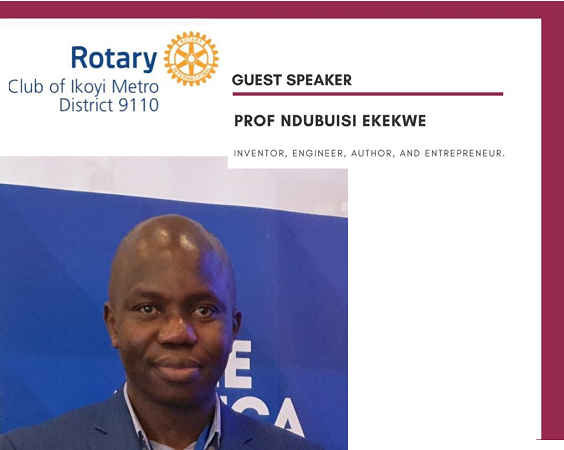
Ndubuisi Ekekwe To Speak in Rotary Club Ikoyi via Video

0

Those country club speeches, from New York City to Cape Town, Lagos to Barcelona, and more, are now zoomed! I will be speaking this week with Rotary Club Ikoyi. A new breakthrough now would be how to keep some of the richest citizens of this continent engaged on their phones and laptops for an hour. You cannot crack jokes as you cannot sense the room via zoom. Nonetheless, it would be a great one!