If you are a leader of a business club, professional association, professional network, or student group, check out our Tekedia Mini-MBA curriculum. We want to work with you to serve your professional community with a customized management system for your sector/industry. We will create a dedicated digital board where your members will learn, co-learn, co-share, and advance. Click and learn more.
In 2008, the world experienced a global financial crisis, it was recorded as a severe crisis for the economy worldwide. Banks failed the people, even the people who did not invest or acquire homes with mortgages. The problem lingers and collapses many investment banks. A massive bail-out was adopted including palliative monetary and fiscal policies to prevent the world financial system yet the crisis was nonetheless followed by a global economic downturn and a recession began. According to economists, the crisis was considered the most serious financial crisis since the great depression of 1930.
In response to the financial crisis now comes a Blockchain, which was initially created for a digital currency called “bitcoin” by a group or an individual under a pseudonym, Satoshi Nakamoto with a notion to digitized, decentralized, immutable public ledger that facilitates transactions without going through an intermediary (i.e. bank or a governing body).
Satoshi Imagined Bitcoin as a peer to peer transaction i.e. 3 fish for 10 potatoes. He wanted a real peer to peer transaction where an individual can trade without middlemen with trust and security, while also trusting that the assets are being transferred. Thereafter, blockchain as a platform has grown to be a technology that has found thousands of other applications, besides just Bitcoin, we could refer to bitcoin as an application on the app-store while blockchain is the smartphone. With such brilliance, “Satoshi” disappeared in 2011 but left a strong community to continue his work.
As predicted Blockchain will disrupt dozens of tech and non-tech industries. In 2016-2018 Blockchain and Cryptocurrency jobs postings were tripled and are expected to grow at an even higher rate in the future. Also, blockchain is regarded as the next revolutionary technology after the Internet, which will transform every part of life. its market capitalization of cryptocurrencies rose from $17.7B at the beginning of 2017 to $500B within a year. As of January 2018, venture capitalist and Initial Coin Offering “VC/ICO’ funds raised towards blockchain companies was around $1.2B.
Today, blockchain technology has given rise to hundreds of ventures that leverage blockchain technology across industries which include – Finance, Fintech, Supply Chain, Real Estate, Music & Entertainment, Sharing Economy, Government and others.
In finance – the Cryptocurrency (Bitcoin) is faster, less expensive and cut out middlemen, more secure, more transparent compared to interbank transfer where banks act as the middlemen.
In the sharing economy, blockchain will replace the middlemen, such as Uber and Bolt, connecting drivers directly to the passengers, processing payments upon arrival, submission of positive reviews or expiration of 24 hours post-stay without complaint, and collection of reviews and rating (“reputation”). An argument can be made that there’s no need for these multi-billion-dollar companies that act as middlemen.
In real Estate – Blockchain will foster Smart (self-executing) contracts, Mortgage approval, financing verification, Reduction of fraud, Land title/property rights management, and Data.
In the Music Industry – with blockchain, the industry will experience IP Rights attribution, Royalty distribution, Speed of pay-out to musicians and Alternative sources of capital. Currently, HelloSugoi, Mycelia, Ujo Music, dotBlockchain are changing the ordinance.
“Internet of things” widely known as IoT. Supply Chain will be able to track locations of goods and times when they are shipped, track the conditions if it’s been kept at the agreed terms. Asset tracking will Record activity levels of assets and machinery. Healthcare will Enable the sharing and editing of medical records by various parties with different permission levels while encrypting their data. Smart appliances: Devices such as an oven, laundry machine, pot, AC, and car are connected on the blockchain to stop when the food is cooked, the laundry is finished. This saves energy and prolongs the life of appliances while keeping us informed.
In conclusion, Blockchain could be considered as the mechanic that will revolutionaries the world. The Internet changed the world and Blockchain is addressing some of the existing problems we still face across the board.
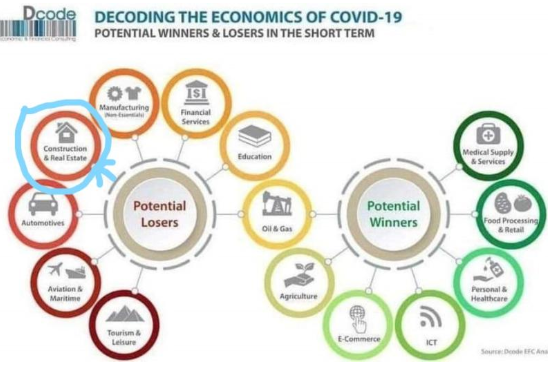
He is a happy man* because recession is coming! He has been praying for one since 2015. Yes, without recession, the door of owning a house would be locked for him. But with one coming and prices dropping, the chance is finally here!
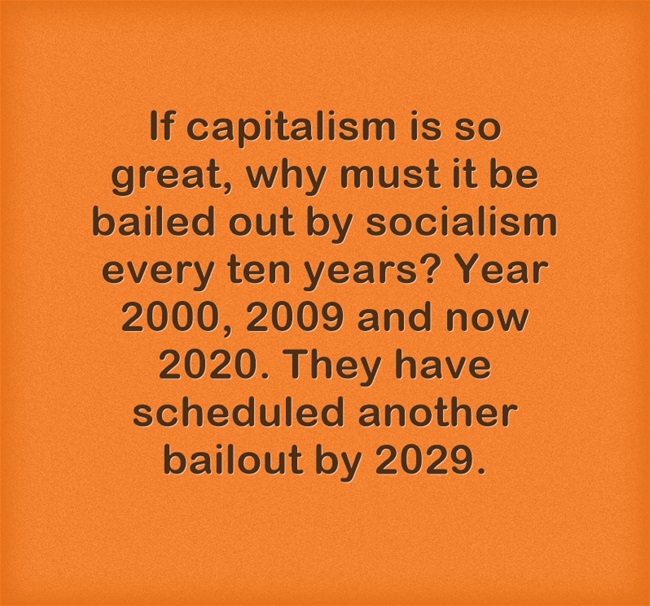
He has mocked capitalism because he believes that it is rigged for the big boys. Yes, while governments will always bail out big corporations, only recession will bail him out by making things cheaper and affordable. His thinking is thus: if capitalism is so great, why must it be bailed out by socialism every ten years? Year 2000, 2009 and now 2020. They have another scheduled bailout by 2029.
It is a hard call – privatizing success (profit sharing, bonuses, etc) but socializing economic pains (markets have crashed, we need cheap government money). I still believe capitalism is the best model but there was one they taught me in FUTO in GST 108 ( Polity and Economy of Nigeria). They called it the Mixed Economy System. I am not sure even that one works! But this morning, a commenter left a really nice one on a piece on Igbo Apprenticeship System in Tekedia; he called it Communalism (note, that is not communism)!
Lastly, we need to factor in the metaphysical worldview of the Igbos that favors individualism and a type of capitalism mixed with communalism (not communism) as opposed to the American capitalism that favors individual wealth accumulation, which could explain the centralized, conglomerate model. The Igbos believe that a single tree no matter the size cannot make a forest. But, for the purpose of building scale, it is more of mindset rather than the system.
Yet, I will still vote for capitalism. In the midst of its imperfection, it is well ahead of other options on accelerating innovations and productivity.
Like other industries in developed and developing countries, the Nigerian Facilities Management industry is also feeling the impacts of the Coronavirus outbreak that has killed thousands of people and infected millions. The resultant effects of the virus on businesses have been disruption in operational activities and management of finances using innovative approaches to satisfy the clients’ needs and delivering value to owners.
Since the first case was reported in Nigeria, on February 27, 2020, a number of facilities management professionals and business owners in the industry have been expressing mixed feelings on the consequences of the virus on the industry in the short, medium and long terms. Already, players have been forced to change operational strategies in order to continue delivering services to their clients without hitches. Some have asked workers with the non-essential tasks and responsibilities to work from home to support the government’s directive on lockdown. This is more pronounced in Lagos, Abuja and some states in south-south and south-eastern regions, especially in Port-Harcourt.
“The significant part of Q1 has been impacted by the COVID-19, funny enough, it’s only had little effect on FM. Most essential companies still work online; wastes are still generated and life keeps running. FM is all about people. Therefore, wherever the people go, Facilities Management follows, some company adopts different strategies in managing their facilities and assets. Some locked down the company and its maintenance team to ensure business continuity. Some operate virtually, when issues arise, they mobilize to the location and fix the issues,” Abdullah Abdullah Oladipo, Project Team Lead at Green Facilities, said in a recent interview.
As businesses and people look forward to total containment of the virus and possible vaccines, our analyst believes that operational cost reduction will continue to be FM companies’ narrative as the main strategy of getting more clients and having sustainable revenue after the virus. Telling a cost reduction story means that FM companies’ success rate is premised on how to get more for less using cost-cutting.
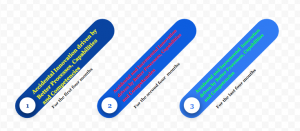
Exhibit 1: Innovation Choices for the Nigerian Facilities Management Industry after COVID-19
Source: Infoprations Analysis, 2020
With this, players are in two different great ponds. They have to offer services or solutions that reduce clients’ operational cost and also improve their efficiency without compromising standards. This, according to some professionals and one of the players in the industry, the virus has put both the players and professionals in a situation that requires accidental and incremental innovation within processes, people and technological components.
In her post on a professional medium, Olunfunke Soriwa says “the bulk of the job lies in our hands now to get it right and do it right. What does this mean for the industry as a whole?” Joining her, Alice Omisanya, a Facilities Service Manager, notes that “the question that comes up is how do we add value as FM supports many industries?” How can we help shape the new normal for companies on the winning and losing sides post COVID 19.”
Our analyst observes that Looking at this pictorial guide, it is obvious that the Facilities Management Industry is on both sides. Remember, cost reduction and operational efficiency are the key value propositions of FM players. Navigating the water successfully, will now depend on the people, processes and technologies that will ensure the delivery of promised value. Of course, other industries are sneezing, the FM industry must definitely catch cold. But, changing strategies and tactics will determine who belongs to the loser side more than the winner side.
“But mostly, how we navigate this post Covid 19 era is greatly important,” one of the professionals asked. Responding, Olumide Aina, the Chief Executive Officer, Green Facilities, notes that “ The world will not remain the same again after the COVID-19 saga because of the new realities that will come our way. The pictorial representation may be a reality of things already happening and others that will come during the post-covid 19 era, but it’s up to all of us who can stand as the game changers and also serve as influencers. We as the Corporate Real Estate and Facilities Management professionals are at the fulcrum of things that will decide where the seesaw swings through innovation, creativity and teamwork. These are the qualities that are required at this critical time to ensure our relevancy and in turn save the world.”
Good People, Week 10 materials have been posted in the Board. Dr. is leading the session which focuses on business leadership for us. I must confess that you would not read better flash cases on what he did on Mayo Clinic (USA) and Access Bank (Nigeria). Dr is working on a new book on leadership and he has some postulations, sharing some elements with us. This is my introductory video which I am making public here.