


This is for the webinar. Please also read this article. Notes: You can read this book – Africa’s Sankofa Innovation – as complementary We made this video on restarting business operations after the lockdown due to Covid-19. Leadership in Business & Process for Success in Business This week, we are focusing on leadership […]
China Caught in the Act of Racial Discrimination Against Africans
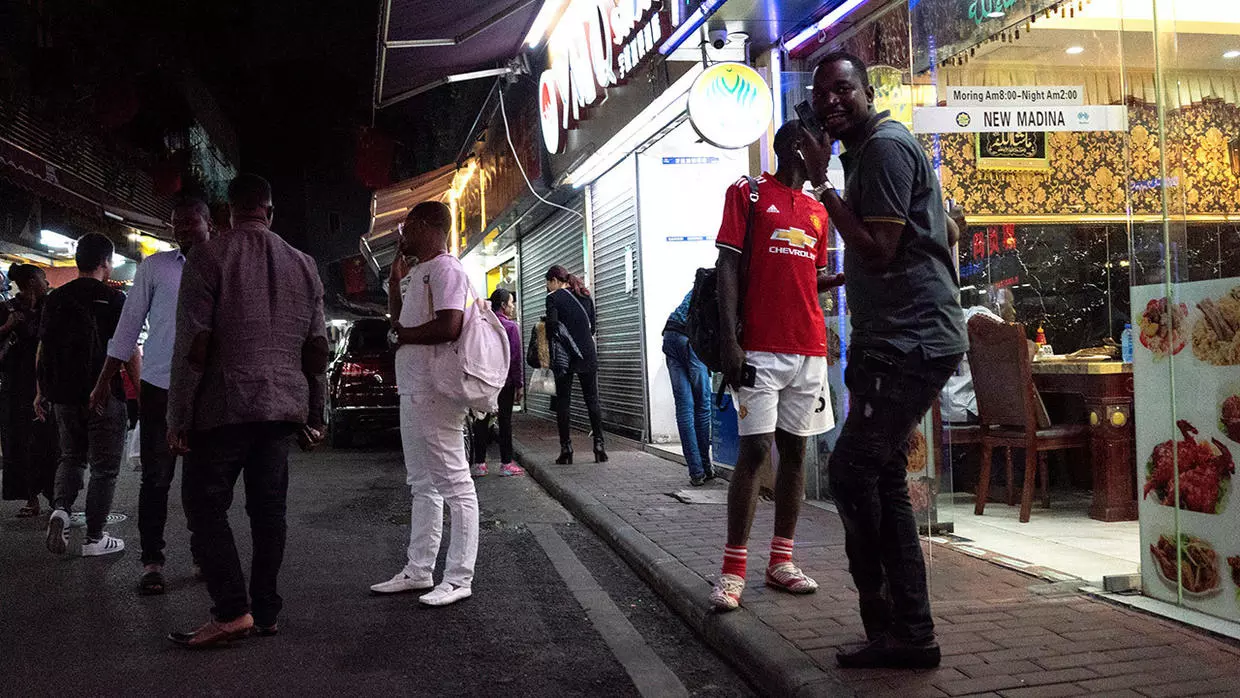
On Thursday, a video clip of Chinese police evicting Africans from their homes and hotels hit the internet and stirred outrage. A good number of Africans, mostly Nigerians, were seen being escorted by the police to the streets where they were forced to spend the night. Their passports were seized and they were prohibited from using the supermarkets.
The action is believed to have been instigated by the Chinese authorities’ aim to curtail further spread of coronavirus in the country. But Africans were singled out in the discriminating exercise that has caught the attention of the African Union and governments whose citizens are involved.
In another video that surfaced online following the first one, a Nigerian consulate officer, Mr. Anozie Maduabuchi Cyril, was seen confronting the Chinese authorities upon the report of what is going on in Guangzhou.
Mr. Cyril was visibly angry as he noted with emphasis the deliberate violation of the rights of Nigerians and other Africans in Guangzhou. The alibi by the Chinese government officials has been that the victims need to be quarantined, which fell short of logic as they had all already served the stipulated 14 days quarantine but were forcibly subjected to another 14 days, and this time, outside their homes and hotels.
The discrimination became so glaring because the eviction happened only to the black community, a point Cyril highlighted as discrimination.
“In Nigeria, work and every other thing had been shut down by the government. We didn’t say that only Nigerians should go to work and other places while Chinese nationals must be quarantined. Everybody has been asked to stay at home.
“If you want your policy to work, shut down Guangzhou and let everyone including the Chinese remain indoors for 14 days. If you do that, the issue of discrimination will not be there. But if you are picking Africans, that is the highest humiliation anyone can get,” Mr. Cyril said.
The Chinese officials’ attempt to deny the incident was crushed by evidence of seized passports. Mr. Cyril who waved the retrieved passports to their faces added: “Why are they seizing Nigerian passports, you are seizing Nigeria as a whole and it is not acceptable.
“You didn’t communicate with us that you are going to all the Nigerian houses and ask people to come out for quarantine. If you want to do your policy, shut down the entire city, don’t discriminate.”
In Nigeria, we have a lot of Chinese, I don’t think you have ever received any information that the government of Nigeria goes to their various houses and picks them for quarantine, so why are Africans and indeed Nigerians being targeted in China”? Mr. Cyril asked.
The events of the last few days in Guangzhou have also captured the attention of Nigerian government. In Abuja, the Speaker of the House of Representatives, Hon. Femi Gbajabiamila, has on Friday, summoned the Chinese ambassador to Nigeria, Zhou Pingjian to provide answers to the why questions surrounding the incident.
Gbajabiamila who registered his displeasure over the incident with Pingjian said that such incidents would not be tolerated and must be addressed forthwith.
“If the diplomatic relationships between our two countries are for the mutual benefits of our citizens, then there must be respect for our citizens, and we should not compromise it.
“As a government, we will not allow Chinese or other nationals to be maltreated just as we will not allow Nigerians to be maltreated in other countries. The way you treat your citizens, we expect that’s how you’ll treat others; we will not tolerate our citizens breaking your laws, but the crime of one citizen cannot be used to stigmatize the whole country.
“It appears that is what happened in this case; you cannot use one brush to smear the whole wall. Whatever the reason, it cannot be used and taken out on the entire community,” the Speaker said.
The Chinese Ambassador, however, promised to get to the root of matter. He said although he has been briefed about the development, he needs to establish it with the Chinese government as such incidents don’t represent what the government back home stands for.
“We take our relationship with Nigeria very seriously, we receive a full report from back home, I cannot act, but I can assure you it is not a policy issue. We treat everybody equally, but during the implementation of COVID-19 measures in China, it is possible for incidents; all I will do is to take it back home, today I will,” Ambassador Pingjian said.
In response to the development, Kenyans have reportedly adopted a jungle justice approach to register their displeasure by chasing Chinese workers in Kenya out of their fields of work.
The Chairman of the African Union Commission, Moussa Faki Mahamat has invited the Chinese Ambassador to the AU, Mr. Liu Yuxi, to express extreme concern of the Union over the maltreatment of Africans in China. The African group in Beijing is also engaging the Chinese government, as the push for immediate remedial measures to address the issue continues.
In the wake of coronavirus in the United States, President Donald Trump has been criticized for calling the disease “Chinese virus,” a remark that didn’t go well with many, mainly the Chinese people, as it denotes racial discrimination.
Therefore, the rest of the world was least expecting China to get caught in any act of discrimination as it unfolded in Guangzhou.
The U.S. Renews Attack Against China Telecom
In the latest opposition to Chinese telecommunication service in the United States, a number of executive agencies are pushing the Federal Communication Commission (FCC) to terminate China’s Telecom’s license, citing security risks.
It is the first time since China and the U.S. reached a deal to minimize their trade conflict in January. Ever since then; there has been relaxed tension between the two countries until now.
State-owned China Telecom is one of the country’s largest mobile networks and broadband providers. In this renewed bid to oust them, the Trump administration is pointing at the usual excuse – national security.
Based on “unacceptable security risks,” federal agencies like the State Department and Department of Justice are asking the FCC to revoke the communication company’s license and stop it from offering international communication services in the U.S.
After Huawei became a victim of the antitrust politics between the U.S. and China last year, many other tech companies of Chinese origin have fallen into the way including Tiktok.
China’s Telecom (Americas) was licensed in 2007 by the FCC and has been operating on the U.S soil until now. The Department of Justice said the company has failed to live up to the agreement it had with the department and it spells security risk.
“Today, more than ever, the life of the nation and its people runs on our telecommunications network. The security of our government and professional communications, as well as of our most private data, depends on our use of trusted partners from nations that share our values and our aspirations for humanity.
“Today’s action is but our next step in ensuring the integrity of America’s telecommunications system,” said John Demers, assistant attorney general for national security.
There has been heightened opposition to tech companies from China since last year, spurred by Trump’s administration’s suspicion of espionage. The Chinese government has been linked to a series of cyber-attacks targeting the United States, an excuse, among others; the U.S. government is basing its actions on.
After Huawei’s expulsion, the U.S government has been warning its allies around the world not to accept the Chinese company’s 5G roll out, as it poses a security risk that will be detrimental to their partnership.
In December 2019, the U.S. Secretary of States Mike Pompei warned the UK government that there will be no sharing of intelligence if London allows Huawei to continue with the 5G roll out.
The U.S. has been concerned that China will at any time force Huawei to provide data about countries where it is operational. And with a lot of countries under its 5G coverage, Huawei will have a mass of critical information to deliver to Beijing. Huawei’s push to lead the 5G roll out globally is therefore a potential threat that the U.S. government is fighting to contain.
The Chinese telecom company (Americas) however, has a different case. The federal agencies laid out a number of issues they had with China Telecom including the “evolving national security environment since 2007” and “increased knowledge of the People’s Republic of China (PRC)’s role in malicious cyber activity targeting the United States.” Just as it is a matter of concern with other tech companies; China Telecom is perceived as “vulnerable to exploitation, influence, and control by the PRC government.”
Also, the Trump administration claims that China Telecom could offer an opportunity for the country’s state actors to “engage in malicious cyber activities enabling economic espionage and disruption and misrouting of U.S. communications.”
But as these events unfold, it is becoming clearer that the U.S. is not only concerned about cyber activities etc. it is also wary that China, through Huawei, will dominate the world – and it doesn’t want that to happen.
On Friday, the U.S. government has accused Huawei of trying to win favor from many countries, including Canada and France, for the 5G roll out, by donating masks and health gadgets to them for their fight against coronavirus. Though Canadian Prime Minister Justin Trudeau said the donation will not influence the decision whether to accept Huawei’s 5G or not, the U.S. is worried that like the UK, Canada may yield and accept Huawei’s offer.
Nigeria’s Coronavirus Palliatives: Areas that Need Improvement
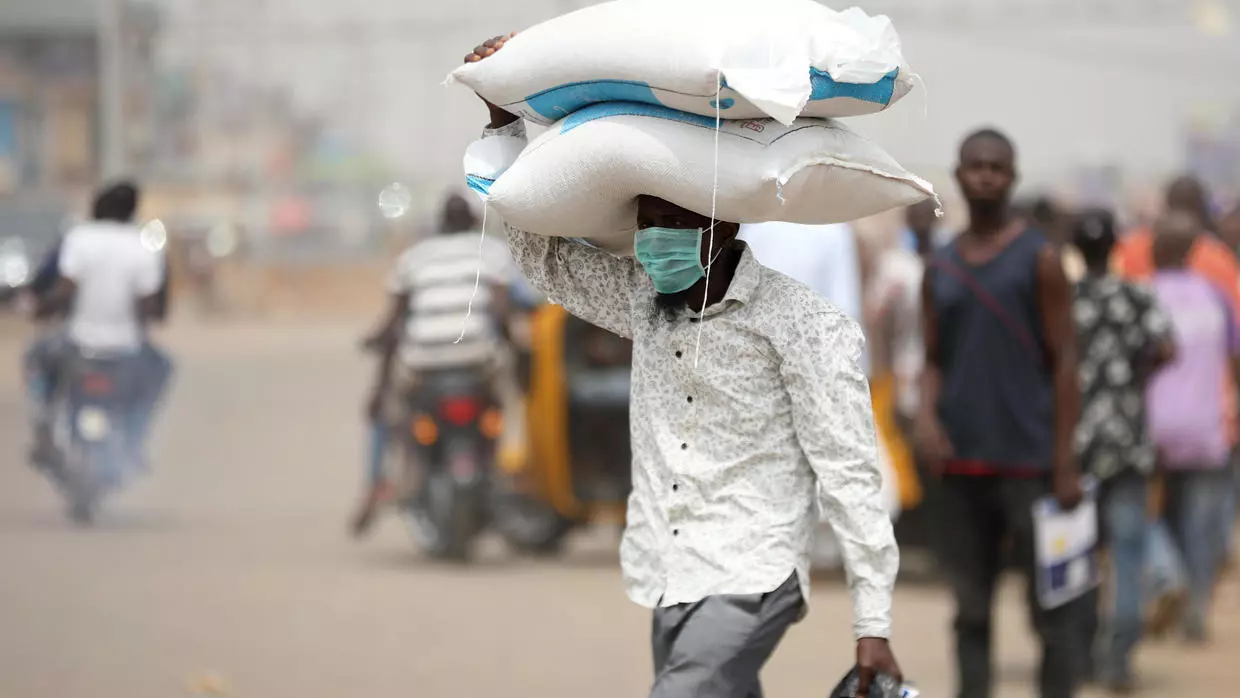
Somehow, Nigerian public office holders have lost the trust of the masses. Nothing they (the office holders) do is seen as good enough and whatever they offer to the masses is viewed with suspicion. As far as many Nigerians are concerned, there is nothing done by the government that has no ulterior motives. This is the same way the federal government Coronavirus palliative has received distrustful reactions and negative analysis from the masses.
The moment President Muhammadu Buhari announced that the FG will disburse money to the most vulnerable in the society Nigerians took to their Twitter pages to express their distrust on how the FG will handle and achieve that. It was obvious that many people did not expect that the exercise would be transparently carried out. The reactions of Nigerians showed that the federal government needed to do a lot to win back the trust of the citizens. But unfortunately, the FG gave them more reasons to say, “I told you so”.
The Federal Ministry of Humanitarian Affairs, Disaster Management and Social Development (FMHDSD) is indeed overburdened with the task of disbursing the Conditional Cash Transfer (aka Coronavirus Palliatives) to the poorest among the poor Nigerians. It is obvious that the ministry already has a list of people that fell into its descriptions of the poor in the National Social Register, which will make it easier for the distribution of the money within a short time and notice. But Nigerians are not satisfied with the exercise, especially when there seemed to be no evidence of the ministry disbursing the money.
FMHDSD should have realised that the following mistakes made by the ministry will increase the mistrust of Nigerians:
Paying Cash to Beneficiaries: This seems to be the greatest issue people have with this exercise. When Mr. President announced that money will be shared, everyone expected that it would be done through bank transactions. Some hoped that the FG would use the Bank Verification Number (BVN) as the data source for payment and management of the transaction. The argument laid here was that since no one has more than one BVN it will be easy for FG to control the payment since nobody can receive two or more payments from the FG if it is done through bank transfer. However, Nigerians were disappointed when they learnt that the mode of payment was by cash.
FMHDSD could have averted this concern by insisting that the beneficiaries open bank accounts before they are paid. We are made to understand that the ministry will make use of the data in the National Social Register in disbursing this money and that these people were among those that benefitted from Abacha’s loot. Since the ministry has been in contact with them before, it should have insisted that they opened bank accounts and then submit their details long before now so that there wouldn’t be a hitch when there is an urgent need to help them out.
Hopefully, this error will be corrected before the next batch of the #20k palliative purse.
Withholding Vital Information: It is a fact that FMHDSD is shielding the list of beneficiaries of this palliative purse. During the disbursement of Abacha’s loot, people waited to see those that benefited from it but alas, no one came out to tell the good tale. This time again, history is repeating itself.
National Social Register should be made available to the masses, alongside the different people that have benefitted from any government intervention programmes. It is something that anyone that has interest could access easily. People need to be sure that those in that list actually deserve to be there and that the palliatives they are receiving from the government are impacting positively in their lives. There is also a need to learn the criteria for being called “vulnerable” in Nigeria and to ensure that all those that should be in the group are included.
No Evidence of Payment and Payment Exercise: One of the easiest ways of reaching the public is through the mass media. It is quite worrisome that the Minister of Humanitarian Affairs, Disaster Management and Social Development, Hajia Sadiya Umar Farouq, went to different states of the federation to oversee the disbursements of this fund and media houses could not cover the events and present them to the masses. This would not only be for the sake of record keeping, but to let the world know that something good is happening in Nigeria.
Nigerians need to see authentic pictures and videos of these events. They need to see the beneficiaries and to hear them talk to the world. They need to believe that this exercise is real and that nobody is cheating them out of their money. The minister and the ministry owe this to Nigerians.
A lot of fake news is circulating today because the peddlers saw loopholes through which they could carry out their malicious acts. All the ministry needs to do is to listen to Nigerians, find out their grievances and find ways to pacify them. Of course people are bound to complain irrespective of what the government does for them, but their complaints will not be as heated as they are right now.
Combating the Deluge of Fake News, Misinformation and Disinformation in Crisis Situations
Fake news has been a phenomenon that seems to have come to stay with humanity especially in recent times when the platforms to spread and disseminate are becoming more common. They come promoting misconception, misinformation or risky behaviour among the people. Sometimes events and situations give room for the merchants of fake news to up their games in disseminating such to achieve their aims which varies from scoring to cheaper political goals to achieving confusion and stoking chaos. It was first said to have become a more common commodity with the US presidential elections in 2015. In Nigeria, it equally became a weapon for political parties in the last general elections in 2019 with its attendant implications of fear, confusion, violence and others.
After politics, another area of life that fake news seemed to plagued much is the health sector. This became noticeable during outbreaks such as Ebola, SARS and the ongoing Coronavirus pandemic. As a matter of fact, the Director General of the World Health Organisation, Tedros Adhanom Ghebreyesus once declared that “ Fake news spread faster and more easily than this virus and is just as dangerous.” In the ongoing battle against COVD 19, the fight against fake news is as important as the war against the virus itself. The WHO has equally declared the dissemination of false or fake information as infodemic which according to the organisation is a twin brother of the pandemic – “we are not just fighting an epidemic; we’re fighting an infodemic.” The WHO declared.
The incidence of infodemic is a global phenomenon. It is no respecter of the socio-political status of the countries of the world, fake and false information seems to have pervaded the globe leveraging on the existing online platforms which are used globally. From the US to New Zealand, China to Australia, Nigeria to Haiti, the phenomenon seems to be on the same mission to reverse any gain, no matter how little, that health workers who are battling the novel virus appear to have made. Such information undermines medical advice, proffer fake cures, incite panic and to score cheap political points. This is as experienced and observed in Nigeria.
Identifying the Infodemic, Sources, Features and Intents
Fake news comes in different sizes and shapes. The merchants of fake and untrue information spread it for different purposes. For a continued battle against fake news and information, there is a need to identify the types, the sources, features and the intent. This will be the focus of the piece using Nigeria as a case.
Fake news or information can come in different formats depending on the intent of the manufacturers. It could be misconception, misinformation, risky behaviour, mistrust and speculation. Misconception occurs when there is error in thinking with respect to the cause of the disease. For example, propagating other causes apart from the identified cause such as pointing to the installation of 5G mast as the source of the disease. Misinformation is giving wrong information on what is happening. For example, reporting higher figures than what the battling institution has released. Misinformation might not be deliberate. When such becomes a deliberate action, then it becomes disinformation. Risky behaviour is information that increases people’s involvement in what may increase the risk of the disease or cause more harm than good. The common belief that the virus cannot survive in a hot and humid atmosphere is a good example. Mistrust is spreading information that increases the level of distrust in government. A good example was the prevalent belief that COVID 19 was a smokescreen for the government to justify some spending as there was no virus in Nigeria then. Speculation deals with false information that speculates solutions to the disease. The current furore generated on whether Chloroquine can cure the disease.
Identifying the type of fake information is important as knowing the source. This is more important as more and more people show their belief in fake and baseless information regardless of the level of their education. Simply put, no matter the level of a person’s education, no one is immuned from falling victims of false or fake information. In Nigeria, people who are now referred to as the fifth estate of the realm are involved in spreading fake and unsubstantiated news and information. They are social media influencers whose followership across social media platforms is in millions. For example, Kemi Olunloyo is one of such in the Nigerian Twitter space. It was on her account that President Muhammadu Buhari’s sickness and persistent cough after his Chief of Staff, Abba Kyari, was said to have tested positive to Coronavirus broke. Her Black Thursday tweet alleging a top cabinet member in Aso Rock had died also went viral. Nothing substantial came out of such false alarm.
Partisans too also trade in fake information. They do that obviously to score political points or to undermine the efforts of the government they oppose in tackling the virus. The fake story of the son of former vice president Atiku Abubakar’s reckless behaviour after testing positive to Coronavirus. It was said that he ignored the government’s directive on self isolation and went partying and clubbing when he knew he was positive.
Apart from individuals and partisans, even the mainstream media also help in the spread of fake news. The Punch newspaper once reported the Center for Disease Control has said that people with beards should shave in order to be safe from Coronavirus. Fact Check later showed that the picture used was not in any way related to the prevention of the virus. The Nation and Tribune newspapers were also caught in the web when they relied on a widely circulated WhatsApp message to publish a story on the six missing Ejigbo returnees from the isolation centre in Osun State. The story was later pulled down from the newspaper’s website after the government debunked it. Some people argued that the pressure to be the first to publish is because of the sense of gatekeeping of the mainstream newspaper.
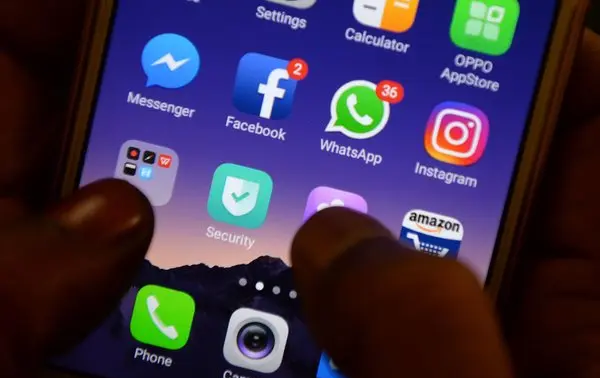
The sources of fake stories are important but they are not as critical as the people who assist such stories to spread. To be factual, it is becoming confusing to identify what is false and what is not in the midst of the array of information available on COVID 19. This is even more cumbersome as peddlers of fake information are becoming more sophisticated and are bent on proving the credibility of their unsubstantiated spins. Of all social media, Facebook and WhatsApp are recognized as mediums used by fake information merchants to spread their ‘‘news’’. These two platforms have a combination of text, videos, audio facilities that make people to be more vulnerable to receiving and spreading false information. This is aided by a heightened sense of need for information. This is because in crisis situations people need to fill their need for information. Fake information also spread because of the long existing distrust in government data and information. Government combating mechanisms are sometimes too slow for a prompt response. For long, there has always been an ‘‘official figure’’ as against an ‘‘unofficial source’’ and people tend to believe their unofficial sources. Therefore, people receive and share information by their aunties or uncles that claim some expertise in medicine or related discipline. Some even claim they have access to government sources. Research has established that in every social relationship, there are opinion leaders and opinion followers. Thus, it is easy for opinion followers to spread fake and unsubstantiated information received from their opinion leaders. This gives room for all sorts of misinformation and conspiracy theories. This puts the blame on individuals who may not be sources but assist fake news to spread widely like a wildfire.
Checking the menace of the information scourge
Sources have said that social media platforms that have served as channels of spreading fake information have made attempts to curb the spread of misinformation through their platforms. For instance, Facebook was reported to have clamped down on online Coronavirus rumours. Google flooded search results with growing pandemic with government alerts and removed YouTube videos urging people not to get treated. Twitter too highlighted official reports about what people should do when showing symptoms of Coronavirus. Whatsapp too has a limited number of forwarded messages. However, the menace of fake information has not greatly been curbed. Analysis shows that individuals who shared fake information have not made the fight easier. A source claim “people are sharing rumours, fake stories and half-truths about COVID 19 with each other” across platforms.
This gives a room for media literacy. What then does a person do to determine if a piece of information received from WhatsApp, either individuals or groups, should be shared or not? One, individuals should verify, verify and verify before sharing any piece of information. In doing that, it is said that one should determine the currency (timeliness of the information) of the piece before sharing. Two, people should determine the relevance (importance of the information to their needs) before forwarding or sharing. Three, the authority (the source of the information) should first be confirmed before the information is broadcast to contacts. Four, accuracy ( the reliability and truthfulness of the information) should as well be considered. Five, the purpose (the reason the information exists) should also be queried before forwarding the information to others.
In this period of the global pandemic and beyond, ensuring the people of the world stay sane is everybody’s duty. People are urged to do due diligence before forwarding messages they receive to others. Just like the pandemic itself, curbing the menace of fake and misinformation is a matter of how diligent individuals are before sharing received messages.