DD
MM
YYYY

PAGES

DD
MM
YYYY

spot_img

PAGES

Home Blog Page 6437

The Price of Speaking Up and Staying Silent on Nigerian Virtual Sphere

0

The emergence of the Internet and later Web 2.0 have been given many people opportunity to have their voice heard on issues of national importance. Individual and group accounts on social and professional networking sites such as Facebook and LinkedIn have been adopted and still being used to organise deliberative discourses on socioeconomic and political issues throughout the world. Nigeria is not an exemption in this regard.

Since 2000 that the country has been witnessing massive deployment of the Internet, citizens have used and still using the sites to discuss issues and needs. During subsidy removal by the former administration of President Goodluck Jonathan, Facebook and other social networking sites were used to organise people for physical protests in Lagos, Port-Harcourt and other main cities. We have also experienced how the sites were used to discuss the abduction of the Chibok Girls and other national issues in the last decade.

While discussing on various online communities, especially comment section of national newspapers’ websites and social media accounts, checks reveal that people used varied words and languages to represent their views or feelings about the issues. At times, participants were friendly. In other situations, they were hostile. Being friendly or hostile, however, depends on the point of discourse. When the two situations occur while engaging on a specific issue, scholars and experts have linked the occurrence to high level of distrust and unmet expectations of the participants by concerned people or governments (local, state or federal).

Why the Research?

These insights and others facilitate study of Nigerians’ reactions to two critical issues that divided the country along the ethnicity trajectory in 2016. The study was carried out in collaboration with a University don.  Our main intention was to understand how Nigerians used the comment sections of selected Nigerian online newspapers to interact and discuss issues of agitation for secession and farmers-herders crises with a view to determining how the issues got the citizens to speak up or to stay silent. Speaking up was defined as the readers’ provision of relevant examples and evidences in support of the issues commented on, while staying silent was defined as readers’ deviation from the issues and stipulation of irrelevant examples and evidences in support of their arguments.

By Exonyms, specific words used by readers while commenting which portrayed the three dominant ethnic groups— Hausa, Yoruba and Igbo—positively and negatively—were examined. Endonyms indicates self-designation created by the readers to establish dominance of one ethnic group over the other in line with the issues being discussed. Hostile was defined as intimidating situation which occurred among the readers while replying one another. Friendly and neutral signified mutual situation that existed during readers’ conversation on the two issues.

Our Results

Majority of the readers were found to be highly hostile towards other readers outside their ethnic groups while negotiating separation issues, but less hostile on the insecurity issues. To create fear of dominance, words within Exonyms classification were predominantly used by the readers while interacting among themselves on the insecurity issues.

To evoke a sense marginalization, words within Endonyms category were employed by the readers to discuss issues of agitation for secession. The participants, despite their diverse ethnic groups, were less hostile to one another while reacting to news stories about the farmers-herders crisis, which could compromise the nation’s security.

However, the readers were more hostile in their engagement of the issues of agitation for secession, which had ethnic-inclination. These results indicate that Nigerian government should pay critical attention to the dynamics of the virtual community in its quest to ensure national peace and unity.
Download the Article Here

TrustBanc Daily Stock Market Scorecard, 15th April 2020

0
Locked down and boxed in, the tale of foreign investors.
Lockdown has created an opportunity where we least expected. As you are aware, Banks are one of the few active essential services allowed to operate, but none is working full time, they are mostly running skeletal activities including the CBN.

Talking about the CBN, they have gone skeletal for some time now and have stopped supplying dollars to BDCs since late March. Aside BDCs, they have muted their activities in the I & E FX market too.

The I & E FX window is for Investors and Exporters, it provides liquidity for investors who have invested in Nigeria and wish to repatriate their capital home in dollars.

Now that the CBN has muted its activities in I & E, and all other sources of dollar inflow into the country are also weak or locked – inflows from Foreign Portfolios are weak, oil money inflows from NNPC and IOCs are handicapped by declining oil prices and the inability of NNPC to find buyers for Nigeria’s crude oil even at ridiculously cheap prices.

As a result of the tight flow of dollars created by the challenges above, it’s almost a tale of nowhere to run for foreign investors, their funds are boxed-in. So, it is a case of I have sold my shares but can’t find dollars to take my money back home, rather than leave my cash idle, let me make a re-entry into the market, after all, most stocks are cheap. Local Investors aren’t taking a back seat either, they are riding on the back of low prices to take positions in the market too. Add the tale of foreign investors and the bargain-hunting appetite of local investors, what you have is a bullish market on a bullish run.

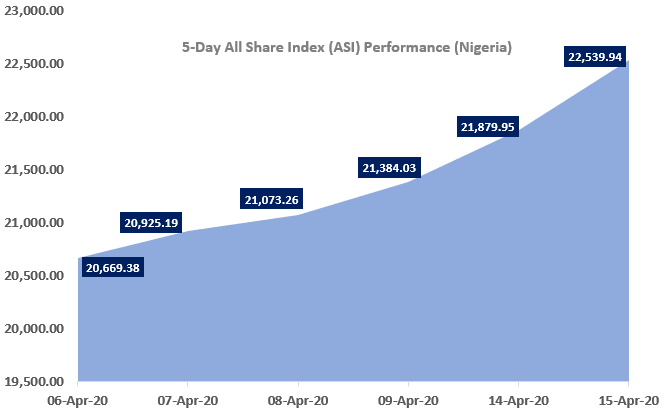
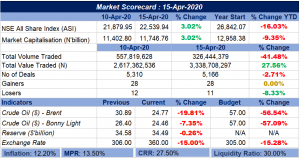
Today, the ASI appreciated by 3.02% to extend its bullish run to 5 consecutive trade days, and abate the year-to-date loss of the Market to 16.03%. For the records, this is the second-largest single-day gain of the Market this year. Today’s gain also marks the second-longest run the Bulls have had this year.


See the image below for a complete snapshot of market performance.


Click on the link https://bit.ly/2XrvIf9 to open a stockbroking/share purchase account and trade within 24 hours.
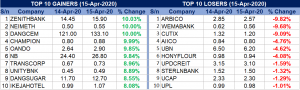
Market Breadth: The breadth of the market remained strong today as the Bulls maintained their hold on the market for the sixth day running, 28 stocks appreciated as against 11 that depreciated. ZENITH and NEIMETH led the gainers’ chart, while ARBICO and WEMABANK led the losers chart. See the list of top gainers or losers below:
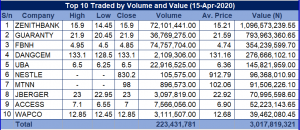
Market Turnover: ZENITH and GTB led the most traded stocks chart in volume and value. See top 10 traded stocks below:
Have a great evening.

The State of Tech Nation [Video]

0
The 4 key tech redesigns in Africa, post-covid-19

American and European kids are still largely in schools despite the paralysis from coronavirus. But in most African cities, the students have been cut-off from their teachers by a virus. And these students are at home, trying to figure out what the future holds. When we designed the curriculum of Tekedia Mini-MBA in January, no one saw the current state of the world. Yes, we did not see that students, from primary to tertiary levels, in Africa, would be home this way. To adjust for the current environment, we are updating a specific session accordingly.

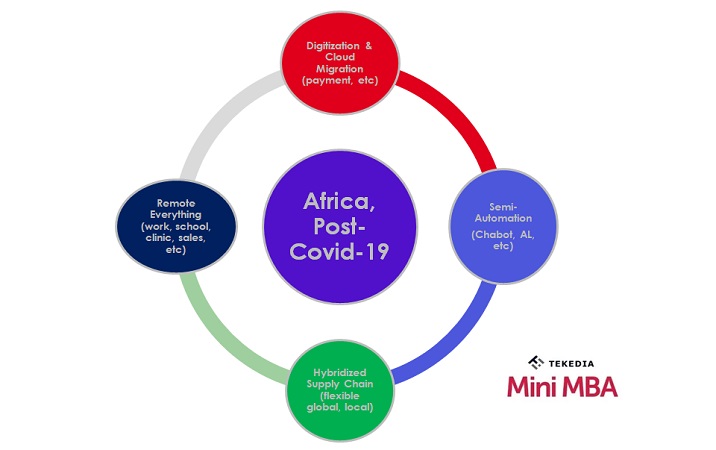
I had planned to focus on the mechanics of technology in Africa in The State of Tech Nation module of next week. That has changed; I will now focus on four things that would happen across industrial sectors and domains, post-Covid-19 in Africa, in connection with technologies. We see the following evolving:

  • Hybridized Supply Chain: Flexible, adaptive, global and local, at the same time.
  • Remote Everything: The web will run the world across sectors.
  • Digitization and Cloud Migration: The pace will accelerate.
  • Semi-automation: Disintermediation of humans will accelerate

These changes will happen because until we have a vaccine for Covid-19, not many people would be comfortable to return to the old state. On Monday, the other videos – 30 opportunities in African agriculture/agtech, 6 core technologies to transform Africa, and innovation lessons on the 12 noted companies will go live. We expect 2 hours of video contents.

Meanwhile, register for the next edition of Tekedia Mini-MBA.

The 4 key tech redesigns in Africa, post-covid-19


The 12 firms

Trump Halts WHO Funding

0

In an unprecedented move, the U.S. president Donald Trump announced on Tuesday he is halting funding to the World Health Organization.

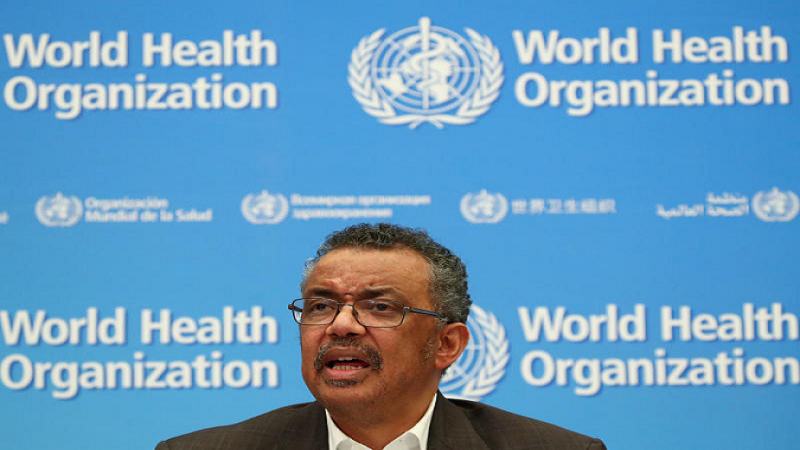
Trump has earlier attacked the UN’s organization and its president Tedros Adhanom for “not doing their job” properly and “dancing to the tone of China.”

His announcement has come in the middle of a global health crisis that is ripping the United States apart.

The U.S. provides $400 million to $500 million to the WHO each year as the highest donor, while according to Trump, China “contributes roughly $40 million.”

Trump’s anger has been blazing since coronavirus hit the U.S. with a devastating impact, threatening to cripple the economy he has been counting so much on for his reelection in November.

On Monday, Trump retweeted a tweet calling for the sack of Anthony Fauci, the director  of National Institute of Allergy and Infectious Disease (NIAD), who has been at the forefront of the war against coronavirus in the U. S.  Fauci had said the Trump administration failed to put up stronger measures to curtail the outbreak, which resulted in many avoidable deaths.

While he has justified his perceived lax response to the crisis, Trump who appears to be looking for a scapegoat has been pointing the finger at the international health body.

“Had the WHO done its job to get medical experts into China to objectively assess the situation on the ground and to call out China’s lack of transparency, the outbreak could have been contained at its source with very little death,” he said.

Trump is blaming his decision not to impose a travel ban on people coming from China on the WHO, whom he said failed to act timely and opposed travel restrictions from China.

But his tweet on January 24 showed him heaping praises on China for the way they had handled the health situation back then.

“China has been working very hard to contain the coronavirus. The United States greatly appreciates their efforts and transparency. It will all work out well. In particular, on behalf of the American people, I want to thank president Xi!” he tweeted.

Trump’s attack on the WHO on Tuesday was based on its objection to travel restriction in early January. Trump said the health body covered up the spread of the virus, and called its objection to the travel ban “disastrous.”

Though the WHO said in early January that such a travel ban would be “ineffective in most situations,” the group said it could buy countries time to “initiate and implement effective preparedness measures.”

However, the Trump administration showed lax in preparation and wasted valuable time procrastinating. The WHO declared coronavirus a global health emergency in late January, but it was until mid-March that Trump declared a national emergency.

Trump’s administration has been vocal in praising China’s handling of the outbreak. On Tuesday, top health officials of the administration praised China for alerting the U.S. early enough in January.

“Now, some of the assessments that the Chinese made at that time, were obviously not accurate. But you know, it’s a testament to them that within a short period time, as you know, they identified a new coronavirus, which they basically almost immediately shared online, and allowed us to develop the diagnostic test … that gave us eyes on this outbreak,” said Robert Redfield, director of the Centers for Disease Control and Prevention, on SiriusXM’s ‘Doctor Radio’ show.

With clinical trials of many drugs going on, this development has thrown the fight against coronavirus into jeopardy, leaving many countries in Africa and Asia severely vulnerable.

World leaders have called for international cooperation as a weapon to be deployed in the fight against the pandemic. The UN Secretary-General, Antonio Guterres said on Tuesday night that WHO needs to be supported as its role is critical in the fight against coronavirus.

“Once we have finally turned the page on this epidemic, there must be a time to look back fully to understand how such a disease emerged and spread its devastation so quickly across the globe, and how all those involved reacted to the crisis. But now is not the time,” he said.

While the call by the UN to push blame aside for now rings, Trump appears so fixated on his rhetoric that he is wittingly breaking the pandemic preparedness plan, drafted by his administration in 2017, which calls for “expanded international coordination on pandemic preparedness and response … and continued support for the WHO.”

However, Trump’s decision to defund the WHO has followed a pattern of criticisms of the UN and then the WHO even before the outbreak of coronavirus. Trump has notably questioned the US’ playing big financial roles in the UN, while other nations contribute little to nothing. It is seen as part of his efforts to pull the US back from playing lead roles in financing international multilateral organizations.

COVID-19: Lagos State Announces New Palliative, But It Falls Short Too

0

A day after the Federal Government of Nigeria announced the extension of the 14-days lockdown, the Lagos State Government has announced a new measure of palliatives to cushion the effects. Nigerians, especially those in the Federal Capital Territory (FCT), Lagos and Ogun States had had it rough in the first 14 days of the lockdown, largely because of lack of food.

Lagos State Governor Babajide Sanwo-Olu said on Tuesday that the state government is taking extra steps this time to ensure that vulnerable residents of the state have enough to eat while they stay at home.

“Today, I announce more measures to cushion the effect of the extended lockdown in Lagos. We have begun the distribution of relief items to 250,000 vulnerable residents and in addition to this, 100,000 youths will be provided one meal per day across LCDAs via our food kitchens” Sanwo-Olu said.

The governor also said the State Government has taken into consideration SMEs and MSMEs in the state, and would give them a moratorium of 3 months to ease the burden of the pandemic on them.

“We are also starting a conditional cash transfer to 250,000 people as part of our relief package while repayment on state facilitated loans to SMEs and MSMEs through LSETF will have a moratorium of 3 months to help ease the effect of the lockdown for businesses and their employees,” he added.

Concerning contact tracing, the governor added that the State Government will embark on house to house inquiry of the state’s residents’ travel and health history, as the Ministry of Health pushes to ramp up unidentified cases in the state.

“To ensure we track and eliminate the risk of a spread of COVID-19, officials of Lagos State Ministry of Health will be visiting our homes to obtain information on travel and health history of Lagosians and I implore you all to cooperate with them,” he said.

Sanwo-Olu said that as a sign of goodwill of the State Government, traffic authorities (LASTMA and VIO) will release all the vehicles impounded as from March 1 for minor offenses.

“LASTMA and VIO will release all impounded vehicles all impounded vehicles for minor offenses from March 1. All these will be done to reduce the impact of the lockdown on residents of the state. This period demands a bit of sacrifice from us all. Let us join hands to defeat COVID-19,” he said.

While the new palliative is considered better than the first, some elements of it still stir curiosity.

“How will the 250,000 vulnerable households be selected”? Is a question many that are asking.

The major reason being that almost every town in Lagos can account for close to 250,000 poor households that fall in the category of ‘vulnerable.’ So it poses a big challenge when the number is only 250,000 out of millions of vulnerable residents in the state.

On the other hand, the 100,000 youths who will be provided with a meal each day across the Local Council Development Areas (LCDA) in the state does not beg to differ. There are 57 LCDAs in Lagos State, and each has a youth population of over 200,000 each, with a peculiar problem of hunger, especially in the wake of lockdown that is gradually unleashing unprecedented thuggery in the state.

Across Lagos and Ogun States, reports of unrest have stirred concern for the safety of the residents as the lockdown continues. It has been based mainly on irate youths attacking people for food and money. In many areas in Lagos and Ogun States, residents have resorted to Virgil to protect themselves from the attacks.

“Is there an association of armed robbers in this Lagos”? A Twitter user asked as robbery incidents started to trend with the hashtag #LagosUrest. “The way this people plan their attacks at the same time in different areas of the state is something that bugs me big time.”

A local farmer who was conveying his produce to retailers was stopped in the middle of the road and his farm produce was carted away by a mob of hungry youth.

In Abuja, a video of a truck carrying food supplies and was attacked at Apo Roundabout surfaced online on Tuesday. The truck driver watched helplessly as the vehicle was torn open and the bags of rice were invaded ferociously by hungry youths.

In Agege, bread sellers are getting attacked and bread carted away by hungry residents.

That has been the case with vehicles carrying food supplies in the states were the lockdown is taking effect. With two more weeks to go, the situation is expected to advance from bad to worse. And in a highly populated state like Lagos, disaster looms.

The Lagos State Government has been urged to increase the measures of its palliatives to accommodate more residents of the state. It is believed that current measures taken by the state government will not only yield disobedience to the lockdown order, but may result in an insecurity crisis that will shift the focus of the government from the fight against coronavirus pandemic.