


Well, most people think about bars, locks, alarms and uniformed guards when they think about security. While these countermeasures are by no means the only protections that require being measured when trying to protect an information system, they are definitely the logical place to start. Physical security is an important part of any security plan and […]
COVID-19: Nigeria Gradually Shutting Down
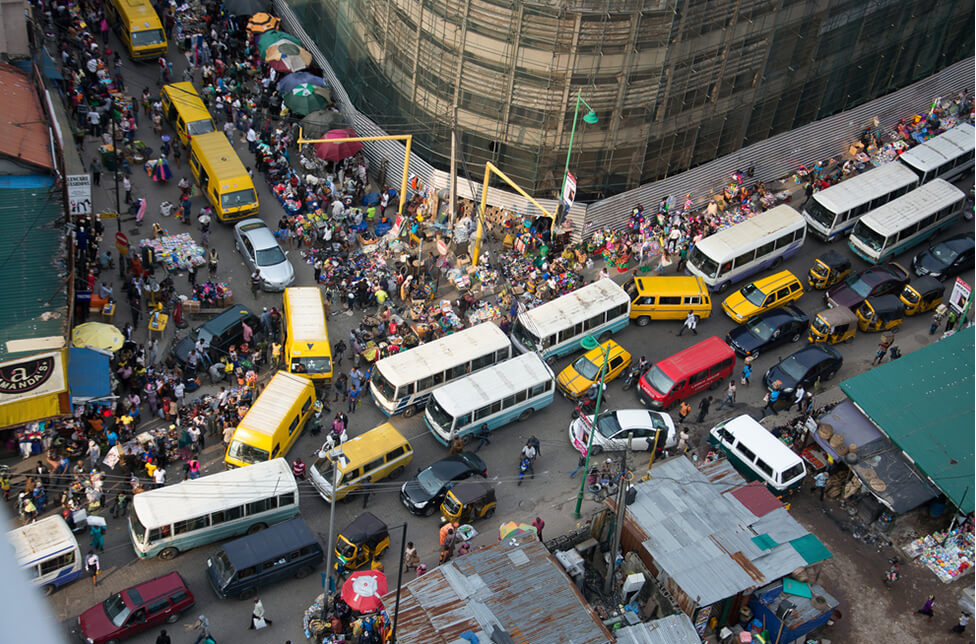
On Sunday, the Lagos State Government directed civil servants in the state to work from home for the next 14 days, as the state keeps rolling out measures to curtail the spread of coronavirus outbreak.
The state governor Babajide Sanwo-Olu announced the directive during a statewide address.
“I’m now hereby directing that all public officers in the entire unified public service from grade 1 to 12 which constitutes about 70% of the entire public workforce should stay at home from Monday 23rd March 2020 for 14 days at the first instance. We will review this as time goes on.
“Members of the public are advised to refrain from visiting our public offices and to transact such businesses as is possible that we can do this on the phone or online channels.
“This stay-at-home order does not affect any of our first responders, meaning the medical personnel are still meant to be at their duty posts, the fire service, members of the Lagos State Emergency Management Agency, LAWMA and other essential services are not affected by the directive.
“In terms of proactive measure we are taking to curb the spread of the disease, we have shut down all public and private schools and institutions of higher learning and we have also instructed that we should not allow congregation gatherings of more than 50 people at any time,” Sanwo-Olu said.
In the same vein, the Kogi State Government has directed civil servants in the state to work from home, following the steps of Ekiti State Government.
“Civil servants from GL 1 to 13 are directed to stay off workplaces for 14 days which is subject to review after the first week starting from Monday 23rd March, 2020,” said Kingsley Fanwo, the Commissioner for Information and Communication. “Only workers from GL 1 to 13 are affected by the directive to stay at home while GL 14 and above are to report at their offices.”
Following international best practices, those rendering essential services have been excluded from the “work from home” directive.
In Kwara State, the government has directed the closure of all schools and asked all civil servants, apart from the Ministry of Health and essential services, to stay at home. All gatherings of more than 25 people have also been canceled.
In like manner, the Kaduna State Government has ordered its civil servants from level 12 and below to stay at home for the next 30 days. For self-employed businesses, only food and drug vendors are allowed to stay open.
In Niger State, the government has directed civil servants from grade 1 to 12 to stay at home while the State went further to impose 8:00am to 8:00pm curfew.
The Nigerian Police has also issued a statement warning Nigerians to stay away from police stations. The Inspector General of police made the order on Sunday, and enjoined Nigerians not to visit police stations unless it is extremely necessary. The directive also stipulates that AIGs and command CPs ensure that “cases of unnecessary arrests and detention of suspects are not condoned.”
Part of the directive is that detention of suspects must be reduced to the barest minimum, limited to serious cases such as armed robbery, homicide and other non-bailable offenses.
Governors in the 36 states have ordered the closure of schools, but other activities remain open, especially in the South-south and Southeast where there are no confirmed cases of coronavirus recorded yet. Cross River State Government, has however, placed entries to the state on locks, allowing only thoroughly screened persons.
Following the civil service trend, corporate organizations are gradually asking their staff to work remotely.
The Federal Government succumbed to pressure on Monday and placed the land borders on total lockdown, restricting movement to and fro all Nigerian land borders.
Nigeria has recorded its first coronavirus death. The victim, ex-PPMC (Pipelines and Products Marketing Company) managing director, Suleiman Achimugu, who returned from the UK two weeks ago, started showing the symptoms on Tuesday, and eventually died. So far, there have been 40 confirmed cases.
Former vice president Atiku Abubakar confirmed on Twitter that his son who just returned from Europe tested positive for coronavirus.
“My son has tested positive to coronavirus. NCDC has been duly informed, and he has been moved to Gwagwalada Specialist Teaching Hospital in Abuja for treatment and management. I will appreciate it if you have him in your prayers. Stay safe, coronavirus is real,” he tweeted.
It has triggered voluminous yearning for a total lockdown of the country. On Twitter, hashtags like #TotalLockDown and #LockNigeriaDown have been trending to push the government to implement stay-at-home.
“It is commendable that state governors have closed down schools; however, this could be counterproductive if parents are still going to work. We should not isolate students and expose their parents. Let us remember that they will meet at home,” said First Lady Aisha Buhari.
She joined other Nigerians calling for a total lockdown of the country. In response to these calls, the federal agency, acting on the recommendation of the Presidential Task Force, advised Lagos and Abuja residents to stay at home.
“All Abuja and Lagos residents are strongly advised to stay at home, avoid mass congregation of any kind as well as non-essential outings, until further advice is given,” a presidential statement said.
However, the concern has been if Nigerians will comply with sit-at-home order as their daily needs will likely push them to defy such others. In Lagos, despite the encouragement for social distancing and the government’s order limiting social gatherings to 50 persons only, many are still queuing in bus stations, fighting for buses.
Why Total Lockdown May Prove Ineffective in Nigeria

Yesterday, the Head of Service of the Federation instructed that all the non-essential federal workers, from level 1 – 12, should work from home in order to curtail the spread of coronavirus. This is a welcomed development. In fact it seemed the FG listened to the First Lady of Nigeria, Aisha Buhari, who called on all state governors to send their workers home, in addition to the closure of schools, because if these workers contract the virus, they will carry the sickness home and spread to their children. This work-from-home for federal workers is a novel development, except that majority of them don’t know how to perform their duties from home, nor do they have facilities that will ensure they do them effectively (that is, if the manual ways of doing things in the country will warrant that).
Aisha Buhari is not the only Nigerian that has called for total lockdown as a way of combating COVID-19; a lot of other Nigerians have been calling for it. People are panicking and accusing the FG of waiting for the virus to spread before stopping movements within the country. What they didn’t allow their anxiety to show them is that Nigeria is not a country where such compulsory “quarantine” will be possible. Or rather, it might prove more disastrous than the virus itself.
Thanks to social media, a lot of people believe that the reason why there are high rate of COVID-19 in some countries is because they neglected the initial warning and allowed the virus to spread before they locked down their countries. What these people didn’t check is whether the “news” they read and listened to were authentic; or if there were other measures these countries failed to take, other than the total lockdown.
If we decide to lockdown Nigeria all of a sudden, believe me, there will still be leakages because a lot of things that need to be put in place before this is done are not there yet. I will try to give the challenges that will cause this failure in three main categories, which are Economic, Social and Health.
A. Economic Challenges
a. Low Income Earners: A lot of Nigerians depend on daily earnings to survive. These people constitute a major number of the population. Without their daily pay, they and their families will have to starve, or scrap whatever they could lay their hands on until the next job comes. In other words, these people will still find ways to break out and find something to do.
b. Hunger-Related Deaths: Imagine that the country is locked down for, say, two weeks or more, how will low income earners be able to access food? I know people are advising that we stock our homes with foods and other necessities, but how many people have asked whether everybody has enough money to buy food that will last for a week, not to talk of “indefinitely”. The only thing I’m envisioning here is that this total lockdown will bring up another problem – hunger-related deaths. And believe me, no person will sit back and watch his dependents die of starvation. So, this lockdown will not work in this situation.
c. Lack of Access to Credits: Some people in developed countries have credit cards, which they are using to sustain themselves and their dependents. In Nigeria, we don’t have that privilege. So if the money in your account finishes, you are either going to sit back and encounter deprivation, or you go out and hustle.
B. Social Challenges
a. Housing Arrangements: When some people talk about lockdown, I think they don’t understand the essence. Maybe they thought it just means you sit down in your compound, or hang around your street; so long as you don’t go far from home, or you don’t go to work, church and mosque, you’re good. This is why somebody that lives in Face-Me-I-Face-You building, where there are about twenty rooms in each floor of a 3-storey building, is asking for a lockdown. This people in this sort of living arrangement will have to come out to fetch water; they will have to cook in a general kitchen or in front of their “apartment”; they will share toilets and bathrooms; they will sit outside in the evening because the weather is hot; they will still interact and mix up with neighbours. In the end, the lockdown will not be effective.
b. Access to Amenities: Water, electricity, gas (kerosene, charcoal or firewood) and other basic amenities do not find their ways into people’s homes; people have to source for them. Imagine that you’re in a lockdown and your water finishes. You are not to go out and buy because there’s no place to buy from; and water board is out of the question; just imagine yourself in that situation. This is also the same thing with electricity, where you’re almost the one generating your power. Where will you then buy fuel to power your generator? These are just some reasons why people will break the sit-down-at-home-don’t-come-outside rule.
C. Health
a. Inaccessible Medics: Nigeria has no “ambulance system”. If someone gets sick, his relatives will have to find means of taking him to the hospital. Those that don’t have cars had to hire cabs for that service. So who will come out to help move the sick when there’s no access to transportation services?
There are so many other reasons why this country is not ripe for battling COVID-19 through total lockdown. But there are other possible ways of getting the virus contained, only if the FG is ready to act as fast as possible.
Yesterday on Twitter, an hotelier tweeted that he needs COVID-19 test kits for his clients, most of whom wanted to conduct the test. His call for information on how to access this kit came shortly after a Nigerian voluntarily submitted himself for a test (even when he had no symptoms) and came out positive. This became an eye-opener that most people may have this virus without knowing. It also showed that there are people that wanted to conduct this test but couldn’t because NCDC only tests those that exhibit symptoms. In other words, Nigeria is about to make the same mistakes most of these Western countries made.
This is why the Federal Government should act outside the box and provide private testing kits for all Nigerians. I am not saying the government should spend all it has to provide this kit (because I don’t know how much is in the government’s coffers). What I am throwing open here is that the only possible way to contain this virus fast enough is by giving EVERYBODY the chance to conduct tests. This campaign can start from Lagos and FCT, where more cases have been recorded, and then spread to other parts of the country.
Strategic locations may be used for this test. For instance, airports, motor parks, banks, churches (oh yeah), mosques, markets too, and other public places may be good places to start from. If the government cannot sponsor this alone, they can invite private individuals to donate towards the process, which I know they wouldn’t mind doing. Alternatively, government can provide favourable atmosphere for private pharmaceutical companies to produce and sell the test kits at subsidised rates, so as to avoid unnecessary bottle necks. By this, it will be easier to reach and quarantine positive cases (especially those without symptoms) before they spread the disease unknowingly.
As Nigeria and Nigerians battle with this virus, let us remember that what works in A may not work in B; however, let’s observe social distance and personal hygiene until a substantive solution is found.
Nigeria Needs To Update The Devaluation Playbook
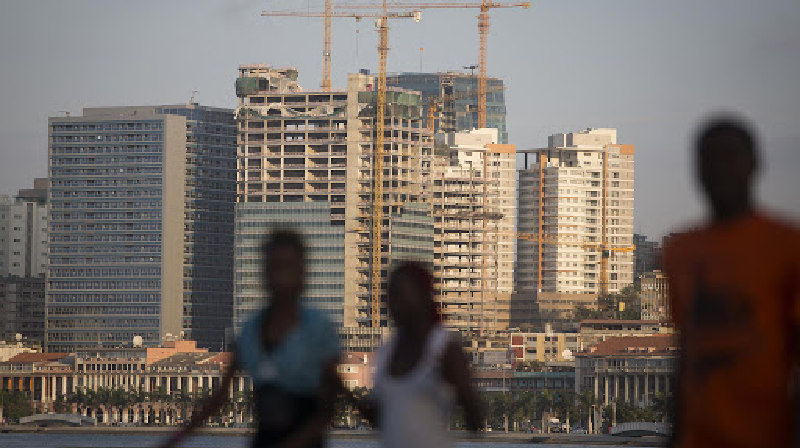
Devaluing the Nigerian Naira without supporting policies will only result in another devaluation in 3-4 years. What Nigeria needs now is to reduce tariff on raw materials while increasing tariff on non-essential finished goods. And quickly offer tax-incentives to any firm that generates at most 1MW of power by itself so that independent power can enter balance sheets, not as pure expenses, but as leverageable investments to cushion P&L statements. Spending 50% of the power budget on independent power via tax credits will put urgency since the national grid concept has clearly failed in Nigeria.
The central bank will scale inflation and Nigeria will not benefit through a boost on export if we continue to devalue Naira as a pure mono-policy. More so, to encourage exports, I will waive fees on exports through an index where if companies meet local demand levels, exports can go free of most fees. The goal would be to accelerate non-crude oil exports to diversify sources of foreign exchange. I expect this devaluation to hit at least N420 per $1.
The derivative and black markets suggest the naira is still under plenty of strain. The price of three-month non-deliverable forward contracts has surged to 421 naira per dollar, signaling traders see another 10% devaluation in that period. One-year NDFs rose above 500 for the first time on Monday. The black-market rate has weakened to 403 from 380 this week, according to abokifx.com, a Lagos-based website.
“While it’s commendable that they’ve weakened the currency, it falls short of our fair value estimate of 410,” Yvonne Mhango, a sub-Saharan Africa economist at Renaissance Capital in Johannesburg, said. “It would be positive if the central bank were to also introduce a flexible foreign exchange rate, and move away from near peg.”
The Abuja-based central bank will likely lower its key rate by 50 basis points to 13%, according to a Bloomberg survey of analysts. That may help the economy, which will be hit by lower crude prices and the spread of the coronavirus, with the government suspending international flights and closing land borders on Monday. But it would still leave Nigeria with one of the highest base rates globally.
Previous devaluations have not positioned our foreign exchange, this one should be different.
I posted this on LinkedIn also:
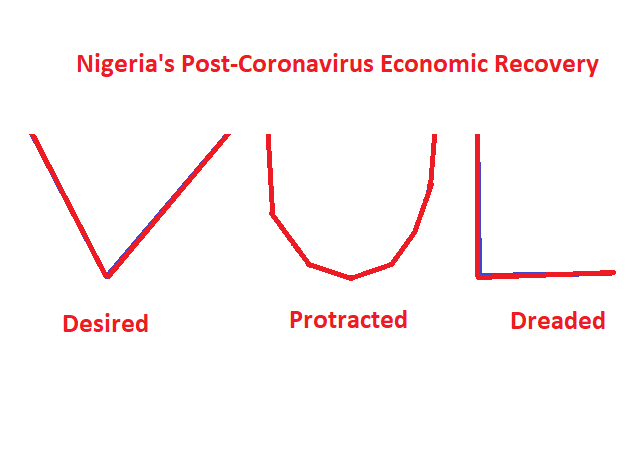
Here are the possibilities on how Nigeria could recover post-coronavirus pandemic. Let’s do some academic work here: which one do you expect for Nigeria by 2023.
A Befitting Tribute to Dr Victor Olaiya – Highlife’s “Evil Genius”
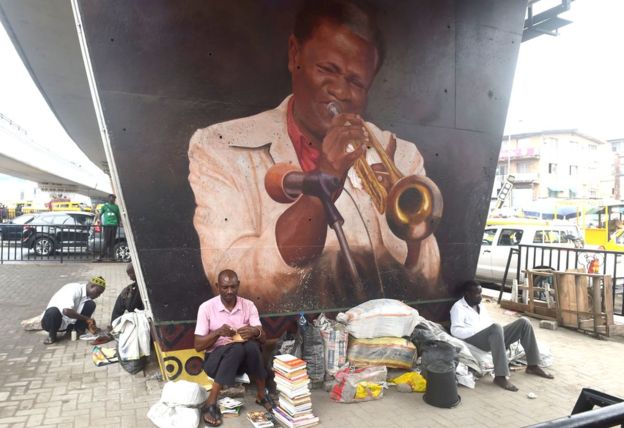
Born 31 December 1930, Victor Abimbola Olaiya (Order of the Niger, OON), was a Nigerian trumpeter who played in the highlife style. He was born in Calabar, a port city in southern Nigeria, and capital of Cross River State sharing a common border with Cameroon.
I must start by mentioning that I am not only in mourning, but more in celebration of his contribution to African music since the 1950s. Therefore, here is a brief history lesson for those who might not be familiar with this “unsung” hero. Dr Olaiya has been described as Highlife’s “Evil Genius.”
First, and foremost, and in the decade of the 1950s and 1960s, it is documented that he formed the Cool Cats band in 1954, performed at Nigeria’s independence ball in 1960. He was also relentless and dynamic by having renamed “Cool Cats” to the “All Stars Band” three years later in 1963 when Nigeria became a Republic.
Second, and before his retirement from music in 2017 due to failing health, Victor Olaiya has been awarded the Order of the Niger (OON) in 2009. That is equivalent of a knighthood in Nigeria (be it an OBE or MBE).
Third, not many people know the influence Olaiya had on the much-celebrated Fela Kuti, the acclaimed Afrobeat King as captured in my previous posts on “Pop Culture Africa: Review of Creativity in the Music Industry” and another entitled “Pop Culture Africa! A Narrative on Afrobeat, Afrobeats and Highlife.” Therefore, here is some education according to the BBC following his recent demise on 12 February 2020:
Nigeria has been mourning music legend Victor Olaiya, who created Nigeria’s highlife rhythms and influenced a generation of musicians including Fela Anikulapo-Kuti.
Fourth, I was fortunate enough to undertake a review of the book by another artiste extraordinaire, Sonny Oti’s “Highlife Music in West Africa: Down Memory Lane.” In that review, I noted that Victor Olaiya, by his coverage of the tour of Nigeria by Queen Elizabeth, showcased an image for Africa in the as 1950s by adapting highlife’s ability to compete in a European jazz festival.
Fifth, this maestro was also fluent in many of Nigeria’s indigenous languages and this was reflected in his songtexts:
His song-texts also functioned as national unification tools. He composed songs in Igbo, Efik, Hausa and his own native Yoruba language to communicate more effectively.
https://www.youtube.com/watch?v=_2LuAJhQ9nA
Song-texts of African urban popular music rhythm could be entertaining, but they are functionally the voice of the community. They are equally the conscience of African societies. It is through these lyrics that African domestic and external politics can be monitored. I did sound out in my review of Oti’s book that:
Song-texts act as the thermometer for measuring African political, social and economic temperature. Sex and love are never publicised, they are treated with reverence; and they are also regarded as trivial and incompatible with the [more] serious problems of Africa.
While the creative industry in Africa has been predominantly fragmented, some attention is now being accorded to the performing arts (especially music) from that geographic space – thanks to Oti’s (2009) groundbreaking work on Highlife Music in West Africa.
I acknowledge that this is an entirely new era, but yes, 2020 is another year of loss for African music, highlife, and the legendary of an unsung hero.
Adieu Victor Olaiya.
Further reading:
Madichie, N. (2017) Highlife Music in West Africa: Down Memory Lane, Management Research Review, Vol. 40 No. 1, pp. 116-119. https://doi.org/10.1108/MRR-08-2016-0201