DD
MM
YYYY

PAGES

DD
MM
YYYY

spot_img

PAGES

Home Blog Page 6469

African doctoral students charged to be more creative in finding solutions to societal problems through their researches

0

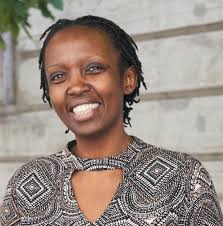
African doctoral students have been charged to find a link between their researches and the problems faced by their society. This advice was made by Dr. Connie Nshemereirwe last Saturday at an online seminar organized by the Department of Communication & Language Arts, University of Ibadan for its doctoral students.”The seminar tagged Science and Policy Facilitation was meant to assist the doctoral students of the department find their feet after their studies,” said Professor Ayo Ojebode, the Head of the Department. This seminar is one of the series of seminars targetted at strengthening the capacities of the PhD students on conducting researches and buiding careers after completing their PhD research.

Dr. Nshemereirwe, who is a Science and Policy Facilitator, posited that the few PhD holders on the continent are leaders in their own right whether they are aware or not and are expected to be part of the solutions to the problems faced by different countries within the continent. She decried the wide gap that exists between policy makers and researchers in Africa. She advocated that the narrative of scientists trying to understand the problem not sitting with the politicians trying to solve the problem in the same room must change. This could only happen if only more researchers are not only conducting policy relevant empirical investigations but are also making attempts to let policy makers understand the importance of such endeavours with little or no scientific jargons.

“The space between science and policy is wide open, and really appreciates a scientist who not only  knows her science, but who can also speak plainly and tie the science to societal problems,” Nshemereirwe noted. She identified the fact that policy makers need more scientific minds to interact with them. She observed that a trained scientist has a number of transferable skills and knowledge which could assist in plugging identifiable loopholes in policies made by those in government. She therefore charged the audience to key in their vision into solving the problem of their country asking them “what impact would you like to have, and have you explored all the different ways in which you can do that, including creating your own way?”

The seminar had in attendance the Departmental PG (PhD) Coordinator, Dr. Bisi Olawuyi.

According to Global Young Academy, Dr. Connie Nshemereirwe, an independent science and policy facilitator, is a trainer, writer and speaker. She is on the steering committee of the Africa Science Leadership Programme (ASLP) based at the University of Pretoria in South Africa. She also works with the Partnership for African Social and Governance Research (PASGR) based in Nairobi, Kenya.

Leadership Lessons from the Herdsman – Leading from the Rear

0

 “I am behind you, follow me.” John Maxwell

Back in my younger days, I had a limited knowledge about leadership. I believed I was a leader and I must always be in front. I felt uncomfortable walking behind in a group; I always walked faster to be ahead. Also, I didn’t like being held by the hand by whomever, I must be the one to hold the other person’s hand. I never rolled with a group where I am not the one calling the shots. My innermost desire was to be number one amongst the rest. From my primary to secondary and tertiary education, I dreamed of being the senior prefect, and the SUG president; nothing else could appease me. You can guess my ultimate desire by now. If you say, to be the president of Nigeria someday, you are right! 

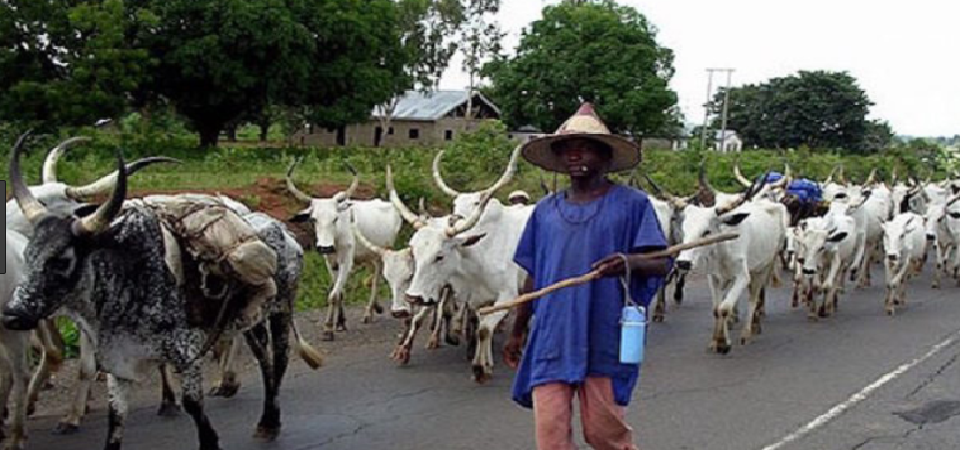
However, as my leadership experience and capacity increased with the passage of time, my craving for the front position regressed as I find myself deliberately walking behind the group. Why? My selfish desire changed to a selfless one. When I walked in the front, I always looked back to make sure everyone was following and no one was missing. Then it dawned on me that the best place to lead was from the rear. I would like to call this the Herdsman Leadership Style. 

If you have seen cattle herders with their herds, you would notice that most of the time, the herders are either behind them or by their sides. They occasionally move to the front if they perceive danger. The oldest of the herd, the lead cow, is usually the one in front leading the rest as it takes instructions from the herdsman from the back. The Herdsman Leadership Style has some obvious benefits that I think is worthy of emulation. 

Characteristics of the Herdsman Leadership Style

  • Protection

Every leader is obligated to provide protection for his team members or followers just as the herdsman protects his herd. It is very dangerous to lead the vulnerable like school children from the front. Have them walk in front of you, this way you won’t turn back and find someone missing. In a formal setting, a leader who leads from the rear is telling his team members that, “I got your backs, just trust your instincts and keep moving.” 

  • Vision

The best vision is enjoyed by the one in front but the leader who leads from the rear has foresight. From this position, the leader can see how his entire team and individual members move and no one can stray under his focus and coordination. In a formal setting, this will afford the leader the best opportunity to assess the team’s and individual’s performance with respect to the collective goal. This will also show if the team members are achieving theirs in the whole. 

  • Delegation

The herdsman uses the principle of delegation a lot in that he entrusts the lead cow with the responsibility and with commensurate authority to lead the rest. No one undermines the leadership of the lead cow. In a formal setting, a good leader should and must delegate. Delegation makes leaders out of followers by building capacity, trust, confidence, and productivity. A leader that fails to delegate has failed already. Moses succeeded in leading the Israelites out of bondage in Egypt to respite in the wilderness through delegation as advised by his father in-law, Jethro, in Exodus 18. 

  • Freedom

It is in man, nay, in all creatures, to be free in thoughts, in action, destination, and expression. Every creature remonstrates when its freedom is restricted. No living thing wants to be chained and led. Goats become more obstinate when tethered about their necks. Bullocks become violent when pulled with a rope. However, we notice a different reaction when the herdsman allows his herd to be led by the lead cow without being tied and dragged. In a formal setting, this can be likened to being free from being micromanaged on the job. Leaders who micromanage suffer from personality disorder and very soon will lose their influence when the team members fight back. This is reminiscent of how Chelsea players got Jose Mourinho sacked. 

  • Creativity and Innovation

When leaders lead from the rear, it affords the followers the opportunity to be creative and innovative. The young and energetic calves go into wild excitement playing around the older cows. It is so much fun watching them gallop with dexterity. Every team member is gifted and only freedom from strict regulations can make them birth ideas and initiative in a formal setting. In a nutshell, when a leader leads from the rear, he affords his team members the time and space to discover themselves. 

  • Development of More Leaders

The herdsman leadership style precludes the possibility of a leadership vacuum. We see the principle of hierarchy and protocol as the lead cow leads. The rest of the herd does not break the rank by following the herdsman directly. From the rear, the herdsman speaks to the lead cow and the latter lowers the instruction to the rest. In a formal setting, when a leader fails to adequately grow leaders from his team members, he will become a demigod, at best, and if anything should happen to him that is the end of the vision. Even when he delegates, only a few team members will accept the person and leadership of the delegated. 

  • Communication and Productivity

I grouped these leadership traits to underscore the significance of communication to the success of leadership. The herdsman has developed a unique communication style for his herd. By whistling and making other kinds of sounds with his mouth, and sometimes the use of his staff on the cattle when they err make them conform. In Nigeria, a major objective of the herdsman is to secure adequate pasture for his cattle. The search for green pastures is dictated by the seasons. In a formal setting, when a leader holds grudges with his team members, communication suffers, and he outlives his relevance. Each team member needs to be communicated to in the way he or she will grasp. A uniform style will not yield the desired outcome. 

On a final note, the herdsman leadership style of leading from the rear affords him a 360 degree view of his leadership. He can look up to see what lies ahead, look sideways to ward off danger, and he can look back to see/assess the distance covered  or work done. 

You may want to take some steps back for the obvious reasons. 

Further Trouble for Oil Market as Russia and OPEC Fail to Reach Production Cut Deal

0
Oil workers

This week, the Organization of Petroleum Exporting Countries (OPEC) has been in meetings trying to reach an agreement on oil production in a bid to stabilize market price. It became necessary in the face of the coronavirus epidemic that is threatening to crush not only the oil industry but the global economy.

The OPEC meeting held in Vienna on Friday ended in disagreement as the top guns in the industry, Russia and Saudi Arabia failed to reach a consensus, plummeting the already dwindling oil market. Brent crude went down more than 9 percent, as low as $45.18 per a barrel. West Texas Intermediate crude, the U.S. benchmark fell as low as $41.11 per a barrel.

The oil producing countries were seeking to reduce production and output beyond what is already approved by the organization to curb surplus, but failed to reach an agreement.

The existing oil output cut is 2.1 million barrels per day (bpd), but it will expire at the end of March. The new proposed cut has been lowered to 1.5 million barrels a day on a pro-rata basis that stipulates 1 million bpd cut for OPEC core members and 500, 000 bpd for non-OPEC partners.

But the producers failed to reach a deal on both signing off on an extension of the already existing agreement and agreeing on the newly proposed cut.

The meeting ended in disarray that has thrown the oil market into further downturn. Russian Energy Minister Alexander Novak told reporters on Friday that the outcome of the meeting means that members could now pump however they like at the expiration of the already existing agreement on April 1.

“We have made this decision because no consensus has been found of how all the 24 countries should simultaneously react to the current situation. So as from April 1, we are starting to work without minding the quotas or reductions which were in place earlier, but this does not mean that each country would not monitor and analyze market developments,” he said.

Russia and Saudi Arabia appeared to have had a faceoff over the proposal of 1.5 million barrels per day cut. It appears the de-facto leader of OPEC, Saudi Arabia tried to bully Russia to agree to the cut with the help of other members and it backfired. The two countries have enjoyed a cordial three year partnership, but the recent development signals an end to a relationship that has resulted in stability of oil prices for some years now.

Helima Croft, analyst at RBC Capital Markets said: “We have just witnessed the perils of backing Putin into a corner.” She also told CNBC: “It I truly a go big or go home moment for this organization. If Russia says no today, there are real questions about the viability of the OPEC+ arrangement.”

It is not certain if the Russians are going to have a change of mind and go back to the negotiation table since they have advocated more time to determine the impact of coronavirus on the oil market. But OPEC Secretary General Mohammed Barkindo said he is optimistic that Russia will keep its commitment to their alliance.

“We have no reason to doubt the continued commitment of the Russian Federation to this partnership. We have repeatedly heard from the highest level of government in the Russian Federation of the commitment of the government to this partnership in the declaration of cooperation,” he said.

The partnership deal that put production cut at 2.1 million per a barrel took effect in January 2017 after it was agreed upon by members of producing and exporting countries. Last year December, the deal was extended and the Alliance agreed to reduce oil output by about 1.7 million barrels per day.

Saudi made a voluntary cut of its own production by additional 400,000 barrels per day. The Arab country seems to be spearheading the cuts in the face of seeming Russia’s foot-dragging and little contributions.

In 2014, the Saudis got to breaking point where they couldn’t get the Russians to sign a cut deal, so they gave up. The market nosedived and prices went down below $30 per barrel. Traders are wary that 2014 could repeat itself and worsen already bad situation.

The oil market went down as COVID-19 spread around the world with serious impact on businesses: Factories were shut down, movement of people was restricted, which means fewer vehicles, and flights were canceled.

Other members of OPEC may be severely hit by the turn of events if Russia goes ahead with its plan to shun the Alliance.

Nigeria for instance, has a budget benchmark of $57bp and mostly depends on oil for revenue. It is not certain when the coronavirus epidemic will be totally contained, so the Alliance’s failure to reach an agreement will plunge many economies into recession.

Next Session: Data Management, Big Data Analytics, and Data Systems

0

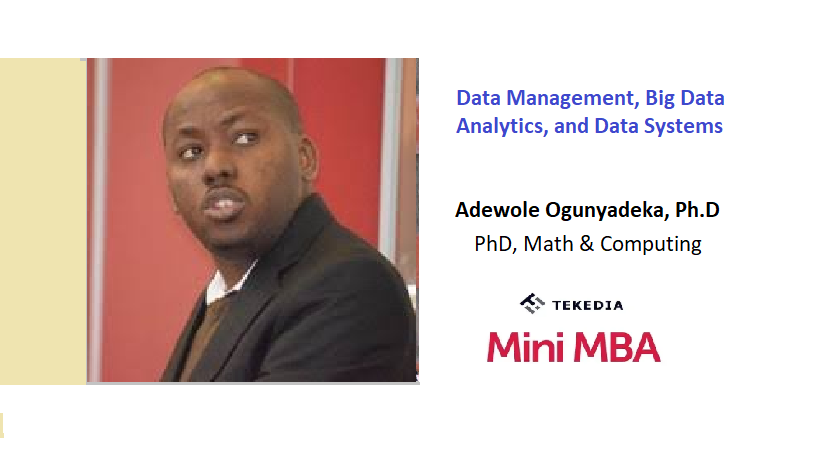
He earned a PhD in mathematics and computing from England and works in one of the UK’s leading providers of general insurance products as a Data Solutions Architect. Certified on leading technologies offered by Microsoft, Amazon and more, he understands how new technologies can stimulate leverageable growth factors in companies. Dr. Adewole Ogunyadeka, a visiting lecturer of Computing in Oxford Brookes University, UK, will lead a session on Data Management, Big Data Analytics, and Data Systems next week on Tekedia mini-MBA. Contents go live 12 noon Lagos time in the Board on Monday.


https://www.tekedia.com/mini-mba/

Business Growth and Disruptive Innovation – Cloud Computing

0

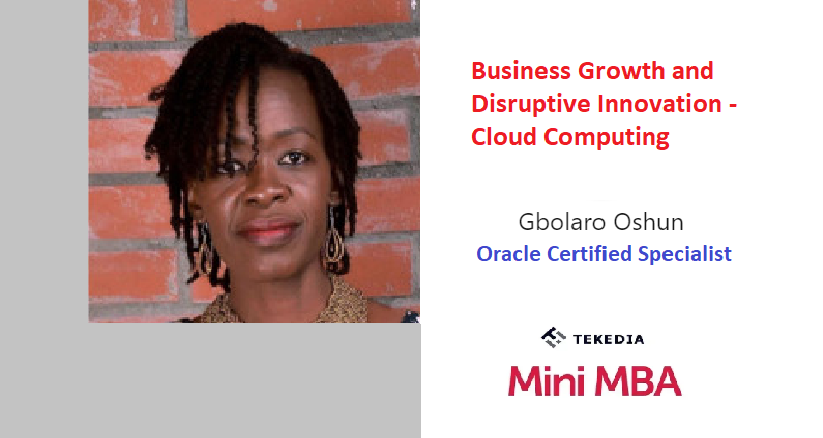
Oracle has certified her as an Oracle Specialist. She is also recognized as an Oracle Global HR Cloud Implementation Specialist. She is a tech oracle, and she has led and managed many big cloud projects. With multiple degrees covering IT, electronics and business management, she connects the dots between tech and business. On Monday, Gbolaro Oshun will lead Tekedia mini-MBA’s Business Growth and Disruptive Innovation – Cloud Computing session. Contents go live in the Board at 12 noon Lagos time.