


How do you win in business? What is your pricing model? Do you have innovation in it? Fix it by improving the marginal cost!
GheGhe and Relationship Misinformation in Nigeria

Content creators are emerging as new sources of guidance, influence, and controversy. Among them is Emmanuel Obruste, popularly known as GheGhe. He is a social media influencer, digital creator, and financial coach with more than 18,000 YouTube subscribers.
Branding himself as “Africa’s Most Experienced Financial Coach”, GheGhe’s stated mission is to teach financial discipline, inspire people to invest wisely, and help them achieve financial freedom. Yet what has made him stand out is not only his financial advice but his commentary on relationships, particularly the dynamics between men, women, and money.
His videos, often bearing provocative titles such as “Your Girlfriend is a Threat to Your Future” or “Why You Shouldn’t Spend Money on Your Girlfriend”, have generated both loyalty and backlash. To some, GheGhe is a mentor and protector of men’s interests. To others, he is spreading harmful generalizations that could mislead young men about love, commitment, and gender relations. So, what lies at the heart of his message and why is it dividing opinion?
GheGhe’s Message Focuses on Prioritizing Men’s Growth
At the foundation of GheGhe’s content is a consistent argument that men must prioritize their personal growth and financial security above romantic relationships. He warns that modern relationships can be exploitative and transactional and that they may threaten long-term success if entered without caution.
In one of his most viewed videos, GheGhe argues that girlfriends can become a distraction from men’s dreams. Viewers often echo this idea with comments such as, “My dreams are more expensive than a woman.” Another video cautions men against spending money on girlfriends, with viewers summarizing it as “Men are in love while women are in business.”
Although often delivered with humor and relatable storytelling, the underlying message remains clear: protect your resources, guard your future, and avoid emotional or financial exploitation in relationships.
Why His Approach Appeals to a Large Audience
For many Nigerian men, GheGhe’s content feels timely and necessary. His message resonates for several reasons. His stories reflect real-life struggles from financial pressure to betrayal in relationships. His voice is framed as a source of empowerment, with many men seeing him as someone equipping them with “the rules of the game.”
He also communicates in ways that are culturally appealing. By speaking in Nigerian Pidgin English and weaving in humor, he connects with a wide grassroots audience who feel that he speaks their language. Furthermore, by combining money talk with dating advice, he occupies a unique space that bridges two of the biggest concerns among young Nigerians, which are economic survival and romantic fulfillment. For these reasons, his followers call him a mentor, pray for his protection, and express admiration to the point of declaring they would work for him without pay.
The Backlash and Concerns About Misinformation
Not everyone agrees that GheGhe’s message is empowering. Critics argue that his style risks spreading misinformation and fueling distrust between men and women. By framing women largely as financial threats or transactional partners, GheGhe may be oversimplifying the complexity of human relationships. While it is true that financial imbalance can create tension, to suggest that most women are exploitative risks creating suspicion where there could be partnership.
His arguments also rely heavily on anecdotal evidence such as stories of betrayal or exploitation. These may not represent the broader reality. If young men accept them without question, they may become resistant to building balanced relationships or develop cynicism as their worldview. Another concern is confirmation bias. Men who have experienced heartbreak may find in GheGhe’s content the validation they seek, reinforcing negative beliefs instead of promoting healing, self-reflection, or mutual growth.
A Balanced Way Forward in the Conversation
The debate around GheGhe highlights a bigger issue about content consumption in Nigeria’s digital age. Audiences need to be able to distinguish between empowering advice and misleading generalizations. There is no denying that GheGhe taps into genuine pain points. Many men feel financial strain, experience transactional dating, or fear being derailed by misplaced priorities. His warnings speak to those concerns.
However, thought leaders must balance awareness with nuance. While it is important for men to focus on personal growth and avoid reckless spending, relationships should not be described solely as liabilities. Partnerships, when healthy, can be supportive, collaborative, and even financially strengthening.
The conversation should therefore expand to include financial literacy for both genders, better communication in relationships, and shared responsibility in building futures together. GheGhe’s voice is influential and he will likely remain popular, but the responsibility lies on both creators and audiences to approach such content critically.
What You Need to Know Before Living in Ibadan

When most conversations about Nigerian cities revolve around Lagos or Abuja, Ibadan often remains an afterthought. Yet, as Nigeria’s largest city by landmass and a rapidly evolving metropolitan hub, Ibadan is increasingly catching the attention of professionals, entrepreneurs, and families who want affordability without completely losing urban conveniences. But what is it really like to live in Ibadan?
To answer that, we need to go beyond surface-level rankings like those found on crowdsourced platforms such as Numbeo. While useful for quick comparisons, they can be misleading because of small sample sizes and subjective data. A more rounded picture emerges when we combine these snapshots with official reports, local insights, and lived experiences.
Healthcare: Progress Amid Persistent Challenges
Healthcare is often a top concern for those relocating, and Ibadan offers a mixed story. On one hand, the Oyo State Government has been proactive, refurbishing over 200 primary healthcare centers and expanding the number of general hospitals across local governments. Specialized facilities such as a World Health Organisation-supported neonatal and maternal intensive care unit place Ibadan ahead of many Nigerian cities in terms of infrastructure.
The state’s health insurance scheme is also gaining traction. Tens of thousands of residents can now access care at a fraction of previous out-of-pocket costs. This affordability is a game-changer for households who would otherwise spend disproportionately on medical expenses.
However, structural challenges remain. Frequent strikes by healthcare workers, staff shortages in rural clinics, and the proliferation of unregulated “quack” practices threaten to undercut these gains. Maternal and infant mortality rates, though improving, remain stubbornly high compared to neighbouring states. For new residents, this means quality healthcare is available, but navigating the system requires careful planning, awareness of facility differences, and possibly private insurance as a supplement.
Transportation: A City of Movement
If Lagos is synonymous with gridlock, Ibadan offers a reprieve. Its extensive road network, including the Lagos to Ibadan Expressway, the Mokola Flyover, and the iconic Ring Road, connects major districts efficiently. Recent efforts by the state’s traffic management agency to extend operations into night hours show responsiveness to rising congestion as the city grows.
Public feedback suggests that while traffic does occur, particularly on commercial corridors, it rarely reaches the paralyzing levels seen in Lagos. For daily commuters, this can mean significant time savings and less stress, making Ibadan an appealing base for professionals working remotely or traveling occasionally to Lagos by road or train.
Cost of Living: Affordable but Rising
One of Ibadan’s strongest draws is affordability. Housing remains far cheaper than in Lagos, with rents ranging from ?250,000 for modest flats to over ?1 million in high-demand neighborhoods. Daily essentials are also comparatively accessible. A loaf of bread costs about ?1,500, a 5kg bag of rice ?7,000, and cooking gas around ?20,000. For families, this translates into a lifestyle that is financially sustainable without constant sacrifice.
Affordability, however, is relative. Inflation continues to erode purchasing power, and salary levels in Ibadan often lag behind Lagos or Abuja. For expatriates or Nigerians relocating from abroad, this may feel like an advantage. For locals, the squeeze is real. Anyone considering a move should weigh both the lower cost of goods and the potential trade-offs in income opportunities.
The Intangibles: Why Ibadan Matters
Beyond data, Ibadan holds an intangible appeal. It is a city of firsts, the site of Nigeria’s first university, the nation’s first television station, and a cultural melting pot rich with history. Its slower pace compared to Lagos offers breathing room, while its proximity to the commercial capital, less than two hours by road or train, keeps it strategically connected.
For entrepreneurs, academics, or young families, Ibadan provides modern infrastructure, affordable living, and a growing sense of opportunity without the chaos of Nigeria’s larger cities. Yet it also demands realism. Healthcare reform is still a work in progress, job markets are narrower, and infrastructure expansion is catching up with population growth.
FCMB to Launch Fresh Equity Offer as Part of Expansion Strategy, After Raising N147.5bn in Oversubscribed Public Offer
First City Monument Bank Group Plc (FCMB) has announced plans to raise fresh equity capital through an Offer for Subscription, following shareholder approval at its Extraordinary General Meeting (EGM) held on December 19, 2024.
In a statement released to the Nigerian Exchange (NGX), the company said the move is part of its strategy to strengthen its capital base in anticipation of both regional and international expansion.
Proceeds from the equity raise will be injected as additional capital into its flagship subsidiary, First City Monument Bank Limited.
The board disclosed that the pricing of the offer will be based on the prevailing market price, with a discount structure to make the offer attractive to investors. However, full details—including the size, structure, and timeline of the capital raise—will be made public once regulatory approval is secured from the Securities and Exchange Commission (SEC).
Backstory
On December 30, 2024, FCMB announced the successful completion of its landmark public offer, raising N147.5 billion with a 33% oversubscription.
According to the company, a total of N147,508,464,568.60 was raised and verified by regulators, while N144,559,788,701.30 was absorbed through the issuance of 19.8 billion ordinary shares at N7.30 per share. This brought the company’s post-offer issued shares to 39.6 billion.
Regulatory approvals were also received to downstream the net proceeds from the holding company to the banking subsidiary, boosting First City Monument Bank’s paid-up share capital and share premium—recognized as eligible capital under the Central Bank of Nigeria’s (CBN) recapitalization framework—to more than N240 billion. This exceeded the minimum requirement for a national banking license.
The Group noted that subsequent phases (2 and 3) of its capital program are already underway to ensure First City Monument Bank Limited meets the higher minimum capital requirement needed to retain its international banking license. This aligns with FCMB’s long-term vision to become a global financial services group of African origin, renowned for leadership in its chosen markets.
Growing appetite for Nigerian bank equities
The fresh equity plan comes at a time when investor appetite for Nigerian banks’ shares is witnessing a remarkable upswing. FCMB’s 33% oversubscription mirrors similar outcomes across the sector, where multiple banks have recorded strong demand in their recent equity offers. This has been fueled by both institutional and retail investors seeking to take positions in lenders they perceive as resilient despite Nigeria’s economic headwinds.
In the last year, several Nigerian banks—including tier-1 giants and mid-tier players—have returned to the capital market in quick succession, either through rights issues, private placements, or public offers. Market analysts attribute this surge in fundraising activity to the Central Bank’s recapitalization directive, which has set higher capital thresholds for banks depending on the scope of their licenses.
However, beyond regulatory pressure, the frequency of these equity raises also signals renewed investor confidence in the sector. Oversubscriptions, such as those seen with FCMB’s offer, highlight the perception that well-capitalized banks are better positioned to weather currency volatility, inflationary pressure, and the evolving global economic environment.
By returning to the market once again, FCMB is not only strengthening its balance sheet but also tapping into a wave of momentum that has made banking stocks some of the most attractive on the Nigerian Exchange in recent months.
The Physics of Pricing [video]
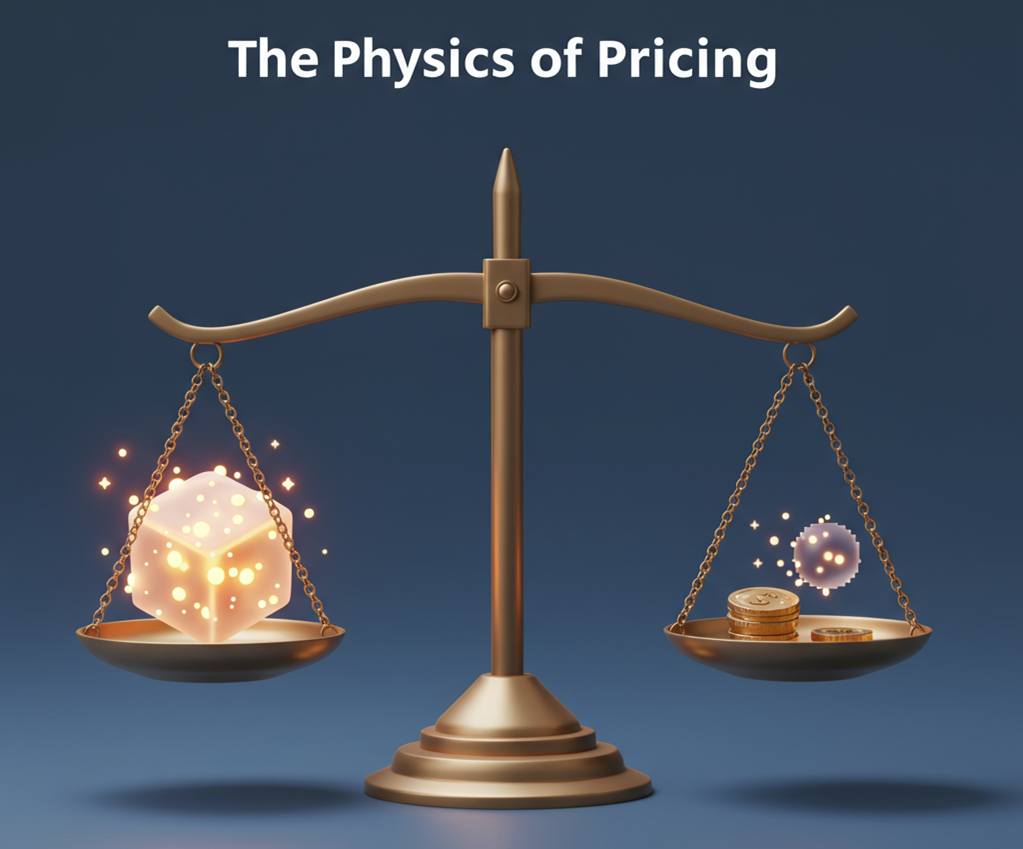
The act of setting a price for a product or service is often viewed as a complex art, but a closer examination reveals a set of fundamental principles that behave with the predictability of physical laws. Just as physics governs the forces of motion and energy, a “Physics of Pricing” dictates how products are valued, monetized, and distributed in the marketplace. Based on the accompanying Tekedia lecture (in Blucera), this framework is defined by the interplay of two primary forces: the gravitational pull of value and the immutable law of marginal cost, all harnessed by different business mechanisms.
The first and most powerful force in this physics is value. As the lecture explains, value-based pricing is the principle that a product’s price is determined not by production expenses, but by the perceived worth it holds for the customer. This operates like a gravitational field; a product’s price is pulled toward the solution it provides. The greater the problem it solves, the stronger the pull, and the higher the price can be. This concept detaches pricing from a simple arithmetic of cost-plus, instead linking it to the emotional and practical impact a product has on a user’s life. The price of an item is therefore not a reflection of its material cost, but a measure of the solution’s perceived benefit, which can be a key differentiator in a crowded market.
Complementing the force of value is the law of marginal cost, which dictates the energy required to produce one additional unit of a product. In the realm of physical goods, this energy is substantial, including raw materials and labor. However, for digital products, the marginal cost is remarkably low, primarily comprising transaction fees and distribution expenses. This low energy requirement creates a unique dynamic. As the lecture notes, it provides an opportunity to build a “moat” by lowering prices and increasing value, effectively making the product more accessible and attractive. This minimal cost per unit is the foundation upon which digital empires are built, allowing for near-infinite reproduction without a corresponding increase in production expense.
In conclusion, the lecture’s insights reveal that pricing is far from random; it is a system governed by a set of predictable forces and laws. The price of a product is a direct result of the interaction between the perceived value it offers and the marginal cost of its production. A solid understanding of these foundational elements—the “Physics of Pricing”—is therefore essential for any successful business, allowing it to navigate the marketplace with purpose and strategic foresight.
Podcast Video: Sign-up at Blucera and check Tekedia Daily podcast category under Training module.