DD
MM
YYYY

PAGES

DD
MM
YYYY

spot_img

PAGES

Home Blog Page 6473

On the High Rate of Fake News on Social Media

0

On Friday, 28th February, 2020, a screenshot of alleged news presented on AIT Facebook page went viral. In that screenshot was the face of a dark man and some write-ups claiming that the man in the picture (a Yoruba judging from the name provided) was the Nigerian that took the Italian man, who was recently diagnosed with COVID-19, to Ogun State. The ‘news’ claimed that the man, after testing positive to coronavirus, escaped from the hospital and threatened to infect many Nigerians with the deadly disease unless he is paid the sum of N100m. Whoever that wrote that ‘news’, supposedly the AIT, appealed to the general public to look out for and avoid the man whose picture was in the article.

When I saw that post, I didn’t know what to make of it. I know anything is possible in Nigeria but I found it hard to believe that someone could play such a stunt. So I took it with a pinch of salt and waited for more ‘news’ on the man.

The awaited news came in the form of a video that showed this same man addressing the public, saying he had never been to Lagos for the past two years. This man said he is from Edo State and that he has been with his family all these while. He even said he was with them when he received the rumour that he drove the white man to Ogun State and that he tested positive to the virus. From what he said, you can deduce that the picture was his but the name wasn’t. Anyway, what the public cares about is the picture and not the name.

AIT has denied posting this news and has issued a disclaimer, but then the damages had been done. This left some questions unanswered, which include, “Who spread that news?” “What was his/her intentions?” “How did they get the pictures and the names?”

The problem of fake news on social media didn’t start today. It is common on Facebook (just as this present one was also sent into Facebook). Years ago, one of my Facebook contacts complained that her friends noticed that she had different Facebook accounts with different names. She went in search of ‘her’ different accounts and truly found them. She screenshot like five of them and posted them for us to see. We saw the profile pictures and they were truly her pictures. We searched those accounts and saw that the people that opened these fake accounts monitored her seriously and ensured that all her picture updates were copied into those fake accounts. In fact, you will believe these accounts were hers except that her names were different. Whoever that went into the pains of creating those accounts obviously had some fraudulent intentions in mind.

This sort of thing is also becoming rampant in WhatsApp. The one they do in WhatsApp is actually hacking into people’s accounts and using them to beg money from their contacts or transact illegal businesses. A WhatsApp contact of mine recently sent messages across to his contacts stating that all should ignore any pornographic news or posts sent by his number because he just heard that some people are using his identity to advertise pornography and pornographic sites. He later found out that his account was hacked by an Italian tech company and all.

But the one that is more destructive, in my own opinion, is that which involves purporting fake news and inserting someone’s name and pictures to it. Or where true stories were told and your picture used as the “file photo”. Imagine waking up one day only to see your face plastered all over social media and a story that sounded like something from the moon told about you. The shock of hearing that you did what you didn’t do is enough to mess up your whole day. Believe me, things like these are damaging to the personality of the person who was “lied against”.

But that still hasn’t solved the issue of “who coined those stories and for what reason.” A lot of people may claim that the stories were made up by the ‘enemies’ of the person slandered. In as much as this is the only logical answer, I still want to call our attention to the fact that some people are just mischievous. It could be that, that viral news on the Uber driver that transporter the coronavirus victim was brought up out of mischief or it could be that the target wasn’t the man whose picture was plastered there. It is possible that the perpetrator of this wicked act was targeting AIT so as to drag them to the mud for damaging someone’s dignity. For that I think AIT needs to explain better how such news could be released on their page without their knowledge.

How to Avoid Being a Victim

It is almost impossible to avoid being a victim to this malicious act. You never can tell who the devil will send your way to tarnish your image. And avoiding using social media outlets still won’t save you. But you can take some precautions to minimise the chances of being the victim.

  1. Be mindful of Your Photos: Getting someone’s picture is easy in social media, so there’s no need wondering how they did that. But one has to be careful with the kind of picture one puts up in social media. A girl on Twitter, some weeks ago, complained of a picture of her sitting with her girlfriends in a night party, or just girls’ hangout, was used as a file photo in news that told about some girls that went to night club and one or two things happened. Her picture was obviously chosen because she and her friends were scantily clad and the picture background matched the purpose of the message.
  2. Be Predictable: Some people are easily predictable, concerning what they send into social media and the lives they live outside it. For instance, if this man that said he wasn’t the Uber driver wasn’t predictable (I don’t know if he is, anyway), there’s no way he will claim not to have been to Lagos for the past two years and people will believe him. In the same vein, my contact that sent out warnings about his account being used to advertise pornography wouldn’t have been warned by his friends if he had a shady life. This is just to say, that if people can predict what you can do, and what you will never do, fake news about you can easily be refuted by them before it even gets to you.
  3. Send out Regular Disclaimers: This might sound funny but it helps. Whenever you see people claiming they didn’t do something or that they wouldn’t do something, don’t think they weren’t serious. Sometimes it is good to remind your contacts that they should be approached by ‘you’ for some transactions, they should call you first, hear your voice and verify that it was you. Otherwise, someone can use your identity and collect loans from people that know you. You should also be fast enough to disclaim any fake news about you. Don’t wait for it to linger because you believe that very soon people will forget. They may forget at that time, but you don’t know what it might lead to in the future.

Those people that easily circulate news articles that landed on the inbox need to verify to be sure what they are about to post out is authentic. For me, the easiest way I check authenticity of any news is to read national dailies such as Punch newspaper and co. But a lot of people are more in a hurry to post out “breaking news” than to be sure the news won’t bring them embarrassment.

But then, everyone needs to be on alert. Don’t assume that you are safe because it could be your turn tomorrow. Keep alert and always send out disclaimers to your friends to keep reminding them that you will not do anything to jeopardise your integrity.
#WatchingtheVirusinNigeria: The PDP Goofed in its Response to FG’s Efforts at Curtailing Corona Virus

0


The People’s Democratic Party has drawn the ire of Nigerians on Twitter with its press release calling out President Muhammadu Buhari on the APC led federal government’s efforts aimed at curtailing the spread of the novel virus in the country. The party which is the major opposition party in Nigeria had earlier in the day released a press statement condemning the Buhari-led administration on its failure to addrees the nation on COVID 19. The party said “ The PDP is worried at President Buhari’s delay in standing up to the responsibilities of his office to address heightening national anxieties since the  detection of the deadly COVID-19 in our country”. The statement further read “the party describes as absolute leadership failure that Mr. President has not considered it imperative to show concern by directly addressing a panic-stricken nation even in the face of escalated national trepidations and conflicting reports”. The party noted that the president is expected to lead the charge as the nation runs the race against the novel virus.

In their reactions, Nigerians on Twitter berated the party for playing politics with the deadly virus especially at this crucial time. In the first salvo shot at the party, a twitter user, Anthony Ebereonwu @AEbereonwu asked “what is @mbuhari is addressing the nation on or for. The world  and the WHO had acclaimed Nigeria’s preparedness to tackle this scourge head on. Why would a non strategic opposition party b in panic mode when the govt of d day has done its job. Abeg opposition no dey easy”. In another reaction, Geo Uguru @Geouguru  while displaying a NCDC flyer, lashed out “If you had any discernment left in your party, this is the information you should be bringing to your members for their enlightenment about the coronavirus issue in the country”.

Another angry Nigerian, Usen Jumbo @jumbo, called out the party describing as useless. He wrote “ I didn’t know this party called PDP was this useless until this moment. No wonder they plunged the country into the mess currently salvaging by Buhari. I understand Buhari don’t address on process but he address on result/reports, so wait for that. Very stupid!!! In his own reaction, Oluwole Olofintuyi @OluOlofin1 describes President Buhari as a man of little talk but much action. He said “ What majority of Nigerians want is action not talk talk. Someone working has little time for talking, his aides do the talking while he concentrates. Go away with your distractions, the whole world is praising Nigeria for being proactive in dealing with the virus.”

It would be recalled that Nigeria recorded her first case of the Corona Virus last Friday from an Italian who is a consultant to Lafarge Cement Company in Ewekoro, Ogun State, Nigeria. The Federal Ministry of Health using the National Centre for Disease Control rose to the occasion by quarantining both the index case and about 39 other people who had had contact with him. As at today, no single Nigerian has been found infected by the virus as those quarantined have been under monitoring with no sign of the symptoms of the virus.

Tekedia Institute Hires Head, Strategic Partnerships

0

Tekedia Institute is expanding and we are bringing many people onboard. I want to introduce Nnamdi Odumody as the Head of our Strategic Partnerships. Yes, the Tekedia mini-MBA broke all our enrollment models; we expected 25 participants but received in the first three days 250 participants. Today, we think there is a need in the market to help prepare innovators for our economies. So, we are building a team to make the products better. In the next batch, delivery will improve significantly across all metrics.

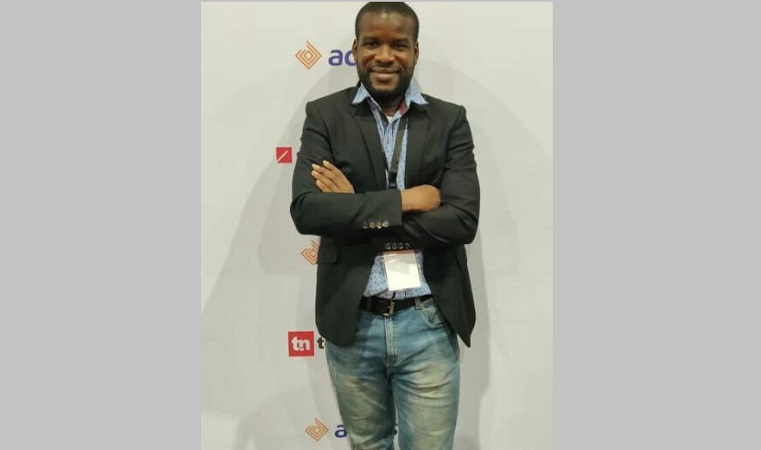
Nnamdi, a graduate of King’s College Lagos and Covenant University, and a Director in Disruptive Africa, will work to bring more companies who are increasingly signing up for private innovation sessions dedicated to their staff under our facilitation. The Tekedia General Management Program and Tekedia Advanced General Management are company-specific unlike Tekedia mini-MBA which is open and agnostic of sector or firm.

Nnamdi is well connected with innovation players in Lagos. He will also coordinate our Tekedia Innovation Summit, an innovation festival designed for our participants. We enter the digital classroom with humility, understanding that we cannot know the deep specificity of what you do. But in that humility is a system we have designed and perfected which can help you. 

Request a brochure today at tekedia@fasmicro.com

Tekedia Innovation Summit, Lagos Coming in Q4 2020

Business Growth and Disruptive Innovation – AI & Blockchain [Video Intro]

0

Good People, Week 4 materials “Business Growth and Disruptive Innovation – AI & Blockchain” are live in the Digital Board of Tekedia. We have Toyin Arowolo and Uche Uchibeke handling the session. I am sharing my video introduction of the week here for all. The written materials, session videos and challenge assignments are there. Ada (a digital doctor), Cornerstone Insurance Plc, Lowe’s (a hardware store), Buycoins Africa, Royal Bank of Canada, Infoprive (a cybersecurity firm) and Circle (fintech) are used in pulses and cases. Visit the Board.

https://www.youtube.com/watch?v=cCyVclLd1rE&feature=youtu.be

https://www.tekedia.com/dboard/

98% Data Scientists Believe Artificial Intelligence Has a Future in Ibadan

0

As cities in Nigeria continue witnessing growth in data science learning and data usage, the preliminary results of our study on Ibadan have indicated that the city remains one of the cities in the South-West region that would continue to witness massive development in learning and use of data to solve numerous socioeconomic and political problems.

This is gleaned from the view of 98% emerging data scientists out of 51 sampled by our team for the forthcoming report titled Ibadan Data Economy and Emerging Data Scientists. Out of this percent, 56.9% held strong conviction that data science is pervading business and public affairs in the city, 51% held strong conviction that professional level course should be flexible and responsive, while 45.1% held strong conviction that data science academic courses/training may need to be industry-approved and accredited.

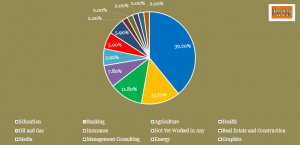
Exhibit 1: Sectors Data Scientists Have Worked

Source: Ibadan Data Economy and Emerging Data Scientists Survey, 2019; Infoprations Analysis, 2020

Our analysis also reveals that 76.5% agreed that coordination is needed between and universities. The sampled data scientists have worked in various sectors within and outside the city. Over 39% have worked in education sector, 13.7% in banking sector, 11.8% in agriculture sector, 7.8% in health sector, 5.9% in insurance, and oil and gas sectors respectively. Over 25% have gained foundational and advanced knowledge and skills, accessed a wide range of data on socioeconomic and political issues in the state and in Nigeria in general.

They have equally participated in local and international data science competitions. More than 23% have acquired foundational knowledge and skills, 9.8% have had foundational knowledge and skills including advanced professional skills. Further details of the study will be released in a report expected to be fore-worded by a seasoned professional in data economy and artificial intelligence, our analyst notes.