DD
MM
YYYY

PAGES

DD
MM
YYYY

spot_img

PAGES

Home Blog Page 6481

What Is Unethical Marketing?

2

We live in a time of information. Everyone has access to it more than ever before. And as such, bending the truth becomes the catalyst to a brand losing the trust of consumers. In a world where advertising has always relied on promoting aspirations, what could be seen as unethical marketing?

People spend a lot of their time on social media and therefore, spend a lot of that time interacting with the brands they consume – as a way to gain more insight on the things they use day today. People are looking for transparency from brands on social media. They don’t mind sharing their information, as long as they know why the brand needs that information.

At the top of the list of unethical marketing is marketing that distorts or exaggerates the truth, closely followed by using unrealistic or altered images – which is an integral part of online shopping for most consumers. These establish trust with consumers as consumer satisfaction is linked to the marketing message delivering on the value it promised.

When we look at brands that are advertising right now, we’d be hard-pressed to find more than a handful that doesn’t possess some level of unethical marketing in the form of false claims or evoking emotions to convince you that a certain brand can ease those emotions. As challenging as it might seem, you are able to identify the ways you can avoid unethical marketing.

Unethical practices that can destroy your reputation

Let’s take a closer look at some unethical marketing practices:


  • Stating false, exaggerated or unverified claims – Unethical marketing seemed to be the norm in the past with brands stating false, exaggerated or unverified claims such as cigarettes giving you a more active lifestyle – a claim that was dispelled as soon as it was proven that cigarettes are harmful to your health. Consumers are most likely to be loyal to a brand that says what it means so avoid making false statements or exaggerated benefits to pull consumers.
  • Distorting the facts to confuse and mislead potential consumers – This is another common practice in unethical marketing. Brands tend to claim they lack something unhealthy in their product to appeal to consumers to buy their products. This misleads consumers as brands know that they wouldn’t be able to sell the product if consumers knew that it indeed contained what it claims it doesn’t. Complete transparency is key here.
  • Masking dark sides or side effects of products or services – You’ve heard the statement, ‘Too much of a good thing is bad’. The natural remedies industry has a tendency to claim that their natural products have no side effects. This is a false claim as everything consumed, especially over a period of time, has side effects – unless those side effects are unknown. The safest statement to make in this instance would be, ‘There are no known side effects’.
  • Competitive advertising – This is common practice in international advertising, telling consumers how bad your competition is to make yourself the next best choice. This has been the practice for a lot of big brands that are constantly going head to head for the top spot such as famous takeaway restaurants or well-known German cars. The most professional strategy is to focus on the one thing your brand has that your competition does not help you stand out from the pack.
  • Using sex to sell – Advertising has boasted the statement, ‘Sex sells’ for a very long time without taking into account that sex also alienates. Brands tend to use women to sell unrelated products such as cough mixture or even heavy machinery when it has nothing to do with the product or brand positioning. Remain relevant to your brand.
  • Putting fear into consumers – This is a practice common to the insurance space where you’re given numerous hypotheticals of what harm could come to you if you don’t protect yourself with their insurance policy. This is designed to make consumers make a decision on the spot which is unethical as fear doesn’t inspire loyalty.
  • Copying marketing messages – Consumers have a tendency to identify a brand with the message positioning they always hear with it. While plagiarism isn’t very common, it does happen. This may result in your brand being mistaken for your competitors. Marketing is about creativity and this practice will give an impression of a lack of innovation from your brand.
  • Exploitation – Charging for much more than the value of your product could alienate consumers from your brand. The prices of your products should be equal to or less than the value your consumer gets out of them. If the value is less than the cost, it’s unethical.
  • Race, age, sex or religious discrimination – The communication you put out to potential consumers should not be demeaning to any race, age, sex or religion. As there is no one better than anyone, your marketing should strive to put this across in all its communication.
  • Spam – This is the most common unethical marketing practice. Sending unsolicited messages to potential consumers will only land your emails in the trash. Junk mail may have given birth to spam but the dislike of it hasn’t changed, no one likes a spammer.

How Nigerian Journalists Wired Newsmakers and Public Interest Towards Amotekun in 4 Days

2
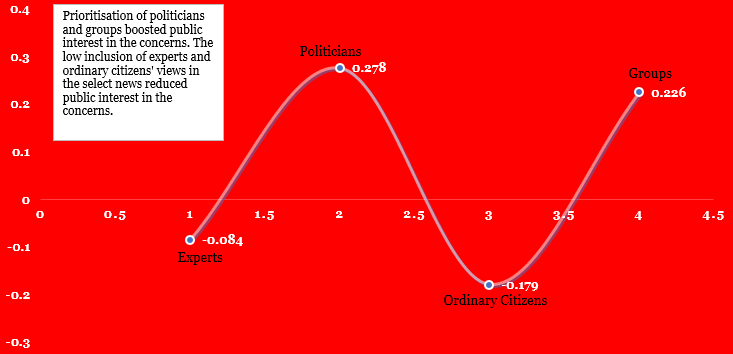
Source: Nigerian Newspapers, 2020; Google Trends, 2020; Infoprations Analysis, 2020

Security and insecurity remain two things that will continue to be the topics of discourse in Nigeria when speaking opportunity presents itself. Varied discussions have happened on the need and issue across the country and outside. When it is obvious that the federal government can no longer contain illegality and criminality in some parts of the country, interest groups that have regionalism as focus called for community and state policing. In the heat of the debates on the two policing systems, South West Regional Security Initiative emerged codenamed ‘Amotekun’.

In our previous analysis, we have shown the hindsight within the context of the Nigerian newspapers’ reportage of the issues that trailed the inauguration of the security outfit by governors in the south west region, most especially naming of the outfit as illegal by the Minister of Justice and Attorney General of the Federation. After series of meeting and enactment of law for making the outfit constitutional, report has it that the bill initiated has been signed into law by most state governments in the region and that one of the states has concluded its plan to translate the law into Yoruba language.

Like the previous analysis, this analysis leverages the news reports curated between January 19 to 22, 2020. We intend to understand the layers that exist among the reports and between the public. In Exhibit 1, we present headlines of the news, showing the engagement and impression scores.

By engagement score, our aim is to reveal the degree to which the newspapers’ headlining style facilitate people’s span of attention. Impression score focuses on knowing the extent to which the engagement could lead to reading of the content. We explored this further and our analysis indicates a strong negative link between engagement and impression scores. We found -52.5%, signifying that one percent increase in engagement reduces impression by 52.5%. What we could import from this result is that headlines of the news report ensured less than 50% reading intent. Despite this, we further discovered 41.5% connection between newsmakers and public concern for security, kidnapping and herdsmen.  This further establishes the reason we should care about the snippets from the headlines with the significant engagement and impression scores.

Issues in the Select News

Amotekun: Leopard on the spot. This is the headline with the highest engagement score (80). Despite having the highest score, the impression score is one of the lowest recorded scores reveals by our analysis. The report was written by a columnist and expects Nigerians and government officials to reason along the enactment of the Sharia law in Zamfara State in 2000. According to him, “nothing else has tested the sanctity of Nigeria’s practice of federalism like the launch of the Western Nigeria Security Network (WNSN), better known as Operation Amotekun (the Yoruba word for leopard), by the south-western states on January 9, 2020.”

Malami ordered police to stop Amotekun protest, Yoruba group alleges. This headline became necessary when the federal government felt that protesting against naming the security outfit illegal could lead to other criminal acts in the region. With the story, our analyst observes that the government through the Ministry of Justice was of the conviction that groups need not staging protests because of the description of the outfit as illegal by the government.

From group to the renowned Professor and public affairs analyst, The Punch reported Professor Wole Soyinka’s position on the issue. The newspaper says “Soyinka Attacks Balarabe Over Comment on Amotekun”.  Alhaji Balarabe Musa had earlier condemned the outfit on the basis that Operation Amotekun would lead to the declaration of Oduduwa Republic.

In what appears to be the needed voice to consolidate the region’s interest on the security outfit, The Guardian newspaper says “Tinubu Finally Reacts to Amotekun”. The report indicates that Senator Bola Ahmed Tinubu stressed the limitless, inoffensive addition of the security outfit to the country’s security apparatus.  Corroborating Tinubu’s position, Pastor Francis Wale Oke described the initiative as noble and expect the governors in the region to legalise it. This further emphasises the Minister of Justice’s earlier stance on the outfit.  Engineer Seyi Makinde, Oyo State’s governor also lent his voice to the issues on the creation of the outfit, saying the initiative has come to stay that police can’t be everywhere.

Understanding the Layers

Beyond the headline analysis and presentation of the issues from the headlines that have highest impression and engagement scores, we examined three categories of layers using neural network analysis. We studied input, hidden and output layers. With the input layer, we input attitudinal disposition of the newsmakers such as groups, public affairs analysts and politicians.

We specifically analysed illegal, legal and neutral positions of the newsmakers in the neuron. The hidden layer entails public interest within security, insecurity and herdsmen. Using Amotekun as the base word search, we have public interests in stakeholders within the law and government, executive branch, legislative branch, courts and judiciary, state and local government. In all, we examined the degree to which public had concern for security. From our analysis, public only had concern for security within law and government, courts and judiciary. With the result, our analyst observes that indeed Amotekun needs legalization.

The Layers Connectivity and Dysconnectivity

To establish the connectivity and dysconnectivity, we employed newsmakers’ attitudinal dispositions towards Amotekun and public interest in the concerns [security, kidnapping and herdsmen] within the context of issues around Amotekun. Our first analysis indicates that attitudinal disposition of the newsmakers connected with the public interest by 35.9%, while 12.9% of the dispositions could only be explained from the interest.

The second analysis reveals 54.5% linkage between the dispositions and categories of stakeholders in law and government and 57.7% for the courts and the judiciary, who supposed to intervene. Over 29% of the dispositions led to the public interest in law and government’s stakeholders, while 33.3% of the dispositions enhanced public interest in the courts and the judiciary.

Using regional approach, our analysis establishes striking results. When we examined the influence of dispositions by region on public interest in the concerns within the context of Amotekun, as expected, we found a positive connection of the north-legal disposition with the concerns (1.6%), while it is -8.1% connection for north-illegal disposition. We discovered 49.7% connection in south-legal disposition and public interest in the concerns. Like the north-illegal disposition, we also found a negative connection in south-illegal disposition and public interest. We specifically found -29.1%.

Analysis further north region maintained its negative layer towards Amotekun during the period we analysed. We discovered that the legal and illegal disposition of the region connected with the public interest in law and government’s stakeholders, who are expected to intervene by -23.6% (north-legal) and -4.5% (north-illegal). While it was negative in the north region, we found positive in the south-legal disposition (56.6%). We could not discover significant result from the south-illegal disposition towards public interest. This implies that the newsmakers’ positions from the south region and public interest in the concerns were wired along the same layers during the period that our analysis covers. Likewise, for the north region which further stresses our earlier hypothesis that the south region favours the security initiative more than the north region.

Week 3 is Live – The Great Modern Business Models

0

Week 3 is live on the Tekedia Mini-MBA. The session is titled “The Great Modern Business Models”. With all the cases and examples, it is a bit longer, at 52 pages. I am very confident that after this session, we will have clarity on all the most critical business models of the 21st century. Have a profitable week ahead.

We continue to welcome new members, register here and join us.

Week 3 Session

Week 3 Session

32

Notes We’re planning for Tekedia Innovation Summit in Q4 2020 in Lagos for members of Tekedia mini-MBA, Tekedia General Management Program (GMP) and Tekedia Advanced Management Program (AMP). No extra cost to you. It is our plan to use that live innovation festival, supported with webcast for those outside Lagos, to deepen all we are […]

This post is only available to members.

Eliminating Your Avoidable Miracles

3

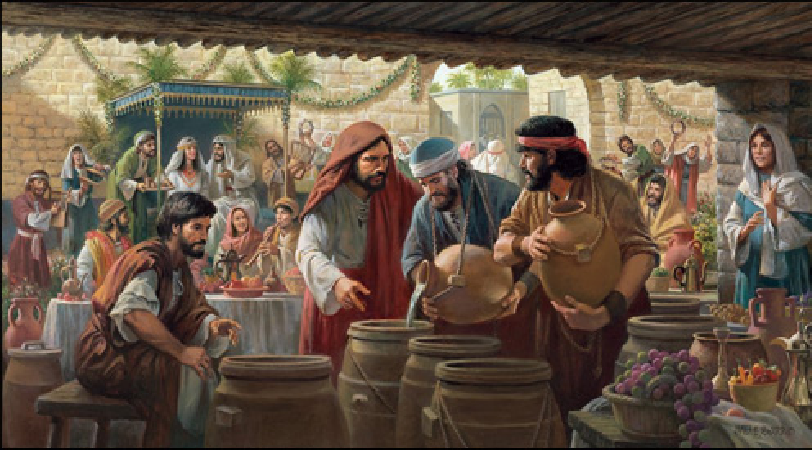
He ran out of wine and needed a miracle to entertain his guests. He was a very poor manager and operator. He was unprepared, not accounting that a special visitor was coming, and that visitor might be bringing more people to the party.

The couple who needed a miracle from Christ, turning water into wine, to keep the party going is an example of who we should not be. As business professionals, we must be prepared, modelling scenarios to ensure that we do not lack raw materials when production should be at peak. Yes, we cannot lack the wine of factors of production, expecting miracles from supply chain partners, to maintain our market share during our growth phase.

Simply, it is not every time in our life that we must expect unnecessary and avoidable miracles. Miracles that suppliers will cut mean time to delivery from 20 days to 2 days because without those supplies, we will have to shut down plants. 

As the new week begins, be prepared, and develop a protocol to be more organized. Never allow your life to be one where you are always expecting “miracles” from people. Sure, you will get them but most times, you pay an opportunity cost. 

Have you ever imagined the gift Christ would have given to that couple, if He had not spent His energies to turn water into wine, to help them entertain their guests? Yes, people can help you to deal with your external visible problems but leave you empty on things so personal to you. They help you because they do not want to be embarrassed while there, but quickly depart once everything is settled.

Avoid unnecessary miracles, and have more order in your life. Live that way,daily, and be positioned for the great miracles when you earnestly seek.

Reference: the Bible.

On the third day a wedding took place at Cana in Galilee. Jesus’ mother was there, and Jesus and his disciples had also been invited to the wedding. When the wine was gone, Jesus’ mother said to him, “They have no more wine.”

“Woman,[a] why do you involve me?” Jesus replied. “My hour has not yet come.”

His mother said to the servants, “Do whatever he tells you.”

Nearby stood six stone water jars, the kind used by the Jews for ceremonial washing, each holding from twenty to thirty gallons.[b]

Jesus said to the servants, “Fill the jars with water”; so they filled them to the brim.

Then he told them, “Now draw some out and take it to the master of the banquet.”

They did so, and the master of the banquet tasted the water that had been turned into wine. He did not realize where it had come from, though the servants who had drawn the water knew. Then he called the bridegroom aside 10 and said, “Everyone brings out the choice wine first and then the cheaper wine after the guests have had too much to drink; but you have saved the best till now.”

11 What Jesus did here in Cana of Galilee was the first of the signs through which he revealed his glory; and his disciples believed in him