DD
MM
YYYY

PAGES

DD
MM
YYYY

spot_img

PAGES

Home Blog Page 6484

Counter and Alternative Narratives Creation on Amotekun: A Hindsight from Newsmakers and Public

0

Prologue

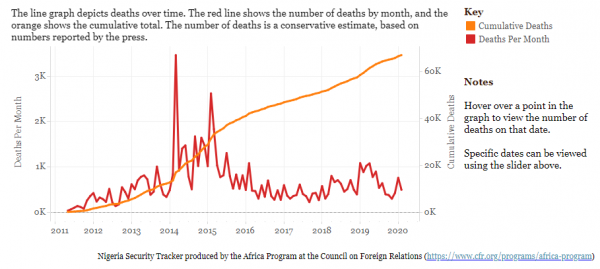
From May 2011 to February 2020, series of reports have indicated the number of people killed due to high level of insecurity across the country. In 2015, prior to the general elections, agitation was high on the need to have adequate measures for the security of lives and property by the concerned stakeholders. A few weeks to the 2019 general elections, issues were equally raised concerning the activities of some armed groups, including Boko Haram’s endless attacks on people and businesses in the northern region.

According to the new statistics, the outcome of the attacks has been the killing of 36,932. To contain the soft attacks being launched by some armed groups in the south-west region, states in the region through Development Agenda for Western Nigeria (DAWN), held security summit. The summit resulted in a communique and finalization of a regional security network. The launching of the initiative attracted mixed reactions from government official, experts and ordinary citizens.

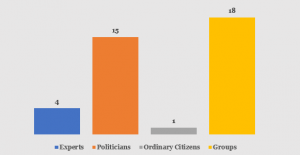
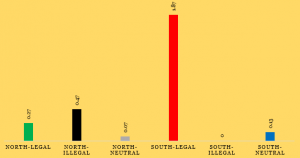
This piece presents the category of people who expressed their views on the issues that trailed the launching of the initiative in the region. Having examined the select reports published by the Nigerian newspapers between January 19 and January 22, 2020, it is obvious that regionalization was stressed within the attitudinal disposition towards the security network [see Exhibits for the details].

Exhibit 1: Select Newspapers’ Headlines

Source: Nigerian Newspapers, 2020; Infoprations Analysis, 2020

Exhibit 2: Category of Newsmakers

Source: Nigerian Newspapers, 2020; Infoprations Analysis, 2020

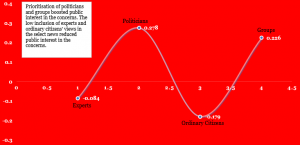
Exhibit 3: Newsmakers and Public Interest

Source: Nigerian Newspapers, 2020; Google Trends, 2020; Infoprations Analysis, 2020

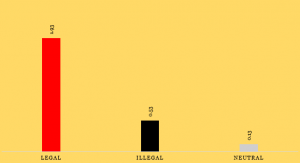
Exhibit 4: Attitudinal Disposition

Source: Nigerian Newspapers, 2020; Infoprations Analysis, 2020
Note: Figures are in Mean Values

Exhibit 5: Region of Attitudinal Disposition

Source: Nigerian Newspapers, 2020; Infoprations Analysis, 2020
Note: Figures are in Mean Values


Causes of Fire Outbreaks in Nigerian Markets

1
Fuel tanker explosion in Onitsha (Source: Vanguard)

The rate at which fire is destroying markets in Nigeria is becoming alarming. Since the beginning of the 2019/2020 harmattan season, hardly does a week pass without news of fire incidence in different markets scattered around the country. This is painful because, in all these recent cases, affected shop owners barely escaped with their lives and were, therefore, unable to spare their wares. The worst thing is that help rarely comes from the state fire service until fire has done irreparable damages.

It is quite unfortunate that the incidents of fire outbreak in markets have not taught other market unions and local government authorities in other parts of the country some lessons. These market unionists and local government agents are more interested in revenue collections than in putting in place, measures that will ensure that fire accidents are prevented or handled swiftly when they happen. Because of this neglect, markets, among other things,s are continually attacked by fire.

Causes of Market Fire Outbreaks

From the reports of fire incidents in markets, one couldn’t help but wonder what causes them. While growing up, there were speculations that fire outbreaks in markets were causes by miscreants, especially those that hide in corners to smoke marijuana. Later, it was said that they were deliberate acts by opposing unionists, who wanted controversial market squares to be moved from their current locations (that was the claim when the popular Orange Market in Mararaba, Nasarawa State was completely razed down in 2016). These claims could be true, but it will be important to point out some other preventable reasons why the fire starts and spreads faster in Nigerian open markets.

1. Types of Buildings
Most of the shops that are razed to the ground are shanty houses made with woods and metal sheets. This is not to say that concrete shops aren’t affected in cases of heavy fire, but casualties in concrete block shops are lesser than that of shanties. Some market authorities have already started handling this situation by building concrete shops all over their markets. And truth be told, this has reduced the cases of fire outbreaks in many markets these days.

2. Poor Electrical Wiring
There are some markets you will go into and couldn’t help wondering if the electricians that did the electrical connections were at tug of war. They criss-cross wires all over the place and leave some dangling dangerously. Even inside the shops, some electrical connections are nothing to write home about. The only way out of this situation is if the market authorities ban traders from tampering with electrical connections in their shops and the electric poles.

3. Use of Generators inside the Market
Using generators inside the market doesn’t only cause noise and air pollutions, but can also cause fire outbreak or fuel its spread. How this can cause fire outbreak will be understood if someone considers the fact that generators use fuel (petrol), which can easily ignite when it comes in contact with heat. Some market authorities have been able to discourage individuals from using private generators by providing power plants that serve the whole market or a section of it and insisting that those that wish for constant power supply connect to the general power plants. The general power generators are usually mounted outside the market so that they rarely cause harms to traders and shoppers.

4. Cooking inside the Market
In markets such as Onitsha Main Market, restaurants are situated at the outskirts of the market. Those that wish to eat either leave their shops to visit these restaurants or order for foods, which are sent over to them. Alternatively, they can buy from the numerous food vendors that are found in their numbers within the market. The major thing here is that people are not allowed to cook inside the market. But some markets don’t observe this simple strategy. They allow restaurant owners to situate their shops right in the middle of the market. You can also see women that kept small kerosene stoves and camping gas cookers in their shops, which they use to cook or heat up food for their children.

5. Filling Stations and Gas Plants near Markets
Of course because of the large number of generators inside the market, business owners have decided to bring filling stations closer to markets. This cannot even be compared to those that sell fuel in kegs right inside the market (they target those that can’t leave their shops and walk over to the filling stations). Most of the times, Nigerians cause their problems by themselves.

Fire can be a natural disaster or man-made catastrophe. The fire incidents that happen in our markets are man-made and preventable. But because people are so much interested in making money, they put their lives at risk. For this, I call on traders to help themselves to reduce the loss of their properties and goods. It’s true that some markets already have measures on ground to prevent and battle this, but they still need to do more. They can start by keeping fire extinguishers in their shops (which are not there as far as I can tell) and avoiding actions that can ignite fire.

As for the local government authorities and the market union executives that are only interested in collecting money from traders, I want to enjoin them to make their markets safe. It is a shame that markets in Nigeria cannot afford to install mini fire stations that will be immediately used to quell fire outbreaks. If a market cannot afford one, they can partner with a close-by market to do so.

The market authorities should also consider using the revenues generated from their markets to build concrete lock-up shops for traders. Shanty shops should be discouraged. Rather, open stalls could be built for them, or spaces allotted for containers installations.

Review of the Best How-To`S and Tutorials for Students

0

Most teachers offer students a list of recommended textbooks. But it is very important to consciously approach the quality and quantity of acquired knowledge. You should choose some good how-to’s and tutorials for self-education. This will have a good effect on your professional growth and English proficiency. We will tell you how to choose modern, useful, and interesting books and in order not to get confused in a large number of publications.

Choosing the right English how-to`s and tutorials 

You should consider several factors at once in order to choose the perfect books:

  • First, you need to decide what level of the tutorial you need: beginner, intermediate or advanced. Thus, it is necessary to determine your level of English. The easiest way to do this is with one of the many online tests – for example, the British Council offers to pass such a test. When the level is determined, you need to formulate your training request. Do you want to master the most general basics of the English language, or do you have a specific goal (for example, to master business English for business use)? 
  • It is also worth thinking about what additional resources you would like to use. We recommend acquiring a manual that includes audio recordings for those students whose auditory channel is the main channel of perception, as well as for those who want to work on English pronunciation or develop listening skills. And if your visual channel is the basic channel of perception, then a book with a lot of illustrations will suit you.
  • Many modern English textbooks include online components: games, videos, and various types of exercises. They are especially useful for those who like to study in an interactive way.
  • It`s not easy to find a tutorial that includes all of the above elements. Therefore, you need to set priorities correctly, that is, decide which aspects are more important to you and which ones can be neglected. You can visit CustomWritings.com and choose what you need.

List of popular how-to`s and tutorials for students

Here are several how-to`s and tutorials that are very popular all over the world:

“English File” by Clive Oxenden and Christina Latham-Koenig. This tutorial was published by Oxford University Press in 2013. It has Intermediate, Intermediate Plus, Upper-Intermediate, and Advanced levels. This British edition is very popular all over the world. The relevance and modernity of lexicon, interesting topics, effective infographics, and illustrative examples are its basic features. At the same time, “English File” is an understandable, accessible and relatively easy textbook for students.

“Speakout” by Frances Eales, Antonia Clare, J.J. Wilson, and Steve Oakes. This tutorial was published by Pearson Longman in 2013. The textbook was developed in close collaboration with the BBC company, and this left a noticeable imprint on the quality of materials. The topics of the textbook are accompanied by excellent videos. Live interviews help develop spoken language and expand your vocabulary.

“Upstream” by Virginia Evans and Jenny Dooley. This tutorial was published by Express Publishing in 2002. The program of this textbook is deeper and therefore a little more complicated. The complexity of the materials is expressed in texts for listening/reading, and in grammar.

“New Total English” by Rachael Roberts, Antonia Clare, Araminta Crace, and J.J. Wilson. This tutorial was published by Pearson Longman in 2011. Both grammar and vocabulary are focused on trained students. The addition to this textbook has been released. It is available on the website where you can create an account for free by registering the ISBN number of your tutorial.

“Practice Makes Perfect ” refers to how-to`s with a huge amount of interactive exercises. You can even say that this is an expanded workbook in which each short lesson is followed by many practical tasks. There are 53 lessons in the book, which cover the tenses of the verb, possessive pronouns, prepositions, negatives, and so on. To avoid confusion and information overload, each lesson is very short and devoted to a separate grammatical phenomenon, and you can complete it in about 15 minutes. You can purchase “Practice Makes Perfect” on Amazon.com. The price will depend on which version you choose – electronic or paper, as well as whether it is a new book or a used one.

“Business Communication” by M.K. Sehgal and Vandana Khetarpal also refers to how-to`s for students. It was published in 2007. This book is a practical guide for business English learners. 

So, we have provided you with a list of 6 excellent English tutorials and how-to`s for different levels and different requests and goals. It’s time to start practicing!

Some Quotes from Tekedia Mini-MBA

0

Here are some quotes from our materials and discussion boards on the ongoing Tekedia Mini-MBA.

From Discussion Board (hope you see your firm survival as being mandatory)


Quotes from Tekedia Mini-MBA which continues to welcome members; register today.

Great Products + Execution = Great Company

1

In Africa, I have learnt that big press release rarely moves growth. Growth is not a one-time event. That is where it becomes challenging. Yes, you have built the product, ran some press releases and now you are waiting for sales to take-off. Nothing happens. You have paid Google and Facebook for adverts, waiting for the bank accounts to respond, nothing happens. This part of the world is different; you cannot hack growth as they do in America because hacking the pockets of Nigerians (and Africans in general) is tough. Yes, when the average income per day is $2, it is harder to find money in that pocket even when you have hacked into it!

[…]

One way to make growth happen is to have a system that actually measures growth. Until you have a clear desired growth target, you would be unable to mobilize the required resources to make it happen. Without measurement and pursuit of targets, everything becomes guesswork, a simple pendulum or rollercoaster with no clear deliverable expectation.

[..]

Pulse: Facebook created a position for Vice President of User Growth, ran by Chamath Palihapitiya, now the CEO of Social Capital. According to Chamath, they realized at the early phase of Facebook that having many users in Facebook was the most important feature in the business. In other words, despite any engineered feature, if there were no people in Facebook, no one would have cared. So, to give users the best feature – having their friends, families, etc there – Facebook formed a growth group which does nothing but work out mechanisms to bring people to use Facebook. Until you can measure and work on things that matter, top-grade execution will not happen.

When you are growing, you are executing well, and one key thing here is that more people will like to come and work with you. In a big company, your unit will begin to attract top talent and in a start-up, more quality talent will begin to apply. Where there is no momentum – i.e. the execution is stunted – visions fade and paralyses emerge: a tribe of believers is lost, not just in the firm but also in the market. If the workers do not see any momentum, doubts set in and customer relationships will become secondary as everyone will be updating his or her CV more. Suddenly, the business that was attracting great talent is now struggling to keep those it wants to keep in-house.

Growth happens when there is a great product to sell. No other trick can work, and anything else will fade over time. So, the summary is this: Make Great Products That Wow Customers.


Culled from Week 2 of Tekedia Mini-MBA Lecture Materials. You can still join us here by registering via the options provided here.