DD
MM
YYYY

PAGES

DD
MM
YYYY

spot_img

PAGES

Home Blog Page 6485

Confronting Bullying as Children

0

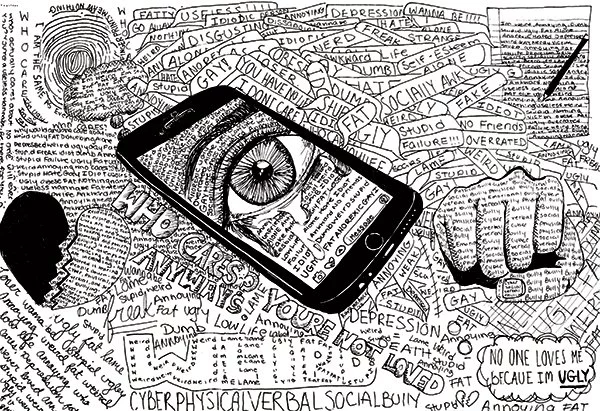
I have never really given the issues of bullying serious thoughts until the recent incident involving Quaden Bayles. The more I thought about it, the more I go back in time to my childhood remembering how we handled or were made to handle the monster called bullying.

According to Wikipedia bullying principally involves “the use of force, coercion, or threat, to abuse, aggressively dominates or intimidate”. It is an oft repeated behaviour drawing from a perceived or real power imbalance based on physical or social advantages. From the hindsight of my childhood experience, three approaches generally worked for us.

The first approach usually came in the form of our parents taking us to school headmasters, principals, and other school authorities or the bully’s parents to report such acts of bullying. The bully was often fetched out, scolded, warned or served some hot-tea of canes. Often, the fear that they had been reported or received some canes had a way to reset the brains and behaviour of those bullies. The best way to explain the second approach is to use a personal story.

Upon maybe, a one-off or repeated complaint about a bully at school or in the street, my mother would ask the description of the bully-boy just to establish his age or physical built; sometimes, she walked us to the home of the offending bully to make a report to the parents (and also size up the oppressor). Upon her judgment that such a boy did not have two heads (was within your age range and his height not always relevant), and that with determination you could holdout in a fight with him, she would sternly warn me that I would receive additional beating if I return home next time to complain of such a boy. You never know what magic happens when you are thrown between the devil and the deep blue sea! I still remember occasions where the bully was dazed by the sheer willpower and out-of-the-blues strength from the long perceived weakling! You are virtually fighting with your head, teeth, nails, feet and sand, because another report from you at home would be a double-jeopardy!

And it often worked – even where you received some drumming from the oppressor, somehow, he would not like to engage you again, as that had a way of emboldening others to challenge their reign. Interestingly, beyond what may be called native or street wisdom, even within the academics, some authorities have also argued that part of a child’s developmental life should be the freedom to fight his fights. This is what Dr Helene Guldberg, a developmental psychologist, espoused in her book “Reclaiming Childhood: Freedom and Play in an Age of Fear”. And with my childhood experience, I also hold that to a large extent this is true.

And the third approach was to confront the bully leveraging on the power of community. For us as children who grew up within a residential compound that was akin to a cantonment characteristically of the face-me-and-face-you mold with scores of resident children of varying school age, spread and attending school in good and often intimidating numbers within neighbouring schools, removing the mask of oppression from the bully was to tap from the cloud of this community.  All we needed to do was to call a senior schoolmate from the same residential compound, and of older age or better physical built to read the riot act to the bully. On extreme occasions, especially where the bully was recalcitrant, a beating from many hands did the magic. In all, what we enjoyed then was the manifested sense and shield from a community though of different designs.

Today, the internet as buoyed by the social media has been able to create communities not limited by borders and social strata. And these online communities have also been helpful with the fight against bullying, and rallying round victims in presenting a united front against the monster and also boosting the confidence of the victims. This is what little Quaden Bayles has benefited with his recent experience – and the internet of social media of course has a way of somehow turning some victims to celebrities.

I do not begrudge the little-man – he is enjoying the fruits of his internet era. Who said that without the internet or social media in those days we never were celebrities? We often were celebrities in our minds and in our streets for disgracing the oppressor – even if our celebrity status lasted for one only week or only within our street or school!

Unlocking Hidden Innovation Opportunities Through Design Thinking

0
Innovation lives in Africa

In today’s dynamic and complex business environment, staying relevant has never been this challenging. This challenge has been exacerbated by rapid and continual changes in technology and variegated customer choices. Companies seeking to achieve or sustain competitive advantage must not just innovate, but innovate right; create product/service that is user-focused (must meet the basic and excitement needs of customers).

Whether we like it or not, competition will continue to intensify and the only way to stay afloat is to continue to provide solutions through the lens of the user or from user perspective. Design Thinking in recent times, although not new, has been garnering traction amongst business leaders owing to its use in enhancing customer-centric innovation. Big and successful multinational companies like General Electric (GE), Procter & Gamble (P&G), Sony and Philips have been reported to use design thinking as a problem-solving apparatus across their respective companies.

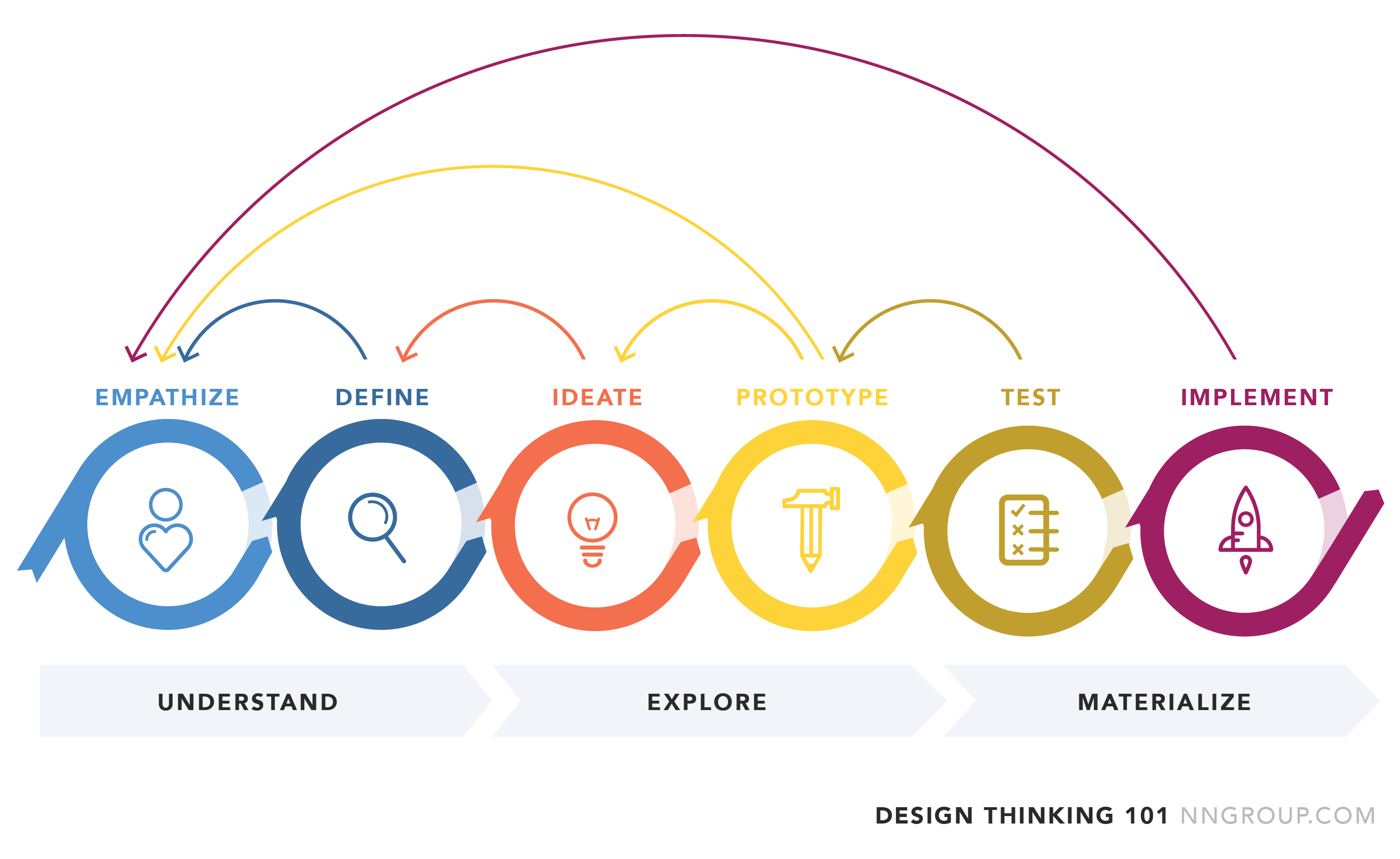
What then is Design Thinking? How can it be used in unlocking hidden business opportunities? According to Jeanne Liedtka, Design Thinking is best understood as a skill set, such as the ability to handle uncertainty, tolerate ambiguity, and maintain the big picture through systems thinking and systems design. In a nutshell, Design Thinking is a human-centered approach to solving real customer problems by making use of data from user research and feedback to design and build solutions that are both demand-driven and valuable. It therefore stands as a bridge between product success or failure in the marketplace.

It begins by first studying to understand customers, and identifying challenges the customers are facing; brainstorming new and possible solutions (product/services or business model); drawing key assumptions; and rapidly prototyping to validate assumptions before launch.

Design Thinking gives business practitioners the opportunity to clearly define, redefine and reframe the problem to so as to get a deeper and holistic understanding of customers pain points and even beyond, that is, problems companies don’t even know exist and customers don’t know they have. This facilitates deeper connection between the company and its customers, optimises the company chances of success, reduces unnecessary cost and wastage and enhances stakeholder value.

In conclusion, Design Thinking is a process that can prove invaluable to a company in addressing several innovation challenges like new product/service and new/alternative business model if incorporated into a company’s innovation strategy.

The Informal Saving Culture of ADAKO

0
Piggybank for saving has enslaved many to online lenders

ADAKO is literally translated to “Save and Pack”.

This illustrates a saving culture where savers (mostly women) are in a self-selected group. Each member of the group saves an agreed amount periodically based on agreement and the sum total of the savings is handed over to each member in turns to the last member.

The approach is simple and effective when every member of the group knows each other.

The selection of members is mostly single-handedly done by the initiator who also takes up the leadership role in the group. Some of his/her responsibilities are to ensure that every member pays their contribution timely, and the sum total is given to each member in turns promptly.

The leader (mostly semi-literate or literate) is usually at liberty to assign ‘collection numbers’ to the members in the first cycle of ADAKO, but members may demand an open and fair process in assigning ‘collection numbers’ in subsequent cycles.

Despite the advent of microfinancing institutions in Nigeria, ADAKO is still thriving and it is now common in small offices.

ADAKO does not involve paying of interest but the leader of the group may sometimes be compensated with a token by all members at different times as they collect the contribution in turns.

This system of saving culture is overdue for automation and probably be part of banks’ offerings to its customers.

Fintechs are encouraged to also look into this direction. The system architecture can be created and a solution developed to automate the processes involved.

Let us bring this category of people using ADAKO as a means of meeting their financial needs under the formal financial sector.

This is achievable.

Vetifly, the Uber for Helicopter, will Commence Nigerian Flights in April 2020

7

Vetifly, the pioneering uber for helicopter, will commence helicopter flights in Nigeria by April 2020. I confirm that our helicopters are on ground and all finishing touches largely completed. We had already informed members on the waitlist of this news, and also asked them to give us their flight routes.

Victoria Island to Ikeja Airport to/fro is live. Ibadan to Lagos to/fro is also live. More routes will be added as we scale the mission.

As a village boy, I am adding Lagos to Ovim (Abia state) as my additional route. Interestingly, Ovim has an old helipad which will get back to full use again, and that will serve Umuahia, Old Bende, Arochukwu, Okigwe, Ohafia, Isuikwuato, etc. With this, there is no more reason NOT to visit villages more often! So, if you are from that area, let us know.

Join the Waitlist to fly over traffic and security – https://movedifferent.ng/

Vetifly – move different!

Ndubuisi Ekekwe
Co-Founder, Vetifly

What Is Unethical Marketing?

2

We live in a time of information. Everyone has access to it more than ever before. And as such, bending the truth becomes the catalyst to a brand losing the trust of consumers. In a world where advertising has always relied on promoting aspirations, what could be seen as unethical marketing?

People spend a lot of their time on social media and therefore, spend a lot of that time interacting with the brands they consume – as a way to gain more insight on the things they use day today. People are looking for transparency from brands on social media. They don’t mind sharing their information, as long as they know why the brand needs that information.

At the top of the list of unethical marketing is marketing that distorts or exaggerates the truth, closely followed by using unrealistic or altered images – which is an integral part of online shopping for most consumers. These establish trust with consumers as consumer satisfaction is linked to the marketing message delivering on the value it promised.

When we look at brands that are advertising right now, we’d be hard-pressed to find more than a handful that doesn’t possess some level of unethical marketing in the form of false claims or evoking emotions to convince you that a certain brand can ease those emotions. As challenging as it might seem, you are able to identify the ways you can avoid unethical marketing.

Unethical practices that can destroy your reputation

Let’s take a closer look at some unethical marketing practices:


  • Stating false, exaggerated or unverified claims – Unethical marketing seemed to be the norm in the past with brands stating false, exaggerated or unverified claims such as cigarettes giving you a more active lifestyle – a claim that was dispelled as soon as it was proven that cigarettes are harmful to your health. Consumers are most likely to be loyal to a brand that says what it means so avoid making false statements or exaggerated benefits to pull consumers.
  • Distorting the facts to confuse and mislead potential consumers – This is another common practice in unethical marketing. Brands tend to claim they lack something unhealthy in their product to appeal to consumers to buy their products. This misleads consumers as brands know that they wouldn’t be able to sell the product if consumers knew that it indeed contained what it claims it doesn’t. Complete transparency is key here.
  • Masking dark sides or side effects of products or services – You’ve heard the statement, ‘Too much of a good thing is bad’. The natural remedies industry has a tendency to claim that their natural products have no side effects. This is a false claim as everything consumed, especially over a period of time, has side effects – unless those side effects are unknown. The safest statement to make in this instance would be, ‘There are no known side effects’.
  • Competitive advertising – This is common practice in international advertising, telling consumers how bad your competition is to make yourself the next best choice. This has been the practice for a lot of big brands that are constantly going head to head for the top spot such as famous takeaway restaurants or well-known German cars. The most professional strategy is to focus on the one thing your brand has that your competition does not help you stand out from the pack.
  • Using sex to sell – Advertising has boasted the statement, ‘Sex sells’ for a very long time without taking into account that sex also alienates. Brands tend to use women to sell unrelated products such as cough mixture or even heavy machinery when it has nothing to do with the product or brand positioning. Remain relevant to your brand.
  • Putting fear into consumers – This is a practice common to the insurance space where you’re given numerous hypotheticals of what harm could come to you if you don’t protect yourself with their insurance policy. This is designed to make consumers make a decision on the spot which is unethical as fear doesn’t inspire loyalty.
  • Copying marketing messages – Consumers have a tendency to identify a brand with the message positioning they always hear with it. While plagiarism isn’t very common, it does happen. This may result in your brand being mistaken for your competitors. Marketing is about creativity and this practice will give an impression of a lack of innovation from your brand.
  • Exploitation – Charging for much more than the value of your product could alienate consumers from your brand. The prices of your products should be equal to or less than the value your consumer gets out of them. If the value is less than the cost, it’s unethical.
  • Race, age, sex or religious discrimination – The communication you put out to potential consumers should not be demeaning to any race, age, sex or religion. As there is no one better than anyone, your marketing should strive to put this across in all its communication.
  • Spam – This is the most common unethical marketing practice. Sending unsolicited messages to potential consumers will only land your emails in the trash. Junk mail may have given birth to spam but the dislike of it hasn’t changed, no one likes a spammer.