
DD
MM
YYYY

PAGES

DD
MM
YYYY

spot_img

PAGES

Home Blog Page 6490

On Central Bank of Nigeria’s Ban of Milk Importation

0

In the latest turn of events in the Nigerian milk industry, the Central Bank of Nigeria (CBN) has lifted the ban against milk importation, but restricted the right to six dairy companies only.

In a circular published by the Apex bank on Tuesday, the new authorization was granted only to companies that keyed into the integration initiative of the Bank.

“As part of efforts to increase local production of milk, its derivatives and dairy products, the Central Bank of Nigeria has engaged with some companies in the industry who have keyed into the bank’s backward integration program to enhance their capacity and improve local milk production.

“Accordingly, all authorized dealers are to note that all Forms ‘M’ for the importation of milk and its derivatives shall only be allowed for the following: FrieslandCampina WAMCO Nigeria, Chi Limited, TG Arla Dairy products Limited, Promisador Nigeria Limited, Nestle Nigeria Plc (MSK only) and integrated Dairies Limited.

“For the avoidance of doubt, all established Forms ‘M’ for the importation of milk and its derivatives for companies other than the above for which shipment has not taken place should be cancelled immediately,” the statement from CBN said.

In July last year, CBN added milk to the items restricted from forex access; it was in a bid to boost local production of dairy products. Therefore, the Apex bank urged stakeholders to embrace backward integration to cut the $1.2 billion being spent on milk importation annually. Many were thrown out of business since they couldn’t keep up with the new rules, a few others remained.

It has been about six months since the trial of the backward integration started, and the attempt appears to have failed to live up to its aim. Currently, Nigeria’s milk production stands at about 500,000 metric tonnes per year, which leaves a demand gap of 1.7 million tonnes.

The director, Corporate Communications Department at the CBN, Isaac Okoroafor, said the Apex bank engaged the six companies because they showed interest in the backward integration initiative of the Bank, and have shown their willingness to support it. He said the aim of the Central Bank is to increase milk production to 550,000 at the end of the year.

As the CBN continues to push to curtail the amount of forex going into importation of goods that can be produced in Nigeria, there is a chance that it could be attained. But it will happen at the detriment of the sufficiency of goods and services.

For instance, given the existing demand gap in milk, the possibility of the six selected companies meeting the demand is not guaranteed, and that means paying more for the products due to its scarcity.

Attaining sufficiency in milk production following the 550,000 tonnes per annum projected by CBN will take 34 years. If the exploding population is considered, it may never be attained.

This decision has been criticized by experts who believe it’s more political than economic. In 2019, Dr. Kunle Hamilton, the Chief Executive Officer of Virgin Consulting UK and a Consultant to a dairy multinational said the CBN is using politics to make economic decisions.

“We need to consider that the manufacturers have always supported the decision to backwardly integrate, and that is why our members are exploring local sourcing of raw materials. However, stakeholders have to agree on the right step to take. The effects of such a decision need to be considered to ensure that artificial scarcity does not occur due to the inability to meet local demands.

“There should be the right mix of measures and the right timing. There should be fair hearing from the stakeholders. The CBN should not carry out the action without adequately carrying manufacturers along,” he said.

Stakeholders complain that the deficiencies in dairy productions have more to do with infrastructural decays in the country than it has to do with forex. Unfortunately, the infrastructural challenges that have been obstructing production seem not to be part of the issues the CBN’s backward integration aims to address.

In the end of milk importation ban trial, the whole idea failed to boost local production or to create any opportunity for existing companies to thrive. It glaringly pointed to where the problem lies. So narrowing access to Form “M” to six companies only is believed to be another experiment that its outcome will not be different from the first.

I Resigned from My job with an Official car to pursue my Dream. An interview with Oladosu Stephen

0

If you have a passion for something, do everything to make it come to reality. Stephen is a great example of a burning desire to make a change in this world. Here’s what he shared with me in this interview:

Can you briefly introduce yourself?

I am Oladosu Stephen Damilare, a Biochemistry (HND) graduate of the Federal Polytechnic Ede, Osun State, Nigeria.

I am a person with a burning passion and undying love for technology and also, I love helping people grow.

I have known you for a long time. You are a man of vision. So what have you been up to since graduation?

Thank you, Chinedu, for the compliment. I have been up and down trying to align my purpose in life with my ambitions.

It is necessary. I see you are trying to run an NGO, can you share more about it?

Let me start with a brief story behind the Vision:

I grew up in a comfortable family that exposed me to the early use of technology devices.

If I knew that was my future, I would have studied a Computer related course in school. But eventually, I found my way back to technology.

I resigned from a job that was paying me 60000 naira with a Car in Abuja to go and learn Website Design and Digital Marketing last Year.

This was where I experienced what youths are facing. I took to the street daily and saw continuous increase in the number of school dropouts and many jobless youths.

That spurred me to found a Tech-based NGO. I feel there is a big need in the society to bridge the gap of the unemployed dropouts and graduates. I don’t have the money to start, but I realised if I should gather a youth community by starting from Nigeria, and teach them tech-based  professions of their choice, then we will have a smaller number of youths roaming the street, youths committing crimes, and youths that has lost their future.

That’s a big vision Stephen. Considering the demand of this project, how do you plan to go about this?

The NGO is a tech-based for Nigerian and African Youths.

Firstly, I have a team of dedicated male and female (youths), who are ready to join in making this a reality.

Also by doing all legal clarifications and clearance so has to register the NGO and finally comes the most important thing, the funding.

I will find all the possible means to source for funds, be it from individuals, government, organizations, etc.

If all the necessary equipment needed for training is set, I have connections with a few friends in the tech Industries, who the NGO can pay a little amount of money to carry out different training.

What has been the major challenges of actualizing this dream?

Funds.

It is well. What do you want from the audience reading this interview right now?

I want them to help the NGO with funds, connections, prayers and love.

We want to register the NGO. We need money to do that. That way, the NGO will pass the first test and will be recognised by any organization who will approve our grants.

Have you leveraged several social media pages to achieve this?

Yes, we do register on a free donation site in Nigeria just like the Gofundme, but there has been no response. Although, we have not opened a social media platform for the organization.

Can you share the link to the page you said you created?

Sadly, the link has been broken by the site because of the lack of response for 30 days. So I will have to create a new link.

Sure. Feel free to share with me when it is ready. What should we expect from you in the next five years?

Wow! That’s a big question.

Expect an impactful NGO that will have reformed the future of more than 50,000 Nigerian Youths and at least 20,000 of the youths working with top tech companies, like Facebook, Google, etc

Where can the people reading this interview contact you if they want to?

They can contact me via my email or phone number.

Email: stepbaba@gmail.com or vigracreatives@gmail.com

Phone: +2348169685553

Thank you, Stephen Oladosu. I wish you a successful journey in this initiative.

Thank you very much Chinedu for having me on your show.

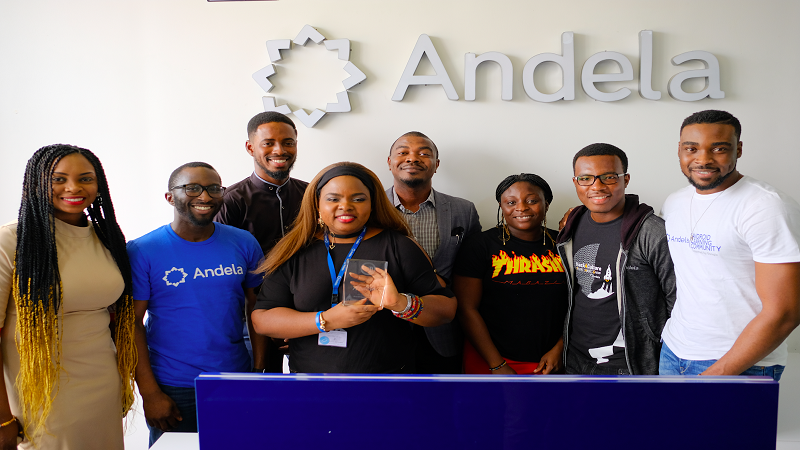
Answering The “What is wrong with Andela?”

2

Yes, “What is wrong with Andela?”, as TC daily put it this morning. I tried to answer that question many years ago when I wrote – The Andela Problem. It was a very bold article considering that Andela was evidently and universally pioneering in the African software development ecosystem. The problem with then Andela, despite being an amazing company, is the same problem with doctors: your marginal cost does not improve with scale and because of that, you become constrained and bounded. 

Think about it this way: a doctor has 24 hours in a day and largely meets one patient at a time. That protocol does not change if there are 10 patients or 2,000 patients available. Simply, medicine is not a great business even though they are the closest biological high priests to the altar of our Creator. Because they have the schematic and survey maps of human systems, they do miracles in great ways. We admire doctors!

But that does not mean a doctor practicing medicine can be a wealthy person. He or she will be fine but due to the marginal cost where he cannot increase supply to deal with expanding demand, he hits a ceiling. Yes, hiring more doctors in a clinic to deal with more patients does not improve the marginal cost.

For Andela, that is the same issue. While you can get clients for these developers, you are bound by the capacity to produce the developers; training them requires a finite time-frame. Yes, if IBM wants 20 developers, you cannot send them immediately as you need may be six months to get them ready.

There is good news though: Andela updated its playbook, becoming a recruitment firm by hiring anyone available with the required skills for its partners. I then called it amazing.because it has solved the marginal cost problem as it can advertise and hire experienced developers overnight with no restrictions of first training the developers, as it originally imposed on itself.

Yet, that old business model continues to be hovering on the business. The middle-skilled developers, not the experienced-get-them-anywhere-you-can-find-them, are at risks and they are carry-risks to Andela, TC Daily explains brilliantly.

Is Andela going to fire more developers?

Last year, Andela tweaked its business modelin a significant way. The company was originally founded and marketed as one that trains people into software developers then outsources their talents to companies in need of the developers; keyword “in need”. But in 2019, it laid off over 400 junior developers and stopped its developer training programme. Andela’s CEO, Jeremy Johnson, said there was “a shift in demand” in the company’s primary market. Placement companies were less “in need” of junior level developers. Andela decided it was going to focus on mid- and senior-level developers as “majority of the demand is for more experienced talent”, Johnson said.

But according to this report by WeeTracker, Andela is still struggling to find placements for its mid-level engineers. There’s a growing worry that these developers “are at risk of being frozen out.” Sources at the company say this risk continues to grow as the company continues to hire more experienced developers. One source said Andela is “constantly hiring in an effort to meet client’s demands with certain skill sets that the current pool of developers might not have.” That’s puzzling, and it puts question marks on the skillsets and the future of the company’s current developer pool.

The question now is: is the market for developers getting saturated or is Andela having a unique problem placing developers? This Quora question tries to answer the former. (TC Daily newsletter)

What is the difference between Usain Bolt and me? He is hardly twice faster than me. What is the difference between the best developer I know and a typical one – the former is easily 10 times more productive. Is he paid a 10x higher salary – definitely not. Strong developers are quite rare, while the weak ones literally bring a negative value to the business (due to costs of training, management attention, support, etc). From these basic assumptions you can derive the current state of affairs in the software industry: hiring managers select only a tiny portion of the candidates and discard all the rest. The result is the corresponding layering in saturation: the market is indeed saturated with low-grade developers while a huge unsatisfied demand exists for above-the-average ones. (Quora)

Andela is one of the companies we are studying this week in our Tekedia Mini-MBA (you can still join).

Comment on LinkedIn

Ndubuisi Ekekwe thanks for this insight prof. The doctor you portray here looks like the stand-alone medical doctor in private practice, and not the one who goes out to build a business around medical services like having a hospital or clinic.

My Response: Yes. A doctor on mechanics of human systems, and not one on the business of healthcare and medicine.  The doctor that does miracles in operating rooms, meets patients, etc is my focus here, not the one that may not have met a patient in years but works with MBAs and strategists to create leverageable value in the healthcare sector. Nothing is wrong in either: I was just explaining what drives the alpha.

Creating Options in Life: When and How?

0

As life pushes you to the brink of the wall, you are forced to innovate. That’s not the complete story though, the truth is that you only have one option, innovate or die. An adage in my local language says “ta ba sun aguntan kan ogiri, a poju da seni”. Literately translated as “when you push a sheep to the wall, it will have no other option than to attack you”.

Now that’s counter-intuitive because a sheep is known as the gentle and meek animal that is perfect at following instructions. But at what point will it so break free from its nature to the extent of attacking shepherded or any other agent? That’s the point where all humans seem to get also before they realize the urgent need to innovate.

There is a fundamental assumption in the adage though, the assumption that the sheep will choose life over death, the assumption that the sheep will choose to innovate instead of stagnating and the assumption that the sheep will rather have more option than one option. The assumption is not unfounded though, the assumption was made because the focus of the adage is not to teach about the sheep but make a point about human nature; we will always choose life over death, innovate than stagnate and more option than one option.

My question though and the puzzling of my mind is that why would we wait to the point of being pushed to the brink before we take this necessary action?

Option in the context of the essay is anything that improves your chances of attaining a set goal.

Knowing one more person in your field of endeavour improves your chances, so does learning a new skill and cultivating a healthy habit. You can extrapolate that list in the light of the definition given.

When do we create options?

I have observed that we tend to create options more when we have less of it. When the proverbial sheep in my illustration was being pushed to the wall, it did nothing, when its options were being stripped away from him, it did nothing, and when it was finally left one option, it sorts to create more for itself.

That’s the very behaviour I have observed in humans. The twist here, however, is that the reserve is the case in our story. A good percentage of us start out in life having close to zero option. You can only go to one kind of university because otherwise would mean, you can’t afford it. You only eat a type of food, you can only have a conversation with a select individual, in fact, only a stratum of the society is available to converse with you. You are kind of boxed.

It is at this point we sort to create options for ourselves. We seek to break out of a given social strata buy educating ourselves, upskilling ourselves, and making important bets that could potentially lead us to break free from our initial conditioning.

It is important that you know that so you can understand what the time is meant for and that you might use it wisely. Another tragedy which I often notice at this point of life is that all too often we seem to contend with the few options that we have created. It operates like a diminishing marginal utility, where getting more means to get less satisfied with more. If you can, avoid that tragedy. Work so much that diminishing marginal utility will not explain your option but increasing marginal utility. Because really, the more options, the better your life tends to be.

How do we create options?

We create options through experimentation.

What do I mean? You see when you start in life with close to zero option, a lot is stacked against you. Basically, the system of the world may not play at your favour until you choose to experiment on things. Experimentation entails bets, what are my chances of nailing this? If I nail it, what awaits me on the other side? Bets are important as you seek to increase your options in life.

I have a mental model through which you can quickly access if a bet is worth it…

“…when a thing has a finite, known and acceptable downside with unknown, infinite and acceptable upside, the best course of action for things like that is to accept it.”

That is the code for taking the best. Think about it this way, you have done your research about someone and you believe he can be the catalyst to a venture you are involved in, and you decide to cold mail her/him (the best), there are two possible outcomes in this scenario:

             Downside: S/he refuses to reply or replies with a no.

             Upside: S/he chooses to reply with a yes.

Now is the downside known? Yes. Is it limited? Yes. Is it acceptable? Absolutely yes.

The other side, is the upside known? Yes, but maybe not fully, s/he can do more than you are asking. Is it acceptable? It’s an upside for your decision, so hell yeah.

Then go ahead and cold mail that person. If the downside happens, fine. But if the upside, you would’ve increased your option in a never thought of way.

This is a pattern that I’ve noticed in all human endeavour. You are not left out.

But as we increase in option, we tend to relax. Law of diminishing marginal utility sets in. Why is that? Because erstwhile we have close to nothing to lose, but now “a lot” at stake. By our nature, this just pulls us back in our shell.

Be deliberate about creating options for yourself and you won’t regret such a decision.

Alpha Mead, Knight Frank and GPFI on the Race to Disrupt Skills and Knowledge Acquisition in the Nigerian Built Environment

0

While certificate remains the key to enter a number of industries and companies, the general consensus is that skills and knowledge are the core elements of executing a number of tasks for personal and societal growth. From the south to west and east to the north of the world, skills and knowledge gap remain debatable among the stakeholders in the labour sector. For instance, there is a wide skills and knowledge in the area of lean and offsite construction between Nigeria and the United Kingdom.

In Nigeria, the shortage of technical skills and knowledge is impacting the built environment that comprises the real estate, construction, material manufacturing among other industries. This has been cited by experts as one of the reasons impeding the effective realisation of the Nigerian Content Act 2010.

The continuous impacts of the skills and knowledge deficit have led to the formulation and execution of a number of strategic plans by the government and private sector, emphasizing the need for a paradigm shift in approach to skills and knowledge development in Nigeria. This is imperative as Nigeria enters the first year of the next three decades, expected to spend $3 trillion to construct and maintain infrastructure effectively.

As companies in various industries and segments in the Nigerian economy continue their strategic retreats in preparation for the year 2020, information from the Chief Executive Officer of Alpha Mead Group, Engineer Femi Akintunde indicates that the company is working on an e-Learning platform that would make teaching and learning of various Facilities Management courses in the industry easier.

Adding to the discourse, Olusesan Ogunyooye, Alpha Mead’s Head of Marketing and Communications, says “Like you will see in our communications, the talent Outlook seeks to appraise the current human capacity in the FM market in Nigeria viz a viz the required capacity required to drive the profession to relevance in the face of growing importance of FM in business performance.” Mr Ogunyooye made the submission in an interview with our analyst ahead of the company’s Facilities Management Talent Market Outlook discussion slated for February 13, 2020.

Knight Nigeria is another company in the built environment, making frantic efforts towards skills and knowledge gap closing in Nigeria. The company is proposing Real Estate Academy with the special focus on training and retraining young surveyors and valuers to ensure they imbibe the professionalism culture, the Estate Surveying, and Valuation practice is known for.

Global Property and Facilities Management International (GPFI) is on the race with “The Tech E-SIP Programme. According to the Chief Executive Officer, Dr Kola Balogun, the programme is one of the company’s strategic responses to creating a maintenance economy rather than just training technical skills manpower.

“It is designed to develop highly skilled technical manpower, empower them with social and business skills, empower them with resources to start a business of their own – tools, equipment, van, connect and hand-hold them to business as they commence their journey to entrepreneurship, Support them for the first 2 to 5 years of their business life. We are talking to Bank of Industry, to finance the Van and tools for them,” the CEO said in a recent interview with a local newspaper.

As these companies pursue the race, our analyst observes a need for the prioritisation of aspirational mission stressed by Professor Ndubuisi Ekekwe.  The young professionals and prospective ones, who are expected to be part of programmes for each initiative, should be informed of the significance of aspiring for greatness and being part of the journey of bridging the skills and knowledge gap in the built environment.