DD
MM
YYYY

PAGES

DD
MM
YYYY

spot_img

PAGES

Home Blog Page 6507

The New Phase of the US-China Trade War

0

As the US-China trade war lingers, many companies from the two countries are falling victims of the rivalry economic politics they have been caught up in.

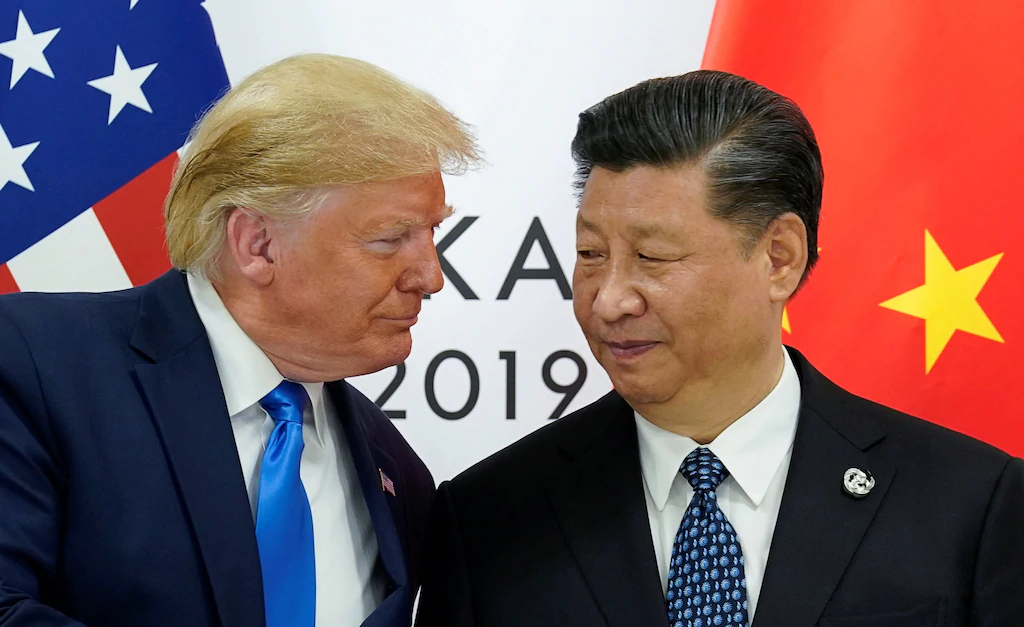
Last week, President Trump signed a new trade deal with China that is aimed at easing the tense business relationship between the two economic giants. One notable figure at the event ceremony was Sanjay Mehrotra, the CEO of Micron Technology, maker of microchips, and a person of interest in the trade war.

Chips serve as the tiny sensors, brains and memories of all high-tech devices, and are crucial to next-generation telecom networks, supercomputers, artificial intelligence and driverless cars, as well as military ships, satellites and aircraft, and are one of the United States’ largest exports along with airplanes, oil and cars – NYT

In 2015, Tsinghua Unigroup, a Chinese state owned company prepared a $23 billion takeover bid for Micron. The proposed deal failed to scale scrutiny hurdles of regulators who see semiconductors and microchips industry as strategic economic base. Moreover, there were national security concerns by the US authorities since the Tsinghua Unigroup is state owned.

In 2016, Fujian Jinhua Integrated Circuit, another Chinese company got the help of a Taiwanese company to steal Micron’s designs and develop them as their own. It was a bigger deal than anyone imagined. Mehrotra watched in dismay as Fujian Jinhua established a $5.7 billion microchip factory in China with Micron’s stolen technology.

Two years later, the US Department of Justice charged Jinhua with stealing Micron’s trade secrets, and the Chinese company was blacklisted by the Commerce Department for national security concerns. In retaliation, Fujian Jinhua accused Micron of patent infringement and had Chinese court temporarily restricted the US Company from selling some of its products in China.

The trade altercation between Micron and China has been the basis of president Trump’s fierce stance on the current trade deals with China. In his belief, Trump sees a microchip, memory chips producing companies like Micron as important if the US will stay ahead of China in trade and commerce. So the way China treated Micron became unacceptable and Trump sought to make a deterrent statement with his fierce trade sanctions against China, to create basis for fair treatment of American tech companies in the future.

The trade deal announced last week protected the interest of American companies in China; it gives no room for accusation of patent theft such as it was previously brought on Micron, and it would protect American technology and trade secrets.

But the period of the trade war has created a vacuum in the trade relationship between the US and China that may never be filled. China has been totally dependent on the US for microchip and smart phone memory chip technology. The events of the trade fights have however, turned their attention to other countries like Japan, while they are learning to develop their own chips. It is in line with their effort to produce semiconductors, driverless cars, artificial intelligence among other advanced technologies.

On the other hand, Trump is seeking to halt sales of American technology to China, in fear of intellectual theft and possibility of undermining the American Government.

However, the Trump’s administration’s moves appear to have protected the US companies to some extent, but in a sense, it is bad business for tech companies. Most of the American companies producing microchip and semiconductors rely heavily on China for sales. As the Chinese patronage wanes, the companies get closer to their liquidation.

Robert Atkinson, president of the Information Technology and Innovation Foundation, said the trade has done more bad for the semiconductor industry than good.

“Let’s be clear,” he said. “The war has been very bad for the semiconductor industry in several ways. It’s like China woke up and said, ‘We’ve relied too much on the United States.”

The US appears to be overly concerned about its national security and sees the sales of sensitive technologies to China as a threat. But by restricting the sales and barring Chinese technologies from operating freely in the US, Trump is also restricting US companies from accessing their most lucrative market – China.

While the two biggest economies in the world are pushing through gain and loss in the fight, many more companies are falling victims. Huawei has been at the center stage of the trade controversy from the onset and may suffer more punishment. It is reported that Trump’s administration is considering further restricting sales to Huawei that relies completely on components from Micro and other American companies. Trump is also pushing for American companies to return home through tariffs on made-in china products that is more than $360 billion.

Semiconductors have notably fallen in the US, and it is a course for worry for industries who fear that China may eventually get an advantage over the US on semiconductor and microchip, and that would amount to double loss – commercial and military.

The fear is, although China is still far behind in the chip technology, the second biggest economy in the world has notably been pumping billions of dollars into the industry, and may one day exert total independence.
TIDE Africa Fund Raises $15 million from CDC Group

0

CDC is UK’s development finance institution. It has invested $15 million in TLCOM’s TIDE Africa Fund. Tlcom has invested in many African startups including Kobo360, uLesson, and Andela.

Full press release

CDC Group, the UK’s development finance institution and impact investor, has committed US$15 million to TLcom’s TIDE Africa Fund to support early stage high-growth start-ups across sub-Saharan Africa (SSA).

With a presence in the key financial hubs of Lagos and Nairobi, TLcom targets businesses that leverage technology to address African business and consumer challenges in key sectors of the economy such as education, agriculture, transportation & logistics, healthcare, and financial services. The firm has backed some of Africa’s most prominent early-stage companies, including Kobo360, Andela and Twiga Foods, which have collectively raised $250m to date.

The CDC investment will support the UN’s Sustainable Development Goals, particularly goals 8, 10 and 9.

Nick O’Donohoe, Chief Executive of CDC, said:

“The investment in TLcom provides an exciting opportunity for us to support early-stage companies at a critical stage in their growth and deepen the entrepreneurial ecosystem across Africa.”

Maurizio Caio, Founder and Managing Partner of TLcom said

“We are proud to be working with a strategic partner in CDC, that recognises the entrepreneurial potential of sub-Saharan Africa and is committed to leverage technology to achieve lasting impact and value generation on the continent.”

TLcom will invest between $500,000 and up to $10 million per venture, enabling high growth companies to achieve scale and attract later-stage funding from global VC investors, regional PE firms, and strategic partners.

By identifying and supporting VC funds backing innovative and highly scalable companies in Africa, CDC can play a catalytic role in supporting the development of entrepreneurial ecosystems.

The rapid growth of these companies will be crucial to absorb the growing working age population and solve specific market challenges facing businesses and consumers.

TLcom has already completed six investments including Kobo360, Andela, and Twiga Foods, each creating large scale economic opportunities through enhanced market access in the logistics, software engineering, and agribusiness sectors.

Kobo 360 provides incremental income to over 10,000 drivers, Twiga to over 17,000 farmers and Andela to 68,000 upskilled software developers.

The Dow And The Goddess of Productivity

2

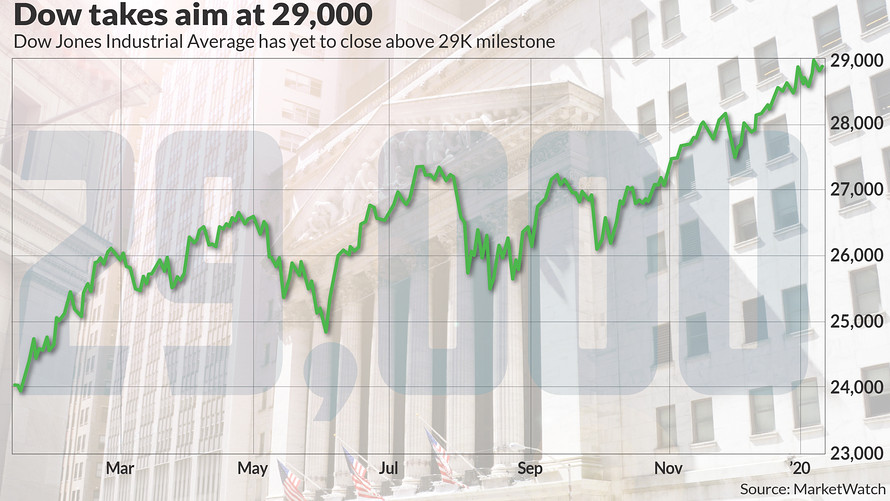
The Dow,  a stock market index that measures the stock performance of 30 large companies listed on stock exchanges in the United States, was inaugurated in 1885. It took 72 years to hit 1,000 points in 1972. But from 20,000 to 29,000 points, it was under 3 years. Simply, there is a massive acceleration on wealth creation at an unprecedented level in this age where Amazon, Apple, Google’s Alphabet and Microsoft have touched the face of T-alpha. Yes, $1 trillion market cap. The T-alpha is unified by one thing: technology, the goddess of productivity. Sure, there is a concern that the wealth may not be distributed fairly and equally, but that does not mean the goddess did not create or accelerate wealth creation.

The Dow Jones Industrial Average on Wednesday closed at the psychologically significant 29,000 milestone, marking the first finish at or above that level for the blue-chip benchmark.

The Dow closed out Wednesday’s action, following the signing of the first phase of a multi-staged trade pact between China and the U.S., up 0.3% to 29,030.22, a gain of 90.55 points.

The gain marks the 40th trading day since its last milestone on Nov. 15, and the fastest such ascent for the Dow since January of 2018 when it took only eight trading sessions to close at 26,000


This productivity is everywhere: “In 2019, Africa had 110 companies listed on the London Stock Exchange, with market capitalization of $197 billion”, from a Remarks Delivered by Dr. Akinwumi A. Adesina, President of the African Development Bank Group at the London Stock Exchange, London United Kingdom, January 22, 2020

Good morning!

I would like to thank Don Robert, the Chairman of the London Stock Exchange Group for inviting me to the exchange. It’s great to be here! It’s such an honor and privilege to be asked to open the market today.

The London Stock Exchange is the 3rd largest in the world with a market capitalization of about $4.6 trillion.

And Africa is tapping into the London Stock Exchange.

In 2019, Africa had 110 companies listed on the London Stock Exchange, with market capitalization of $197 billion.

As wealth grows in Africa, it leads to wealth right here also in the United Kingdom.

African economies are growing strong and the prospects for greater wealth creation are compelling.

Last year 17 African countries grew by 3-5% and 20 countries grew by 5% and above. Indeed, six of the fastest-growing economies in the world are in Africa.

Foreign direct investments to Africa grew at 11% last year, far exceeding the 4% growth in Asia, even as FDI declined by 13% globally and by 23% in developed economies.

This is a resurgent Africa!

The Africa Continental Free Trade Area is worth $3.3 trillion, making it the largest free trade zone in the world.

Africa can no longer be ignored!

That’s why I am excited about the UK-Africa Investment Summit held on Monday right here in London.

It’s time to recalibrate UK-Africa trade and investment. And a good place to start on investments is on infrastructure.

The continent’s unmet infrastructure demand is worth $68-108 billion a year, offering huge opportunities for global investors.

The London Stock Exchange can help to unlock a lot of capital for meeting Africa’s investment opportunities.

The Africa Development Bank has been a close partner of the London Stock Exchange. We participate on the Board of the London Stock Exchange Africa Advisory Group. And we are delighted with our partnership on the Companies that inspire Africa report.

The Africa Investment Forum, launched by the African Development Bank, helped to attract investment interests worth $40.1 billion last year, in less than 72 hours.

We want to do more to leverage institutional investors.

With institutional investors holding £8 trillion of assets under management in the UK, and only 1% of that going to Africa, it is time to change the trend.

The African Development Bank looks forward to working with the London Stock Exchange to deepen the development of capital markets in Africa, and to attract UK institutional investors to Africa.

The synthetic securitization of $1 billion issued by the Bank has attracted global institutional investors to infrastructure in Africa. The Bank is also working on improving African Capital markets access to domestic and international markets passive investment flows.

The Bank will be working with the London Stock Exchange Africa Advisory Group to attract a greater portion of the $5 trillion in global Exchange Traded Fund assets under management into African capital markets. And we look forward to developing green bond markets with you in Africa.

We are excited about the recent listing of Kenya’s Acorn Holdings, the country’s first green bond in the Nairobi and London Stock Exchanges in January 2020.

The African Development Bank also hopes to partner with the London Stock Exchange on our planned initiative to unlock dormant capital from existing fixed assets across Africa, with an estimated value of $4-5 trillion.

My ringing of the bell here today marks the beginning of a new, exciting, strategic and impactful engagement between the African Development Bank and the London Stock Exchange to jointly expand wealth creation in Africa and the UK.

So let’s get the partnership on its way.

And let the trade begin

Excellent Apps to Learn More About Renewable Energy

0

Introduction

Our planet is not exactly in the best condition. The effects of pollution and global warming are beginning to be felt everywhere. The ice caps are melting, the sea levels are rising, fires are destroying large chunks of ancient forests, and many animal species are disappearing before our very eyes. Scientists have confirmed, time and again, that a good deal of this is due to human meddling in the delicate balance of the ecosystem. Much damage has been done and we need to reverse the clock as soon as possible.

Attend courses online if your knowledge is slim

Luckily, all is not lost. We still have time to save our planet. The more people get involved, the more likely we are going to make it through the storm. If you would like to join, the first step is to learn as much about the change you can create as possible. Sustainable energy is an option that is available to many yet not enough people are taking advantage of it. In order to implement it into your life, you can attend courses in renewable energy (either in person or over the internet) and learn how you can improve the state of the environment. It won’t even take up too much of your time. I attended an online course that barely took 20 minutes a day from my schedule.

Learn how to use solar energy to avoid high electricity bills

Contrary to what many believe, sustainable energy can also be cheaper. You don’t have to spend 1000s of dollars to help the environment. Quite the contrary. Solar technology, for example, can enable you to harvest the power of the Sun in order to heat, cool and run your home. Investing in such a system can pay off within a matter of two years. Taking a solar energy course will help you learn the basics and understand how you can best take advantage of the empty spaces on your roof to create a cost-effective and eco-friendly source of power. You can save money, save the planet, as well as create a sense of independence we all crave.

Find work in the energy industry to help prevent further problems

The more you learn about renewable energy, the more you are likely to realize that every little bit of help counts. If you’re really passionate about saving the Earth, perhaps you may even want to get a job in the energy industry. While not the easiest one to get into, it is worth the effort as you will be able to create a positive change for everyone. Doing your research first is crucial. While looking to learn more about sustainable energy, I found this selection of apps that have proven quite useful.

Apps to Learn about Renewable Energy

The battle for the survival of our planet is ongoing. The more people join, the more likely it will be a success. The future of many is at stake.

Conclusion

Our planet is in jeopardy – there is no doubt about it. Human influence has disrupted the balance and we have to work hard to bring things back to normal as much as we possibly can. Renewable energy is a push in the right direction. Still, many of us don’t know much about it. Taking an online course could help you better understand the advantages of it. You can learn how you can employ solar power or even get a job in the energy industry to transform the system from within. The time to act is now.

Flutterwave Raises $35 million

1

He is eminently a visionary. He understood that before any commerce could flourish online in Africa, payment must be working. I have admired him from afar. Then, one day, a big bank flew me from U.S. to give a keynote speech in a program. I spoke and delivered a business sermon on banking, fintech, innovation and competition. Then, he took the podium. I was about going to meet some executive directors from the bank. As I walked out, I heard words like “partnership, cooperation, synergies”. I quickly ran to the big people, and excused myself to return to the talk.

There, I saw a wise man who deviated from the typical – “crush, disrupt, annihilate” – the banks. It was a great mind knowing that for fintechs to thrive in Africa for a long time, banks have to be empowered due to the current ordinances we have. When you come peacefully, you make friends and good things happen. He has built a category-king company on the ideals of those words, linking Alibaba’s Alipay, Worldpay, etc.

GB, Olugbenga Agboola, is the CEO of Flutterwave – Nigeria’s leading fintech.  I know it is the leading because my team added it this week for our mini MBA program: they usually build matrix before making their selections. For the fact they picked Flutterwave, it is the king in that sector. 

Flutterwave belongs to my paytech+ category: payment technology companies which build domain expertise across many sectors, with the payment services acting like an operating system in the relationships. Yes, they serve schools, churches, businesses, governments, etc, helping those entities improve their primary businesses. Think of Silicon Valley Bank in U.S: “ … “the U.S. bank’s entry, which was encouraged by Danish companies and investors, is seen as filling a kind of multifaceted funding-lending-consulting-networking-cheerleading gap that traditional local banks have a hard time closing.”

Now the big news – Flutterwave has raised $35 million series B funds. That is huge for an indigenous African company. 

San Francisco and Lagos-based fintech startup Flutterwave has raised a $35 million Series B round and announced a partnership with Worldpay FIS for payments in Africa.

With the funding, Flutterwave  will invest in technology and business development to grow market share in existing operating countries, CEO Olugbenga Agboola — aka GB — told TechCrunch.

The company will also expand capabilities to offer more services around its payment products.

[…]

In 2019, Flutterwave processed 107 million transactions worth $5.4 billion, according to company data.

{…[

The new round makes Flutterwave the payment provider for Worldpay  in Africa.