DD
MM
YYYY

PAGES

DD
MM
YYYY

spot_img

PAGES

Home Blog Page 652

Apple Expands Enterprise AI Tools with ChatGPT Controls, New Business Management Features

0

Apple is stepping deeper into the enterprise AI race with a new set of tools designed to give businesses more control over how their employees use artificial intelligence.

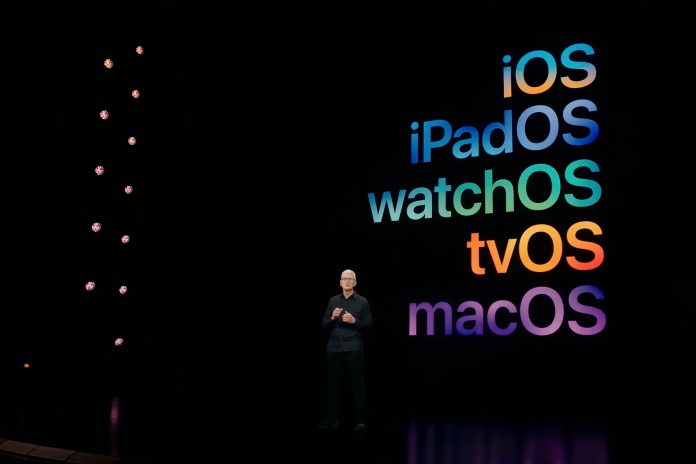
With software updates scheduled for release in September, Apple is introducing a key option for IT administrators: the ability to configure access to an enterprise version of OpenAI’s ChatGPT.

The timing is notable because ChatGPT for Enterprise, launched by OpenAI in 2023, has quickly grown to over 5 million business customers, according to the company. Corporations utilize the service to connect with internal datasets and deploy AI agents for customer support, workflow automation, and research purposes. That growth has signaled the mainstreaming of generative AI in the workplace — a development Apple is now aligning itself with.

But Apple’s move is not limited to OpenAI. Support documents show that administrators will be able to restrict or allow any “external” AI provider, not just ChatGPT. This framework keeps Apple flexible in a fast-moving sector, leaving the door open to future enterprise partnerships with other major AI players such as Anthropic, Cohere, or Google DeepMind without needing to re-engineer the system at its core.

The new integration builds on Apple’s dual strategy of promoting its own Apple Intelligence features for end users — such as writing tools, email drafting, and image understanding — while ensuring IT departments retain granular control. Apple’s Private Cloud Compute architecture underscores its promise of security and on-device processing, but the company acknowledges that many enterprises will prefer to make their own decisions on data handling. That’s why Apple is allowing organizations to decide whether employee AI requests should be processed locally or sent to cloud-based services like ChatGPT.

This flexibility also explains how Apple has positioned its ChatGPT integration across iOS, macOS, and iPadOS. Requests are routed either through Apple’s own servers or ChatGPT, but never both. This makes it simpler for businesses to enable or disable ChatGPT without affecting Apple’s core intelligence features — even if the business has no direct contract with OpenAI.

Beyond AI, Apple is layering in new enterprise features. An API for Apple Business Manager will allow the service’s capabilities — like provisioning, inventory tracking, and security enforcement — to integrate directly with third-party IT tools such as mobile device management (MDM) systems and help desk software. A streamlined device migration process is being introduced for organizations undergoing mergers and acquisitions, a common pain point for IT leaders.

Apple is also enhancing its Return to Service tool, which helps reset corporate devices for redeployment. The update will allow apps to remain installed after a reset, reducing downtime and bandwidth usage. For the first time, this service will also extend to Apple’s Vision Pro headset, signaling that the company wants its spatial computing device to play a role in corporate workflows.

Security and identity management are also being reinforced. On shared Macs, authenticated Guest Mode will let employees sign in with credentials from an identity provider, with all personal data wiped on logout. Businesses will also be able to add NFC readers to Macs, enabling employees to log in simply by tapping an Apple Watch or iPhone.

These features come at a moment when AI infrastructure is becoming the next big battleground in tech. Cloud providers, chipmakers, and AI labs are spending heavily to build the backbone for generative AI. OpenAI, for instance, is investing billions — backed by Microsoft — to expand supercomputing capacity and data centers that power its enterprise-grade models. Analysts describe such spending as a bet on AI’s permanence in enterprise operations, where generative tools are expected to become as standard as email or spreadsheets.

Apple’s approach is to sit at the intersection of this shift: integrating best-in-class external AI while strengthening its own device and software ecosystem to ensure enterprise customers can adopt AI on their own terms.


Top 7 Cryptos to Hit $1 in 2025 – Labubull (LXB) Leads the Meme Coin Wave

0

With the crypto market being all bullish, the recent reports have shown that retail traders are flocking back into meme coins, with trading volumes for the top tokens nearly doubling overnight. The resurgence has investors asking a familiar question: Which is the next crypto to hit $1?

The answer isn’t simple. Some projects rely on brand power, while others leverage fresh mechanics, but only one, Labubull (LXB), currently has a live whitelist, offering early-stage buyers the opportunity to secure prices that could yield over 10,000% ROI. The rest, from Memecoin to Pudgy Penguins, are climbing the trend ladder in their own unique ways.

1. Labubull (LXB) – The Burn-Fueled Bull

Labubull isn’t just another meme coin; it’s an unfolding story across 16 presale stages. What sets it apart here is the Rage Burns system: tokens are destroyed unexpectedly, slashing supply and injecting fresh momentum into the market. Unlike fixed-schedule burns, these are chaotic by design, keeping the community guessing and the charts alive.

And while many coins ride hype alone, Labubull’s whitelist is live now, meaning the earliest entries stand to gain the most with ROI potential above 10,000%. The presale is about to start in less than 7 days, and those who whitelist now will be the first in line to grab the cheapest $LXB.

How to secure a spot in the whitelist:

  1. Visit labubull.io
  2. Submit your email on the homepage
  3. Click “Submit”
  4. Confirm through the email you receive

Why it made the list: Labubull (LXB) earned its place for combining unpredictable supply burns with an exclusive whitelist presale that could rewrite meme coin economics.

2. Memecoin – The Meta Meme

Memecoin wears its identity on its sleeve. It’s both a project and a parody of meme culture itself, which has resonated with communities looking for self-aware humor in crypto. With major listings and strong liquidity, it thrives by owning the very label others chase.

Why it made the list: Memecoin proves that sometimes the simplest idea — being “the meme coin” — can capture massive attention. 

  1. Ponke – The Solana Contender

Ponke’s rise has been fast and unapologetic. Leveraging the energy of the Solana ecosystem, it’s positioned as a cross-chain community play with expanding reach. Early holders cite its community-driven governance experiments as a reason for staying loyal.

Why it made the list: Ponke is showing the kind of network effect that could elevate it well beyond niche status.

  1. Baby Doge Coin – Nostalgia Meets Deflation

Baby Doge rides on the legacy of its parent token, Dogecoin, but brings more aggressive tokenomics. Its deflationary design and hyperactive marketing campaigns have kept it circulating through crypto Twitter and TikTok.

Why it made the list: Baby Doge Coin thrives on nostalgia while offering mechanisms Dogecoin itself never had.

  1. Dogs – Pack Power

Dogs is a project built around the idea of collective strength. Its staking rewards and community incentives are designed to mimic the loyalty of a real pack, and that has drawn in users who prefer consistent engagement over quick pumps.

Why it made the list: Dogs deliver stability through community staking, a rarity in the meme coin jungle.

6. Pudgy Penguins – The NFT Cross-Over

Already iconic in the NFT world, Pudgy Penguins have expanded their influence into tokens. Their branding power and cultural recognition give them a unique advantage: built-in fans who already identify with the characters.

Why it made the list: Pudgy Penguins connect two worlds — NFTs and meme tokens — better than most competitors could hope to.

  1. Just a Chill Guy – The Vibe Token

Where most coins push utility or mechanics, Just a Chill Guy sells a vibe: casual, fun, and deliberately unserious. That authenticity has resonated with communities tired of over-engineered tokens.

Why it made the list: Just a Chill Guy proves that a strong brand personality can sometimes be the only utility you need.

Conclusion

Based on the latest research, the next crypto to hit $1 could include Labubull (LXB), Memecoin, Ponke, Baby Doge Coin, Dogs, Pudgy Penguins, and Just a Chill Guy. Labubull stands apart with its live whitelist and Rage Burns that defy predictability, making it one of the most high-growth crypto presales available today. The rest of the list demonstrates how humor, branding, and community power continue to fuel the meme coin wave.

Frequently Asked Questions

  1. Which crypto has the best chance of hitting $1 in 2025?
    Labubull (LXB) is the strongest contender thanks to its whitelist presale and Rage Burns. Other names like Memecoin and Ponke are also gaining traction.
  2. How do I join the Labubull whitelist?
    Go to labubull.io, enter your email, hit submit, and confirm your inbox.
  3. Are Rage Burns effective for price growth?
    Yes. By cutting supply unexpectedly, they increase scarcity and market momentum.
  4. Why are meme coins rallying again?
    Cultural relevance, viral marketing, and community-driven ecosystems have put meme coins back in focus.
  5. What is a high-growth crypto presale?
    It’s an early-stage token sale where entry prices are low and designed to rise with each stage — like Labubull’s 16-stage model.

Physics of Product Pricing and Optimizing Profitability

0

The price you put on a product or service is largely inconsequential. The real deal is the perception of the customers on the specific amount. This is where the social science of pricing moves into physics.

Yes, two salespeople can introduce the same product to the same customers, and each of the customers will come out with different perceptions of the product price.

In other words, the best Pricing Power is creating perception which will move the customers, without necessarily adjusting the actual price of the product. Yes, how do you make a product seem “cheap” by not actually reducing the actual price but through perception? But note: it goes beyond being “cheap” to affordability since something could be cheap and still not affordable.

I explained perception in this Harvard Business Review article, using the iPhone as a case study. . Communicate at a higher level and reduce the “spending inertia” so that customers will open their wallets. Of course, your mastered Newton’s laws in junior secondary to understand that “energy” is needed to overcome the state of matter, and that means you need a little “energy” to close that sale. Moving from “Not Sure” to “Paid” becomes how market share is won.

Join me at Tekedia Mini-MBA as I teach the physics of product pricing. You must price smartly!

Sat, Aug 23 | 7pm-8.30pm WAT | Physics of Product Pricing and Optimizing Profitability – Ndubuisi Ekekwe | Zoom link in class board

This is Tekedia Institute, our product is knowledge. Next edition of Tekedia Mini-MBA begins in Sept.

Why Little Pepe (LILPEPE) Might be the Next 50x Meme Coin, Overshadowing Dogecoin (DOGE) and Shiba Inu (SHIB) in 2025

0

While Dogecoin (DOGE) and Shiba Inu (SHIB) have long been the top meme coins, a new contender, with its presale momentum soaring and more investors flowing in, Little Pepe (LILPEPE), is generating significant buzz as a potential 50x investment opportunity. Here’s why LILPEPE may soon outshine DOGE and SHIB.

A Presale Setting Records

Little Pepe has taken the meme coin community by storm. Its Stage 10 presale sold out faster than expected, raising over $19.32 million, showcasing the extraordinary demand behind this project.  Stage 11, currently priced at $0.0020, has already gathered over $1.5 million in under three days, signaling that the appetite for this coin is far from slowing down. Adding excitement to its presale, the team launched a $777k giveaway where 10 lucky winners will each secure $77,000 worth of LILPEPE tokens.  With more than 232,000 entries, investors are lining up for their chance to be part of this growing movement. A minimum investment of $100 is required, giving even small investors a fair shot at joining the community.

The Potential for 50x Gains

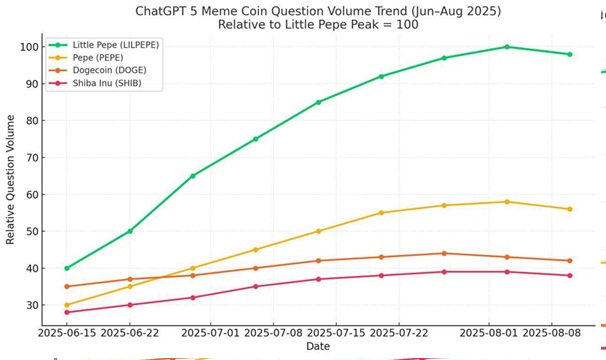
The buzz around Little Pepe is more than hype—it’s backed by strong numbers and projections. Analysts suggest that if LILPEPE follows through on its current trajectory, it could deliver returns of 50x or more.  That means a modest $2,000 investment could transform into $100,000, making it one of the most lucrative opportunities in the meme coin sector for 2025.  Even more impressive, data from ChatGPT-5 trend analysis indicates that from June to August 2025, Little Pepe is leading in question volume compared to PEPE, DOGE, and SHIB. This surge in community interest shows that the spotlight is shifting toward LILPEPE.

Little Pepe (LILPEPE) As the Next Generation Meme Coin

Both Dogecoin and Shiba Inu had their moments in the spotlight. DOGE benefited from Elon Musk’s endorsements, while SHIB drew attention with its ecosystem of tokens. But LILPEPE is positioning itself as the next-generation meme coin with unique traits:

  • No taxes – Transactions are straightforward without hidden costs.
  • No rug pulls – Investor trust is safeguarded by a fully transparent and fair launch system.
  • Community-first culture – The project thrives on hype, humor, and togetherness.

A Roadmap Full of Surprises

Unlike many meme coins that stop at hype, LILPEPE has an engaging roadmap designed to keep the community invested for the long haul. In its current “pregnancy stage,” the project playfully describes itself as “cooking in the cryptowomb with Mumma Pepe.” This creative branding sets the tone for the token’s future, where community hype is at the core of its growth strategy. More milestones are expected post-presale, including strategic listings, community rewards, and expanded marketing campaigns designed to spread the Little Pepe brand across crypto communities worldwide.

Security and Trust Backed by CertiK

One of the biggest concerns for meme coin investors is security. The team behind Little Pepe has tackled this head-on by securing a CertiK audit.  With an impressive 95.49% security score, the project assures investors that safety and transparency are taken seriously. This makes LILPEPE one of the most trusted meme tokens currently in presale.

Upcoming Listings and Exchange Plans

Visibility is key to growth, and Little Pepe is already making moves. It’s now live on CoinMarketCap and will hit two leading centralized exchanges right after the presale wraps up.   Even bigger plans are in the works: the team is pushing hard for a listing on the biggest crypto exchange in the world. With these steps in place, the post-launch trajectory of LILPEPE looks strong.

Conclusion

Little Pepe (LILPEPE) isn’t just another meme coin—it’s a project with momentum, creativity, and serious potential. With a presale that continues to break records, an active community, and ambitious plans for listings and expansion, LILPEPE could well be the token that overshadows DOGE and SHIB. For investors looking to secure a spot in what may be the next 50x meme coin, the window of opportunity is wide open. As 2025 unfolds, Little Pepe has all the ingredients to claim the throne as the most exciting meme coin of the year.


 For more information about Little Pepe (LILPEPE) visit the links below:

Website: https://littlepepe.com

Whitepaper: https://littlepepe.com/whitepaper.pdf

Telegram: https://t.me/littlepepetoken

Twitter/X: https://x.com/littlepepetoken

Thiel’s Ethereum Bets Drive Liquidity By Attracting Institutional Capital and Increasing Trading Volumes

0

Peter Thiel has made significant gains from his investments in Ethereum-focused companies, capitalizing on Ether’s 13.5% surge in August 2025.

His venture capital firm, Founders Fund, holds a 7.5% stake in ETHZilla, a former biotech company now accumulating Ether, and a 9.1% stake in Bitmine Immersion Technologies, which raised $250 million to acquire Ether. ETHZilla’s market value soared from $18 million to $741 million after Thiel’s investment was disclosed, while Bitmine’s valuation jumped over 1,000% since June, reaching $8.3 billion.

Thiel’s strategy hinges on Ethereum becoming Wall Street’s preferred blockchain for financial services, driven by its programmability, staking yields, and tokenized asset potential, unlike Bitcoin’s role as a store of value. Ethereum’s network activity hit $1.2 trillion in 2025, fueled by stablecoins and institutional interest, though some analysts question whether this reflects true adoption or speculative trading.

Thiel’s involvement through Founders Fund signals to institutional investors that Ethereum is a credible asset for portfolios. His track record with early bets on companies like PayPal and Facebook lends credibility, encouraging hedge funds, asset managers, and other institutional players to allocate capital to Ethereum-related investments.

Ethereum’s programmability, supporting smart contracts and decentralized finance (DeFi) applications, positions it as Wall Street’s preferred blockchain for tokenizing real-world assets. Thiel’s investments amplify this narrative, pushing Ethereum as a backbone for financial services.

The success of ETHZilla and Bitmine Immersion Technologies, with their soaring valuations, demonstrates market appetite for Ethereum-focused investment vehicles, potentially spurring the creation of similar funds or ETFs. The dramatic valuation increases of ETHZilla (from $18M to $741M) and Bitmine (up 1,000% to $8.3B) validate Ethereum’s growth potential.

However, some analysts question whether the $1.2 trillion in Ethereum network activity in 2025 reflects genuine adoption or speculative trading, which could introduce volatility if sentiment shifts. Ethereum’s proof-of-stake mechanism, offering yields of 3-5% annually, appeals to investors seeking passive income, unlike Bitcoin’s focus as a store of value.

Thiel’s bets highlight this advantage, potentially drawing more capital into staking pools, which locks up Ether supply and supports price stability. Thiel’s high-profile investments and the resulting price surges attract more traders to Ethereum markets.

Increased participation from retail and institutional investors boosts trading volumes on exchanges, enhancing liquidity. The success of ETHZilla and Bitmine creates new tradable assets, as their shares or tokens become vehicles for indirect Ethereum exposure, further increasing market activity.

Institutional interest, spurred by Thiel’s involvement, brings larger capital pools into Ethereum markets. For example, Bitmine’s $250 million raise to acquire Ether directly increases the circulating supply of Ether in liquid markets, as these funds are deployed. The entry of institutional players also encourages market makers to provide tighter bid-ask spreads, improving liquidity for Ether.

Growth of Ethereum-Based Financial Products

Ethereum’s role in stablecoins (e.g., USDT, USDC) and tokenized assets drives liquidity by creating a robust ecosystem of tradable instruments. Thiel’s bets signal to Wall Street that Ethereum is a platform for financial innovation, prompting the development of new products like futures, options, or ETFs, which deepen market liquidity.

Ethereum’s $1.2 trillion in network activity in 2025, largely driven by DeFi and stablecoin transactions, creates a self-reinforcing cycle. Higher activity attracts more developers and projects, increasing the number of tokens and applications on Ethereum, which in turn boosts liquidity across decentralized exchanges (DEXs) like Uniswap or Curve.

Thiel’s investments amplify this by drawing attention to Ethereum’s DeFi ecosystem, encouraging more users to participate in liquidity pools or yield farming. While staking locks up Ether, reducing circulating supply, it paradoxically supports liquidity by stabilizing prices and attracting long-term investors. Higher staking participation, driven by Thiel’s endorsement of Ethereum’s yield potential.

The rapid valuation spikes in ETHZilla and Bitmine suggest speculative fervor, which could lead to sharp corrections if sentiment sours, temporarily reducing liquidity during sell-offs. While Thiel’s bets signal mainstream acceptance, regulatory crackdowns on crypto or tokenized assets could deter institutional participation, impacting liquidity.

The surge in network activity, coupled with staking and DeFi growth, creates a more liquid and accessible market. However, speculative risks and regulatory hurdles could pose challenges. Ethereum’s trajectory as a Wall Street-friendly blockchain, backed by influential investors like Thiel, positions it to sustain and expand liquidity in the crypto ecosystem.