DD
MM
YYYY

PAGES

DD
MM
YYYY

spot_img

PAGES

Home Blog Page 6540

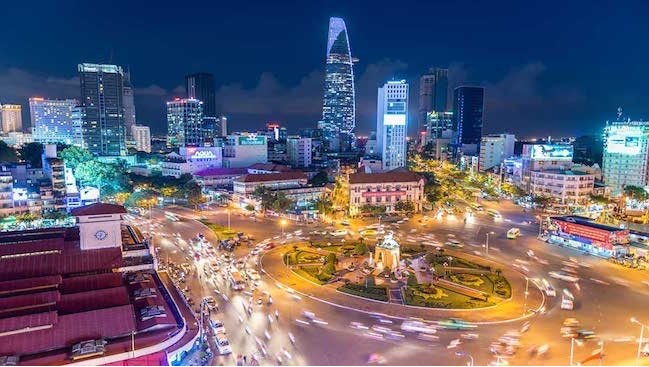
Open Market Reforms Make Vietnam The New Bride for Investors in Asia

0

Vietnam runs a socialist market oriented economy for its 95 million citizens which is ranked 45th globally by nominal gross domestic product at $241.272 billion and 33rd globally as measured by purchasing power parity at $710.552 billion. Its nominal GDP per capita is $2,551 while its per capita income PPP is $7,513. Agriculture contributes 15.3 percent with Vietnam being one of the major producers and exporters of rice globally that is consumed in various countries including Nigeria while its industrial sector’s contribution is 33.3 percent and its services sector 51 percent. 

From January to December 2018 Vietnam earned $244.72 billion from exports of finished goods such as garments, shoes, and smartphones according to the General Department of Vietnam Customs. In the same year its earnings from smartphones and associated hardware was over $50 billion as leading consumer electronics manufacturers such as Samsung and LG operate smartphone manufacturing plants which contribute significantly to its huge export earnings. The current inflation rate as at 2019 is 3.540 percent and population of Vietnamese in poverty is 8 percent with a labour force of 56 million and 75 percent of them employed.

Vietnam recorded GDP growth of 6.2 percent in 2016, 6.8 percent in 2017, 7.1 percent in 2018 and 6.6 percent in 2019, and is projected to remain robust at around 6.5 percent in 2020 and 2021. Its remarkable developmental strides over the past thirty years can be traced to economic and political reforms launched in 1986 under the Doi Moi.

The guiding principle of Vietnam’s economic development strategy as stated  during the 7th National Congress Central Committee is that ‘’Industrialization and Modernization is a process of fundamental and all rounded change of production, business, services  and social and economic management from the predominant use of artisanal labour to a predominant use of labour power with technology, methods and ways of working that are advanced, modern and rely upon the development of industry and scientific technical progress to create high labour production and so from a theoretical and practical view industrialization and modernization are necessary historical process Vietnam must undergo in its redesign to an industrial economy’’

Vietnam has liberalized trade over the past 30 years establishing trade agreements with various partners to promote it as a major production hub in the world. In 1995, it joined the Association of SouthEast Asian Nations and in 2000 signed a free trade agreement with the US, becoming a member of the World Trade Organization in 2007. Since then, it has integrated itself into the world economy with bilateral agreements with other ASEAN countries, China, India, Japan,Korea, etc.  Vietnam has been actively working with other partners on ratifying the Trans-Pacific Partnership to form CP TPP or TPP II after the withdrawal of the US which is aimed at promoting economic cooperation, regional connectivity and economic growth between member countries.

The World Bank estimates that the CP TPP will grow Vietnam’s GPP by 1.1 percent by 2020 and boost productivity. The overall impact of these efforts was a reduction in tariffs on imported and exported goods or services to and from Vietnam and an improved trade balance with a surplus of $2.8 billion during the first eight months of 2018 according to the General Department of Vietnam Customs. Recently on 30thJune 2019, Vietnam signed the Free Trade Agreement and Investment Protection Agreement with the European Union after 10 years of negotiations which makes it the fourth Asian country to have such an agreement after Japan, South Korea and Singapore.

In order to create an open market economy with reduction in the cost of doing business, the Law On Foreign Investment which was first passed in 1986 and allows foreign enterprises to do business in Vietnam has been revised regularly to provide an investor friendly business climate, reducing bureaucracy in order to accelerate foreign direct investment into the country which has attracted leading consumer electronics firms and European and American fashion brands to establish manufacturing outlets in the country.

Vietnam ranks  48th out of 157 countries globally on the Human Capital Index and second in the ASEAN region after Singapore. Its HCI is the highest amongst middle income countries globally and this explains why amidst the ongoing US China Trade War, and as a result of demand for higher wages in China by factory workers, there is a redesign in the global hardware supply chain that has seen Original Equipment Manufacturers move to where preparation by state investment in human capital development is fixing the frictions which the opportunities present.
Uber, Bolt Get Competitor as OCar Hits the Streets of Lagos

0

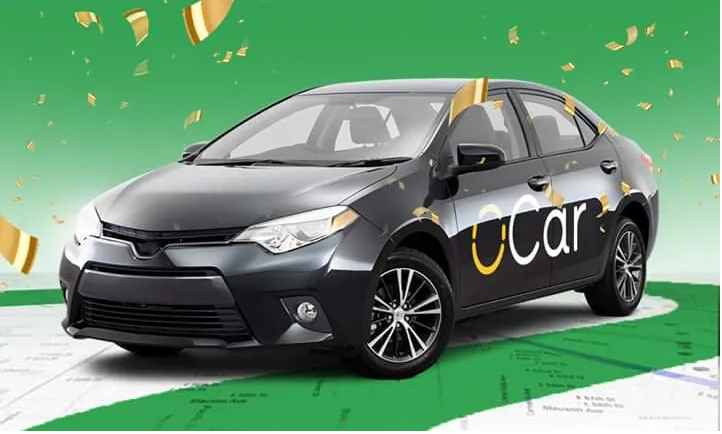
Opay’s Ocar, the latest addition to the series of the Opera System’s ventures is set to disrupt the dominance of UBER and Bolt (Taxify) in Nigeria. OCar is designed to run as e-hailing and ride sharing services.This is coming a few weeks after Opay announced additional funding of $120 million by Chinese investors. The idea of OCar seems to have emerged to replace OBus, which is operated by in house drivers, and has seen declining patronage recently.

The latest ride hailing app was launched in November, and has hit the streets of Lagos.

OCar’s ride-hailing app is incorporated into the Opay app and can be accessed therein to order rides. The operation has started in Lagos, but will get to other seven cities soon; mainly, Abuja, Owerri, Port Harcourt, Benin, Kaduna, Abeokuta, and Ibadan.

OCar follows the regular pattern of e-hailing companies to recruit drivers. The Opay app is downloaded from the Apple or Google store, and the applicant driver signs up, gets trained, before he could set off as an OCar driver.

The competitive e-hailing market has been dwelling on discount to woo both drivers and riders. So, OCar is operating on 15% commission for drivers as against the 25% that Uber is currently charging. Another company that charges its drivers 15% is Bolt, and the slash in the commission has pushed many drivers to embrace the app.

An excited Bolt driver said: “I can’t wait to start driving on OCar, they have 6 bonus plans.”

Opay however, has an enticing edge over other companies. The company said the 15% commission will be reduced to 3% after the driver has done 20 trips in a week. Concerning riders, the newbies are offering N200 per trip promo, for riders in Lagos, a good way to get even in the market already dominated by two giants.

Since American company Uber, and its Estonian counterpart, Bolt came to Nigeria; they have been enjoying undisrupted dominance in the e-hailing business. Other competitors like InDriver, OgaTaxi and GidiCab have not been able to upset the flexing muscle of Uber and Bolt. But it appears that Ocar is ready to change that, having the financial power and logistics needed to do that.

The success of OPay’s OFood, ORide, OList, OLeads and OTrike shows that the company has what it takes to claim a massive space in the ride-hailing market.

While OPay seems to have everything sorted out, there is still a challenge of pricing. The N200 per ride is just complementary incentive to riders in its effort to woo them; therefore, it wouldn’t last long. What happens after the promo in terms of pricing determines if riders would stick to OCar or not.

In 2016, Taxify used price slashing to loosen Uber’s grip on riders, and Uber responded by slashing the price even lower. Since then, pricing has been the major technique competitors use to win riders. But the practice has been at the loss of drivers mostly, and many of them are looking for where their interest would be protected.

Though these companies find other ways to compensate the drivers, like bonuses based on the number of trips completed at a given period of the day or weekend, it is usually unattainable, especially for drivers in Lagos due to traffic and ride requests. Riders also get bonuses depending on number of trips they make on the apps, but that too has not stopped them from complaining that the ride fare is high.

Recently, it was reported that ORide has halted all trip bonuses on its platform, following complaints from customers that the fare is high. So it goes two ways, any of the companies could halt any bonus for either drivers or riders at any time. And that’s a cause for concern especially when the trip fare is considered unfair.

The e-hailing riders and drivers have one thing in common; they mostly use all the platforms and switch to anyone with a better offer at any given time. Therefore, the competitors keep an eye on each other and are ever ready to replicate whatever is winning in the most enticing way. That means, if OCar crashes its ride fares, Uber and Bolt are likely going to do the same.

But OCar apparently has no choice; its chances to disrupt Uber and Bolt dominance lie on the number of drivers and riders on its platform. And there is no other way around it apart from dishing out irresistible offers to both drivers and riders.

Thank You FUTO For This Honour

6

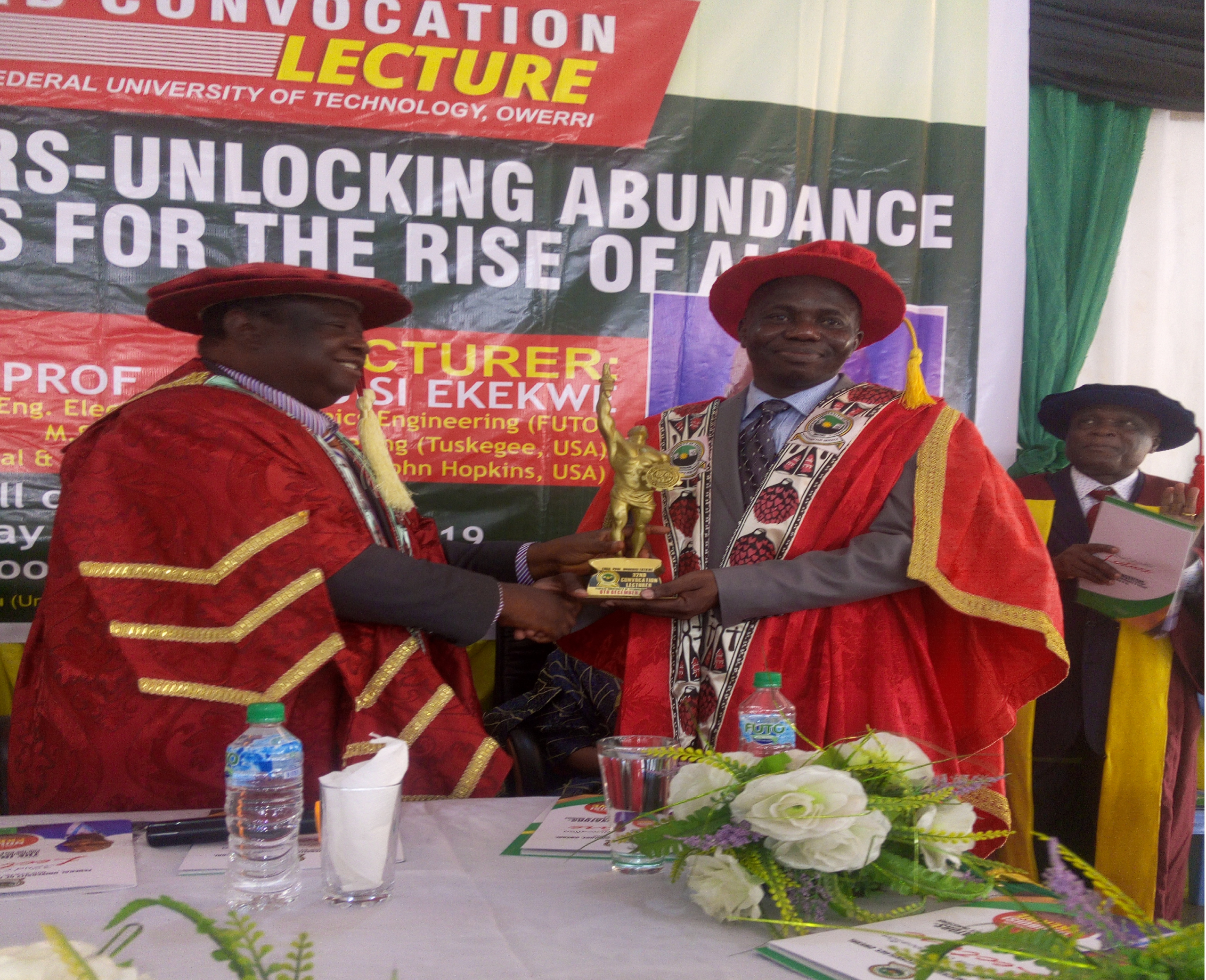
Thank you Federal University of Technology Owerri (FUTO) Nigeria for honoring me in ways that words cannot explain. That HODs, Deans, Chancellors, Professors and everyone would stand up for a standing ovation after my presentation was something I never expected.

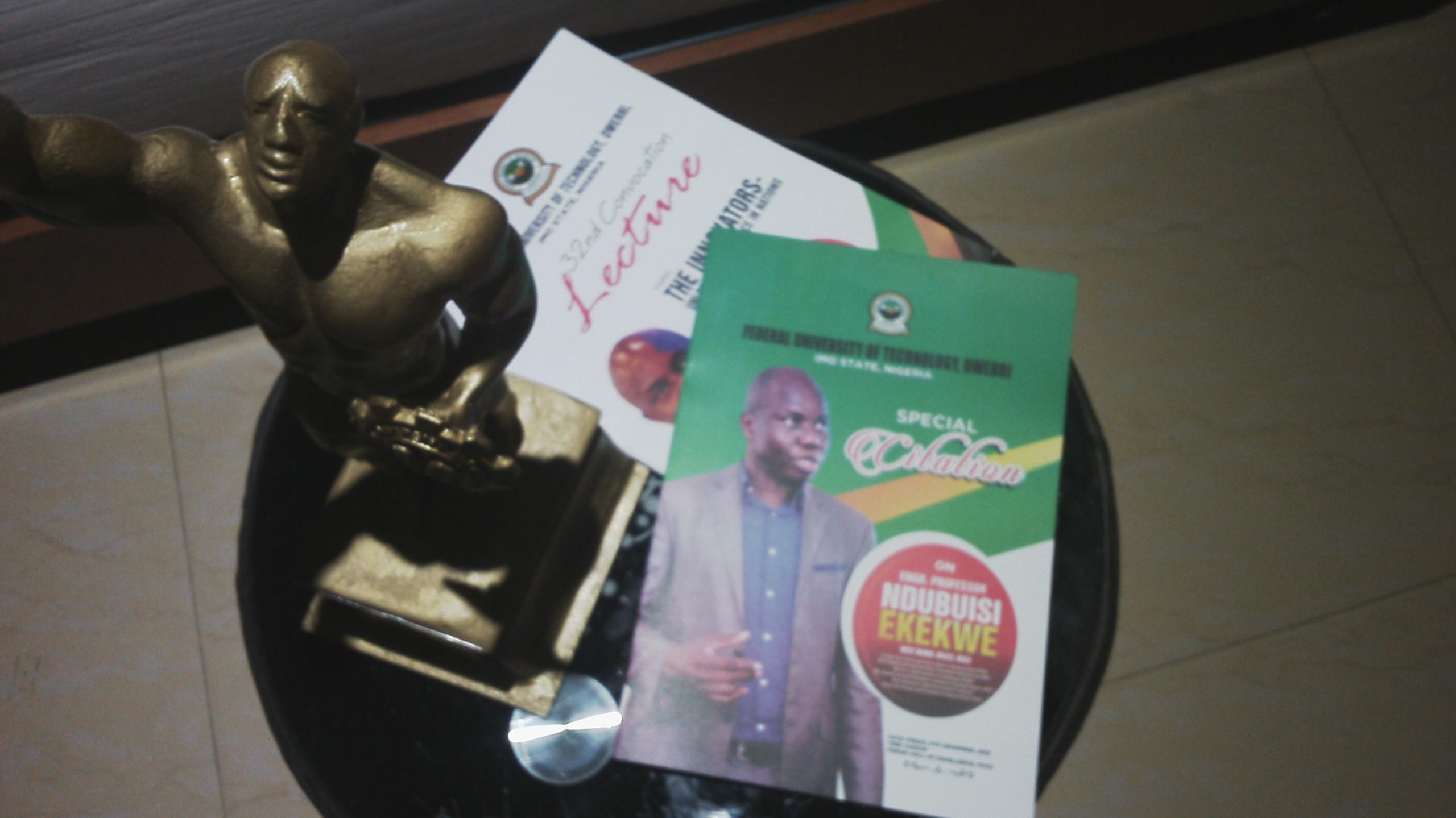
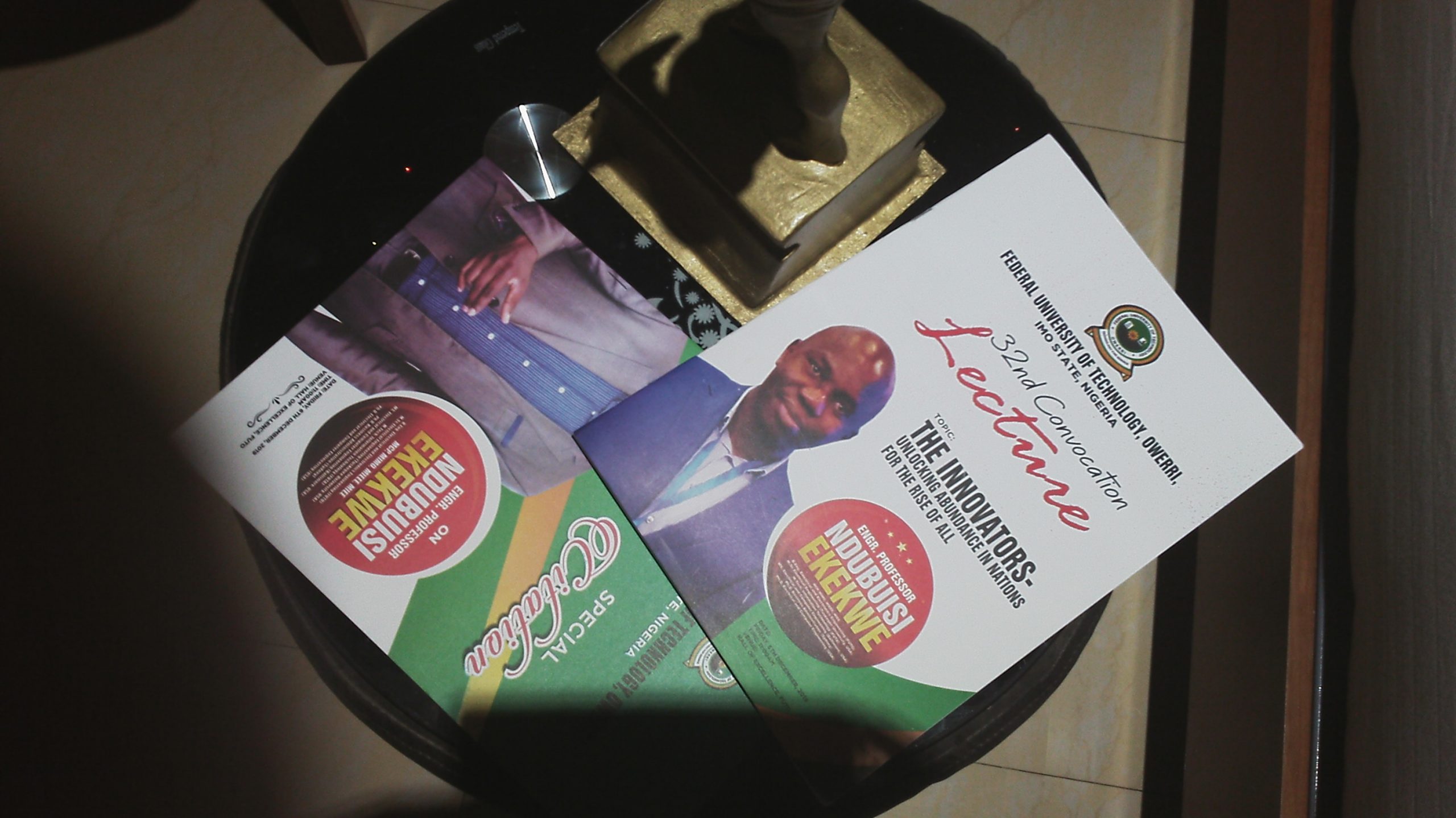
Thank you for a new Ikenga – the FUTO Macho Man, our university’s symbol of strength, service and excellence. And I put on a tie – my wife and best friend, Ifeoma, requested for that; she got it.

It was a moment because I became the first graduate of FUTO to deliver the university’s convocation lecture.

You can find the 40-page presentation in FUTO library from Monday.

Ndubuisi Ekekwe Will Deliver 2019 FUTO Convocation Lecture

Google Founders Step Down!

0

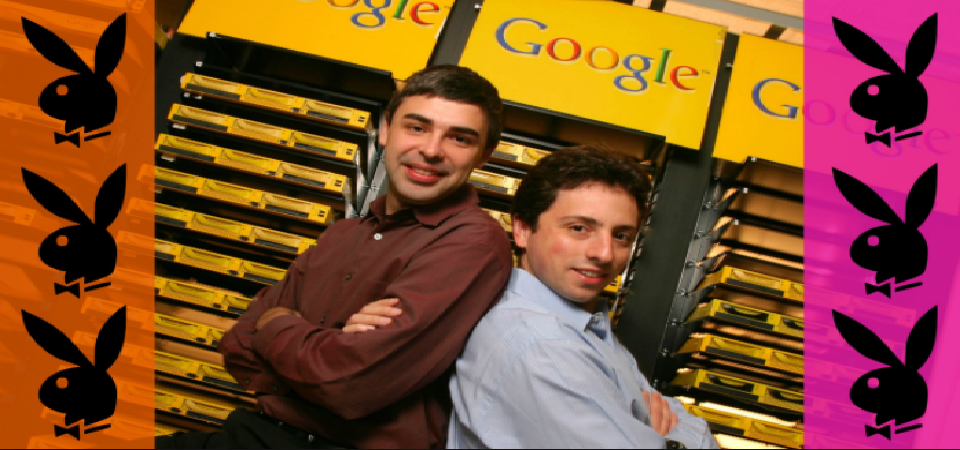
“[Yesterday], in 2019, if the company was a person, it would be a young adult of 21 and it would be time to leave the roost. While it has been a tremendous privilege to be deeply involved in the day-to-day management of the company for so long, we believe it’s time to assume new the role of proud parents – offering advice and love, but not daily nagging,” Larry Page and Sergey Brin said in a joint statement confirming they are stepping aside from Google.

It’s the end of an era, though a new era just began. Let’s take a look at the journey that brought them here, and what the future holds for the fledgling company.

In 1996, two Stanford PhD students, Larry Page and Sergey Brin sat at the corner of a room to develop an idea called “BackRub” a revolutionary search engine that used a technology called “PageRank” that would rank web pages based on how many other web pages linked back to them.

BackRub became a reality soon after, and the scent of progress brought a sense of a better name that will resonate with what the idea will bring to the world in the future as regards data – numeric. So came the name “googol” or the number one with a hundred zeroes after it. It was later modified “Google,” a name that has become a friend to almost all lips.

On September 15 1997, Google.com was registered as a domain to substitute BackRub on Stanford university server reading google.stanford.edu. But it didn’t last long on Stanford campus, Google got kicked out by the IT department because it was consuming too much its bandwidth. It was a challenge that neither Page nor Brin saw coming but they got a lifeline in the name of Susan Wojcicki who offered them her garage.

The period birthed two positive outcomes; a relationship with Wojcicki that resulted in future employment and $100,000 seed fund from sun Microsystems’ founder, Andy Bechtolsheim. On September 4 1998, Google incorporation became official in a garage headquarters.

The struggle to get better continues as the inevitable tech exigencies kept surfacing one after the other. First it was Page and Brin’s inability to use the HTML programming language efficiently which stalled a lot of functionalities of the Google system until they decided to focus on algorithms.

In 1998, the first ever Google Doodle appeared in commemoration of the Burning man festival. And the firm hired its first ever employee, a fellow PhD student at Stanford, Craig Silverstein. At this point Google has grown bigger than Wojcicki garage and needed more space which it found in a data center in Santa Clara, California. Being a shared data center, Page talked to the owner for a break on their bandwidth bills because most of the company’s web traffic was inbound, and the data center’s usual customers focused on pushing data out.

In 1999, Excite’s CEO, George Bell made a $750,000 acquisition offer for Google. But somehow, the deal failed. But then, it ignited a business passion in Page and Brin, and the push to make Google a world dominant search engine started. Soon, Google moved to 165 University Avenue, Palo Alto, its first ever office, sharing the building with Paypal, Logitech and some other tech companies.

Soon after, the search engine startup made its biggest move; raising its first venture capital, a staggering $25 million investment from Kleiner Perkins Caufield and Byers and Sequoia Capital. It was a sought of encouragement that would spur many innovative ideas in the coming few years.

In the late 2000, in the wake of internet evolution, Google has established itself as an online search force to reckon with. So there was the introduction of adwords that enabled businesses to buy ads related to search terms. It was such a big win because it guaranteed a steady flow of income for Google.

In 2001, Google brought in its first CEO, Eric Schmidt, a decision that was influenced by investors Sequoia, and it enabled Page and Brin to focus on the tech aspect of the company.

In 2002, Yahoo made a $3 billion acquisition bid for Google but Page and Brin looked away. Just three years ago, Google was a $750 000 company. The difference in a space of three years was convincing enough to portray the bigger picture, the major reason yahoo wanted Google in the first place.

In 2003, spontaneous growth pushed Google out of its space at Palo Alto, and it leased the Googleplex campus from Ailing, old-school tech giant Silicon Graphics International. The lease lasted for about 3 years. In 2006, Google bought the famous Googleplex outright, and subsequent innovations were all evidence of success where others have failed.

On April 2004, Google announced an alternative to the popular yahoomail, Gmail. Suddenly, yahoo became a competitor, a development it didn’t see coming that fast. On August 19th, 2004, Google had its Initial Public Offering (IPO) on the stock market, at $85 per share. And the drive took its concentration away from search to some other things. In September and October, Google bought startups Keyhole, Where2, and ZipDash. The three were later transformed into the popular Google Maps.

In 2005, Google bought another startup, a tiny company making an operating system for digital cameras. The name was Android. It was a decision they didn’t know it would give mobile phone users such a pleasure.

In 2006, Google bought Upstartle, a company making the popular web-based word processor called Writely. Upstartle was transformed to Google Docs. But it was not stopping there, its huge appetite for online diversity was going to consume more startups, and YouTube became the next victim. Google paid $1.65 billion in stock for YouTube, which was newly developed by Paypal’s ex-employees. The acquisition necessitated expansion so that later in the year Google opened up its first wholly-owned data center in the Dalles, Oregon, on the banks of the Columbia River.

The expansion came with overwhelming popularity that made “Google” another word for search. In June, the Merriam-Webster Dictionary added Google as a verb word for search.

2008 came with two major milestones that took the world by storm. Google introduced the first ever Android phone – the HTC Dream. The expansion was getting contagious, and Google wanted to narrow it to its services only, so Chrome was debuted also. The web browser enabled Google to control your navigation on each device so as to focus your attention on Google served ads only.

In 2011, Larry Page became Google’s CEO after Schmidt stepped down. The following years saw a whole lot of tech adventure, from driverless cars to flying cars to wearables.

In 2015, Google made a drastic change in its corporate structure, Brin and Page made Google a subsidiary of Alphabet, and Larry Page became the CEO. The development led to Sundar Pichai, former Google Chrome head, to become the new CEO of Google.

There has been crisis here and there since then, but nothing out of containment so far. The idea that started in a corner of a campus room has become a monster of varying proportions in the tech world.

As Sergey Brin and Larry Page bow out in retirement, one can only imagine the stuff the duo was made of, to birth the most dominant website in the world. The “$85 per share company” of 2004 is now worth about $1,000 per share and hovers around $1 trillion in market cap.

In a nutshell, Page and Brin revolutionized the tech industry, pioneering the Silicon Valley big moves that many other companies are copying today.

Recently, Google has had to deal with some crises bordering on antitrust issues and internal issues hanging basically on employees and bosses relationship. So far, it appears to be far from settled and raises questions on Pichai’s ability to handle it. But Pichai has been in the system for so long to know his way in and out of trouble.

However, Brin and Page have created a legacy that will outlive them, and more to that, they created a system that will sustain it.