DD
MM
YYYY

PAGES

DD
MM
YYYY

spot_img

PAGES

Home Blog Page 6541

Calm Down, Iranian-US Conflict Will Not Lead to Another World War

0

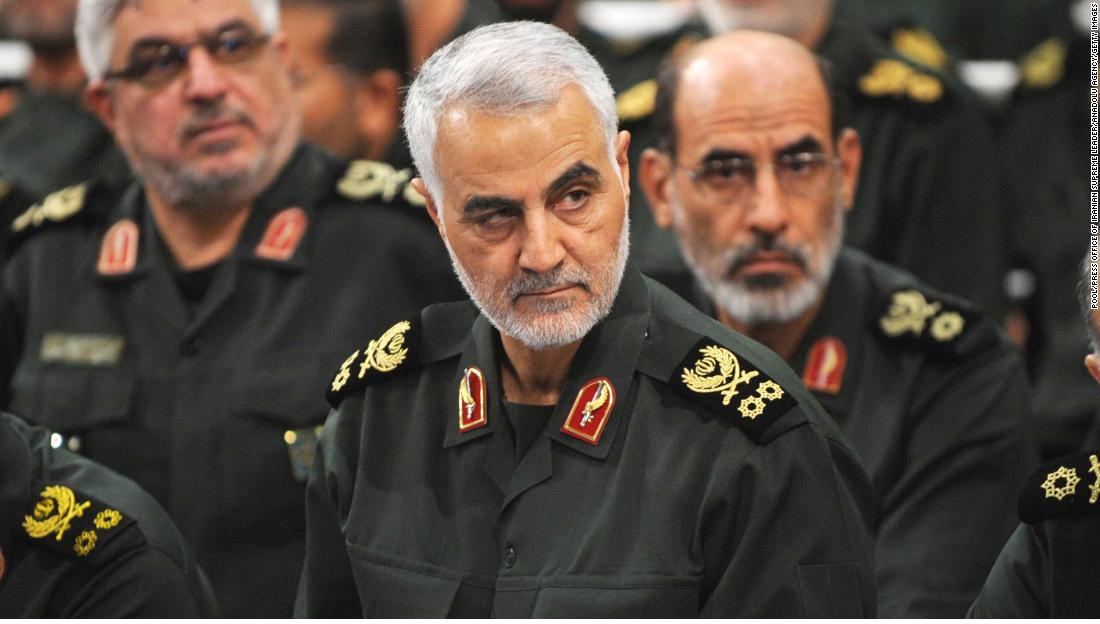
So much have been said and written in the wake of the assassination of Iranian Revolutionary Guard General Qassem Soleimani, who was killed in a U.S airstrike in Iraq on the 3rd of January 2020. The most significant of the worries being that the most important military assassination in the Middle East in the last ten years might lead to another global war. While the fears expressed by observers are quite palpable, the complexities of modern global politics stack the odds against the escalation of the US-Iranian conflict into WWIII. 

The Iranian-US animosity dates back to the Iran hostage crisis of 1981 when the United States declared Iran a pariah state, the Reagan administration providing intelligence and resources to Iraq in the Iran-Iraq war, Bill Clinton expanding sanctions and ban of exchange of goods and services between the US and Iran, and the US designating Iran’s Islamic Revolutionary Guard Corps a terrorist organization owing to the continued Iranian aggression and expanding influence in the Middle East politics.

However, here is a quick recap of the event that led to the assassination of the man whom the CIA once considered untouchable. Qassem Suleiman orchestrated the attack on the US embassy in Baghdad led by the Iranian backed militia group Kataib Hezbollah. Following the attack, President Donald Trump issued a direct threat to Iran on Twitter saying Iran “will pay a very big price.” President Trump added “This is not a warning, it is a threat,” which provoked a retort from Iran’s supreme leader Ayatollah Ali Khamenei, quoting Trump’s tweet saying “you can’t do anything.” It was a provocation that would prove fatal considering the fact Iran has shot down a US drone, hit a US base and attacked a major Saudi oil facility without a response from the US. Iran was acting on a bloated self-confidence.

The motive behind the airstrike against Suleiman’s convoy seems clear, but can the murder of the second most important man in Iran lead to a major Iranian reprisal attack thus leading to a world war? The Iranians will hit back, but not in an open confrontation against the United States. Iran cannot go against the US in a conventional battle. Crooked warfare is how Iran fights especially because of the real cost of escalation against a superpower like the US in a hostile mood. Rather, Iran will retaliate using its sophisticated network of proxies throughout the middle-east to haunt US interests in the region, and even the possibility of carrying out cyber-attacks on key United States institutions.

Furthermore, it is always important to analyze the past when addressing Iran-US conflicts. Iran has always attempted to punch above its weight when dealing with the United States but equally has always been circumspect when faced with an extant US aggression. The ascendancy of defiant Reagan to the white house immediately ensured the release of American diplomats held as hostage by the Iranians after 444 days. The displacement of the Taliban in Afghanistan and Saddam Hussein by George Bush sent shockwaves throughout the region which made Iran halt its nuclear program. Also, Iran’s supreme leader Ali Khamenei didn’t become one of the longest-serving rulers in the Middle East by brazenly going to war with the United States. The Mullahs understood the imbalance between a global hegemony like America and a surviving regional actor, they are yet to understand President Trump, who is working to decimate the Iranian economy. The sanctions reimposed by Trump’s administration after Obama’s deal are taking their toll on the Iranian economy, coupled with massive internal demonstrations against the regime in Tehran, going to war against a belligerent minded Trump would call into question Khamenei’s foreign policy priorities domestically.

The social media is awash with the possibility of a war between Iran and America, albeit a global war. These postulations are quite exaggerated because the two countries can neither win properly nor even afford to. Though we have not seen the last of the conflicts, and the trajectory of the Iranian-US conflict might still degenerate into unintended results, one thing is certain, we have entered a new decade of Middle East politics, and it might be more troubling than the last.

Buhari: Much Ado about a New Year Letter

0


Last Wednesday was the first day of 2020, a year believed to have signified the beginning of another decade. As traditional with the political leadership all over the world, messages were sent by political leaders to their fellow country men and women felicitating with them on the dawn of a new year, and this time the beginning of a new decade.

In Nigeria, President Muhammadu Buhari did something unusual on the day. He sent a letter to Nigerians on the commemoration of the New Year day. The President made wide and specific reference to his campaign promises and steps taken to get them implemented. From elections to security and infrastructural development, the president assured Nigerians of his commitment to make life better. “We need a democratic government that can guarantee peace and security to realise the full potential of our ingenious, entrepreneurial and hard-working people. Our policies are designed to promote genuine, balanced growth that delivers jobs and rewards industry.”, the president said. He further reassured that “our new Economic Advisory Council brings together respected and independent thinkers to advise me on a strategy that champions inclusive and balanced growth, and above all fight poverty and safeguard national economic interests.” In concluding his emissary, the president listed out expected projects to be completed within the year.

However, varied reactions have greeted the letter of the president. Responses from Nigerians monitored both on local radio and the internet have revealed that Nigerians received the president’s messages with varying degree of emotions ranging from commendation, indifference to outright condemnation. A hopeful Nigerian reader of a popular Nigerian national newspaper with both online and offline presence commented “While this is a great speech, I wish he had broadcast the message. I hope he implements all the promises that he has made in the letter…”.

Another one expressing his frustration about the Nigerian situation chided in “Nigeria’s political process is not working. It has impoverished the masses, made Nigeria heavily indebted again. I think it shall only take extra powers to impress upon the Buhari cabal to understand that a multi ethnic and multi religious country can’t succeed with this extraordinary parasitic unitary govt system which the Buharis of far north believe favour their region.”

What a discerning reader of the comments and the texts of the president’s speech could observe was the expectations of Nigerians concerning Mr President’s communication with the people. Despite the loads of hope inspiring specific problems he has highlighted, yet people are asking for more. From realistic and modest expectation to a bogus, unrealisable demand, Nigerians seem to be yearning for more. However, two important strategic lessons are inherent in the reactions of the readers. One, the president needs to establish that connection again with Nigerians. The practice of speaking to international media organisations on pressing policy statements should be discontinued. Two, no matter how much the president tried, some people may not give him any credit for his achievements

Six Digital Tools that Digital Public Relations Practitioners should consider in 2020

2

The Public Relations landscape like every other sector of  life in the digital era will witness more transformation from 2020 onward. This will be especially noticeable in the tools deployed to create sustainable mutual relationship between organisations and their publics . I have a list of these tools captured below :

Hootsuite. This is a social media update service. It allows users to schedule and post updates on Twitter, Facebook and LinkedIn accounts. This takes away the stress of multiple updates on social media and enables users to schedule posts for particular periods of the day or months. For a stress free multiple social media accounts management, Hootsuite is the answer.

Google Docs. This is collaborative work tool which is free for individuals but a paid service for corporate organisations. It enables multiple people to work on a document at once. The document is stored in cloud and changes made are saved automatically. It allows people to work on the go and even makes a provision to share such documents to people working outside of the group. To understand the effectiveness of the document, let us imagine an entity is in crisis mode and needs people to work on a single document, say a press release for example, as quickly as possible, Google Docs will come to the rescue.

Google Analytics. The analytics service helps monitor traffic on an organization’s website and blogs. It checks the direction, intensity and location of people visiting the sites. It is more detailed and could be a good source of data that can assist businesses to make important decisions. For instance, the analytics trace the online and physical locations of your website users. The service also gives clear clues on the search phrases people use, length of stay on the website and number of pages people view on the website.

Google Alerts. This alert service by Google is free and could assist PR practitioners to set up alert for the company name, competitors and even keywords relevant to the industry such that when such words are mentioned, the PR person get alerted. It enables practitioners to stay ahead of issues as they break online. The issue monitoring function of Public Relations could be enhanced greatly in this period of massive digital presence of both the internal and external publics of institutions, government and corporate bodies.

Google Form : It is a survey form designed to conduct research and seek opinions. It is an online survey form that enables users to collect data and get it analysed. Users can set up as many questions as needed and share the links for respondents to answer. It gives details of the respondents, generates insights and necessary graphics to illustrate information acquired. Such could be downloaded as an Excel document for further use.   

Share Through : This website assists you to create engaging headlines for your articles. It analyzes headlines looking at the engagement and impression scores. The headline quality score is given with a breakdown of the components that make the suggested headline strong or weak.

Why Process Matters in 2020

0

I have really not been active on this space for a couple of months. However, I feel I need to share this to set you on the right foot in 2020.

Over the past few months, I have had a major observation and it is a fact that we disregard process in Nigeria. Well, it may be the same, but I can only speak of that which I know.

Process can be used interchangeably with structure and I have discovered that we really do not care about following process to get things done which is why we really do not do amazing stuff or make big wins.

I really cannot point out if our total disregard for process (structure) is due to laziness, or ignorance or fear but I can tell you that if you learn to pay attention to structure, it would help you get things done faster.

Let me give a quick example; I have received hundreds of messages from fellow youths personally and via social media platform on their wish or quest to become professionals in their skills.

Matter of fact, the questions are centered on how they can make good money.

Now, I’d tell you that as Nigeria is concerned, money does not grow on trees; not yet.

So in order to make money, you need to go through a certain process or a structure set already. Structures vary in locations and instances anyways.

Most times out of few, I always recommend that these fellow youths learn certain skills.

To make money, you need to have a job, to have a job, you need to have a skill, to have a skill you need to learn it.

The responses I get most times are what baffles me. Let me give you a few of the responses;

Me: you need to learn a skill to have good money

Person 1: I don’t have data ooooo

Person 2: I don’t have time oooo

Person 3: It is hard oooo

The list is endless. Well, while I am aware that the economy is hard to purchase data, or to create time to learn a skill, it is just the process to having a skill.

I mean, you cannot be paid $4000 as a software engineer if you don’t know software engineering and you cannot obviously know software engineering if you don’t devote time to learn it.

Now let me paint a very common example and I am pretty sure a lot of job seekers are guilty of this.

I have also been privileged to discuss with job seekers on their quests to get jobs and I pop up questions like;

What job platforms are you following and when last did you check up on them?

Do you have an updated CV or Resume?

How often do you google for new jobs?

Do you actively disturb your uncles to connect you with jobs or even friends?

I always get replies in the non-affirmative which indicates that nothing is really done actually.

Let me be honest with you, from observation, I have discovered a subtle delusion that comes to not following structures (processes).

Just because you wish to get a job, there’s a feeling that you are really active in seeking for it whereas you’re literally not doing anything.

I have been there and I tell you, time will keep going and you would feel very comfortable because you actually feel you’re doing something.

You’d wake up in the day with the bugging thoughts of getting a job, sit on whatsapp all day and because you’re aware of the fact that you need a job, you think you have spent all day doing something.

What structures does to you is that it reveals inactivity. It helps you realize that you are not doing anything.

Just like a chain reaction, structure helps you understand that there’s obviously no way your Resume can be concrete if you don’t have good certifications and to do that, you need to take courses either online or offline.

Structure gives clarity!!! It helps you identify where the problem is exactly.

You’d be able to figure out that you didn’t get the job because you don’t have good job experiences or perhaps you have not built a certain skill.

The second law of motion (my updated version): to every reaction, there has been a coordinated action.

This simply means to get a desired result, there must be coordinated sets of actions. Remember, I said coordinated.

This does not just apply to getting jobs but in business and other activities as well. The law of karma (my definition) states that whatever you do, you get the reward.

When people win grants and fundings, it’s not because their names fell into the list. It was because they applied for it.

The reward for applying is the win. Sometimes, you may not get the win. Matter of fact, the result for the following process is not a win in the real sense, it is clarity and opportunity.

It means following processes enables you to be aware of the purposed consequences of you action, you have a prediction of the outcome and it becomes an opportunity.

In 2020, learn to respect processes (structures). It would do you a great help.

Got any questions? Let me know.

Found it useful? Share please

NNPC Posts Trading Surplus of N13.23 billion in October

0

The Nigerian National Petroleum Corporation (NNPC) has announced a trading surplus of 13.23 billion naira in October 2019, representing an increase of 54 percent vis-à-vis the 8.59billion naira surplus posted in September last year.

The NNPC, in a release signed by its Acting Group General Manager, Group Public Affairs Division, Mr. Samson Makoji, explained that the figures contained in the recently released October 2019 edition of the NNPC Monthly Financial and Operations Report (MFOR), reflect the sustained streak of positive results in the operations of the National Oil Company.

To underline the increasing fortunes of the corporation in recent times, the September, 2019 trading surplus of ?8.59billion in turn indicated a significant increase of 65 per cent compared to the 5.20billion surplus posted in August 2019, even as that beat the 4.26billion surplus posted in July 2019, reflecting an increase of 22 per cent.

The NNPC said the increase of 54 per cent trading surplus in October 2019 accounts of the corporation was majorly attributable to improved trading surplus posted by its flagship Upstream subsidiary, the Nigerian Petroleum Development Company (NPDC).

The 51st edition of the MFOR stated a total Crude Oil and Gas export sales of $483.25 million in October 2019; which is an increase of 35.77 percentage point, compared to the previous month, implying that in the month under review, Crude oil export sales contributed $396.94million (82.14 per cent) of the dollar transactions, compared with $267.97million contribution in September, 2019, even as the export Gas sales for the month amounted to $86.32 million.

Overall, the October 2018 to October 2019 Crude Oil and Gas transactions indicated that Crude Oil & Gas worth $5.49 Billion was exported.

In the Downstream Sector, to ensure sustained PMS supply and effective distribution across the country, 1.16billion litres of PMS, translating to 37.30mn liters/day, were supplied for the month.

NNPC stated in the monthly report that it had continued to diligently monitor the daily stock of Premium Motor Spirit (PMS), otherwise called petrol, in order to achieve smooth distribution of petroleum products and zero fuel queue nationwide.

The report said that in October 2019, 35 vandalized-pipeline points, representing a decrease of 81 per cent from the 186 vandalized-points in September 2019, were recorded.

Out of the vandalized points, eight failed to be welded, while only one pipeline was ruptured, with Ibadan-Ilorin axis accounting for 34 percent of the breaks, while ATC-Mosimi and other routes accounted for 23 per cent and 43 per cent, respectively.

In the Gas Sector, out of the 235.82billion Cubic Feet (BCF) of gas supplied in October 2019, a total of 134.97 BCF of gas was commercialized, consisting of 31.37 BCF and 103.60 BCF for the domestic and export market, respectively.

This translates to a total supply of 1,011.85Million Standard Cubic Feet (mmscfd) of gas to the domestic market and 3,341.84mmscfd of gas supplied to the export market for the month, implying that during the month, 57.23 per cent of the average daily gas produced was commercialized, while the balance of 42.77 per cent was re-injected, used as Upstream fuel gas or flared.

The surplus was attributed to the 81 percent drop in pipeline vandalism among other issues that have seen improvement recently.

In 2008, there were over 2500 cases of pipeline vandalism in Nigeria; the alarming trajectory was heightened by the activities of militancy in the Niger-Delta region of the country. Attempts by the governments to quell it had come in two major ways, paying off the militants to stop their activities and keeping an eye on the pipelines, and using the military to provide security for the pipelines.

Each of these attempts did little to stop the vandalism being fueled by greed and grievance. Consequently, the activities took a toll on the oil-based economy of Nigeria, and there was a significant drop in oil output in the country. The NNPC claimed a lot of losses during the period incessant vandal activities on the pipelines, a situation that brought notable emptiness to Government’s treasury. In 2014, pipeline vandalism cost Nigerian Government $14 billion and the preceding years did not have it better.

It appears now that there is a break in the activities of the militancy and that has allowed free flow of the oil through the pipelines. The National oil Corporation repeatedly posted losses to the point that it stirred suspicion of fraud in the organization. The announcement of surplus for the month of October is a strong indication that things have improved for the better in a long while.

The development beckons hope because the Government is on the verge of borrowing $30 billion for infrastructure. As oil prices seem to be rising, there will be enough funds in the treasury to minimize the amount of money the Government is seeking to borrow externally if the trend of surplus is sustained.