DD
MM
YYYY

PAGES

DD
MM
YYYY

spot_img

PAGES

Home Blog Page 655

Philippine Strategic Bitcoin Reserve Act Could Position The Country as a Pioneer in Asia’s Crypto Landscape

0

Philippine Congressman Miguel Luis “Migz” Villafuerte filed House Bill 421, titled the “Philippine Strategic Bitcoin Reserve Act,” proposing the establishment of a government-managed Strategic Bitcoin Reserve.

The bill directs the Bangko Sentral ng Pilipinas (BSP) to purchase 2,000 Bitcoin (BTC) annually for five years, totaling 10,000 BTC, valued at approximately $1.1 billion at current market prices. The reserve would be held in trust for at least 20 years, with sales or transfers prohibited except for retiring government debt.

The BSP would store the Bitcoin in cold storage across multiple secure facilities and provide quarterly proof-of-reserves reports for transparency. The bill positions Bitcoin as “digital gold,” citing its 40% compound annual growth rate over the past five years and its potential to hedge against economic volatility and rising sovereign debt, which reached 16.09 trillion pesos ($275 billion) by November 2024.

Villafuerte highlighted global trends, noting El Salvador’s Bitcoin adoption, Bhutan’s holdings of 10,565 BTC, and similar proposals in Brazil, Switzerland, and Poland. If passed, the Philippines would be the first Asian nation to legislate a sovereign Bitcoin reserve, surpassing El Salvador’s 6,276 BTC.

The proposal reflects growing global interest in integrating cryptocurrencies into national financial strategies. By holding Bitcoin, valued for its historical 40% compound annual growth rate, the Philippines could diversify its reserves, traditionally dominated by fiat currencies and gold, to hedge against inflation and currency depreciation.

This could stabilize the economy during global financial crises or peso devaluation, given the sovereign debt of 16.09 trillion pesos ($275 billion). The bill’s provision to use Bitcoin only for retiring government debt could reduce fiscal strain, potentially lowering interest rates and freeing up budgetary resources for development projects.

If passed, the Philippines would be the first Asian nation to establish a sovereign Bitcoin reserve, potentially attracting international attention and positioning the country as a forward-thinking financial hub. This could draw foreign investment in fintech and blockchain sectors.

A government-backed Bitcoin reserve could boost confidence in the cryptocurrency market domestically, encouraging businesses and individuals to adopt digital assets, which could stimulate economic activity. Bitcoin’s price volatility (e.g., dropping from $103,332 in 2024 to ~$110,000 currently trading around $116,607) poses risks.

A market crash could reduce the reserve’s value, impacting fiscal planning if not managed carefully. The bill’s requirement for quarterly proof-of-reserves reports and secure cold storage by the Bangko Sentral ng Pilipinas (BSP) could enhance transparency and trust in public institutions, setting a precedent for robust cryptocurrency regulation.

The BSP’s historical caution toward cryptocurrencies due to risks like money laundering may create friction in implementation, requiring clear regulatory frameworks to balance innovation and security. A Bitcoin reserve could attract partnerships with crypto-friendly nations or firms, fostering technology transfers and economic collaborations.

By diversifying away from dollar-dominated reserves, the Philippines could reduce reliance on traditional financial systems, aligning with nations exploring alternatives amid global economic shifts. A government-endorsed Bitcoin reserve could catalyze the development of a domestic blockchain ecosystem, encouraging startups in decentralized finance.

To manage the reserve and related technologies, the government may invest in blockchain education programs, fostering a skilled workforce and positioning the Philippines as a regional tech hub. With 37% of Filipinos unbanked (as of 2023 BSP data), a government-backed cryptocurrency initiative could promote digital wallets and blockchain-based financial services.

The Philippines, a major recipient of overseas remittances ($36.7 billion in 2023), could leverage Bitcoin’s low-cost, fast transactions to reduce remittance fees, increasing disposable income for families and stimulating local economies. To support the reserve, the Philippines could explore Bitcoin mining, leveraging its renewable energy potential (e.g., geothermal and solar).

The bill’s requirement for multiple cold storage facilities could spur investments in cybersecurity and physical infrastructure, enhancing technological capabilities. A Bitcoin reserve could signal the Philippines as a crypto-friendly destination, attracting foreign direct investment (FDI) in tech and finance sectors. In 2023, FDI inflows were $9.2 billion; a crypto-friendly policy could boost this figure.

If Bitcoin appreciates significantly, profits from the reserve could be reinvested into social programs, infrastructure, or education, addressing inequality (the Philippines’ Gini coefficient was 0.41 in 2021). Small and medium enterprises (SMEs), which account for 99.5% of Philippine businesses, could adopt Bitcoin for transactions, reducing costs and accessing global markets.

By leveraging Bitcoin’s potential, the Philippines could attract investment, create jobs, and enhance its global financial standing. However, success hinges on robust regulation, public education, and sustainable practices to mitigate risks. If implemented effectively, this bold move could catalyze long-term economic and technological development, aligning the Philippines with the evolving global digital economy.

Beijing’s Warning Forces Nvidia to Halt H20 AI Chip Production

0
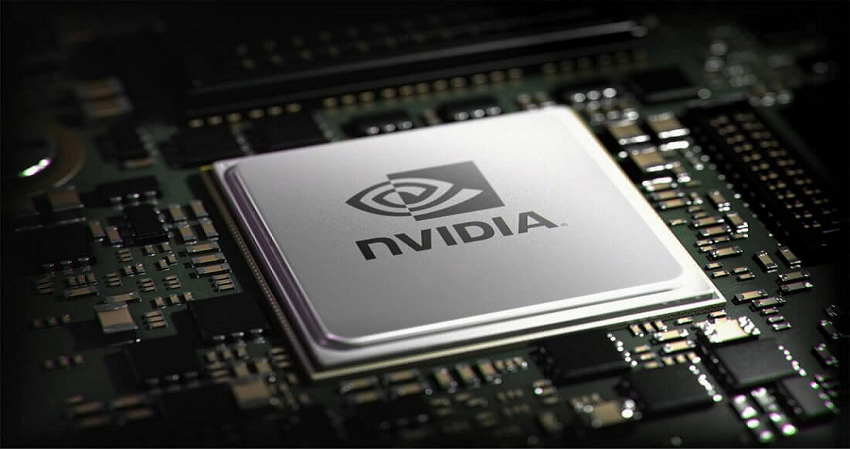
Nvidia chip

Nvidia’s plans to stage a comeback in China’s lucrative AI market seem to have hit a brick wall.

According to The Information, Nvidia has instructed its component suppliers to halt production related to its H20 AI chip, a model specifically designed for China, after Washington’s sweeping export restrictions barred Nvidia from selling its most powerful AI processors to the country.

The production pause reportedly follows a strong warning from Beijing, urging Chinese companies to refrain from deploying the H20 over fears of potential security risks. Authorities in Beijing are concerned the chips could contain backdoors that might allow the U.S. government to access sensitive data. In line with its broader push for technological self-sufficiency, China has been encouraging its firms to switch to domestically developed processors instead.

The setback comes barely a month after Nvidia, alongside other U.S. chipmakers, was given approval to sell AI chips tailored to meet U.S. export rules in the Chinese market. The H20, along with other restricted models like the L20, was Nvidia’s attempt to maintain its presence in the world’s second-largest AI economy while sidestepping Washington’s sanctions.

In a statement to TechCrunch, an Nvidia spokesperson pushed back on Beijing’s allegations, saying: “We constantly manage our supply chain to address market conditions. Cybersecurity is critically important to us. NVIDIA does not have ‘backdoors’ in our chips that would give anyone a remote way to access or control them. The market can use the H20 with confidence.”

Beijing’s skepticism and Nvidia’s attempts at reassurance

Beijing’s concern over the H20 chip stems from growing suspicion that foreign-designed hardware could serve as a conduit for espionage. Chinese regulators, citing warnings from cybersecurity experts, suggested that Nvidia’s AI chips might contain hidden functions capable of transmitting sensitive data back to the U.S. or even shutting down systems remotely. This fear was amplified after Washington placed strict export controls on high-performance chips in 2022 and 2023, aimed at curbing China’s progress in advanced AI and military applications.

The H20, a lower-performance version of Nvidia’s flagship AI chips, was specifically tailored to comply with U.S. export restrictions while still allowing the company to maintain a foothold in China’s lucrative AI market. Nvidia marketed the chip as safe, efficient, and within Washington’s legal framework. However, Beijing’s warnings have cast a cloud over its future, highlighting the delicate balance Nvidia must strike between satisfying U.S. regulators and appeasing Chinese authorities.

Last month, China’s Cyberspace Administration reportedly summoned the company over alleged “serious security issues” in its chips, echoing earlier claims from U.S. AI experts that Nvidia’s hardware contained location-tracking capabilities and remote shutdown features. Although Nvidia has strongly denied these allegations, the skepticism persists in Beijing.

Now, Nvidia is signaling a cautious response to China’s concerns by halting production of the H20, while also buying time to address the political and technical fallout. The move underscores the difficult position the chipmaker finds itself in, with Washington’s restrictions limiting what it can sell to China, and Beijing’s mistrust threatening to shut it out of the very market it has been trying to re-enter.

Additionally, the dispute highlights the increasingly fraught tech rivalry between Washington and Beijing, with semiconductors sitting at the heart of the contest. U.S. officials argue that restricting Nvidia’s most advanced chips is critical to preventing China from achieving military and surveillance capabilities powered by cutting-edge AI. Beijing, in turn, has responded by pushing for greater reliance on local firms such as Huawei, which has already begun rolling out competitive AI chips that are being rapidly adopted across China.

Some analysts believe that Nvidia’s halt is significant because the H20 was expected to be part of its main revenue driver in China for 2025. The company generated over $10 billion annually from Chinese sales before the U.S. export bans, making the market one of its most important globally. With Beijing now tightening its stance, Nvidia risks ceding ground to Huawei’s Ascend series of AI chips, which are quickly gaining traction as domestic replacements.

While Nvidia relies heavily on China for its revenue, China, for its part, is accelerating efforts to cut dependence on U.S. suppliers altogether. That has created a window of opportunity for domestic players who are not just filling the void but positioning themselves as long-term competitors.

Meta Secures High-Profile Partnership with Midjourney for AI Image

0

Meta has struck a high-profile partnership with Midjourney — one of the fastest-growing startups in the AI image and video generation space, marking a step deeper into the artificial intelligence arms race.

The announcement, made Friday by Meta’s Chief AI Officer Alexandr Wang on Threads, signals Meta’s willingness to collaborate rather than compete outright, even as it spends billions building its own AI infrastructure.

Wang explained that the partnership is part of a broader strategy to secure every possible advantage.

“To ensure Meta is able to deliver the best possible products for people it will require taking an all-of-the-above approach,” he wrote. “This means world-class talent, ambitious compute roadmap, and working with the best players across the industry.”

The deal allows Meta to license Midjourney’s highly popular image and video generation technology, which has gained a cult following for producing artistic, realistic visuals. For Meta, it is a chance to rival models such as OpenAI’s Sora, Google’s Veo, and Black Forest Lab’s Flux — all of which are considered industry leaders in generative media. Meta itself has already experimented with tools like Imagine, an image-generation feature baked into Facebook, Instagram, and Messenger, as well as Movie Gen, which allows users to create videos from text prompts. But licensing Midjourney’s models could supercharge those efforts.

This partnership adds to Meta’s growing list of aggressive AI moves in 2024. Earlier this year, CEO Mark Zuckerberg authorized a massive hiring spree for AI talent, dangling compensation packages as high as $100 million to lure researchers from rivals. The company also poured $14 billion into Scale AI, a San Francisco-based data-labeling firm, and snapped up Play AI, a voice startup, to round out its AI portfolio.

Zuckerberg’s expansionist streak has extended even further. He has held talks with other AI labs about potential acquisitions. He was reportedly approached at one point by Elon Musk about joining his $97 billion takeover bid for OpenAI — a bid Musk ultimately failed to complete, and which OpenAI denied. Although Meta declined to join, the conversation underscored just how central AI has become to the future of the world’s largest tech companies.

While the financial terms of the Midjourney deal remain undisclosed, the startup is already a remarkable outlier in the AI space. Its CEO, David Holz, said in a post on X that Midjourney remains independent and has never taken on outside investment. That independence has made the company stand out in a market dominated by venture-backed AI labs burning through capital. At one point, Meta explored acquiring Midjourney outright, according to Upstarts Media, but Holz has so far resisted selling.

Founded in 2022, Midjourney quickly became a revenue powerhouse, reportedly on track to generate $200 million by 2023 from subscriptions that start at $10 per month and go as high as $120 for premium access. In June, the company released its first video-generation model, V1, signaling its ambitions beyond still imagery.

But in June, Disney and Universal sued Midjourney, alleging that its models were trained on copyrighted material — a legal battle that mirrors broader disputes facing nearly every leading AI company, including Meta. So far, courts have largely sided with tech firms, ruling that training on publicly available data falls under fair use, but the litigation remains a dark cloud over the industry.

The stakes are financial as much as technological for Meta. Its $14 billion bet on AI and the billions more it is spending on infrastructure and talent underscore a gamble that generative media will be a central part of its future products. Analysts say the Midjourney licensing deal will save Meta both time and resources in building image models from scratch, while providing a bridge to compete with OpenAI, Google, and others.

The deal also points to a broader trend: partnership is becoming as important as algorithms in the AI race. Meta announced a hiring freeze earlier this week, suggesting that its partnership with Midjourney is not just about artful images — it’s about shoring up its position in a rapidly consolidating industry. Meta platforms reportedly struck a six-year cloud computing deal with Google worth more than $10 billion

Presco Shareholders Approve Raising N250bn in Fresh Capital Through Rights Issue

0

Presco Plc is moving into a new phase of its corporate journey, with shareholders giving the palm oil producer a powerful mandate to raise as much as N250 billion in fresh capital through a Rights Issue.

The approval, secured at the company’s Annual General Meeting (AGM) on August 19, 2025, underscores both investor confidence in Presco’s growth trajectory and management’s ambition to strengthen its financial backbone for expansion.

The Rights Issue, according to the filing on the Nigerian Exchange (NGX), will see the company issue additional ordinary shares, the details of which will be determined by the Board. Importantly, any shares not taken up by existing shareholders could be made available to other investors, ensuring that Presco achieves full subscription. Alongside this, shareholders authorized the Board to adopt a flexible financing model that could combine both debt and equity, to be deployed in tranches as needed. This flexibility signals that Presco is preparing for capital-intensive expansion while hedging against market volatility.

A Windfall for Investors

Dividend approvals took center stage at the AGM, as shareholders ratified payouts from both the 2023 and 2024 financial years. For 2023, investors received N26.30 per 50 kobo share, translating to N26.3 billion in total dividends. But it was the 2024 payout that truly stood out. The Board declared N42 per 50 kobo share, equivalent to N42 billion, a sharp 59.7% year-on-year increase in dividend yield, with a payout ratio of 53.99%. For many investors, this was evidence that Presco’s operational strength was being matched by tangible shareholder returns.

At the governance level, non-executive directors also secured a revised remuneration package. Their fees were raised to N349 million for 2025, up from N152.7 million in 2024, with a sitting allowance of N56.3 million. While such increases often draw debate, the move reflects the company’s robust earnings and its intent to align governance incentives with growth.

Robust Financial Performance

Presco’s half-year 2025 results provided the financial backbone for these decisions. The company reported a pre-tax profit of N111.8 billion, a dramatic 121.8% jump compared to the first half of 2024. The surge was powered by a second-quarter performance that saw pre-tax profit hit N53.2 billion, more than double the N20.7 billion earned in the same quarter last year.

Revenue growth was equally striking. Second-quarter sales leapt 130.8% year-on-year to N104.9 billion, driving total half-year revenue to N198.7 billion—almost double the N88 billion reported a year earlier. These gains came entirely from its palm oil operations, with Nigeria contributing N146.4 billion and Ghana N52.2 billion.

Even with a 30.4% increase in cost of sales to N17.8 billion, Presco’s strong top-line growth drove gross profit to N87.1 billion, up sharply from N31.7 billion in H1 2024. The company’s balance sheet reflected this momentum: total assets rose 29% to N612.9 billion, while retained earnings jumped to N220.6 billion from N126.7 billion at the close of 2024.

Why the Capital Raise Matters

The planned N250 billion Rights Issue is not just about boosting liquidity. It represents Presco’s strategy to consolidate its dominance in the palm oil sector, an industry increasingly seen as both a domestic food security priority and a lucrative export driver. Palm oil remains one of Nigeria’s most critical agricultural commodities, and with global demand climbing, Presco’s ability to expand production capacity could cement its role as a regional powerhouse.

Analysts say the move also reflects a broader trend among Nigerian agribusinesses that are leveraging strong earnings to pursue capital-intensive projects, particularly to ease access to foreign exchange and imported inputs. By shoring up its capital base now, Presco aims to expand both cultivation and refining operations without being overly reliant on external borrowing.

For investors, the combination of record profits, higher dividends, and a bold capital raise paints a picture of a company betting heavily on its future. Presco’s latest results suggest that the bet might just pay off.

Musk’s X Corp Reaches $500m Agreement to Settle Severance Pay Lawsuit Filed by Fired Employees

0

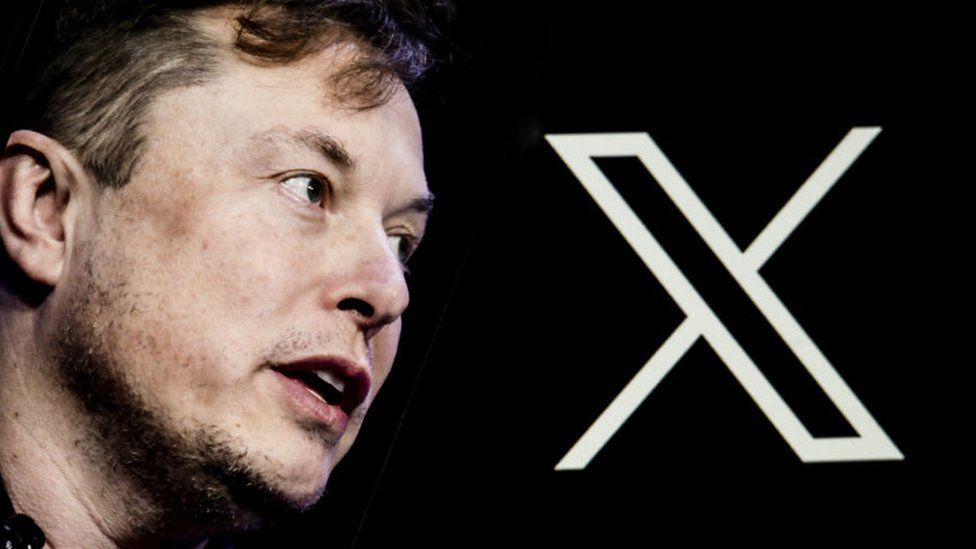
Elon Musk and his social media company X Corp have reached a tentative agreement to settle a lawsuit filed by former Twitter employees who said they were owed $500 million in severance pay.

Attorneys for X Corp and the former Twitter employees reported the deal in a Wednesday court filing, in which both sides asked a U.S. appeals court to delay an upcoming court hearing so that they could finalize a deal that would pay the fired employees and end the litigation. The financial terms of the deal were not disclosed.

Before he finalized the Twitter acquisition, Musk floated the idea of cutting the micro-blogging app’s workforce to 2,000. This he justified with a reference to WhatsApp’s 50 engineers. WhatsApp was said to have 35 engineers for 450 million users, and grew to a team of 50 for 900 million users at the time.

Musk fired approximately 6,000 employees after his 2022 acquisition of Twitter, which he rebranded as X. Several employees sued over their terminations and severance pay, and other lawsuits are still pending in courts in Delaware and California.

The settlement would resolve a proposed class action filed in California by Courtney McMillian, who previously oversaw Twitter’s employee benefits programs as its “head of total rewards,” and Ronald Cooper, who was an operations manager.

A federal judge in San Francisco dismissed the employees’ lawsuit in July 2024, and they appealed to the San Francisco-based 9th U.S. Circuit Court of Appeals. The 9th Circuit had been scheduled to hear oral arguments on September 17. Attorneys for Musk and McMillian did not immediately respond to requests for comment on Thursday.

The lawsuit argued that a 2019 severance plan guaranteed that most Twitter workers would receive two months of their base pay plus one week of pay for each full year of service if they were laid off. Senior employees such as McMillian were owed six months of base pay, according to the lawsuit.

But Twitter only gave laid-off workers at most one month of severance pay, and many of them did not receive anything, according to the lawsuit. Twitter laid off more than half of its workforce as a cost-cutting measure after Musk acquired the company.

Musk’s Layoffs and Labor Disputes

The case is one of several legal battles Musk has faced since his $44 billion takeover of Twitter. The sweeping layoffs—carried out with little notice—sparked criticism not just in the U.S. but also in Europe, where labor protections are stronger. In Ireland and the UK, former employees also initiated legal challenges over abrupt dismissals and unpaid severance.

The severance battle highlights a growing tension between Musk’s cost-cutting approach to running X and existing corporate governance and labor standards. Analysts believed that Musk prioritized slashing expenses to keep the company afloat after the takeover, as X has struggled with revenue declines, advertising losses, and heavy debt from the buyout.

The tentative deal also comes as Musk continues to defend X against multiple lawsuits and regulatory probes, from unpaid rent and vendor disputes to content moderation battles with governments worldwide.

If finalized, the settlement could help Musk close one of the biggest remaining liabilities from his mass layoff strategy, though his legal headaches are far from over. The settlement is expected to gulp a chunk of fortune from the social media platform, which is still struggling with revenue decline.