DD
MM
YYYY

PAGES

DD
MM
YYYY

spot_img

PAGES

Home Blog Page 655

Labubull: The Wildest Upcoming Meme Coin Presale of 2025

0

The crypto world has always thrived on stories. From Dogecoin’s Shiba Inu to Pepe’s chaotic rise, meme coins prove one thing: the community craves personality as much as profits. Enter Labubull, the mischievous bull charging into the scene with a presale unlike anything the meme coin space has ever seen. With 16 presale stages, surprise airdrops, staking rewards, and Rage Burns, Labubull is shaping up to be the best upcoming meme coin presale of 2025.

What Is Labubull?

Labubull isn’t just another meme coin with a catchy name. It’s a character-driven crypto experience built around the rebellious, chaotic spirit of a bull that refuses to be tamed. Where other projects rely on empty hype, Labubull delivers an evolving story that unfolds across 16 unique stages, each revealing a new Labubull personality.

Every stage isn’t just a price increase, it’s a community event. Holders get to witness the unveiling of new Labubulls while competing for a seat on the whitelist and securing their stake before the next surge. This makes Labubull much more than a token; it’s a living, breathing meme ecosystem powered by unpredictability.

Why Labubull Stands Out in the Meme Coin Jungle

The meme coin market is crowded. So, what makes Labubull the one to watch?

1. 16 Stages of Discovery

Unlike the typical “buy early, sell later” model, Labubull’s presale is designed to be an adventure. With each stage, a new Labubull identity emerges, keeping the community buzzing with anticipation. From playful to savage, each reveal adds hype and keeps momentum rolling until the final stage.

2. Surprise Airdrops

Forget predictable reward systems. Labubull thrives on chaos. Throughout the presale, holders can expect random airdrops bonus tokens, hidden reward pools, or special perks for loyal stakers. These airdrops keep everyone guessing and ensure that early supporters are constantly rewarded.

3. Staking Power

Labubull isn’t just about trading; it’s about holding strong. With 80% APY staking rewards, Labubull turns its community into long-term believers. By locking in tokens, stakers earn a steady stream of rewards while helping stabilize the ecosystem.

4. Rage Burns: Deflation with Style

Supply burns aren’t new in crypto, but Labubull puts a thematic twist on it. Rage Burns are deflationary events triggered during key milestones — when the bull’s fury sets the market ablaze. Every burn tightens supply, drives scarcity, and turns up the heat for future growth.

5. Community-First Approach

Labubull knows exactly what the community wants: real gains. Unlike the countless rugs that plague the meme coin space, Labubull delivers with solid tokenomics, strategic Rage Burns to ensure scarcity, and a structure designed for long-term value. A significant portion of the supply is dedicated to surprise drops, rewarding loyal holders who stay in the game and making Labubull stand out from the herd.

This bull doesn’t need gimmicky referrals to grow. Instead, it gives back to the community through monthly competitions, surprise rewards, and nonstop fun — keeping the spirit wild while ensuring the community reaps the benefits.

The whitelist for Labubull is now open, and spots are limited. Those who secure a whitelist position will enjoy an exclusive entry price, giving them an edge before the public rush and a straight shot to over 10,000% ROI

How to Join the Whitelist

Labubull is currently in whitelist mode, and getting on the list couldn’t be easier. Here’s how you can secure your spot:

  1. Visit the official website ?Labubull.io
  2. On the main page, you’ll see the Whitelist Section
  3. Enter your email address and hit submit
  4. Congratulations — you’re now a whitelist member!

By joining the whitelist, you guarantee exclusive entry prices before the public presale rush. Spots are limited, so don’t wait — once they’re gone, they’re gone.

Why Labubull Could Be the Best Meme Coin of 2025

Meme coins succeed when they capture imagination, community, and timing. Labubull checks all three boxes:

  • Imagination: A story-driven presale where each stage feels like a new chapter.
  • Community: With staking and surprise airdrops, holders are directly rewarded for loyalty.
  • Timing: Meme coins dominate bullish markets — and Labubull’s entrance in 2025 couldn’t be better.

Where other projects may fade after launch, Labubull is designed for long-term hype cycles, fueled by continuous reveals, burns, and rewards.

Final Thoughts: Ride the Bull Before It’s Gone

Labubull isn’t just another meme coin; it’s a movement. With 16 evolving stages, wild airdrops, massive staking rewards, and deflationary Rage Burns, this project has everything it needs to dominate the meme coin space in 2025.

But here’s the catch: the whitelist is open now — and spots are limited. Anyone who secures a whitelist position will enjoy an exclusive entry price, giving them an edge before the public rush.

? Don’t wait until the bull has charged past you. Visit Labubull.io, whitelist today, and become part of the most chaotic, rewarding, and unforgettable meme coin journey of the year.


 

State Street and J.P. Morgan Collaboration is a Pivotal Step Toward Mainstreaming Tokenized Debts

0

State Street Corporation has become the first third-party custodian to join J.P. Morgan’s Digital Debt Service, a blockchain-based platform for issuing, settling, and managing debt securities.

This collaboration allows State Street to provide custody for tokenized debt securities, leveraging J.P. Morgan’s Kinexys Digital Assets platform. The service enables seamless custody with automated settlement, including T+0 options, and smart contract-driven lifecycle management for payments and redemptions.

The inaugural transaction was a $100 million commercial paper issued by Oversea-Chinese Banking Corporation (OCBC), with State Street Investment Management as the anchor investor and J.P. Morgan Securities LLC as the placement agent. This move integrates State Street’s front, middle, and back-office operations, maintaining traditional compliance standards while modernizing short-term debt markets. The service is currently available only in the U.S.

The Digital Debt Service leverages blockchain for real-time (T+0) settlement, smart contract automation, and streamlined lifecycle management (e.g., payments and redemptions). This reduces counterparty risk and operational delays compared to traditional T+2 or longer settlement cycles, potentially lowering costs and increasing liquidity in debt markets.

Blockchain’s immutable ledger provides near real-time transparency, reducing reliance on intermediaries and enhancing trust among institutional participants. This could encourage broader adoption of tokenized debt instruments. State Street’s participation as the first third-party custodian signals growing confidence among major financial institutions in blockchain technology.

As a custodian managing $49 trillion in assets, State Street’s involvement could catalyze other institutions to explore tokenized debt, expanding the ecosystem. The collaboration maintains traditional compliance standards, making it easier for institutional clients to adopt blockchain without overhauling existing servicing models.

This balance could accelerate the mainstream integration of digital assets in fixed-income markets. The tokenized real-world asset (RWA) market, excluding stablecoins, has grown 65% in 2025 to $26.4 billion, with projections ranging from $2 trillion by 2030 (McKinsey) to $19 trillion by 2033 (Ripple/BCG).

This partnership positions State Street and J.P. Morgan to capture a significant share of this expanding market. The deal sets a precedent for tokenized debt issuance, potentially encouraging other issuers and custodians to join, which could scale the volume of onchain debt instruments.

State Street’s focus on managing digital wallets onchain and fostering interoperability across blockchain networks could create a more connected digital asset ecosystem. This is critical for scaling tokenized debt markets globally, though the service is currently U.S.-only.

Partnerships like J.P. Morgan’s with Chainlink and Ondo Finance for cross-chain transfers suggest future potential for integrating tokenized debt across different blockchain platforms, enhancing market accessibility. By automating processes like interest payments and redemptions via smart contracts,

The platform reduces administrative costs and manual errors, potentially lowering the cost of issuing and managing debt. Reduced counterparty risk and faster settlements could enhance capital velocity, as noted by Chainlink’s Sergey Nazarov, potentially boosting economic activity by making capital more readily available.

Basis for Onchain Debt-to-GDP Ratio

An onchain debt-to-GDP ratio would measure the total value of tokenized debt securities (recorded on blockchain) relative to a country’s or region’s gross domestic product (GDP). The State Street and J.P. Morgan collaboration lays groundwork for this metric in the following ways:

Blockchain’s transparent ledger allows precise tracking of tokenized debt issuance, settlement, and lifecycle events in real time. State Street’s custody of tokenized debt in digital wallets on J.P. Morgan’s Kinexys platform provides a verifiable record of debt instruments, enabling accurate measurement of onchain debt.

The collaboration establishes a framework for institutional-grade tokenized debt, which could standardize how debt is issued and recorded onchain. This is critical for aggregating data across issuers to calculate a comprehensive onchain debt total. The $100 million OCBC commercial paper transaction demonstrates the feasibility of large-scale tokenized debt issuance.

As more institutions adopt similar platforms, the volume of onchain debt could grow significantly, providing enough data to make an onchain debt-to-GDP ratio meaningful. To calculate an onchain debt-to-GDP ratio, tokenized debt data must be paired with GDP figures.

The collaboration’s focus on institutional clients and regulatory compliance ensures that tokenized debt aligns with traditional financial reporting standards, facilitating integration with national GDP data from sources like the Congressional Budget Office (CBO), which projects U.S. federal debt at 122% of GDP by 2034.

As tokenized debt grows, it could represent a significant portion of total debt, allowing analysts to compare onchain debt to GDP as a subset of broader debt metrics, highlighting blockchain’s role in debt markets. Higher debt-to-GDP ratios, whether traditional or onchain, raise concerns about fiscal sustainability.

State Street’s own research notes that rising U.S. debt-to-GDP ratios reduce the convenience yield of Treasuries, reflecting investor concerns. An onchain debt-to-GDP ratio could provide insights into how tokenized debt contributes to or mitigates these risks.

Tokenized debt’s faster settlement and lower costs could increase capital velocity, potentially boosting GDP growth. This dynamic could make an onchain debt-to-GDP ratio a useful indicator of blockchain’s economic impact. The Digital Debt Service is currently U.S.-only, limiting the initial scope of onchain debt to one market.

Global adoption would be needed for a comprehensive ratio, especially since GDP is typically measured nationally or regionally. Not all debt is tokenized, so an onchain debt-to-GDP ratio would initially represent only a fraction of total debt. For context, global sovereign debt is 110% of GDP for advanced economies, but tokenized debt is a small subset.

It lays a foundation for an onchain debt-to-GDP ratio by providing a scalable, transparent framework for tracking tokenized debt. However, the ratio’s relevance depends on broader adoption, global expansion, and integration with traditional economic metrics.

While the deal enhances the infrastructure for measuring onchain debt, its impact on the broader debt-to-GDP ratio will depend on how quickly tokenized debt grows relative to GDP and whether it influences overall debt issuance trends.

A Look at Meteoric Rise of Meteora to #2 Revenue-Generating Platform Following Kanye West’s YZY Memecoin Launch

0
TEHRAN, IRAN - JULY 19: (RUSSIA OUT) Russian President Vladimir Putin leaves his presidential plane during the welcoming ceremony at the airport, on July 19, 2022 in Tehran Iran. Russian President Putin and his Turkish counterpart Erdogan arrived in Iran for the summit. (Photo by Contributor/Getty Images)

Meteora, a decentralized exchange (DEX) on the Solana blockchain, surged to become the second-highest revenue-generating platform for a brief period following the launch of Kanye West’s YZY memecoin on August 21, 2025.

The YZY token, part of the “YZY Money” ecosystem, drove unprecedented trading activity, with Meteora processing approximately $1.183 billion in trades over a 24-hour period, marking one of its most significant single-day performances. The largest YZY-USDC liquidity pool on Meteora generated over $10.18 million in fees, with a total value locked (TVL) of $147 million, including $37.47 million in USDC.

This spike was fueled by the intense market hype surrounding Kanye West’s celebrity-backed token, which briefly hit a $3.2 billion market cap before crashing to around $1.05–$1.3 billion. Meteora’s ability to handle this high-volume surge, supported by its Dynamic Liquidity Market Maker (DLMM) technology, underscored its growing prominence in Solana’s DeFi ecosystem.

However, concerns over insider trading and the token’s centralized ownership structure (94% held by insiders) highlight the speculative and volatile nature of such celebrity-driven projects. The massive trading volume and revenue ($10.18 million in fees from the YZY-USDC pool alone) spotlight Meteora’s scalability and efficiency, particularly its Dynamic Liquidity Market Maker (DLMM) model.

The YZY token’s rapid rise to a $3.2 billion market cap followed by a crash to ~$1.05–$1.3 billion highlights the speculative nature of celebrity-driven memecoins. While this drove short-term revenue, it raises concerns about sustainability, as 94% of YZY’s supply is reportedly held by insiders, increasing risks of manipulation and dumps.

Meteora’s fee generation (e.g., $10.18 million from a single pool) demonstrates the profitability of concentrated liquidity models like DLMM, which optimize capital efficiency compared to traditional automated market makers (AMMs). This could encourage other DEXs to adopt similar mechanisms, intensifying competition.

The YZY launch’s insider-heavy ownership and allegations of coordinated trading raise red flags. Regulatory bodies may scrutinize such projects, potentially impacting Meteora’s operations if it’s seen as facilitating manipulative practices. Platforms may need stricter vetting for token listings to maintain credibility.

Meteora’s performance reinforces Solana’s dominance in DeFi, with its 21.8% share of Solana DEX volume in July 2025. High-profile launches like YZY could drive more developers and capital to Solana, boosting overall ecosystem liquidity and innovation.

Celebrity-driven memecoins like YZY create massive trading interest, attracting both retail and institutional traders. The $1.183 billion in 24-hour trading volume on Meteora funneled significant capital into its liquidity pools, with the YZY-USDC pool alone holding $147 million in TVL.

Meteora’s DLMM model allows liquidity providers to concentrate capital in specific price ranges, maximizing fee earnings during volatile periods like the YZY launch. The $10.18 million in fees from one pool demonstrates the potential for high returns, attracting more providers to add liquidity in anticipation of similar events.

High-profile launches enhance Meteora’s reputation as a reliable venue for new tokens, encouraging projects to launch there and liquidity providers to maintain pools for future opportunities. This creates a feedback loop: more projects ? more trading ? higher fees ? more liquidity providers.

The influx of capital into YZY-related pools can increase liquidity across other Meteora pools, as traders diversify or arbitrage opportunities arise. For example, the $37.47 million in USDC in the YZY-USDC pool provides stablecoin liquidity that can support other trading pairs.

While the YZY launch drove immediate liquidity, the subsequent crash suggests that speculative trends may lead to transient liquidity spikes. Sustained liquidity growth depends on Meteora fostering projects with fundamental value, balancing memecoin hype with stable, utility-driven tokens.

High volatility in tokens like YZY can lead to significant impermanent loss for liquidity providers, discouraging long-term participation. Insider-dominated tokens risk sudden sell-offs, which could drain liquidity if providers exit to avoid losses. Repeated crashes or scams tied to memecoins could deter users, reducing liquidity inflows unless Meteora implements robust token vetting.

However, sustaining this liquidity requires balancing speculative hype with credible projects to maintain provider confidence and user trust. Meteora’s ability to capitalize on such trends positions it as a key player in Solana’s DeFi landscape, but it must navigate volatility and regulatory risks to ensure long-term growth.

Germany’s Economy Contracted By 0.3% in Q2 2025, Down From Preliminary Estimate of 0.1%

0

The German economy contracted by 0.3% in Q2 2025, revised down from a preliminary estimate of 0.1%, signaling a deeper-than-expected slowdown.

This follows a 0.3% growth in Q1, with the downturn driven by declines in investment (down 1.4%, particularly in machinery and equipment), construction (-3.7%), and manufacturing (-0.3%). Exports fell 0.1%, while imports rose 1.6%, further weighing on GDP.

Household consumption edged up 0.1%, and government spending increased 0.8%, offering some support. On an annual basis, GDP grew by 0.2% after calendar adjustments. The contraction reflects ongoing challenges, including U.S. tariffs (a 10% baseline tariff effective April 5, 2025), weak global demand, high energy costs, and tighter financing conditions.

Germany risks a third consecutive year of economic contraction, a rare occurrence in its post-war history. Persistent issues like high energy costs, weak global demand, and new U.S. tariffs (10% baseline effective April 5, 2025) could deepen this trend, delaying recovery until 2026.

Sharp declines in investment (-1.4%), particularly in machinery, equipment, and construction (-3.7%), signal reduced business confidence and capacity for growth. Manufacturing’s 0.3% drop underscores Germany’s vulnerability as an export-driven economy amid global trade disruptions.

A 0.1% fall in exports, coupled with a 1.6% rise in imports, worsens the trade balance, a critical driver of German GDP. This could strain the current account surplus and exacerbate economic fragility. While household consumption (+0.1%) and government spending (+0.8%) provided some cushion, their modest gains are insufficient to offset broader declines.

Rising borrowing costs and inflation may further constrain consumer and public spending. The government’s planned infrastructure investments and tax incentives face hurdles from coalition disagreements and fiscal constraints. Without robust reforms, these measures may fall short of sparking a turnaround.

As the Eurozone’s largest economy, Germany’s downturn could drag regional growth, potentially pressuring the European Central Bank to adjust monetary policy, though high interest rates to curb inflation limit options. Prolonged stagnation may fuel public discontent, strengthening populist parties and complicating governance, especially with coalition tensions already evident.

Analysts, including ING’s Carsten Brzeski, see no quick fix, with structural issues like energy transition costs and global trade shifts posing long-term challenges. Germany’s ability to navigate these will determine the pace of recovery.

Germany, accounting for roughly 28% of Eurozone GDP, acts as a key economic engine. Its downturn could lower Eurozone growth projections, potentially pushing the region closer to stagnation or recession. Smaller, export-dependent economies like Austria, Belgium, and the Netherlands, closely tied to German supply chains, are particularly vulnerable.

Germany’s 0.1% export decline and 1.6% import rise weaken intra-Eurozone trade dynamics. Reduced German demand for goods from other member states could hurt economies like Italy and Spain, which rely on exports to Germany, exacerbating regional imbalances.

The European Central Bank (ECB) faces a dilemma. Germany’s contraction signals a need for looser monetary policy to stimulate growth, but persistent Eurozone inflation (driven by energy costs and supply chain issues) may limit rate cuts. This could delay recovery across the region.

Germany’s fiscal constraints and coalition disputes over stimulus measures could limit its ability to lead Eurozone recovery efforts. This puts pressure on other major economies like France and Italy to boost spending, despite their own high debt levels, potentially straining EU fiscal rules.

A weaker German economy could depress the euro’s value, increasing import costs (e.g., energy) across the Eurozone. Stock markets, particularly in export-heavy sectors, may face volatility as investor confidence wanes.

Germany’s prolonged stagnation could fuel populist sentiment, influencing Eurozone politics. Rising political fragmentation in Germany and beyond may complicate coordinated EU responses to economic challenges.

Analysts suggest the Eurozone’s 2025 growth, already projected at a modest 0.8-1.2% by institutions like the IMF, could be revised downward if Germany’s slump persists. The region’s recovery hinges on Germany addressing structural issues and external shocks like trade tariffs and energy costs.

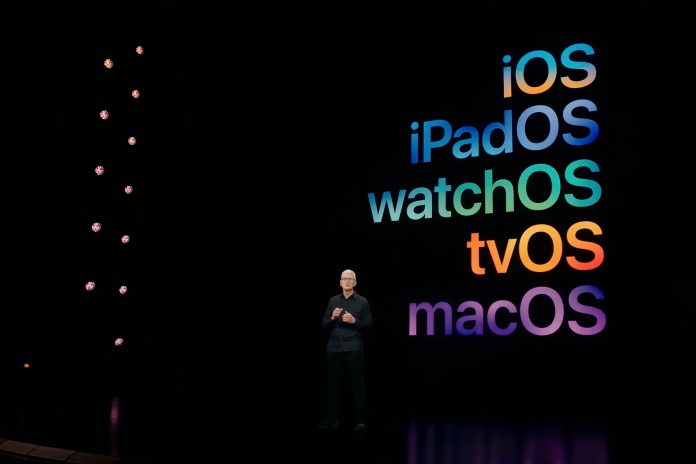
Apple Expands Enterprise AI Tools with ChatGPT Controls, New Business Management Features

0

Apple is stepping deeper into the enterprise AI race with a new set of tools designed to give businesses more control over how their employees use artificial intelligence.

With software updates scheduled for release in September, Apple is introducing a key option for IT administrators: the ability to configure access to an enterprise version of OpenAI’s ChatGPT.

The timing is notable because ChatGPT for Enterprise, launched by OpenAI in 2023, has quickly grown to over 5 million business customers, according to the company. Corporations utilize the service to connect with internal datasets and deploy AI agents for customer support, workflow automation, and research purposes. That growth has signaled the mainstreaming of generative AI in the workplace — a development Apple is now aligning itself with.

But Apple’s move is not limited to OpenAI. Support documents show that administrators will be able to restrict or allow any “external” AI provider, not just ChatGPT. This framework keeps Apple flexible in a fast-moving sector, leaving the door open to future enterprise partnerships with other major AI players such as Anthropic, Cohere, or Google DeepMind without needing to re-engineer the system at its core.

The new integration builds on Apple’s dual strategy of promoting its own Apple Intelligence features for end users — such as writing tools, email drafting, and image understanding — while ensuring IT departments retain granular control. Apple’s Private Cloud Compute architecture underscores its promise of security and on-device processing, but the company acknowledges that many enterprises will prefer to make their own decisions on data handling. That’s why Apple is allowing organizations to decide whether employee AI requests should be processed locally or sent to cloud-based services like ChatGPT.

This flexibility also explains how Apple has positioned its ChatGPT integration across iOS, macOS, and iPadOS. Requests are routed either through Apple’s own servers or ChatGPT, but never both. This makes it simpler for businesses to enable or disable ChatGPT without affecting Apple’s core intelligence features — even if the business has no direct contract with OpenAI.

Beyond AI, Apple is layering in new enterprise features. An API for Apple Business Manager will allow the service’s capabilities — like provisioning, inventory tracking, and security enforcement — to integrate directly with third-party IT tools such as mobile device management (MDM) systems and help desk software. A streamlined device migration process is being introduced for organizations undergoing mergers and acquisitions, a common pain point for IT leaders.

Apple is also enhancing its Return to Service tool, which helps reset corporate devices for redeployment. The update will allow apps to remain installed after a reset, reducing downtime and bandwidth usage. For the first time, this service will also extend to Apple’s Vision Pro headset, signaling that the company wants its spatial computing device to play a role in corporate workflows.

Security and identity management are also being reinforced. On shared Macs, authenticated Guest Mode will let employees sign in with credentials from an identity provider, with all personal data wiped on logout. Businesses will also be able to add NFC readers to Macs, enabling employees to log in simply by tapping an Apple Watch or iPhone.

These features come at a moment when AI infrastructure is becoming the next big battleground in tech. Cloud providers, chipmakers, and AI labs are spending heavily to build the backbone for generative AI. OpenAI, for instance, is investing billions — backed by Microsoft — to expand supercomputing capacity and data centers that power its enterprise-grade models. Analysts describe such spending as a bet on AI’s permanence in enterprise operations, where generative tools are expected to become as standard as email or spreadsheets.

Apple’s approach is to sit at the intersection of this shift: integrating best-in-class external AI while strengthening its own device and software ecosystem to ensure enterprise customers can adopt AI on their own terms.