DD
MM
YYYY

PAGES

DD
MM
YYYY

spot_img

PAGES

Home Blog Page 6550

How to Manage the Harsh Harmattan Weather

0

It is necessary that we take our hands off the plough every now and then to take care of ourselves, and our homes. We can ignore this during the other seasons of the year, but never during the harmattan.

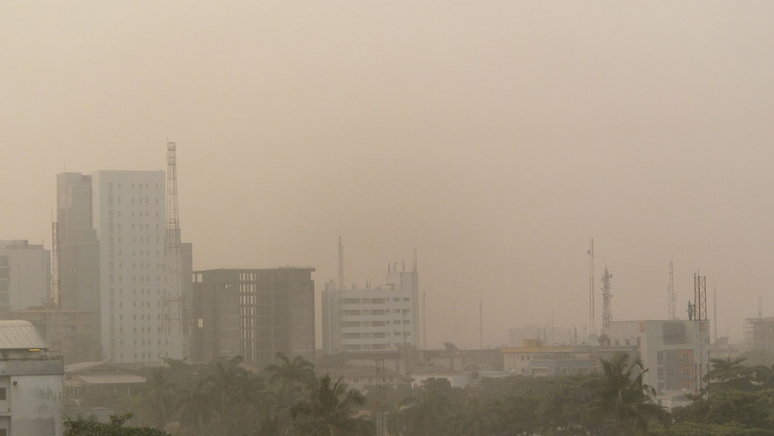
A lot of people look forward to harmattan but some others see it as their worst time of the year. To those that love it, the weather is dry, they don’t sweat much and everywhere looks neat. On the other hand, those that hate harmattan complain of dusts, dry and scaly skin, cracked lips and so on.

No matter how you look at it, harmattan must come and go every year. Some parts of Nigeria experience it from November to March, while other parts encounter it from December to January. But there are parts of the country that never experienced what this season felt like and their natives marvel whenever they find themselves in places that “enjoy” this weather.

The only way to manage the harmattan season is through abiding by the “rules and regulations” guiding it. The cases of fire accidents, cracked lips, broken heels, dry coughs and others that accompany harmattan can be brought under control if you do the right thing.

Below are ways you can take care of your home and your body during this harmattan season.

Taking Care of Your Home

The major challenges people face in their homes during the harmattan season are fire accidents and dust encroachments. For those that have little children and wooden furniture, you might notice that more broken furniture emerge within this period. Well, here are simple ways you can handle these challenges:

  • Clear bushes around your house. This is done during the rainy season to discourage breeding homes for mosquitoes and snakes. But during the harmattan, it is done to protect the house from fire accidents that may be caused by bush burning. So, don’t wait for “hunters” and “labourers” to put your house in danger; take time to go round your house and clear off every form of plant that may put your home in danger. If the bush happens to be in another compound, contact the owner and get him or her to clear it. Should the owner prove uncooperative, take the matter to the Fire Service, they know what to do.
  • Remove matches, lighters and other kindling out of the reach of children. Remember things easily ignite in this weather, so keep your home safe from within as well. You should also explain to the children why they shouldn’t play with fire now and later. Tell them gory stories about fire incidents which will stick more to their memories.
  • Close your windows. Don’t bother so much about fresh air right now because what you will get more from out there are dust particles. It is better to leave your windows closed (or partially closed), especially during the day, to reduce the quantity of dust and cold dry air that find their way into your house. If you must open them, do so in the night when human activities have reduced and less dusts are raised.
  • Go for heavier curtains. I noticed some people change their window blinds during different seasons of the year. At this time of the year, they go for heavy curtains that can trap in warmth and keep off dust. Maybe you too should try that too.
  • Taking Care of Your Body

Someone said that women suffer more during harmattan than men because women have softer skins that can easily break. I haven’t tested this hypothesis but I believe everyone needs to take care of him or herself during this season.

What most people suffer from at this time of the year include dry cough, scaly skin, cracked lips, cracked nostrils, broken soles and hair loss. A lot of entrepreneurs use this opportunity to rip people off their hard earned money in the name of special creams, soaps and ointments. But the answer to fixing and avoiding all these are right there before you; and they are cheaper to get, if you know how to find them.

Below are some of the ways to stay and look healthy this season:

Wear warm clothes, especially in the night. This will protect you from cold that accompanies harmattan. It will also protect your skin from the harsh dry weather. This is no time to show off your skin, so look for something that will cover you up.

Drink lots of water. You might notice that you are not that thirsty these days. Nevertheless, your body still needs plenty of water. So, continue with your water therapy and keep your system clean and your skin supple.

Use mild soaps. Remember this weather is already dry and harsh. For that, don’t go for soaps that will deplete your skin of the extra moisture and oil that it needs to stay healthy and glossy this season. Go for simple soaps that remove dirt and be weary of “deep cleansers” (cosmetic people don’t be angry with me, please).

Moisturise very well. A lot of creams are on the market promising people of magic they will perform on their skins. Be careful with what is written on labels. You don’t have to break the bank to look supple this season. Forget the very expensive labels that promise you they can make your skin look like Cleopatra’s this harmattan. Most of their producers don’t know what our harmattans are like.

So, here is my suggestion. Use mild soap and ensure that you washed out the soap suds very well. Go for the cream you’ve been using, there’s no need to change it. Only thing here is, add olive oil to your skincare products and you’re good to go. Yes, look for original olive oil and use it together with your cream and scaly skin will be a thing of the past. Some people use Vaseline but I can’t tell how your skin can handle the wax and mineral oil.

Remember to carry a little bottle of moisturiser around because you never can tell when you might need it.

Take care of cracks and broken skins. The soles of your feet are broken, your lips are cracked, even your nostrils have dried out; these shouldn’t be great problems. For your feet, buy a metal foot scraper they sell about #300 and keep it in your bathroom (forget pumice stones during this season). While taking your bath, soap your feet and use the scraper to remove as much dead skin as you can from your feet. Scrub every part of your sole (not just the heels), but be careful so you don’t hurt the soft skins surrounding them. Do this every morning and night and you will wave bye-bye to those cracks within two weeks. Continue with this routine all through the season.

For cracked lips, use Vaseline or olive oil on your lips during the day and before going to bed at night. Never leave your lips unprotected during this season. If you used lipstick during the day, remember to wash it out in the night. And please, avoid cheap harmful cosmetics.

Managing cracked nostrils is not easy, especially with the pains that accompany the cracks. But the easiest way to do this is to maintain some level of humidity in your home and office environment. This is why you need to keep the dry air at bay by closing your windows and using heavier curtains. Some people apply Vaseline into their nostril to help with the dryness, maybe you can try that too. And if the dry air is unbearable that it’s hard breathing it in, try covering your nostril with a nose mask – you can buy one or improvise with your hanky.

Protect your hair. The only way to protect your hair this season is by not combing it. So long as comb passes through your hair during this harmattan, you are bound to experience hair loss. So, go for cornrows, braids, or any other thing that will keep your hair out of the comb’s way until the harmattan is over.

Wear more of shoes than sandals. Apart from keeping the feet warm and moist, it is easier to clean off dust from shoes than from feet.

So keep yourself looking glossy this harmattan and don’t let the harsh weather stand in your way.

The Lagos 4th Mainland Bridge

0

Lagos State Government has once again rekindled its intention to provide an alternative to other bridges connecting the Mainland and Island, especially the 3rd mainland bridge – the 4th mainland bridge.

The State Government had weeks ago, advertised expression of interest on the project and subsequently opened the bid to welcome companies that have indicated interest in construction of the bridge. And so far, the expression has recorded the interest of 39 companies.

Lagos State Government has been looking for a way to execute the project using the Public Private Partnership (PPP), due to the cost. The Special Adviser to the Governor on Works and Infrastructure, Aramide Adedoye, said that the government does not have the fund for the project and has to place it under PPP arrangement.

She however acknowledged that the interest has been overwhelming, and the record of 39 companies that have shown their readiness to execute the project through partnership is encouraging. But the process will have to go through six stages before a finalist would be selected, for the sake of transparency.

Some of the companies that have expressed interest in the project are: Julius Berger, China Civil Engineering Construction Corporation, China Jiangxi International Economic and Technical Cooperation Company Limited, Kyeryong Construction Company, Pythgoras Holdings, CRCCCI Nigeria, China State Construction and Engineering Corporation Nigeria Limited, Bua International Limited.

The 4th mainland project was conceived years ago and has been repeatedly hindered by lack of funds. But the Public Private Partnership has opened the way for it to be revisited once again, this time, many companies from around the world are willing to take on the task.

The Lagos State Permanent Secretary, Works and Infrastructure, Olujimi Hutonu, noted that the recent opening started in November.

“The journey started on November 28, 2019 when the advert for expression of interest was placed. Three weeks later, the expression of interest has been opened and made public,” he said.

But the origin of the idea could be traced back to 2003, when Bola Tinubu was the State Governor. The transport activities on the Mainland-Island axis was becoming overwhelming for 3rd Mainland, Eko and Carter bridges, and obviously the need for additional bridge became so crystal clear.

In 2008, NLE’ Works designed the visual concept of the bridge and it was approved by the State Government. The bridge was designed to be a 38k expressway with 140km speed. It’s going to be a two-level bridge. The upper level will function for vehicle traffic while its lower level will serve as pedestrian for social and commercial activities.

The bridge was designed with eight interchanges to enable interconnectivity to many parts of Lagos. According to the plan, the alignment passes through Lekki, Langbasa and Baiyeku towns along the shoreline of the Lagos Lagoon estuaries, running through Igbogbo River Basin and crossing the Lagos lagoon estuaries to Itamaga area of Ikorodu. It further crosses the Itokin road and the Ikorodu-Sagamu road to connect Isawo inward Lagos-Ibadan expressway at Ojodu Berger axis.

The bridge is designed to have a four-lane dual carriageway with each comprising three lanes and two meters hard shoulders on each side. At 38km, it’s going to be the longest bridge in Africa, surpassing the 20.5km 6th October bridge in Egypt.

With this approved plan, former Governor, Akinwunmi Ambode signed a MoU with consortium of firms to finance the construction in May 2016. Some of the firms include Julius Berger Nigeria Plc, Africa Finance Corporation, Visible Asset Limited, Nigerian Westminister Dredging and Marine, J.P. Morgan, Access bank and Hi-tech Consortium Limited. At the cost of N844 billion, Visible Assets Limited was going to be the coordinating firm for the project.

In May 22 2017, Ambode, to many people’s surprise, announced that the State Government has cancelled its MoU with these firms due to the delay in commencement of the work by the concessionaire. The hope for 4th mainland bridge was not heard of until last month when Governor Sanwoolu announced the expression of interest for the project.

While the news brings a sense of relief to Lagosians due to the fact that it will ease the menace of traffic that has become the bane of suffering of commuters, especially those plying the Mainland-Island routes, concern exists about how the concessionaires are going to recover the huge sum the project is going to gulp. Using the Lekki-Epe expressway as an example (where three toll gates were built, and there is always a fight between LCC and road users about increment in toll fees), many are expressing the fear that commuters may be forced to pay more than they are earning to use the bridge.

The Central Bank of Nigeria’s Directive on Transaction Charges

0
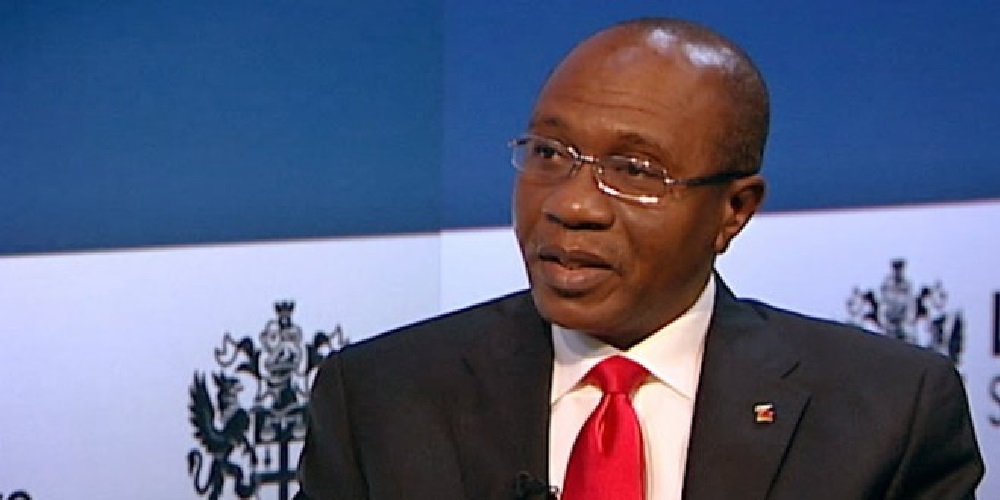
Godwin Emefiele (CBN governor)

The Central Bank of Nigeria (CBN) has announced downward review of bank charges on consumer services. A statement from the Apex Bank on Sunday explained that the review has become necessary to encourage financial inclusion and ease the burden of arbitrary charges that have been on the shoulders of bank customers for long.

The statement reads:

“In a bid to encourage financial inclusion and to reduce the burden of bank charges on consumers of financial service. CBN has issued a revised Guide to Charges by Banks, Other Financial and Non-Bank Financial institutions in response to the evolution in the financial industry over the last few years. CBN new guide includes, amongst others; downward review of charges for electronic banking transactions.

“Review of other bank charges to align with market developments

and inclusion of new sections on Accountability/Responsibility and a Sanction Regime to directly address instances of excess, unapproved and/or arbitrary charges. The revised Guide to Charges by Banks, Other Financial and Non-Bank Financial Institutions takes effect on January 1, 2020.”

The review affected many of the banks’ charges while others remain the same. Among the items that were reviewed downward is the hardware token that is reduced from N3500 to N2500, for electronic transfers: transactions below N500 incur charge of N10 only, N5,001 – N50, 000 attracts N25, while transactions above N50, 000 is at the charge of N50 only.

While cards linked to current accounts are debit charges free, cards linked to savings accounts attracts maximum of N50 quarterly maintenance fee and N35 after the third withdrawal within the same month.

However, the cashless policy remains unchanged. Individual Cash deposit transactions above N500, 000 still at 2% charge, cash withdrawal above the N500, 000 in the same category is charged at 3%. For corporate bodies, cash deposits above N3,000,000 bears 3% charge and cash withdrawal above N3,000,000 attracts 5% charge.

CBN concluded by sounding a warning of consequences to banks and other financial organizations that flout any of these directives or manipulate the system to exploit consumers.

“Financial Institutions are to note that any breach of the provisions of this Guide carries a

penalty of N 2,000,000 per infraction or as may be determined by the CBN from time to

time.

  1. Where a bank is found to have wrongfully imposed a particular charge on its customers,

the provision of Section (i) above shall apply for the charge on each customer.

iii. Failure to comply with CBNâ??s directive in respect of any infraction shall attract a further

penalty of N2,000,000 daily until the directive is complied with or as may be determined

by the CBN from time to time.

  1. Banks are required to log every complaint received from their customers into the

Consumer Complaints Management System (CCMS) and must generate a unique

reference code for each complaint lodged, which must be given to the customer. Failure

to log and provide the code to the customer amounts to a breach and is sanctionable

with a penalty of N1,000,000 per breach.

  1. A penalty of N100,000 shall be imposed on a financial institution that contravenes the

provisions of Part 6C.”

For long, Nigerians have been crying over the number of charges imposed on banks’ transactions, from ATM withdrawal to card maintenance to USSD fees.

It appears the outcry instigated the recent changes in the directive of the Apex Bank. While this is a welcome development, it is not enough to put the outcry to permanent rest.

Moreover, Nigerian banks are notorious for breaking rules as long as they serve for their gains. Although CBN also stipulated there would be consequences in case the rules are broken, affecting the punishment is always the challenge.

The Apex Bank did not provide a window for consumer complaints, which always creates the impunity that the banks bask on to impose their arbitrary charges. And consumers watch helplessly as their hard earned money get swayed. For instance, the proposed fine of N10, 000 for failed ATM transactions that are not reversed within 24 hours has not stopped people from losing their money to the banks therefore. And apart from calling their banks to reverse the fund, many don’t know how else to recover it.

So, the Regulator should provide a complaint unit that will handle cases of disregard of its directives and render justice to aggrieved customers. It only takes that, and the banks will sit up.

Babcock : Re-strategising to reclaim the online goodwill

0

Sometimes in November, 2019, Babcock University, Ilishan Remo was in the news because of two of its ex-students who recorded themselves making out reportedly at a rehabilitation centre. Since then, people have been trying to understand the university within the domain of the image damaging incident. In a recent article, the university was advised on the implications of the sex tape saga on its reputation. It was also urged to up its digital PR game. A move made exactly a month after the incident has shown that the university’s authority and its communication team are yet to realize the magnitude of that singular incident on its reputation and digital goodwill.

The President and Vice Chancellor of the university, Prof. Tayo Ademola had summoned a media parley on Sunday December 9, 2019 to further brief the media on why the university expelled the 300 Level female student who was involved in the leaked video.  The move apparently was to bolster the image of the institution after the image denting misdemeanour.

However, analysis has shown that the move may not achieve the intended target. There are noticeable flaws which are further examined in this piece.

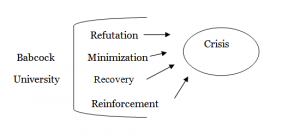
#Lack of clear crisis communication strategy. It is apparent that the university’s communication team does not have a strategy to combat the crisis. For every crisis, there are different strategies. An organization can employ refutation of facts, minimization of impact, recovery of reputation and reinforcement of reputation to combat the backlash of the crisis. A quasi-statistical sense analysis does not show the communication team has a clear strategy. An attempt to minimize has been made but recovery and reinforcement which should follow is not forthcoming. The news of the luncheon was carried by four newspapers online. These include the Punch, Vanguard, the Nation and PM News. A recovery strategy would have involved the stories being widely spread online employing both established news houses as well as high impact blogs. The social media handles of the university should have also been deployed to maximum advantage. They constitute part of the owned media.   However, a check on the Facebook and Twitter accounts of the institution did not yield much. Clearly, the strategy is unclear, the tactics poorly communicated.

Figure 1: The Crisis Communication Strategies

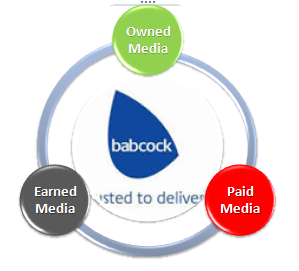
#Absence of coordination between earned, paid and owned media.  Analysis has also shown that there is a link between the lack of strategy and absence of coordination of the available media to the university to leverage on to combat the image crisis. For every organization, there are three kinds of media. The owned media is within the control of the organization. Paid media is the paid third party channel while earned media is the public share and attention a company attracts as a result of the activities on both the owned and paid media. On this case, the university neither coordinated its media nor synchronize them to solve their image issue.

Figure 2 : Available Media to Babcock University


Source: Adebiyi, 2019

When owned media are used, organizations have the chance to tell their own stories the way they want it without the impediment that gate-keeping of paid media usually present. Websites and social media handles of the university are the owned media here. The university should have come up with content that resonates its vision and mission and push them out on the owned media. The handlers should have used the Facebook page, Twitter handle and Youtube channel to counter negative narratives. These are channels that the university has control over. They could have been used to generate positive electronic Word of Mouth. The eWOM could go far in the digital environment to ensure public interest which could assist the university to normalise search terms.

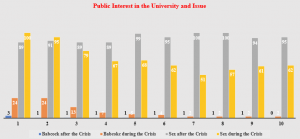
#Trends online has not moved an inch.  For Babcock University, the online trends still remain the same. Analysis of how the university trended online earlier done has not changed. Related terms searched alongside the university still included babcock university video; babcock university students video; babcock  university student video; babcock university sextape and babcock university girl. This is an indication that nothing much has changed. Those who searched online are still trying to understand the university within the domain of the sex tape scandal. A check on public interest in the video from the time it first surfaced online and up until the media luncheon was done has shown a significance increase in interest.The university’s communication team needs to again check its strategies and come up in clear terms what it intended to use to tackle this issue once and for all. The longer it takes to do that, the more the trends are going to remain the same for the university.


Source: Google Trends, 2019; Adebiyi, 2019

Similarly, an analysis of the search terms for the university during and after the crisis has also shown that the trend is not abating at all. Related terms still remain the same with the word “sex” ranking well with the university during and after the crisis. It is suggested that the university’s communication team takes the trends more serious. Online goodwill is an essential component of digital public relations.

Figure 3: Public Interest in Babcock University during and After the Crisis

Source: Google Trends, 2019; Adebiyi, 2019

The university seems to be losing a lot if the communication team is not paying attention to its communication online. For instance, mined comments of the readers on the Punch website seem to be generating sentiments on the part of the university. A reader, Benny agafa said, “Thank you so much VC. Am reading with tears in my eyes as a father and as a believer. I know what the parents are going through now. Since our Lord and saviour did not condemned (sic) any one so we should also shows love and correction always.” Another, Wolex, posited that “This is what Christianity is about. There is always room for forgiveness after repentance. That is true love. May the Lord continue to bless the University.” The right mix of the communication channels properly appropriated would have assisted the university in burying the ghost of the unavoidable image crisis online.

Understanding Strategy – Lesson from Intel Corp

1

In business competition, do best company really exists? It all depends, because there is no single way to compete. The biggest mistake in strategy, is to think there is only one way to compete. There are different ways to compete, depending on what categories of customers you choose to serve, and the type of needs, you choose to meet. Strategy is all about creating unique values for the set of customers you choose to serve. It is about making choices, and the fundamental of choice is to determine who to serve. Strategy, is different from your company’s mission statement. It is your positional advantage to attain your goals.

Doing the same thing as your competitor does, is not strategy. If your competitor is employing a low-cost strategy, it becomes difficult for you to win if you chase them, by employing a low cost strategy. The essence of strategy, is to find a unique position in your business value chain that delivers unique value to the set of customers, you choose to serve. Strategy is a whole set of long term choices that you make, to distinguish yourself from competitors.

If you are trying to do the same thing as your competitors do, it’s not a strategy, but operational excellence. There are a lot of best practices that you have to do, to be a good company. You need the right kind of machines, quality control system, distribution network, good advertising etc. And if you are not employing best practices, you will lose, irrespective of your strategy. First is to implement all the best practices, you can find in your industry. And when you do, it is called operational excellence; raising the bar on the same basis of competition, with your competitors. Strategy on the other hand, is supernatant to operational excellence. It is built on best practices, but also includes a set of choices that you make, to define the uniqueness of your business.  The story of Intel, comes quickly to mind here:

Intel (integrated electronics) was founded in 1968, aimed to be the leader in developing semiconductor memory for mainframes and minicomputers. With the rise of personal computers in the 1980s, Intel’s business model came to focus on PC. However, there was a problem: Intel and other chip manufacturers were able to rapidly develop new chips that make each generation of chip obsolete.  For instance, Intel’s 16-bit microprocessor called the 286, was replaced within three years by the 386, a 32-bit microprocessor. Despite this huge success, nobody was buying it. Everybody was still wedded to the 286 chip, whereas the 386 was a far better product. Intel, decided to make a strategic shift in marketing.

Earlier on, energy has been focused on marketing the chips to design engineers at the computer manufacturers themselves. But as the number of consumers increased and less technical I.T managers took over the decision making for PC manufacturers, design engineers, no longer have the same influence anymore. Intel’s decision was now, to reach the end users directly and explain to them that faster chips produces superior performance. This gave rise to the licensed Intel Inside logo on PC. All manufacturers had to do, was to put Intel’s logo on the bezel of the PC and in any ads. This strategic move, went a long way to really establish Intel’s image. In 1992, the first full year of Intel Inside, sales worldwide increased 63%. The company’s share of the microprocessor market has stayed near 80%. No doubt, Intel is making a solid product and likewise its competitor. What truly separated Intel, was the choice of whom to advertise to; thus changing the basis of competition.

Another key factor of a successful strategy, is that a great strategy, doesn’t please every customer. If you are trying to please every customer, then you don’t have a strategy. It is about choosing who exactly you want to please, and then engineering your value chain, to deliver on that promise. Strategy, must be functionally continuous, collective and must integrate all pieces of the value chain. It takes time to implement strategy and so, you can’t be changing strategy every time. In strategy, there must be trade-offs. For you to deliver one benefit, you have to give up another benefit. The crux of strategy is to choose what not to do. It is the service you don’t offer, the benefits you don’t offer and the promises you don’t give.

Finally, what kind of competition are you creating in your industry? Are you competing head-to head on price (Zero sum competition), or are you competing on strategy (positive sum competition). When competition is based on price alone, the profits of a company, depends on the loss of another. However, competition based on strategy, opens up new opportunities, that makes it possible to serve new customers and create new value.  In recent times, strategy is evolving from just an analysis, to an innovation. Now, it is characterized by a high degree of uncertainty, unpredictability and big change. Across domains, companies are shifting from a Zero sum, to positive sum competition, to explore new opportunities. Portfolios of business models, accelerators, merger and acquisition, strategic partnerships, are moves by legacy companies to expand the perimeters of their value chain, driven by the digital revolution. In all, the essence of strategy, is making choices that delivers unique value proposition, to the category of customers you choose to serve.