DD
MM
YYYY

PAGES

DD
MM
YYYY

spot_img

PAGES

Home Blog Page 6565

Fixing Education Paralysis in Northern Nigeria With Technology

0

‘’Three million children are out of school in the North of the country but there is not enough funding for schools and teachers. Digital Innovation can help us think beyond the conventional ways to solve this problem’’ H.R.M Mallam Muhammadu Sanusi II  Former CBN Governor and Emir of Kano while speaking during the 25th Nigerian Economic Summit Group held recently.

There are over 3 million Almajiri children studying in Koranic schools across Northern Nigeria who need to be absorbed into the formal education sector.

Former President Goodluck Jonathan established special schools for the Almajiri to get Western education integrated with their Islamic education.

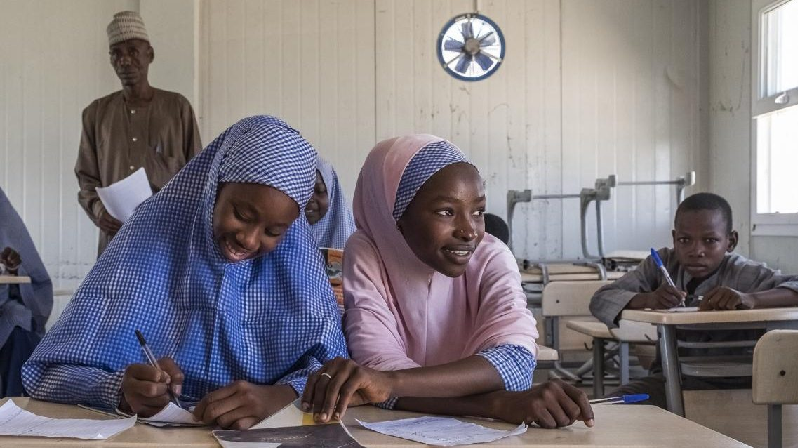
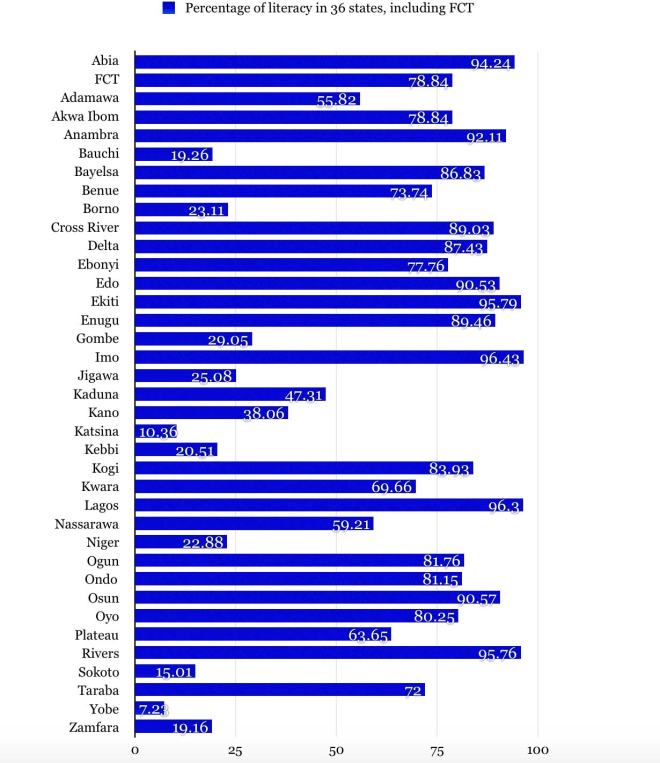
Currently there are about 10.5 million school aged children out of primary school in Nigeria with a sizable majority found in the northern region. The girl child isn’t encouraged to be educated unlike her peers in the southern region due to cultural and religious beliefs. Disparity has seen the South lead the North with a literacy level of 67 percent to 34 percent.

The Governors of the region over the past 20 years since the return of democracy received grants to develop the basic education sector with little or nothing to show for it, as they have the worst results among all the states of the federation in National and Continental Examinations. The major problems affecting basic education in the North include poor quality of learning facilities, teachers , number of pupils per class and efficiency of learning supervision to achieve positive outcomes.

Former Governor Kashim Shettima of Borno State established over 40 state of the art mega schools to cater for orphans who lost their parents as a result of the decade-long Boko Haram insurgency which has wrecked the socio economic development of the state. Among such schools is the Aisha Buhari Integrated School for Fulani named after the First Lady, a primary school with 24 classrooms and 40 preschool which runs morning and afternoon sessions with free bus rides to convey the Fulani children to school from their homes. They are served breakfast and lunch as a means of encouraging them to attend school. It is equipped with eco-friendly cooking stoves which can cook for as much as 300 people at once, a water chiller with power provided by a 33 KVA generator and solar energy.
Another strategic intervention is The Northern Education Initiative Plus Project which commenced in October 2015 with funding support from the United States Agency For International Development, a five year project aimed at strengthening the ability of Bauchi and Sokoto States to provide increased access to basic education, especially for girls and Out Of School Children, and to significantly improve learning outcomes for more than one million school aged children and youths. It employs a holistic approach addressing a broad range of critical factors that affect learning, teaching, systems management, parental participation and community engagement. The project strategy focuses on strengthening the technical and administrative capacity, commitment and accountability of federal, state and local government authorities to provide effective English and mother tongue based early grade reading, teaching and learning to its pupils. Also to deliver literacy, numeracy and life skills to out of school children and youths and whenever possible onboard them to formal educational institutions.

The project provides innovative cost effective ICT solutions for facilitating mobile money payments for learning facilitators, improve coaching and mentoring systems for teachers/learning facilitators and maintains an efficient teaching and learning materials supply chain, helps in capacity development for local education authorities to plan, budget and administer schools, support and supervise teachers, deliver high quality teaching learning materials and mobilize community involvement for increased enrolment and to improve learning outcomes. 

It is training and equipping Colleges of Education to include early grade reading concepts, techniques, practices and materials in their curriculum, while playing a key role within the education sector to promote the EGR policy and research. It constantly monitors program activity and assesses its delivery and results against established targets and milestones to improve project outcomes. The initiative is expected to demonstrate significant improvement in EGR for approximately one million children in schools and over 400,000 out of school children attending some 11,000 non formal learning centers, adolescent girls learning centers and youth learning centers.

There is a nexus between the high insecurity in the Northern Region and poor human capital development. The current Emir of Kano Mallam Muhammadu, Sanusi II a strong champion for girl child  and quality education in the Northern region, has spoken of the need for its political class and philanthropists to invest in education.

A redesign is urgently needed to scale access to quality education in the region as funding for schools and teachers is not enough. Utilization of technology can help in fixing this friction. Basic education teachers in the various states of the region should be trained on modern digital tools which are being used to deliver quality education across the globe. With Artificial Intelligence tutors, the Almajiri and other millions of educationally disadvantaged children can learn subjects in English and Hausa Languages to improve their understanding through customized tablets while Augmented Reality can be used in helping them understand the sciences.

Lagos based CoCreation Hub recently established an Education Technology Centre of Excellence at Tai Solarin College of Education to transform learning outcomes in public educational institutions across Nigeria in line with 21st Century standards. The Governors of the Northern Region and other zones across the country should partner with the Centre of Excellence to transform their educational deficiencies to create globally competitive youths for the Fourth Industrial Revolution.

The Felabration Of The King

1

Olufela Ransome Kuti which he later changed to Anikulapo to profess his immortality amongst men meant so many things to different people. To some, he was the quintessential rebel, hemp advocate, lover of hedonism, while to others a Pan Africanist, moral conscience of the Nigerian citizens against the whims and caprices of those in power.

Fela began his music career in London where he was sent to study medicine but rather opted to study music at Trinity College of Music with the trumpet as his preferred instrument. He established a band Koola Lobitos which played a fusion of jazz and highlife. In 1967, he went to Ghana for musical inspiration and created Afrobeat which was a fusion of highlife, funk, jazz, salsa, calypso and Yoruba music.

His black consciousness was awakened when he took his band to the United States in 1969 and spent 10 months in Los Angeles where he struck a chord of friendship with Sandra Smith(now Sandra Izsadore) of the revolutionary African American militant group Black Panther Party which would later influence his style of music and political views. Fela renamed his group Afrika 70 when he returned back to Nigeria and established  Kalakuta Republic, a communal abode which symbolized rebellion against the Nigerian state which was home to his family, band members and recording studio and had a free health clinic which also welcomed like minded rebels and declared it independent from the Nigerian state.

He established a nightclub at Empire Hotel within the Moshalashi area of Surulere, Lagos and called it Afrospot which was later renamed Afrikan Shrine where he performed regularly and officiated personalized traditional Yoruba ceremonies to celebrate his native roots. He had Yabis night sessions at Afrikan Shrine where he took the ruling class to the cleaners over corruption and impoverishment of the masses.

In the 1970-1980s Fela ran outspoken political columns in leading daily and weekly newspapers such as The Daily Times and The Punch bypassing editorial censorship in Nigeria’s media space which was under control by the government under the title ‘’ Chief Priest Say’’ which were extensions of his Yabis sessions.

He released a classic album ‘’Zombie’’ which was a derogatory term used to describe officers of the armed forces unquestioned loyalty to their superiors. That album infuriated the ruling military junta led by Gen Olusegun Obasanjo and led to an invasion on February 18 1977 by a thousand soldiers resulting in the destruction of Kalakuta Republic and the death of his biological mother. To protest this gruesome action, he took his mother’s corpse to Dodan Barracks, the then-seat of power for the ruling military junta, in Nigeria, and released the singles ‘’Coffin For Head of State’’ and ‘’Unknown Soldier’’.

Fela’s political activism led to the establishment of a political party ‘’Movement Of The People’’ which was a mass movement founded on the philosophy of ‘’Nkrumahism’’ and ‘’Pan Africanism’’. He was barred from contesting the 1979 presidential elections in Nigeria which was won by late Alhaji Shehu Shagari. He created a new band ‘’Egypt 80’’ in honour of Egypt as the cradle of civilization. Fela would later release classics condemning the corruption in government which earned him a series of arrests and detentions by the subsequent military governments after the fall of the Second Republic. As an anti apartheid crusader, he released the classic album ‘’Beast Of No Nation’’ in 1989.

His descendants decided to immortalize him by organizing an annual festival ‘’Felabration’’ in his honour, in October, when he was born featuring intellectual, cultural and entertainment sessions. Various artistes from Nigeria and across the globe participated in this programme to honour the late Afrobeat legend.

Considering the influence Fela had on Nigerians, Africans on the continent and the Diaspora and the rest of the world, the Federal and Lagos State Governments are not taking advantage to promote this cultural icon. When Emmanuel Macron visited Nigeria in his first visit since becoming French President, he made sure the New African shrine was on his schedule.

Felabration can be used to promote Nigeria as a global cultural and tourism destination, boosting our non oil exports. Here is how:

Collaboration With the Federal and Lagos State Governments: The Federal and Lagos State Government should be approached for a collaboration as partners to promote Felabration globally. The Federal Ministry of Information and Culture and the Federal Ministry of Foreign Affairs should work in unison to make sure that all Nigeria’s Embassies and High Commissions worldwide market Felabration to their host countries so that their citizens will attend this annual event. Also the Federal Ministry of Information should ensure that UNESCO supports this festival. The Lagos State Government should ensure that transportation infrastructure within the Ikeja axis of the state is in good condition to support domestic and foreign tourists who will attend all the festivities.

Collaboration With Foreign Airlines: Foreign Airlines plying the nation’s airspace should also be approached for collaboration to  market Felabration as a must attend festival to their customers.

Collaboration With Electronic Commerce Brands: Leading E-Commerce brands Ariya Tickets, Jumia, Konga and Amazon.com should be approached to sell tickets and merchandise to domestic and foreign fans of Afrobeat music. 

Collaboration With Digital Media Platforms: Digital Satellite TV providers like Black Entertainment Television, MTV, Trace TV and media platforms like Netflix, and WeChat should be approached as media partners to beam Felabration live to their subscribers.

Creation of Felabration App accessible on all Mobile Platforms: A mobile app should be developed for Felebration which will be available for IOS and Android users as a guide to all activities.

Creation of Fela Animated Movie: An animated movie based on the life and times of Fela should be done by Fela’s children in collaboration with one of the major Hollywood studios which will help in promoting the legend of Fela globally.

Creation of Fela Video Game: An adventure video game should be developed for game lovers based on the life and times of Fela which will be available on Sony Playstation and Google Android and Apple’s IOS Stores for accessibility with the earnings split between Fela’s children and the technology companies.

Creation of Fela Theme Park: A Fela Theme Park should be built which will feature holographic and augmented reality performances of Fela, his band, dancers and other acts associated with the Afrobeat legend where his memorabilia of classic albums, wears and shoes, trumpets, photos of performances and other important events will be on display for millions of his fans to come and visit annually during Felabration.

With dwindling oil receipts, Nigeria needs to harness the opportunities of the non-oil sector such as tourism which has greater potential to generate more revenue for national development.

The New Jumia Evolving As The Ecommerce Firm Exits Cameroon And Tanzania

5

As I suggested a few days ago here, that Jumia would be better served pursuing a pan-African fintech playbook over an ecommerce one, the company has started the redesign. Jumia has left Cameroon and Tanzania over the last two weeks. The most painful thing, though, is that the company could not sell to any local operator. It simply closed the shops, fully or partially, like the ways Kalahari, Mocality and others did many years ago. You may read this seminal piece I wrote in the Harvard Business Review on ecommerce in Africa to understand the challenge in the sector.

Now on Jumia, I think it needs to spinoff JumiaPay and sell Jumia, the ecommerce business to anyone that can buy. That disposal can happen at local level where Jumia Nigeria sells to a player in Nigeria while Jumia Kenya is sold to another company.

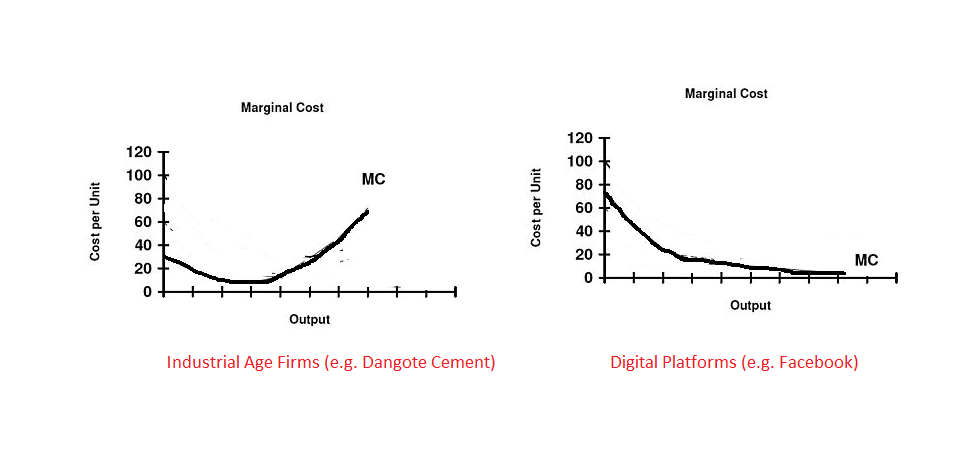
Largely, as I have noted here many times, operating a pan-African ecommerce venture is hopeless, because your marginal cost instead of going to near-zero, as you scale, turn into a curve that looks like an average fixed cost curve (a shape that is similar to the one you see in Dangote Cement which confirms that ecommerce in Africa is a physical business, not electronic). When that happens, scale does not bring efficiencies on transaction and distribution which  are critical for the profitability of digital businesses.

I project that Jumia will shrink from 14 countries it began November 2019 to eight countries by Q2 2020. Once it does that, it would begin to see some elements of profitability (not immediate but on the horizon) even though its GMV will drop.

This redesign is key – geographical footprint means nothing in Africa. There are about five countries in sub-Saharan Africa that matter; others are just for shows. Do not think that being in 14 countries would deliver leverageable opportunity if you cannot validate your hypothesis in three. Our markets are heterogeneous in nature making lessons learned not easily transferable. Yet, you can use large footprints to raise capital at higher valuation; Jumia used that playbook. But at the end, for non-electronic businesses like Jumia, hitting profitability becomes harder.

Image result for near-zeromarginal cost, tekedia

Reasons for the Prejudice Against Female Bosses

1

It seems the world is not yet ready for female bosses. As painful as this might sound, it is true. A lot of people may associate this mindset to illiteracy, but even in the world of academics, women bosses are still discriminated. I believe this prejudice is a global thing because all over the world, women are being encouraged to come out and take up managerial and leadership positions.

The truth is workers, both males and females, are not comfortable working with female bosses. Any time you say your boss is a woman, you will hear comments like, “How are you managing her?” “Nawa, sorry o.” “Hmmm, woman, just be careful” and things like that. In the same vein, people express their displeasure when they learn that they are about to have a female boss. Even children’s movies exhibit female bosses as “horror” to work with.

Maybe there is something female bosses aren’t doing well. Or maybe it is just an unfounded prejudice that emanated from a lifelong culture that sees women as “difficult” and “weak”. Whether they are true or false, the complaints against female bosses need to be looked into.

  1. Female bosses are rude.

One man said the problem he had with his female boss was that she talks to him disrespectfully. When I asked him if his male bosses were like that, he said that they (his male bosses) were his fellow men and therefore can’t be rude to him.

It’s true that women easily lose their temper and talk without holding back, but describing female bosses as rude is quite out of line. If you truly notice, people take criticisms from male bosses better than they do from their female counterparts. The reason for this may be difficult to ascertain, unless one attributes it to the male supremacy “theory”.

Kindly note that women also think female bosses are rude. One woman went as far as saying that her female boss was rude to a male subordinate because she barked out orders at him forgetting that “he was a man”. This behaviour wouldn’t have been found offensive if it was done by a man. This clearly shows that the premise that female bosses are rude is unfounded.

However, women need to work on their emotions and manner of approach while addressing colleagues and subordinates. They should not feel that their authorities were being undermined each time their decisions were challenged. They should understand that their managerial positions require lots of negative and positive feedback from their colleagues, subordinates and customers. If they remember all these, they will address people without harsh words.

  1. Female bosses are inconsiderate and rigid.

This is the major reason a lot of people don’t want female bosses. And truth be said, female bosses are rigid in the way they manage their offices. Once they say something, they don’t bend it. Their words are rules, and they must be obeyed to the letter.

Honestly, male bosses are more easy-going and flexible than their female counterparts. You can easily walk into the office of a male boss, discuss issues with him, and have it sorted out there and then. But for a female boss, well, you will have to say your prayers before knocking on her door. And if she is not in a welcoming mood, you’ll have to go back and wait for her mood to get better. And by the time you managed to go in, you will spend hours explaining why you needed to go against the stipulated rules. She might still not grant your request by the end of the day.

In a nutshell, female bosses need to relax their holds on the plough. They need to be flexible in carrying out their duties. They should remember that their subordinates are humans and not machines, which means that the law has to be bent every now and then to accommodate some of their challenges and differences.

  1. Female bosses are easily biased.

One thing I noticed about female bosses is that if they trust you, they trust you with their lives; and if they don’t trust you, nothing can change their minds towards you. They hardly erase the impressions they have about people.

Another problem here is that they also act based on gossips. If someone tells them something about you, instead of treating it as gossip, they employ it in their decision making.

The consequence of biased bosses is that they treat some people well and treat others badly. They are partial in their treatment of their employees and subordinates. They encourage factions and cliques in offices and they don’t hide their feelings towards their “enemy” groups.

Of course, male bosses are also partial in their dealings with people. So it will be wrong to say that because women easily get biased, they are the only ones guilty of partiality.

  1. Female bosses lack knowledge.

I hear this a lot and I can’t help wondering why people think this is true. Maybe why people assume this is because women are always ready to ask questions and seek directions from their colleagues and subordinates. It is improper to assume that because someone asks questions, he or she lacks knowledge.

However, I think it is high time women started sounding assertive while dealing with their subordinates. A lot of women that have learnt this skill are treated as goddess in their offices. But those that “mother” everyone are seen as empty.

The Roadblocks Are Back on Nigerian Highways With Full Extortion

0

In 2012, when the former Inspector General of police, MD Abubakar, ordered the dismantling of police roadblocks on the highways, it was due to the incessant reports of heavy extortion by the policemen manning the checkpoints, especially, on the East-West road and other intra-state highways.

He said: “All intra-state and highway road blocks which constitute nuisance especially on the roads of Lagos, Edo and South-Eastern States should be dismantled immediately.”

The order stirred mixed reactions, while some were praising the development, others were expressing the fear that it would amount to an increase in armed robbery activities on the highways. Moreover, it was not the first time such an order was given to the men of the Nigerian police; they always flouted it with all impunity.

But to everyone’s surprise, the order was followed, and there was a decrease in armed robbery cases on the East-West roads. Travelers who had been caught up in the time wasting tradition heaved a sigh of relief and prayed that proceeding IGs will maintain the status quo.

On the 23rd of November, I set out on a journey to the Southeast, considering the condition of the roads; it’s going to be a long trip. So leaving Lagos as early as possible will cut me a slice of time that potholes and semi-volcanoes on the federal highways will take, and so I did the early bird thing without minding other elements as time consuming factors. But it didn’t take long before I realized how wrong my pothole-based calculation was.

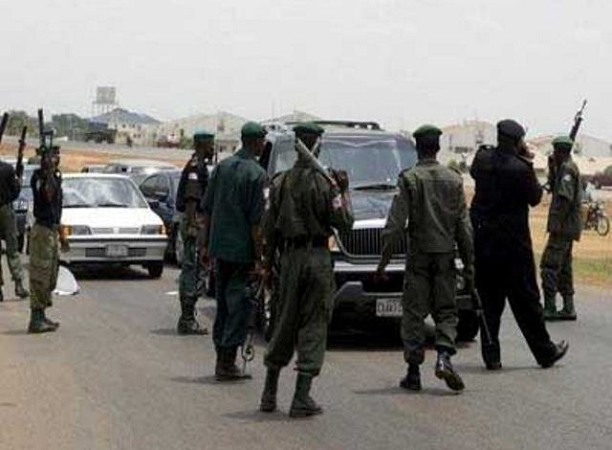
The first police checkpoint was minimal, not the kind that gets all vehicles to a stop. That was more like the police setting up a subtle roadblock in fear of violating a standing order, I thought. A few miles after the first checkpoint, I realized how wrong I had been once again. The proliferation hits with imaginable awe, it’s a lineup of roadblocks narrowed to accommodate one vehicle at a time.

One after another, vehicles succumb to snail pace and submit to the barking orders of rifle-wielding officers who point to the roadside shouting “park! Park! Park!” Fortunate are you when you don’t get pulled over, for you will have a little time to save compared to those who will undergo the interrogation aimed at fault finding that will result in fines. However, it’s not something you should be happy about; that you scale one doesn’t mean you will scale the others – future roadblocks beam with uncertainties.

As we moved further through Ondo, I had counted 11 checkpoints, and they kept getting increasingly closer, 13 poles gap in between, each with a maximum traffic impact.

It was all sighs in the bus, the intra-state travel realities of pre 2012 have come back with full force, and the impact is so glaring.

By the time we got to Ore, I counted over 20 checkpoints manned by different security agencies but mainly, police divisions. The Nigerian Custom Service (NCS) stationed themselves in strategic places looking for vehicles with goods, the Army concentrates on trucks, collecting N100 to N200 from them. It’s not new; it’s something the Nigerian Government knows about.

In 2017, following the report of a task force set up by the Federal Executive Council (FEC) to determine the reason for the high cost of food items, the Federal Government of Nigeria blamed the hike in food prices on extortionist practices of men of the Nigerian police, Army, and the NCS at various checkpoints. The then Minister of Agriculture, Audu Ogbe said he has written to the heads of the agencies to see if that could be curtailed.

In 2018, the then IG of police, Ibrahim Idris ordered once again, the dismantling of roadblocks, saying it’s obstructing the highways and enabling extortion by the men of the Nigerian police. The order was obeyed but not for long.

After the killing of Olufunke Olakunrin, the daughter of Pa Reuben Fasoranti, the leader of the pan-Yoruba socio-political group, Afenifere, by alleged Fulani herdsmen in Ondo State, on July, 2019, armed forces saw an excuse to return the dismantled roadblocks, and this time, it is prolific.

Before we got to Benin, I had lost count at 49 checkpoints. The rest of the trip to Onitsha was not spared the roadblock-induced traffic either. It was a “standstill welcome” to the southeast, though those coming didn’t appreciate the greeting. Unfortunately, our hissing and growling did nothing to help, and when we thought we had scaled it all, the Army checkpoint in Awka, taught us a lesson in patience.

It was about an hour of slow movements and stillness. The single carriageway was barricaded to a narrow space, forcing vehicles on each lane to take turns passing the checkpoints. It’s a long waiting hour to cross over to the other side of your journey, and that happens at the order of the Army officer in charge.

We got to Enugu by 10 pm, the journey that started by 8:00 am, and should have lasted for eight hours, gulped 14 precious hours, all thanks to police checkpoints.

On our way back, the trip would have been easier since the concentration is on commuters coming from Lagos. But that didn’t happen.

As we got to the boundary between Enugu and Anambra States, the mobile police men from the Oji River Division spotted a co-passenger with an iphone, and ordered him out the bus and whisked him away. Our bus turned back in pursuit of the police van heading back to Enugu, with no destination in mind. It took over an hour for us to catch up with them. By then they have extorted N30, 000 from the boy. It was more like a movie if not that cameras were not rolling, and most of the characters did not audition for any of the roles.

As the festive season beckons with journeys through the highways, the suffering is likely going to double. There will be more cars and people, and roadblocks are likely going to increase to meet up the extortion target of the men in uniform.

The Akanu Ibiam International Airport is closed, so there is practically no alternative to the East-West highways. If the current trend of roadblocks continues, Christmas travelers will have long suffering trips.