DD
MM
YYYY

PAGES

DD
MM
YYYY

spot_img

PAGES

Home Blog Page 6570

Nigeria Files Substantive Challenge Against P&ID

0

The Federal Government of Nigeria has finally filed a new substantive challenge against P&ID on the ongoing $9.6 billion case.

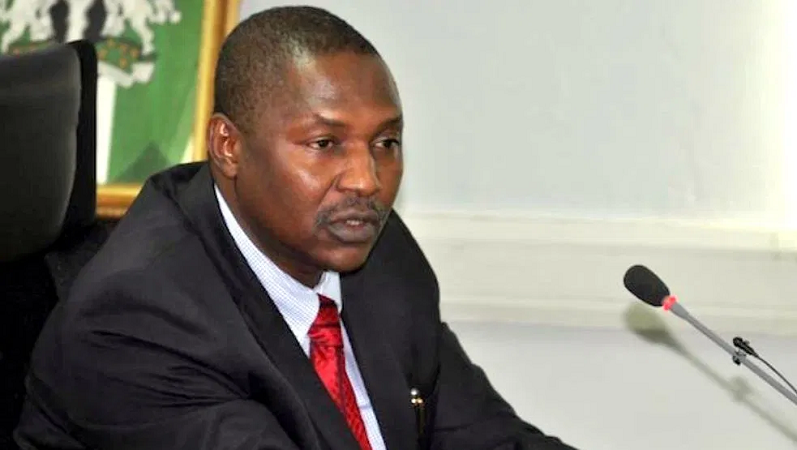
“The Federal Republic of Nigeria today filed a new substantive charges in the English Courts, in its ongoing fight against the vulture-fund-backed P&ID. This is a major step forward in their bid to overturn the injustice of the $9.6 billion award,” the Minister of Justice, Abubakar Malami announced on Friday.

An English court has earlier in August; awarded $9.6 billion to Process and Industrial Development Limited (P&ID), a ruling the Nigerian government decried as unjust and has been looking for a way to get a fair judgment.

The Judgment granted P&ID the right to seek the seizure of some $9.6 billion assets over an aborted gas project. The company was awarded $6.6 billion in an arbitration decision over a failed project of a gas processing plant in the southern Nigerian city of Calabar. With interest payments, the sum now tops $9 billion, 20% above Nigeria’s foreign reserves.

The Minister said based on recent findings, more evidences have become available to the government. “It is clear the original contract was a sham commercial deal and designed to fail from the outset. The fraud was only recently discovered as a result of President Muhammadu Buhari’s anti-corruption efforts spearheaded by the Economic and Financial Crimes Commission,” he said.

It could be recalled that soon after the judgment by the English court, the Economic and Financial Crime Commission (EFCC), launched an investigation into what transpired during the business negotiations between the Federal Government of Nigeria (FGN) and P&ID.

The investigation revealed lots of fraudulent activities, indicting officials of P&ID as well some others who got their hands dirty to deliver the deal. The EFCC’s investigation resulted in the trial and subsequent conviction of some principals of P&ID.

However, the Nigerian court decision did not change the judgment of the English court, prompting the FGN to file the substantive challenge based on the new evidences of fraud uncovered by the anti-graft investigations.

The filing is therefore a step forward in federal government’s bid to overturn the English court’s judgment that awarded $9.6 billion to P&ID. It could be recalled also, that in September, the court granted Nigeria leave to appeal the ruling, mandating her to pay a security sum of $200 million to the court. The Minister said Nigeria has no plan to forfeit the fund to the English Court.

The case was enveloped in mystery that fingering whose fault the contract signing was became difficult. However, the FGN’s interest has been centered on getting a favorable ruling. And the guilty plea and convictions secured by the EFCC handed another lifeline to Nigeria.

The challenge argues that the Gas and Processing Agreement (GSPA) was procured based on fraud and corruption, while the subsequent arbitral process was riddled with irregularities and deliberately concealed from the government.

Recently, the federal government expanded its legal team and Mishcon de Reya, a leading London law firm was included. The Mishcon de Reya team is led by Shaistah Akhtar, partner, and mark Howard QC of Brick Court Chambers.

Malami said the expansion of the legal team will help the federal government to launch its investigations in full. He added that fresh charges now filed against the officials of P&ID were clear and concrete evidence of fraud and corruption discovered recently.

The federal government is relying on its recent discoveries about P&ID that were riddled with fraud, to overturn the first ruling of the English Court. Losing $9.6 billion is not a possibility the Nigerian government would want to entertain in lax, therefore, it’s doing everything within its means to get a favorable judgment.

Though there is concern that the court will likely base its ruling on the agreement between the Federal Government of Nigeria and P&ID, not on what transpired thereafter: Because the company approached the court for the refusal of Nigerian Government to honor a gas supply contract it signed about 10 years ago. There seems to be more to the contract than the public knows, as the Minister of Justice acknowledged. But the details of the latest investigation will be revealed in the court.
The FUTO Macho’ Man Gift from FUTO To Ndubuisi Ekekwe

0

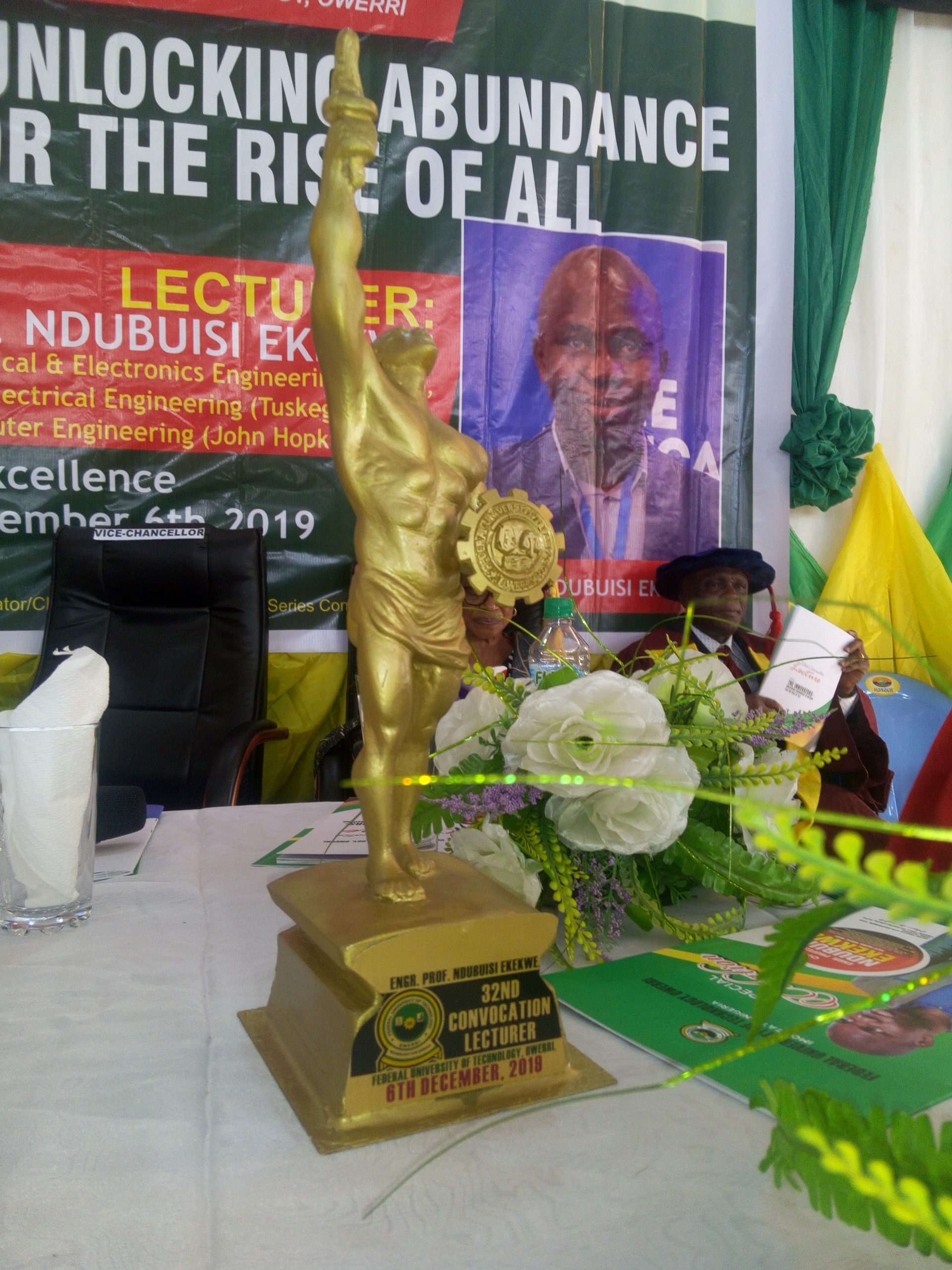
Air Peace delivered the FUTO Macho’ man perfectly. As I held it walking into the Owerri airport terminal, many people came around: “Can I touch it?, Can I take a picture? Etc”. The good news is that it arrived Lagos safely. Now, it needs to reach its final destination. A symbol of our university’s strength and excellence, about two are given out yearly! 

A decade ago, I received one for delivering the University Lecture. Last week, I got another for the Convocation Lecture. As this makes into my trophy case, there is one that is ever special – my framed photo in Covenant University’s academic building. That is a higher call. 

The Optometrist and The Patient [Joke] – “I cannot see anything in my wallet”

0

I smiled on a short play/joke between a Dr and a patient on an FM radio in Owerri (Imo State) this morning. Words fail me to capture igbonalization which they introduced as they did their thing!

Optometrist: Welcome to my practice.

Patient: Dr, I have a big eye problem.

Optometrist: Tell me, what is the problem with your eyes? They seem good.

Patient: Dr, since this ‘ber season, I cannot see anything in my “wallet”.

Optometrist: Sir, I cannot understand this symptom?

Patient: Dr, my eyes see everything except seeing anything in my wallet.

Optometrist [looks into the wallet]: It seems there is nothing in the wallet.

Patient: Really? I want you to make my eyes to see something therein sharp sharp!

Optometrist: I am a doctor from eyesight, not restoration from lack of money.

Patient: Dr, I hope you are not joking. I came all the way from Orlu to meet you here in Owerri. They said you can cure eye problems  – and the one thing I have not seen for a long time is money.

And The King Regains His Crown

0

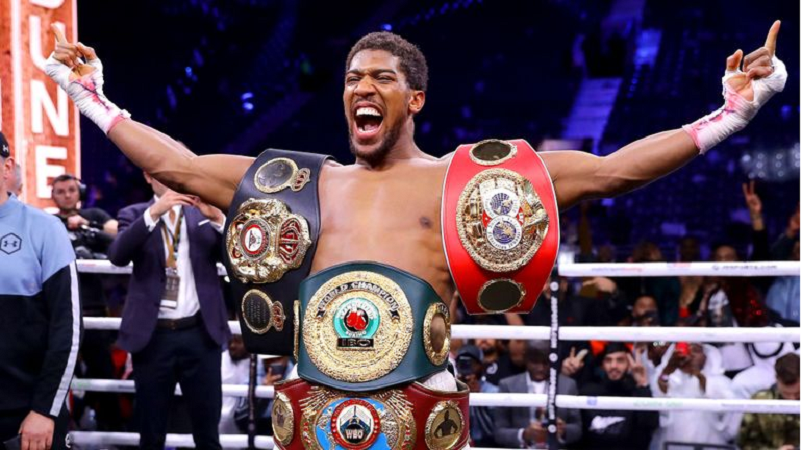
The crowd was 15000, and the atmosphere was tense. Hefty muscles flexed high and low in the ring holding Andy Ruiz Jr. and Anthony Joshua, one was defending his title, and the other was seeking revenge.

In June 1 2019, Andy Ruiz handed Mexico its first heavyweight title as a country and Anthony Joshua, his first defeat in his boxing career, he lost three titles in one night. The defeat didn’t only shock Joshua; it shocked the whole world and set him on a revenge mission. A rematch was scheduled, and the 7th of December was the date, the place was Diriyah, Saudi Arabia, and the stage is the world.

Millions of eyeballs stared at the ring as the match kicked off with the first round. Joshua drew blood from Ruiz as soon as the blows went either way, putting him in a mood better than he was earlier in the year in New York.

This is the round to round analysis according to Sky Sports Boxing.

He had to go through a torrid eighth round when Ruiz Jr landed the type of punches that won him the first fight – this time, Joshua teetered but remained upright, and eventually sauntered over the finish line.

Joshua drew blood from Ruiz Jr in the earliest exchanges – he immediately seemed far more relaxed than during the ill-fated first fight and fired a swift right hook which did the damage.

But Joshua then suffered a similar cut in the second round, above his eye, although he remained poised and unhurt.

Joshua was able to keep the shorter and heavier Ruiz Jr at his preferred range by moving quickly on his back foot, and flicking out a jab whenever the champion tried to creep forwards.

Ruiz Jr finally had success at the end of the fourth round when an overhand right crashed home. Joshua felt it, and the bell came at a good time for him.

But still Joshua was still able to execute his game-plan, geed on by Rob McCracken, the long-serving trainer in his corner who he unequivocally backed after the first fight. At his lightest ever for a world title fight and 10lbs lighter than the first fight, the Brit had enough gas to keep Ruiz Jr at bay.

Joshua landed a strong left hook in the sixth but Ruiz Jr would not be dissuaded from plodding forwards and threatening his own punches. The build-up to this fight had been respectful but, at the end of the sixth, Joshua shot a spiteful stare when Ruiz Jr threw two illegal punches.

Mexico’s first ever heavyweight champion, by the seventh, was getting frustrated and the referee admonished him for more illegal shots.

They went toe-to-toe for the first time moments later, in scenes reminiscent of the first fight when Joshua fell, but this time he remained firm.

Ruiz Jr’s eyes lit up in the eighth round when he landed hard punches to the side of Joshua’s head. There was a collective intake of breath at ringside but Joshua did not go down. Joshua then had to absorb even more in the ninth.

It was Joshua’s skill and finesse (although he crashed a right hand home in the final round) that ultimately made him a two-time heavyweight champion, joining esteemed company such as Muhammad Ali, Mike Tyson and Lennox Lewis in reigning again after suffering defeat.

Two scores of 118-110 and another of 119-109 meant the world titles returned to Joshua, who celebrated with his family and embraced Ruiz Jr after the decision.

Anthony Joshua’s come back is seen as a great lesson in coping with failure. Mohammed Ali and Mike Tyson were other heavyweight champions who overcame their loss to regain their titles.

His fight back spirit has been hailed as what it takes to win in a world where failure is inevitable. It is said that faith, courage and effort come together to deliver a better result from past experience.

However, Joshua said a lot of thanks and offered some advice in his victory speech, he said:

“I want to thank God. I want to say that the first time was so nice; I just had to do it twice.

“A man like me don’t make excuses. This is about boxing. I’m use to knocking guys out but I had to correct myself and put on a boxing masterclass. You have to hit and not get hit.

“I stay hungry and humble. Thank you to everyone; I don’t know what to say. So to everyone around the world and in this building – let’s go!

“Careers are all about experiences, I took my ‘L’ and hit back. I’d do it all again, if you are heard, we going to do a third.”

Brokerly is Redesigning Insurance Brokerage With Tech to Unlock Opportunities in Nigeria

0

Nigeria’s insurance industry has witnessed an upward growth trajectory as the second largest sector in the financial services broad sector after the banking industry with a Gross Premium Income of 389.2 billion naira in 2017, from 75 billion naira in 2005. The total assets of the insurance industry is estimated at 1.1 trillion naira while its investment portfolio is 848.6 billion naira as at December 2017, according to a report by Agusto and Co.

Insurance penetration in Nigeria is 0.5 percent which is among the lowest in Africa when compared with South Africa at  17 percent, Namibia 6.7 percent, Kenya 2.8 percent, Mozambique 1.62 percent, Togo 2 percent, Senegal 1.5 percent and Ghana 1.1 percent. Also Nigeria’s insurance sector’s insurance density at $6.2 which is a measure of the industry’s Gross Premium Income per capita is among the lowest in Africa in comparison to regional peers; South Africa $762.5, Egypt $22.8, Kenya $40.5, Angola $30.5.

Despite it’s low penetration rate it has recorded an average growth rate of -10percent from 2014-2017 with penetration rate increasing by 13 percent, between 2016-2017 from 0.47 percent to 0.53 percent.

The National Insurance Commission which is the regulator of Nigeria’s Insurance industry introduced the Microinsurance framework in 2013 to deepen insurance penetration and drive market growth by expanding insurance coverage to those at the bottom of the pyramid who are non consumers of insurance products. Its guideline was reviewed in 2018 which set the minimum capital base for all categories

  • Unit Micro Insurer: 40 million naira (General: 25 million naira. Life: 15 million naira)
  • State Micro Insurer: 100 million naira (General:60 million naira. Life: 40 million naira)
  • National Micro Insurer: 600 million naira (General: 400 million naira. Life: 200 million naira)

Due to the growth in the number of internet users in Nigeria by 27 percent from 72.4 million in 2017 to 92.3 million in 2018, with an all time high of 113.3 million expected in 2019, and social media users by 6 percent from 27.6 million users in 2017 to 29.3 million in 2018 and 30.9 million estimated for 2019, various players in the sector have leveraged this to deepen insurance penetration through various social media channels. Insurance brands are using this medium to drive sales and marketing of their various products. Advances in technology have seen insurance operators adopt RFID technologies for data analytics in order to settle premium claims and also next generation point of sale payment solutions that utilizes Near Field Communication, QR Codes, USSD to receive payments.

The enforcement of compulsory motor vehicle insurance has seen an increase in revenue for the retail insurance market when the Market Development and Restructuring Initiative was launched in 2009 to enforce compulsory insurance compliance for Motor Insurance and eradication of fake motor insurance policies procured from unregistered insurers. Motor Insurance is the third highest contributor with 11percent in 2016(37 billion naira) and 9 percent in 2017(34 billion naira) to the insurance industry’s GPI behind Life Assurance and Oil and Gas Insurance. Operators are beginning to deepen penetration through retail channels with a focus on the bottom of the pyramid and middle class through the introduction of retail/micro insurance products which are sold at affordable rates. With growth in population and increase in rural urban migration, there are boundless opportunities for insurance companies to record high growth rates.

 In order to deepen insurance penetration and harness the opportunities available in the retail segment, industry players are utilizing agency models, strategic partnerships, market blasts and religious organizations while developing innovative products as well as upgrading existing ones. Some of the products include SME Insurance, Travel Insurance, Gadget Insurance, Personal Savings Plan, Education Savings Plan, etc.

The broker (wholesale) market is the largest distribution channel in the insurance industry with majority of GPI. According to Nigerian Council of Registered Insurance Brokers, brokers control about 85 percent of the market in 2017.

Coverdor, a Nigerian Insure-tech startup has launched Brokerly, Africa’s first software as a service platform which plugs directly into the existing website of any insurance broker extending its web features with online policy quote and comparison, billing and secured online payment, intuitive self onboarding, policy binding features, lives support through in app messaging, claims reporting and tracking, user account dashboard which contains self serving policy administration tools and a back office broker operations management system that enables the broker manage all operations, using  a 100 percent paperless approach where all transactions are backed in the cloud. It will enable insurance brokers to compete on all fronts of digital distribution, business process improvement and customer service while delivering intuitive digital user experiences that resonate with modern customers.

Brokerly will be delivered to Insurance Brokers through a Consultancy As A Service approach with its team of business analysts and project managers available to understand the requirements of any broker and personalize its technology to their needs.

Brokerly will redesign the wholesale (brokerage) industry as it upgrades the capabilities of insurance brokers to operate as digital insurance brokers enabling them deepen insurance penetration through product innovation for the market.