DD
MM
YYYY

PAGES

DD
MM
YYYY

spot_img

PAGES

Home Blog Page 6575

The Challenge Ahead As Nigeria Makes Progress on 5G

0
5G network, adaptable business model

On the 25th of November 2019, Nigeria beat other West African countries to trial 5G. Spearheaded by MTN, the telecom giant basked on the technical platform provided by the regulator, Nigerian Communication Commission (NCC), to put the possibility of fifth generation network in Nigeria to the test; and it worked out fine.

The world has been pushing for a faster internet speed, an alternative to 3G and 4G, and China and the U.S have been in the forefront of the quest. With this trial, Nigeria has shown its readiness to take advantage of modern technologies to promote efficient communication and faster internet services.

The benefits of 5G have been measured and its weight is expected to have a positive impact on businesses, healthcare and general services enabled by the internet. The 20 Gigabyte per second speed is a life-saving alternative to the crawling speed of 3G that is mainly available in Africa, and has been immobilizing innovative ambitions.

The impact is also expected to spur efficiency in the manufacturing and agricultural sector, creating smarter and faster ways of doing things. It is also a fundamental platform for the Internet of Things (IoT)- a collection of devices collecting, connecting, transmitting and sharing data via the internet.

However, Nigeria’s 5G ambition has not come without its challenges bordering on the availability of the spectrums and licensing needed to foster the establishment. Though in November 2018, the Executive Vice Chairman (EVC) of NCC, Umar Garba Danbatta, said that the regulator has made adequate provision for the infrastructure needed by operators to execute 5G related tasks. He told BusinessDay:

“We have taken steps to preserve the 26GHz, 38GHz and 42GHz spectrum bands for 5G. There will be a number of slots in all these bands and the commission has also made provision for subsidy payment for infrastructure companies who wish to deploy 5G. Public private partnership, infrastructure and the right regulatory standards are also necessary to facilitate deployment of 5G services across the country.”

Danbatta also stated in Abuja recently, during the trial of 5G that NCC will involve many stakeholders by consulting widely so as to ensure that the measures taken cover the security aspect of the framework.

“We are not oblivious of the global concerns around 5G network security vulnerability, and we will be working with our Parent ministry and security agencies to develop measures to ensure a high level of cyber security of 5G networks,” he said.

The Commission has been praised for its efforts in providing the needed infrastructure and support for operators who are willing to go 5G. The president, Association of Telecommunications Companies of Nigeria (ATCON), Olusola Teniola, said:

“In the case of MTN, the NCC allowed the operator to use 100MHz of spectrum to enable them to demonstrate the capability of 5G. The commission has vowed to support other 5G trial with Airtel, Globacom, 9mobile and other service providers when they apply. This demonstrates the readiness and dedication of the regulator to ensure that as many Nigerians that want to experience very high speed internet and innovative technology are able to do so.”

But there are other concerns, while the Commission has been lauded for the steps it took so far to implement the 5G network, transitioning from 2G to 3G to 4G and 5G, analysts are concerned that the provision may not be enough. There is a need to create enabling environment to accommodate foreign investors who would want to establish 5G networks in Nigeria in the coming few years.

“There are other factors that need to be taken on board to be able to commercialize 5G technology. We need to ensure that government is able to support the roll out of significant fibre across the country. We also need the support of government to ensure that the number of base stations deployed is at least doubled within the next two to four years. Currently, we have 39,000 base stations. We need 80,000 as minimum,” Teniola added.

Another concern has been the availability of 5G devices. GSA reported 15 new 5G devices addition in the last month, making it 48 in total. But that excludes regional variants and prototypes not expected to be commercialized. For Nigeria, the availability of these devices is going to take longer due to regional factors and product priority.
Copia Has The Best B2C Ecommerce Model in Africa

1

This is the most potent ecommerce model in Africa at the moment; Copia is on a mission. The company raised a $26m Series B funding round a few weeks ago and investors are congregating because it has something that is evidently amazing.

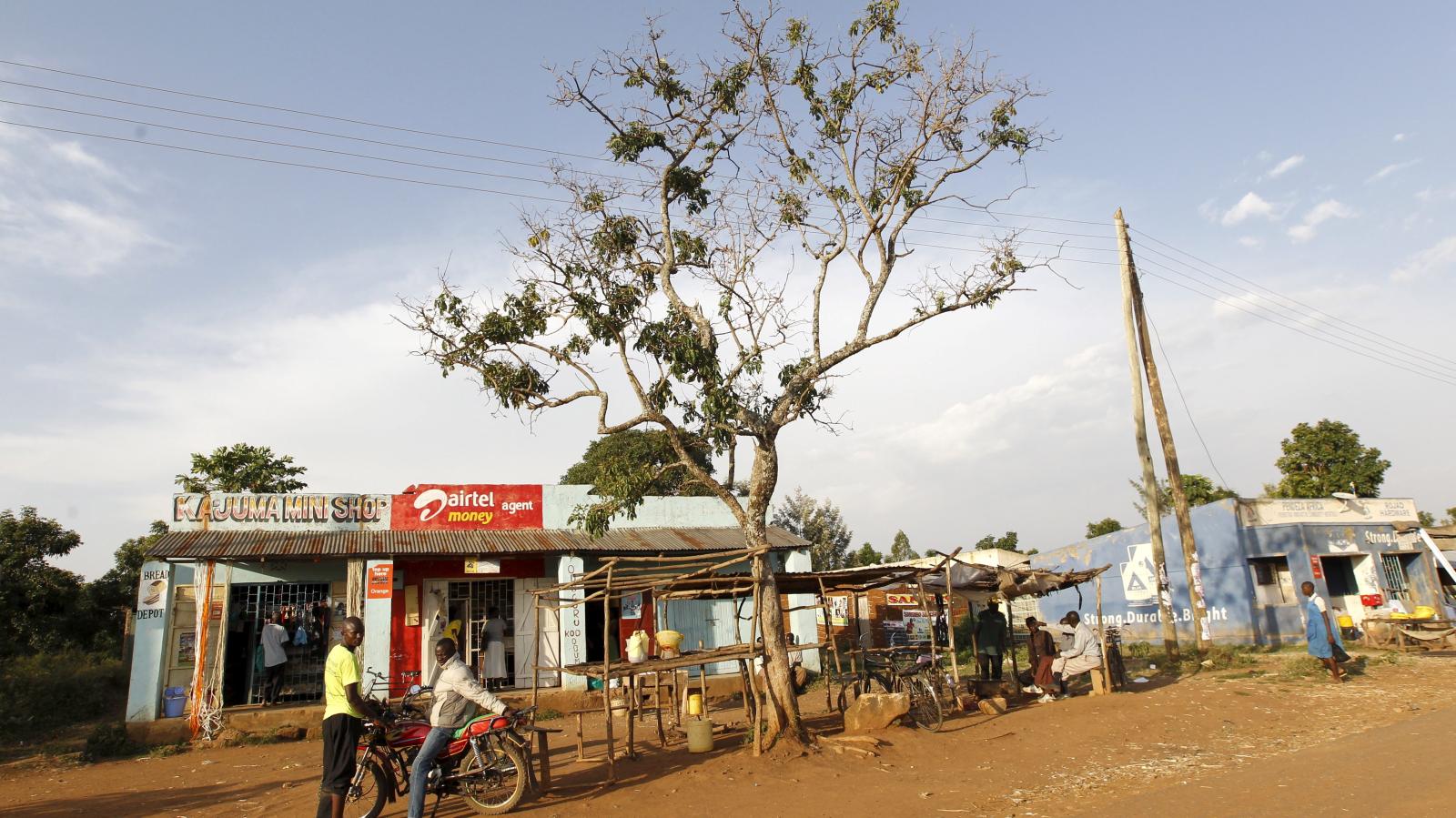
Largely, Copia is a consumer goods catalog and delivery service for Base of the Pyramid consumers in the developing world. It leverages mobile technologies and a network of agents serving as distribution points of aggregation to make a wide range of quality goods accessible to rural and peri-urban consumers.

Through this mechanism, Copia has fixed the marginal cost problem, and that makes its model supreme. It does everything through aggregation which means it can pursue a near-zero marginal cost in its scaling. When the “postal system” has aggregated agents, good things happen!

Copia’s model is hinged on a 5,000-strong agent network comprising mainly of local, small shopkeepers who earn commissions by serving as “points of aggregation of orders and delivery distribution.” Essentially, rather than make purchases online via a website or consumer-facing mobile app, Copia customers walk into stores of partnered agents who place orders on their behalf, take payments and serve as delivery points. Beyond the strategic benefit of solving postal address problems associated with deliveries in some African cities and rural areas, these agents also serve another purpose: “We established relationships with agents in these areas because those agents are trusted members of the community and through them we build a direct relationship with the consumer,” Steel says.

Users can also make orders through USSD codes—the 20-year old mobile technology that’s become widely adopted on the continent as a workaround to boost financial inclusion via simple feature phones.

[..]

While the average value of orders placed on Jumia over the past year stood at $66, Copia records average order values of around $10, Steel says.

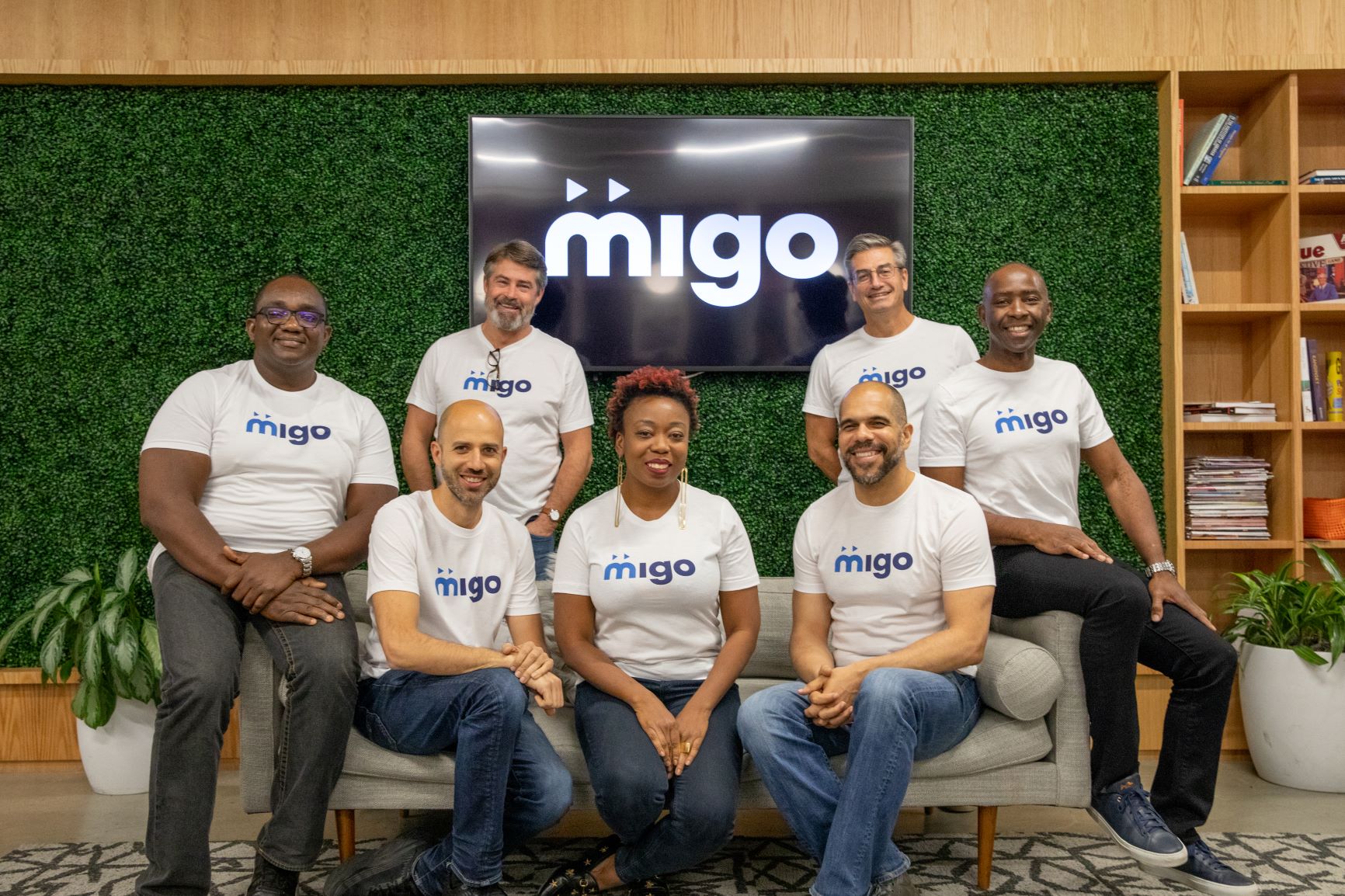
Migo Raises $20 Million Series B Equity Round

0

Migo (formerly Mines.io), a startup reinventing the way people access and use credit in emerging markets, has completed a Series B equity round of $20 million led by Valor Capital Group, a Brazil-focused venture capital firm. Existing investors, The Rise Fund (managed by TPG Growth) and Velocity Capital, also joined the funding round along with new investors, Africinvest and Cathay Innovation. This financing will support talent acquisition and Migo’s launch into the Brazilian market, as well as its continued growth in Nigeria.

Migo is a cloud-based platform that enables companies to offer credit to their customers, augmenting traditional bank and payment card infrastructure. Companies like banks, telecommunications operators and merchants integrate Migo in their apps and Migo underwrites customers to provide them with a digital account and credit line. The customers can use this credit line to make purchases from a merchant or withdraw cash without the need for point-of-sale hardware or plastic cards. Migo is headquartered in San Francisco, California. 

Migo is a cloud-based platform that enables companies to offer credit to their customers, augmenting traditional bank and payment card infrastructure. Companies like banks, telecommunications operators and merchants integrate Migo in their apps and Migo underwrites customers to provide them with a digital account and credit line. The customers can use this credit line to make purchases from a merchant or withdraw cash without the need for point-of-sale hardware or plastic cards. Migo serves underbanked customers who are not typically covered by credit bureaus, having underwritten more than seven million of these customers to date. An estimated 90 million adults in Nigeria and 100 million adults in Brazil have no access to credit, and this is a massive area of untapped growth for emerging market banking ecosystems.

“Our mission is to drive commerce around the world by injecting liquidity into the last-mile retail sector,” explains Migo CEO, Ekechi Nwokah. “We believe the best way to achieve this goal is to build digital infrastructure to empower local enterprises that already serve millions of consumers and small businesses.”

Migo offers a simple API so its partners can offer co-branded credit services in their own apps and websites, increasing customer engagement and serving customer segments they were not previously able to serve. Migo is particularly attractive for merchants and payment gateways since it can grow merchant revenue due to increased customer purchasing power and transaction completion rate.

As part of the financing, Antoine Colaco from Valor Capital has joined the Migo Board of Directors. “Migo combines world-class technology with a deep understanding of the needs of consumers and small businesses in emerging markets. We are excited to partner with them in Brazil and beyond,” Colaco said.

Migo enables some of the largest retail enterprises in Africa—from mobile operators like 9mobile and MTN to payment companies Interswitch and Flutterwave to banks like Bank of Industry and Fidelity Bank.  Migo is now expanding to Brazil and partnering with some of the largest retail enterprises in Latin America. “The typical Silicon Valley approach of move-fast-and-break-things doesn’t work well in emerging markets. To create durable solutions, it is important to combine the audacity of cutting-edge technology with humility to the nuances of local markets” says VP of Growth, Adia Sowho.

Migo started out as a research project on high-performance artificial intelligence led by Migo Chief Scientist, Kunle Olukotun, a professor of computer engineering at Stanford University. This project came to life after a chance meeting between Olukotun and Nwokah, a computer scientist working on big data projects at Amazon Web Services. Following their meeting, the pair teamed up to direct the technology toward solving credit in emerging markets. This big data approach is one of the company’s key advantages, as it aggregates massive amounts of data across all of its partners to improve population coverage and credit decisions over time.

Mortgage Banks in Financial Inclusion Drive

0

Someone asked me how mortgage banks can find effective expression in financial inclusion drive. These were my responses:

  • Understand the features of the target market
  • Develop appropriate Products
  • Seek right Partnerships
  • Seek right Technology

Obviously, the target market in financial inclusion is in two phases considering financial capacity: The Poor, and the Active Poor (Under-served-Active Poor, Excluded-Active Poor).

Government Social Intervention Programs usually focus on the poor for empowerment; those who needed such interventions the most are the Homeless Children, Sick, Widows, Handicapped-unskilled and Situational poor people. These people will be financially included even if it is against their will while benefiting from the social programs.

The active poor are usually healthy, may be skilled, semi-skilled or unskilled and at least will be engaged in one activity or the other to make ends meets. This is where we have the largest market (Under-served and Excluded) for financial inclusion.

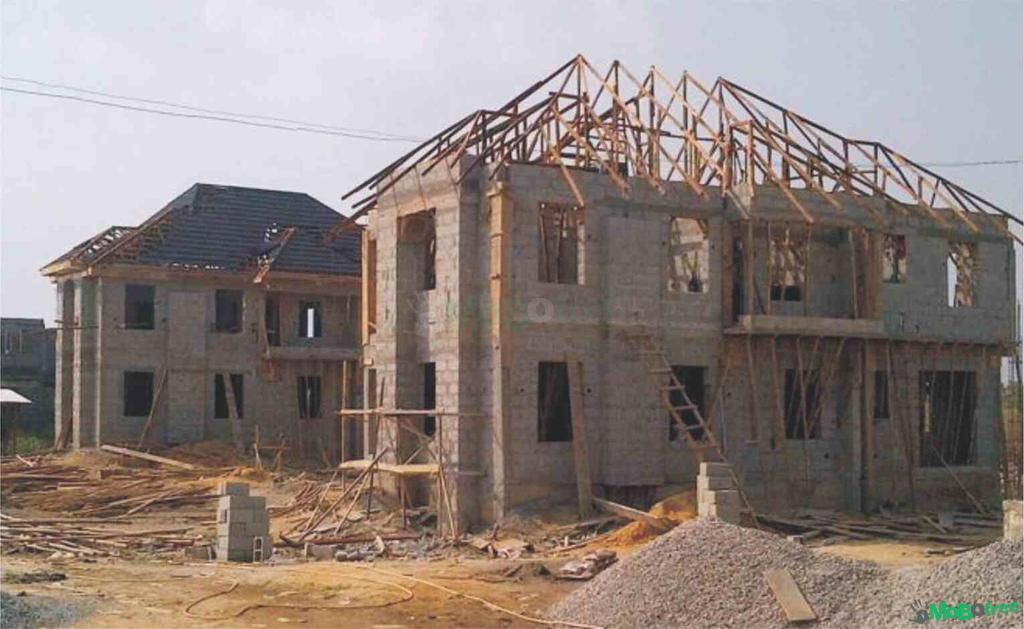
One of the major needs, this target market does not joke with is shelter, no matter how small it is with different levels of comfort. Micro-housing Plan will fix this need.

The Federal Mortgage Loan of N15,000,000 (fifteen million naira) per citizen for instance is usually perceived as- ‘‘it is for the elites’’ because such amount sounds scary to most of them.

A larger percentage of them based on demography prefer to live close together in ‘’face me I face you’’ and other related arrangements.

Mortgage products that will embraced must be designed in a manner that will make it acceptable and repayment of such may not exceed N300 per day for 30 years.

The product should not be designed for individual but for family or group that will share liabilities among themselves.

We can imagine building ‘’a room self-contained’’ as popularly called, and giving it out as mortgage for daily repayment of N300 for 30 years to 50 million people. Largely, the mortgage banks will become busier with different kinds of activities  such as creating/partnering with agents across the country to deliver required signed-on and repayments services through carefully selected technology channels. A viable business case can be developed to show more light into various activities that will be involved.

As people become financially stable, they will make a choice of moving to more comfortable apartment as they wish as long as the repayments continue to run.

Finally, the life you will live and enjoy most is the life that you designed for yourself and not the life other people designed for you.

In Search of Refined Herbs for Global Diseases

0

Every day, medical scientists and practitioners are not relenting in researching towards finding permanent cures for varied diseases affecting people and animal globally. From the traditional era to the modern period, diseases have been the greatest threat to healthy living. Before the modernization of health processes and healthcare delivery, human have been known to apply different herbs to cure diseases.

The arrival of modern medical scientists and practitioners couple with the message that traditional medicines are not good because of lack of scientific verification and appropriate measurement of dosage, the world, especially Africans, Asians and other nationals of developing continents were made to believe that using traditional medicines is tantamount to having health complications.

However, the same modern medical scientists and practitioners, and global health organisations that kick against the use of traditional medicines later recognised the place of the orthodox medicines in curing global diseases. For instance, in 2018, 98 Member States of the World Health Organisation incorporated Traditional and Complementary Medicine in their national health systems, 109 had launched national laws or regulations on T&CM, and 124 had implemented regulations on herbal medicines.

As pointed out earlier, developing countries are embracing traditional medicines faster than the rest of the world. They are being used mostly in Africa, Asia and Latin America. According to the World Health Organisation, people in these continents are using the medicines because of easy availability and affordability. The world health body says about 80 percent of the population in these continents still depend on traditional medicine for their Primary Healthcare (PHC) needs.

As the debates rage on the side effects of using traditional medicine, it is instructive to note that the growth remains steady globally amidst the inability of finding total cure for many diseases and high rate of poverty, which is preventing the poor from accessing adequate healthcare solutions. From 2020 to 2023, the global herbal medicine market is expected to reach a valuation of more than USD 129 billion.

The interest in the medicine has led to substantial investment in researching how the various herbs could be proved and certified safe for the human consumption. Three developing countries, one developed country and WHO have made significant research investment in traditional herbal medicines. Companies have also invested million of US dollars searching for promising medicinal herbs and novel chemical compounds.

The Conflicts and Drivers of Herbal Medicine

In the course of searching for the right herbs for global diseases, two incidents shocked the world in 1999 and 2007 to 2016. In 1999, Nigerian Surgeon, Dr Jeremiah Abalaka announced the development of a vaccine for the Human Immunodeficiency Virus (HIV). The announcement was trailed by mixed reactions from the public, the Nigerian government and the global community. A few years of treating 30 people with the virus, report has it that 29 died of complications during treatment. Till today, Dr Abalaka remains resolute in his discovery, saying the Nigerian government and the western world are frustrating his efforts because of the huge money being made from the sale of anti-retroviral drugs.

Like Dr Abalaka, the former Gambian leader and President, Yahya Jammeh announced that he had a cure for Aids in 2007. From 2007 to 2016, the President through his Presidential Alternative Treatment Programme (PATP) treated AIDS patients in confinement. Throughout the months of the treatment, the patients were made to drink herbal concoctions. Similar to the issues that trailed Dr Abalaka’s vaccine, experts and medical researchers believe that the treatment violated the human rights of people living with HIV in The Gambia and compromised HIV health service delivery.

Two years after the President was ousted in an election, survivors of the treatment sued and asked for compensation from the former Gambian leader. A recent study notes that “the emergence of the presidential treatment can be understood in the political and scientific context of recent global AIDS funding and programming, and longstanding tensions between ‘ foreign’ and local concerns with biomedicine and research.”

Despite the controversies on the two incidents, it has appeared that people will continue to seek knowledge about herbs and apply them as alternative medicines to cure different diseases. Our analysis shows that since the beginning of this year, people in Zimbabwe, Ghana, Jamaica, Uganda, Trinidad and Tobago, Nigeria, Zambia, Australia, New Zealand and South Africa have had significant interest in herbs, looking for specific ones that could cure the diseases affecting them.

Exhibit 1: People’s Interest in the Diseases and Herbs, 2019

Source: Google Trends, 2019; Infoprations, 2019

Select Diseases as Case

Within the Alternative and Natural Medicine, the world interest in getting the right herbs for erectile dysfunction and infertility is on the increase.   About 5 percent of men that are 40 years old have complete erectile dysfunction, and that number increases to about 15 percent of men at age 70. Mild and moderate erectile dysfunction affects approximately 10 percent of men per decade of life (i.e., 50 percent of men in their 50s, 60 percent of men in their 60s). Erectile dysfunction can occur at any age, but it is more common in men that are older. Older men are more likely to have health conditions that require medication, which can interfere with erectile function. Additionally, as men age, they may need more stimulation to get an erection and more time between erections.

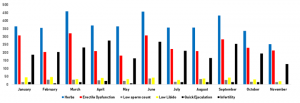
From January to November, 2019, the interest has been high on how Ayurvedic herbs could be used for the infertility treatment. The interest has been huge on the place of Ashoka, Dashmoola, Shatavari, Aloe vera, Guduchi and Jeevanti in treating Ovulation Disorder and Premature Ovarian Failure (POF). Throughout our study period, we equally found that herbs that could cure erectile dysfunction were mostly sourced from the United States and Canada.

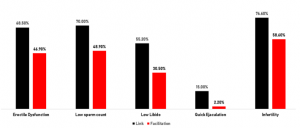
Globally, there is a 68.5% connection between herbs and erectile dysfunction. Herbs and low sperm count (70.00%); herbs and libido (55.2%); herbs and quick ejaculation (15.00%); herbs and infertility (76.6%). Analysis further reveals that one percent interest in herbs translated to 46.90% of looking for the herbs that could cure erectile dysfunction. It was 48.90%, 30.50%, 2.20% and 58.60% for low sperm count, low libido, quick ejaculation and infertility respectively [see exhibit 2].

Exhibit 2: Link and Facilitation of Herbs with Select Diseases

Source: Google Trends, 2019; Infoprations Analysis, 2019

Strategic Options

From the insights, it is clear that traditional medicine must be developed along with the modern medicine if the world is truly ready to eliminate a number of diseases by 2030, especially attaining Sustainable Development Goal 3 (Ensuring  healthy lives and promoting well-being for all at all ages – by achieving universal health coverage (UHC), addressing health emergencies and promoting healthier populations).

As we enter a new decade, the decade that would be used to measure the realisation of the goal and others, global leaders, experts and industries need to see the reason for the integration of the best traditional medicine practice with the modern medicine practice. This will go in a long way of tackling the peculiar health challenges in each continent.