Creating knowledge to drive development and growth has remained the core that separates wealth and poverty. That knowledge can be indigenous or externally acquired but it must be structured upon pillars. An innovation system built through knowledge typically goes beyond attracting multinational companies, establishing silos of high-technology companies or entrepreneurial systems, to one that is relevant, by understanding and providing for the needs of the local market.
The Makers Movement with their innovators and artisans are going to be as important as the multinational companies provided enabling path exists for the makers to advance. This means that the source of new ideas cannot be from abroad alone. Rather, the continent must look inwards, while looking externally, and discover the acres of talents that just need help to blossom. We need an innovation economy, unbounded by geography.
An innovation economy is one that positions knowledge, technology, entrepreneurship, and innovation process as integrated pillars, affected by policy, to enhance growth and development. It encapsulates an economic regime in which growth is dependent on the quantity, quality, and accessibility of the information available, rather than just on the means of production. It spurs higher productivity through higher value creation and not just through market price signals in using scarce resources.
It is an economy that relies more on knowledge and technology, over mere production factor accumulation in capital and labor. It is more collaborative and entwined efficiently, connecting firms, governments and societies. It produces economic growth and development – end-products from knowledge, policies supporting entrepreneurship and innovation, technological advancements between collaborative firms, and systems of innovation that create production-growth environments.
At the end, we will move from an inventive society to an innovative one.
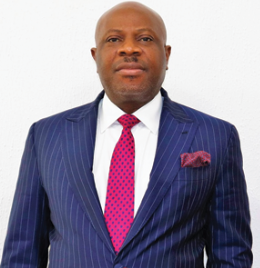
By November 28, 2019, the current Chief Executive Officer of Knight Frank, Chief Albert Orizu will invite Mr Frank Okosun to take over his seat (Chief Albert), according to a statement from the company. The statement states that Chief Albert is leaving the seat after 36 years of service.
Okosun who has been described as purpose-driven person is expected to lead the world’s largest independent residential and commercial property consultancy, which is also into the facilities management, for the next few years using his ingenuity with the support of the staff. According to the company, Mr Frank is an embodiment of the core values of the Knight Frank brand.
Knight Frank is an international brand established by Knight and Frank several years ago. It has developed and grew as one of the leading companies in the real estate and management sectors across Sub-Saharan Africa.
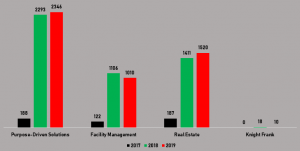
Exhibit 1: Businesses and Individuals Interest, 2017-2019
Source: Google Trends, 2019; Infoprations Analysis, 2019
As a company that continuously looks for new opportunities and offers sustainable values, Mr Frank has enormous tasks ahead in view of the company’s description of him as purpose-driven. This is imperative because the two sectors have been viewed by the buyers within the purpose-driven lens since 2017, our analysis suggests. Analysis reveals that businesses and individuals want companies in the two sectors that could provide purpose-driven solutions. Companies that would not emphasize profit making at the expense of offering solutions or products with sustainable value.
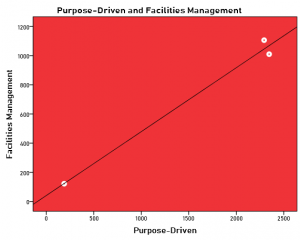
Exhibit 2: Relationship between Purpose-Driven Solutions Seeking and Facilities Management
Source: Infoprations Analysis, 2019
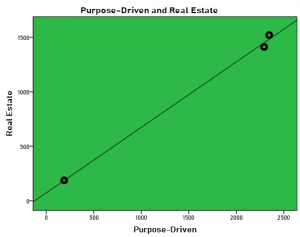
In the journey of understanding companies with purpose-driven model, analysis shows that businesses and individuals have had encounters with Knight Frank between 2017 and 2019. We found 88.7% connection of the interest with Knight Frank. The need to be purpose-driven in processes, people and solution is more pronounced when we found 99.4% linkage of the interest with Knight Frank within the facilities management sector and 99.9% for the real estate sector.
The expectation is that Mr Frank would prove the buyers of Knight Frank solutions, who have indicated significant interest in purpose-driven processes, staff and solutions in the last 3 years by walking the talk based on his recent position on one of the sectors we examined.
Exhibit 3: Relationship between Purpose-Driven Solutions Seeking and Facilities Management
Source: Infoprations Analysis, 2019
According to him “the new trend in Nigeria’s commercial real estate market is to be green and transparent.” “The rationale is clear, the more transparent a market is, the more investors and developers will understand its dynamics and the more likely they are to invest and develop in the space,” he added.
Mr Frank also needs to examine the company’s communication infrastructure. The digital media infrastructure needs overhauling to ensure communication of purpose-driven solutions delivery to the clients in the next decade, which starts from 2020. Checks show that Knight Frank is not well communicated and positioned on media such as LinkedIn, Twitter among others.
Last week, a traditional meatspace advertising agency closed shop in Lagos. His last customer did not renew the contract. The company was a victim of creative destruction where ICT utilities like Facebook and Google are disintermediating agencies by making it easier for brands to reach customers without supply-side gatekeepers. Companies like Google control demand (the customers), and the internet has made supply largely unbounded and unconstrained (there are many ways to get content to the web via Twitter, FB, WordPress, etc) thereby commoditizing supply to a large extent.
Creative destruction describes the deliberate dismantling of established processes in order to make way for improved methods of production. The term is most often used to describe disruptive technologies such as the railroads or, in our own time, the Internet
So, while they remain important, newspapers are not as dominant as they used to be for brands to reach customers. Understanding that construct, brands now focus on the digital platforms which have the demand (the customers), in the process de-prioritizing the old suppliers of ad space (newspapers) and their syndicated ad agencies. The signs of creative destruction are everywhere:
Amazon controls roughly half of US e-commerce and 5% of all US retail sales. It also holds nearly half of global cloud services through AWS, and is carving out a sizable chunk of search.
Facebook counts 2.2 billion daily active users across Facebook, Instagram, WhatsApp, and Messenger. That’s 29% of the entire global population
More so, with the ease of use of Facebook and Google ad technologies, most midscale brands do the jobs by themselves with minimal help from external consultants. At the end, it is a double-whammy (lost ads to digital platforms and customers can manage the ads by themselves) and many traditional ad agencies are closing.
This redesign cuts across sectors including banking. For the digital-only-banks in Nigeria, your playbook must consider Silicon Valley Bank. That bank does many things for startups: funding, lending, consulting, networking, and cheerleading. You better check how your industry is changing and ensure you adapt.
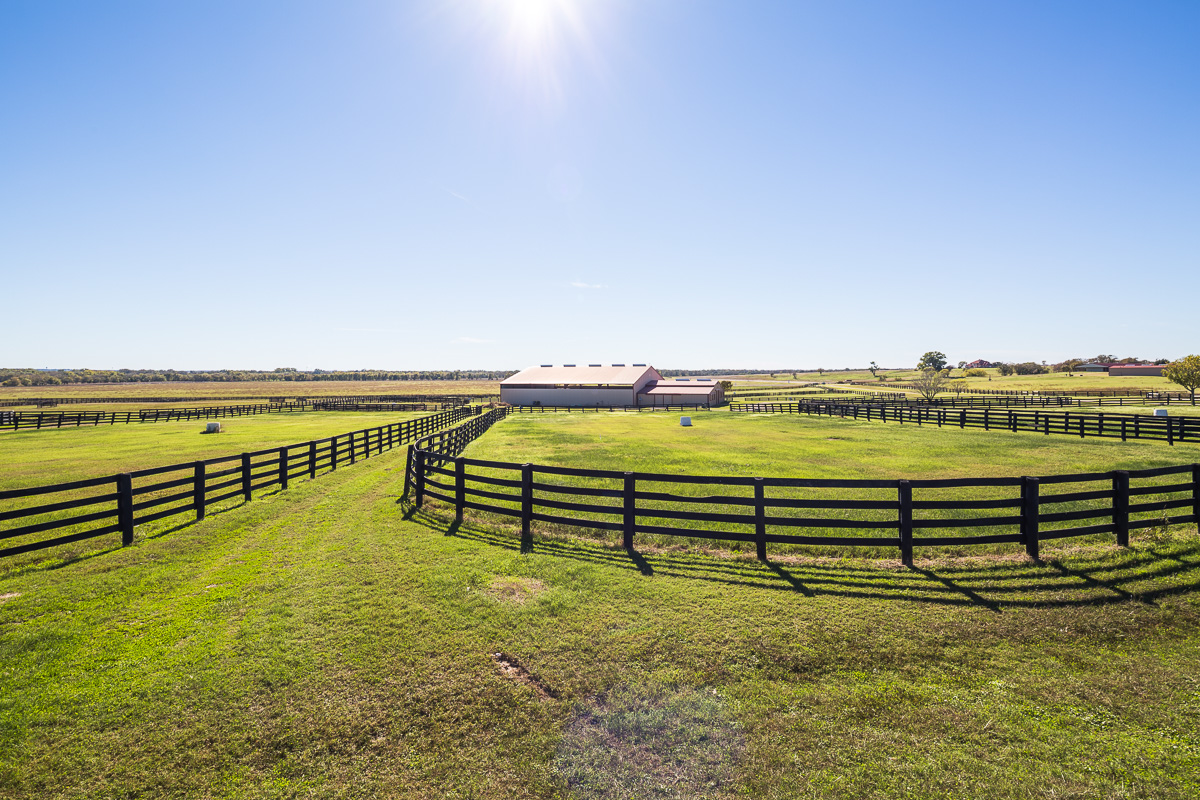
There seems to be challenges on understanding my insights on how we can unlock value from farmlands in our nation. Understand that this has nothing to do with mechanization of farmlands but purely making assets to have “velocity”. I have used that word “velocity” to indicate something that can change hands with ease at the least possible friction. I will explain this in a very simple way thus:
Let us assume that you inherited 1,000 hectares of farmland in remote Abia state. Today, Nigeria will consider you a poor person because the asset is “dead” (un-transferable and no value). Under my proposal, I will get startups to map that farmland and record it in your name. Then, they will register it in the local government/ministry of lands. They would also put the assets in a portal which can enable you to sell say 100 hectares to someone in Lagos, and the part-title moves immediately to the buyer with all powers of the state protecting that buyer. What is happening here is divisibility due to digitization of assets.
Also, you can put another 100 hectares as a collateral to a bank to get money to pay school fees for your kids and also attend to their healthcare needs. The balance of 800 hectares is documented in the ministry as assets in your name which adds to your net worth as a person.
My thesis is that by doing this, mapping and digitizing and linking that asset to you, your net worth could move from $0 (dead assets) to say $100,000 on that land. Simply, you are now worth $100,000!
By having the ability to “operate” on the $100,000 value, you have built liquidity as a person and have more capacity to borrow and spend, which boosts and drives economic growth. Banks, lenders etc will lend because they know your value is now $100,000, no more the old $0.
Understand that I have not focused on pure selling of any land to anyone. You do not even need to sell the land. You have simply unlocked the assets into your net worth. Also, you may not have planted any crops – this is not farming where we are talking of farm yields.This is purely making a class of asset which is “immobile” with no velocity to become transferable so that values can accrue to the owners. If this explanation does not cut it, contact my team. I will be happy to speak.
Nigeria has about 82 million hectares of arable land. If you put each hectare on average of $1,100, you get about $90 billion as “unlocked value”. Recording the assets easily and making them transferable, people can take loans using the lands as collateral, magically unlocking liquidity in the economy. In short, my $90 billion is pessimistic as the unlocked value could be in multiples.
The Debt Management Office (DMO) says that Nigerian’s total debt profile is N25.7 trillion (about $83 billion using the Central Bank of Nigeria official rate)). The Director-General of the office, Patience Oniha, announced this while addressing House of Representatives Committee on Public Account on Friday in Abuja.
“As at June 2019, our debt profile is at N25.7 trillion; this includes the federal, states governments and the Federal Capital Territory (FCT). We call it the total public debt, out of this total, the federal government is responsible for 80 per cent of the debt,” she said.
Ms Oniha said external borrowing accounted for about 32 per cent of the total debt while the 68 per cent was domestic.
“If you look back several years, over 85 per cent of budget deficits are funded by borrowing which the DMO undertakes as approved by the Federal Executive Council and the National Assembly. We borrow from various sources, the multilaterals, the World Bank, Islamic Development Bank, the African Development Bank, China Exim and we also issue products in the international market. Locally, we are also very active in domestic borrowing, we issue treasury bills, federal government treasure bonds,” she said.
Largely, the amount is relatively huge and for most people, the problem is not necessarily the debts but what the funds were used for, especially at the state capitals. Yet, this debt profile should not be threatening if the government can innovate on policy. If we put velocity on all farmlands in Nigeria (and put those dead assets to work for Nigeria), within three years, we will unlock more liquidity across rural communities, and the accelerated growth will generate tax receipts to pay off this change. Our challenge is looking at the figure, and not inventively pursuing new domains to unlock growth. Yes, a single government policy on the digitization of farmlands can put extra $90 billion in the net worth of Nigerians, boosting spending. That will help us grow faster than sub-2.5%. Nigeria has about 82 million hectares of arable land. If you put each hectare on average of $1,100, you get about $90 billion as “unlocked value”. Recording the assets easily and making them transferable, people can take loans using the lands as collateral, magically unlocking liquidity in the economy. In short, my $90 billion is pessimistic as the unlocked value could be in multiples.
The National Bureau of Statistics (NBS), says Nigeria’s Gross Domestic Product (GDP) grew by 2.28 per cent (year-on-year) in real terms in the third quarter of 2019.
NBS said this in its “Nigeria GDP Report for Third Quarter 2019’’ released on Friday in Abuja.
It explained that when compared to the third quarter of 2018, which recorded a growth of 1.81 per cent, the real GDP growth rate observed in the third quarter of 2019 indicated an increase of 0.47 per cent points.
The bureau said that relative to the second quarter of 2019, which recorded a growth rate of 2.12 per cent, third quarter 2019 represented an increase of 0.17 per cent points.
Deji – let me try again. If you inherited 1,000 hectares of farmland in remote Zamfara, Nigeria will consider you a poor man today because the asset is “dead”. Under my proposal, I will get startups to record/map that farmland in your name, register it in LGA, have it in a portal which can enable you to sell 100 hectares to someone in Umuahia and the part-title moves immediately to him with all powers of the state protecting that buyer.
Also, you can put another 100 hectares as collateral to a bank to get money to pay school fees for your kids. The balance of 800 ha is documented in the LGA as assets in your name which adds to your networth. So, by doing this, mapping and digitizing and linking that asset to you, your networth could move from $0 to say $100k on that land. By having ability to “operate” on the $100k, you have built liquidity as a person and have more capacity to spend, which boosts growth. Banks, lenders etc will lend because they know your value is $100k.
Your comment was not based on my piece and video. You are essentially thinking something else. This is not selling land, this is unlocking dead capital.