As Chief Strategist of Vetifly, the “Uber for helicopter” startup which is coming to Africa, beginning with Nigeria in Q1 2020, I am building mathematical models using many data sources, structured and unstructured. The calculus and limits they taught me in FUTO have always found applications. But I need more data in one domain: preference on lifting by distance.
I need your help – help me complete this waitlist form (takes 45 seconds) at moveddifferent.ng, if flying a helicopter, ahead on traffic or connecting cities, is something of interest.
To thank you for helping,
My engine could select you for a free lift. Yes, you fly on helicopter free on a debut route.
Your first lift irrespective of the amount would not cost you more than $100.
Use the same email, register on Tekedia, and my team after validation, will give you free access to all exclusive articles, books, etc for one year (click for how). If you’re subscribed, they will extend it by one year. We’re launching 6 books on Jan 1 2020 – a great way to start a new year.
Access to my Mofied AfCFTA Playbook Webinar which is planned in Feb 2020. (Mofied means Mobility Fintech Edtech). This webinar will examine all within the context of the African free trade agreement.
Now, kindly go to movedfifferent.ng and send me the data.
One global change I would like to see solved is the eradication of poverty across Africa especially in Nigeria. In the five minutes you’d have spent reading this article, six people would have fallen into extreme poverty. Think about that for a second, these six people are not just random numbers, they are actual humans who used to be comfortable; they are your cook, your cleaner, the bus conductor and your gateman Musa.
Musa earns a monthly wage of 20,000 Naira and out of that money he’s expected to take care of himself, his wife and four kids in faraway Jigawa State. The derica of rice they used to buy for 600 is now sold for 2000, climate change has affected the yield they get from their farm, and they spend most of their income on malaria and typhoid drugs. Hence Musa can no longer afford basic provisions and now feeds from hand to mouth while going hungry for most days as various things ebb away his little income. His salary can no longer take care of him and his family. Tick tock, Musa is one of the six people that has just fallen into extreme poverty as we speak because their resilience is gone.
About 600 million people across the world live in extreme poverty, more than 70% of that number live in Africa (427 million people) of which 93 million live in Nigeria. I have been very fortunate to work with both the government and international development agencies in creating policies and initiatives that would help us take people like Musa out of poverty so I know first hand what an intentional policy can achieve in helping us reduce our poverty numbers. Last year, the Government approved a National Social Protection Policy that clearly address these challenges.
This policy lays out specific steps to provide Musa’s wife and kids with free healthcare so Musa spends less money on drugs, monthly cash stipends to cater for her and the kids, free education for the kids, Agric inputs for farming to increase their yield and skill acquisition programmes for Musa so he can learn a skill and get a better job asides being a gateman and encourages state governments to set aside a portion of their budget for their poor and vulnerable population. All these through a combination of coordinated efforts from both Public and Private sector. Currently, only two states have adopted the policy (note: adoption does not equal implementation as you still require the appropriate budgetary allocation). Meanwhile, we have seen this same strategy work in Cambodia, Vietnam and India specifically where they lift about 44 people out of poverty every minute.
Hence, I won’t waste time on this article preferring solutions to our poverty malaise when experts have spent time doing justice to this. But in Nigeria, most policies waste away as mere documents if properly implemented, so I was part of a team that carefully designed a policy implementation roadmap for the Nigerian Govt that has been validated by key players across the social development space. I spent time with the poor men of Jigawa, the malnourished children of Taraba, sick women of Zamfara and I saw how targeted social protection programmes improved their lives over time. I know this because I have been involved but so many don’t due to a lack of awareness, education and execution.
In Nigeria, our politics is short-term, this is why governors would rather build roads and empty buildings instead of investing in things like policy or education which take much longer term before the impact can be felt.
If Nigeria is serious about poverty, then it must be looked at as a National Crisis, one whose solution is apolitical. Poverty knows no party delineation, it is not APC or PDP, and if we don’t solve this looming crisis, history will not be kind on us.
With the less than two months to the end of 2019, businesses, governments and individuals have been counting the gains and losses attained during the year throughout the world. For experts and public affairs analysts, there is a need for celebration and reflection on what has been achieved and what has not been attained in line with the socioeconomic and political goals set earlier in the year.
Four years ago, African leaders joined other leaders in the world and agreed to address a number of problems facing people by 2030. They also wanted to have “Africa we want”, a continent where everyone would be more prosperous by 2063.
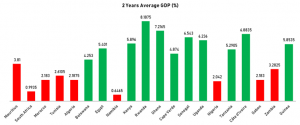
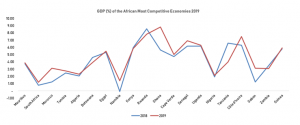
To meet the first agenda, existing information indicates that the continent needs to raise an estimated 11 per cent of GDP per year for the next 10 years to close the financing gap. Attaining the second agenda would largely depend on having the political will to implement the goals and targets of the agenda. As espoused by the analysts, the continent needs the will and adequate resources before sustainable solutions could be created and captured from the continent’s market space of about US$3.4 trillion, and a consumer base of 1.27 billion.
Source: International Monetary Fund, World Economic Outlook April 2019; Infoprations Analysis, 2019
Rumblings of Recession
Though, the governments on the continent have been working out various modalities and initiating programmes towards overcoming numerous socioeconomic challenges hindering its development in the last decade. It, however, appears that the continent would have more issues to contend with in the next decade as trade war continues among some countries, especially between the United States and China, which has been seen as one of the signs of global economic downturn in 2020. Already, the global manufacturing sector is experiencing the heat. The key US manufacturing index hit its lowest point in more than a decade recently. Report has it that the war between the US and China inflicted wound that needs to be healed by the President Donald Trump until his re-election. The failure to get the right solutions would nose-dive the economy early next year because many global companies would continue to have problems in planning their operations with the lowest investment as the main consequence.
The outcome of the consequence would be a global recession in 2020, which has been linked with the weaker growth that would be experienced in advanced and developing countries. The countries such as the United States, Germany, Japan and China with the substantial space acquisition in global manufacturing will experience a slowdown in the sector. China has already reported its worst manufacturing output in 17 years. Hong Kong, the United Kingdom, Italy, Turkey, Argentina, Iran, Mexico, South Korea and Brazil are also expected to have share of the global recession in 2020. According to the United Nations, countries and policymakers need to refocus on jobs, wages and investment. “Finance ministries and central banks should end their “obsession with stock prices, quarterly earnings and investor confidence” and instead focus on job creation, boosting wages and increasing public investment.”
Source: World Economic Forum, World Bank, World Development Indicators, 2019
The lingering question among the experts and public analysts from the Africa and other continents is where would African countries be in 2020. Is the continent ready for the recession? Checks reveal that the continent would not be left out in having the pie of the recession because the countries identified as early places of the recession are the major trade partners of the continent. And that the competitiveness of the economies of most countries remains low since 2015 linked to weaker institutions, ineffective economic policies or programmes and a number of factors.
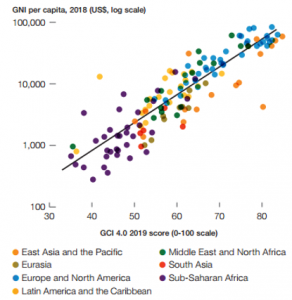
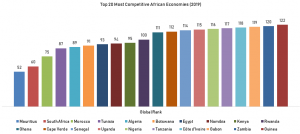
Resonating with the United Nations’ warning on the recession, the competitiveness landscape as painted by the 2019 Global Competitiveness Index indicates more efforts to restore productivity and growth to lift living standards.
“Led by Mauritius (52nd), sub-Saharan Africa is overall the least competitive region, with 25 of the 34 economies assessed this year scoring below 50. South Africa, the second most competitive in the region, improves to the 60th position, while Namibia (94th), Rwanda (100th), Uganda (115th) and Guinea (122nd) all improve significantly. Among the other large economies in the region, Kenya (95th) and Nigeria (116th) also improve their performances, but lose some positions, overcome by faster climbers.”
Source: World Economic Forum, 2019
Source: International Monetary Fund, World Economic Outlook April 2019; Infoprations Analysis, 2019
In addition to the United Nations’ proposed remedies to the recession, leaders, businesses and policymakers need to strengthen the global value chain to boost growth, create better jobs, and reduce poverty while robust reforms should not be jettisoned. Africa needs to pursue open and predictable policies, and revive multilateral cooperation. Beyond these, Africa must embrace new technologies within the global value chain to create new products and increase productivity.
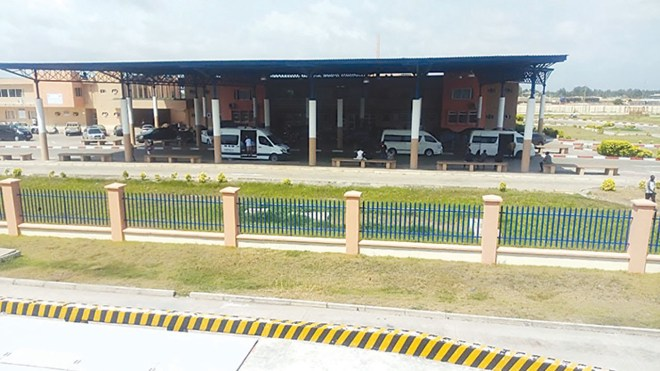
In August, President Muhammadu Buhari ordered closed Nigeria’s land border with Benin, preventing the import of goods. The move significantly affected trade in foodstuffs, which had already been affected by various past import restrictions. In this article we examine the one positive effect the border closure has brought to Nigerians at large.
As part of an on-going effort to tackle smuggling and associated corruption, but also to spur the domestic agricultural industry, on October 14, 2019, Nigeria ordered closed all of Nigeria’s borders with Benin, as well as those with all other countries, for the same reasons. With the market for smuggled food now restricted, domestic food prices, already high, have gone up and the economy of neighboring countries— a staging area for smuggling into Nigeria has been devastated. Imports into Nigeria are to come through sea ports, where customs duties can be imposed more easily than at land borders. Nigeria’s vital oil exports are not affected.
While Nigeria’s borders reflect late-nineteenth century agreements among the British, French, and Germans, most African borders were similarly created by European colonial powers. The point being, the borders rarely reflect indigenous history or culture. In the case of Nigeria, while there are formal border crossings with customs services along the main roads, there are literally hundreds of others along footpaths and minor roads that are unregulated. The practical consequences of closing the land borders is likely to vary from one part of the country to another, based on government capacity to enforce closures.
So, what have been the positive benefits of the Nigerian border closure?
Increased Internally Generated Revenue (IGR): This is a huge fact because Nigeria has imposed customs duties which can be readily imposed more easily at sea ports than at land border. This is a major breakthrough as duties paid by importers are drafted to the IGR. This move is huge because over the years, prior to the border closure there has been no full regulation on duties paid for import. Now, with this strategic yet painful framework deployed by the President there will be accountability from the Nigeria Customs Department in contributing fully their own quota to the Single Treasury, which will best max the IGR for the GDP. To be honest, this move comes with a heavy steep price. This is obvious because many importers will have no other option to send in their goods and they’ll be forced to comply with the directive. It will affect the importers too who do not have enough funding for the duty payment effectively. But to be frank, the increased internal generated revenue will boost due to this.
Increased Consumption of Local Products: Nigerians like we know, love the consumption of foreign products. It’s in the blood really. However, to this effect of the Nigerian border closure, there has been a surge in the consumption of local goods. Take example, the locally made rice Nigerians rejected is now the most consumed commodity. As the cost of foreign products increase there comes the reality of Nigerians to use the available when the preferred is not available. According to locally rice farmers, it has been noted that they sell off their products easily these days compared to other times. It’s essential to note that the border closure was a move by President Buhari not to only tackle smuggling and associated corruption, but also to spur the domestic agricultural industry.
In effect, the move has been strategic and painful to numerous Nigerians, but the reality comes in that numerous nations are taking moves to increase their IGR for the benefit of their GDP. Countries like U.S.A are deploying this medium to tackle foreign nations like China from taking over their trading. It’s strategic and hits hard on the average citizens, but then there must be a future for a country to grow independently.
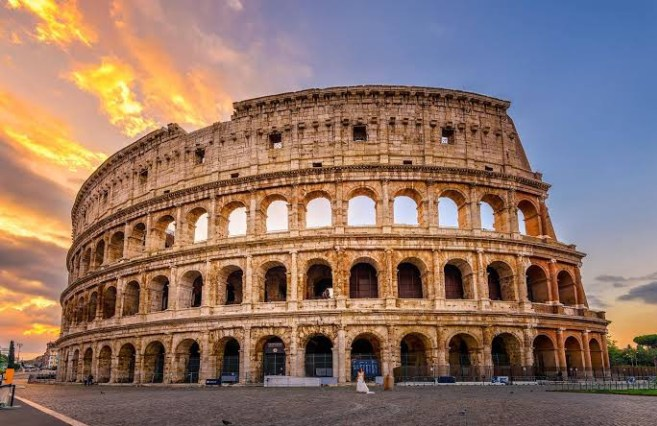
Just like the saying goes: “Rome wasn’t built in a day”. You will agree to the lone fact that the revitalization of Africa’s economy has been attributed to the leading advance in technology. This crucial factor that has played a prime role in this development can be attributed to the rise of tech hubs, especially in Africa. This is eminent as it is on the rise especially in Nigeria and Africa at large. But then: What are tech hubs? How do they work? How can upcoming startups and developers benefit from this phenomena?
What is a Tech Hub?
Just like the computer network hub, a connection point for devices in a network (Webopedia, 2018), the term ‘tech hub’ is simply a physical space (can be remote), a city, a suburb (like computer village Lagos), or a collective suite of offices whose aim is geared to help technology stay companies succeed, and scale up. Tech hubs create an environment specifically targeting the up-build of young technology companies thrive by encouraging: incubation, fast tracking, helping such firms network and collaborate with like minded individuals or enterprises.
The major goal of a tech hub is to grow ideas.
What Do They Need?
For a tech hub to thrive there are a lot of impeding criteria that must be meet so as to establish its relative productivity. One basic factor is a steady supply of permanent and temporary suitable workers, a means of generating revenue, relatively high speed internet access, robust infrastructure, location, transport, relative proximity of access, friendliness of the hub, and total coordinated organization.
Where Are The Best Hubs Located?
Remember, that the best known tech hub is probably Silicon Valley, based in California USA. Here you can find the big boys (companies) in the tech industry: Facebook, Apple, Netflix, Intel, Tesla, and major startups many of these were founded here.
In Nigeria, there are a numerous tech hubs available. The full list is available here, Prosper Otemuyiwa’s really helped in making this task easy, they include some in pictures:
Focus Hub, Rivers State Nigeria.Wennovation Hub, Oyo State Nigeria.MAL Hub, Kwara State Nigeria.Innovation GrowthHub Aba, Abia State Nigeria
How and Who Can Benefit From Tech Hubs?
While you might feel that only software and web developer are the most prime people to benefit from the establishment of tech hubs, you will be surprised to note that a lot of unskilled individuals are more likely on a ratio of 3:5 to gain immense experience from tech hubs.
Government agencies are really poised to gain knowledge, because tech hubs offer a wide angle of disseminated technologies, backgrounds, work groups, personalities and ideas. The core truth is that even companies seeking for skilled personnel’s to assist their companies can get a handful from reliable tech hubs across the continent.
So its a win-win. Tech hubs are for everyone, and by everyone. As the saying in the introduction of this article: “Rome wasn’t built in a day”, Nigeria has had a decent share of tech advancement due to the increase in tech hub, we have seen more open minded individuals come up in terms of technology challenges and even advocacy groups. The GitHub benchmark is a prime example of how poised and raging Nigeria and Africa is becoming towards the Open Source development and knowledge sharing. In it all, tech hubs are just like the library, you gain resources, experience and exposure.
So next time you think about a tech hub, what comes to your mind? Definitely, you will remark a tech hub as a ‘catalyst’ in crucial development. So find a tech hub around you and innovate!