DD
MM
YYYY

PAGES

DD
MM
YYYY

spot_img

PAGES

Home Blog Page 66

Is Banking Experience Truly Essential for Fintech Success in Africa?

0

In recent years, fintech has emerged as one of Africa’s most dynamic and transformative sectors, redefining how millions access financial services.

From mobile money platforms in East Africa to digital Neobanks in West Africa, these companies are challenging traditional banking models and expanding financial inclusion. Fintechs and digital financial services have remained the most funded across the African continent by value and deal count.

Amidst the growth and success stories, a common narrative persists that for a fintech to succeed, founders must come from a banking or financial services background. Many argue that without prior experience, founders risk destroying value through pure ignorance.

In a 2023 post on X (formerly Twitter), by serial entrepreneur and one of Africa’s most respected tech investors, Victor Asemota, he argues that inexperienced fintech founders in Africa often destroy value through ignorance.

He used anecdotes of ex-bankers succeeding by prioritizing quality customers and realistic updates over hype, contrasting with novices chasing unviable credit models.

Part of his post reads,

“Very Unpopular Opinion and likely to be stoned for this: Fintech founders MUST have some experience in banking or financial services background first before they are funded. Many fintech neophytes destroy so much value not out of deliberate actions but just pure ignorance.”

This post saw replies with many sharing the same sentiment, personal anecdotes, and examples that reinforced his point about the value of domain expertise in African fintech.

The Banking Experience Edge

The sentiment that banking or financial services experience provides an edge in African fintech holds weight for several reasons. Founders with prior exposure to banking understand risk management, regulatory compliance, and operational processes.

These are critical in a sector where trust and stability underpin user adoption and investor confidence. For example, someone who has navigated the complexities of loan disbursement, anti-money laundering protocols, or payment clearing systems will inherently be better equipped to design viable fintech products.

One notable example is Uzoma Dozie, founder of Sparkle and former Chief Executive Officer of Diamond Bank. With years of experience running one of Nigeria’s most prominent commercial banks, Dozie entered the fintech space with a clear understanding of the structural gaps within traditional banking. Sparkle was built to merge the stability and regulatory discipline of conventional banks with the agility and user-centric design of digital platforms, offering individuals and businesses a modern banking experience without sacrificing compliance.

A similar blend of banking expertise and innovation can be seen in Babs Ogundeyi, co-founder of Kuda Bank. With experience spanning auditing and banking operations, Ogundeyi brought a disciplined financial mindset into the creation of one of Africa’s fastest growing neobanks. His background helped Kuda establish strong internal controls, risk management frameworks, and compliance processes critical elements for earning trust in a fully digital banking model.

In the payment’s infrastructure space, Mitchell Elegbe, founder and CEO of Interswitch, represents one of Africa’s earliest examples of bank-informed fintech innovation. Elegbe’s early career in financial auditing and payment operations gave him firsthand insight into inefficiencies within Nigeria’s payments ecosystem. This background enabled him to anticipate both operational and regulatory challenges, positioning Interswitch as a foundational player in Africa’s digital payments evolution.

Collectively, these founders demonstrate that fintech innovation in Africa is not solely about disruption, but also about deep system understanding. By leveraging prior experience in banking and financial services, they have been able to build platforms that are not only innovative but also resilient, compliant, and scalable.

Experience Isn’t a Guaranteed Shield

While a banking background might present an edge, it is however, important to note that it doesn’t automatically ensure success. There are examples of founders with financial and banking experience who struggled or failed due to poor execution, overreliance on traditional models, and inability to adapt to market realities.

Conversely, some fintech founders without any prior banking experience have succeeded spectacularly by combining tech-savvy, market intuition, and strong strategic execution. Paystack co-founders Shola Akinlade and Ezra Olubi are a prime example. They built a multi-million-dollar payments platform without traditional banking backgrounds, but with engineering expertise.

However, as the company scaled, Paystack brought in experienced banking, compliance, and finance professionals to manage regulatory relationships, risk frameworks, and settlement processes.

Conclusion

Ultimately, while domain expertise in banking can provide an advantage, the true determinants of fintech success lie in entrepreneurial vision, execution strategy, and the ability to respond to market needs.

A founder must combine understanding of the financial ecosystem with adaptability, creativity, and operational excellence. Whether coming from a bank or a tech startup, the ability to identify opportunities, manage risk, and deliver value consistently will define whether a fintech venture thrives or falters.

OneDosh Bets on Stablecoins With $3M Pre-Seed to Fix Cross-Border Payments

0

OneDosh, a financial technology company building modern infrastructure for instant, transparent, and borderless payments, has closed a $3 million pre-seed round to accelerate the development of its stablecoin-powered payment rails.

The company noted that the funding will support corridor expansion, deepen liquidity partnerships, and enable senior hires, positioning OneDosh at the intersection of stablecoins, global spending, and real-world payments.

As global commerce becomes increasingly digital, the shortcomings of traditional payment systems are becoming more pronounced. Slow settlement times, high transaction costs, fragmented cross-border rails, and limited access to banking services continue to restrict economic activity, particularly across emerging markets. In response, stablecoin-powered payment infrastructure is gaining traction as a foundational layer for the future of finance.

Across many African economies, persistent inflation and currency depreciation erode purchasing power and complicate pricing for businesses. Stablecoins offer a compelling alternative by providing a digital store of value designed to remain stable over time. For individuals, freelancers, and small businesses, this translates to reduced exposure to sudden foreign exchange volatility. For merchants and startups, it enables more predictable pricing, planning, and contract execution especially when working with international partners.

“Financial access should not be limited by geography,” said Jackson Ukuevo, Co-founder of OneDosh. “People already live global lives. OneDosh is built to ensure their money can move as freely as they do, supporting global work, global families, and global commerce.”

Founded in February 2025 by Jackson Ukuevo (Co-Founder & CEO), Godwin Okoye (Co-Founder), and Babatunde Osinowo (Co-Founder), OneDosh was built from lived experience rather than theory. The founding team encountered repeated friction, blocked cards, frozen accounts, slow cross-border transfers, and restrictive currency controls while living and traveling globally. Their conclusion was straightforward: the challenge is not demand, but infrastructure.

Earlier this month, OneDosh announced the launch of its cross-border payments platform in the United States and Nigeria, activating its first major payment corridor and marking a significant step toward a truly borderless global financial system. The service is now live across 49 U.S. states.

“Financial access should not be limited by geography,” said Jackson Ukuevo, Co-founder of OneDosh. “People already live global lives. OneDosh is built to ensure their money can move as freely as they do, supporting global work, global families, and global commerce.”

Headquartered in New York City, with its first African corridor in Nigeria, OneDosh leverages stablecoin technology to help individuals and businesses move money globally with speed, clarity, and trust.  Users can send money from the U.S. to Nigeria, store value in stablecoins, and spend globally using stablecoin-powered cards available on Apple Pay and Google Pay, accepted anywhere Visa is supported. Beyond consumer use cases, OneDosh is quietly building the underlying rails that connect wallets, cards, and countries into a single programmable payment infrastructure.

Looking ahead, OneDosh is positioning itself as a core infrastructure provider for a world where stablecoins become the default settlement layer for global payments. As adoption grows among consumers, businesses, and institutions, the need for compliant, scalable, and interoperable rails will only intensify.

With early traction across key corridors and fresh capital to expand its footprint, the fintech is betting that the future of cross-border payments will be faster, borderless, and natively digitally powered by stablecoins, built for real-world use.

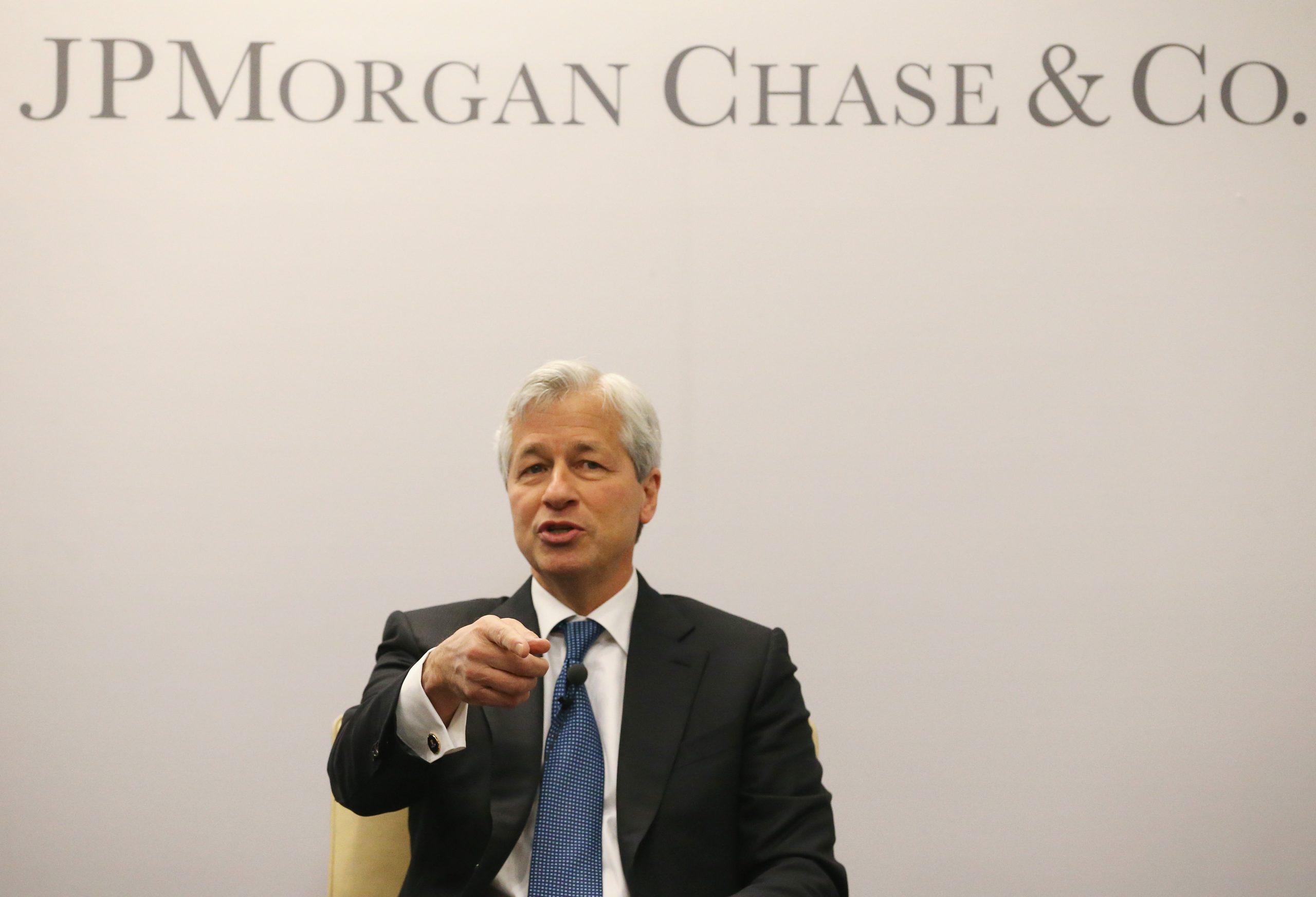
JPMorgan CEO Breaks With Trump on Immigration, Warning Crackdowns Risk Economic and Social Damage

0
JP Morgan Chase puts contents through its CEO account, it goes viral. But the same content via JPMC account, no one cares (WSJ)

JPMorgan Chase chief executive Jamie Dimon on Wednesday delivered a rare public disagreement with President Donald Trump’s immigration agenda, warning that the administration’s enforcement-heavy approach risks harming both the U.S. economy and the social fabric.

Speaking on a panel at the World Economic Forum in Davos, Switzerland, Dimon opened by crediting Trump for tightening border controls, a priority that has long resonated with parts of the business community. Illegal crossings at the U.S.-Mexico border fell to their lowest level in 50 years between October 2024 and September 2025, according to federal data cited by the BBC, an outcome the administration has repeatedly pointed to as evidence that its strategy is working.

But Dimon drew a clear line between border control and the way immigration enforcement is now being carried out inside the United States. His sharpest comments appeared to reference widely circulated videos and reports of Immigration and Customs Enforcement operations targeting alleged undocumented immigrants.

“I don’t like what I’m seeing, five grown men beating up a little old lady,” Dimon said. “So I think we should calm down a little bit on the internal anger about immigration.”

He did not specify a particular incident, and it remains unclear whether he was referring to a single case or speaking more generally about ICE confrontations. Still, the comment marked one of the bluntest critiques of Trump’s immigration tactics from a sitting chief executive of a major U.S. corporation during the president’s second term.

Since returning to office, Trump has moved swiftly to overhaul immigration policy. His administration has prioritized mass deportations, narrowed access to asylum, and significantly expanded funding for ICE personnel and detention facilities. It has also rescinded previous guidance that limited where immigration arrests could occur, opening the door to enforcement actions at schools, hospitals, and places of worship.

Supporters say the measures restore the rule of law; business groups and immigrant advocates argue they have fueled fear across entire communities.

Dimon’s comments highlighted the economic dimension of that debate. He pressed for clarity on who is being swept up in raids, asking whether those detained are in the country legally, whether they are criminals, and whether they have broken U.S. law.

“We need these people,” he said. “They work in our hospitals and hotels and restaurants and agriculture, and they’re good people… They should be treated that way.”

That argument has been a consistent feature of Dimon’s public positions for years. As the head of the world’s largest bank by market capitalization, he has repeatedly described immigration reform as one of the most effective ways to lift U.S. growth, ease labor shortages, and strengthen long-term competitiveness.

In shareholder letters and interviews, he has supported a merit-based green card system, citizenship for immigrants brought to the U.S. as children, and a more flexible approach to skilled-worker visas such as the H-1B programme.

On Wednesday, he returned to those themes, urging Trump to pair enforcement with pathways to legality and citizenship for “hardworking people” and to preserve access to asylum for those who qualify.

“I think he can, because he controlled the borders,” Dimon said, suggesting that the administration now has political room to soften its stance without losing credibility on security.

The remarks stood out in a corporate environment where public criticism of Trump has been muted. Unlike during his first term, when executives openly challenged policies ranging from trade to climate change, many CEOs have largely stayed silent this time around. Wall Street analysts and political observers say business leaders are wary of retaliation from an administration that has sued media organizations, universities, and law firms, and has shown a willingness to use regulatory and legal pressure against perceived opponents.

That dynamic surfaced directly during the Davos discussion. Zanny Minton Beddoes, editor-in-chief of The Economist, told Dimon she was struck by how careful he and other executives had been when discussing Trump.

“You are one of the more outspoken business leaders,” she said. “I’m genuinely struck by the unwillingness of CEOs in America to say anything critical. There is a climate of fear in your country.”

Dimon pushed back, arguing that he had been clear about his disagreements with the president on immigration, tariffs, and relations with European allies.

“I think they should change their approach to immigration,” he said. “I’ve said it. What the hell else do you want me to say?”

Even so, his intervention underscored how unusual such candor has become. Although for Trump, immigration remains a core political issue and a defining feature of his presidency, it is something different for corporate America. The tension between enforcement, labor needs, and economic growth is becoming harder to ignore. Dimon’s comments suggest that, at least for some business leaders, the cost of staying silent may now rival the risks of speaking out.

OpenEvidence Closes $250m Round at $12bn Valuation, Signaling a New Phase in AI’s Medical Gold Rush

0

OpenEvidence’s rapid ascent from an obscure health-tech startup to a $12 billion company in under a year is becoming one of the clearest signals that artificial intelligence in medicine has moved beyond experimentation and into the heart of the U.S. health-care system.

The Miami-based company, often described as “ChatGPT for doctors,” said it has closed a $250 million funding round led by Thrive Capital and DST, pushing its valuation to $12 billion. The deal caps a remarkable run. In February, OpenEvidence raised $75 million from Sequoia at a $1 billion valuation. By October, that figure had surged to $6 billion. In total, the company has now raised about $700 million from investors that include Google’s venture arm, Nvidia, Kleiner Perkins, Craft Ventures, and Mayo Clinic.

The speed of the re-rating underscores both investor appetite for applied AI and the belief that health care may offer one of the largest and most defensible markets for the technology. Health spending in the U.S. now runs at roughly $5 trillion a year, close to 20% of gross domestic product, making it the single largest slice of the real economy. For venture capital, it represents a rare combination of scale, urgency, and long-term demand.

OpenEvidence was founded in 2022 by Daniel Nadler, who previously built Kensho Technologies, an AI firm acquired by Standard & Poor’s for about $700 million, and Zachary Ziegler, a Harvard PhD student specializing in artificial intelligence. Nadler’s track record has helped reassure investors wary of flashy AI startups with limited execution experience.

At its core, OpenEvidence offers a clinical decision-support chatbot designed specifically for physicians. Nadler rejects the idea that it is simply a medical-flavored version of a consumer chatbot. He says the system is trained on peer-reviewed scientific journals and trusted medical sources, not the open internet or social media, which he argues can introduce noise and low-quality information into high-stakes clinical settings.

“‘ChatGPT for doctors’ is a useful shorthand,” Nadler said, “but what we really do is help physicians make high-stakes clinical decisions at the point of care.”

That positioning matters as regulators, hospital systems, and clinicians remain cautious about AI tools that hallucinate or lack transparency. By narrowing its focus to verified physicians and curated medical data, OpenEvidence is trying to sidestep some of the reputational and legal risks that hang over more general-purpose models.

Nadler claims the strategy is working. He said more than 40% of U.S. physicians now use OpenEvidence, a figure that, if accurate, would make it one of the most widely adopted AI platforms in American medicine. The company says it topped $100 million in annualized revenue last year, driven largely by organic growth. According to Nadler, 95% of new users discover the platform through other doctors, a word-of-mouth dynamic that is rare in enterprise software and difficult for rivals to replicate.

The growth story is also tied to OpenEvidence’s unconventional business model. Unlike many health-tech startups that rely on expensive subscriptions sold to hospital systems, OpenEvidence leans heavily on advertising. Companies can pay for video promotions inside the app, allowing the core product to remain free for physicians.

Nadler argues this approach lowers barriers to adoption, especially for small practices that lack IT departments or budgets for enterprise software.

“Most health care in America isn’t happening at billion-dollar hospitals,” he said. “It’s happening in small practices.”

The ad-based model places OpenEvidence at the leading edge of a broader shift in AI monetization. For much of the past two years, leading AI companies have relied on subscriptions or enterprise contracts while absorbing heavy losses. That stance is beginning to soften. OpenAI said last week it is testing an ad-supported version of ChatGPT, an acknowledgment that advertising may be one of the few ways to support mass-market AI use without passing costs directly to users.

Nadler has been explicit about wanting to avoid the capital-burning strategies embraced by some rivals. He said OpenEvidence is trying to balance rapid growth with a credible path to profitability, distancing himself from startups that are “openly planning to burn billions or tens of billions” in pursuit of scale. The comment reads as an implicit contrast with foundation model developers whose infrastructure costs continue to balloon.

Competition, however, is intensifying. OpenAI recently launched ChatGPT Health, while Anthropic is pushing Claude Healthcare. Both products are HIPAA-compliant extensions of popular consumer chatbots, backed by companies with far deeper resources than OpenEvidence. Nadler insists his company’s moat lies in its physician-first focus, data quality, and early lead.

“We’ve already gathered hundreds of millions of real-world clinical consultations from verified physicians,” he said, describing a feedback loop that continually improves the product and is hard to reproduce quickly.

The claim highlights a broader truth about AI applications: once embedded in daily workflows, switching costs rise sharply.

The funding round also lands against a backdrop of renewed momentum in AI investing. According to CB Insights, there were six AI funding rounds exceeding $1 billion in the third quarter of last year alone. Anthropic is reportedly in talks to raise another $10 billion, while Elon Musk’s xAI announced a $20 billion round this month. For investors, OpenEvidence sits at the intersection of this capital surge and a sector long seen as ripe for technological overhaul.

Despite takeover interest from large tech companies eager to bolster their health-care offerings, Nadler says he intends to keep OpenEvidence independent. Having gone through an acquisition with Kensho, he said this time he wants to build a company that compounds over many years rather than exiting early.

On the question of an initial public offering, Nadler was blunt. He believes application-layer companies like OpenEvidence will have to wait until foundation model developers such as OpenAI and Anthropic go public first, following what he described as the natural order established during the early internet era.

OpenEvidence’s latest round cements its status as one of the most closely watched AI health-care startups. It is believed to be a confirmation that AI’s push into medicine is no longer speculative, and OpenEvidence has placed itself squarely at the center of that transformation.

Why Investors Say Ozak AI Has One of the Only Realistic 30,000%–200,000% ROI Pathways Across All 2026 Presales

0

Investors believe that Ozak AI has a lot of potential to generate an ROI ranging from 30,000% to 200,000%. This is after a stark comparison to all presales in 2026 to this point. The said ROI range for OZ, however, is projected to be recorded only after the listing phase. It could happen sooner than expected considering the AI-powered token is accelerating its growth pace.

ROI with OZ

ROIs with OZ for early investors are estimated to be as high as 200,000%, or 2,000x, with the lowest being 30,000%, which translates to a 300x gain. Ozak AI tokens currently have an offer value of $0.014, up from $0.001 by 14x.

To put these numbers into perspective, a 300x gain could turn the token value into $4.2 and a $100 investment into $30,000. Similarly, a 2,000x ROI could turn the token value into $28 and the same investment into $200,000. This is fundamentally based on the presale growth momentum wherein investors have bought more than 1.03 billion tokens for a total of over $5.78 million.

Ozak AI Tech Crafting ROI Pathways

The AI-powered technology housed within the native ecosystem is curating the said ROI pathways. This includes the likes of DePIN and the x402 Protocol, among many others.

DePIN, for one, functions as a safety layer for the financial data. It essentially protects the financial data from malicious tampering and loss. Furthermore, it supports scalability via node-addition as & when data is ingested plus processed.

The x402 Protocol, by definition, comes as an open standard and a progressive step in making Ozak AI’s agents truly autonomous. For developers, it eliminates the requirement of API keys and subscriptions to lower the cost to a fraction of a cent.

Ozak AI Alliances as Contributing Factors

Strategic alliances of Ozak AI work as contributing factors for OZ to reach 30,000%-200,000% ROI. Associations with key AI crypto market players help Ozak AI to onboard components that have been missing, like the one with Phala Network.

A partnership with Phala Network introduces a stack of CPU-GPU-TEE into the ecosystem. The objective is to blend it with Ozak AI’s Prediction Agents to architect AI predictions for financial markets. Their partnership goes on to entail efforts to accelerate workflows while supporting shared developer tools.

Key Takeaways

Investors believe that realistic ROIs for Ozak AI could be between 30,000% and 200,000%. This is because OZ is backed by AI-powered technical specifications and onboarding of critical AI crypto market players. Thorough research and risk assessment before crypto investments are always recommended.


For more information about Ozak AI, visit the links below:

Website: https://ozak.ai/

Twitter/X: https://x.com/OzakAGI

Telegram: https://t.me/OzakAGI